What Is Going on With China’s Crazy Clean Energy Installation Figures?

greentechmedia.com

China says it installed more wind than the rest of the world put together last year.
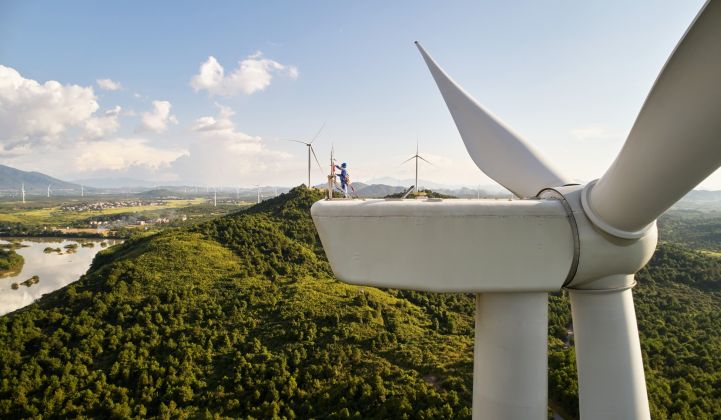
Chinese government reports of 120 gigawatts of wind and solar installed last year have confounded industry analysts.

Chinese government reports of 120 gigawatts of wind and solar installed last year have confounded industry analysts.

Analysts have been left dumbfounded after China last month released official 2020 wind and solar installation figures that were seemingly too big to be true.

The Chinese National Energy Administration (NEA) “stunned the world,” according to Wood Mackenzie senior analyst Xiaoyang Li, when it announced total wind and solar capacity additions of 120 gigawatts.

Notwithstanding uncertainty over COVID-19’s impact on the supply chain, China had been expected to report big numbers for last year. The International Energy Agency, for example, had predicted the country would add around 32 GW of wind and 50 GW of solar.

But the magnitude of the official figures caught even seasoned China watchers off guard. BloombergNEF had forecast 36 GW each of new solar and wind in 2020 and the official figure for PV capacity additions was 48 GW AC.
Tiếp tục đọc “What Is Going on With China’s Crazy Clean Energy Installation Figures?”
Beyond Declining Battery Prices: 6 Ways to Evaluate Energy Storage in 2021

greentechmedia.com

Balance of systems, software, supply chain constraints, and reliability and performance guarantees all weigh on total costs.

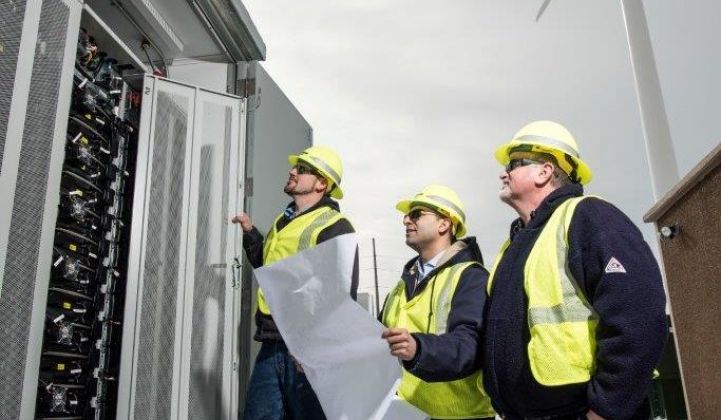
Batteries make up only a slice of energy storage system costs. (Credit: Ameren)

Batteries make up only a slice of energy storage system costs. (Credit: Ameren)

The energy storage market in the United States is booming, with 476 megawatts of new projects installed in the third quarter of 2020 alone, up 240 percent over the second quarter, according to industry analysts at Wood Mackenzie. 2021 is expected to be another record-breaking year for storage, but with technological innovation accelerating across the market, renewable energy asset owners need to carefully select safe and reliable systems to protect their storage investments. As the market accelerates, these are a few of the essential questions asset owners should be asking.

1. Evaluate pricing beyond the cell

When analysts speak about declines in storage pricing, they are referring to battery pricing, which continues to decline every year. Bloomberg New Energy Finance’s latest report states that current lithium-ion pricing stands at about $137 per kilowatt-hour and will drop as low as $100 per kWh by 2023.

However, purchasers of energy storage systems may see substantially higher prices for their projects, depending on a range of factors. For example, the lowest pricing for lithium-ion batteries is generally available for either a major supply contract or for very large-scale deployments of 500 megawatt-hours and above. Since most projects today are not that large, that $137 per kWh figure will be closer to $150 to $170 per kWh, and perhaps as high as $200 to $210 per kWh on the battery-pack level, depending on the size of the project.
Tiếp tục đọc “Beyond Declining Battery Prices: 6 Ways to Evaluate Energy Storage in 2021”

A Lesson from Physics on Oil Prices: Revisiting the Negative WTI Oil Price Episode

While the episode of negative WTI price is still being actively debated, its proper root cause is yet to be determined. This Comment contributes to the discussion and studies the event by modifying the theory of storage for an oil market with rigid operational infrastructure, where short-term supply and demand are price inelastic. We found that such pricing anomaly can be well characterized by a simple concept borrowed from the physics of extreme events.

The future prices are modelled as a financial derivative of the storage capacity. During normal market conditions, the spread between nearby futures contract is mostly determined by the carry trade and the cost of storage. However, if either inventory or the storage capacity is no longer available, the carry trade breaks down as the futures trader is unable to make or take the delivery of physical barrels. These events are akin to defaults in financial markets and prices leading to them are characterized by the financial squeeze.

We calibrate the model to inventory data at Cushing, Oklahoma and conclude that only a small fraction of the abnormal price move could be attributed to constraints on the storage capacity. The rest of the move was caused by the financial squeeze on long futures positions held against over-the-counter products. We detail the behavior of main market participants that led to negative prices. The Comment also points to several shortcomings of the recent CFTC report on this topic and suggests additional areas where a more granular look at the data could be helpful.

This comment looks at the announcement by the Danish government on 4 December to cancel the 8th offshore licensing round and all future rounds and to phase out all production of oil and gas by 2050. It describes the industry and political background to the announcement, including the ambitious legal target of a 70% reduction in GHG emissions by 2030 and climate neutrality by 2050, and the most recent official projections of offshore production. It concludes that it will shape operators’ investment and management of mature fields but its impact on Danish emissions and upstream production in 2030 and 2050 is likely to be much more modest than at first appears. However, if the reform galvanises the Danish authorities and investors to commit resources to the development of offshore COstorage in the period 2025-30, it may contribute significantly to Denmark’s climate objectives.

View full paper https://www.oxfordenergy.org/wpcms/wp-content/uploads/2021/01/A-Lesson-from-Physics-on-Negative-Oil-Prices.pdf

Steps to Aid US Fossil Fuel Workers in the Clean Energy Transition

WRI.org

The economic fallout from COVID-19 took a serious toll on U.S. fossil fuel workers and communities. But well before the coronavirus pandemic arrived, the U.S. fossil fuel industry was under significant pressure as the country moves toward cleaner forms of energy.
Tiếp tục đọc “Steps to Aid US Fossil Fuel Workers in the Clean Energy Transition”

Better infrastructure is way to absorb surge in renewable energy production: experts

e.vnexpress.net 

By Viet Anh   January 24, 2021 | 07:56 am GMT+7

Storing renewable energy in batteries and pumped storage of water to generate power, and improving transmission capacity are keys for Vietnam to foster renewable energy, according to experts.

Nguyen Duc Ninh, director of the National Load Dispatch Center, said earlier this month Vietnam plans to reduce its renewable energy output by 1.3 billion kilowatt hours this year since it lacks transmission capacity.

Installed solar power capacity reached 19,400 MWp by the end of last year, or 25 percent of total power capacity.

Dr Hang Dao, a sustainable energy expert at the World Resources Institute (WRI), said the reason Vietnam has solar energy surplus is the country’s electric grid and infrastructure are quite weak, and so energy is not transmitted to locations where needed.

The national grid is out of date and needs to be upgraded, but it would take time to install a modern network, and while waiting for it the country could focus on short-term storage plans, said Hang.

Tiếp tục đọc “Better infrastructure is way to absorb surge in renewable energy production: experts”

Nhiệt điện khí LNG không dễ bùng nổ ở Việt Nam như điện mặt trời

Nhật Hạ – 12:01, 21/01/2021

TheLEADER Các dự án nhiệt điện khí LNG sẽ gặp nhiều khó khăn khi triển khai hơn so với các dự án nhiệt điện than – vốn đã phải đối mặt với tình trạng chậm tiến độ triền miên, theo Viện Kinh tế Năng lượng và phân tích tài chính (IEEFA).

Nhiệt điện khí LNG không dễ bùng nổ ở Việt Nam như điện mặt trời

Toàn cảnh một nhà máy Nhiệt điện sử dụng khí LNG.

Trong thời gian vừa qua, Việt Nam đã nhanh chóng nổi lên là một trong những thị trường nhập khẩu khí thiên nhiên hóa lỏng (LNG) cho phát điện tiềm năng nhất ở châu Á. 

Tuy nhiên, không dễ để điện khí LNG tạo ra bước nhảy vọt mạnh mẽ như đã từng diễn ra trong lĩnh vực điện mặt trời thời gian vừa qua, theo báo cáo mới đây của Viện Kinh tế Năng lượng và phân tích tài chính (IEEFA). Tiếp tục đọc “Nhiệt điện khí LNG không dễ bùng nổ ở Việt Nam như điện mặt trời”

Expansion of Hoa Binh hydropower plant begins in northern Vietnam

Monday, January 11, 2021, 14:36 GMT+7 tuoitre

Expansion of Hoa Binh hydropower plant begins in northern Vietnam
Prime Minister Nguyen Xuan Phuc speaks at the ground-breaking ceremony of the expansion project of Hoa Binh Hydropower Plant, Hoa Binh Province, January 10, 2021 in this supplied photo.

Vietnam’s Prime Minister Nguyen Xuan Phuc attended the ground-breaking ceremony of the expansion project of Hoa Binh Hydropower Plant in northern Hoa Binh Province on Sunday morning.

Tiếp tục đọc “Expansion of Hoa Binh hydropower plant begins in northern Vietnam”

Kỳ vọng về việc đàm phán hợp đồng mua bán điện (PPA) ngay trong tháng 8/2020 và ký kết PPA vào cuối năm 2020 đã không thành hiện thực

Báo Đầu Tư

TIN LIÊN QUAN

Các Dự án LNG đều yêu cầu được bao tiêu dài hạn. Trong ảnh: Mặt bằng một Dự án điện khí LNG hoàn chỉnh
Các dự án LNG đều yêu cầu được bao tiêu dài hạn. Trong ảnh: Mặt bằng một dự án điện khí LNG hoàn chỉnh

Khó đàm phán

Trao đổi với phóng viên Báo Đầu tư mới đây, một quan chức của Cục Điện lực và Năng lượng tái tạo (Bộ Công thương) cho hay, Dự án Điện khí LNG Bạc Liêu đã không thể ký được PPA trong năm 2020. Như vậy, kỳ vọng về việc “đàm phán PPA ngay trong tháng 8/2020 và ký kết PPA vào cuối năm 2020” đã không thành hiện thực.

Tiếp tục đọc “Kỳ vọng về việc đàm phán hợp đồng mua bán điện (PPA) ngay trong tháng 8/2020 và ký kết PPA vào cuối năm 2020 đã không thành hiện thực”

Renewable Energy Lab. NREL’s Updated System Advisor Model

The latest version of NREL’s popular System Advisor Model (SAM) is now available, providing more robust data and seamless integration with other NREL models to help the renewable energy industry make informed project decisions.

SAM is free, publicly available modeling software for technical performance simulation and financial analysis of renewable energy projects and includes a desktop application, software development kit, and open-source code.

Updates to the model include:

  • The addition of the latest solar resource data from NREL’s National Solar Radiation Database, including yearly and sub-hourly data and covering Europe, Africa, and Asia for the first time
  • Improved battery dispatch for both front-of-meter and behind-the-meter battery storage applications
  • Improved electricity bill calculations for distributed behind-the-meter financial models
  • Implementation of NREL’s Solar Position Algorithm for sun angle calculations of solar performance models
  • Integration of NREL’s Land-Based Balance-of-System Systems Engineering Model for improved wind power plant system cost estimation and design.

“With the recent improvements, we’re excited to continue to ensure that complex energy analysis questions can be answered quickly and easily,” said Janine Freeman, NREL lead for the SAM model.

Solar power boom poses a distribution challenge

By Dat Nguyen   January 5, 2021 | 08:31 pm GMT+7 vnexpressSolar power boom poses a distribution challengeA worker installs solar power panels in Ninh Thuan Province, central Vietnam. Photo by VnExpress/Quynh Tran.The increasing solar power capacity has made it difficult for national utility Vietnam Electricity (EVN) to ensure stable power distribution nationwide.
The nature of solar power capacity, which accounts for 25 percent of the total, is to produce high volumes during the day and no production in the evening. This poses difficulties for EVN in operating the national grid, the national utility has said in a report.

There have been times when the grid was oversupplied during the low-demand hours between 10 a.m. and 2 p.m. when solar radiation is at peak, the report says.

On the contrary, when power demand is at the highest, the 5:30-6:30 p.m. period, solar power production falls to nearly zero and the traditional power generators have to be mobilized.

“The ratio of renewable power generation is increasing and with it comes instability in operation,” the report says.

Vietnam’s solar power capacity was roughly 16,500 megawatt by the end of last year, nearly 48 percent of it coming from rooftop panels and the rest from plants.

Solar power production reached 10.6 billion kilowatt-hours last year, accounting for 4.3 percent of total.

There was a surge in the number of solar power projects after the government offered an incentive feed-in tariff scheme to promote renewable energy production to meet rising demand in a fast-growing economy.

Fashion brand Nike and H&M to Vietnam: More renewables, please

Asia.nikkei.com

29 global fashion brands say green energy will boost No. 3 textile exporter

A wind park in Vietnam’s Bac Lieu Province.   © Reuters

HO CHI MINH CITY — Fashion brands including H&M and Nike are pressing Vietnam to move ahead with a renewable energy purchase program as companies come under increasing pressure to meet their sustainability goals, Nikkei Asia has learned.

A consortium of 29 brands sent a letter to Vietnamese Prime Minister Nguyen Xuan Phuc this month urging the country to introduce direct power purchase agreements (DPPA) between private buyers and sellers of renewable energy. Currently, energy users can only buy electricity through the national utility or through small-scale projects such as rooftop solar panels.

International clothing brands, which rely heavily on Asian garment factories, are under pressure from shareholders and consumers to reduce emissions in their supply chains. Renewable energy in Vietnam — the world’s third-largest textile exporter — is key to those companies hitting their emission targets.

“Without the DPPA we believe renewable energy development will plateau and fall short of meeting the growing energy needs of Vietnam’s industries,” the consortium warned in the Dec. 15 letter, seen by Nikkei.
Tiếp tục đọc “Fashion brand Nike and H&M to Vietnam: More renewables, please”

Đông Nam Á đối phó với bãi đổ rác khi Trung Quốc thực thi lệnh cấm nhập khẩu rác thải

English: Southeast Asia braces for trash dump as China enacts waste import ban

Kể từ ngày 1/1/2021, Trung Quốc  sẽ  không còn chấp nhận chất thải đến từ nước khác, đối với Việt Nam, Thái Lan và Indonesia có thể sẽ cảm thấy đây là gánh nặng từ chính sách mới

Mặc dù ba quốc gia này đã thực hiện nhiều biện pháp để đối phó với rác thải nhưng do còn nhiều tham nhũng, và các chính sách yếu có thể khiến các quốc gia bị chôn vùi trong rác

Trung Quốc, quốc gia đã từng là vua cứu cánh của thế giới, đang đóng cửa đối với tất cả các hoạt động nhập khẩu chất thải trong ngày đầu tiên của năm mới. Thông báo gần đây đã gây ra sự lo lắng tương tự đối với các nước xuất khẩu rác thải vào năm 2018, khi Trung Quốc ban hành chính sách “Chiến dịch thanh kiếm toàn quốc” đó là cấm nhập khẩu 24 loại rác thải rắn, bao gồm cả rác thải nhựa
Tiếp tục đọc “Đông Nam Á đối phó với bãi đổ rác khi Trung Quốc thực thi lệnh cấm nhập khẩu rác thải”

First Solar’s Photovoltaic Technology Completes 25 Years of Testing at NREL

NREL.gov

Dec. 14, 2020

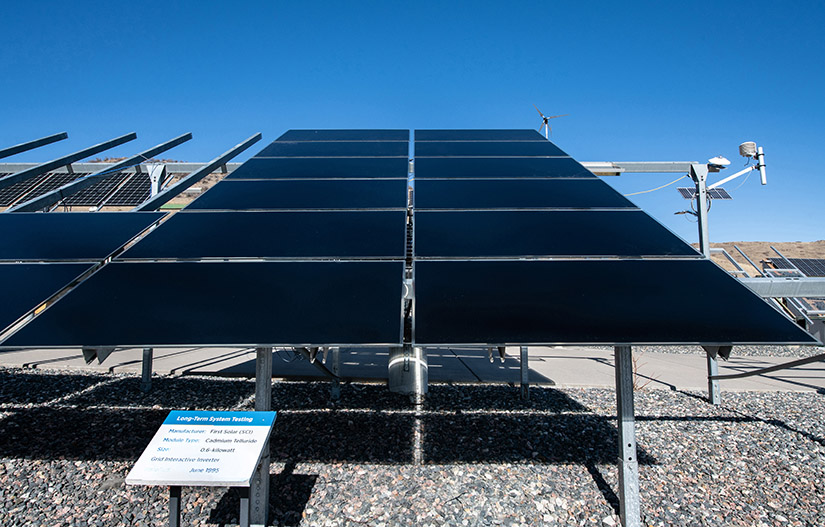
Photo of an outdoor array of solar panels
First Solar’s 0.6 kilowatt cadmium telluride PV solar test array has been tested at NREL’s Outdoor Test Facility for 25 years. Photo by Dennis Schroeder, NREL


Determining how many years a solar panel will last can take, well, years. Intended to function for 25 years or more, solar panels must be made to withstand the elements. In some cases, panels continue working well after their planned operational lifetime. Nowhere is this more evident than on the sunny hillside in Golden, Colorado, where the National Renewable Energy Laboratory (NREL) operates the Outdoor Test Facility (OTF). Tiếp tục đọc “First Solar’s Photovoltaic Technology Completes 25 Years of Testing at NREL”

Databases Related to Marine and Wind Energy and the Environment

tethys.pnnl.gov

The list below compiles and provides access to external databases. While the respective scopes of each of the databases are varied, all convey information relevant to wind and marine renewable energy and the environment. The list of databases is not exhaustive and will be updated as needed. If you have comments on incorrect or missing material, please email tethys@pnnl.gov.

Database for emerging PV technologies

emerging-pv.org 

Aiming to complement NREL’s Best Research-Cell Efficiency Chart and the Solar cells efficiency tables by Martin Green et al., which list the absolute best performing certified efficiencies for each major photovoltaic (PV) technology, emerging PV reports provides an alternative reference. We summarize the best results in the PV research, as published in academic journals (certified and uncertified) and with respect to the Shockley-Queisser efficiency limit, encouraging the reproducibility of the results. Unlike the established overviews, our new approach also deals with the best flexible, transparent/semitransparent and long-term photostable PV devices. In all cases, we also suggest protocols for best practices in characterization and reporting of emerging PV device performance.