‘Heated’ debate on fossil fuels as COP28 winds down

By Editor On Dec 11, 2023 Last updated Dec 11, 2023

By Vishani Ragobeer in Dubai 

Fossils fuels- the main contributor to the climate crisis- were always going to be the hot topic at this year’s global climate talks in Dubai, COP28, with sweltering temperatures making 2023 the hottest year on record. But as the end of the conference draws nearer with a new draft agreement released, fiery debates have taken over the conference.

On Monday night (Dubai time), a new text for the Global Stocktake (GST) was released after negotiators from Guyana and other countries spent days hammering out how best to satisfy everyone.

The GST is a global inventory of sorts that shows how climate goals are unfolding. And the draft text said countries (called Parties) were called upon to take several actions that would reduce greenhouse gas emissions.

Those emissions include carbon dioxide, a harmful gas produced when fossil fuels like oil and diesel are burnt. When that gas is produced, it goes into the atmosphere and leads to global warming.

And countries were told that they could take actions ranging from tripling renewable energy use (that is, using more environmentally-friendly energy sources like solar energy or hydropower) to reduce both the production and use of fossil fuels in a “just orderly and equitable” manner.

Tiếp tục đọc “‘Heated’ debate on fossil fuels as COP28 winds down”

Rủi ro địa chính trị cho thị trường khí đốt ở châu Âu

Nguyễn Phán – 10:00 18/11/2023

(KTSG) – “Rủi ro đáng lo ngại nhất khi nó không rõ ràng và không đáng lo khi nó quá rõ ràng”

James Grant

Từ nhiều năm nay, dầu được coi là loại tài sản mang tính kinh tế vĩ mô và quan trọng từ góc nhìn địa chính trị. Nó thường bị ảnh hưởng bởi chiến tranh, chính sách tiền tệ và sức khỏe của nền kinh tế. Khí đốt thì thường bị ảnh hưởng nhiều bởi những biến động trong một khu vực nhất định vì vận chuyển khí đốt thường phức tạp hơn là vận chuyển dầu. Nhưng với chuỗi cung ứng hiện tại, khí đốt cũng bắt đầu bị ảnh hưởng bởi các sự kiện toàn cầu.

Tiếp tục đọc “Rủi ro địa chính trị cho thị trường khí đốt ở châu Âu”

Cambodia scraps coal power project to build gas-fired plant, import LNG

reuters.com By Sudarshan Varadhan

November 29, 202312:52 PM GMT+7Updated 5 days ago

Cambodia's national flags are seen as labourers work at a construction site in Phnom Penh

SINGAPORE, Nov 29 (Reuters) – Cambodia has abandoned plans to build a $1.5 billion 700 megawatt (MW) coal-fired power project in a protected reserve along the southwestern coast and will build an 800 MW natural-gas fired plant instead, its energy minister told Reuters.

As part of the project, Cambodia is exploring construction of a liquefied natural gas (LNG) terminal to import the super-chilled fuel and re-gasify it for use in the power plant, Energy Minister Keo Rottanak told Reuters.

The planned LNG terminal, likely to be a fixed land-based facility, would be Cambodia’s first and would make it a new import market in Southeast Asia. Vietnam and the Philippines took their first shipments this year.

“The Cambodian Prime Minister Hun Manet will announce on Nov. 30 the cancellation of the 700 MW coal power plant project in Koh Kong and the plan to replace it with an 800 MW LNG to be commissioned after 2030,” Rottanak told Reuters.

Tiếp tục đọc “Cambodia scraps coal power project to build gas-fired plant, import LNG”

Nước Đức và tiếng gọi ở Phi châu

ANTG – Thứ Năm, 02/11/2023, 09:59

Thủ tướng Đức Olaf Scholz thăm Nigeria và Ghana trong khi Tổng thống Đức Frank-Walter Steinmeier cũng tới Tanzania và Zambia tuần này. Những chuyến công du cấp tập cho thấy tầm quan trọng ngày càng tăng của châu Phi – một khu vực mà trước đây Berlin ít quan tâm.

Khơi dòng năng lượng mới

Thủ tướng Đức Olaf Scholz đã đến Nigeria vào Chủ nhật (29/10). Đây là chuyến thăm đầu tiên của nhà lãnh đạo nước Đức tới Nigeria kể từ khi quốc gia Tây Phi này thành lập chính phủ mới dưới thời Tổng thống Bola Tinubu.

Thủ tướng Đức Olaf Scholz thăm Nigeria từ ngày 29 đến 31/10. Ảnh: DW

Tiếp tục đọc “Nước Đức và tiếng gọi ở Phi châu”

A moment of truth for the oil and gas industry

Climate change and clean energy confront oil and gas producers with profound choices

Full report here

Oil and gas producers face pivotal choices about their role in the global energy system amid a worsening climate crisis fuelled in large part by their core products, according to our major new special report.

The Oil and Gas Industry in Net Zero Transitions finds that the oil and gas sector – which provides more than half of global energy supply and employs nearly 12 million workers worldwide – has been a marginal force at best in transitioning to an energy system with net zero emissions, accounting for just 1% of clean energy investment globally.

The report shows how the industry can take a more responsible approach and contribute positively to the new energy economy, highlighting that the UN’s COP28 climate summit in Dubai is “a moment of truth” for the oil and gas sector.To start, all oil and gas companies should commit to tackling emissions from their own operations, according to the report. These emissions need to decline by 60% by 2030 to align with the Paris Agreement goal of limiting global warming to 1.5 °C. Companies also need to dramatically change how they allocate their financial resources. In 2022, clean energy investments accounted for a mere 2.5% of the industry’s total capital spending. The report finds that producers looking to align with the aims of the Paris Agreement would need to put 50% of capital expenditures towards clean energy projects by 2030.What’s more, companies must abandon the notion that they can continue with business as usual simply by ramping up the deployment of carbon capture technologies.

The report finds that if oil and gas consumption were to evolve as projected under today’s policy settings, limiting warming to 1.5 °C would require an entirely inconceivable 32 billion tonnes of carbon capture by 2050, with annual investment rising from $4 billion last year to $3.5 trillion.Opportunities lie ahead despite these challenges, however. Nearly a third of the energy consumed in 2050 in a decarbonised energy system comes from technologies that could benefit from the oil and gas industry’s skills and resources, including hydrogen, offshore wind and liquid biofuels.

Infrastructure, planning and market keys to develop LNG power

VNN – November 23, 2023 – 07:46

HÀ NỘI — Infrastructure, planning and a market mechanism were among key issues that must be addressed in order to develop a market for liquefied natural gas (LNG) in Việt Nam, heard participants at a conference on LNG on Wednesday in Hà Nội.

Thị Vải Terminal, an LNG storage facility in the southern province of Bà Rịa-Vũng Tàu. — VNA/VNS Photo

Deputy head of the Electricity and Renewable Energy Department under the Ministry of Industry and Trade (MoIT) Bùi Quốc Hùng said the importation of LNG must follow international trade standards and regulations while Việt Nam is still lacking in many key areas including design, construction, and operation of infrastructure for LNG imports. 

Tiếp tục đọc “Infrastructure, planning and market keys to develop LNG power”

Phát triển bền vững thị trường điện khí: Điện khí LNG chờ khung giá

SGGP 22/11/2023 06:02 (GMT+7)

Mặc dù điện khí LNG nằm trong chiến lược quốc gia nhưng khó khăn lớn nhất hiện nay là chưa có khung giá cho điện LNG, nên các bên khó đàm phán ký kết hợp đồng tiêu thụ, dẫn đến nguy cơ chậm tiến độ.

Nguy cơ khó thực hiện mục tiêu

Những năm gần đây, nhu cầu sử dụng khí LNG trên thế giới tăng nhanh – với tốc độ 6,3% mỗi năm, đồng thời sản lượng LNG trên thế giới cũng đã tăng từ 340 triệu tấn năm 2017 lên 453 triệu tấn vào năm 2022. Tại Việt Nam, theo Quy hoạch Phát triển điện lực quốc gia đến năm 2030, tầm nhìn đến 2045 (Quy hoạch điện VIII) thì đến năm 2030, nguồn nhiệt điện khí sẽ chiếm tới 24,8% tổng công suất toàn hệ thống phát điện – chiếm tỷ trọng lớn nhất trong cơ cấu nguồn điện (trong khi nhiệt điện than, thủy điện, điện gió trên bờ và ngoài khơi lần lượt chỉ còn chiếm tỷ trọng là 20%, 19,5% và 18,5%).

Kho cảng Thị Vải chứa khí LNG. Ảnh: PV GAS

Tiếp tục đọc “Phát triển bền vững thị trường điện khí: Điện khí LNG chờ khung giá”

Fragile Equilibrium: LNG Trade Dynamics and Market Risks

A report by the International Energy Forum and SynMax

Download the Full Report

In just over half a century, the liquefied natural gas (LNG) industry has radically transformed from its nascent stages into a globally traded energy source. LNG trade has quadrupled over the past two decades and is poised to double again in the next 20 years.

While LNG trade is becoming more liquid and inclusive, it remains disproportionately concentrated in production and consumption. Three countries – Japan, China, and South Korea – accounted for half of the world’s total LNG imports in 2022. Meanwhile, another three – Qatar, Australia, and the United States – commanded a staggering 65% of global exports. Despite this stark concentration, the sector is interdependent, and supply disruptions in one corner of the globe can send shockwaves across the entire market.

Tiếp tục đọc “Fragile Equilibrium: LNG Trade Dynamics and Market Risks”

After a Decade of Fossil Fuel Investing, Can China Fulfill Its Promise of a “Green” Belt and Road Initiative?

wri.org October 24, 2023 By Lihuan Zhou and Ziyi Ma Cover Image by: xiaoke chen/iStock

A decade ago, China launched the Belt and Road Initiative (BRI), an ambitious effort to finance infrastructure around the world. Since then, Chinese investments made through the BRI have become an integral part of the global infrastructure landscape — particularly in developing countries — with estimates of $1 trillion or more invested across 152 countries.

Unfortunately, the first 10 years of the BRI were dominated by fossil fuel investment, with $52 billion invested in coal power alone according to the China Overseas Finance Inventory.

But the next decade could look very different: At the 2021 UN General Assembly, China announced it would cease building new coal plants abroad and instead step up investment in renewable energy, a commitment reiterated by President Xi Jinping at the latest BRI summit in October 2023.

Tiếp tục đọc “After a Decade of Fossil Fuel Investing, Can China Fulfill Its Promise of a “Green” Belt and Road Initiative?”

Draft natural gas rules in the Philippines ignore high costs and economic consequences

IEEFA.org September 04, 2023 Sam Reynolds

Key Findings

The Philippines spent nearly US$90 million on its first two shipments of liquefied natural gas (LNG). The price tag for just two cargoes should be a warning sign for the exorbitant LNG import bills to come. 


The Department of Energy’s draft circular aiming to make the country “a major player” in Asia “through the development and operation of LNG facilities” could increase the country’s dependence on one of the most expensive fuels available. 

Tiếp tục đọc “Draft natural gas rules in the Philippines ignore high costs and economic consequences”

‘Shadow fleet’ oil tankers pose growing risk in SEA

southeastasiaglobe.com

An armada of poorly regulated, scrapyard-ready tankers is hauling sanctioned oil through the region’s bustling shipping lanes. With that, they’re carrying an ever-present threat of environmental catastrophe

IAN HOLLINGER AUGUST 29, 2023

‘Shadow fleet’ oil tankers pose growing risk in SEA
Smoke rises from the oil tanker Pablo after it suffered from multiple explosions on 1 May off the coast of Malaysia. The ship was registered to Gabon and was part of the so-called “ghost fleet” of little-regulated tankers. Photo courtesy of the Malaysian coast guard.

On the morning of 3 May, residents of Batam, Indonesia, the largest city of the country’s Riau Islands, woke up to beaches black with oil. 

Tiếp tục đọc “‘Shadow fleet’ oil tankers pose growing risk in SEA”

Fossil Fuel Subsidies: WHY DO WE CARE ABOUT FOSSIL FUEL SUBSIDIES?

IFM.org

Why do we care about fossil fuel subsidies?

Subsidies are intended to protect consumers by keeping prices low, but they come at a substantial cost. Subsidies have sizable fiscal consequences (leading to higher taxes/borrowing or lower spending), promote inefficient allocation of an economy’s resources (hindering growth), encourage pollution (contributing to climate change and premature deaths from local air pollution), and are not well targeted at the poor (mostly benefiting higher income households). Removing subsidies and using the revenue gain for better targeted social spending, reductions in inefficient taxes, and productive investments can promote sustainable and equitable outcomes. Fossil fuel subsidy removal would also reduce energy security concerns related to volatile fossil fuel supplies.

BACK TO TOP

Measuring Fossil Fuel Subsidies

Tiếp tục đọc “Fossil Fuel Subsidies: WHY DO WE CARE ABOUT FOSSIL FUEL SUBSIDIES?”

Financing the Coal Transition

Rocky Mountain Institute

This report aims to contribute to growing conversations about coal finance mechanisms, particularly as they move from concept to reality. RMI believes that financial mechanisms can be a transformational tool in coal transition efforts—but only if implemented well. Ultimately, the devil will be in the detail as to how financial mechanisms are designed and governed to meet the critical needs of all stakeholders and help deliver a rapid and smooth pathway to a climate-safe future.

RMI’s report, Financing the Coal Transition, shows how financial mechanisms can complement policy and regulation to help achieve a rapid, equitable, and smooth coal transition.

The economics of power generation are shifting rapidly in favor of clean energy, challenging coal’s long history as a mainstay of economic development throughout the world. However, much more work needs to be done to transition the existing coal fleet in line with climate and development goals.

The privileged place coal has occupied in power generation for over a century has entrenched complex barriers—from the way that grids have been built to the incentive structures within electricity systems—that prevent markets from catching up to the economic trend toward clean energy. In the absence of solutions to address these barriers, the costs of uneconomic coal will fall largely on local communities through direct costs and unpriced impacts on local health and the environment.

The global community needs new solutions to address the social and economic complexities of the coal transition while responding to the urgency of the climate challenge. One set of solutions currently under development are the innovative financial mechanisms designed to support the transition from coal to clean energy.

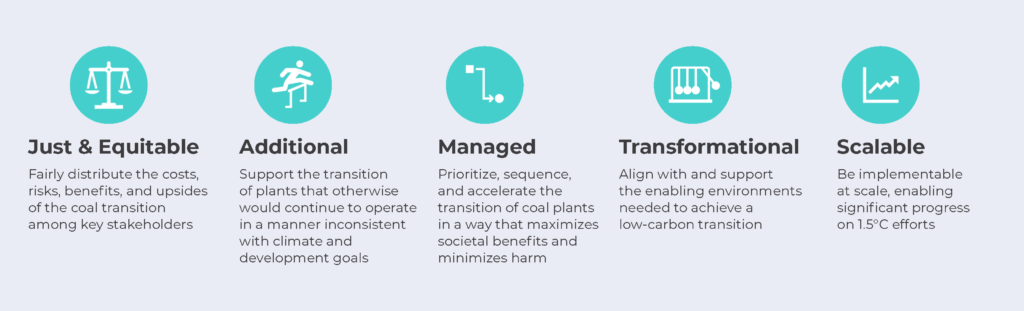
This report helps make sense of the various financial mechanisms proposed to date, and models the impacts of using different financial mechanisms to transition existing coal power plants. While it finds that financial mechanisms have the potential to generate wins for both the climate and communities, it also recognizes the risks of using finance to support the coal transition. To manage these risks, RMI proposes five key principles to guide the design of credible financial mechanisms.

five key principles to guide the design of financial mechanisms for coal transitionFive key principles to guide the design of financial mechanisms for coal transition
Download report here

Vietnam’s big bet on LNG may not ease its power crisis

Reuters.com

By Francesco GuarascioEmily Chow and Khanh Vu July 17, 2023

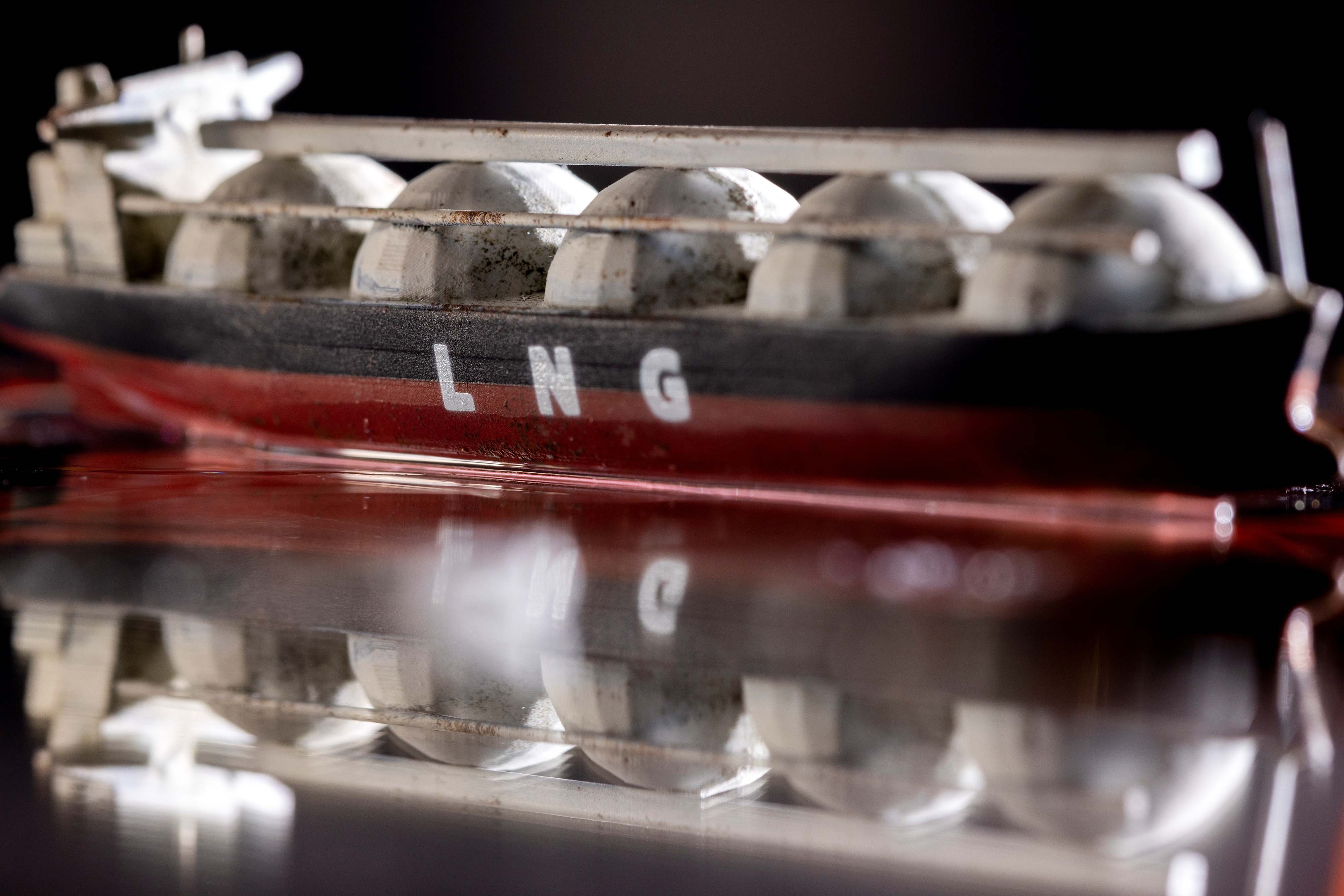
Illustration shows a model of LNG tanker

Model of LNG tanker is seen in this illustration taken May 19, 2022. REUTERS/Dado Ruvic/Illustration/File Photo

  • Electricity-hungry Vietnam looks to become LNG importer
  • First plant fuelled from imported gas unlikely pre-2026
  • Investors, Hanoi at odds over volumes, price of power sales
  • Bold plans exposed to volatile LNG prices as demand grows

HANOI, July 17 (Reuters) – Vietnam received its first shipment of liquefied natural gas this month, a milestone for the energy-hungry country, but various hurdles mean it could take years for imported gas to ease the country’s long-running power shortages.

Disagreement over pricing, plant construction delays and lack of supply contracts are dogging the Southeast Asian manufacturing hub’s adoption of LNG, hampering its ambitions to make imported gas a major fuel, industry insiders say.

Vietnam’s urgent need to boost electricity supply, laid bare by recent rolling blackouts, has raised concerns among foreign investors about whether Vietnam can remain a reliable option to diversify manufacturing away from China.

Half the businesses in a June poll by the European Chamber of Commerce in Vietnam said the power crisis had hurt investment plans. Some were considering alternatives or pausing spending on factories.

Reuters Graphics

Reuters Graphics

Tiếp tục đọc “Vietnam’s big bet on LNG may not ease its power crisis”

COP28 is a moment of truth for the oil and gas industry’s efforts on climate

IEA.org

Dr Fatih BirolDr Fatih Birol, Executive Director, International Energy AgencyCommentary — 13 May 2023

The COP28 Climate Change Conference in Dubai this year is a unique opportunity for the oil and gas industry to show it’s serious about tackling climate change.  

At a time when the impacts of climate change are increasingly being felt worldwide, oil and gas producers need to secure a new social license to operate. The world needs to see meaningful changes in the operations of both international and national oil companies, with clear and responsible strategies for bringing down their emissions rapidly.

Tiếp tục đọc “COP28 is a moment of truth for the oil and gas industry’s efforts on climate”