How Greenland’s Rare Earth Reserves Compare to the Rest of the World

 visualcapitalist January 19, 2026

How Greenland’s rare earth reserves compare globally and why its untapped minerals are drawing Trump’s attention.

Key Takeaways

China dominates global rare earth mining, but undeveloped reserves elsewhere could reshape future supply chains.

Greenland holds an estimated 1.5 million metric tons of rare earth reserves despite having no commercial production.

U.S. President Donald Trump has once again put Greenland at the center of global attention.

His renewed threat to assert U.S. control over the Arctic territory has drawn sharp reactions from European leaders and Denmark, which governs Greenland as an autonomous territory.

While the island’s strategic location is often cited, another underlying motivation is increasingly tied to its vast mineral potential. In particular, Greenland’s rare earth reserves have become a focal point in a world racing to secure critical resources.

This visualization compares rare earth mine production and reserves across countries, placing Greenland’s untapped resources in a global context. 

The data for this visualization comes from the U.S. Geological Survey (USGS), as of 2024.

China’s Grip on Rare Earth Supply

China remains the backbone of the global rare earth market. In 2024, it produced roughly 270,000 metric tons, accounting for well over half of global output.

China also controls the largest reserves, estimated at 44 million metric tons. This combination of scale and integration gives Beijing significant leverage over industries ranging from electric vehicles to defense systems.

CountryReserves (Metric Tons)Rare Earth Production 2024 (Metric Tons)
🇨🇳 China44.0M270,000
🇧🇷 Brazil21.0M20
🇮🇳 India6.9M2,900
🇦🇺 Australia5.7M13,000
🇷🇺 Russia3.8M2,500
🇻🇳 Vietnam3.5M300
🇺🇸 United States1.9M45,000
🇬🇱 Greenland1.5M0
🇹🇿 Tanzania890K0
🇿🇦 South Africa860K0
🇨🇦 Canada830K0
🇹🇭 Thailand4.5K13,000
🇲🇲 Myanmar031,000
🇲🇬 Madagascar02,000
🇲🇾 Malaysia0130
🇳🇬 Nigeria013,000
🌍 Other01,100
🌐 World total (rounded)>90,000,000390,000

Large Reserves, Limited Production Elsewhere

Outside China, many countries with sizable reserves play only a minor role in production.

Brazil holds an estimated 21 million metric tons of rare earth reserves yet produces almost nothing today. India, Russia, and Vietnam show similar patterns.

Why Greenland Matters

Greenland’s estimated 1.5 million metric tons of rare earth reserves exceed those of countries like Canada and South Africa. Yet the island has never had commercial rare earth production.

Environmental protections, infrastructure constraints, and local political opposition have slowed development. Still, as supply chain security becomes a priority for major economies, Greenland’s position is becoming harder to ignore.

Trump’s interest in Greenland is driven by more than symbolism. Rare earths are essential for advanced manufacturing, clean energy technologies, and military hardware. With China firmly entrenched as the dominant supplier, policymakers in Washington are increasingly focused on alternative sources.
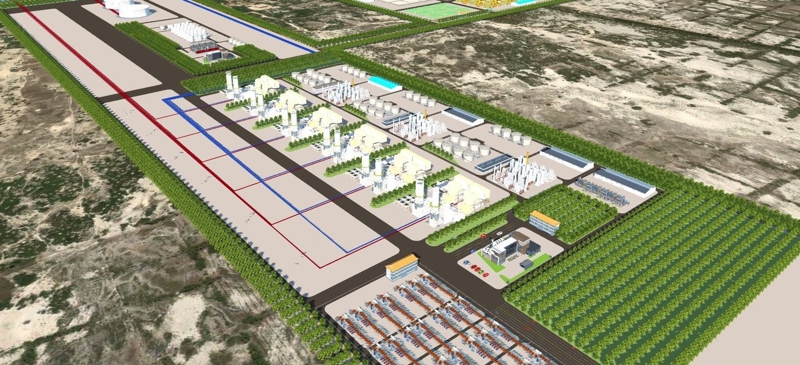
LNG 101 – What is liquified natural gas and what is its impact on emissions, health, and economics?

RMI.org By Carmela ChaneyDeborah GordonColm Quinn

As the name suggests, liquefied natural gas (LNG) involves turning gas into liquid form — a process known as liquefaction. Liquefaction does not alter the chemical makeup of gas, which is comprised of mostly methane plus varying amounts of different impurities, but it does make it denser. This enables ships and other carriers to move more gas over oceans between locations that lack direct pipeline connectivity.

What comprises the LNG supply chain?

Tiếp tục đọc “LNG 101 – What is liquified natural gas and what is its impact on emissions, health, and economics?”

KHÍ HOÁ LỎNG – LNG, CÓ PHẢI LÀ NHIÊN LIỆU “SẠCH”?

PECC2 23/05/2025, 09:58 AM

Trong bối cảnh thế giới đang nỗ lực giảm phát thải khí nhà kính và chuyển dịch sang nền kinh tế carbon thấp, khí thiên nhiên hóa lỏng (LNG) thường được nhắc đến như một “nhiên liệu chuyển tiếp sạch”, thay thế cho than đá và dầu mỏ trong sản xuất điện. Tuy nhiên, mức độ “sạch” của LNG vẫn là một câu hỏi gây tranh cãi, không chỉ vì những con số phát thải CO₂ thấp hơn khi đốt, mà còn bởi các tác động khí hậu tiềm ẩn từ toàn bộ chuỗi cung ứng – đặc biệt là rò rỉ khí metan. Bài viết này sẽ phân tích toàn diện các khía cạnh phát thải của LNG so với các nhiên liệu hóa thạch khác, dựa trên đánh giá vòng đời khí thải (LCA), nhằm đưa ra góc nhìn cân bằng và thận trọng về vai trò thực sự của LNG trong quá trình chuyển đổi năng lượng.

1. Phát thải khí nhà kính: LNG so với than đá và dầu mỏ

Các nhà máy điện tuabin khí sử dụng LNG thải ra khí nhà kính (chủ yếu là CO₂) ít hơn đáng kể so với các nhà máy điện than và dầu, nếu xét trên mỗi kWh điện sản xuất. Theo ước tính trung bình của IPCC, một nhà máy điện chạy khí thiên nhiên phát thải khoảng 490 g CO₂ tương đương mỗi kWh, trong khi con số này với than đá khoảng 820 g CO₂e/kWh và dầu nhiên liệu khoảng 600 g CO₂e/kWh. Sự khác biệt này chủ yếu do khí tự nhiên có tỷ lệ hydro/carbon cao hơn, cho hiệu suất đốt cao và sinh ít CO₂ hơn so với than và dầu cho cùng một lượng nhiệt năng.

Tiếp tục đọc “KHÍ HOÁ LỎNG – LNG, CÓ PHẢI LÀ NHIÊN LIỆU “SẠCH”?”

Déjà vu? The global LNG industry risks repeating the coal bust of the 2010s

IEEFA November 20, 2025 Amandine Denis-Ryan

 Key Findings

In the early 2010s, the coal industry attracted a large wave of investment, banking on surging coal imports from China and India.

When this growth didn’t materialise, coal oversupply and depressed prices sent major companies bankrupt with significant value destruction for shareholders.

The LNG industry risks repeating the coal industry’s mistakes, as investment levels outstrip future demand, with potentially more severe consequences for the capital-intensive industry.

Peddling a ‘supercycle’ for coal in the 2010s

In the early 2010s, the coal industry was on the rise. Global trade had tripled between 1990 and 2011, with the 2000s experiencing “the largest growth in coal demand in history – greater than the previous four decades combined”. This growth was expected to accelerate after China and India entered the global coal import market (Figure 1). Between 2011 and 2012, global coal imports increased by 13% and coal prices doubled (Figure 2).

Tiếp tục đọc “Déjà vu? The global LNG industry risks repeating the coal bust of the 2010s”

Hành trình Net Zero của Việt Nam: Một khoảng trống

1-11-2025 – Phạm Thu Trang

TiasangLàm thế nào để phát triển xanh đi liền với phát triển công bằng?

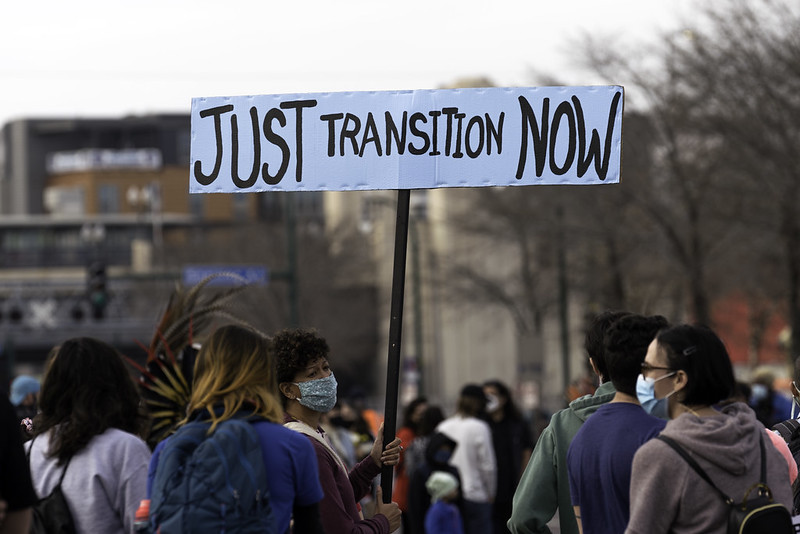
Một người biểu tình tại Minnesota, Mỹ đang giơ tấm biển “Just Transition Now”. Ảnh: Lorie Shaul

Cam kết đạt phát thải ròng bằng “0” vào năm 2050 và Thỏa thuận Đối tác Chuyển dịch Năng lượng Công bằng (JETP) với gói hỗ trợ trị giá 15,5 tỷ USD là những bước đi thể hiện rõ quyết tâm của Việt Nam tiến vào quỹ đạo phát triển xanh và bền vững.

Cho đến nay, phần lớn các thảo luận và chính sách vẫn xoay quanh ba trục chính: vốn đầu tư, công nghệ và khung pháp lý. Đây là những yếu tố nền tảng để thúc đẩy quá trình chuyển đổi năng lượng và hiện thực hóa tham vọng Net Zero. Tuy nhiên, có một khía cạnh quan trọng lại ít được chú ý đúng mức – đó là tác động xã hội.

Chuyển đổi năng lượng sẽ không chỉ tác động đến nền kinh tế, mà còn ảnh hưởng sâu rộng đến đời sống của người lao động, cộng đồng địa phương và các nhóm yếu thế. Nếu không được tính đến, những tác động này có thể tạo ra bất công mới, làm suy yếu đồng thuận xã hội.

Đó là lý do khái niệm Just Transition – Chuyển đổi công bằng – cần được đặt vào trung tâm của hành trình Net Zero.

Tiếp tục đọc “Hành trình Net Zero của Việt Nam: Một khoảng trống”

Who Buys the Most Iranian Oil?

visualcapitalist.com

As tensions escalate between Iran, Israel, and the U.S. amid fragile ceasefire negotiations, the Iranian oil market is facing heightened volatility.

Certain Asian economies that rely heavily on Iranian crude and stable passage through the Strait of Hormuz now face some of the greatest exposure.

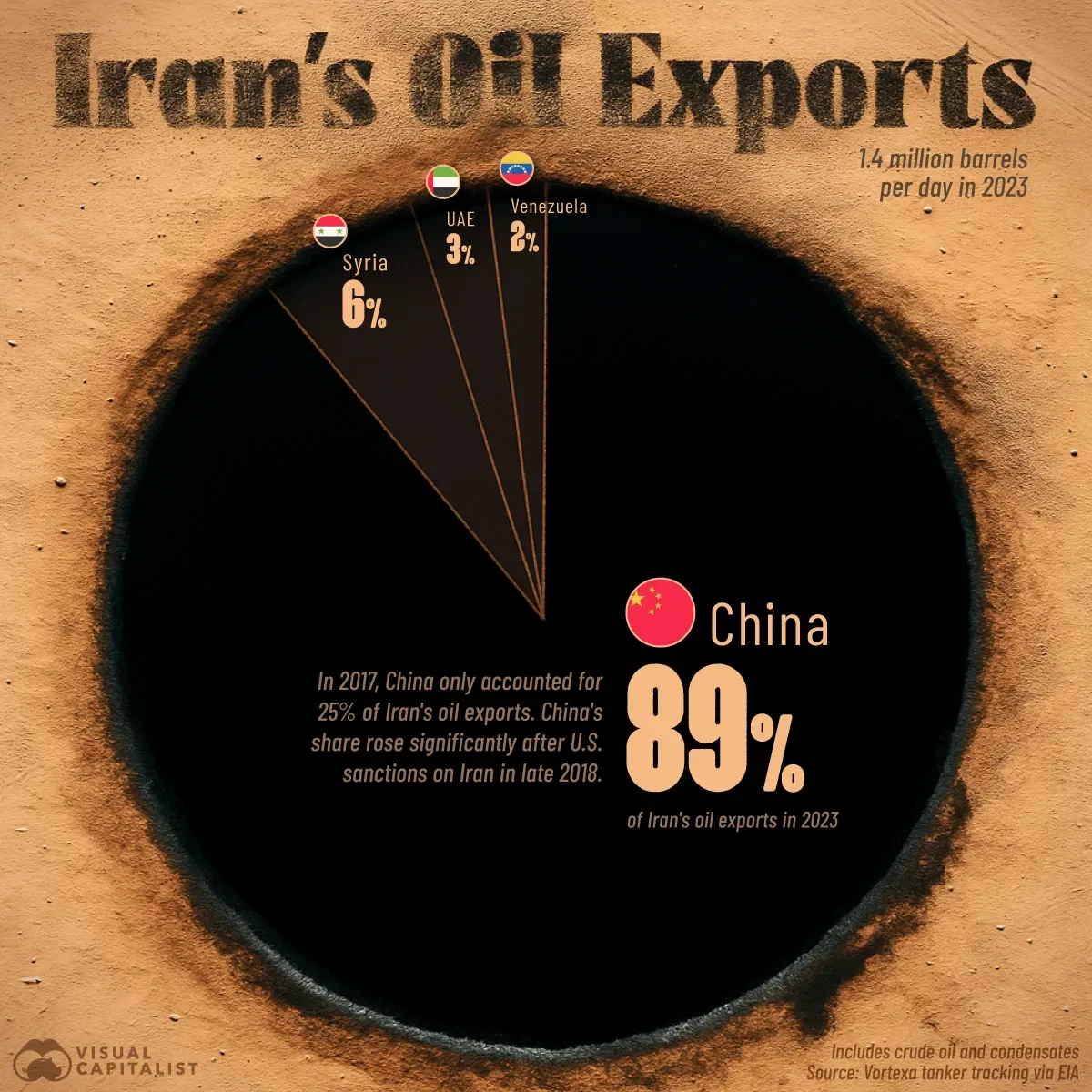
This chart visualizes the breakdown of Iran’s crude oil and condensate exports by destination in 2023.

Data comes from the U.S. Energy Information Administration.

China is the Top Buyer of Iranian Oil

Below, we show the share of Iran’s oil exports by destination.

CountryShare of Iran’s Crude Oil Exports
🇨🇳 China89%
🇸🇾 Syria6%
🇦🇪 United Arab Emirates3%
🇻🇪 Venezuela2%

In 2023, a staggering 89% of Iran’s oil exports went to China, a sharp rise from just 25% in 2017.

This surge followed renewed U.S. sanctions in 2018, which isolated Iran from most global oil buyers.

Iran is among the world’s largest oil producers, and in recent years, China has become its most critical customer both economically and geopolitically.

As hostilities in the region intensify–marked by U.S. attacks on Iranian nuclear infrastructure and Iranian missile strikes on American bases in Qatar and Iraq—China’s access to Iranian oil is increasingly at risk.

This is because the Strait of Hormuz, a critical route for China’s oil imports, could be disrupted by further conflict or Iranian retaliation.

While Iran supplies only about 13% of China’s total oil imports, the relationship is strategically important, offering China discounted crude and reinforcing its broader regional influence amid Western pressure.

Tại sao Iran?

SÁNG ÁNH – 07/07/2025 16:26 GMT+7

TTCT Hình ảnh Iran trong mắt phương Tây đã bị bóp méo rất nhiều, và cuộc chiến vừa diễn ra không chỉ có nguyên nhân địa chính trị…

Phụ nữ Iran ở Tehran. Ảnh: Reuters

Trong thập niên 1970, do phải tiêu pha cho chiến tranh Việt Nam và chiến tranh lạnh với Liên Xô, đồng thời với sự lớn mạnh kinh tế của Nhật Bản và Đức, Hoa Kỳ mất vị trí đứng đầu. 

Tổng thống Nixon, dưới áp lực của chính các đồng minh Đức, Anh, Pháp, phải ngưng việc hoán đổi USD sang vàng như ấn định bởi hiệp ước Bretton Woods sau Thế chiến II. 

Lý do nước Mỹ không đảm bảo được đồng USD bằng vàng nữa là vì họ đã in ra quá nhiều USD so với lượng vàng đang giữ. Mà vàng lại không phải của Hoa Kỳ, mà là ký thác của Anh, Pháp trong thời Thế chiến, giờ họ đòi về. Đồng USD đành thả nổi và sụt giá.

Tiếp tục đọc “Tại sao Iran?”

Không có hồ sơ tham gia, Thanh Hóa tiếp tục gia hạn gói thầu siêu dự án 57.000 tỷ

vneconomy.vn Nguyễn Thuấn

Không có nhà đầu tư nào nộp hồ sơ dự thầu cho Dự án Nhà máy Nhiệt điện LNG Nghi Sơn tính đến thời điểm đóng thầu ngày 19/6/2025, Ban Quản lý Khu kinh tế Nghi Sơn và các Khu công nghiệp tỉnh Thanh Hóa đã quyết định gia hạn thời gian lựa chọn nhà đầu tư theo quy định mới của Chính phủ.

Ảnh minh hoạ
Ảnh minh hoạ

Theo ông Nguyễn Anh Tuấn, Phó Trưởng ban Quản lý Khu kinh tế Nghi Sơn và các khu công nghiệp tỉnh Thanh Hóa, thời điểm đóng thầu lựa chọn nhà đầu tư Dự án Nhà máy Nhiệt điện LNG Nghi Sơn là ngày 19/6/2025 nhưng không có nhà đầu tư nào nộp hồ sơ dự thầu. Ngay sau đó, bên mời thầu đã thực hiện gia hạn thời điểm đóng/mở thầu theo đúng quy định tại Nghị định số 115/2024/NĐ-CP của Chính phủ.

Tiếp tục đọc “Không có hồ sơ tham gia, Thanh Hóa tiếp tục gia hạn gói thầu siêu dự án 57.000 tỷ”

What countries are the top producers and consumers of oil?

EIA.org

The top 10 oil1 producers and share of total world oil production2 in 20233

CountryMillion barrels per dayShare of world total
United States21.9122%
Saudi Arabia11.1311%
Russia10.75 11%
Canada  5.76  6%
China  5.26  5%
Iraq  4.42  4%
Brazil  4.28  4%
United Arab Emirates  4.16  4%
Iran  3.99  4%
Kuwait  2.91  3%
Total top 1074.59  73%
World total101.81

1 Oil includes crude oil, all other petroleum liquids, and biofuels.
2 Production includes domestic production of crude oil, all other petroleum liquids, and biofuels and refinery processing gain.
3 Data source: U.S. Energy Information Administration, International Energy Statistics, Total oil (petroleum and other liquids) production, as of April 11, 2024

The top 10 oil1 consumers and share of total world oil consumption in 20222

CountryMillion barrels per dayShare of world total
United States20.0120%
China15.1515%
India  5.05  5%
Russia  3.68  4%
Saudi Arabia  3.65  4%
Japan  3.38  3%
Brazil  3.03  3%
South Korea  2.55  3%
Canada  2.41  2%
Germany  2.18  2%
Total top 1061.0861%
World total99.95

1 Oil includes crude oil, all other petroleum liquids, and biofuels.
2 Data source: U.S. Energy Information Administration, International Energy Statistics, Total oil (petroleum and other liquids) consumption, as of April 11, 2024

Learn more:
Energy Explained: Where our oil comes from

Last updated: April 11, 2024. Note: Source data are subject to change since last update.

China confirms natural gas find in South China Sea

South China Morning Post – 9-8-2024

China announced the discovery of a major natural gas field in the South China Sea on August 7, 2024. Named Lingshui 36-1, the site is said to be the world’s first “ultra-shallow gas field in ultra-deep waters”. Located southeast of China’s southern island of Hainan, the field lies around 1,500 metres below the sea surface. Its discovery is expected to boost energy security for China, the world’s-largest natural gas importer. But developing oil and gas resources in the South China Sea could raise tensions among rival claimants to parts of the disputed waters.

Oil firms forced to consider full climate effects of new drilling, following landmark Norwegian court ruling

theconversation.com Published: January 31, 2024 12.02pm GMT

Norway’s district court in Oslo recently made a decision on fossil fuels that deserves the attention of every person concerned about climate change.

This ruling, which compels energy firms to account for the industry’s entire carbon footprint, could change the way oil and gas licenses are awarded in Norway – and inspire similar legal challenges to fossil fuel production in other countries.

The court ruled that three petroleum production licenses, held by energy companies including Equinor and Aker BP, were invalid largely due to the lack of consideration that had been given to so-called “downstream emissions”. That is, emissions from burning the petroleum that these firms would extract from the North Sea (also called scope 3 emissions).

This case is a big win for environmental campaigners who have tried to make oil and gas companies account for the emissions that come from burning their products. Similar efforts have been defeated in legal challenges elsewhere over the last few years.

Our mission is to share knowledge and inform decisions.

About us

Tiếp tục đọc “Oil firms forced to consider full climate effects of new drilling, following landmark Norwegian court ruling”

Nga, trừng phạt và mâu thuẫn giữa hai bờ Đại Tây Dương

ANTG – Thứ Hai, 05/02/2024, 08:27

Châu Âu chìm trong khủng hoảng năng lượng. Các công ty châu Âu đang dần chuyển hướng sang Mỹ. Người Mỹ thì lợi dụng điều này để bán khí thiên nhiên hóa lỏng (LNG) cho châu Âu với giá cao.

Không còn lựa chọn nào khác, châu Âu đang bắt đầu xây dựng các bến cảng lớn để tiếp nhận hàng từ Mỹ. Thế nhưng, sau đó, Mỹ tuyên bố đình chỉ các dự án LNG và sẽ không cung cấp cho châu Âu trong những năm tới.

Tổng thống Mỹ Joe Biden ngày 26/1 công bố lệnh tạm dừng xây dựng các kho cảng xuất khẩu LNG mới. Theo dữ liệu do tổ chức quốc tế Cedigaz công bố, trong năm 2023, Mỹ là nước xuất khẩu LNG hàng đầu thế giới. Theo Nhà Trắng, khoảng một nửa lượng xuất khẩu LNG vào năm 2023 được xuất khẩu sang châu Âu, do lục địa này đã chấm dứt việc nhập khẩu khí đốt của Nga kể từ khi nổ ra cuộc xung đột tại Ukraine.

Một cảng xuất khẩu khí thiên nhiên hóa lỏng ở Mỹ.

Tiếp tục đọc “Nga, trừng phạt và mâu thuẫn giữa hai bờ Đại Tây Dương”

Canada’s oil sands spew massive amounts of unmonitored polluting gases

nature.com

Innovative aircraft-based technique records carbon emissions not tracked before from the industrial region

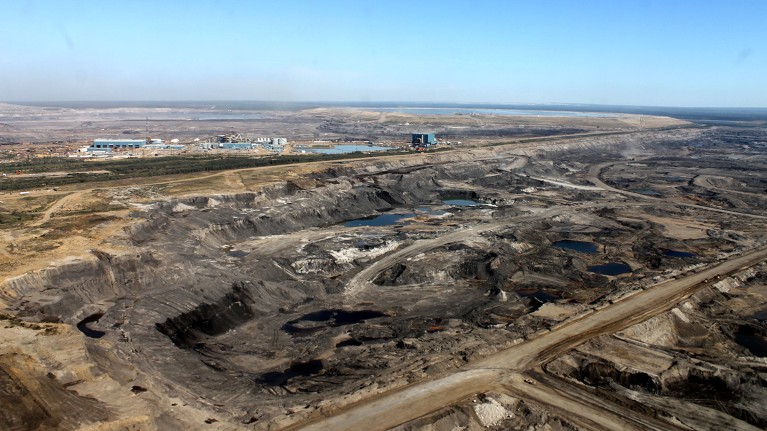
An aerial photo of the Athabasca oil sands operations, with tar and dirt exposed.
Researchers flew an aeroplane over the oil sands in Alberta, Canada, to measure all of their carbon-based emissions. Credit: John Liggio, Andrea Darlington and Andrew Elford

Canada’s controversial oil-producing tar sands generate a substantial amount of unaccounted-for carbon-based emissions that can affect air quality, according to measurements taken by aircraft. The sands release more of these pollution-causing gases than megacities such as Los Angeles, California, and about the same as the rest of Canada’s human-generated sources combined — including emissions from motor traffic and all other industries.

“No rules have been broken, or guidelines exceeded here,” says Janetta McKenzie, an oil and gas analyst for the Pembina Institute, a think tank in Calgary, Canada. “But that speaks to some issues in our rules and our guidelines.”How a dangerous stew of air pollution is choking the United States

The team that conducted the study — led by environmental engineer Drew Gentner at Yale University in New Haven, Connecticut, and chemist John Liggio at the federal agency Environment and Climate Change Canada (ECCC) in Toronto — used an innovative approach to measure all the carbon-based molecules in the air over oil sands in the province of Alberta. The researchers factored out greenhouse gases such as carbon dioxide and instead tracked only molecules important to air quality, many of which haven’t been monitored at the oil sands before. These carbon-based gases can seed particulate pollution in the air and react with other chemicals to form ground-level ozone.

Tiếp tục đọc “Canada’s oil sands spew massive amounts of unmonitored polluting gases”

Vietnam’s forests have been cleared to supply the world’s timber industry (2 parts)

pulitzercenter.org – APRIL 4, 2023

Vietnam’s Forests Have Been Cleared To Supply the World’s Timber Industry

author image

In Central Vietnam’s factory, wood chips are accumulated in the rear of a three-wheel vehicle used to transport acacia wood to the processing machine. Image by Thanh Nguyen.

Vietnam is ranked the fifth-largest country in the world, second in Asia, and the largest in Southeast Asia in furniture exports. Vietnamese furniture has been directly exported to 120 countries and territories.

However, behind this impressive figure is that series of natural forests that have been cut down and quickly. These forest land areas have been occupied for growing short-term timber trees.

Deforestation makes natural disasters in Vietnam more severe, local people suffer the most from the consequences.

An investigation will be published on Mekong Eye.

Tiếp tục đọc “Vietnam’s forests have been cleared to supply the world’s timber industry (2 parts)”

COP28: Ai đang gây ô nhiễm

SÁNG ÁNH 23/12/2023 13:59 GMT+7

TTCT Hội nghị thượng đỉnh COP28 về biến đổi khí hậu kết thúc tại UAE với kết quả lừng khừng…

Các họp hành kiểu này thường kết thúc như vậy. Rất nhiều quyền lợi mâu thuẫn chưa giải quyết được nên mới phải họp hành và họp hành không giải quyết được nên mới phải dung hòa, ta nâng ly uống rồi về nhà, hẹn gặp lại sau.

Mỹ là nước thải ra rác thải nhựa nhiều nhất thế giới, theo cả hai thông số tổng số rác và số rác bình quân trên đầu người. Ảnh: Getty Images

Các quyền lợi mâu thuẫn này là giữa thế giới phát triển và đang phát triển, tức là mâu thuẫn nam bắc; giữa các nước sản xuất và có tài nguyên dầu khí với các nước tiêu thụ; giữa công nghệ cũ dựa trên dầu khí, than đá, và công nghệ mới dựa trên năng lượng nắng, gió, thủy triều… 

Các mâu thuẫn về quyền lợi chẳng khi nào đơn giản. Ở mức thế giới, quốc gia, ở mức công nghệ, nó bao giờ cũng đi kèm thượng tầng văn hóa, chính trị và ý thức hệ để bảo vệ, tuyên dương, phát triển hay duy trì quyền lợi.

Tiếp tục đọc “COP28: Ai đang gây ô nhiễm”