Pollution in our waterways is not only dangerous and unsanitary for humans but it also affects wildlife. That’s why it is so exciting to see an initiative aimed at preventing such waste.
The Australian city of Kwinana has designed a simple and cost-effective solution to deal with the discharge of waste from drainage systems. The town has put nets on the outlet of drainage pipes.
These nets stop waste and pollutants from leaving the sewers, preventing garbage transported by rain waters from contaminating the town’s local water reserve. It is a simple filtering system and it works like a charm.
Launched as policymakers lock horns with petrochemicals lobbyists over a treaty to end plastic pollution, the documentary produced by Eco-Business asks why opportunities to solve humanity’s waste crisis are being wasted. It will premiere in Singapore and screen on the sidelines of the upcoming COP28 climate summit.
More than a week after a third round of negotiations for a global treaty to stop plastic pollution came to a disappointing close, a new documentary launches that explores the truth behind the waste industry.
Negotiations for a binding global plastic agreement were stalled by lobbying from petrochemical and plastics industry-leaning governments, who are pushing for the treaty to focus solely on waste management rather than plastic production. The new film, titled “Wasted”, explores the role of “polluter pays” laws that hold corporations to account for the 280 million tonnes of short-lived plastic products that enter the environment every year.
“Why is waste ignored when it is staring us in the face? Maybe it is because the true impact is being hidden from us,” said Jessica Cheam, founder and managing director of Eco-Business, who co-produced the documentary with filmmaker Fraser Morton.
The film investigates the waste landscape in four key Asian countries for waste – Singapore, South Korea, Vietnam and India – and explores the solutions needed to stem the flow of trash into the environment. “Solutions to tackle this blight exist in plain sight, so why are we wasting opportunities to make change?” said Cheam.
On 7 December, Eco-Business will also be hosting the documentary’s premiere on the sidelines of the COP28 climate meeting in Dubai, in partnership with CC Forum. The event will be held at Grand Hyatt Dubai.
Vietnam is grappling with a critical plastic waste crisis. Each year, the country generates 1.8 million tonnes of plastic waste, about one-third of which ends up in the ocean. This constitutes 6 per cent of global marine plastic pollution and makes it the world’s fourth-largest emitter.
Not only does this exacerbate Vietnam’s environmental challenges, but it also casts a shadow over its international reputation as the nation has pledged robust commitments to sustainable dvelopment and the green transition.
Rapid economic progress in Viet Nam has been accompanied by a huge increase in consumption and, as a result, waste – particularly plastic waste. It is estimated that Viet Nam’s post-consumer plastic waste will rise by 36% from 2018 levels by the year 2030. 1 Despite major commitments from the government, business and civil society, plastic waste leakage into the country’s water bodies is expected to increase by 106% between 2018 and 2030, to 373,000 tonnes per year.2 The intersectional gender context assessment report on the plastic value chain in Viet Nam is an initiative under the framework of the NPAP Viet Nam. Its aim is to highlight the gender and inclusion gaps and inequalities that exist throughout the plastic value chain, which can inform the development of gender-responsive and inclusive policy options for addressing plastic waste pollution in Viet Nam. Executive summaryGender Context Assessment of the Plastic Value Chain in Viet Nam 6
[VOV2] – Hội thảo đã gợi mở những trao đổi hiệu quả về vai trò của phụ nữ và cách thức giúp nâng cao bình đẳng giới, phát triển toàn diện trong quản lý rác thải nhựa ở cấp hộ gia đình và cộng đồng.
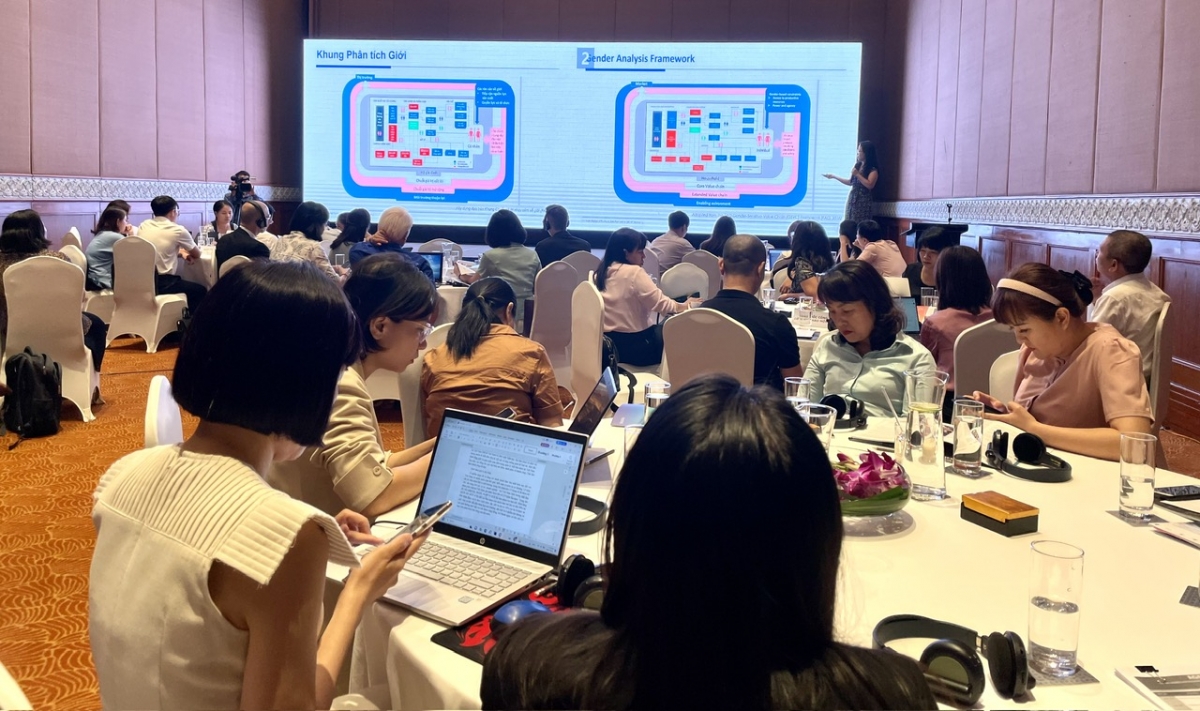
“Cần thiết phải lồng ghép các vấn đề bình đẳng giới và phát triển toàn diện trong bản kế hoạch hành động chung của Trung ương Hội liên hiệp Phụ nữ Việt Nam, Đại sứ quán Canada, Chương trình Phát triển của Liên hợp quốc tại Việt Nam (UNDP Việt Nam) và các thành viên tích cực khác thuộc mạng lưới Chương trình đối tác hành động Quốc gia về Nhựa (NPAP). Cụ thể sẽ đề xuất tích hợp những giải pháp đơn lẻ thành nền kinh tế tuần hoàn nhựa bền vững và toàn diện, bằng cách tận dụng nguồn lực từ các nhà hoạch định chính sách, chuyên gia, doanh nghiệp và đối tác phát triển”. Đây là nội dung được đưa ra tại Hội thảo về Bình đẳng giới và Phát triển toàn diện trong quản lý chất thải nhựa do Trung ương Hội liên hiệp Phụ nữ Việt Nam hợp tác cùng Đại sứ quán Canada tại Việt Nam và UNDP Việt Nam vừa tổ chức mới đây tại Hà Nội.
Hội thảo về Bình đẳng giới và Phát triển toàn diện trong quản lý chất thải nhựa
Hội thảo nhằm mục đích chia sẻ kết quả “Báo cáo đánh giá hiện trạng về giới (GESI) trong chuỗi giá trị nhựa tại Việt Nam” của Chương trình đối tác hành động Quốc gia về Nhựa (NPAP), cũng như nâng cao nhận thức của đối tác quốc gia và các bên liên quan trong thúc đẩy bình đẳng giới và phát triển toàn diện thuộc lĩnh vực quản lý chất thải nhựa.
Hội thảo đã gợi mở những trao đổi hiệu quả về vai trò của phụ nữ và cách thức giúp nâng cao bình đẳng giới, phát triển toàn diện trong quản lý rác thải nhựa ở cấp hộ gia đình và cộng đồng.
Waste problems on Sơn Island and Cái Răng floating market in Cần Thơ Province are gradually being solved thanks to a pivotal project by Greenhub. Volunteers are collecting waste from households living on the island and on boats and encouraging residents to clean up and promote a more sustainable future for Vietnam. Watch this video to learn more about the programme.
Scientists have found thriving communities of coastal creatures, including tiny crabs and anemones, living thousands of miles from their original home on plastic debris in the Great Pacific Garbage Patch – a 620,000 square mile swirl of trash in the ocean between California and Hawaii.
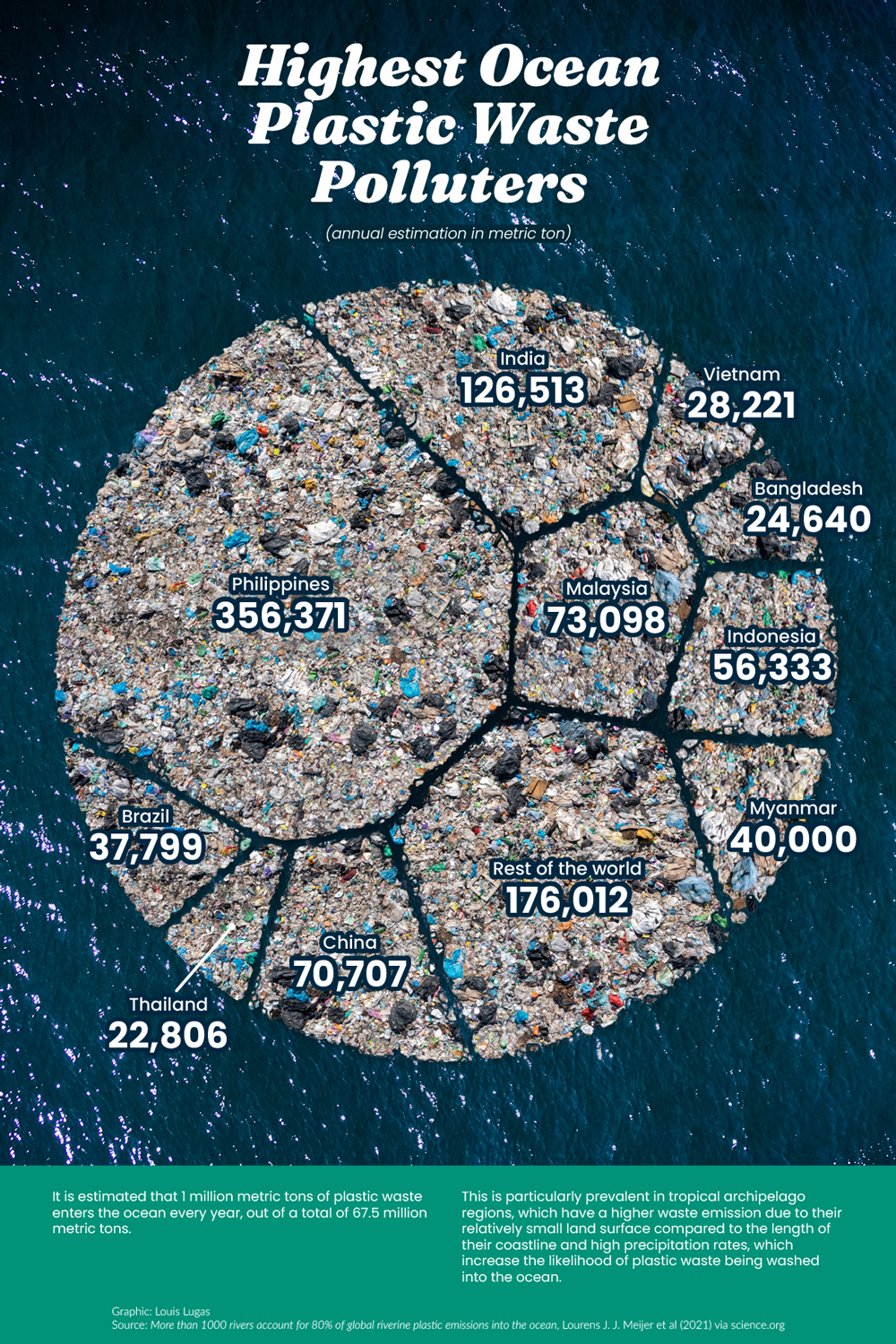
#1 Philippines #2 India #3 Malaysia #4 China #5 Indonesia #6 Myanmar #7 Brazil #8 Vietnam #9 Bangladesh #10 Thailand
Many high-income countries generate high amounts of plastic waste, but are either better at processing it or exporting it to other countries. Meanwhile, many of the middle-income and low-income countries that both demand plastics and receive bulk exports have yet to develop the infrastructure needed to process it.
Visualized: Ocean Plastic Waste Pollution By Country
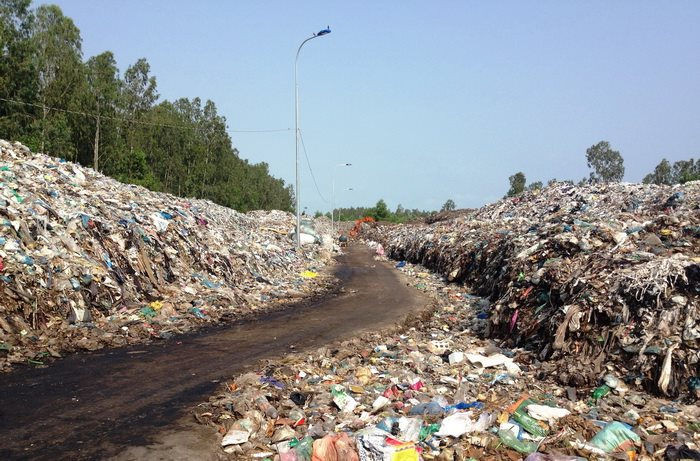
(TN&MT) – Theo thống kê của Tổng cục Môi trường (Bộ Tài nguyên và Môi trường – TN&MT), tại Việt Nam hiện có hơn 900 bãi chôn lấp chất thải sinh hoạt, trong đó chưa đến 20% bãi chôn lấp hợp vệ sinh. Tình trạng ô nhiễm môi trường từ hàng trăm bãi chôn lấp này là hiện hữu.
Vẫn khó xử lý, cải tạo
Trong hơn 900 bãi chôn lấp chất thải sinh hoạt, ngoài 20% bãi chôn lấp hợp vệ sinh, còn lại là các bãi chôn lấp không hợp vệ sinh hoặc các bãi tập kết chất thải cấp xã. Một số bãi rác này hiện đã “đóng cửa”.
Việt Nam có hơn hơn 900 bãi chôn lấp chất thải sinh hoạt, có nguy cơ gây ô nhiễm môi trường
The flow of plastic entering the ocean is expected to double by 2040. To prevent this tsunami of difficult-to-decompose waste, experts have proposed a global treaty which could oblige all nations to reduce how much plastic they produce and emit to the environment.
At a recent meeting of the United Nations Environment Assembly (UNEA) in Nairobi, Kenya, ministers and representatives from 173 countries agreed on the terms for negotiating such a treaty over the next two years.
Is this the turning point for plastic pollution the world needs? And how will it work? We asked Steve Fletcher, a professor of ocean policy and economy at the University of Portsmouth and an advisor to the UN Environment Prograamme on plastic.
What has actually been agreed in Nairobi?
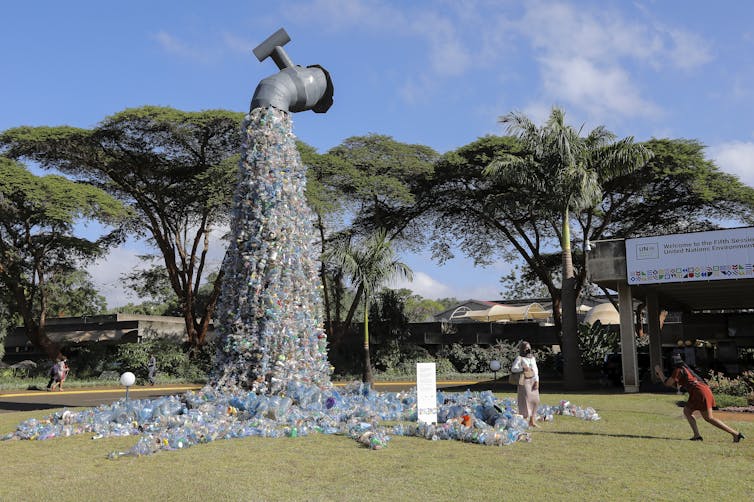
The UNEA is a gathering of all United Nations member states to discuss and adopt policies for tackling global environmental problems. It is the highest environmental decision-making body in the world. On Wednesday March 2 2022, ministers and representatives from 173 countries formally adopted a resolution to start negotiations for a legally binding agreement to end plastic pollution.
The three-day UNEA meeting brought countries together to discuss turning off the plastic tap. EPA-EFE/Daniel Irungu
Agreeing the mandate and focus of the negotiations is just the start. Before the end of 2024, the substance of the agreement will need to be thrashed out.
Take-away food and drink packaging is dumped in a public site in Thu Thiem New Urban Area in HCMC, May 2022. Photo by VnExpress/Quynh TranGarbage from take-away food and drinks make up 44 percent of plastic waste found at surveyed sites in Vietnam, according to the World Bank.
Plastic waste at both surveyed river and coastal sites across Vietnam came mostly from take-away-related sources.
Take-away related waste accounted for 43.6 percent in number and 35.1 percent in weight of the total plastic waste, followed by fisheries-related waste (32.6 percent in number and 30.6 percent in weight), and household-related waste (21.6 percent in number and 22.8 percent in weight), according to a World Bank report released this week.Total amount of plastic waste by source on surveyed sites in Vietnam2020-2021Take-away related wasteTake-away related wasteFisheries related waseFisheries related waseHousehold related wasteHousehold related wasteAgriculture related-wasteAgriculture related-wasteSanitary and medical related wasteSanitary and medical related wasteTake-away related waste●
Xu hướng gọi đồ ăn trực tuyến trong giai đoạn dịch COVID-19 làm gia tăng chóng mặt lượng rác thải nhựa, tạo áp lực nặng nề đến môi trường toàn cầu.
Theo thống kê của Bộ Tài nguyên và Môi trường, bình quân mỗi hộ gia đình sử dụng khoảng 1 kg túi nilon mỗi tháng. Lượng chất thải nhựa và túi nilon hiện tại chiếm khoảng từ 8 – 12% chất thải rắn sinh hoạt, nhưng chỉ có khoảng từ 11 – 12% trong số đó được xử lý tái chế. Số còn lại chủ yếu được chôn lấp, đốt và thải ra ngoài môi trường. Vậy đâu là giải pháp để xử lý rác thải nhựa thông minh và hiệu quả.
SYDNEY: Take a walk around Sydney’s city centre and chances are, it won’t take long before you find a recycling bin or a product made from recycled material.
While it may seem insignificant, it is a sign of how Australia’s packaging landscape is changing.
After years of largely neglecting the buildup of plastic waste in Earth’s environment, the U.N. Environment Assembly will meet in February and March in the hopes of drafting the first international treaty controlling global plastics pollution.
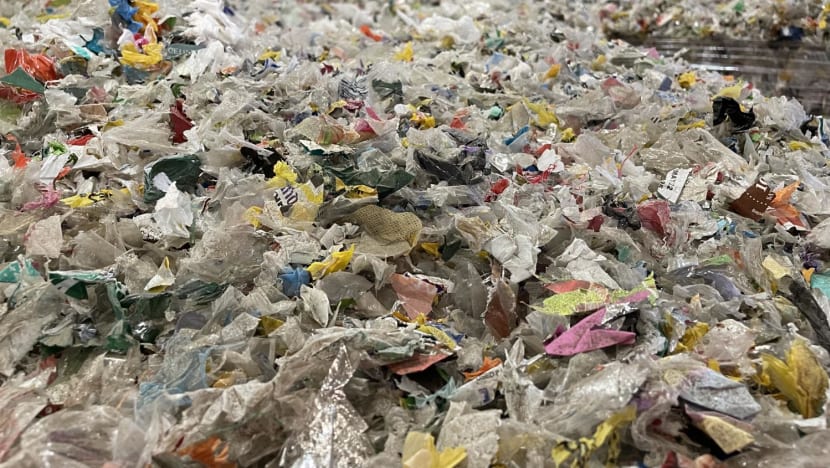
Discarded plastic is currently killing marine life, threatening food security, contributing to climate change, damaging economies, and dissolving into microplastics that contaminate land, water, the atmosphere and even the human bloodstream.
The U.N. parties will debate how comprehensive the treaty they write will be: Should it, for example, protect just the oceans or the whole planet? Should it focus mainly on reuse/recycling, or control plastics manufacture and every step of the supply chain and waste stream?
The U.S. has changed its position from opposition to such a treaty under President Donald Trump, to support under President Joe Biden, but has yet to articulate exactly what it wants in an agreement. While environmental NGOs are pushing for a comprehensive treaty, plastics companies, who say they support regulation, likely will want to limit the treaty’s scope.
At the end of February, the United Nations Environment Assembly (UNEA) will tackle a challenging task: the creation of a landmark treaty to control plastic pollution worldwide. While most nations have agreed to participate, the scope and timing of such an agreement aren’t settled, with many countries, environmental NGOs, and the plastics industry expressing widely different ideas as to what should be included.
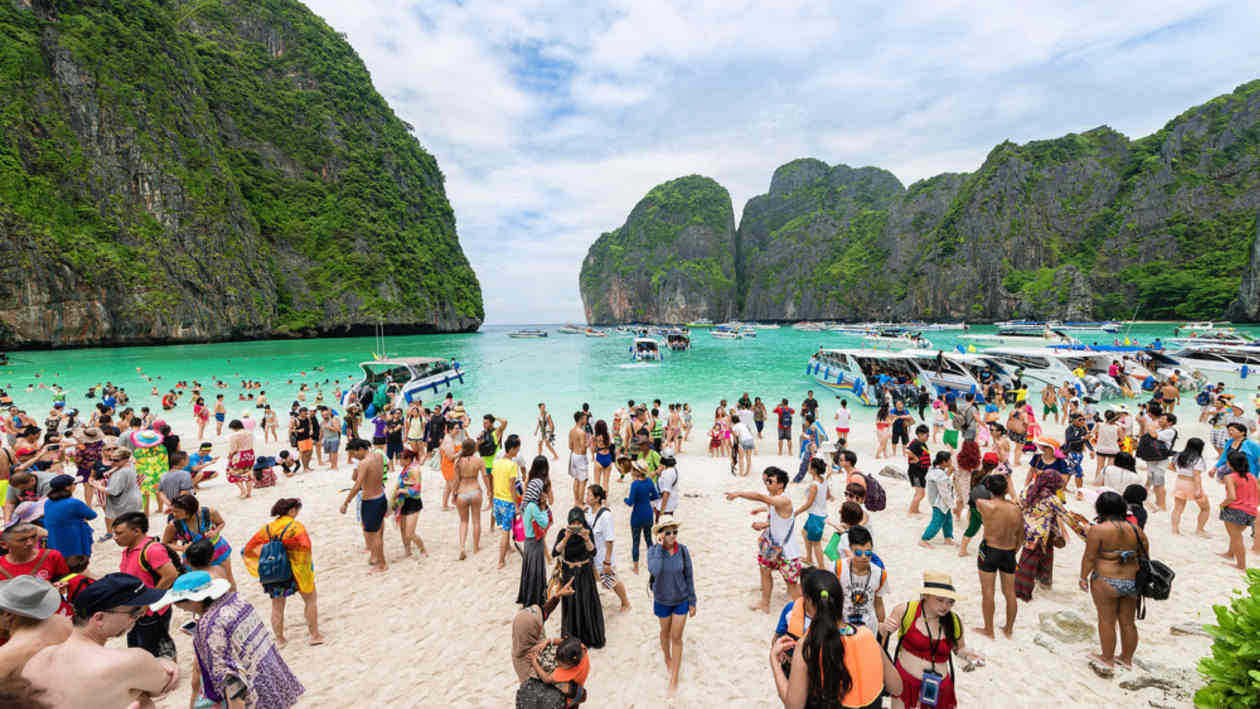
Từ Thái Lan đến Bali, khách du lịch – phần lớn đến từ Trung Quốc và các nền kinh tế đang phát triển nhanh chóng khác – đang gia tăng chóng mặt, đẩy các hệ sinh thái nhạy cảm đến điểm tan vỡ.
Một số quốc gia đang cố gắng kiểm soát sự bùng nổ, chẳng hạn như đóng cửa một vài điểm đến phổ biến để các khu vực bị thiệt hại được chữa lành.
Vịnh Maya ở Thái Lan thu hút 5.000 khách du lịch mỗi ngày trước khi chính phủ đóng cửa khu vực để hệ sinh thái phục hồi (Ảnh: Shutterstock)

/img/iea/3oOpZZzb6W/drainage-picture-2.jpg)




 CVD
CVD 