Chính thức đề xuất kiểm định khí thải xe máy từ năm 2027 ở Hà Nội và TPHCM

Laodong.vn

Bộ Nông nghiệp và Môi trường vừa chính thức kiến nghị về áp dụng lộ trình kiểm định khí thải xe máy.

Chính thức đề xuất kiểm định khí thải xe máy từ năm 2027 ở Hà Nội và TPHCM
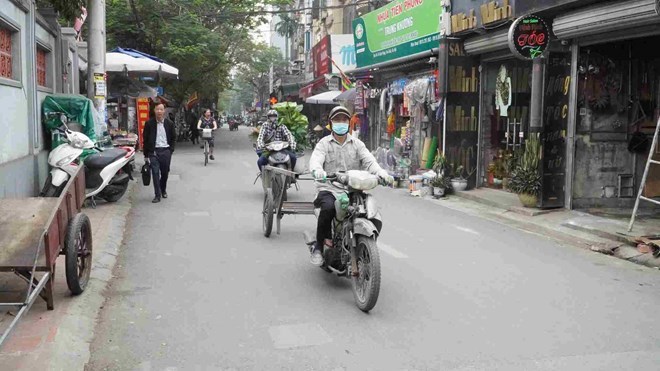
Hà Nội sẽ bắt đầu kiểm định khí thải xe máy từ 2027. Ảnh: Xuyên Đông

Bộ Nông nghiệp và Môi trường trình dự thảo Quyết định của Thủ tướng Chính phủ quy định lộ trình áp dụng quy chuẩn kỹ thuật quốc gia về khí thải xe mô tô, xe gắn máy 9 (xe máy) lưu hành ở Việt Nam.

Thời điểm bắt đầu thực hiện kiểm định khí thải xe máy đang lưu hành như sau:

Từ 1 tháng 1 năm 2027 đối với xe máy lưu hành trên địa bàn 2 thành phố trực thuộc Trung ương, gồm thành phố Hà Nội và Thành phố Hồ Chí Minh.

Từ 1 tháng 1 năm 2028 đối với xe máy lưu hành trên địa bàn 4 thành phố trực thuộc Trung ương còn lại, gồm thành phố Hải Phòng, thành phố Đà Nẵng, thành phố Cần Thơ và thành phố Huế.

Từ 1 tháng 1 năm 2030 đối với xe máy lưu hành trên địa bàn các tỉnh, thành phố còn lại. Tùy theo tình hình thực tế, các tỉnh, thành phố này có thể quy định áp dụng thời hạn sớm hơn.

Xe mô tô sản xuất trước năm 2008, áp dụng Mức 1 – Giới hạn lớn nhất cho phép của khí thải quy định tại Quy chuẩn kỹ thuật môi trường quốc gia về khí thải xe mô tô, xe gắn máy lưu hành ở Việt Nam.

Xe mô tô sản xuất từ năm 2008 đến năm 2016, áp dụng Mức 2 – Giới hạn lớn nhất cho phép của khí thải quy định tại Quy chuẩn kỹ thuật môi trường quốc gia về khí thải xe mô tô, xe gắn máy lưu hành ở Việt Nam.

Tiếp tục đọc “Chính thức đề xuất kiểm định khí thải xe máy từ năm 2027 ở Hà Nội và TPHCM”

China and Cambodia ink deal for massive canal project that has raised environmental concerns

thestar.com

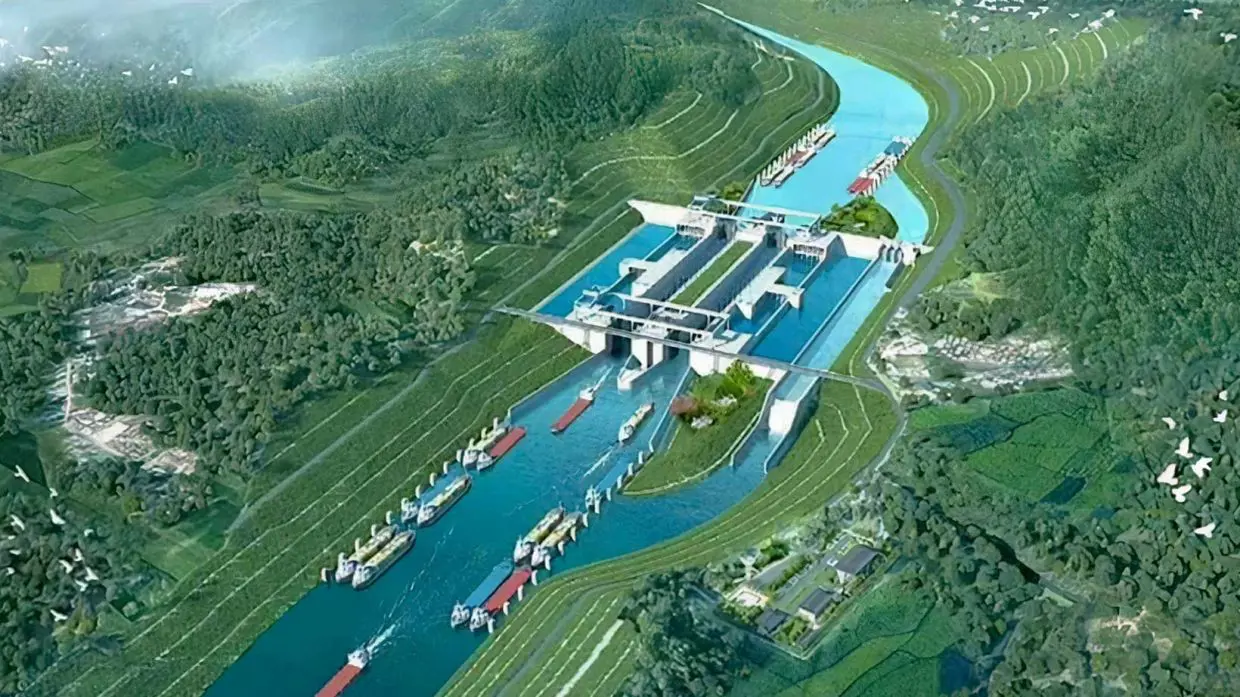
PHNOM PENH, Cambodia (AP): Cambodia and China have signed a US$1.2 billion deal to finance an ambitious canal project that aims to boost trade efficiency by linking a branch of the Mekong River near Phnom Penh to a port on the Gulf of Thailand, the Cambodian government agency heading the project has announced,

The deal to fund the Funan Techo Canal was signed Thursday during the state visit to Cambodia of Chinese President Xi Jinping, the agency said in a news release. Xi returned home Friday after a three-nation Southeast Asian tour that also included Vietnam and Malaysia.

Tiếp tục đọc “China and Cambodia ink deal for massive canal project that has raised environmental concerns”

China plans to build the world’s largest dam – but what does this mean for India and Bangladesh downstream?

theconversation.com

Published: April 8, 2025 5.33pm BST

Author Mehebub SahanaLeverhulme Early Career Fellow, Geography, University of Manchester

China recently approved the construction of the world’s largest hydropower dam, across the Yarlung Tsangpo river in Tibet. When fully up and running, it will be the world’s largest power plant – by some distance.

Yet many are worried the dam will displace local people and cause huge environmental disruption. This is particularly the case in the downstream nations of India and Bangladesh, where that same river is known as the Brahmaputra.

The proposed dam highlights some of the geopolitical issues raised by rivers that cross international borders. Who owns the river itself, and who has the right to use its water? Do countries have obligations not to pollute shared rivers, or to keep their shipping lanes open? And when a drop of rain falls on a mountain, do farmers in a different country thousands of miles downstream have a claim to use it? Ultimately, we still don’t know enough about these questions of river rights and ownership to settle disputes easily.

The Yarlung Tsangpo begins on the Tibetan Plateau, in a region sometimes referred to as the world’s third pole as its glaciers contain the largest stores of ice outside of the Arctic and Antarctica. A series of huge rivers tumble down from the plateau and spread across south and south-east Asia. Well over a billion people depend on them, from Pakistan to Vietnam.

Tiếp tục đọc “China plans to build the world’s largest dam – but what does this mean for India and Bangladesh downstream?”

Thượng nguồn suối du lịch Đà Nẵng bị cày xới vì nạn khai thác cát trộm

tuoitre.vn THANH NGUYÊN

Tại khu vực thượng nguồn sông Cu Đê (Đà Nẵng), một đoạn sông Bắc đang bị những kẻ trộm cát cày xới, xâm hại đến cảnh quan và môi trường tự nhiên.

Thượng nguồn suối du lịch Đà Nẵng bị cày xới vì nạn khai thác cát trộm - Ảnh 1.
Hình ảnh tại hiện trường bãi khai thác cát trái phép ở một đoạn sông Bắc (xã Hòa Bắc, huyện Hòa Vang, Đà Nẵng) – Ảnh: THANH NGUYÊN

Xe múc, phương tiện âm thầm đào trộm cát

Xã Hòa Bắc (huyện Hòa Vang) đang được xây dựng thành điểm du lịch sinh thái ở Đà Nẵng với nhiều con suối trong lành. Vào mùa hè, dòng sông Cu Đê và những con suối nằm ở thượng nguồn như sông Bắc thu hút đông đảo người dân và du khách đến vui chơi, nghỉ mát.

Tuy nhiên, một đoạn sông Bắc đang bị “cày xới” bởi các đối tượng khai thác cát lậu.

00:01:44

Xe múc đào trộm cát trên thượng nguồn sông Cu Đê ở Đà Nẵng, chính quyền nói gì? – Video: THANH NGUYÊN

Theo ghi nhận của Tuổi Trẻ Online, tình trạng khai thác cát trái phép ở khu vực này đã diễn ra được một thời gian.

Trước đó vào tháng 8-2024, phóng viên ghi nhận nhiều người đã đưa máy móc, xe tải tiến về khu vực sông Bắc (phía trên vũng Bọt) để múc trộm cát.

Các hoạt động khai thác cát trái phép này thường diễn ra vào ban đêm hoặc rạng sáng để tránh bị lực lượng chức năng phát hiện.

Theo ghi nhận, khoảng 22h, một người lái xe tải chở theo máy xúc tiếp cận đến điểm khai thác. Người này nhanh chóng xúc cát đổ đầy thùng xe tải dưới ánh sáng lờ mờ của chiếc đèn pin.

Đà Nẵng - Ảnh 2.
Hình ảnh khai thác cát trái phép trong đêm – Ảnh: THANH NGUYÊN

Trước khi chở cát rời đi, người này gom cát lại thành đống để thuận tiện cho việc khai thác lần tiếp theo.

Sau một thời gian, các hoạt động khai thác tạm ngưng khi nước suối dâng cao vào mùa mưa cuối năm 2024. Tuy nhiên, thời gian gần đây, việc khai thác cát trộm tái diễn ở khu vực này. Các đối tượng tiếp tục tuồn đi nhiều m3 cát, sỏi dọc bờ suối.

Hậu quả để lại là một đoạn bờ suối bị cày xới, biến dạng, nguy cơ làm thay đổi dòng chảy và tiềm ẩn nhiều nguy cơ sạt lở vào mùa mưa.

Tiếp tục đọc “Thượng nguồn suối du lịch Đà Nẵng bị cày xới vì nạn khai thác cát trộm”

Are Dire Wolves Really Back? Nope.

Have researchers really ‘de-extincted’ the dire wolf? No, but behind the hype was a genuine breakthrough

theguardian.com

Helen Pilcher

Helen Pilcher

The pups are cute – and great for PR – but they’re modified grey wolves. The real work is being done with their red cousinsThu 10 Apr 2025 15.50 BSTShare109

I’ve been waiting for this. Ever since researchers almost brought a wild goat species back from extinction in 2003, it was only a matter of time until someone came forward and said they had successfully “de-extincted” a species. Now, it has happened.

This week, American biotech company Colossal Biosciences announced it had resurrected the dire wolf, an animal that went extinct at the end of the last ice age. Colossal released a video that invited viewers to “experience the first dire wolf howls heard in over 10,000 years”.

But these are not dire wolf howls, and these are not dire wolves. To make the pups, scientists edited the DNA inside grey wolf cells to make it more dire wolf-like. Twenty changes were made to 14 different genes involved in coat colour, body size and skull shape. Then the cells were used for cloning.

Tiếp tục đọc “Are Dire Wolves Really Back? Nope.”

Paris said au revoir to cars. Air pollution maps reveal a dramatic change.

msn.com

Over the past 20 years, Paris has undergone a major physical transformation, trading automotive arteries for bike lanes, adding green spaces and eliminating 50,000 parking spaces.

Part of the payoff has been invisible — in the air itself.

Airparif, an independent group that tracks air quality for France’s capital region, said this week that levels of fine particulate matter (PM 2.5) have decreased 55 percent since 2005, while nitrogen dioxide levels have fallen 50 percent. It attributed this to “regulations and public policies,” including steps to limit traffic and ban the most polluting vehicles.Paris said au revoir to cars. Air pollution maps reveal a dramatic change.

Paris said au revoir to cars. Air pollution maps reveal a dramatic change.

Air pollution heat maps show the levels of 20 years ago as a pulsing red — almost every neighborhood above the European Union’s limit for nitrogen dioxide, which results from the combustion of fossil fuels. By 2023, the red zone had shrunk to only a web of fine lines across and around the city, representing the busiest roads and highways.

One year of global plastic waste visualized

voronoi.com

One year of global plastic waste visualized

The Data

Over 400 million tonnes of plastic was projected to be wasted in 2024 according to an OECD report from 2020. Further, plastic waste is expected to nearly triple worldwide by 2060, with half of all waste expected to be in landfill while less than one-fifth of it will be recycled.

Unbelievably, if all this plastic waste were put in a kitchen bin and scaled up uniformly, this would double the height of the Burj Khalifa.

Dataset

CategoryWeight of Waste (Millions of Tonnes)
Other67.7
Construction/Electronics37.5
Textiles42.9
Vehicles47.9
Consumer Products47
Packaging155.9

Data sources

OECD, Statista

https://www.oecd.org/en/publications/policy-scenarios-for-eliminating-plastic-pollution-by-2040_76400890-en/full-report.html

https://www.statista.com/chart/32385/global-plastic-waste-production-by-application/

Vietnam and China partner on wildlife-friendly traditional medicine practices


Mongabay.com

Vietnam and China, the two largest markets for traditional medicine (TM) that uses wild plants and animals, announced a new partnership in January to adopt practices that protect wildlife while preserving the countries’ cultural heritage.

The first-of-its-kind agreement involved leading TM associations from Vietnam and China — the Vietnam Oriental Traditional Medicine Association (VOTMA) and the China Association of Traditional Chinese Medicine (CATCM) — along with researchers, policymakers and pharmaceutical leaders. TRAFFIC, an international NGO monitoring illegal wildlife trade, facilitated it.

The partnership aims to explore “several sustainable practices to make traditional medicine more conservation-friendly,” said TRAFFIC Vietnam director Trinh Nguyen in a statement to Mongabay. She said these include encouraging practitioners to switch to legal, sustainable and cultivated plant-based alternatives, and eliminating illegal wildlife ingredients in prescriptions.

Historical TM practices in the two countries have incorporated wildlife-derived ingredients, including those from threatened species, such as tiger bonespangolin scalesrhino horns and bear bile. While many such ingredients are legal to trade inside China, the wildlife parts are often sourced from other countries to meet domestic demand. Many of the threatened species are, however, listed on CITES Appendix I, making the international trade in their parts illegal. As TM becomes popular globally, conservationists worry about its impact on wildlife.

Tiếp tục đọc “Vietnam and China partner on wildlife-friendly traditional medicine practices”

Plastic is choking the Mekong River

themekongeye.com By Anton L. Delgado 20 January 2025 at 10:54

Plastic is now ubiquitous in the Mekong, Asia’s Mother of Rivers, and experts and local people are struggling to contain the risks to human health, biodiversity and livelihoods

ILLUSTRATION: Sunhee Park / Dialogue Earth

On Sơn Island in Viet Nam’s Mekong Delta, Le Trung Tin scatters fish feed into his ponds, where dozens of snakehead fish leap through the surface in synchronized bursts. “I taught them how to do that,” he says proudly, tossing another handful of feed at his fish.

The scene looks idyllic, but Le’s fish farm is a reluctant response to an escalating crisis. For decades, he made his living fishing the Hậu River, a distributary of the Mekong. But in recent years, plastic waste clogged his nets and strangled the fish. “I had no choice but to stop,” he says. “Everything was tangled – trash, nets, even the fish themselves. It was hopeless.”

Now, Le relies on enclosed ponds using filtered water to keep his fish alive. “I built this ecological environment free of plastic waste, chemical spills and [protected it from] extreme weather,” he says.

https://player.vimeo.com/video/1037846174?dnt=1&app_id=122963VIDEO: Anton L. Delgado/Dialogue Earth

Le’s experience reflects the wider challenges facing the Mekong. Stretching over 4,300 kilometres from the Tibetan Plateau to the South China Sea, the river supports nearly 70 million people and some of the world’s most biodiverse ecosystems. Yet, it is one of the most plastic-polluted rivers in the world and among the 10 rivers in Asia that carry the vast majority of plastic to the sea. The Mekong dumps – by some estimates – tens of thousands of tonnes each year into the ocean, with plastic waste accumulating along its banks, tributaries and lakes.

Plastic enters the Mekong in myriad ways – agricultural runoff, unregulated dumping and a flood of single-use packaging from upstream countries like China and Myanmar. It accumulates in hotspots like Tonle Sap Lake in Cambodia and the wetlands of Vietnam’s Mekong Delta, where this plastic waste threatens biodiversity, food security and human health.

Plastics and other waste scattered along the riverbank
Plastics and other waste accumulate along the riverbank near the city of Can Tho in Vietnam’s Mekong Delta region. PHOTO: Anton L. Delgado / Dialogue Earth

Tiếp tục đọc “Plastic is choking the Mekong River”

Fruits of spoil: Laos’ forests disappearing as fruit farms flourish (2 parts)

Fruits of spoil: Laos’ forests disappearing as fruit farms flourish

Mekong eyes – 16 December 2024 at 9:27 (Updated on 16 December 2024 at 15:40)

The country’s improved railway connectivity facilitates fruit exports to China but has also sparked a boom in foreign-owned banana and durian farms, leading to forest clearance

A Chinese-owned banana plantation on land that was once forested, located in Attapeu province, southern Laos, in August 2024.

The report was produced with support from the Pulitzer Center’s Rainforest Investigations Network (RIN) and Internews’ Earth Journalism Network as part of the “Ground Truths” collaborative reporting project on soils. 

ATTAPEU, LAOS — The new high-speed railway has enabled faster fruit exports from Laos to China, attracting more investment in large-scale plantations. However, this growth has come at the cost of deforestation.

Bananas and the “king of tropical fruit” – durians – are very popular in China, but they typically ripen within a few days of harvesting.

However, that problem was resolved with the launch of the Laos-China Railway in 2021, which has enabled landlocked Laos to deliver its fruit quickly to China’s 1.4 billion consumers.

Tiếp tục đọc “Fruits of spoil: Laos’ forests disappearing as fruit farms flourish (2 parts)”

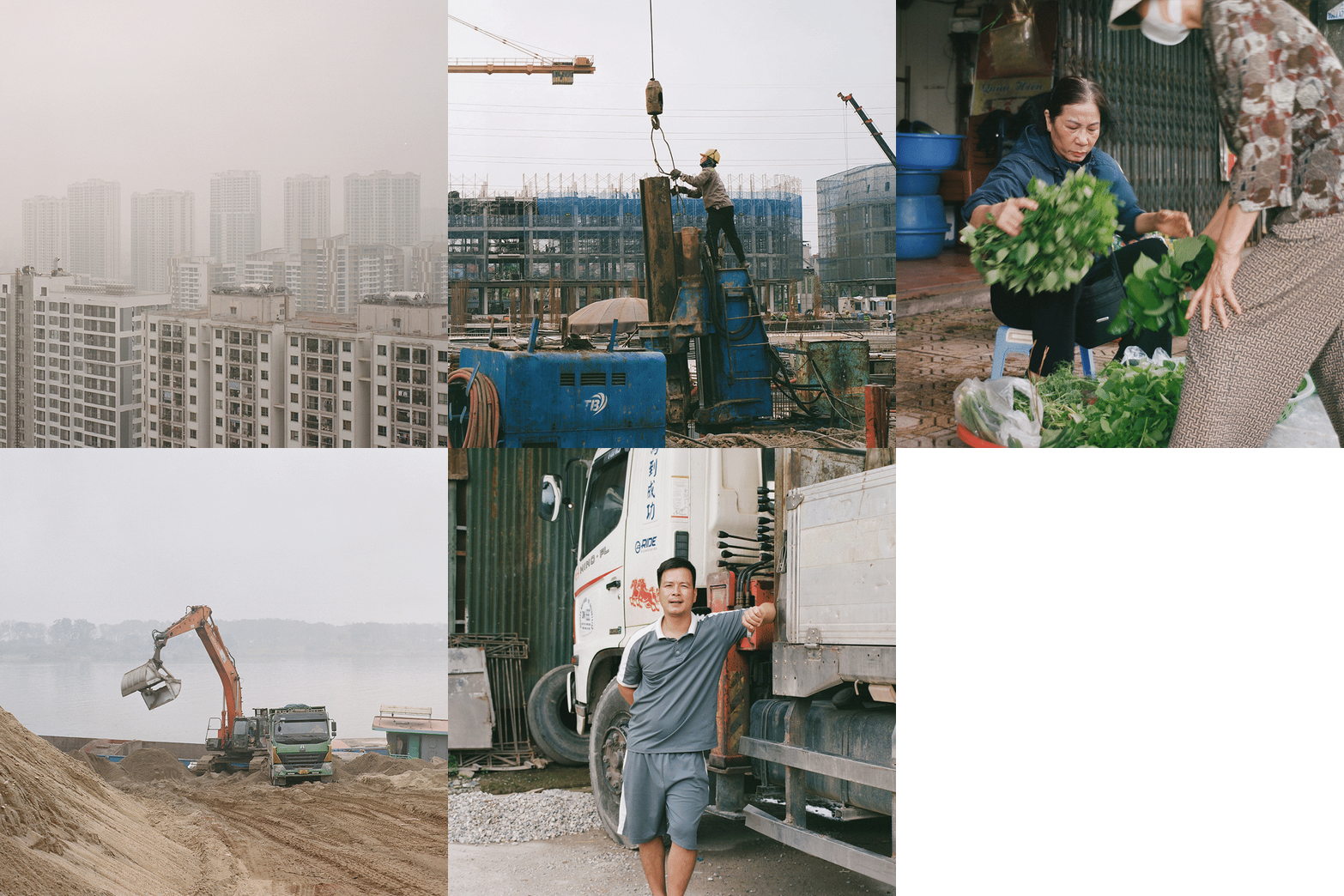
Hanoi becomes world’s most polluted city

South China Morning Post – 13-2-2025

The Vietnamese capital Hanoi has taken the top spot for air pollution among global cities, according to the Air Quality Index (AQI) operated by leading air-quality technology company IQAir on February 12, 2025. Persistent smog has residents and tourists alike worried about whether the hazardous air may be causing long-term damage to human health.

Ancient town leads waste management in central Việt Nam

VNN – December 31, 2024 – 18:43

The ancient town has become a trailblazer in terms of waste management, waste separation at source, volume-based waste fees and a reduction in the use of plastic.

Local residents in Hội An began waste classification at source as a practical method of reducing the amount of rubbish heading to landfill. Photo courtesy of IUCN

HỘI AN – The ancient town of Hội An has become a trailblazer in waste management, leading the way in waste separation at source and tackling the over reliance on plastic.

Hội An has also introduced volume-based waste fees and established a Material Recycling Facility for organic waste collection.

The environmentally-friendly solutions have been instilled into the thinking of the local community so they are now something routine for residents and businesses, following a four-year pilot project of the initiatives.

Tiếp tục đọc “Ancient town leads waste management in central Việt Nam”