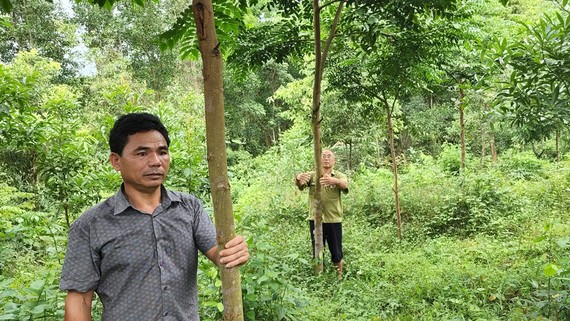
Từng là người chặt gỗ trong các cánh rừng miền tây Quảng Bình, ông Nguyễn Đức Sự (ở thôn Tân Tiến, xã Cao Quảng, huyện Tuyên Hóa, tỉnh Quảng Bình) không nghĩ có ngày trở thành người giảng dạy cho nông dân nhiều vùng trồng rừng bằng chính kiến thức của mình học được. Không những thế, ông còn trở thành nhà thực vật thực thụ khi tiến hành ươm mầm gần 2.500 loài thực vật có hạt từ các cánh rừng quê ông.
Một góc rừng lim 3 năm tuổi do ông Sự ươm trồng tại xã Cao Quảng, huyện Tuyên Hóa, Quảng Bình
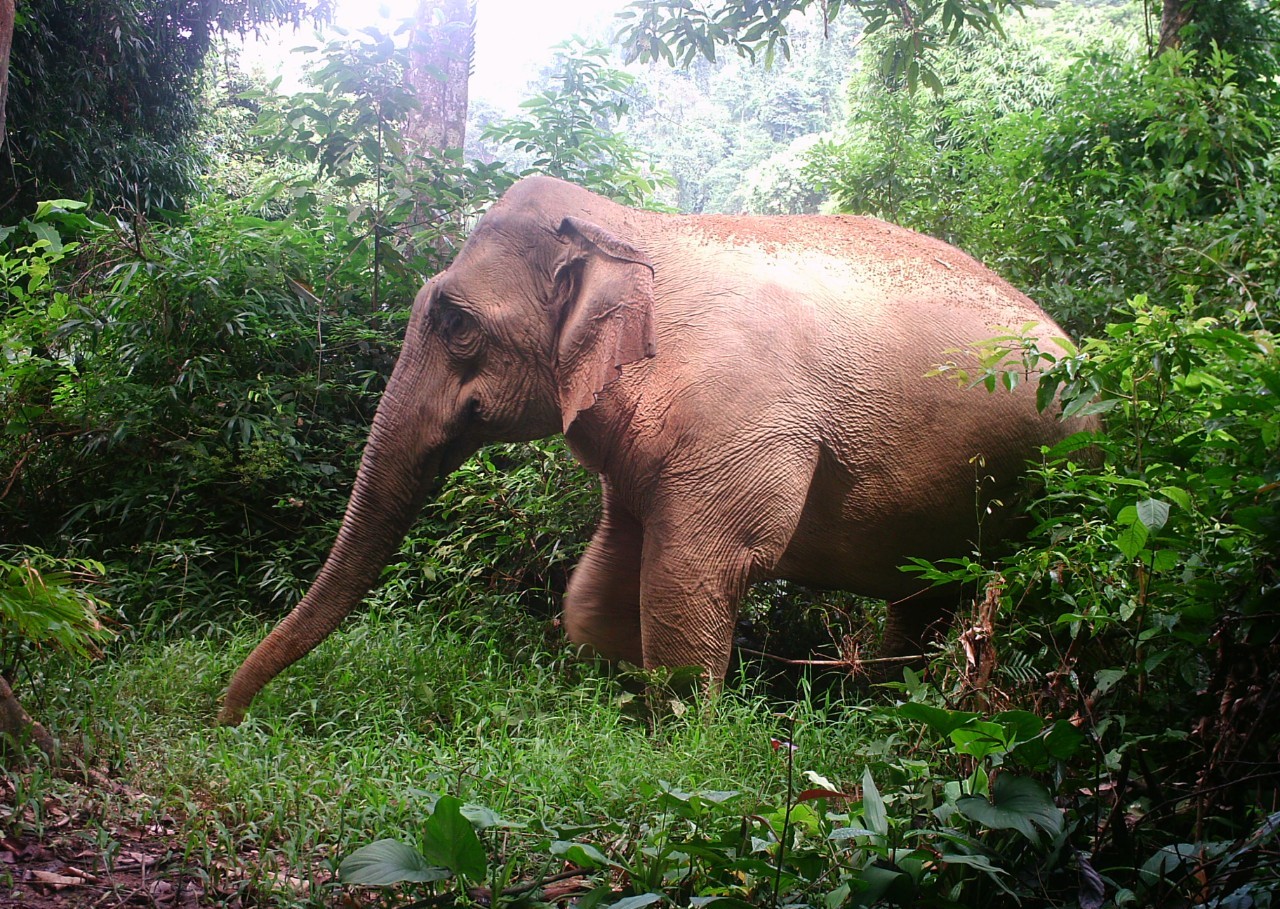
TTO – Ở Nghệ An, số voi tự nhiên nhiều thứ ba cả nước. Nhưng nhiều đàn voi trong số này là “đàn đơn lẻ”, chỉ còn một con sống đơn độc. Chúng thường xuyên về khu dân cư, xung đột với người, tàn phá hoa màu khiến chính quyền đau đầu tìm giải pháp.
Con voi rừng đơn độc ở Pù Mát – Ảnh: Vườn quốc gia Pù Mát cung cấp
Suốt nhiều năm qua, người dân hai xã Bắc Sơn và Nam Sơn (huyện Quỳ Hợp) đã làm đủ cách để ngăn voi rừng về phá hoại nhưng không hiệu quả.
Voi rừng về bản
Nhiều tháng nay, bà Lương Thị Danh (57 tuổi, bản Tăng, xã Nam Sơn, huyện Quỳ Hợp) thường mất ngủ vì bị voi rừng về quấy phá. Chỉ riêng tháng 8, con voi cái này đã năm đêm “thăm” nhà bà Danh, làm cuộc sống gia đình bà bị đảo lộn.
Mỗi lần voi rừng về, nhà bà Danh phải tất bật hô hào, đốt lửa, gõ chiêng xua đuổi. Tuy nhiên, con voi rừng cũng ngày càng dạn hơn. Lần gần nhất nó về, đã… trộm mất hũ măng chua nặng hơn 5kg bà Danh muối chưa kịp ăn. “Hôm đó, tôi để hũ măng ngoài hiên. Nó hay về nhà tôi, lục tung để trộm đồ ăn, cái gì để ở ngoài nhà mà trong tầm với nó là nó ăn hết mà đặc biệt là những thứ có chất mặn”, bà Danh kể. Những bụi chuối xung quanh nhà bà Danh giờ cũng chỉ còn lại phần gốc.
Hồ Tây ở Hà Nội và Hồ Tây ở Hằng Châu (Trung Quốc) tương đồng về quy mô, hình thế, công năng văn hóa. Nhưng Hồ Tây ở Hằng Châu đã trở thành Di sản văn hóa thế giới, đại chúng cùng được thụ hưởng, trong khi Hồ Tây ở Hà Nội có nguy cơ thành “vùng bất động sản khủng của các doanh nghiệp”.
Trong khu vực các nước đồng văn, có rất nhiều hồ mang tên Hồ Tây. Trung Quốc có 36 Hồ Tây, Nhật Bản có một Hồ Tây (ở huyện Yamanashi) và Việt Nam có một Hồ Tây tại thủ đô Hà Nội. Không chỉ cùng tên, tất cả các Hồ Tây kể trên còn mang một đặc điểm chung rất quan trọng: đều là nơi hội tụ, ghi dấu của thơ ca, truyền thuyết và tín ngưỡng dân gian.
Nổi tiếng nhất trong số đó, phải kể đến Hồ Tây ở Hằng Châu (Trung Quốc) và Hồ Tây tại Hà Nội với nhiều điểm tương đồng mà chúng tôi sẽ lần lượt nêu ra.
Hồ Tây và thành phố Hằng Châu nhìn từ trên cao. Ảnh tư liệu Đinh Thế Anh
New data on forest fires confirms what we’ve long feared: Forest fires are becoming more widespread, burning nearly twice as much tree cover today as they did 20 years ago.
Using data from a new study by researchers at the University of Maryland, we calculated that forest fires now result in 3 million more hectares of tree cover loss per year compared to 2001 — an area roughly the size of Belgium — and accounted for more than a quarter of all tree cover loss over the past 20 years.
Indian Roots of the Term Speak of a History of Non-Violent Resistance
The first tree huggers were 294 men and 69 women belonging to the Bishnois branch of Hinduism, who, in 1730, died while trying to protect the trees in their village from being turned into the raw material for building a palace. They literally clung to the trees, while being slaughtered by the foresters. But their action led to a royal decree prohibiting the cutting of trees in any Bishnoi village.
Photo courtesy Waging NonviolenceThe Chipko movement (which means “to cling”) started in the 1970s when a group of peasant women in Northern India threw their arms around trees designated to be cut down.
Show the slightest bit of concern for the environment and you get labeled a tree hugger. That’s what poor Newt Gingrich has been dealing with recently, as the other presidential candidates attack his conservative credentials for having once appeared in an ad with Nancy Pelosi in support of renewable energy. Never mind that he has since called the ad the “biggest mistake” of his political career and talked about making Sarah Palin energy secretary. Gingrich will be haunted by the tree hugger label the rest of his life. He might as well grow his hair out, stop showering and start walking around barefoot.
But is that what a tree hugger really is? Just some dazed hippie who goes around giving hugs to trees as way to connect with nature. You might be shocked to learn the real origin of the term.
The first tree huggers were 294 men and 69 women belonging to the Bishnois branch of Hinduism, who, in 1730, died while trying to protect the trees in their village from being turned into the raw material for building a palace. They literally clung to the trees, while being slaughtered by the foresters. But their action led to a royal decree prohibiting the cutting of trees in any Bishnoi village. And now those villages are virtual wooded oases amidst an otherwise desert landscape. Not only that, the Bishnois inspired the Chipko movement (chipko means “to cling” in Hindi) that started in the 1970s, when a group of peasant women in the Himalayan hills of northern India threw their arms around trees designated to be cut down. Within a few years, this tactic, also known as tree satyagraha, had spread across India, ultimately forcing reforms in forestry and a moratorium on tree felling in Himalayan regions.
Cambodia’s Metta forest has been devastated by deforestation as the government gives away land to the elite, with villagers’ protests quashed by violence
Sri Lanka continues to face the brunt of the worst economic crisis in the country’s history, with depleted foreign reserves resulting in acute fuel shortages nationwide.
The shortages and limited rations are affecting conservation efforts, including the timely treatment of wild animals, regular patrolling to thwart poaching, and mitigation actions to limit human-elephant conflict.
Fuel allocations for the wildlife conservation department have been halved, and both wildlife and forest officials say this has made operations extremely difficult.
The threat of forest fires also looms as the dry season gets underway, which typically calls for more patrols to prevent burning by poachers and forest encroachers.
COLOMBO — Anyone who’d ever seen Maheshakya in the wildernesses of Kebithigollewa in Sri Lanka’s North Central province agreed that, as elephants went, he was an exemplary specimen with large tusks. Earlier this year, he got into a fight with another elephant, which left Maheshakya seriously wounded. As he lay in pain, still alive and conscious, a poacher cut off one of his tusks. Twenty days later, Maheshakya was dead.
In the time since Maheshakya had suffered his injuries during the fight, veterinarians from the Department of Wildlife Conservation (DWC) were able to check on him just twice. Before this year, Maheshakya would have received many more visits, possibly preventing the loss of his tusk and subsequent death. But Sri Lanka’s ongoing economic crisis, the worst in the country’s history, meant that was not to be.
“If we had more opportunity to treat the elephant and visit frequently, there was a chance of saving his life. But we did not have fuel in our vehicles to make this journey regularly,” said Chandana Jayasinghe, a wildlife veterinary surgeon at the DWC.
Sri Lanka has declared bankruptcy and lacks foreign reserves to import essential goods for its people, such as medicine, fuel and gas. Kilometers-long lines at gas stations have become a permanent scene throughout the country, and although a rationing system is helping shorten the wait times, what little fuel is available isn’t enough for wildlife officials to do their regular work. This leaves response teams, like the one Jayasinghe works on, often unable to go out on rescue missions.
The Attidiya Wildlife Rehabilitation Centre in Colombo receives several calls a day regarding injured animals, but has been forced to reduce operations due to fuel being in short supply. Image courtesy of the Attidiya Wildlife Rehabilitation Center.
The flow of plastic entering the ocean is expected to double by 2040. To prevent this tsunami of difficult-to-decompose waste, experts have proposed a global treaty which could oblige all nations to reduce how much plastic they produce and emit to the environment.
At a recent meeting of the United Nations Environment Assembly (UNEA) in Nairobi, Kenya, ministers and representatives from 173 countries agreed on the terms for negotiating such a treaty over the next two years.
Is this the turning point for plastic pollution the world needs? And how will it work? We asked Steve Fletcher, a professor of ocean policy and economy at the University of Portsmouth and an advisor to the UN Environment Prograamme on plastic.
What has actually been agreed in Nairobi?
The UNEA is a gathering of all United Nations member states to discuss and adopt policies for tackling global environmental problems. It is the highest environmental decision-making body in the world. On Wednesday March 2 2022, ministers and representatives from 173 countries formally adopted a resolution to start negotiations for a legally binding agreement to end plastic pollution.
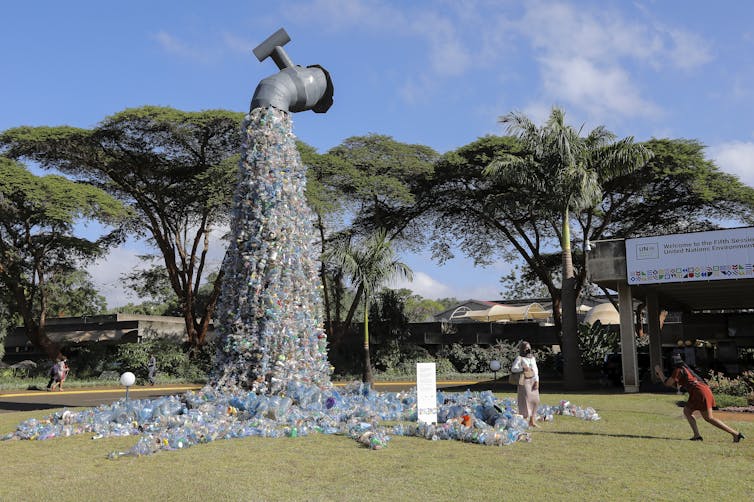
The three-day UNEA meeting brought countries together to discuss turning off the plastic tap. EPA-EFE/Daniel Irungu
Agreeing the mandate and focus of the negotiations is just the start. Before the end of 2024, the substance of the agreement will need to be thrashed out.
when it comes to the Paris Agreement and climate action; namely that when individuals change their behaviour by consuming differently they can drive industries to change, as those industries are then caught between a ‘greening’ consumer demand and international and governmental policies focusing on climate action.
Back in the 1980s, everyone was talking about the hole in the ozone layer, so what happened, and what can the international agreement to ban CFCs teach us about the importance of multilateral cooperation when it comes to climate action?
What exactly is the ozone layer?
The ozone layer is the part of the Earth’s atmosphere that protects the planet from ultraviolet radiation. It’s found in the Stratosphere which is around 10-50km above the surface of the earth. Think of it as a layer of sunscreen that protects us from all manner of harmful rays. Without it, life on Earth would be extremely unpleasant.
Green water – the rainwater available to plants in the soil – is indispensable for life on and below the land. But in a new study, we found that widespread pressure on this resource has crossed a critical limit.
The planetary boundaries framework – a concept that scientists first discussed in 2009 – identified nine processes that have remained remarkably steady in the Earth system over the last 11,700 years. These include a relatively stable global climate and an intact biosphere that have allowed civilisations based on agriculture to thrive. Researchers proposed that each of these processes has a boundary that, once crossed, puts the Earth system, or substantial components of it, at risk of upset.
Eight-year-old Chelsea Symonds carries a bucket of collected rainwater in her family’s yard in the drought-affected town of Murrurundi, New South Wales, Australia, on February 17, 2020.
TTCT – Dùng muối mỏ, dầu hỏa, thuốc diệt cỏ, bao nilông, đốt lửa… là vài cách phổ biến nhất trong 1.001 cách “giết” một cái cây đang được nhiều website hướng dẫn công khai trên mạng. Tỉ mỉ đến cả quy trình giết cây, từ cây non tới cổ thụ, sao cho kín đáo và hiệu quả nhất, lại khó bị phát hiện. Ở Lâm Đồng, hàng ngàn cây thông đã bị giết theo cách ấy. Thoạt tiên là vài cây thông lẻ nhưng sau 10 năm, hơn 90 ngàn hecta rừng đã biến mất.
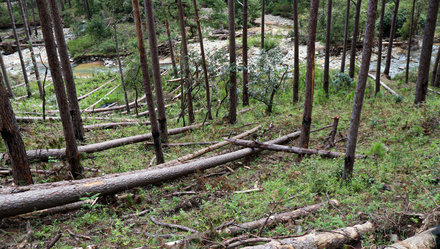
Rừng phòng hộ đầu nguồn Đa Nhim (huyện Lạc Dương, tỉnh Lâm Đồng) bị phá, thông nằm la liệt (Ảnh: Mai Vinh)
Tổng cục Lâm nghiệp (Bộ Nông nghiệp và phát triển nông thôn) đã tiến hành kiểm kê rừng trên địa bàn tỉnh Lâm Đồng và công bố kết quả vào các năm 2016, 2018.
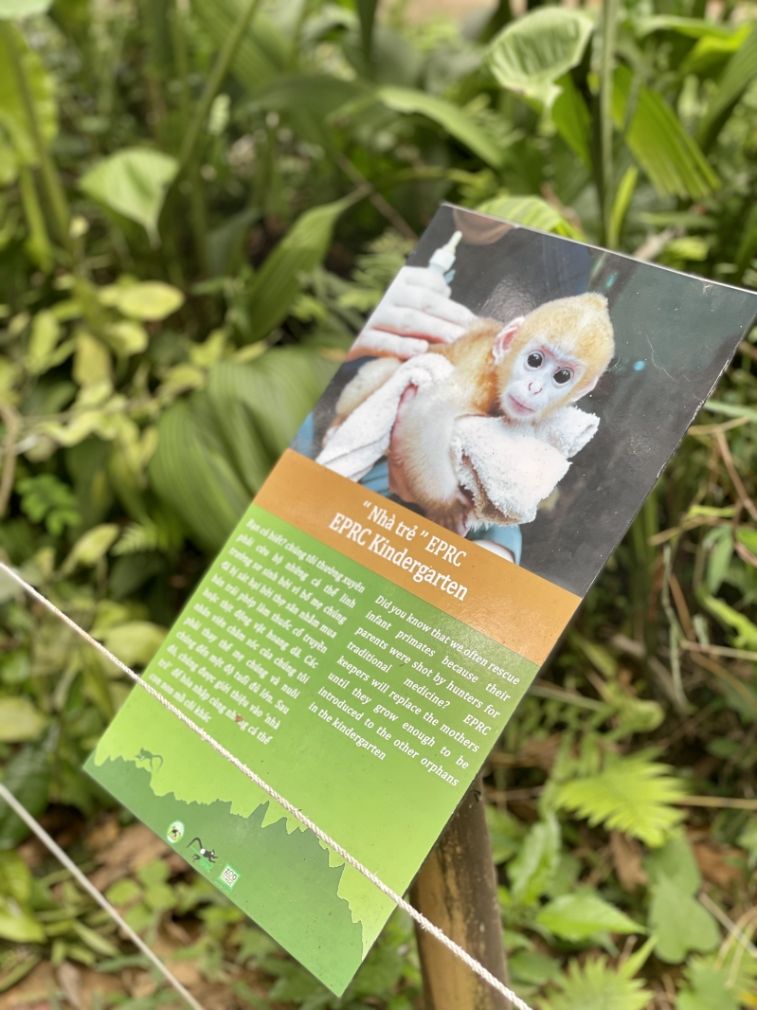
Gần đây, giới trẻ rộ lên trend (xu hướng) nuôi động vật hoang dã như thú cưng. Nhưng bạn có biết rằng, nuôi động vật hoang dã khiến cho nhiều loại thú đứng bên bờ vực tuyệt chủng và thế giới tự nhiên mất cân bằng nghiêm trọng?
Trung tâm Cứu hộ linh trưởng (EPRC) Vườn quốc gia Cúc Phương gọi nơi ở của các linh trưởng được cứu về các hoạt động buôn bán trái phép là “Nhà trẻ EPRC”.
Take-away food and drink packaging is dumped in a public site in Thu Thiem New Urban Area in HCMC, May 2022. Photo by VnExpress/Quynh TranGarbage from take-away food and drinks make up 44 percent of plastic waste found at surveyed sites in Vietnam, according to the World Bank.
Plastic waste at both surveyed river and coastal sites across Vietnam came mostly from take-away-related sources.
Take-away related waste accounted for 43.6 percent in number and 35.1 percent in weight of the total plastic waste, followed by fisheries-related waste (32.6 percent in number and 30.6 percent in weight), and household-related waste (21.6 percent in number and 22.8 percent in weight), according to a World Bank report released this week.Total amount of plastic waste by source on surveyed sites in Vietnam2020-2021Take-away related wasteTake-away related wasteFisheries related waseFisheries related waseHousehold related wasteHousehold related wasteAgriculture related-wasteAgriculture related-wasteSanitary and medical related wasteSanitary and medical related wasteTake-away related waste●
Xu hướng gọi đồ ăn trực tuyến trong giai đoạn dịch COVID-19 làm gia tăng chóng mặt lượng rác thải nhựa, tạo áp lực nặng nề đến môi trường toàn cầu.
Theo thống kê của Bộ Tài nguyên và Môi trường, bình quân mỗi hộ gia đình sử dụng khoảng 1 kg túi nilon mỗi tháng. Lượng chất thải nhựa và túi nilon hiện tại chiếm khoảng từ 8 – 12% chất thải rắn sinh hoạt, nhưng chỉ có khoảng từ 11 – 12% trong số đó được xử lý tái chế. Số còn lại chủ yếu được chôn lấp, đốt và thải ra ngoài môi trường. Vậy đâu là giải pháp để xử lý rác thải nhựa thông minh và hiệu quả.






 CVD
CVD 