Việt Nam là quốc gia có tốc độ tăng
trưởng kinh tế vượt bậc trong suốt
ba thập kỷ vừa qua và là trọng tâm
trong danh mục đầu tư của các chính
phủ nước ngoài và đa phương. Tuy
nhiên, trong những năm vừa qua,
tăng trưởng kinh tế đã kèm theo sự
gia tăng đáng kể trong tiêu dùng, từ
đó dẫn đến phát sinh một lượng lớn
chất thải. Ước tính hàng năm Việt
Nam phát sinh khoảng 3,7 triệu tấn
chất thải nhựa sau sử dụng, con số
này tăng khoảng 6,2% mỗi năm. Mặc
dù, Chính phủ, ngành và tổ chức xã
hội dân sự đã đưa ra những cam kết
mạnh mẽ nhằm quản lý lượng chất
thải này, tình trạng rò rỉ chất thải
nhựa ra môi trường nước dự đoán sẽ
tiếp tục tăng khoảng 106% trong giai
đoạn từ năm 2008 đến năm 2030,
tương đương từ 182.000 tấn đến
373.000 tấn mỗi năm.
Năm 2019, Chính phủ Việt Nam đã
bắt đầu hợp tác với Chương trình Đối
tác Hành động Toàn cầu về Nhựa
(GPAP), một nền tảng đa chủ thể do
Diễn đàn Kinh tế Thế giới (WEF) khởi
xướng. Đồng thời, vào ngày 23 tháng
12 năm 2020, Chương trình Đối tác
Hành động Quốc gia về Nhựa tại
Việt Nam (NPAP) đã được khởi động
nhằm thực hiện các hành động cấp
bách và chưa từng có tiền lệ liên quan
đến vấn đề rò rỉ nhựa. Chương trình
NPAP Việt Nam được thành lập với
sự tham gia của Phó Thủ tướng Trịnh
Đình Dũng, Chủ tịch WEF ông Borge
Brende, Bộ trưởng Bộ Tài nguyên và
Môi trường (Bộ TNMT) Trần Hồng Hà
và các lãnh đạo chủ chốt.
Tiếp tục đọc “Hành động Quốc gia giảm ô nhiễm Nhựa tại Việt Nam – Viet Nam National Plastic Action Partnership”
Chuyên mục: Ô nhiễm – Pollution
Intersectional Gender Context Assessment of the Plastic Value Chain in Viet Nam
Download full report here weforum.com
Rapid economic progress in Viet Nam has been accompanied
by a huge increase in consumption and, as a result, waste –
particularly plastic waste. It is estimated that Viet Nam’s
post-consumer plastic waste will rise by 36% from 2018 levels
by the year 2030. 1 Despite major commitments from the
government, business and civil society, plastic waste leakage
into the country’s water bodies is expected to increase by
106% between 2018 and 2030, to 373,000 tonnes per year.2
The intersectional gender context assessment report on
the plastic value chain in Viet Nam is an initiative under
the framework of the NPAP Viet Nam. Its aim is to highlight
the gender and inclusion gaps and inequalities that exist
throughout the plastic value chain, which can inform the
development of gender-responsive and inclusive policy
options for addressing plastic waste pollution in Viet Nam.
Executive summaryGender Context Assessment of the Plastic Value Chain in Viet Nam
6
Bình đẳng giới và Phát triển toàn diện trong quản lý chất thải nhựa
[VOV2] – Hội thảo đã gợi mở những trao đổi hiệu quả về vai trò của phụ nữ và cách thức giúp nâng cao bình đẳng giới, phát triển toàn diện trong quản lý rác thải nhựa ở cấp hộ gia đình và cộng đồng.
“Cần thiết phải lồng ghép các vấn đề bình đẳng giới và phát triển toàn diện trong bản kế hoạch hành động chung của Trung ương Hội liên hiệp Phụ nữ Việt Nam, Đại sứ quán Canada, Chương trình Phát triển của Liên hợp quốc tại Việt Nam (UNDP Việt Nam) và các thành viên tích cực khác thuộc mạng lưới Chương trình đối tác hành động Quốc gia về Nhựa (NPAP). Cụ thể sẽ đề xuất tích hợp những giải pháp đơn lẻ thành nền kinh tế tuần hoàn nhựa bền vững và toàn diện, bằng cách tận dụng nguồn lực từ các nhà hoạch định chính sách, chuyên gia, doanh nghiệp và đối tác phát triển”. Đây là nội dung được đưa ra tại Hội thảo về Bình đẳng giới và Phát triển toàn diện trong quản lý chất thải nhựa do Trung ương Hội liên hiệp Phụ nữ Việt Nam hợp tác cùng Đại sứ quán Canada tại Việt Nam và UNDP Việt Nam vừa tổ chức mới đây tại Hà Nội.
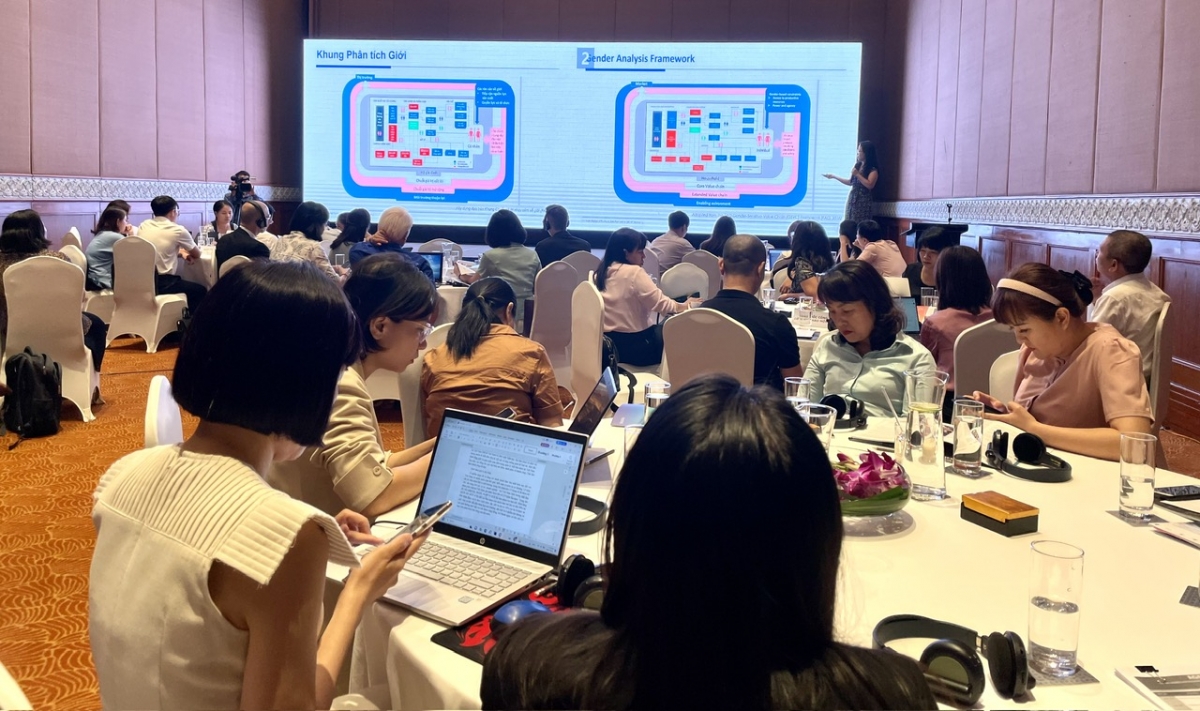
Hội thảo nhằm mục đích chia sẻ kết quả “Báo cáo đánh giá hiện trạng về giới (GESI) trong chuỗi giá trị nhựa tại Việt Nam” của Chương trình đối tác hành động Quốc gia về Nhựa (NPAP), cũng như nâng cao nhận thức của đối tác quốc gia và các bên liên quan trong thúc đẩy bình đẳng giới và phát triển toàn diện thuộc lĩnh vực quản lý chất thải nhựa.
Hội thảo đã gợi mở những trao đổi hiệu quả về vai trò của phụ nữ và cách thức giúp nâng cao bình đẳng giới, phát triển toàn diện trong quản lý rác thải nhựa ở cấp hộ gia đình và cộng đồng.
Tiếp tục đọc “Bình đẳng giới và Phát triển toàn diện trong quản lý chất thải nhựa”Vietnam’s desolate seabed
mekongeye.com by Thu Quynh Nguyen 31 July 2023 at 14:39
As coral reefs and marine life disappear, efforts to save them are underway, but is it too late?
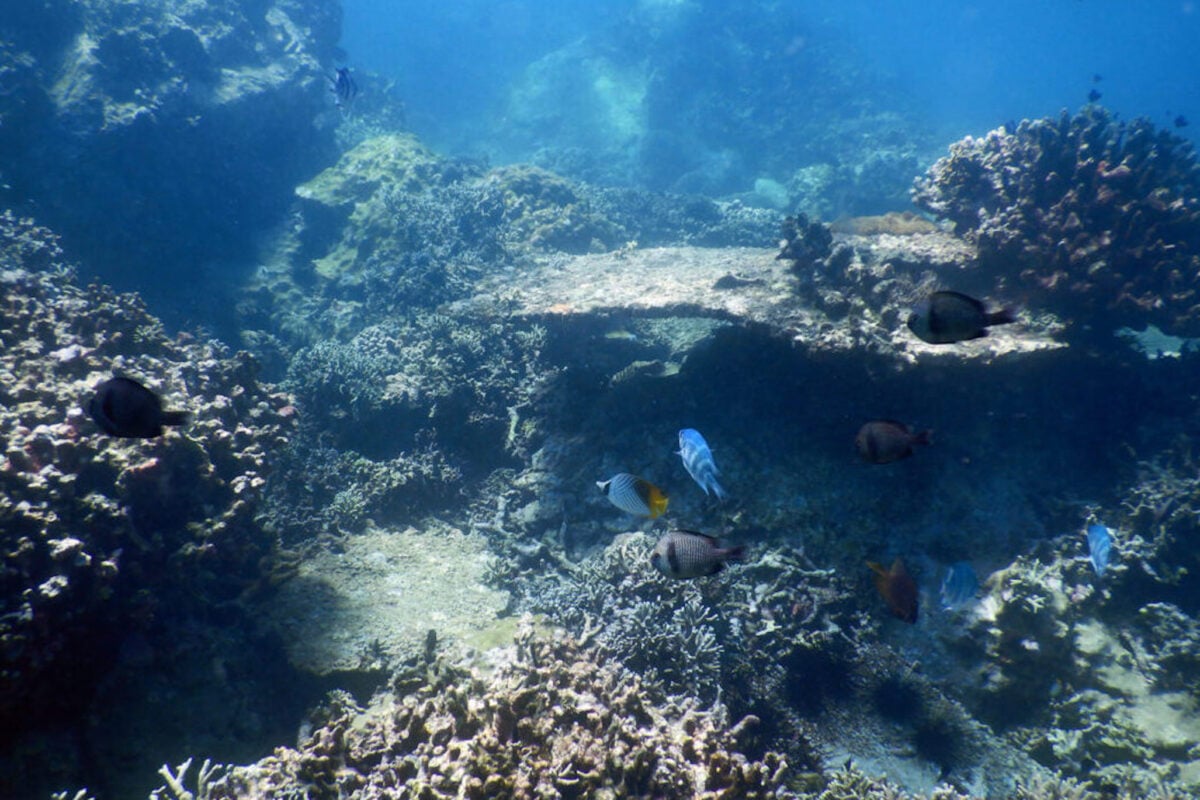
Coral die-off in Hon Mun, Nha Trang. PHOTO: Konstantin Tkachenko.
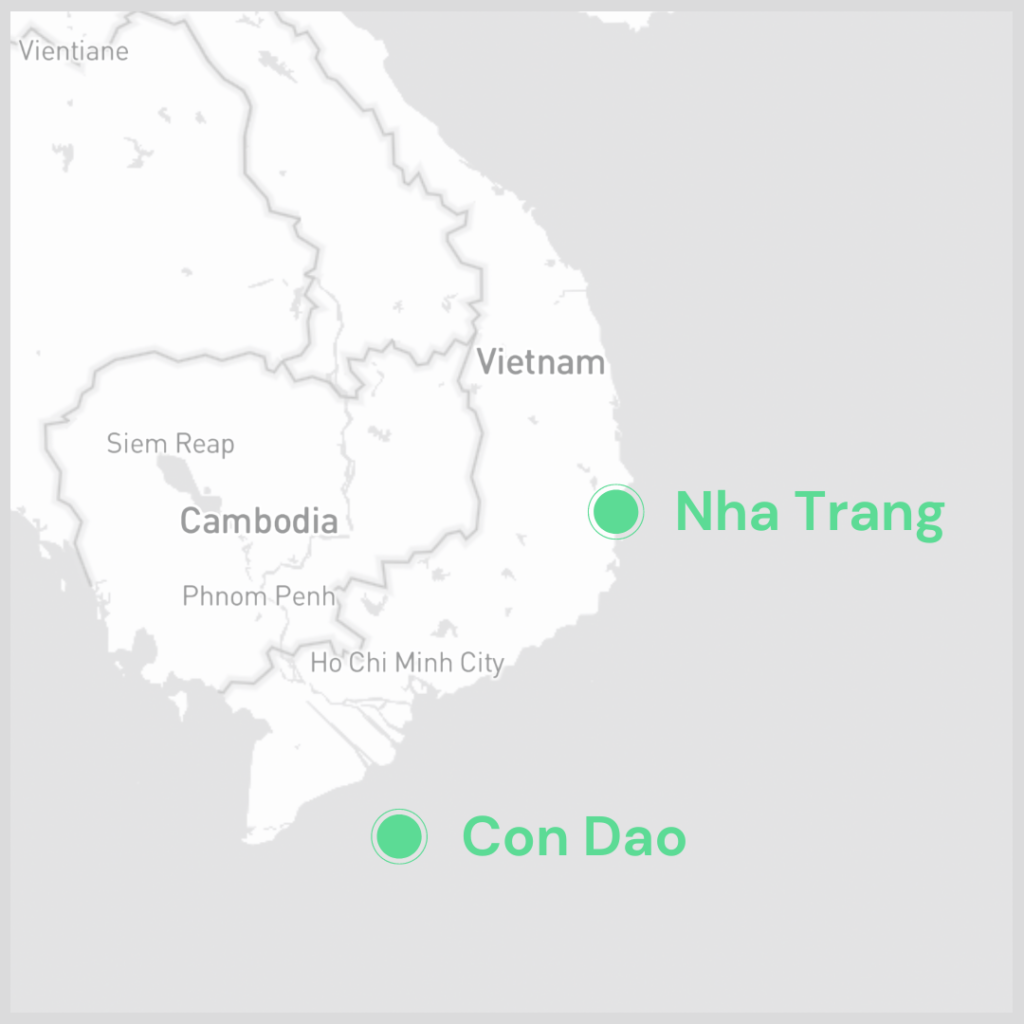
NHA TRANG, VIETNAM ― In Hon Chong, one of Vietnam’s last coral reefs, colorful schools of fish have become distant memories. These days, only small fish lurk behind bleached coral formations, a stark difference from the way some travel brochures depict the place.
Half an hour by boat from Hon Chong is Hon Mun, a marine conservation site once home to more than 340 coral species, and valued at approximately US$70 million for its biodiversity in 2005.
About 10 years before the Covid-19 pandemic, professional divers started noticing a gradual depletion of the coral reefs in the area. They had hoped that lockdowns and border closures would alleviate stress from tourism and revive the reef.
“After two years [of Covid-19], I was speechless to see the ocean bed so empty, the coral all bleached,” photographer Na Son, a diver who has made hundreds of trips down to Hon Mun’s ocean bed, told Mekong Eye in June 2023. Last June, Na Son was one of many divers who spoke to local media about Hon Mun’s alarming coral depletion.
Coral reefs are considered to be one of Vietnam’s national treasures, as the country boasts one of the world’s most diverse ecosystems with 355 species, according to data from the World Resources Institute.
Yet across the country, vital coral reserves are depleting at such an alarming rate that frenzied attempts to salvage what remains are likely to be insufficient to restore the ecosystems.
Trung Quốc đã giảm thiểu ô nhiễm không khí như thế nào?
Nửa thập kỷ trước, Bắc Kinh từng là thành phố thuộc nhóm ô nhiễm không khí nhất thế giới. Tính trên toàn Trung Quốc, tình trạng khói mù dày đặc xuất hiện ở 25/31 tỉnh thành, bao phủ hơn 100 thành phố lớn hoặc cấp trung, lan rộng trên diện tích 1,4 triệu km2 và ảnh hưởng đến hơn 800 triệu người.
Cuộc “khủng hoảng” khói mù này buộc chính phủ Trung Quốc khởi động “cuộc chiến tổng lực” với các biện pháp mạnh tay hơn và mang tính hệ thống, thông qua Kế hoạch hành động phòng chống ô nhiễm không khí giai đoạn 2013-2017, được ban hành vào tháng 9/2013.
Kế hoạch này đặt ra mục tiêu hàm lượng PM10 (bụi mịn đường kính 10 micromet trở xuống) tại các thành phố từ cấp địa khu trở lên phải giảm ít nhất 10% so với năm 2012, hàm lượng PM2.5 tại khu vực Kinh Tân Hà phải giảm khoảng 25%. Riêng đối với Bắc Kinh, hàm lượng PM2.5 phải giảm từ mức gần 90 xuống còn khoảng 60 microgram/m3 sau 5 năm theo kế hoạch.
Đây không phải những mục tiêu dễ đạt được. Tuy nhiên, theo số liệu chính thức được công bố cuối năm 2017, Bắc Kinh dường như đã đạt được mọi mục tiêu lớn được đề ra trong kế hoạch hành động năm 2013. Ngoài việc hàm lượng PM2.5 giảm xuống còn 58 microgram/m3 (tương đương giảm 35,6% so với năm 2013), hàm lượng lưu huỳnh điôxit (SO2), nitơ điôxit (NO2), PM10 trong không khí cũng lần lượt giảm 70%, 18% và 22%.
Trung Quốc đã làm gì để thoát khỏi tình trạng ô nhiễm không khí
1. Minh bạch thông tin về ô nhiễm không khí
Tiếp tục đọc “Trung Quốc đã giảm thiểu ô nhiễm không khí như thế nào?”Ô nhiễm không khí tại Hà Nội chủ yếu là ô nhiễm bụi ‘tử thần’
TPO – Báo cáo môi trường quốc gia về môi trường không khí cho thấy, ô nhiễm không khí tại Hà Nội cũng như các tỉnh miền Bắc chủ yếu là ô nhiễm bụi PM2,5, – loại bụi được coi là tử thần trong không khí khi có thể đi sâu vào phổi – thông tin trên được cho biết tại Tọa đàm “Quản lý Chất lượng không khí: Công cụ tổng thể kiểm soát giảm thiểu ô nhiễm”, do Báo Tiền Phong phối hợp Trung tâm Truyền thông Tài nguyên và Môi trường – Bộ Tài nguyên và Môi trường tổ chức sáng 28/7.
Sáng nay, 28/7, Báo Tiền Phong phối hợp với Trung tâm Truyền thông Tài nguyên và Môi trường – Bộ Tài nguyên và Môi trường tổ chức Tọa đàm “Quản lý Chất lượng không khí: Công cụ tổng thể kiểm soát giảm thiểu ô nhiễm”.
Tọa đàm được thực hiện trong bối cảnh, ô nhiễm không khí là vấn đề môi trường rất nghiêm trọng tại Việt Nam những năm qua, đặc biệt là các thành phố lớn như Hà Nội, TPHCM. Ô nhiễm môi trường không khí không chỉ ảnh hưởng trực tiếp đến sức khỏe con người mà còn tác động đến sự phát triển kinh tế xã hội của đất nước.
Thiệt hại do ô nhiễm không khí vô cùng lớn
Phát biểu mở đầu buổi Tọa đàm, Nhà báo Phùng Công Sưởng – Phó Tổng biên tập Báo Tiền Phong nhận định, chúng ta đều đang sống ở các thành phố lớn, nơi mà mỗi mùa đông, chúng ta đều cảm nhận rõ rệt bầu không khí ô nhiễm. Hình ảnh bầu trời mù mịt, khói bụi bao phủ đã trở nên quen thuộc ở Hà Nội và nhiều thành phố lớn những năm qua.
Tiếp tục đọc “Ô nhiễm không khí tại Hà Nội chủ yếu là ô nhiễm bụi ‘tử thần’”
Khai thác nước ngầm quá mức (Bài 1): Thực trạng và định hướng quản lý khai thác nước ngầm bền vững
Khai thác nước ngầm quá mức (Bài 2): “Lợi bất cập hại”
Khai thác nước ngầm quá mức (Bài 3): Cần những giải pháp cấp bách
Theo nhận định của các chuyên gia, ở Việt Nam, nguồn nước ngầm hiện nay đã và đang đứng trước nguy cơ cạn kiệt và ô nhiễm nghiêm trọng, ảnh hưởng đến an ninh nguồn nước và môi trường.
Nước ngầm, một cách gọi khác của “nguồn nước dưới đất”, là một dạng tài nguyên nước được phân bổ hoàn toàn dưới bề Trái Đất được tích trữ trong không gian rỗng của đất hay trong những khe nứt của lấp đất đá trầm tích. Ở Việt Nam hiện nay, việc khai thác nước ngầm đang diễn ra quá mức, và đang đứng trước nguy cơ bị cạn kiệt, cần được bảo vệ.
Hà Nội: Người dân đóng góp “biến” ao làng thành bể bơi miễn phí
VTV24 – 5/6/2023
1,3 tỷ đồng là số tiền mà người dân làng Hưng Giáo, xã Tam Hưng (huyện Thanh Oai, Hà Nội) đã ủng hộ để biến ao nước tù, chứa nhiều loại rác thải trong làng thành bể bơi miễn phí rộng 1.100 m2.
Biển Quảng Ninh nổi sóng – 6 bài
Biển Quảng Ninh nổi sóng – [Bài 1]: Quả phao nổi, đời người chìm
Nông nghiệp – Thứ Tư 19/04/2023
Trên mặt biển Quảng Ninh sóng chỉ lăn tăn nhưng ẩn sâu là những ‘cơn sóng lớn’ của việc chuyển đổi phao xốp sang nhựa, của sự tha thiết muốn có sổ đỏ mặt nước.

Người dân Vân Đồn đang thay phao xốp bằng phao nhựa. Ảnh: Dương Đình Tường.
Which Countries Pollute the Most Ocean Plastic Waste?
#1 Philippines
#2 India
#3 Malaysia
#4 China
#5 Indonesia
#6 Myanmar
#7 Brazil
#8 Vietnam
#9 Bangladesh
#10 Thailand
Many high-income countries generate high amounts of plastic waste, but are either better at processing it or exporting it to other countries. Meanwhile, many of the middle-income and low-income countries that both demand plastics and receive bulk exports have yet to develop the infrastructure needed to process it.
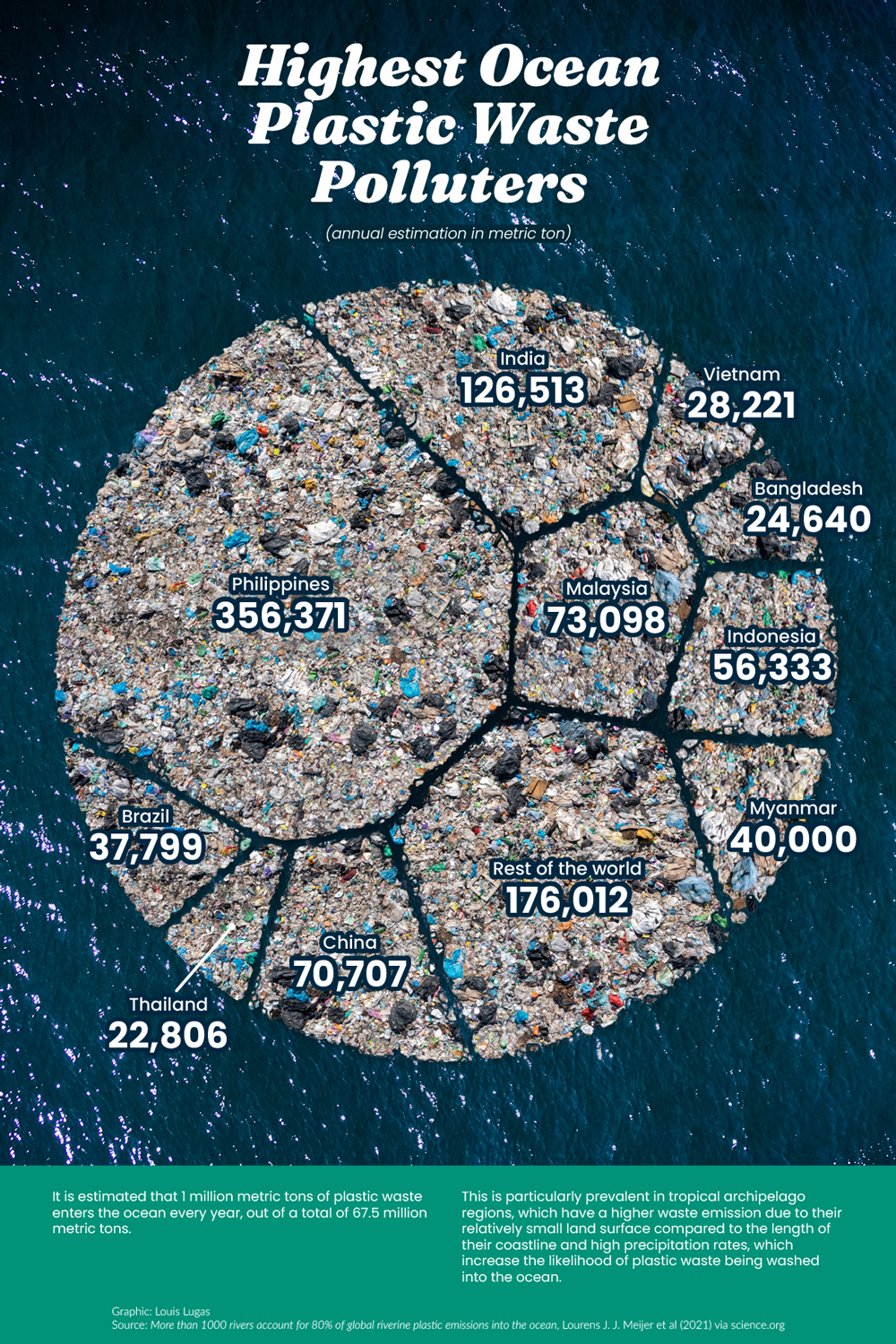
Visualized: Ocean Plastic Waste Pollution By Country
Tiếp tục đọc “Which Countries Pollute the Most Ocean Plastic Waste?”
Hà Nội nằm trong 10 thành phố chất lượng không khí kém nhất thế giới
Chiều nay (10/1), trên trang IQAir, với chỉ số AQI trung bình 173 đơn vị, Hà Nội xếp thứ 5 trong 10 TP có chất lượng không khí kém nhất trên thế giới. Sáng nay, Hà Nội còn bị xếp thứ 4 với chất lượng không khí rất kém.
Trong ngày 10/1, chất lượng không khí ở nhiều nơi trên địa bàn Hà Nội rất kém. Toàn TP chìm trong sương mù. Dự báo, trạng thái này còn có thể kéo dài.
Các điểm có chỉ số AQI rất cao như Cầu Giấy 433, phố Phạm Tuấn Tài 305, Trường mầm non thực hành Hoa Sen 451, Thanh Xuân 318, Hoàn Kiếm 376. Cá biệt, Khu đô thị Time City lên tới con số 500.
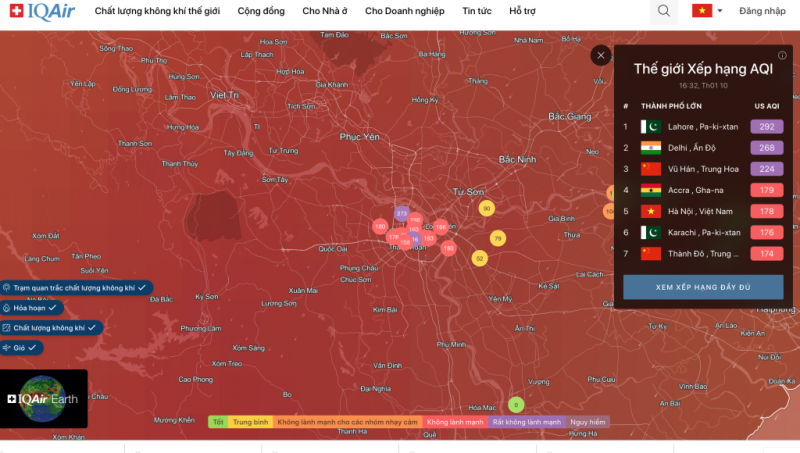
Tiếp tục đọc “Hà Nội nằm trong 10 thành phố chất lượng không khí kém nhất thế giới”
Arctic Ocean acidifying up to four times as fast as other oceans, study finds
Scientists ‘shocked’ by rate of change as rapid sea-ice melt drives absorption of CO2 – with ‘huge implications’ for Arctic sea life
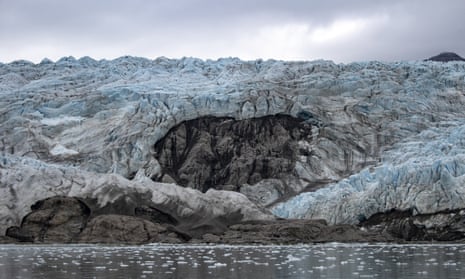
Acidification of the western Arctic Ocean is happening three to four times faster than in other ocean basins, a new study has found.
The ocean, which absorbs a third of all of the carbon dioxide in the atmosphere, has grown more acidic because of fossil fuel use. Rapid loss of sea ice in the Arctic region over the past three decades has accelerated the rate of long-term acidification, according to the study, published in Science on Thursday.
Tiếp tục đọc “Arctic Ocean acidifying up to four times as fast as other oceans, study finds”
Nigeria: Shell settles lawsuit in the Netherlands for €15 million over oil spillages in Niger Delta
Four Nigerian Farmers Take Oil Giant Shell to Court
View full case here
A unique court case, brought by four Nigerian victims of Shell oil spills, in conjunction with Friends of the Earth Netherlands, begins on Thursday 3rd December in the court at The Hague. This is the first time in history that a Dutch company has been brought to trial before a Dutch court for damages abroad. The Nigerian farmers and fishers, who lost their livelihoods after oil from leaking Shell pipelines streamed over their fields and fishing ponds, are claiming compensation from the Anglo-Dutch oil giant…Shell denies all responsibility and contends that the Dutch court has no jurisdiction over its Nigerian subsidiary.
“Shell to pay 15 mln euros in settlement over Nigerian oil spills”, 24 Dec 2022
Shell will pay 15 million euros ($15.9 million) to communities in Nigeria that were affected by multiple oil pipeline leaks in the Niger Delta, the oil company on Friday said in a joint statement with the Dutch division of Friends of the Earth.
The compensation is the result of a Dutch court case brought by Friends of the Earth, in which Shell’s Nigerian subsidiary SPDC last year was found to be responsible for the oil spills and was ordered to pay for damages to farmers.
The money will benefit the communities of Oruma, Goi and Ikot Ada Udo in Nigeria, that were impacted by four oil spills that occurred between 2004 and 2007.
“The settlement is on a no admission of liability basis, and settles all claims and ends all pending litigation related to the spills,” Shell said.
An independent expert had confirmed that SPDC has installed a leak detection system on the KCTL Pipeline in compliance with the appeal court’s orders, the company added…
The case was brought in 2008 by four farmers and environmental group Friends of the Earth, seeking reparations for lost income from contaminated land and waterways in the region, the heart of Nigeria’s oil industry.
After the appeals court’s final ruling last year, Shell said it continued to believe the spills were caused by sabotage.
But the court said Shell had not proven “beyond reasonable doubt” that sabotage had caused the spill, rather than poor maintenance.
Timeline
- Nigeria: Shell settles lawsuit in the Netherlands for €15 million over oil spillages in Niger DeltaDate:3 Jan 2023
- Content Type:Article”Shell (SHEL.L) will pay 15 million euros ($15.9 million) to communities in Nigeria that were affected by multiple oil pipeline leaks in the Niger Delta, the oil company on Friday said in a joint statement with the Dutch division of Friends of the Earth”
- Commentary: The Hague Court of Appeals rules on Shell in NigeriaDate:4 Feb 2021
Bình dân hóa thịt lợn: Cái giá phải trả ?
TS – – Võ Kiều Bảo Uyên
Sự bùng nổ của đàn lợn đã không đi cùng với khả năng xử lý chất thải, đe dọa môi trường tự nhiên, sức khỏe và sinh kế của người dân.
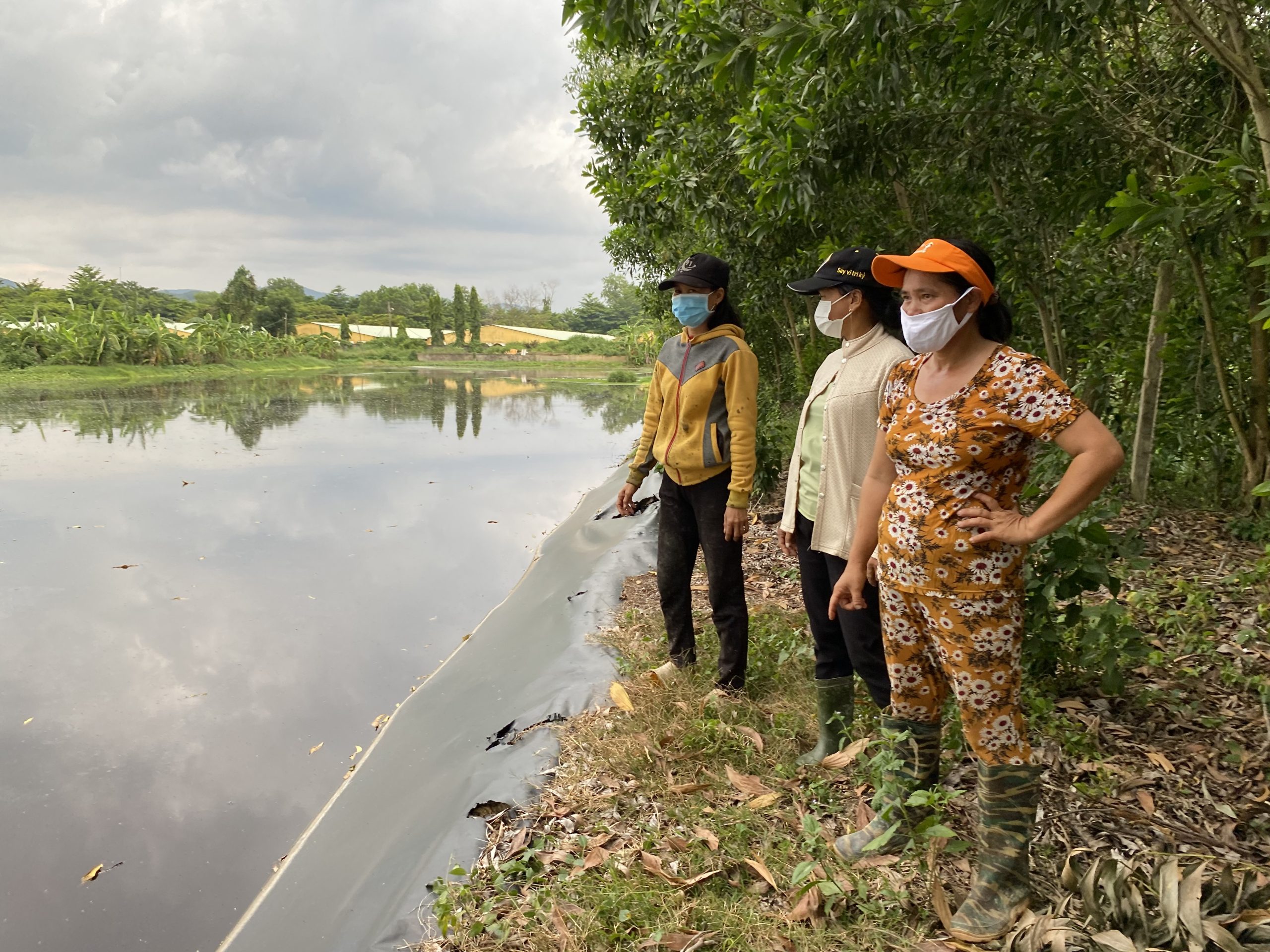
Tháng ba, sau nhiều năm chịu đựng mùi hôi của phân lợn, Nguyễn Thị Bông, 47 tuổi, cùng những phụ nữ thôn 5, xã Phú An, huyện Tân Phú, tỉnh Đồng Nai, kéo nhau lên Ủy ban Nhân dân xã khiếu nại một trại nuôi lợn.
“Không thể thở nổi. Ban đêm đi ngủ còn phải đeo khẩu trang”, Bông ngồi bên hiên nhà kể lại, trong một buổi chiều tháng sáu hiếm hoi có thể mở toang cửa nhà đón gió hè. “Cái mùi ấy hôi tanh nồng nặc làm tôi đau đầu, choáng váng”.
Năm 2014, trại lợn quy mô 10.000 con cùng các hố chứa chất thải lộ thiên mọc lên cạnh nhà bà. Chất thải dẫn ra từ trang trại sớm nhuộm đen ao cá gần nhà. Trong khi đàn ông, người trẻ trong làng đi học, đi làm xa, những phụ nữ trung niên làm việc tại nhà như Bông hứng chịu nhiều nhất sự ô nhiễm này.
Trại lợn đã rút cạn bầu không khí trong lành của một vùng quê với đồi núi bao bọc. Không chỉ mỗi ngôi làng của Bông ngạt thở trong chất thải chăn nuôi. Có hàng loạt ngôi làng như vậy ở Đồng Nai, cũng như trên khắp Việt Nam. Sự bùng nổ của đàn lợn đã không đi cùng với khả năng xử lý chất thải, đe dọa môi trường tự nhiên, sức khỏe và sinh kế của người dân bản địa.
Plastic waste treaty: expert Q&A on the promise of a global agreement to reduce pollution
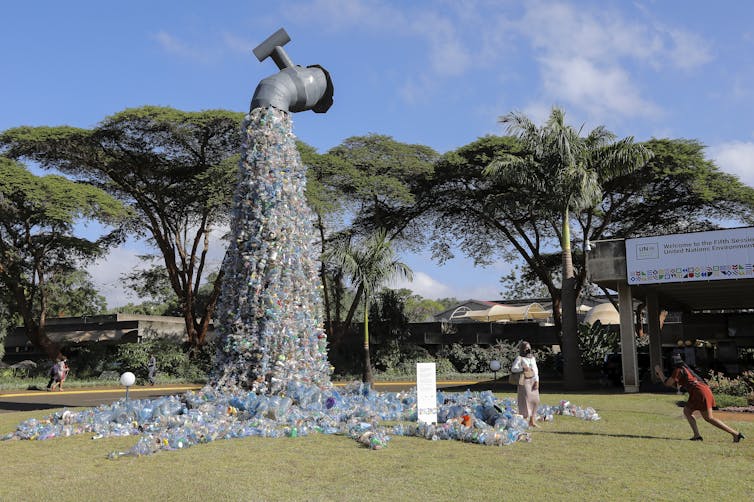
The flow of plastic entering the ocean is expected to double by 2040. To prevent this tsunami of difficult-to-decompose waste, experts have proposed a global treaty which could oblige all nations to reduce how much plastic they produce and emit to the environment.
At a recent meeting of the United Nations Environment Assembly (UNEA) in Nairobi, Kenya, ministers and representatives from 173 countries agreed on the terms for negotiating such a treaty over the next two years.
Is this the turning point for plastic pollution the world needs? And how will it work? We asked Steve Fletcher, a professor of ocean policy and economy at the University of Portsmouth and an advisor to the UN Environment Prograamme on plastic.
What has actually been agreed in Nairobi?
The UNEA is a gathering of all United Nations member states to discuss and adopt policies for tackling global environmental problems. It is the highest environmental decision-making body in the world. On Wednesday March 2 2022, ministers and representatives from 173 countries formally adopted a resolution to start negotiations for a legally binding agreement to end plastic pollution.
Agreeing the mandate and focus of the negotiations is just the start. Before the end of 2024, the substance of the agreement will need to be thrashed out.
 CVD
CVD