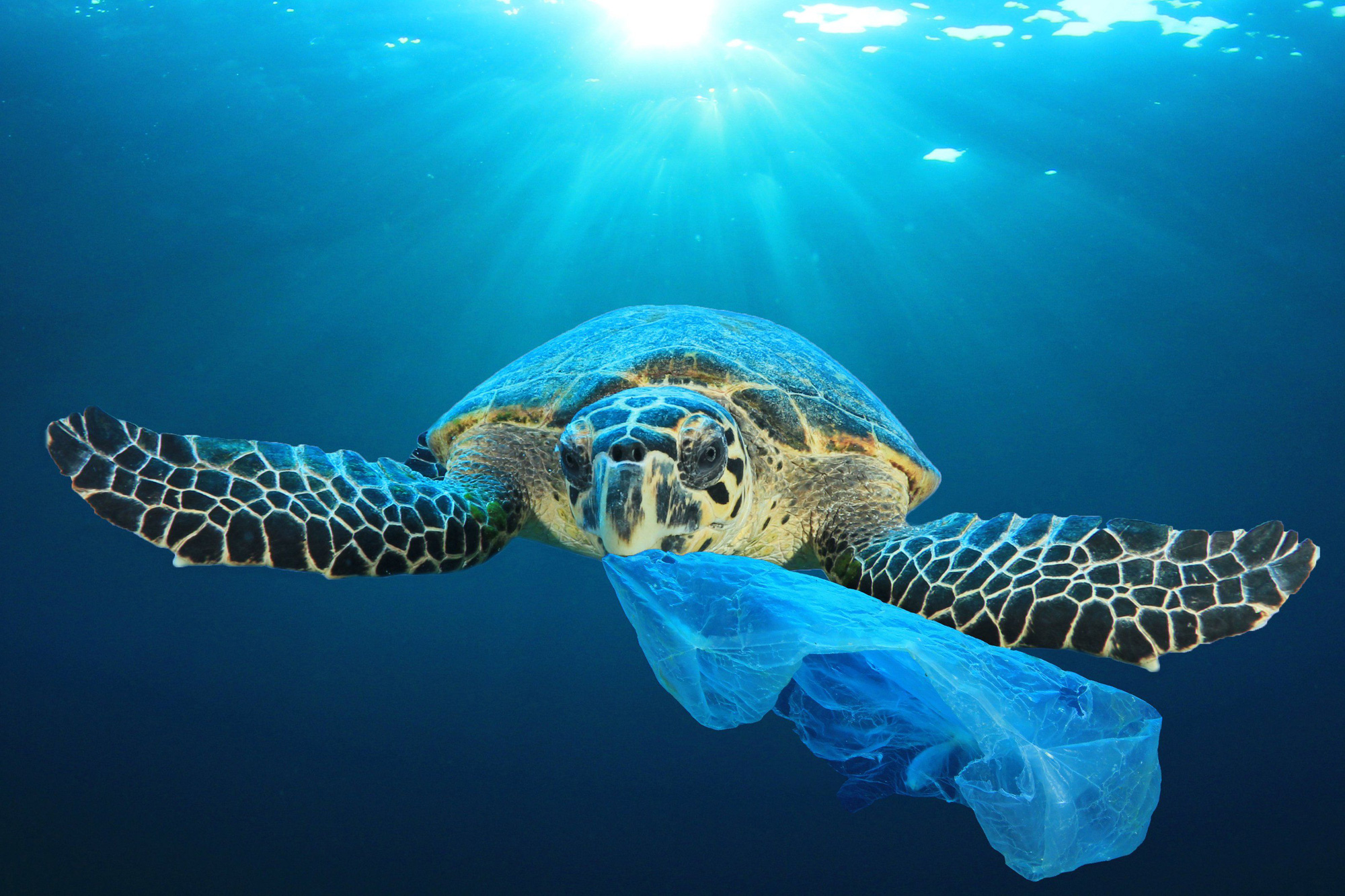
HOÀNG THI TTO – Các nhà khoa học cho biết không phải ngẫu nhiên mà sinh vật biển, đặc biệt là rùa, lại ăn rác thải nhựa…
Conversations on Vietnam Development

HOÀNG THI TTO – Các nhà khoa học cho biết không phải ngẫu nhiên mà sinh vật biển, đặc biệt là rùa, lại ăn rác thải nhựa…
Over the past 20 years, Paris has undergone a major physical transformation, trading automotive arteries for bike lanes, adding green spaces and eliminating 50,000 parking spaces.
Part of the payoff has been invisible — in the air itself.
Airparif, an independent group that tracks air quality for France’s capital region, said this week that levels of fine particulate matter (PM 2.5) have decreased 55 percent since 2005, while nitrogen dioxide levels have fallen 50 percent. It attributed this to “regulations and public policies,” including steps to limit traffic and ban the most polluting vehicles.
Paris said au revoir to cars. Air pollution maps reveal a dramatic change.
Air pollution heat maps show the levels of 20 years ago as a pulsing red — almost every neighborhood above the European Union’s limit for nitrogen dioxide, which results from the combustion of fossil fuels. By 2023, the red zone had shrunk to only a web of fine lines across and around the city, representing the busiest roads and highways.
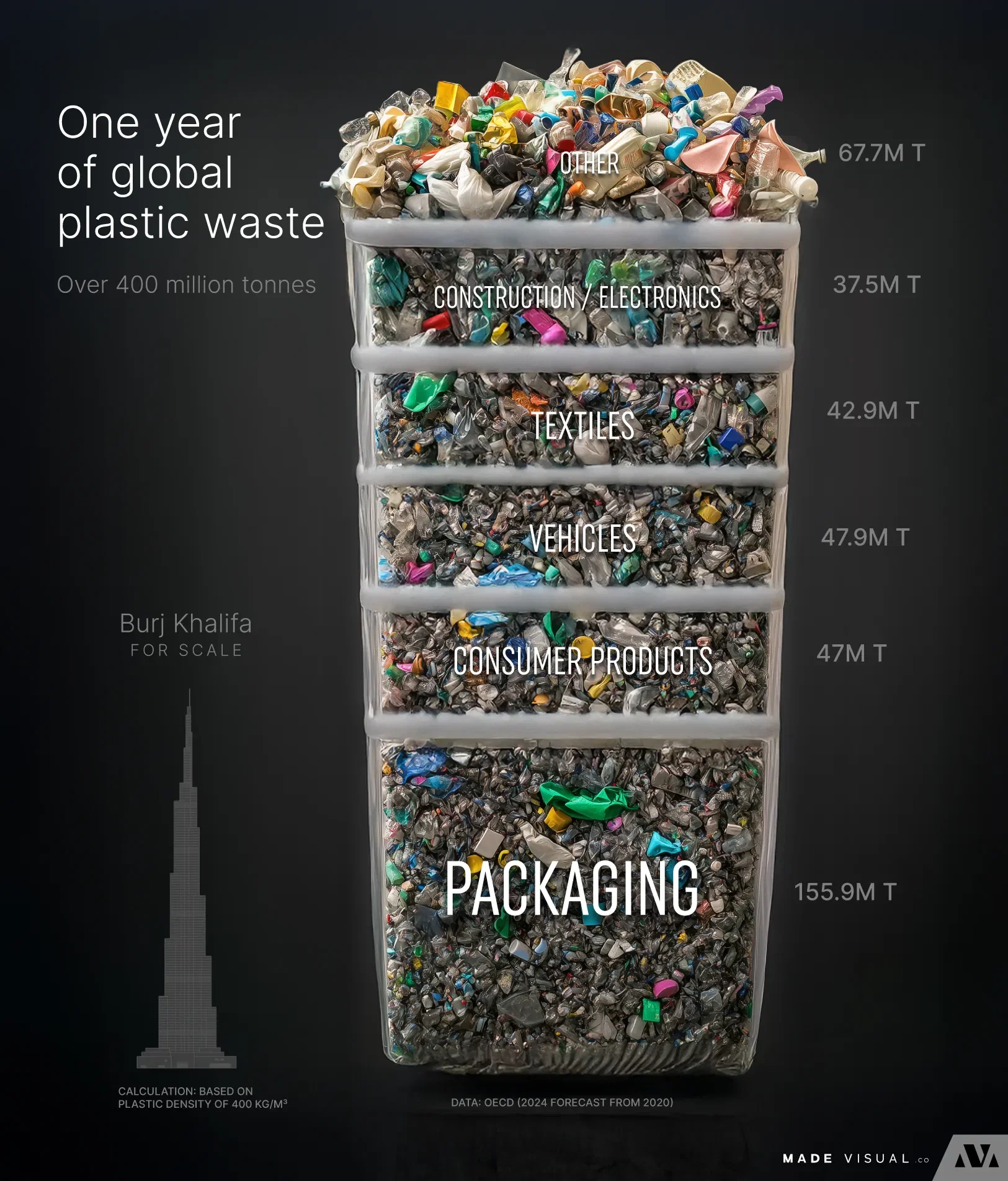
Over 400 million tonnes of plastic was projected to be wasted in 2024 according to an OECD report from 2020. Further, plastic waste is expected to nearly triple worldwide by 2060, with half of all waste expected to be in landfill while less than one-fifth of it will be recycled.
Unbelievably, if all this plastic waste were put in a kitchen bin and scaled up uniformly, this would double the height of the Burj Khalifa.
| Category | Weight of Waste (Millions of Tonnes) |
|---|---|
| Other | 67.7 |
| Construction/Electronics | 37.5 |
| Textiles | 42.9 |
| Vehicles | 47.9 |
| Consumer Products | 47 |
| Packaging | 155.9 |
OECD, Statista
https://www.statista.com/chart/32385/global-plastic-waste-production-by-application/
themekongeye.com By Anton L. Delgado 20 January 2025 at 10:54
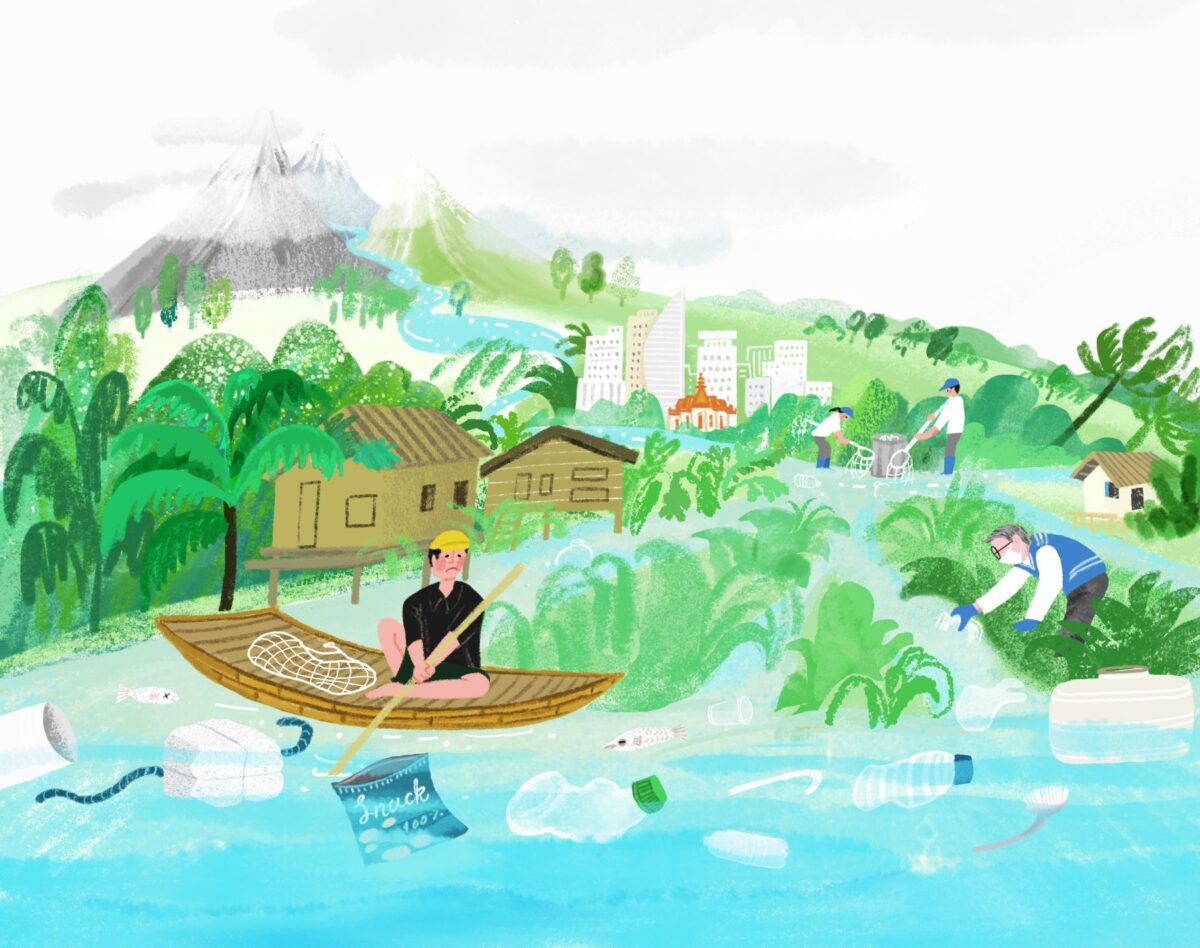
ILLUSTRATION: Sunhee Park / Dialogue Earth
On Sơn Island in Viet Nam’s Mekong Delta, Le Trung Tin scatters fish feed into his ponds, where dozens of snakehead fish leap through the surface in synchronized bursts. “I taught them how to do that,” he says proudly, tossing another handful of feed at his fish.
The scene looks idyllic, but Le’s fish farm is a reluctant response to an escalating crisis. For decades, he made his living fishing the Hậu River, a distributary of the Mekong. But in recent years, plastic waste clogged his nets and strangled the fish. “I had no choice but to stop,” he says. “Everything was tangled – trash, nets, even the fish themselves. It was hopeless.”
Now, Le relies on enclosed ponds using filtered water to keep his fish alive. “I built this ecological environment free of plastic waste, chemical spills and [protected it from] extreme weather,” he says.
https://player.vimeo.com/video/1037846174?dnt=1&app_id=122963VIDEO: Anton L. Delgado/Dialogue Earth
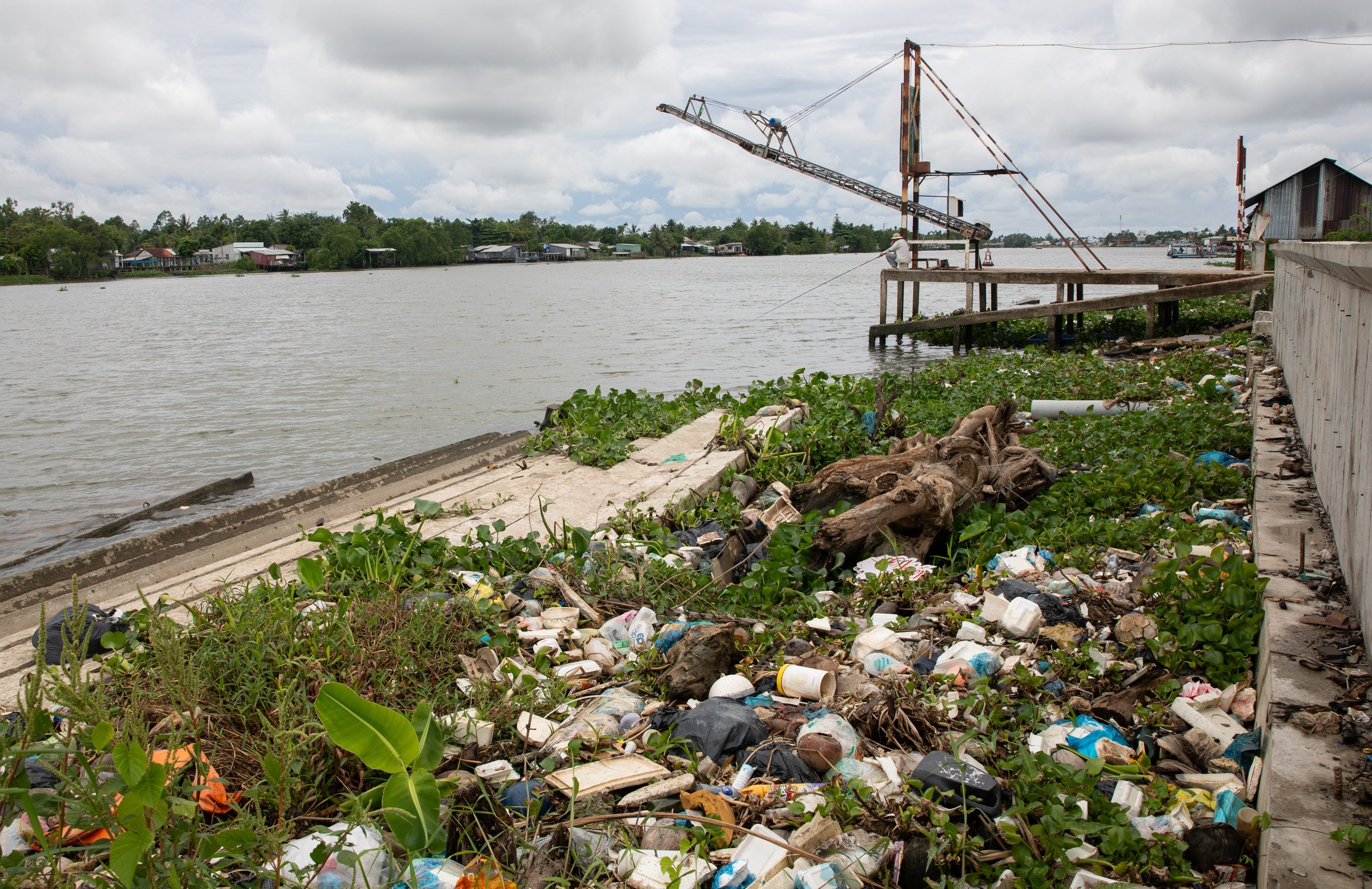
Le’s experience reflects the wider challenges facing the Mekong. Stretching over 4,300 kilometres from the Tibetan Plateau to the South China Sea, the river supports nearly 70 million people and some of the world’s most biodiverse ecosystems. Yet, it is one of the most plastic-polluted rivers in the world and among the 10 rivers in Asia that carry the vast majority of plastic to the sea. The Mekong dumps – by some estimates – tens of thousands of tonnes each year into the ocean, with plastic waste accumulating along its banks, tributaries and lakes.
Plastic enters the Mekong in myriad ways – agricultural runoff, unregulated dumping and a flood of single-use packaging from upstream countries like China and Myanmar. It accumulates in hotspots like Tonle Sap Lake in Cambodia and the wetlands of Vietnam’s Mekong Delta, where this plastic waste threatens biodiversity, food security and human health.
Mekong eyes – 16 December 2024 at 9:27 (Updated on 16 December 2024 at 15:40)
The country’s improved railway connectivity facilitates fruit exports to China but has also sparked a boom in foreign-owned banana and durian farms, leading to forest clearance

The report was produced with support from the Pulitzer Center’s Rainforest Investigations Network (RIN) and Internews’ Earth Journalism Network as part of the “Ground Truths” collaborative reporting project on soils.
ATTAPEU, LAOS — The new high-speed railway has enabled faster fruit exports from Laos to China, attracting more investment in large-scale plantations. However, this growth has come at the cost of deforestation.
Bananas and the “king of tropical fruit” – durians – are very popular in China, but they typically ripen within a few days of harvesting.
However, that problem was resolved with the launch of the Laos-China Railway in 2021, which has enabled landlocked Laos to deliver its fruit quickly to China’s 1.4 billion consumers.
Tiếp tục đọc “Fruits of spoil: Laos’ forests disappearing as fruit farms flourish (2 parts)”
South China Morning Post – 13-2-2025
The Vietnamese capital Hanoi has taken the top spot for air pollution among global cities, according to the Air Quality Index (AQI) operated by leading air-quality technology company IQAir on February 12, 2025. Persistent smog has residents and tourists alike worried about whether the hazardous air may be causing long-term damage to human health.
Bất chấp các quy định nghiêm ngặt của EU về tái chế nhựa, đường đi của chất thải nhựa được vận chuyển từ EU đến Việt Nam lại không được giám sát chặt chẽ. Một tỷ lệ lớn nhựa xuất khẩu của châu Âu không thể tái chế và bị thải ra ngoài tự nhiên.

Innovative aircraft-based technique records carbon emissions not tracked before from the industrial region
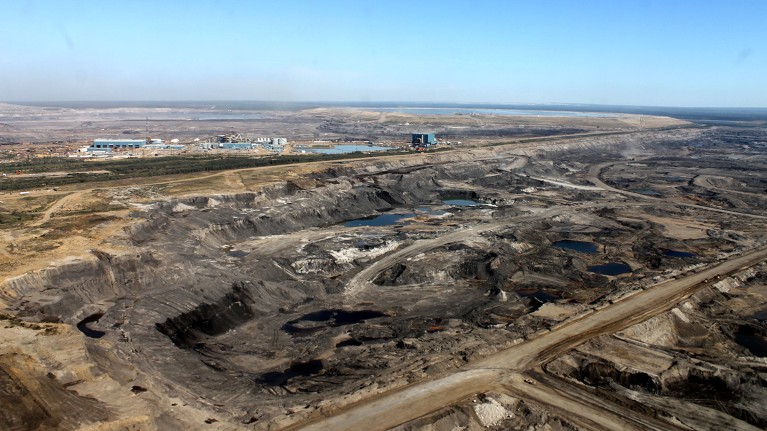
Canada’s controversial oil-producing tar sands generate a substantial amount of unaccounted-for carbon-based emissions that can affect air quality, according to measurements taken by aircraft. The sands release more of these pollution-causing gases than megacities such as Los Angeles, California, and about the same as the rest of Canada’s human-generated sources combined — including emissions from motor traffic and all other industries.
“No rules have been broken, or guidelines exceeded here,” says Janetta McKenzie, an oil and gas analyst for the Pembina Institute, a think tank in Calgary, Canada. “But that speaks to some issues in our rules and our guidelines.”How a dangerous stew of air pollution is choking the United States
The team that conducted the study — led by environmental engineer Drew Gentner at Yale University in New Haven, Connecticut, and chemist John Liggio at the federal agency Environment and Climate Change Canada (ECCC) in Toronto — used an innovative approach to measure all the carbon-based molecules in the air over oil sands in the province of Alberta. The researchers factored out greenhouse gases such as carbon dioxide and instead tracked only molecules important to air quality, many of which haven’t been monitored at the oil sands before. These carbon-based gases can seed particulate pollution in the air and react with other chemicals to form ground-level ozone.
Tiếp tục đọc “Canada’s oil sands spew massive amounts of unmonitored polluting gases”/img/iea/3oOpZZzb6W/drainage-picture-2.jpg)
Pollution in our waterways is not only dangerous and unsanitary for humans but it also affects wildlife. That’s why it is so exciting to see an initiative aimed at preventing such waste.
RELATED: THIS MODULAR ROBOTIC EEL CAN DETECT SOURCES OF WATER POLLUTION
The Australian city of Kwinana has designed a simple and cost-effective solution to deal with the discharge of waste from drainage systems. The town has put nets on the outlet of drainage pipes.

These nets stop waste and pollutants from leaving the sewers, preventing garbage transported by rain waters from contaminating the town’s local water reserve. It is a simple filtering system and it works like a charm.


Published: 10:00am, 26 Nov, 2023 scmp
Vietnam is grappling with a critical plastic waste crisis. Each year, the country generates 1.8 million tonnes of plastic waste, about one-third of which ends up in the ocean. This constitutes 6 per cent of global marine plastic pollution and makes it the world’s fourth-largest emitter.
Not only does this exacerbate Vietnam’s environmental challenges, but it also casts a shadow over its international reputation as the nation has pledged robust commitments to sustainable dvelopment and the green transition.
Tiếp tục đọc “Why Vietnam faces an uphill battle in its war against plastic waste”The world is very warm right now. We’re not only seeing record temperatures, but the records are being broken by record-wide margins.
Take the preliminary September global-average temperature anomaly of 1.7°C above pre-industrial levels, for example. It’s an incredible 0.5°C above the previous record.
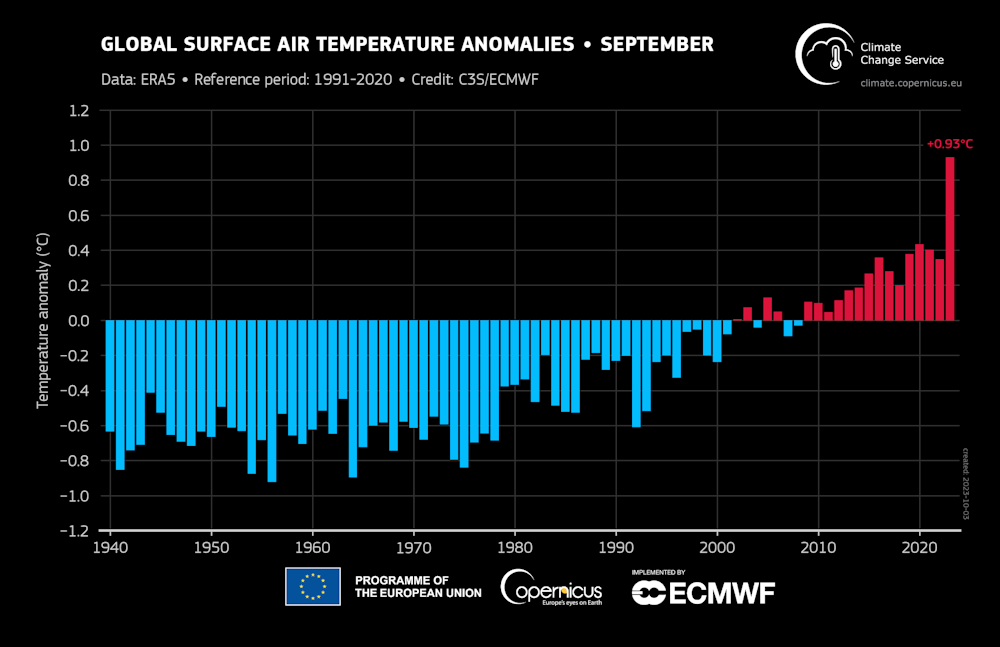
So why is the world so incredibly hot right now? And what does it mean for keeping our Paris Agreement targets?
Here are six contributing factors – with climate change the main reason temperatures are so high.
One reason for the exceptional heat is we are in a significant El Niño that is still strengthening. During El Niño we see warming of the surface ocean over much of the tropical Pacific. This warming, and the effects of El Niño in other parts of the world, raises global average temperatures by about 0.1 to 0.2°C.
Tiếp tục đọc “6 reasons why global temperatures are spiking right now”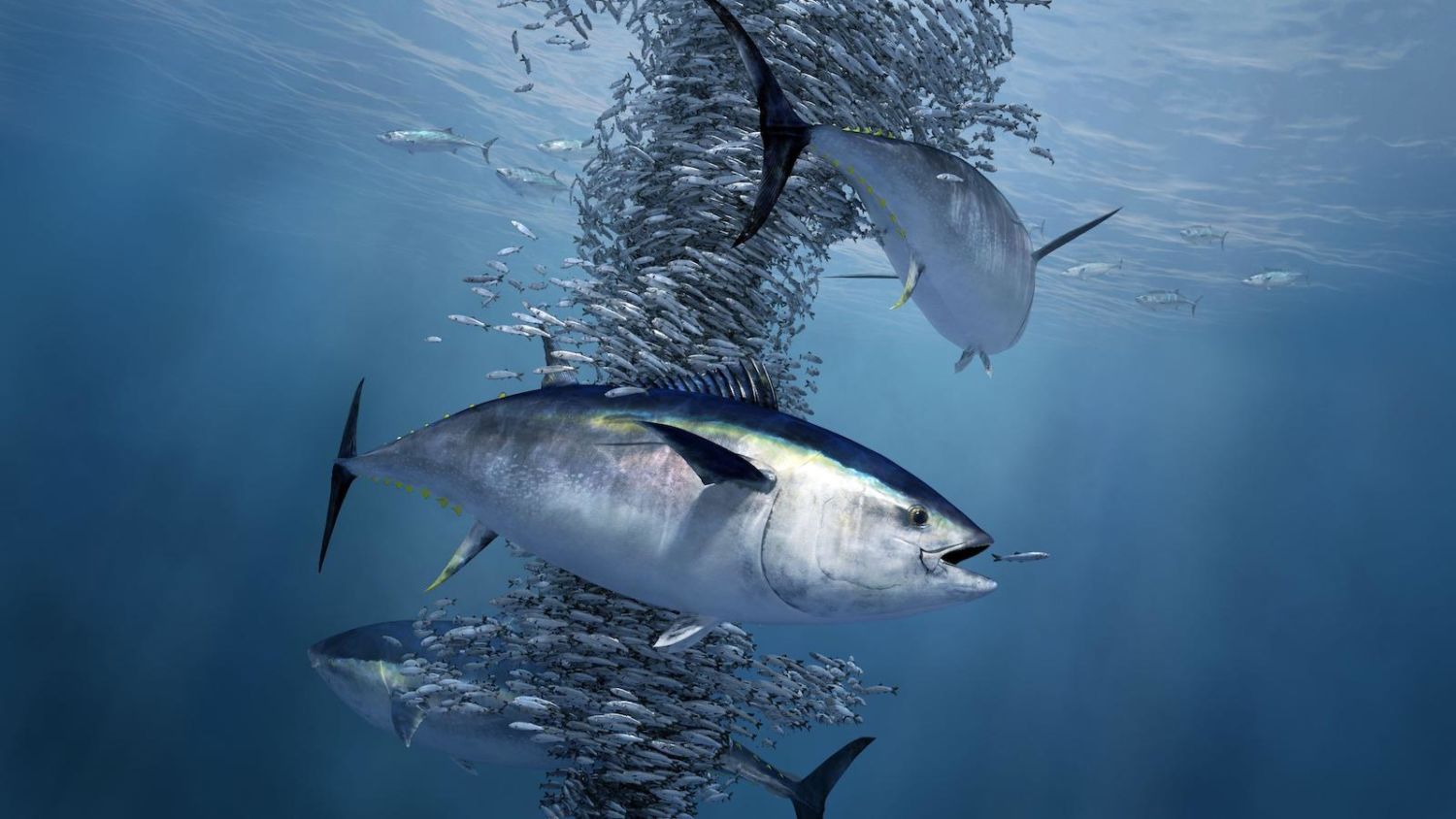
Global warming not only increases ocean temperatures, it triggers a cascade of effects that are stripping the seas of oxygen. Fish are already moving to new waters in search of oxygen, and scientists are warning of the long-term threat to fish species and marine ecosystems.
BY NICOLA JONES • MAY 11, 2023
Off the coast of southeastern China, one particular fish species is booming: the oddly named Bombay duck, a long, slim fish with a distinctive, gaping jaw and a texture like jelly. When research ships trawl the seafloor off that coast, they now catch upwards of 440 pounds of the gelatinous fish per hour — a more than tenfold increase over a decade ago. “It’s monstrous,” says University of British Columbia fisheries researcher Daniel Pauly of the explosion in numbers.
The reason for this mass invasion, says Pauly, is extremely low oxygen levels in these polluted waters. Fish species that can’t cope with less oxygen have fled, while the Bombay duck, part of a small subset of species that is physiologically better able to deal with less oxygen, has moved in.
The boom is making some people happy, since Bombay duck is perfectly edible. But the influx provides a peek at a bleak future for China and for the planet as a whole. As the atmosphere warms, oceans around the world are becoming ever more deprived of oxygen, forcing many species to migrate from their usual homes. Researchers expect many places to experience a decline in species diversity, ending up with just those few species that can cope with the harsher conditions. Lack of ecosystem diversity means lack of resilience. “Deoxygenation is a big problem,” Pauly summarizes.
Tiếp tục đọc “As Ocean Oxygen Levels Dip, Fish Face an Uncertain Future”Imperial College London by Ryan O’Hare18 April 2023


A new review of evidence highlights the impact air pollution has on health across the life course, from before birth through to old age.
The report was commissioned by the Greater London Authority via Imperial Projects and carried out by researchers from Imperial College London’s Environmental Research Group.
Bringing together the findings from a range of key studies, the review highlights the serious and life-limiting risks of air pollution and how it affects multiple aspects of physical and mental health over the course of pregnancy and birth, child development, through to adulthood.
The authors looked at studies focused on the links between air pollution and ill health, including pollutants such as black carbon (or soot), small particulate matter (PM2.5), Nitrogen Dioxide (NO2), and Sulphur Dioxide (SO2).
Tiếp tục đọc “Review highlights lifelong health impacts of air pollution”Our World in Data Hannah Ritchie June 20, 2017
Cities in most high-income countries have relatively low levels of local air pollution. This, however, hasn’t always been the case.
National air pollution trends often follow the environmental kuznets curve (EKC). The EKC provides a hypothesis of the link between environmental degradation and economic development: in this case, air pollution initially worsens with the onset of industrial growth, but then peaks at a certain stage of economic development and from then on pollution levels begin to decline with increased development. Many high income nations are now at the late stage of this curve, with comparably low pollution levels. Meanwhile, developing nations span various stages of the growth-to-peak phase. I have previously written about this phenomenon in relation to sulphur dioxide (SO2) emissions here on Our World in Data.
If we take a historical look at pollution levels in London, for example, we see this EKC clearly. In the graph, we have plotted the average levels of suspended particulate matter (SPM) in London’s air from 1700 to 2016. Suspended particulate matter (SPM) refers to fine solid or liquid particles which are suspended in Earth’s atmosphere (such as soot, smoke, dust and pollen). Exposure to SPM – especially very small particles, which can more easily infiltrate the respiratory system – has been strongly linked to negative cardiorespiratory health impacts, and even premature death. As we see, from 1700 on, London experienced a worsening of air pollution decade after decade. Over the course of two centuries the suspended particulate matter in London’s air doubled. But at the very end of the 19th century the concentration reached a peak and then began a steep decline so that today’s levels are almost 40-times lower than at that peak.
The data presented has been kindly provided by Roger Fouquet, who has studied the topic of environmental quality, energy costs and economic development in great detail.1
vnexpress.net By Thuy Quynh August 11, 2023 | 03:30 pm GMT+7

An area in Hanoi on the morning of August 11, 2023. Photo by VnExpress/Viet AnThe air quality in Hanoi was ranked as “very unhealthy” on Friday morning and then “unhealthy for sensitive groups” at noon.
Switzerland-based air quality monitoring facility IQAir AirVisual recorded the air quality index (AQI) at over 200 in many places in Hanoi on Friday morning.
At noon, it dropped to 149 on average.
According to AirVisual, the AQI ranges from 0 to 500, though air quality can be indexed beyond 500 when there are higher levels of hazardous air pollution. Good air quality ranges from 0 to 50.
Tiếp tục đọc “Hanoi’s air quality stays at unhealthy levels”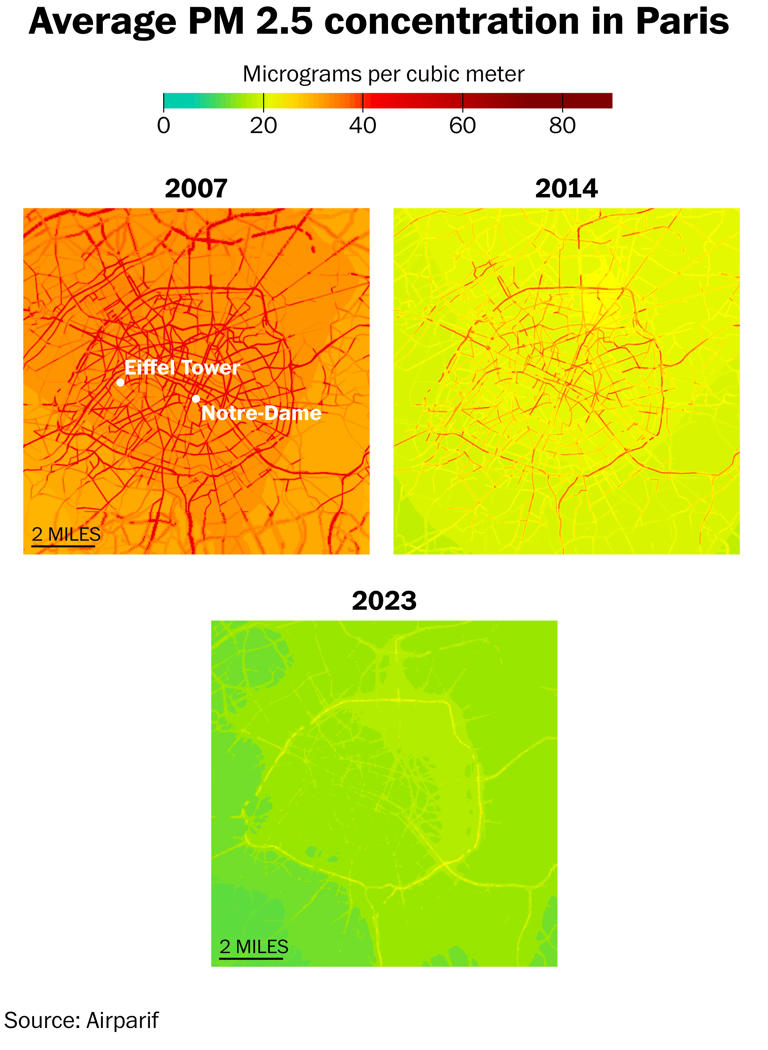
 CVD
CVD 