Patrolling international skies: Understanding joint air patrols

In examining recent suggestions for joint patrolling of the South China Sea, analysts have tended to focus on the surface vessels of various nations’ coast guards and navies. Yet the flight of a U.S. Navy P-8A Poseidon hosting a CNN film crew over disputed waters in the South China Sea in May highlighted the potential of air power – specifically maritime patrol aircraft (MPA) – in executing the possible missions of joint patrols. To explore the potential effectiveness of South China Sea joint air patrols it is important to first be clear about the often overlooked distinctions in missions, locations, and concepts. Tiếp tục đọc “Patrolling international skies: Understanding joint air patrols”

Airpower in the South China Sea

AMTI – China is not the first, but the fifth claimant to build an airstrip in the Spratly Islands. Are all airstrips created equal? What kinds of operations does each enable? AMTI explores the role of airstrips and airpower in the South China Sea.

AIRPOWER PROJECTION

Much attention has been paid to China’s new airstrip on Fiery Cross Reef. How does this runway compare to Malaysia’s on Swallow Reef, the Philippines’ on Thitu Island, Taiwan’s on Itu Aba, or Vietnam’s on Spratly Island? Below, explore infographics on each claimant’s airstrip size and the aerial operating range each enables. Watch an exclusive interview on China’s Fiery Cross runway with RAND Senior International Defense Analyst Timothy R. Heath. View satellite images of each Spratly airstrip and read more about the types of operations that each may enable.

Ali Demo Airstrip Tiếp tục đọc “Airpower in the South China Sea”

Why Southeast Asia’s Refugee Crisis Matters

Thediplomat – For summer and fall 2015, The Diplomat presents “Southeast Asia: Refugees in Crisis,” a series of exclusive articles from scholars and practitioners tackling Southeast Asia’s ongoing refugee crisis. Launched with the help of former ASEAN Secretary-General Surin Pitsuwan and designed with the assistance of students from Harvard University and Oxford University, the series aims to give the readers a sense of the various dimensions of this complex issue.

In our first piece, former ASEAN Secretary-General Surin Pitsuwan and The Diplomat’s associate editor Prashanth Parameswaran launch the series with a framing article on the issue. 

In May 2015, thousands of Rohingya refugees from the Rakhine State of Myanmar and economic migrants from Bangladesh were found stranded in the Strait of Malacca off the coast of Thailand, Malaysia and Indonesia. This was the start of the latest round of Southeast Asia’s refugee crisis. The image of the overcrowded, shabby boats full of people – haunted and hungry, faced with dwindling supplies of food and water – seized the world’s attention. Tiếp tục đọc “Why Southeast Asia’s Refugee Crisis Matters”

Growing Maritime Security Concerns in Southeast Asia: A Greater Need for Further Regional Cooperation


The United States, Japan and Vietnam stand a lot to gain from expanding their strategic partnerships to battle regional maritime challenges.

Hoang Anh Tuan – Nguyen Vu Tung
June 19, 2015

The National Interest – Cooperation between Japan, the United States, and Vietnam has been improving dramatically over the last several years—a reflection of both the changing strategic environment in the region, as well as a deepening sense of trust among the three countries.

Recent events—especially when one examines specific instances of warming bilateral ties with Vietnam—demonstrate how far relations have come. For example, during U.S. secretary of defense Ashton Carter’s recent visit to Vietnam from May 31 to June 1, 2015, he and his Vietnamese counterpart, Gen. Phung Quang Thanh, signed a Joint Vision Statement on Defense Relations—a remarkable development in the defense ties between the two nations, as relations were only normalized just twenty years ago. Tiếp tục đọc “Growing Maritime Security Concerns in Southeast Asia: A Greater Need for Further Regional Cooperation”

Massive island-building and international law

June 15, 2015

AMTI. CSIS – Within the short span of a year, China’s rapid construction of artificial islands in the disputed Spratlys has radically changed the geographical and security landscapes in the South China Sea.

This island construction has so far created over eight million square metres of real estate in the open sea, outstripping other countries’ reclamation activities by far, and shows no sign of abating. Hundreds of millions of tons of sand and coral have been dredged from the seabed and dumped atop fragile coral reefs that are vital components of the maritime ecology. Marine experts expect that the work has already caused disastrous and essentially irreversible environmental impacts. Tiếp tục đọc “Massive island-building and international law”

PGS Philippines: ‘Mong Việt Nam hành động mạnh hơn về biển Đông’

VNN – “Từ lý do đó, chúng tôi nhận thấy rằng cần phải hợp tác chặt chẽ hơn với Việt Nam, và chúng tôi hy vọng rằng Việt Nam có thể là bên thứ ba mặc nhiên chịu ảnh hưởng trong vụ kiện đường lưỡi bò”.

LTS: Việt Nam và Philippines đang trong quá trình tiến tới thiết lập quan hệ đối tác chiến lược. Tuần Việt Nam có bài phỏng vấn PGS. Richard Javad Heydarian của Đại học De La Salle (Philippines) về vấn đề này. PGS. Heydarian đồng thời là Cố vấn chính sách của Hạ viện Philippines, và cây bút trên Huffington Post, The National Interest, Aljazeera… 

biển Đông, Việt Nam, Philippines, Mỹ, đường lưỡi bò, Trường Sa, Hoàng Sa, đảo nhân tạo, Trung Quốc, tòa quốc tế, kiện
PGS. Richard Javad Heydarian. Ảnh: Huỳnh Phan

Philippines và Việt Nam đang tiến tới mối quan hệ đối tác chiến lược. Xin ông cho biết việc 2 nước có mối quan tâm chung là tình hình an ninh Biển Đông và cùng có tranh chấp với Trung Quốc, điều này có phải là quá muộn không, khi Việt Nam với Thái Lan và Singapore đã thiết lập quan hệ đối tác chiến lược trước đó?  Tiếp tục đọc “PGS Philippines: ‘Mong Việt Nam hành động mạnh hơn về biển Đông’”

Sự cự tuyệt của người thổ dân làm lung lay niềm tin của châu Á vào các kế hoạch khí đốt của Canada

Bloomberg.com – Các nhà đầu tư châu Á đang mất dần niềm tin vào khả năng cung cấp dầu và khí tự nhiên xuyên Thái Bình Dương khi mà một dự án xuất khẩu lớn khác cũng đã sa lầy do sự phản đối của người thổ dân bản xứ.

Một cộng đồng thổ dân ở Bờ Tây đã từ chối gần 1 tỉ Đô la tiền đền bù từ Công ty Xăng Dầu Quốc gia Malaysia, khiến cho tương lai của một trong những sự đầu tư xuất khẩu khí đốt tiên tiến nhất của Canada rơi vào tình thế nguy khốn. Đây là khó khăn mới nhất ngăn cản sự tiếp cận của châu Á tới nguồn năng lượng của Canada khi mà các đường ống dẫn và các trạm tiếp nhận cần thiết để vận chuyển nhiên liệu thô qua biển gặp phải sự phản đối của cộng đồng người bản xứ.

Sự cự tuyệt tập trung vào những rào cản mà Canada phải đối mặt trong các nỗ lực cạnh tranh với Mỹ và Úc nhằm thu hút nhu cầu nhiên liệu đang tăng lên của châu Á, ví dụ như 19 đề xuất nhằm thúc đẩy xuất khẩu khí đốt Bờ biển Thái Bình Dương Canada.
“Điều này gửi một dấu hiệu rất xấu tới thế giới rằng Đó hãy nhìn vào Canada”, Gord Nettleton – một cộng sự tại Calgary của hãng luật McCarthy Tetraut nói. [Calgary là một thành phố phía nam của tỉnh Alberta, Canada]. Sự từ chối này đặt ra một câu hỏi: “Làm thế nào để kiểm soát được căn nhà của chính bạn?” Tiếp tục đọc “Sự cự tuyệt của người thổ dân làm lung lay niềm tin của châu Á vào các kế hoạch khí đốt của Canada”

Southeast Asia’s Geopolitical Centrality and the U.S.-Japan Alliance

JUN 11, 2015

CSIS – Building on a careful analysis of Southeast Asia’s recent history, politics, economics, and place within the Asia Pacific, this report looks forward two decades to anticipate the development of trends in the region and how they will impact the U.S.-Japan alliance. How will Southeast Asian states come to grips with the political and economic rise of China? How will they modernize their military forces and security relationships, and what role can the United States and Japan play? How will they manage their disputes in the South China Sea, and how will they pursue greater regional integration? These questions will prove critical in understanding Southeast Asia’s role in the Asia Pacific, and in the U.S.-Japan alliance, in the decades ahead.

Publisher CSIS/Rowman & Littlefield
ISBN 978-1-4422-4086-5 (pb); 978-1-4422-4087-2 (eBook)


China Unlikely to Halt Island Construction in Disputed Sea

War, blocked shipping lanes among scenarios for South China Sea, State report says

The alleged on-going reclamation of Subi Reef by China is seen from Pag-asa Island in the Spratly Islands in the South China Sea, western Palawan Province, Philippines / AP

The alleged on-going reclamation of Subi Reef by China is seen from Pag-asa Island in the Spratly Islands in the South China Sea, western Palawan Province, Philippines / AP

BY:
June 9, 2015 5:00 am

Freebeacon – China will continue building islands in the disputed waters of the South China Sea but a major conflict in the region over the dispute is unlikely, according to a State Department security report.

“Beijing will continue to develop contested territories in the South China Sea,” says the internal report by the Overseas Security Advisory Council (OSAC). “Unlike fishing boats or patrol vessels, infrastructure investments, such as land reclamation and the construction of runways and lighthouses, signal a more permanent presence.” Tiếp tục đọc “China Unlikely to Halt Island Construction in Disputed Sea”

Malaysia phản đối Trung Quốc xâm phạm lãnh hải

09/06/2015 10:46 GMT+7

TTO  Malaysia đã có sự thay đổi thái độ quan trọng khi ngày 8-6 tuyên bố sẽ phản đối những hoạt động xâm phạm của một tàu tuần duyên Trung Quốc vào lãnh hải nước này ở phía bắc Borneo.

Tàu Malaysia tiếp cận một tàu tuần duyên của Trung Quốc ngoài khơi Borneo - Ảnh: Getty Images
Tàu Malaysia tiếp cận một tàu tuần duyên của Trung Quốc ngoài khơi Borneo – Ảnh:Getty Images

“Đó không phải là vùng chồng lấn. Chúng tôi sẽ phản đối qua đường ngoại giao”, Bộ trưởng An ninh quốc gia Malaysia Shahidan Kassim cho biết trong một cuộc phỏng vấn được tờ The Street Journal đăng ngày 8-6. Tiếp tục đọc “Malaysia phản đối Trung Quốc xâm phạm lãnh hải”

ASEAN must take a collective stance on the South China Sea

4 June 2015

Author: Vignesh Ram, Manipal University

 
EAF – The South China Sea dispute has become the new normal in ASEAN meetings. The dispute, with its overlapping claims on various land features in the South China Sea, has started to figure as the most important territorial disputes in Asia, one that risks becoming a major power confrontation in the region. With this in mind, ASEAN must take a collective stand on the South China Sea.

Beijing deployed the Haiyang Shiyou oil rig 981 in May 2015 close to the Paracel Islands, triggering a furious reaction in Hanoi and the most serious uptick in tensions in the waters in years. (Photo: AAP) Tiếp tục đọc “ASEAN must take a collective stance on the South China Sea”

Sabah’s Shadow on the South China Sea

• By Jay L. Batongbacal I May 27, 2015

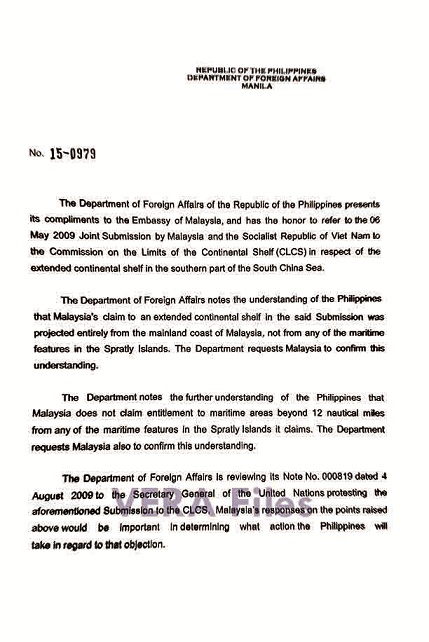
cogitasia – Philippine media went into a minor frenzy with the startling news that Manila purportedly offered Kuala Lumpur a quid pro quo in March: dropping the Philippine claim to North Borneo (Malaysia’s Sabah State) in exchange for Malaysian support for Manila’s arbitration case over the South China Sea. The media reports were quickly denied by the Philippines Department of Foreign Affairs, which noted the total absence of any reference to such a deal in the note that set off the firestorm. Recently, President Benigno Aquino III had to reiterate that his administration was not dropping the claim, prompting Malaysia to summon the Philippine Charge d’Affaires. Tiếp tục đọc “Sabah’s Shadow on the South China Sea”