Giao tranh Israel – Hamas nổ ra sau những tranh cãi về cuộc chiến pháp lý nhiều năm nhằm đẩy 7 gia đình Palestine khỏi khu đất ở Đông Jerusalem.
Hôm 10/5, đụng độ nghiêm trọng xảy ra tại nhà thờ Hồi giáo Al Aqsa, một trong những địa điểm linh thiêng nhất ở Jerusalem, khi cảnh sát Israel bắn hơi cay và lựu đạn choáng vào đám đông biểu tình người Palestine. Đụng độ tại đây và nhiều khu vực khác thuộc Jerusalem đã khiến hàng trăm người Palestine và nhiều sĩ quan Israel bị thương.
Phong trào Hamas tại Dải Gaza của Palestine tối hôm đó quyết định can thiệp bằng cách phóng hàng loạt rocket về phía lãnh thổ Israel. Không quân Israel tung đòn không kích đáp trả, châm ngòi cho loạt động thái “ăn miếng trả miếng” giữa hai bên.
Welcome to the 7th edition of the National Intelligence Council’s Global Trends report. Published every four years since 1997, Global Trends assesses the key trends and uncertainties that will shape the strategic environment for the United States during the next two decades.
Global Trends is designed to provide an analytic framework for policymakers early in each administration as they craft national security strategy and navigate an uncertain future. The goal is not to offer a specific prediction of the world in 2040; instead, our intent is to help policymakers and citizens see what may lie beyond the horizon and prepare for an array of possible futures.
Each edition of Global Trends is a unique undertaking, as its authors on the National Intelligence Council develop a methodology and formulate the analysis. This process involved numerous steps: examining and evaluating previous editions of Global Trends for lessons learned; research and discovery involving widespread consultations, data collection, and commissioned research; synthesizing, outlining, and drafting; and soliciting internal and external feedback to revise and sharpen the analysis.
A central component of the project has been our conversations with the world outside our security gates. We benefited greatly from ongoing conversations with esteemed academics and researchers across a range of disciplines, anchoring our study in the latest theories and data. We also broadened our contacts to hear diverse perspectives, ranging from high school students in Washington DC, to civil society organizations in Africa, to business leaders in Asia, to foresight practitioners in Europe and Asia, to environmental groups in South America. These discussions offered us new ideas and expertise, challenged our assumptions, and helped us to identify and understand our biases and blind spots.
One of the key challenges with a project of this breadth and magnitude is how to organize all the analysis into a story that is coherent, integrated, and forward looking. We constructed this report around two central organizing principles: identifying and assessing broad forces that are shaping the future strategic environment, and then exploring how populations and leaders will act on and respond to the forces.
Based on those organizing principles, we built the analysis in three general sections. First, we explore structural forces in four core areas: demographics, environment, economics, and technology. We selected these areas because they are foundational in shaping future dynamics and relatively universal in scope, and because we can offer projections with a
reasonable degree of confidence based on available data and evidence. The second section examines how these structural forces interact and intersect with other factors to affect emerging dynamics at three levels of analysis: individuals and society, states, and the international system. The analysis in this section involves a higher degree of uncertainty because of the variability of human choices that will be made in the future. We focus on identifying and describing the key emerging dynamics at each level, including what is driving them and how they might evolve over time. Finally, the third section identifies several key uncertainties and uses these to create five future scenarios for the world in 2040. These scenarios are not intended to be predictions but to widen the aperture as to the possibilities, exploring various combinations of how the structural forces, emerging dynamics, and key uncertainties could play out.
When exploring the long-term future, another challenge is choosing which issues to cover and emphasize, and which ones to leave out. We focused on global, long-term trends and dynamics that are likely to shape communities, states, and the international system for decades and to present them in a broader context. Accordingly, there is less on other nearterm issues and crises.
We offer this analysis with humility, knowing that invariably the future will unfold in ways that we have not foreseen. Although Global Trends is necessarily more speculative than most intelligence assessments, we rely on the fundamentals of our analytic tradecraft: we construct arguments that are grounded in data and appropriately caveated; we show our work and explain what we know and do not know; we consider alternative hypotheses and how we could be wrong; and we do not advocate policy positions or preferences. Global Trends reflects the National Intelligence Council’s perspective on these future trends; it does not represent the official, coordinated view of the US Intelligence Community nor US policy.
We are proud to publish this report publicly for audiences around the world to read and consider. We hope that it serves as a useful resource and provokes a conversation about our collective future.
Finally, a note of gratitude to colleagues on the National Intelligence Council and the wider Intelligence Community who joined in this journey to understand our world, explore the future, and draft this report.
The Strategic Futures Group
National Intelligence Council
March 2021
1. Kể từ khi đại dịch COVID-19 lan rộng toàn cầu, thái độ kỳ thị đối với cộng đồng gốc Á có dấu hiệu gia tăng ở nhiều nước. Tại Hoa Kỳ, các vụ tấn công bạo lực, kỳ thị đối với người gốc Á đã xảy ra tại nhiều tiểu bang, ảnh hưởng đến an ninh, an toàn và cuộc sống của người dân, trong đó có cộng đồng người gốc Việt và công dân Việt Nam đang sinh sống tại Hoa Kỳ.
Chính quyền các cấp của Hoa Kỳ đã áp dụng nhiều biện pháp tích cực để phòng ngừa, ngăn chặn tình trạng trên. Đại sứ quán và các cơ quan đại diện Việt Nam tại Hoa Kỳ đã vận động mạnh và thường xuyên phối hợp với các cơ quan Chính quyền và Quốc hội cấp liên bang và tiểu bang của Hoa Kỳ nhằm kịp thời bảo đảm an ninh, an toàn cho cộng đồng người gốc Việt và công dân Việt Nam tại Hoa Kỳ, đồng thời tạo thuận lợi cho cộng đồng và công dân Việt Nam được tiếp cận các dịch vụ về an ninh, y tế, giáo dục, an sinh xã hội và việc làm trong thời gian đại dịch.
Thời gian qua, tình trạng phân biệt chủng tộc đối với cộng đồng người gốc châu Á, trong đó có người gốc Việt và công dân Việt Nam tại Hoa Kỳ trong đại dịch Covid-19 ngày càng gia tăng. Đại sứ quán Việt Nam tại Hoa Kỳ đã nhiều lần trao đổi, vận động Chính quyền, Quốc hội liên bang và các tiểu bang của Hoa Kỳ bảo đảm an ninh, an toàn và quyền tiếp cận đầy đủ các dịch vụ về y tế, giáo dục, việc làm cho công dân và cộng đồng người gốc Việt tại Hoa Kỳ.
The fallout comes after corporate statements about concerns over forced labor in the Xinjiang region resurfaced on Chinese social media following fresh Western sanctions.
March 25, 2021, 9:11 PM +07 / Updated March 26, 2021, 6:04 PM +07By Adela Suliman
The United States announced in January that it would halt all imports of cotton from China’s Xinjiang region — a leading global supplier of the material — over forced labor concerns, while major retailers previously issued statements expressing their concerns.
In the wake of fresh Western sanctions earlier this week against officials responsible for the region in the country’s northwest, those corporate statements resurfaced on Chinese social media and were met with fury.
State-controlled media and online users criticized the two brands, with German sportswear giant Adidas and American brand Tommy Hilfiger also among those coming under fire.
“For enterprises that touch the bottom line of our country, the response is very clear: don’t buy!” China Central Television said on its social media account.
Many users also joined the calls for a boycott, urging local retailers to carry domestic stock instead.
The hashtag #ISupportXJCotton — created by the state-owned People’s Daily — generated more than 3 million ‘likes’ as of Friday on the Chinese social media platform Weibo.
The fallout continued offline too, with Chinese celebrities quick to disassociate themselves from the brands and tear up endorsement deals.
Popular actor Wang Yibo terminated his contract with Nike, his agency said in a statement posted on Weibo on Thursday.
And luxury fashion brand Burberry saw its iconic plaid design removed from the clothing worn by characters in the popular video game “Honor of Kings,” according to a post on the game’s official Weibo account.
I will stop buying or using Burberry products until Burberry has retracted or apologized for its unfounded allegations against Xinjiang. pic.twitter.com/Mus4FXeVXm— Regina Ip Lau Suk Yee (@ReginaIplau) March 26, 2021
Download the NBC News app for breaking news and politics
The backlash appeared to begin when the Communist Party’s Youth League on Wednesday called attention to a statement initially issued by the Swedish company H&M last year.
It also prompted users to look for previously issued statements by other foreign retailers on Xinjiang.
The original statement from the H&M Group said it was “deeply concerned by reports from civil society organizations and media that include accusations of forced labor and discrimination of ethnoreligious minorities in Xinjiang.”
The company said Thursday that “At this point we have nothing further to share” and directed NBC News to the statement.
The Nike statement is undated and reads: “We are concerned about reports of forced labor in, and connected to, the Xinjiang Uyghur Autonomous Region. Nike does not source products from the XUAR and we have confirmed with our contract suppliers that they are not using textiles or spun yarn from the region.”
Nike did not immediately respond to requests for comment from NBC News.
“The H&M Group continues to respect the Chinese consumer. We are committed to long-term investment and development in China,” it said.
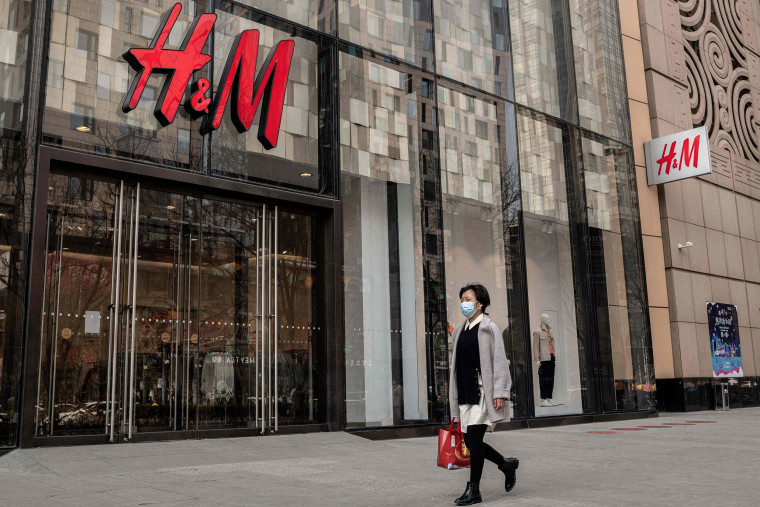
A woman walks past a store of Swedish clothing giant H&M in Beijing on Thursday.Nicolas Asfouri / AFP – Getty Images
As the world’s second largest economy and home to 1.4 billion people, Chinese purchasing power is strong.
“This is not actually the first time this kind of nationalistic backlash against a foreign firm has happened,” said Xin Sun, a lecturer in Chinese and East Asian Business at the Lau China Institute at King’s College London.
Chinese consumers have previously launched powerful boycotts of goods from Japan, South Korea and the U.S. in the last decade, he said, often with the “unofficial and implicit” backing of the ruling Communist Party.
But with the Uyghur issue an increasing flashpoint andtensions between Washington and Beijing showing no signs of abating, Sun said it was getting trickier for Western brands to operate in both markets.
“They try to respond to the increasing scrutiny from Western customers and people about their supply chains,” he told NBC News.
“They’re walking a very fine line between the Western market and of course the Chinese market is very big for them but you see the political pressure from all directions.”
The latest backlash comes shortly after sanctions were issued against Chinese officials on Monday by the United States, European Union, Britain and Canada.
Beijing retaliated with sanctions of its own, including a new round targeting British lawmakers and others on Friday, but has also been escalating public efforts to counter accusations of wrongdoing in Xinjiang.
A spokesman for China’s Ministry of Commerce, Gao Feng, said on Thursday the accusations of forced labor in Xinjiang were “completely untrue,” urging foreign companies to “correct their wrongdoings, and prevent business activities from becoming political issues.”
Foreign Ministry Spokesperson Hua Chunying told a news conference on Thursday that the “strong reaction from Chinese netizens” spoke for themselves and that Chinese people had a right to express their feelings and “oppose malicious attacks on China based on rumors and lies.”
She also held up photos at the daily media briefing of Black people picking cotton in the U.S., contrasting them with a second photograph of people smiling in cotton fields in Xinjiang.
On 21 January 2021, the Electricity and Renewable Energy Authority of Vietnam (EREA) submitted Report No. 20/BC-DL to the Deputy Minister of Industry and Trade in charge. The report requests the Ministry of Industry and Trade (MOIT)’s internal approval of the draft of the Prime Minister’s decision on the selection of investors for grid-connected solar power projects in Vietnam (“Draft Decision”).
This Draft Decision would apply the selection mechanism on a long-term basis. Bidding rounds will be conducted based on a so-called Renewable Energy Development Plan formulated by the MOIT for each five-year period. A more specific plan will be circulated on a biannual basis.
A “superhero” delivery driver in Hanoi has saved a two-year-old girl who fell from a 12th-floor balcony.
Nguyen Ngoc Manh, 31, was sitting in his car waiting to make a delivery at 5pm on Sunday when he heard a child crying, he told the Anninhthudo news organisation. A woman started screaming and he stuck his head out of the window to see what was going on.
He told local media in the Vietnam capital that he first thought it was a child having a tantrum, but quickly realised it was something else. The child was nearly 50 metres above ground.
“I saw a girl climbing out of the balcony,” he said. He jumped out of his car and climbed up on to a nearby building to get closer should the child fall.
Standing on a metallic roof used to store generators, he lost his footing as the child began to fall, he told VN Express International. But he flung himself forward to catch her, landing so hard that he left a dent in the roof.
“I tried to reach out my hand and took the maximum effort to catch the girl,” he said, hoping that at the very least he might be able to prevent her from falling straight to the ground.
In a video of the incident taken from a nearby apartment building, the child can be seen climbing over the balcony railing and on to a thin ledge. Neighbours in a building opposite can be heard crying out to her. The child holds on for a few moments before losing her grip and falling.
“Luckily, the baby fell into my lap,” Nguyen said. “I hurriedly embraced her then saw blood leaking from her mouth, I was very frightened.”
The child was taken to the National Children’s Hospital where doctors told local media she had dislocated her hip but suffered no other injuries. Le Ngoc Duy, a doctor at the hospital, said she was in a cast and being monitored.
Beijing’s South China Sea moves have ramped up with the passing of a law allowing the China Coast Guard (CCG) to fire on what it identifies as illegal foreign vessels in waters under its jurisdiction. By virtue of China’s nine-dash line claim, this law applies to the entire South China Sea. Given that China’s claims are opposed by other South China Sea claimants as well as numerous non-claimant countries, the law has proven controversial and raises concerns over whether it will increase the risk of confrontation and conflict in the disputed waters.
The Law
On January 22, the standing committee of China’s National People’s Congress passed a new law empowering the CCG to employ “all necessary means” to stop or prevent threats from foreign vessels and specifying the circumstances under which different weapons, “handheld, shipborne, or airborne,” can be deployed, as well as allowing it to demolish structures built by other claimants in areas China considers its own. This new law is another manifestation of the CCG’s expanding role. The roles and practices of the CCG have generally been in line with those of other coast guards around the world. This specific law, however, lays out the powers and duties of the CCG in so called “jurisdictional waters,” which include the highly contested areas in the South China Sea. For now, the law amounts to a figurative shot across the bows of other claimants—but that shot could soon be literal.
[TĐH: Jane Fonda was an anti-Vietnam-War activist]
Washington [US], March 1 (ANI): At this year’s Golden Globes, American actor Jane Fonda received the prestigious Cecil B. DeMille Award.
According to Variety, the honour recognises Fonda’s illustrious career in film, one that saw her top the box office and cement her name in movie history by starring in such classics as ‘Klute,’ ‘The China Syndrome’ and ‘9 to 5.’More recently, Fonda has appeared in the Netflix series ‘Grace and Frankie’ as well as ‘Book Club’ and ‘Youth.’ The 83-year-old star’s other films include ‘The Electric Horseman,’ ‘Barefoot in the Park,’ ‘Coming Home, and ‘Julia.’One of her biggest commercial successes was the 1982 release of her first exercise video, ‘Jane Fonda’s Workout,’ which went on to sell 17 million copies and spawned several follow-ups.
Fonda has been equally well known for her political stances – protesting the Vietnam War, campaigning for civil rights, and advocating for feminist causes. Currently, Fonda is leading Fire Drill Fridays as part of a national movement to raise awareness about the climate crisis.
The Cecil B. DeMille Award is the highest honour given out by the Hollywood Foreign Press Association, the organisation behind the Globes. Past recipients include Robert De Niro, Sophia Loren, Sean Connery, Oprah Winfrey, Martin Scorsese, Jodie Foster, Steven Spielberg, and Meryl Streep. Last year’s honouree was Tom Hanks.
A 15-time nominee, Fonda has been awarded Golden Globes for seven-times.
The 78th Golden Globe Awards is taking place nearly two months later than normal, due to the impact of the COVID-19 pandemic on cinema and television.
This is the first bi-coastal ceremony, with Tina Fey hosting from the Rainbow Room in New York City, and Amy Poehler hosting from The Beverly Hilton in Beverly Hills, California. The nominees for Golden Globes were announced on February 3. (ANI)
“Ngày thành lập ư, có thật quan trọng không?”, tôi đã nghĩ thế… Nhưng hôm nay, chợt nhớ về 20 năm trước, kỷ niệm lần lượt hiện về.
Lần đầu tiên tôi “nhìn thấy” Internet là vào năm 1998, nửa năm sau khi Việt Nam chính thức kết nối. Ấn tượng đầu tiên là hầu như không có gì bằng tiếng Việt để đọc. Đang làm biên tập viên báo Lao Động, tôi nhận ra đây sẽ là phương tiện phát hành mới, mảnh đất chưa khai phá cho báo chí. “Mình có thể là người đầu tiên làm điều đó?”, từ lâu tôi mong ước làm một tờ báo thực sự hữu ích cho người dùng.
CỘNG HÒA XÃ HỘI CHỦ NGHĨA VIỆT NAM Độc lập – Tự do – Hạnh phúc —————
Số: 2427/QĐ-TTg
Hà Nội, ngày 22 tháng 12 năm 2011
QUYẾT ĐỊNH
PHÊ DUYỆT CHIẾN LƯỢC KHOÁNG SẢN ĐẾN NĂM 2020, TẦM NHÌN ĐẾN NĂM 2030
THỦ TƯỚNG CHÍNH PHỦ
Căn cứ Luật Tổ chức Chính phủ ngày 25 tháng 12 năm 2001;
Luật Khoáng sản số 60/2010/QH12 ngày 17 tháng 11 năm 2010;
Căn cứ Nghị quyết số 02-NQ/TW ngày 25 tháng 4 năm 2011 của Bộ Chính trị về định hướng chiến lược khoáng sản và công nghiệp khai khoáng đến năm 2020, tầm nhìn đến năm 2030;
Căn cứ Chiến lược phát triển kinh tế – xã hội 2011 – 2020;
Xét đề nghị của Bộ trưởng Bộ Tài nguyên và Môi trường,
QUYẾT ĐỊNH:
Điều 1. Phê duyệt “Chiến lược khoáng sản đến năm 2020, tầm nhìn đến năm 2030” với những nội dung chính như sau:
Lesbian, gay, bisexual, transgender and intersex (LGBTI) rights have become an important topic of discussion in the development sector in recent years. Moving from the provision of HIV and AIDS care for the disproportionate number of LGBT people affected, through to same-sex marriage legalisation, the landscape has shifted to promote an LGBTI-inclusive approach in many areas. This is supported by a series of international and national human rights provisions affirming all people’s rights to nondiscrimination, freedom of expression and freedom from violence. In some contexts, these changes have been possible due to shifts in social norms towards greater tolerance and acceptance of LGBTQI people. Norm change has largely been the result of long-term and increasingly visible and vibrant activist engagement, drawing on strategies such as media coverage, peer interventions, ally-building and institutional training. This guide reviews some of the literature on the norm changes that are leading to greater acceptance of and less discrimination towards LGBTQI people, focusing on low income countries in the global South.
This topic guide is primarily intended for policy-makers and practitioners who may not be familiar with a queer theory approach to norms. It provides an overview of some important ideas and ways of thinking about how gendered social norms affect LGBTQI people in developing countries, moving the discussion beyond a rights-based approach to be more inclusive of all kinds of non-normative sexualities and genders. The guide aims to summarise the main theoretical points of a queer approach to gender norms, to identify the key issues and challenges affecting LGBTQI people, and to provide some examples of where norm change has happened.
Ambassador Daniel Kritenbrink collaborated with Vietnamese rapper Wowy to make a song about the Lunar New Year vibe in Vietnam.
Throughout the song, the ambassador raps several Vietnamese lines to wish people a peaceful new lunar year.
He also lists what should be done throughout Tet in Vietnamese traditions, including preparing the yellow mai and peach plants, of which flowers are signature for home decoration during Tet in Vietnam, cleaning up the house to welcome guests, and giving li xi (lucky money) to children.
He ends the video with the line saying “Tet den roi” which means Tet has arrived.
This is the Ambassador’s fourth Tet in Vietnam, and he has always enjoyed this time of year. “Tet gives us an opportunity to slow down, reconnect with loved ones, and reflect on the passing year while looking ahead to the coming year,” said the U.S. Consulate General in HCMC.
“Our two countries cooperate closely on everything from security, trade, and education, to war legacies, energy, and health, and now we can add music to the list,” it added.
Tet is what Vietnamese calls Lunar New Year, which is so far the nation’s biggest holiday and most important occasion for family reunion.
The Communist Party of Vietnam (CPV)’s Central Committee has been elected with 200 members for the 13th Congress (2021-26), unchanged from the previous term.
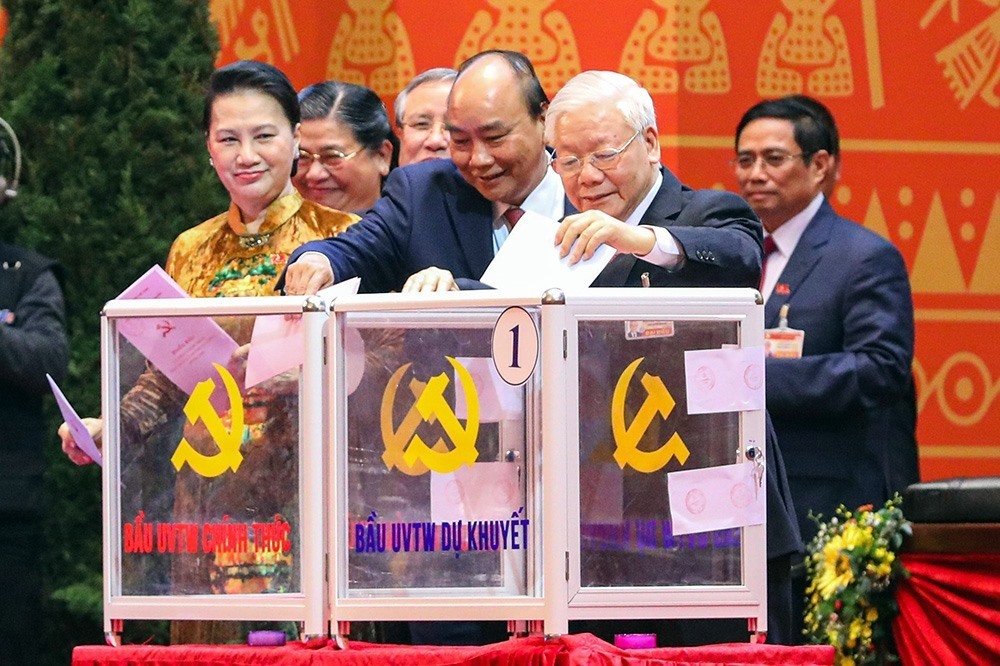
Delegates cast ballots to elect 13th tenure Party Central Committee
The 13th National Congress of the Communist Party of Vietnam (CPV) on January 30 evening announced the results of the election and the list of the 200 elected to the 13th Party Central Committee, including 180 official members and 20 alternative members.
Immediately after completing the vote counting, the Congress announced the list of delegates elected to the 13th Party Central Committee.
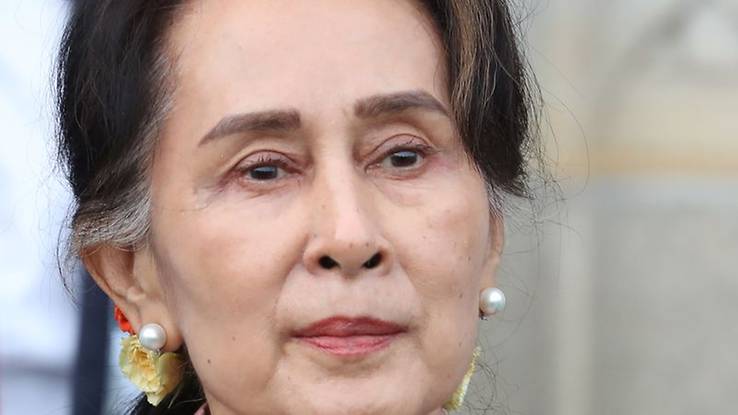
File photo of Myanmar’s leader Aung San Suu Kyi, who was detained in the early morning of Feb 1, 2021. (Photo: Reuters/Yves Herman)
01 Feb 2021 07:12AM(Updated: 01 Feb 2021 09:31AM)
YANGON: Myanmar’s de facto leader Aung San Suu Kyi and other senior figures from the ruling party have been detained in an early morning raid, the spokesman for the governing National League for Democracy said on Monday (Feb 1).
The move comes after days of escalating tension between the civilian government and the powerful military that stirred fears of a coup in the aftermath of an election the army says was fraudulent.





 CVD
CVD 