US Dept. of Treasury Report to Congress (Nov. 2022): Macroeconomic and Foreign Exchange Policies of Major Trading Partner of the United States

Read full report >>

Excerpt on Vietnam

Treasury Conclusions Related to the 2015 Act

Vietnam has been removed from the Monitoring List, having only met one of the three criteria over the four quarters through June 2022 as it had in the June 2022 Report for the four quarters through December 2021. Vietnam had previously exceeded the thresholds for all three criteria as noted in the December 2021, April 2021, and December 2020 Reports, in each of which Treasury conducted enhanced analysis of Vietnam. In early 2021, Treasury commenced enhanced bilateral engagement with Vietnam in accordance with the 2015 Act. As a result of discussions through the enhanced engagement process, Treasury and the State Bank of Vietnam- (SBV) reached agreement in July 2021 to address Treasury’s concerns about Vietnam’s currency practices.5 Treasury continues to engage closely with the SBV to monitor Vietnam’s progress in addressing Treasury’s concerns and remains satisfied with the progress made by Vietnam.

Treasury Analysis under the 1988 and 2015 Legislation

This Report assesses developments in international economic and exchange rate policies over the four quarters through June 2022. The analysis in this Report is guided by Sections 3001-3006 of the Omnibus Trade and Competitiveness Act of 1988 (1988 Act) (codified at 22 U.S.C. §§ 5301-5306) and Sections 701 and 702 of the Trade Facilitation and Trade Enforcement Act of 2015 (2015 Act) (codified at 19 U.S.C. §§ 4421-4422), as discussed in Section 2 of this Report.
Under the 2015 Act, Treasury is required to assess the macroeconomic and exchange rate policies of major trading partners of the United States for three specific criteria. Treasury sets the benchmark and threshold for determining which countries are major trading partners, as well as the thresholds for the three specific criteria in the 2015 Act. In this Report, Treasury has reviewed the 20 largest U.S. trading partners3 against the thresholds Treasury has established for the three criteria in the 2015 Act:

(1) A significant bilateral trade surplus with the United States is a goods and services trade surplus that is at least $15 billion.
(2) A material current account surplus is one that is at least 3% of GDP, or a surplus for which Treasury estimates there is a material current account “gap” using Treasury’s Global Exchange Rate Assessment Framework (GERAF).
(3) Persistent, one-sided intervention occurs when net purchases of foreign currency are conducted repeatedly, in at least 8 out of 12 months, and these net purchases total at least 2% of an economy’s GDP over a 12-month period.4

Read full report >>

Belching lakes, mystery craters, ‘zombie fires’: How the climate crisis is transforming the Arctic permafrost

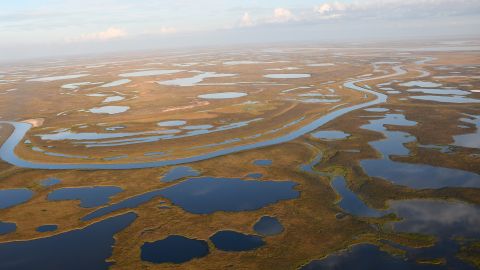
Newly formed lakes in the permafrost landscape of Russia's Siberia.

Newly formed lakes in the permafrost landscape of Russia’s Siberia.Evgeny Chuvilin/Skoltech

By Katie Hunt, CNN

Published 7:06 AM EST, Sat November 12, 2022

CNN — Four years ago, Morris J. Alexie had to move out of the house his father built in Alaska in 1969 because it was sinking into the ground and water was beginning to seep into his home.

“The bogs are showing up in between houses, all over our community. There are currently seven houses that are occupied but very slanted and sinking into the ground as we speak,” Alexie said by phone from Nunapitchuk, a village of around 600 people. “Everywhere is bogging up.”

What was once grassy tundra is now riddled with water, he said. Their land is crisscrossed by 8-foot-wide boardwalks the community uses to get from place to place. And even some of the boardwalks have begun to sink.

“It’s like little polka dots of tundra land. We used to have regular grass all over our community. Now it’s changed into constant water marsh.”

Tiếp tục đọc “Belching lakes, mystery craters, ‘zombie fires’: How the climate crisis is transforming the Arctic permafrost”

Crypto’s Boy King Got Dethroned Overnight

Sam Bankman-Fried sold himself as a savior—but was sitting on a hollow company.

By David Gerard, the author of the book Attack of the 50 Foot Blockchain and the cryptocurrency and blockchain news blog of the same name.

Foreign Policy

Sam Bankman-Fried speaks onstage at a charity event on June 23 in New York City.

NOVEMBER 11, 2022, 1:22 PM

Cryptocurrency has a serious problem: The party’s over. Fresh dollars from naive retail buyers aren’t coming in anymore after the crashes in May and June, despite a round of advertising during the Super Bowl in February reaching every consumer in the United States. Without those fresh dollars, the holders can’t cash out.

Crypto trading firms hold large piles of assets whose “market cap”—their alleged mark-to-market value—supposedly adds up to a trillion dollars. But this number is unrealizable nonsense because the actual dollars just aren’t there. Everyone in the system knows it. What to do?

The regulated U.S.-based exchanges are just the cashier’s desk for the wider crypto casino. The real trading action, as well as price discovery, is on the unregulated offshore exchanges. These include Binance, OKX, and Huobi. Until Tuesday, Nov. 8, they also included Sam Bankman-Fried’s FTX, which cut off customer withdrawals around 11:37 a.m. UTC on Nov. 8 and then revealed around 4 p.m. UTC that it was suffering a “liquidity crisis.” FTX is just the latest casualty in a series of collapses that began with Terraform Labs’s UST stablecoin; that took out Celsius Network, Voyager Digital, and many other crypto trading firms; and that is now gradually driving the price and trading volume of cryptocurrencies to what they should be: zero.

FTX desperately sought more funding, but to no avail; at press time, FTX had been shut down by its Bahamian regulator and put into liquidation, as well as was filing for bankruptcy in the United States and Bankman-Fried has resigned as CEO. But the fall of FTX has been particularly remarkable in part because its founder was unusually feted.

Tiếp tục đọc “Crypto’s Boy King Got Dethroned Overnight”

As major powers meet in Asia, the rest of the world is pressed to pick a side

Simone McCarthy

By Simone McCarthy

Updated 2:54 AM EST, Fri November 11, 2022

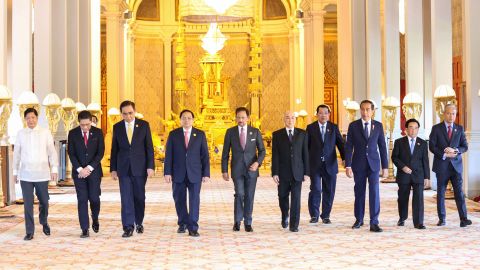
Leaders of Southeast Asian nations make courtesy call to Cambodia's king before a summit in Phnom Penh on November 10, 2022.

Leaders of Southeast Asian nations make courtesy call to Cambodia’s king before a summit in Phnom Penh on November 10, 2022.Khem Sovannara/AFP/Getty Images

Editor’s Note: A version of this story appeared in CNN’s Meanwhile in China newsletter, a three-times-a-week update exploring what you need to know about the country’s rise and how it impacts the world. Sign up here.

Hong Kong CNN — 

World leaders are converging in Phnom Penh this weekend for the first in a series of international summits in Southeast Asia over the coming week, where divisions between major powers and conflict threaten to overshadow talks.

The first stop is the Cambodian capital where leaders from across the Indo-Pacific will meet alongside a summit of Association of Southeast Asian Nations (ASEAN) leaders, followed next week by a meeting of the Group of 20 (G20) leaders in Bali and of the Asia-Pacific Economic Cooperation forum in Bangkok.

Tiếp tục đọc “As major powers meet in Asia, the rest of the world is pressed to pick a side”

A technologically advanced society is choosing to destroy itself. It’s both fascinating and horrifying to watch

Published: November 6, 2022 7.04pm GMT The Conversation

Authors

  1. Christopher WrightProfessor of Organisational Studies, University of Sydney
  2. Daniel NybergProfessor of Management, Newcastle Business School, University of Newcastle
  3. Vanessa BowdenLecturer, University of Newcastle

Disclosure statement

Christopher Wright receives funding from the Australian Research Council.

Daniel Nyberg receives funding from the Australian Research Council.

Vanessa Bowden receives funding from the Australian Research Council.

Partners

University of Sydney and University of Newcastle provide funding as members of The Conversation AU.

View all partners

CC BY ND
We believe in the free flow of information
Republish our articles for free, online or in print, under Creative Commons licence.

As world leaders assemble for the United Nations climate change conference (COP27) in Egypt, it’s hard to be optimistic the talks will generate any radical departure from the inexorable rise in global carbon emissions over the past two centuries.

After all, before last year’s Glasgow talks, experts warned the summit was the world’s last chance to limit global warming to 1.5℃ this century. And yet, a UN report last week found even if all nations meet their climate goals this decade, the planet would still heat by a catastrophic 2.5℃.

Tiếp tục đọc “A technologically advanced society is choosing to destroy itself. It’s both fascinating and horrifying to watch”

Loss and damage: Who is responsible when climate change harms the world’s poorest countries?

The Conversation

Author

  1. Bethany TietjenResearch fellow in climate policy, The Fletcher School, Tufts University

Disclosure statement

Bethany Tietjen does not work for, consult, own shares in or receive funding from any company or organisation that would benefit from this article, and has disclosed no relevant affiliations beyond their academic appointment.

Partners

Tufts University provides funding as a founding partner of The Conversation US.

View all partners

CC BY ND
We believe in the free flow of information
Republish our articles for free, online or in print, under Creative Commons licence.

You may be hearing the phrase “loss and damage” in the coming weeks as government leaders meet in Egypt for the 2022 U.N. Climate Change Conference.

It refers to the costs, both economic and physical, that developing countries are facing from climate change impacts. Many of the world’s most climate-vulnerable countries have done little to cause climate change, yet they are experiencing extreme heat waves, floods and other climate-related disasters. They want wealthier nations – historically the biggest sources of greenhouse gas emissions – to pay for the harm.

Tiếp tục đọc “Loss and damage: Who is responsible when climate change harms the world’s poorest countries?”

Singaporean wanted by US for violating North Korea sanctions is in Singapore: police

US State Department on Thursday offered US$5 million for information on Kwek Kee Seng, blaming him for numerous fuel deliveries to North KoreaReward comes as the US urges strict enforcement of UN sanctions on North Korea after it launched a volley of missiles

Agence France-Presse

Agence France-Presse, SCMP

Published: 9:15am, 6 Nov, 2022

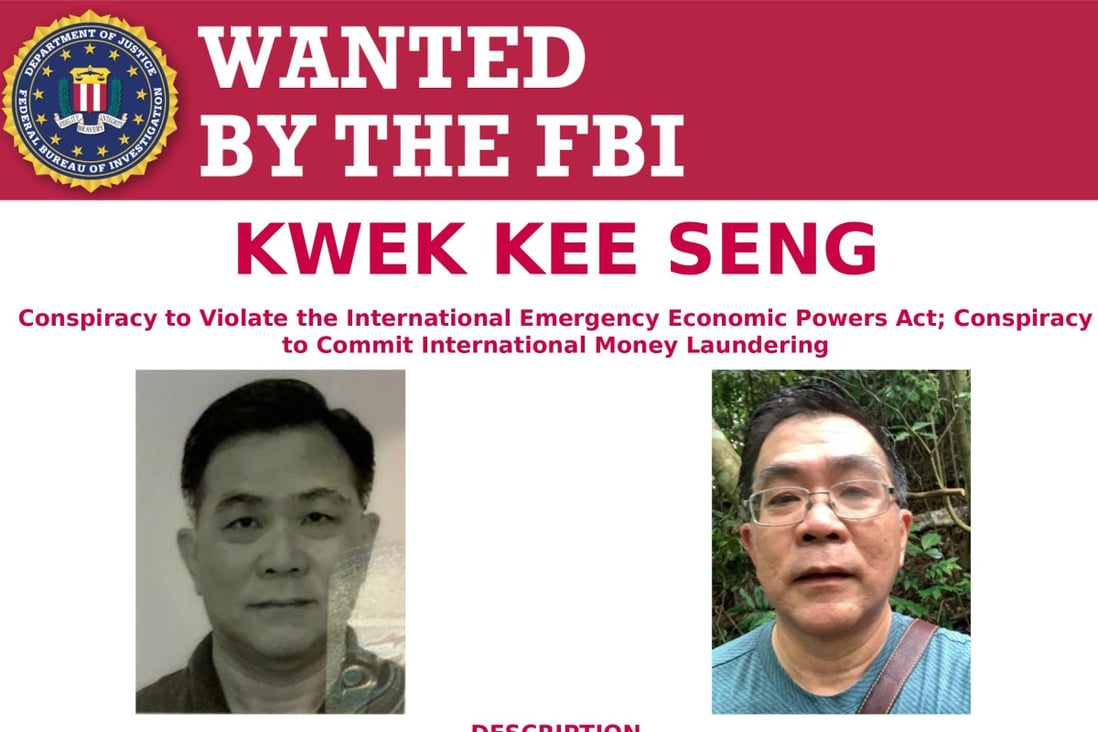
FBI wanted poster for Kwek Kee Seng. Photo: FBI via AP

FBI wanted poster for Kwek Kee Seng. Photo: FBI via AP

A Singaporean businessman wanted by the United States for violating sanctions on North Korea is currently in the city state where he is under investigation, the Singapore police said.

In a statement issued late on Saturday, the Singapore Police Force (SPF) said they have sought clarification from their US counterparts over the reward as they have kept them informed about the ongoing probe by local authorities.

Tiếp tục đọc “Singaporean wanted by US for violating North Korea sanctions is in Singapore: police”

Egypt faces criticism over crackdown on activists ahead of COP27 climate summit

Ivana Kottasová

By Ivana Kottasová, CNN

Updated 12:44 PM EDT, Sat November 5, 2022

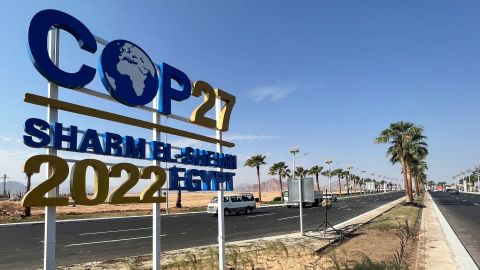
View of a COP27 sign on the road leading to the conference area in Egypt's Red Sea resort town of Sharm el-Sheikh, taken on October 22, as it prepares to host the COP27 summit.

View of a COP27 sign on the road leading to the conference area in Egypt’s Red Sea resort town of Sharm el-Sheikh, taken on October 22, as it prepares to host the COP27 summit.Sayed Sheasha/ReutersCNN — 

Egypt is facing a barrage of criticism over what rights groups say is a crackdown on protests and activists, as it prepares to host the COP27 climate summit starting Sunday.

Rights groups have accused the Egyptian government of arbitrarily detaining activists after Egyptian dissidents abroad called for protests to be held against President Abdel Fattah el-Sisi on November 11, during the United Nations climate talks.

According to rights groups, security forces have been setting up checkpoints on Cairo streets, stopping people and searching their phones to find any content related to the planned protests.

Tiếp tục đọc “Egypt faces criticism over crackdown on activists ahead of COP27 climate summit”

Hundreds of elephants, wildebeests and zebras dead in Kenya amid prolonged drought

Prolonged drought across the Horn of Africa over the past four consecutive rainy seasons has left some 18 million people affected by food shortages in Somalia, Ethiopia and Kenya

By Idris Mukhtar, CNN

Published 7:45 AM EDT, Sat November 5, 2022

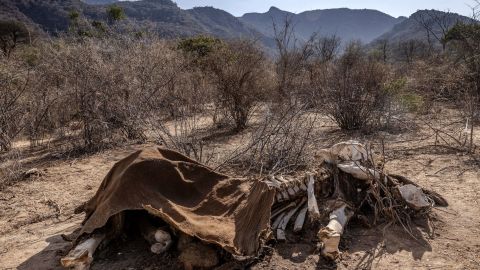
The carcass of an adult elephant, which died during the drought, is seen in Namunyak Wildlife Conservancy, Samburu, Kenya on October 12, 2022.

The carcass of an adult elephant, which died during the drought, is seen in Namunyak Wildlife Conservancy, Samburu, Kenya on October 12, 2022.Luis Tato/AFP/Getty ImagesCNN — 

Hundreds of elephants, wildebeests, and zebras have died across Kenya amid the nation’s longest drought in decades.

“The Kenya Wildlife Service Rangers, Community Scouts, and Research Teams counted the deaths of 205 elephants, 512 wildebeests, 381 common zebras, 51 buffalos, 49 Grevy’s zebras, and 12 giraffes in the past nine months,” a report released Friday by the country’s Ministry of Tourism said.

Tiếp tục đọc “Hundreds of elephants, wildebeests and zebras dead in Kenya amid prolonged drought”

The new [US] National Security Strategy in the context of an unstated “cold war”

By John Hemmings, Pacific Forum

John Hemmings (john@pacforum.org) is Senior Director of the Indo-Pacific Foreign and Security Policy Program at the Pacific Forum.

The Biden administration released America’s new National Security Strategy (NSS) on Oct. 12. For those who read such documents regularly, there were few surprises. Values were mentioned in the context of the United States’ position in the world and vis-a-vis perceived adversaries, such as Russia, Iran, and the People’s Republic of China, while the administration’s lines of effort were laid out in a typical ends, ways, and means format. There were also sections on each region of the world, where the strategies laid out a bit more context.
Tiếp tục đọc “The new [US] National Security Strategy in the context of an unstated “cold war””

Council on Foreign Relations -Daily News Brief, Nov. 3, 2022

Top of the Agenda

Ethiopian Government Agrees to Truce With Tigrayan Rebels

After two years of fighting, the Ethiopian government and rebel Tigray People’s Liberation Front (TPLF) agreed to end hostilities (WaPo), disarm, and restore “law and order,” said Olusegun Obasanjo, the Horn of Africa envoy for the African Union (AU). The AU-mediated truce has raised hopes for an end to a war that has killed tens of thousands of people and displaced millions (Reuters).  The AU stepped in to mediate after a cease-fire declared by the government in March fell apart after five months. Obasanjo said the AU will monitor the implementation of the new peace deal, which stipulates that Ethiopia’s government will take control of Mekelle, the capital of the Tigray region, and that the TPLF will once again be recognized as a political party. Eritrea, which sent troops to fight alongside the Ethiopian government’s forces, was not part of the talks. 
Analysis

This is a huge breakthrough that involved major concessions from both sides, even if the parties punted the thorniest details to future peace talks,” the International Crisis Group’s Alan Boswell tells Reuters. “If they do stop fighting, then today will just be the start of what will surely prove a very bumpy, long, and difficult peace process.” 

“The African Union-mediated deal in Ethiopia is important for watchers of regional organizations & world order. While too early to celebrate, AU shows the way when European regional institutions are weakening or busy fighting each other,” American University’s Amitav Acharya tweets. 

For the Africa in Transition blog, CFR’s Michelle Gavin explains the challenges that have hindered the AU-mediated negotiation process.
Tiếp tục đọc “Council on Foreign Relations -Daily News Brief, Nov. 3, 2022”

ISDS case map

facebook sharing button
twitter sharing button
whatsapp sharing button
linkedin sharing button

Click here for map >>

Click on the dots on the map to explore ISDS cases or look at the list below


Additional resources:

ISDS cases displayed on this map

AfricaAsiaEurope
Ampal-American vs. Egypt
Unión Fenosa vs. Egypt
Veolia vs. Egypt
Al-Kharafi vs. Libya
Carlyle vs. Morocco
Foresti vs. South Africa
Agro EcoEnergy vs. Tanzania
Total vs. Uganda
Border Timbers & Von Pezold vs. Zimbabwe
Bechtel, Enron and seven European banks vs. India
Vodafone vs. India
Churchill Mining vs. Indonesia
Newmont Mining vs. Indonesia
Khan Resources Inc. vs. Mongolia
Tethyan Copper vs. Pakistan
Fraport vs. Philippines
Hanocal & IPIC International vs. South Korea
Kingsgate vs. Thailand
ConocoPhillips & Perenco vs. Vietnam
Razvoj Golf & Elitech vs. Croatia
CME & Lauder vs. Czech Republic
Saluka vs. Czech Republic
Vermilion vs. France
Vattenfall vs. Germany I
Vattenfall vs. Germany II
Rockhopper vs. Italy
RWE vs. Netherlands
Eureko vs. Poland
Gabriel Resources vs. Romania
Micula vs.. Romania
Yukos vs. Russia
Achmea vs. Slovakia
Ascent Resources vs. Slovenia
NextEra vs. Spain
Latin AmericaNorth AmericaPacific
Abaclat vs. Argentina
Azurix vs. Argentina
CMS Gas vs. Argentina
Aguas del Tunari vs. Bolivia
Eco Oro vs. Colombia
Novartis vs. Colombia
Infinito Gold vs. Costa Rica
TCW vs. Dominican Republic
Chevron vs. Ecuador
Copper Mesa vs. Ecuador
Occidental Petroleum vs. Ecuador
Pac Rim vs. El Salvador
Kappes, Cassidy & Associates vs. Guatemala
RDC vs. Guatemala
Abengoa vs. Mexico
Cargill vs. Mexico
Metalclad vs. Mexico
Renco vs. Peru
Philip Morris vs. Uruguay
ConocoPhilips vs. Venezuela
Crystallex vs. Venezuela
Eli Lilly vs. Canada
Ethyl vs. Canada
ExxonMobil and Murphy Oil vs. Canada
Lone Pine vs. Canada
TC Energy vs. United States
Philip Morris vs. Australia
Barrick Gold vs. Papua New Guinea

Key ISDS facts

  • Amount of ISDS cases: 1104 (2020)
  • Total claimed amount: $US 570 billion (2018)
  • Average amount claimed by investors: US$ 1.5 billion
  • Average amount awarded by tribunals: US$ 438 million
  • Largest award: US$ 50 billion (Yukos vs. Russia)
  • Results of decisions (on the merits): 61% in favour of investors (2019)
  • Most invoked treaty in ISDS arbitrations: Energy Charter Treaty (135 cases)
  • Investor legal costs on average: US$ 6.4 million
  • States legal costs on average: US$ 4.7 million
  • ISDS proceedings average length: 4 years and a half

(Source: UNCTADBIICLSOMO)

keywords: investor-state disputes | ISDS

source:

Functional Jurisdiction in the Law of the Sea

Functional Jurisdiction in the Law of the Sea – Download >>

It is a commonplace observation that the 1982 UN Convention on the Law of the Sea establishes a framework for the Law of the Sea that is based upontwo different concepts. One is a zonal analysis, which takes the juridicalzones into which the seas are divided and stipulates the basic rules applica- ble to each of them in turn. The other is a topical analysis, taking some of themain activities on the seas, such as fishing, marine research and pollution,and again setting out the basic rules for each.

The framework is, however,incomplete, and a great deal is left open, not only to be worked out in moredetailed treaties but also to be governed by more general principles of inter-national law. In this way the 1982 regime will continue to develop to meet new challenges and changed circumstances.

In this monograph Dr Gavouneli explores these issues and offers an expertinsight into the jurisdictional developments that are clearly discernable aquarter-century after the adoption of the Convention. Her keen analysismoves from fundamental principles governing jurisdiction in internationallaw to shrewd reflections on the significance of current developments suchas the Proliferation Security Initiative and questions of jurisdiction over theinternational seabed area. This thoughtful text will be of real interest to allwho have a concern with the directions in which the contemporary Law of the Sea is growing.

Vaughan Lowe
Oxford, August 2007

Functional Jurisdiction in the Law of the Sea – Download >>

Council on Foreign Relations: Daily news brief, Nov. 2, 2022

November 2, 2022
Top of the Agenda

Seoul Fires Back After Barrage of North Korean Missile Tests

North Korea fired a missile that crossed the Northern Limit Line, a maritime border with South Korea that Pyongyang does not recognize (CNN), for the first time since the 1950–53 Korean War. South Korea’s military called the launch “rare and intolerable” and responded by firing three missiles (Yonhap) into waters north of the line. North Korea’s missile was one of as many as twenty-three it test-fired into the seas off of South Korea’s east and west coasts today. The missile deployment was North Korea’s largest in a single day. The launches came after U.S.-South Korea military drills began on Monday. U.S. Defense Secretary Lloyd Austin is set to meet with his South Korean counterpart at the Pentagon tomorrow.  
Tiếp tục đọc “Council on Foreign Relations: Daily news brief, Nov. 2, 2022”