Japan passes ‘brutal’ counter-terror law despite fears over civil liberties

Critics including UN expert fear legislation passed by Abe government could target ordinary citizens and deter grassroots opposition to government policies

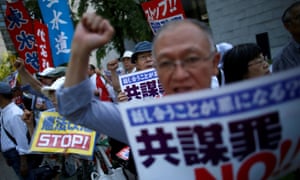
Protesters shout slogans as they protest against an anti-conspiracy bill outside parliament building in Tokyo.
Protesters shout slogans as they protest against an anti-conspiracy bill outside parliament building in Tokyo. Photograph: Issei Kato/Reuters

Japan has passed a controversial law targeting conspiracies to commit terrorism and other serious crimes, despite a warning by the UN that it could be used to crack down on civil liberties.

The ruling Liberal Democratic party and its junior coalition pushed the bill through the upper house of Japan’s parliament as thousands of people protested outside. Tiếp tục đọc “Japan passes ‘brutal’ counter-terror law despite fears over civil liberties”

“Một vành đai, Một con đường:” Có gì trong đó cho ta?

English: “One Belt, One Road:” What’s in It For Us?

Ý kiến tại hội thảo của Viện nghiên cứu biển Trung Quốc

Cầu cao tốc Beipanjiang tại tỉnh Quý Châu, Trung Quốc (Ảnh: Glabb / trên trang Wikimedia Commons)

Alexander Đại đế là người được cho là đã tuyên bố: “người lo hậu cần là những kẻ không hề hài hước…họ hiểu rằng nếu chiến dịch của ta thất bại, chúng là những kẻ đầu tiên ta xử tử.” Alexander Đại đế là một trong những chiến lược gia đầu tiên hiểu được tầm quan trọng của việc kết nối và cũng là người đầu tiên chỉ ra rằng chẳng có gì đáng cười về điều này. Tốc độ và độ tin cậy của việc vận chuyển và các dạng liên lạc khác có ý nghĩa rất lớn đối với hiệu quả kinh tế cũng như đối với chiến tranh. Tiếp tục đọc ““Một vành đai, Một con đường:” Có gì trong đó cho ta?”

Triều Tiên – Vì sao căng thẳng? – 5 kỳ

  • Kỳ 1: Triều Tiên – Vì sao căng thẳng?
  • Kỳ 2: Sóng ngầm ở Hội đồng Bảo an
  • Kỳ 3: Bình Nhưỡng có gì trong tay?
  • Kỳ 4: Tình hình Triều Tiên có thể cứu vãn?
  • Kỳ 5: Chìa khóa “made in China”

***

Triều Tiên – Vì sao căng thẳng?

17/04/2017 11:33 GMT+7

TTO – Bình Nhưỡng đã năm lần thử hạt nhân và hơn chục lần bắn thử các loại tên lửa. Không biết bao nhiêu lời răn đe, không biết bao nhiêu biện pháp trừng phạt đã được công bố nhưng có vẻ đâu vẫn hoàn đấy. Vì sao vậy?

Triều Tiên - Vì sao căng thẳng?
Binh lính Triều Tiên trong lễ duyệt binh ngày 15-4 – Ảnh: Reuters

Tiếp tục đọc “Triều Tiên – Vì sao căng thẳng? – 5 kỳ”

Japanese demand for nuclear shelters, purifiers surges as North Korea tension mounts

channelnewsasia

Sales of nuclear shelters and radiation-blocking air purifiers have surged in Japan in recent weeks as North Korea has pressed ahead with missile tests in defiance of U.N. sanctions.

A soldier films North Korean soldiers, officers and high ranking officials attending a military parade marking the 105th birth anniversary of country’s founding father Kim Il Sung in Pyongyang, North Korea, April 15, 2017. REUTERS/Damir Sagolj/Files

TOKYO:Sales of nuclear shelters and radiation-blocking air purifiers have surged in Japan in recent weeks as North Korea has pressed ahead with missile tests in defiance of U.N. sanctions.

A small company that specializes in building nuclear shelters, generally under people’s houses, has received eight orders in April alone compared with six orders during a typical year. Tiếp tục đọc “Japanese demand for nuclear shelters, purifiers surges as North Korea tension mounts”

Japan kills more than 300 whales in annual Antarctic hunt

Whaling fleet returns to port after slaughtering hundreds of minke whales, in defiance of moratorium on hunting and global criticism

A dead minke whale onboard the Nisshin Maru, part of the Japanese whaling fleet, at sea in Antarctic waters.
A dead minke whale onboard the Nisshin Maru, part of the Japanese whaling fleet, at sea in Antarctic waters. Photograph: Glenn Lockitch/AFP/Getty Images

A Japanese whaling fleet returned to port on Friday after an annual Antarctic hunt that killed more than 300 of the mammals, as Tokyo pursues the programme in defiance of global criticism.

The fleet set sail for the Southern Ocean in November, with plans to slaughter 333 minke whales, flouting a worldwide moratorium and opposition led by Australia and New Zealand.

The fleet consisted of five ships, three of which arrived on Friday morning at Shimonoseki port in western Japan, the country’s Fisheries Agency said.

More than 200 people, including crew members and their families, gathered in the rain for a 30-minute ceremony in front of the Nisshin Maru, the fleet’s main ship, according to an official of the Shimonoseki city government. Tiếp tục đọc “Japan kills more than 300 whales in annual Antarctic hunt”

Japan plans to send largest warship to South China Sea: Sources

China claims almost all the disputed waters and its growing military presence has fuelled concern in Japan and the West, with the United States holding regular air and naval patrols to ensure freedom of navigation. Tiếp tục đọc “Japan plans to send largest warship to South China Sea: Sources”

Japanese emperor kicks off landmark visit to Vietnam

HANOI: Japan’s emperor arrived in Vietnam on Tuesday (Feb 28) for a whirlwind tour that will include a meeting with families of Japanese soldiers who stayed there after World War II.

The emperor and empress were received by Vice President Dang Thi Ngoc Thinh and guards of honour at the Hanoi airport, where national flags were displayed.

The 83-year-old Akihito and his wife, Michiko, are on their first visit to the country, the latest in a series of trips to former battlegrounds. Tiếp tục đọc “Japanese emperor kicks off landmark visit to Vietnam”

South Korea Can Keep Buddha Statue Stolen From Japan, Court Says

New York Times

Sekko Tanaka, a Buddhist monk on the Japanese island of Tsushima, in 2013, holding a photograph of a Buddha statue that was stolen the year before. Credit Ko Sasaki for The New York Times

SEOUL, South Korea — A court ruled Thursday that a South Korean temple can have a Buddha statue that was stolen from a Japanese temple in 2012, on the grounds that it had been taken from Korea centuries earlier by Japanese pirates.

Japan called the ruling “regrettable” and urged the statue’s return. The dispute is being closely watched by both governments, whose relations are often roiled by historical disputes.

Tiếp tục đọc “South Korea Can Keep Buddha Statue Stolen From Japan, Court Says”

60.000 du học sinh VN ở Nhật: Chỉ có 7.000 người đi học đại học và sau đại học

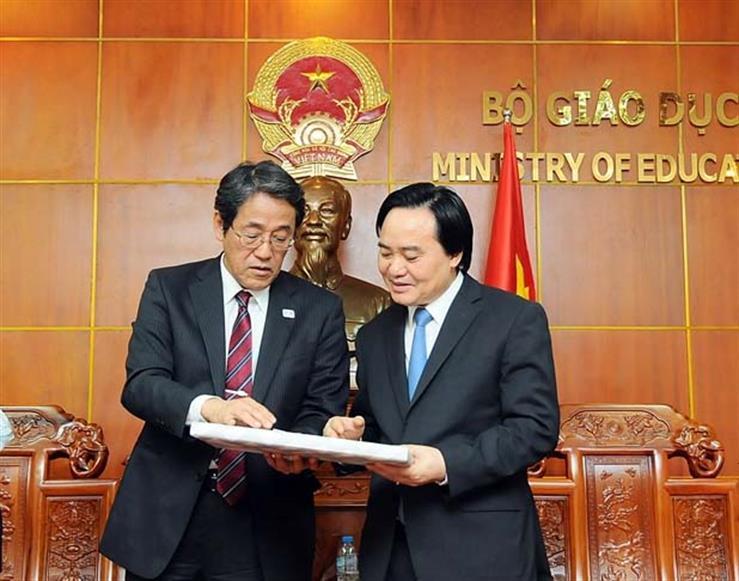
VNN –  Đó là thông tin đưa ra trong buổi tiếp Đại sứ Đặc mệnh toàn quyền Nhật Bản tại Việt Nam Umeda Kunio diễn ra chiều 4/1. Bộ trưởng GD-ĐT Phùng Xuân Nhạ cho biết sẽ kiên quyết đóng cửa các trung tâm tư vấn du học không nghiêm túc.

60.000 du học sinh VN ở Nhật: Chỉ có 7.000 người đi học đại học và sau đại học
Bộ trưởng Phùng Xuân Nhạ trao đổi với Đại sứ Umeda Kunio. Ảnh: Cổng Thông tin điện tử Bộ GD-ĐT

Tiếp tục đọc “60.000 du học sinh VN ở Nhật: Chỉ có 7.000 người đi học đại học và sau đại học”

GS Võ Tòng Xuân: Chúng ta sẽ ăn Tết cổ truyền theo lịch dương như Nhật Bản

Thứ hai, 09/01/2017, 08:00 AM

 (VTC) – Giáo sư Võ Tòng Xuân – người 11 năm trước làm “nóng” dư luận khi đề xuất gộp tết ta vào tết tây – cho biết, đã có những “tín hiệu cho thấy sự thay đổi” và ông tin rồi Việt Nam sẽ ăn Tết cổ truyền theo lịch dương như Nhật Bản.

vo-tong-xuan1

Giáo sư Võ Tòng Xuân. Ảnh CafeF

Tiếp tục đọc “GS Võ Tòng Xuân: Chúng ta sẽ ăn Tết cổ truyền theo lịch dương như Nhật Bản”

ADB vẫn có nhiều ảnh hưởng hơn AIIB

HN – Được viết ngày Thứ tư, 04 Tháng 1 2017 11:17


Link ảnh: South China Morning Post

Ngân hàng Đầu tư Hạ tầng Châu Á (AIIB) thành lập đã được gần một năm, nhưng Ngân hàng Phát triển Châu Á (ADB) mới là ngân hàng có một năm đầu tư bận rộn ở cả châu Á lẫn Trung Quốc. Tiếp tục đọc “ADB vẫn có nhiều ảnh hưởng hơn AIIB”

Japan Recalls Ambassador to South Korea to Protest ‘Comfort Woman’ Statue

A statue of a girl representing the Korean women forced into sexual slavery by the Japanese military being unveiled during a rally in front of the Japanese Consulate in Busan, South Korea, last week. Credit Kim Sun-ho/Yonhap, via Reuters

SEOUL, South Korea — Japan recalled its envoy to South Korea on Friday to protest a statue commemorating Korean women who were forced into sexual slavery for Japanese soldiers during World War II, in the latest sign that ties between Washington’s two key Asian allies were again deteriorating over the bitter historical issue.

“The Japanese government finds this situation extremely regrettable,” Yoshihide Suga, chief cabinet secretary to Prime Minister Shinzo Abe, said during a news conference in Tokyo, referring to the placement of the statue outside the Japanese Consulate in Busan, South Korea’s second-largest city, last week.

Continue reading on New York Times