Chuyển đổi số hứa hẹn sẽ mang đến cho người nông dân nhiều lợi ích từ khâu sản xuất đến tiêu thụ sản phẩm. Tuy nhiên, trên thực tế, nhiều người nông dân vẫn cảm thấy khó khăn để tiếp cận và làm chủ công nghệ số. Bên cạnh đó, nhiều sảm phẩm công nghệ đưa ra chưa đáp ứng đúng nhu cầu sử dụng của người nông dân.
Chuyển đổi số sẽ đem lại kết quả to lớn cho nông dân và ngành nông nghiệp chỉ khi có sự đồng hành, đào tạo, hỗ trợ liên tục và phối hợp làm việc giữa nhà nước, công ty công nghệ và người nông dân.
VOV.VN – Dù được coi là chìa khóa nâng cao năng suất, chất lượng và đầu ra bền vững, chuyển đổi số trong nông nghiệp vẫn đang là bài toán khó với nhiều nông dân, hợp tác xã (HTX). Thiếu hạ tầng, thiếu kỹ năng, thiếu nguồn lực và thiếu kết nối thị trường đang khiến họ loay hoay giữa làn sóng công nghệ.Tiếp tục đọc “Nông dân loay hoay trước chuyển đổi số “→
Tiasang – Việt Nam là một “miền đất hứa” trong mắt các nhà đầu tư để đặt trung tâm dữ liệu, nhưng chúng ta chưa sẵn sàng cả về tài nguyên và pháp lí để họ đổ bộ.
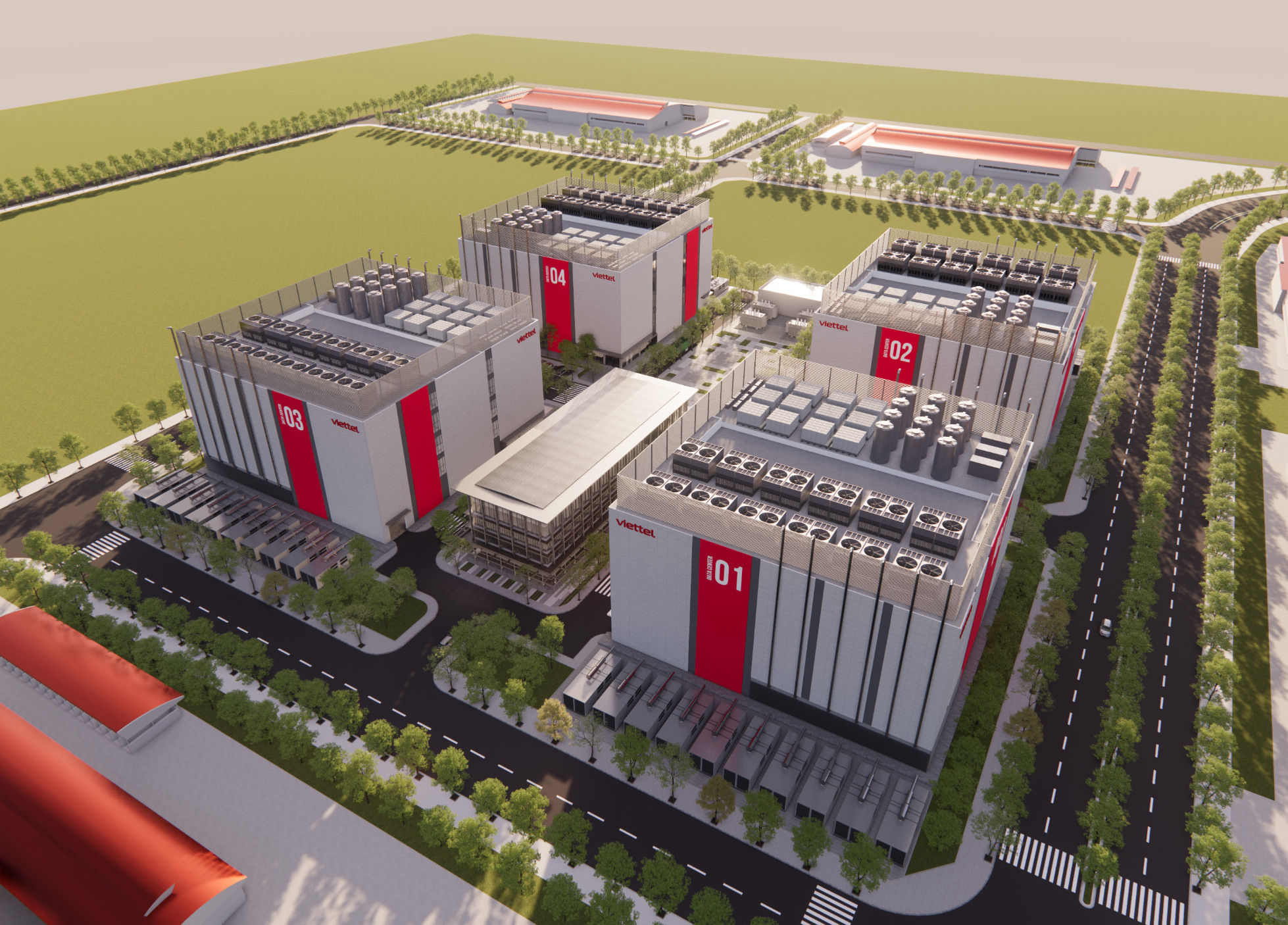
Phối cảnh trung tâm dữ liệu hyperscacler đầu tiên của Viettel tại Tân Phú Trung, Củ Chi. Những người trong ngành chia sẻ rằng, hiện nay những dự án như vậy sẽ không xây ngay toàn bộ công suất, mà chỉ khởi đầu với quy mô nhỏ để “nghe ngóng” thị trường.Tiếp tục đọc “Việt Nam chưa sẵn sàng cho cuộc đua về trung tâm dữ liệu”→
Police officers escort Do Kwon after he served his prison sentence in Podgorica, Montenegro, on March 23, 2024. Filip Filipovic/Getty Images
New YorkAP —
Onetime cryptocurrency mogul Do Kwon was sentenced Thursday to 15 years in prison after a $40 billion crash revealed his crypto ecosystem to be a fraud. Victims said the 34-year-old financial technology whiz weaponized their trust to convince them that the investment — secretly propped up by cash infusions — was safe.
Kwon, a Stanford graduate known by some as “the cryptocurrency king,” apologized after listening as victims — one in court and others by telephone — described the scam’s toll: wiping out nest eggs, depleting charities and wrecking lives. One told the judge in a letter that he contemplated suicide after his father lost his retirement money in the scheme.
Having placed artificial intelligence at the centre of its own economic strategy, China is driving efforts to create an international system to govern the technology’s use.
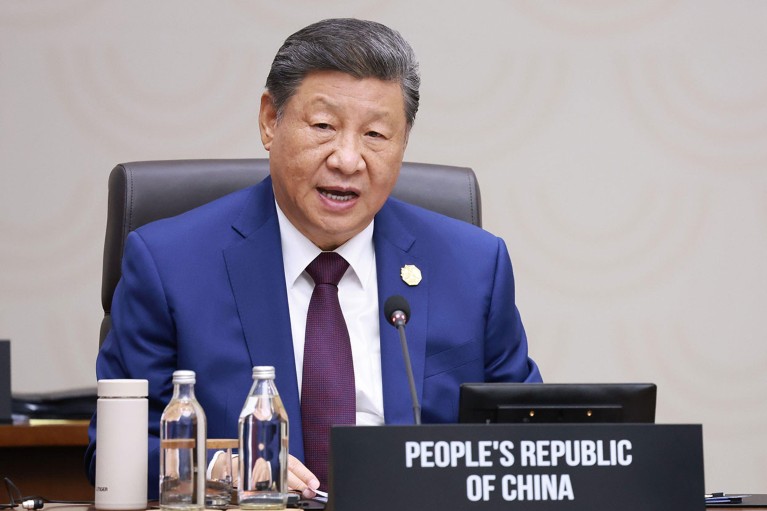
Chinese president Xi Jinping speaking at the 2025 Asia-Pacific Economic Cooperation meeting in Gyeongju, South Korea.Credit: Yonhap via AP/Alamy
So, where does this hidden labor take place? According to Casilli’s research, workers are in countries including Kenya, India, the Philippines, and Madagascar — regions with high levels of digital literacy, access to English- or French-speaking workers, and little in the way of labor protection or union representation.
Behind most of today’s AI models lies the labor of workers in the Global South, who are exposed to disturbing content and poor working conditions. This reality raises urgent questions about the transparency and ethics of AI development.
Picture working 10-hour days tagging distressing images to train an AI model — and getting paid not in money, but in a kilogram of sugar. This isn’t dystopian fiction, but reality for some of the workers behind today’s most advanced artificial intelligence.
While the development of AI is undoubtedly enhancing the lives of many by streamlining processes and offering efficient solutions, it also raises a pressing question: What is the true cost of AI, and who is paying for it?
Antonio Casilli, Professor of Sociology at Télécom Paris and Founder of DipLab, addressed this question during an Esade seminar on the promises and perils of the digitalization of work. The event was part of the kick-off for the DigitalWORK research project, which explores how digital technologies are transforming work and promoting fair, equitable and transparent labor conditions, with Anna Ginès i Fabrellas and Raquel Serrano Olivares (Universitat de Barcelona) as principal investigators.
Satellite images show how data centers are changing America’s landscape
Business insider
Data centers across the street from residential housing are not an uncommon scene in Virginia.
There are over a thousand planned or existing data centers across the US, according to a BI investigation.
Major tech companies are racing to construct even more as the AI boom continues. But at what cost?
Satellite images show where these facilities are cropping up and why they’re a nuisance to many.
Build, baby, build. That’s the mantra behind the AI boom sweeping America.
This year, alone, Amazon, Meta, Microsoft, and Google are projected to spend about $320 billion in capex, mostly for AI infrastructure, according to an analysis of financial statements by Business Insider.
At the heart of this AI infrastructure growth are data centers that house the specialized hardware and high-speed networking equipment, driving the intensive computations behind large language models. However, AI needs more.
Because AI learns by processing increasingly large amounts of data, improving it requires more computational power, which in turn necessitates more data centers.
A BI investigation found 1,240 data centers across America are already built or approved for construction by the end of 2024.
Bộ trưởng Nguyễn Mạnh Hùng cho biết dự thảo Luật Trí tuệ nhân tạo có nguyên tắc xuyên suốt là phát triển vì con người, lấy con người làm trung tâm.
Sáng 21/11, thừa ủy quyền Thủ tướng, Bộ trưởng Bộ Khoa học và Công nghệ Nguyễn Mạnh Hùng trình Quốc hội dự án Luật Trí tuệ nhân tạo (AI). Dự luật điều chỉnh toàn bộ hoạt động nghiên cứu, phát triển, cung cấp, triển khai và sử dụng AI tại Việt Nam; áp dụng với cả tổ chức, cá nhân nước ngoài nếu sản phẩm AI của họ tạo tác động tại Việt Nam. Các hệ thống dùng riêng cho quốc phòng, an ninh được loại trừ để bảo đảm bí mật nghiệp vụ, song nếu sử dụng cho mục đích dân sự thì vẫn phải tuân thủ quy định chung.
Four years after it first approved Bitcoin mining projects powered by surplus hydropower, Laos is beginning to rethink whether the energy-hungry industry — now linked to massive transnational cryptocurrency scams — is worth keeping alive
High-rise buildings stand in the Boten Special Economic Zone in northern Laos, near the border with China. The area is suspected to be a hotspot for scam operations, including schemes that store fraudulent money in crypto for later laundering. PHOTO: Thanh Hue
Houaphanh Province, LAOS — Bitcoin is a world far away from 19-year-old Chai, an ethnic Hmong and a college student who has never owned a computer.
But its shadow has already crept into his mountainous village, where power outages are common—often a side effect of the vast energy demands elsewhere, including cryptocurrency mining.
Despite the national grid being connected to his remote community seven years ago, he and his classmate studied by candlelight, oil lamp, or mobile flashlight at night to prepare for university entrance exams. The blackout worsens during the dry seasons when hydropower drops.
Dự thảo Luật Sở hữu trí tuệ sửa đổi mở đường để quyền sáng chế, tác phẩm và giải pháp công nghệ có thể định giá, giao dịch và thế chấp như tài sản kinh tế.
Chiều 27/10, Chính phủ trình Quốc hội dự án Luật sửa đổi, bổ sung một số điều của Luật Sở hữu trí tuệ. Đây là lần điều chỉnh quy mô lớn nhất từ trước tới nay, với 75 điều được sửa đổi, hai điều bổ sung và 8 điều bãi bỏ. Mục tiêu là hoàn thiện hành lang pháp lý cho đổi mới sáng tạo, thương mại hóa kết quả nghiên cứu và quản lý hiệu quả tài sản trí tuệ trong nền kinh tế số.
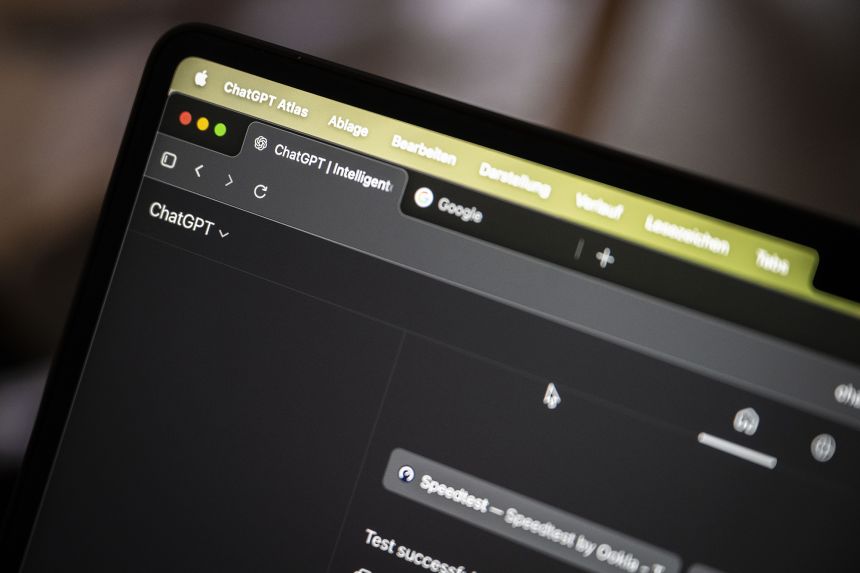
OpenAI’s new ChatGPT Atlas browser is a challenge to Google Chrome. Philip Dulian/picture alliance/dpa/Getty Images
The tug-of-war over the internet’s future escalated dramaticallyon Tuesday after OpenAI unveiled a new product that takes direct aim at the heart of Google’s core business: controlling the world’s front door to the internet.
OpenAI this week released ChatGPT Atlas, a desktop web browser infused with the popular AI chatbot. The product is more than just a way to expand ChatGPT, which now has more than 800 million weekly users. It’s an attempt to become the pathway to websites, social media and other online services, giving it a more direct role in everything people do online. Google has dominated that business for two decades. OpenAI is betting it can start to take over.
This ARSET training covers general approaches to apply satellite remote sensing data when studying or forecasting climate-sensitive infectious diseases.
Description
Climate-sensitive vector-borne diseases such as malaria impact millions of people each year, causing more than 700,000 deaths annually, according to the World Health Organization (WHO). Satellite remote sensing data can provide valuable insights for monitoring conditions which support disease vectors. In this training, participants will learn the basic principles of how satellite remote sensing data can be applied to track climate-sensitive vector-borne disease outbreaks and provide early warnings for potential outbreaks. Participants will learn about general approaches to apply satellite remote sensing data when studying or forecasting climate-sensitive infectious diseases. These will be illustrated with a case study example in the forecasting of malaria. Participants will also become familiar with some of the common, freely available NASA remote sensing datasets used in these applications, as well as where and how to access them and how to decide which datasets are fit for their purpose.
Part 1: How Remote Sensing Can be Used to Study Climate-Sensitive Infectious Diseases
Identify environmental variables and conditions that can be observed from space which are relevant to climate-sensitive infectious disease outbreaks.
Identify how satellite observations can improve the assessment and forecasting of climate-sensitive infectious disease outbreaks.
List the steps of a conceptual framework for incorporating remote sensing data into the study of climate-sensitive infectious diseases.
Recognize several remote sensing datasets commonly used to study and forecast climate sensitive infectious diseases, along with their key attributes such as resolution, coverage, latency, and uncertainty.
Select appropriate remote sensing datasets for studying climate-sensitive infectious diseases based on the disease characteristics, region of interest, and relevant environmental parameters.
Examine common benefits and challenges of using remote sensing data for studying climate-sensitive infectious diseases.
Part 2: Case Study in the Use of Remote Sensing to Study Climate-Sensitive Infectious Diseases
Identify environmental variables and conditions relevant to malaria that can be observed from space.
Recognize why the remote sensing datasets used in this case study were chosen, based on their key attributes.
Recognize the steps taken for accessing and preparing remote sensing data for use in this case study.
Identify the steps used by the EPIDEMIA system for integrating remote sensing data.
Examine the benefits and challenges of using remote sensing data for tracking and forecasting malaria in Ethiopia, and how these were addressed through the case study.
Examine the primary outcomes of the case study and ways its approach might be expanded in the future.
Such a simple query might seem trivial, but making it possible across billions of sessions requires immense scale. While OpenAI reveals little information about its operations, we’ve used the scraps we do have to estimate the impact of ChatGPT—and of the generative AI industry in general.
OpenAI’s actions also provide hints. As part of the United States’ Stargate Project, OpenAI will collaborate with other AI titans to build the largest data centers yet. And AI companies expect to need dozens of “Stargate-class” data centers to meet user demand.
Estimates of ChatGPT’s per-query energy consumption vary wildly. We used the figure of 0.34 watt-hours that OpenAI’s Sam Altman stated in a blog post without supporting evidence. It’s worth noting that some researchers say the smartest models can consume over 20 Wh for a complex query. We derived the number of queries per day from OpenAI’s usage statistics below. illustrations: Optics Lab
OpenAI says ChatGPT has 700 million weekly users and serves more than 2.5 billion queries per day. If an average query uses 0.34 Wh, that’s 850 megawatt-hours; enough to charge thousands of electric vehicles every day.
2.5 billion queries per day adds up to nearly 1 trillion queries each year—and ChatGPT could easily exceed that in 2025 if its user base continues to grow. One year’s energy consumption is roughly equivalent to powering 29,000 U.S homes for a year, nearly as many as in Jonesboro, Ark.
Though massive, ChatGPT is just a slice of generative AI. Many companies use OpenAI models through the API, and competitors like Google’s Gemini and Anthropic’s Claude are growing. A report from Schneider Electric Sustainability Research Institute puts the overall power draw at 15 terawatt-hours. Using the report’s per-query energy consumption figure of 2.9 Wh, we arrive at 5.1 trillion queries per year.
AI optimists expect the average queries per day to jump dramatically in the next five years. Based on a Schneider Electric estimate of overall energy use in 2030, the world could then see as many as 329 billion prompts per day—that’s about 38 queries per day per person alive on planet Earth. (That’s assuming a global population of 8.6 billion in 2030, which is the latest estimate from the United Nations.) As unrealistic as that may sound, it’s made plausible by plans to build AI agents that work independently and interact with other AI agents.
The Schneider Electric report estimates that all generative AI queries consume 15 TWh in 2025 and will use 347 TWh by 2030; that leaves 332 TWh of energy—and compute power—that will need to come online to support AI growth. That implies the construction of dozens of data centers along the lines of the Stargate Project, which plans to build the first ever 1-gigawatt facilities. Each of these facilities will theoretically consume 8.76 TWh per year—so 38 of these new campuses will account for the 332 TWh of new energy required.
While estimates for AI energy use in 2030 vary, most predict a dramatic jump in consumption. The gain in energy consumption will be driven mostly by AI inference (the power used when interacting with a model) instead of AI training. This number could be much lower or much higher than the Schneider Electric estimate used here, depending on the success of AI agents that can work together—and consume energy—independent of human input.
VNExpress Chiều 6/10, trao đổi với báo giới, đại tá Nguyễn Đức Long, Phó giám đốc Công an Hà Nội, cho hay thời gian qua cơ quan chức năng đã tiếp nhận phản ánh qua cơ quan truyền thông, báo chí về “vụ việc đầu tư tiền ảo liên quan dự án blockchain AntEx” .
Đại tá Nguyễn Đức Long, Phó giám đốc Công an Hà Nội, trong cuộc họp báo chiều 6/10 tại Bộ Công an. Ảnh: Phạm Dự
Phòng An ninh mạng và phòng, chống tội phạm sử dụng công nghệ cao, Cục cảnh sát Hình sự, Cục Cảnh sát Điều tra, Công an Hà Nội đang xác minh thông tin. Bước đầu, một nhà đầu tư trú tỉnh Ninh Bình gửi đơn trình báo đã đầu tư 2.000 USD (tương đương 47 triệu đồng).
Đại tá Long khẳng định “tất cả phản ánh đều sẽ được tiếp nhận, xử lý với tinh thần không có ngoại lệ, không có vùng cấm”. Kết quả điều tra sẽ sớm được thông tin với báo chí trong thời gian sớm nhất.
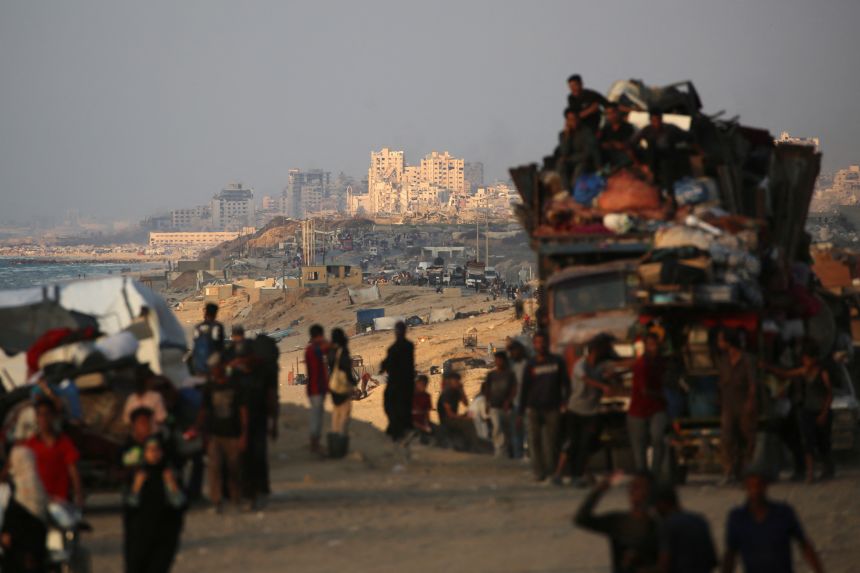
Displaced Palestinians move with their belongings southwards on a road in the Nuseirat refugee camp area in the central Gaza Strip. Eyad Baba/AFP/Getty Images
Microsoft has terminated a set of services for the Israeli military after an investigation suggested Israel was using the company’s cloud computing technology for mass surveillance of Palestinians.
In a statement posted the company’s blog, Microsoft President Brad Smith said the company had “ceased and disabled a set of services to a unit within the Israel Ministry of Defense.” The move comes after an investigation by The Guardian and Israel’s +972 Magazine in early-August reported that Israel’s military intelligence unit, known as 8200, relied on Microsoft Azure to store millions of phone calls made by Palestinians in Gaza and the occupied West Bank.
Microsoft announced on August 15 that it had begun a review of the allegations. Smith said Microsoft does not provide technology “to facilitate mass surveillance of civilians,” a principle it has applied “in every country around the world.” The review, Smith said, focused on business records, financial statements, internal documents and other records without accessing the content of the stored material.
During the investigation, the company says it found evidence that supports elements of the investigation from the news outlets, including Israel’s “consumption of Azure storage capacity in the Netherlands and the use of AI services.” Microsoft informed Israel of the decision “to cease and disable specific [Israel Defense Ministry] subscriptions and their services, including their use of specific cloud storage and AI services and technologies.”
An Israeli security official said, “There is no damage to the operational capabilities of the IDF.”
Việt Nam lần đầu bật đèn xanh cho việc thí điểm thị trường tài sản mã hóa. Dù còn cần thời gian để hoàn thiện chi tiết, khung pháp lý mới được kỳ vọng sẽ mở ra một sân chơi chính thống cho loại tài sản vốn lâu nay tồn tại trong vùng xám.
Hình ảnh: Angel Garcia/Bloomberg
Tác giả: Giang Lê 23 tháng 09, 2025 lúc 2:00 PM
Có gì mới?
Sau khoảng một năm chuẩn bị, ngày 9.9.2025, nghị quyết 5/2025/NQ-CP bắt đầu có hiệu lực, đặt nền móng cho một thị trường giao dịch và phát hành tài sản mã hóa có kiểm soát. Đây là lần đầu tiên Việt Nam cho phép thử nghiệm chính thức loại tài sản này. Thời gian thử nghiệm dự kiến kéo dài 5 năm.
Tài sản mã hóa là gì?
Hiểu đơn giản, theo nghị quyết, tài sản mã hóa là loại tài sản tồn tại dưới dạng dữ liệu số và được bảo đảm bằng công nghệ mã hóa. Người ta có thể tạo ra, lưu giữ, chuyển nhượng hay giao dịch chúng trên mạng. Nhưng lưu ý đó không phải chứng khoán, cũng không phải tiền do ngân hàng Nhà nước phát hành (tiền pháp định). Như vậy tài sản mã hóa không chỉ là tiền mã hóa như Bitcoin mà còn bao gồm cả các tài sản số như token, NFT…





 CVD
CVD 