Dalai Lama says successor will be born in ‘free world’ outside of China

Aljazeera.com

Tibetan spiritual leader says in a new book that his people’s aspiration for freedom cannot be indefinitely delayed.

The Dalai Lama offers blessings to his followers at his Himalayan residence in the northern hill town of Dharamshala, India, on December 20, 2024 [Priyanshu Singh/Reuters]

Published On 11 Mar 202511 Mar 2025

The Dalai Lama has said that his successor will be born in the “free world” outside of China.

In a new book released on Tuesday, the 89-year-old spiritual leader of Tibetan Buddhism says that he will be reincarnated outside of Tibet, which is an autonomous region of China.

“Since the purpose of a reincarnation is to carry on the work of the predecessor, the new Dalai Lama will be born in the free world so that the traditional mission of the Dalai Lama – that is, to be the voice for universal compassion, the spiritual leader of Tibetan Buddhism, and the symbol of Tibet embodying the aspirations of the Tibetan people – will continue,” the Dalai Lama, who fled Tibet for India in 1959, writes in Voice for the Voiceless.

China considers Tibet, which has alternated between independence and Chinese control over the centuries, as an integral part of the country and views movements advocating greater autonomy or independence as threats to its national sovereignty.

Beijing has labelled the current Dalai Lama, who was identified as the reincarnation of his predecessor at two years old, a “separatist” and insisted on the right to appoint his successor after his death.

The Dalai Lama, who stepped down as the political leader of the Tibetan government-in-exile in 2011 to focus on his spiritual role, has denied advocating Tibetan independence and argued for a “Middle Way” approach, which would grant the mainly Buddhist territory greater autonomy.

In his book, the Dalai Lama writes that he has received numerous petitions from people in and outside Tibet asking him to ensure that his lineage continues, and says that Tibetan people’s aspirations for freedom cannot be denied indefinitely.

“One clear lesson we know from history is this: If you keep people permanently unhappy, you cannot have a stable society,” he writes.

Source: Al Jazeera and news agencies

Khi sinh viên Mỹ biểu tình phản chiến

NGUYỄN VŨ – 05/05/2024 10:05 GMT+7

TTCT Chuyện sinh viên Mỹ biểu tình trong khuôn viên nhà trường không có gì lạ, nhưng khi ban giám hiệu Đại học Columbia kêu cảnh sát tới giải tán sinh viên rồi bắt đi hơn 100 người, vụ việc trở nên lớn chuyện.

Sinh viên dựng lều để biểu tình lâu dài trước Đại học Columbia. Ảnh: Reuters

Các cuộc biểu tình tương tự lan rộng ra các trường đại học, kéo theo nhiều vụ bắt bớ khác.

2h chiều thứ tư 17-4, hiệu trưởng Đại học Columbia, bà Minouche Shafik, bước ra khỏi tòa nhà Quốc hội Mỹ, thở phào nhẹ nhõm. Bà tưởng đâu đã thoát tình cảnh như hai đồng nghiệp, hiệu trưởng Đại học Harvard Claudine Gay và Đại học Pennsylvania (UPenn) Liz Magill từng rơi vào, khi bị mời ra điều trần trước Ủy ban Giáo dục Hạ viện. 

Hai bà này trả lời lấp lửng, còn tùy bối cảnh, khi được hỏi việc kêu gọi diệt chủng dân Do Thái có vi phạm nội quy ứng xử của nhà trường không. Dư luận phản ứng dữ dội, hai bà lần lượt phải từ chức.

Tiếp tục đọc “Khi sinh viên Mỹ biểu tình phản chiến”

Biểu tình phản chiến lan rộng khắp 50 đại học ở Mỹ

TT – 28/04/2024 08:48 GMT+7 – THANH BÌNH

àn sóng biểu tình ủng hộ người Palestine và kêu gọi chấm dứt cuộc chiến của Israel ở Dải Gaza đang diễn ra tại ít nhất 50 đại học ở Mỹ.

Các sinh viên dựng lều trại trong cuộc biểu tình ủng hộ người Palestine tại khuôn viên Đại học Columbia ở TP New York (Mỹ) hôm 26-4 – Ảnh: Reuters

Tính đến ngày 27-4 (giờ Việt Nam), các sinh viên đã dựng lều phản đối trong khuôn viên của ít nhất 50 trường đại học, cao đẳng ở Mỹ, từ các trường nổi tiếng trong nhóm Ivy League cho đến các trường công lập. Nhiều sinh viên cho biết sẽ không dừng việc biểu tình cho đến khi yêu cầu được đáp ứng.

Tiếp tục đọc “Biểu tình phản chiến lan rộng khắp 50 đại học ở Mỹ”

Vietnam Freedom of the Net index 2022

Freedomhouse.org

Country Facts

A Obstacles to Access12/25
B Limits on Content6/35
C Violations of User Rights4/40

LAST YEAR’S SCORE & STATUS: Vietnam: 22/100 Not Free

Scores are based on a scale of 0 (least free) to 100 (most free). See the research methodology and report acknowledgements.

  • Global Freedom Score 19/100: Not Free
  • Internet Freedom Score: 22/100:  Not Free
  • Freedom in the World Status: Not Free
  • Networks Restricted: No
  • Social Media Blocked: No
  • Websites Blocked: Yes
  • Pro-government Commentators: Yes
  • Users Arrested: Yes

OVERVIEW

Internet freedom remained restricted in Vietnam, as the government enforced stringent controls over the country’s online environment. Though the government did not disrupt connectivity or throttle Facebook servers as it had done previously, the state continued mandating that companies remove content and imposed draconian criminal sentences for online expression. A COVID-19 surge in late 2021 propelled government surveillance, and authorities have also sought to expand control over content on social media platforms.

Vietnam is a one-party state, dominated for decades by the ruling Communist Party of Vietnam (CPV). Although some independent candidates are technically allowed to run in legislative elections, most are banned in practice. Freedom of expression, religious freedom, and civil society activism are tightly restricted. Judicial independence is absent.

Key Developments, June 1, 2021 – May 31, 2022

  • Government officials ordered international social media companies to remove thousands of pieces of content, particularly targeting criticism of the authorities (see B2).
  • New regulations tightened content restrictions on websites that host advertisements and increased administrative fines on companies found to be hosting online speech that authorities deem illegal (see B3, B6, and C2).
  • Authorities imposed prison sentences on human rights defenders and everyday internet users for their online activities, including a ten-year sentence issued to activist Trịnh Bá Phương (see C3).
  • The expansion of government-run COVID-19 apps and the creation of a central database for new identification cards have raised privacy concerns (see C5).

A Obstacles to Access

A1 0-6 pts

Do infrastructural limitations restrict access to the internet or the speed and quality of internet connections? 4 6

The internet penetration rate was 71 percent by the end of 2021, according to data from the Ministry of Infomation and Communications (MIC).1 Mobile broadband has played a significant role in increasing access to faster internet service. As of May 2022, the median mobile download speed stood at 35.29 megabits per second (Mbps) while the upload speed stood at 16.89 Mbps according to Ookla’s Speedtest Global Index. The median fixed broadband download speed was 71.79 Mbps and upload speed was 67.20 Mbps.2 Market data aggregator Statista estimated smartphone penetration at 61.37 percent as of May 2021.3 Fixed broadband remains a relatively small market segment.

As of December 2021, 4G signal covered 99.8 percent of Vietnam’s territory, while 5G had been tested in 16 provinces, according to the MIC.4

Disruptions to international internet cables took place repeatedly during the coverage period when the country was in full or partial lockdowns due to COVID-19 outbreaks.5 In February 2022, three undersea cables—the Intra-Asia, Asia-America Gateway, and Asia-Pacific Gateway cables—were disrupted at the same time, seriously affecting internet users nationwide.6 The cables are pivotal for connectivity to the international internet.

A2 0-3 pts

Is access to the internet prohibitively expensive or beyond the reach of certain segments of the population for geographical, social, or other reasons? 2 3

Tiếp tục đọc “Vietnam Freedom of the Net index 2022”

Freedom of expression under threat in Southeast Asia

Chathamhouse.org

Governments across Southeast Asia have little incentive to protect freedom of expression domestically but steps taken by both domestic and international actors could mean the difference between freedom and its opposite.

All of the countries of Southeast Asia currently sit in the bottom half of the World Press Freedom Index, with four – Brunei, Laos, Singapore and Vietnam – ranked below 150 in the 180-country list, and Myanmar expected to join them following its February 2020 coup.

In these countries, critical coverage is not formally banned but there is no presumption of the right to publish. In Cambodia, Indonesia, Malaysia, Philippines and Thailand, for example, a theoretical commitment to freedom of expression is marred by restrictive legislation, intimidation and even the killing of journalists.

The media in Southeast Asia faces two problems – vaguely worded laws open to abuse and politically-motivated prosecutions – and, in the absence of robust independent courts willing to challenge these governments, politicians have been able to pursue personal vendettas against publications and individuals with few limitations.

.

Without independent courts, even those countries with rules-based legal systems, will fail to defend dissenting voices against politicians in power.


Tiếp tục đọc “Freedom of expression under threat in Southeast Asia”

Họ tưởng chúng tôi là con nít

TƯỜNG ANH 25/08/2022 06:17 GMT+7

TTCTHơn 1.000 tác phẩm văn học đã bị đưa khỏi chương trình hoặc loại khỏi danh sách đọc bắt buộc của sinh viên nhiều đại học Anh.

Họ tưởng chúng tôi là con nít - Ảnh 1.

Hơn 1.000 tác phẩm văn học đã bị đưa khỏi chương trình hoặc loại khỏi danh sách đọc bắt buộc của sinh viên nhiều đại học Anh. Trong số này có các kiệt tác của William Shakespeare, Charles Dicken, Jane Austen, Charles Bronte… và cả của những tác giả hiện đại mà sách của họ vừa được vinh danh, theo tường thuật hôm 10-8 của The Times.

Tiếp tục đọc “Họ tưởng chúng tôi là con nít”

Salman Rushdie: Câu hỏi muôn thuở

SÁNG ÁNH 19/08/2022 06:42 GMT+7

TTCTBao giờ chính trị mới hết sợ nhà văn, qua trường hợp Salman Rushdie lại vừa bị đâm ngay trên đất Mỹ?

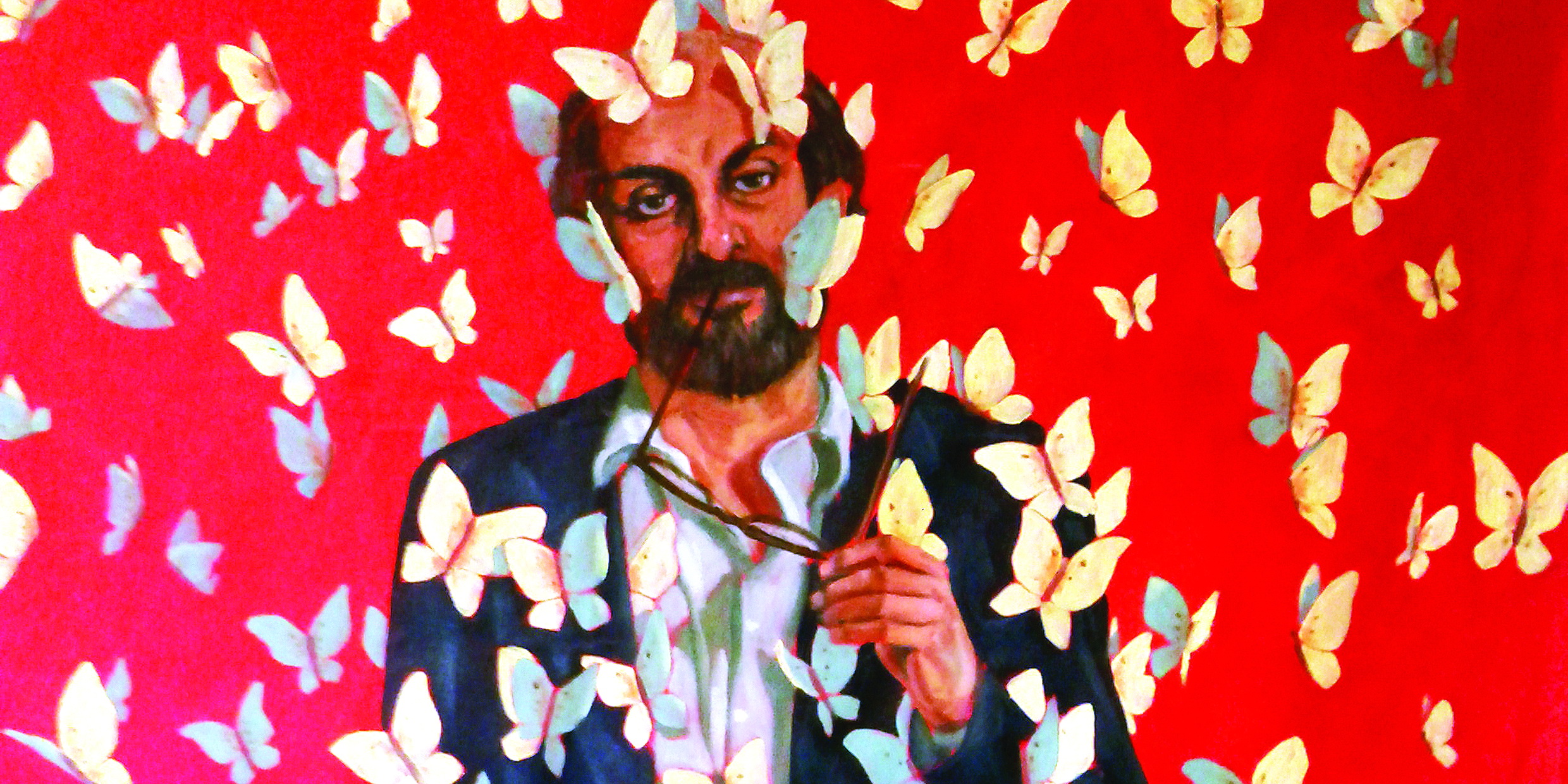
Salman Rushdie: Câu hỏi muôn thuở - Ảnh 1.

Salman Rushdie đã trở thành khuôn mặt đại diện cho tự do sáng tác trong một cuộc xung đột chồng chéo và phức tạp. Ảnh: PEN Canada

Cô ngồi một mình, áo hở rốn, coi dáng rất cô đơn tại quầy rượu mênh mông của khách sạn Atrium ở Praha. Lúc đó đã gần 2 giờ sáng, và hở rốn là vì cô mặc quốc phục sari của Bangladesh. Cô nhìn tôi và tôi đã định lại gần kéo ghế bên cạnh. “Khuya rồi, yên ắng nhỉ, bạn có thấy không, mọi thứ như là chùng hẳn xuống và 2 người mình vàng vọt như trong một bức tranh của Edward Hopper…”, tôi định nói.

Nhưng nào chỉ có 2 người mà là 3, và người thứ 3 cũng ngồi nhìn tôi là anh công an bảo vệ Taslima Nasreen làm tôi mất cả hứng. Năm đó, tại Hội nghị quốc tế Văn bút, nữ nhà văn này vì từ đạo Hồi và viết lách sao đó chống đối nên tính mạng bị đe dọa, và cũng như Salman Rushdie, bị một giáo sĩ treo án tử hình. Nhờ vậy nên mấy ngày trước tôi thấy cô đi xe BMW chống đạn đến đại hội, lúc nào cũng có một anh mặc đồ vest đi theo sau dáo dác. Tình hình rất là chán, tôi quyết định chỉ ủng hộ quyền tự do phát biểu và sáng tác của cô từ xa. Tôi gật đầu chào cô rồi đi ra khỏi khách sạn.

Những đụng độ văn chương, tôn giáo, tự do ngôn luận (và tự do sau ngôn luận) không bắt đầu hay kết thúc ở Salman Rushdie, nhưng với thế giới, nhất là phương Tây, thì văn sĩ 75 tuổi này lại trở thành bộ mặt cho cuộc tranh luận đó.

Tiếp tục đọc “Salman Rushdie: Câu hỏi muôn thuở”

Airline apologizes for tweet poking fun at Thailand’s King

An April Fool’s tweet referenced the apparently volatile relationship between King Vajiralongkorn and his consort Sineenat Wongvajirapakdi.

By Sebastian Strangio

thediplomat – April 04, 2022

Airline Apologizes for Tweet Poking Fun at Thailand’s King
A VietJet Air Airbus A320(SL) departs from Suvarnabhumi Airport in Bangkok, Thailand, on September 18, 2017.Credit: Flickr/Alec Wilson

The low-cost carrier Thai VietJet Air has been forced to make a public apology after an April Fool’s tweet prompted a flood of criticism in Thailand, one of its major markets, for making fun of Thailand’s King Vajiralongkorn. The post described the creation of a fake new route between the city of Nan in northern Thailand and Munich, Germany, where the king has for many years spent considerable amounts of time.

Tiếp tục đọc “Airline apologizes for tweet poking fun at Thailand’s King”

Những giáo sư bị “bịt miệng” và một nền giáo dục đại học Mỹ đang rung lắc

Xê NHO 4/11/2021 7:10 GMT+7

TTCTTinh thần giáo dục khai phóng, môi trường tự do học thuật, khuyến khích tranh luận có lẽ là những điểm thu hút phụ huynh khi cố gắng cho con đi du học ở Mỹ. Nhưng các vụ việc xảy ra gần đây rất có thể khiến các bậc phụ huynh này phải suy nghĩ lại.


Tiếp tục đọc “Những giáo sư bị “bịt miệng” và một nền giáo dục đại học Mỹ đang rung lắc”

Hai biểu tượng tự do báo chí được Nobel Hòa bình vinh danh

VNE 09/10/2021 – 10:19

Maria Ressa và Dmitry Muratov, hai nhà báo dũng cảm đấu tranh cho sự thật và tự do ngôn luận, được vinh danh bằng giải Nobel Hòa bình năm nay.

Maria Ressa (trái) và Dmitry Muratov, hai nhà báo được trao giải Nobel Hòa bình năm nay. Ảnh: AFP, Reuters.
Maria Ressa (trái) và Dmitry Muratov, hai nhà báo được trao giải Nobel Hòa bình năm nay. Ảnh: AFP, Reuters.

Trái với dự báo của giới quan sát về các ứng viên sáng giá, Ủy ban Nobel Na Uy năm nay quyết định trao giải Nobel Hòa bình cho Maria Ressa và Dmitry Muratov, hai nhà báo người Philippines và Nga, vì “nỗ lực bảo vệ quyền tự do ngôn luận”.

Với việc lựa chọn hai nhà báo có bề dày kinh nghiệm và nổi tiếng toàn cầu cho giải thưởng danh giá này, Ủy ban Nobel nhấn mạnh tự do ngôn luận “là điều kiện tiên quyết cho nền dân chủ và hòa bình lâu dài”.

Tiếp tục đọc “Hai biểu tượng tự do báo chí được Nobel Hòa bình vinh danh”

Vua Minh Mệnh và tự do ngôn luận

MTG – 17/05/2016, 04:48

Một trong những điểm lạ lùng độc đáo của vua Minh Mệnh là chủ trương mà ngày nay chúng ta ghi trong Hiến Pháp : tự do ngôn luận. Quốc sử quán triều Nguyễn khi biên soạn bộ Minh Mệnh chính yếu đã dành hẳn một thiên, gọi là “Quảng ngôn lộ”, nghĩa là mở rộng đường ngôn luận.

Dưới sự trị vì của vua Minh Mệnh, nước Việt ta không những là quốc gia có cương thổ rộng lớn nhất trong lịch sử dân tộc, bao gồm đất liền và biển đảo, trong đó có Hoàng Sa và Trường Sa, mà còn là quốc gia cường thịnh nhất ở châu Á thời bấy giờ, vượt xa cả Nhật Bản.

Tiếp tục đọc “Vua Minh Mệnh và tự do ngôn luận”

Làm sao vực dậy đời sống khoa học xã hội?

nhanhoc.hcmussh.edu.vn – tháng 8-2006 – Trần Hữu Quang

Tầm quan trọng của khoa học xã hội-nhân văn tại Mỹ

Tại sao lại có hiện tượng coi thường khoa học xã hội? Đâu là căn nguyên của tình trạng sa sút trong hoạt động nghiên cứu khoa học xã hội? Tại sao phải bàn về quyền tự do tư tưởng trong hoạt động trí tuệ?

Khi bàn về nhu cầu cải tổ hoạt động nghiên cứu khoa học ở nước ta vốn đang lâm vào tình cảnh suy thoái ngày càng nặng nề, người ta thường hay nói nhiều nhất tới nguyên nhân cơ chế quản lý. Theo một cuộc thăm dò cán bộ khoa học gần đây của Sở KH&CN TP. Hồ Chí Minh, có 97,8 % trong số 233 người trả lời cho rằng cần đổi mới chính sách và cơ chế quản lý hoạt động khoa học1. Có lẽ cũng chính vì thế mà chính phủ đã ban hành Nghị định 115 (5-9-2005) về cơ chế tự chủ, tự chịu trách nhiệm của các tổ chức nghiên cứu công lập nhằm nỗ lực cải cách theo hướng ấy. Cải tổ cơ chế quản lý khoa học là điều rất đúng đắn và cần thiết vào lúc này; tuy nhiên, theo thiển ý chúng tôi, nếu chỉ dừng lại ở đó mà thôi thì hoàn toàn chưa đủ vì mới chỉ đụng chạm vào cái thân chứ chưa đột phá tới những chiều sâu gốc rễ của vấn đề. Đặc biệt là trong lĩnh vực khoa học xã hội mà bài này muốn bàn luận đến.

Tiếp tục đọc “Làm sao vực dậy đời sống khoa học xã hội?”

Men arrested for Facebook posts defaming leaders

SOCIETYFace BookTwitterBình luậnTin nóng

Chia sẻ | FaceBookTwitter Email Copy LinkInterested111/02/2021    07:52 GMT+7

Police in the central province of Quang Tri on February 10 launched legal proceedings against two men for compiling and spreading documents with defamatory contents via social networks.

Men arrested for Facebook posts defaming leaders hinh anh 1
Phan Bui Bao Thi (Photo: laodong.vn)

The documents were posted on Facebook accounts like Thu Ha and Hoang Le, and such fanpages as Ly Duong Tu, Quang Tri 357, and Tin Quang Tri 246 (Quang Tri news 246).

Those articles, photos and video clips have contents defaming and insulting the prestige of individuals, including some leaders of Quang Tri province, ministries and centrally-run agencies.

They have harmed the leaders’ prestige and dignity as well as the role, position and function of State agencies for a long time, triggering concern among Party members, officials and the public, while affecting political security in the locality.

Local competent forces on February 4 stopped 56-year-old Le Anh Dung, residing in An Phu ward, district 2, Ho Chi Minh City, while he was on the way from Dong Ha city, Quang Tri province, to HCM City.

They found documents stored in Dung’s mobile phone proving that he had directly published the documents on social networks.

Dung’s accomplice is Phan Bui Bao Thi, 50, from Son Tra district, the central city of Da Nang, who is working at the Giao duc & Thoi dai (The Education and Times) newspaper.

Thi confessed that he and Dung wrote many articles defaming Quang Tri leaders and posted more than 10,000 pages on social networks.

The local police on February 5-6 decided to detain the duo for abusing the rights to freedom and democracy, and violating the State’s interests, as well as legal rights and interests of organisations and individuals as prescribed in Article 331 of the Penal Code./.VNA

The rise and rise of a Vietnamese corporate empire-Vingroup và sự trỗi dậy đầy nghi vấn của một đế chế kinh tế

Bản tiếng anh: The rise and rise of a Vietnamese corporate empire
Dịch bởi Phùng Anh Khương (Luatkhoa.org)

Mấy tuần trước, tôi có đi về phía Đông Hà Nội, xuyên qua các khu công nghiệp và ruộng đồng, đến thành phố cảng Hải Phòng thuộc miền Bắc Việt Nam.

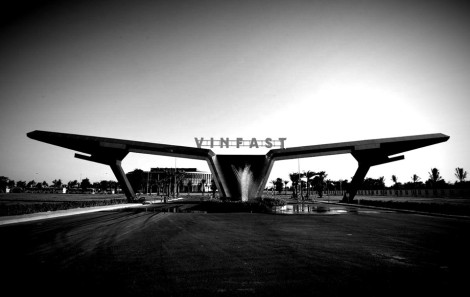
Bác tài chở tôi qua một cây cầu vượt biển để ra đảo Cát Hải. Tại đây, một thứ đáng chú ý đang dần thành hình: chiếc xe hơi “quốc dân” đầu tiên của Việt Nam đang được chế tạo, dưới nhãn hiệu VinFast. Tiếp tục đọc “The rise and rise of a Vietnamese corporate empire-Vingroup và sự trỗi dậy đầy nghi vấn của một đế chế kinh tế”