Mr.Hunter bị dẫn độ về Việt Nam


Trần Cường – Đình Huy 15/12/2025 18:44 GMT+7 Thanhnienonline

Mr.Hunter Lê Khắc Ngọ, nghi phạm cầm đầu đường dây lừa đảo hơn 5.300 tỉ đồng cùng Mr.Pips, đã bị dẫn độ từ Philippines về nước.

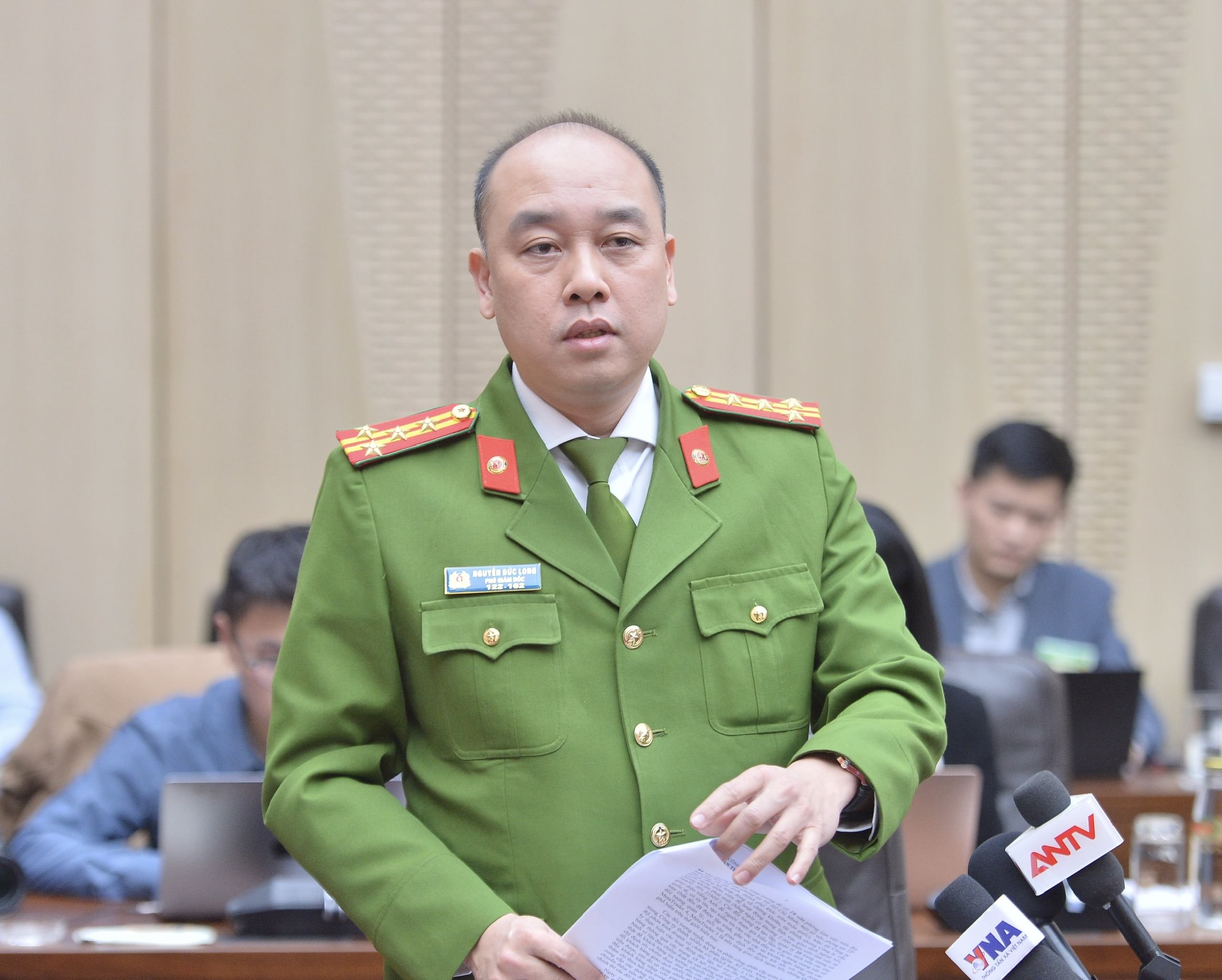
Chiều 15.12, tại họp báo thông tin tình hình, kết quả công tác công an năm 2025 do Bộ Công an tổ chức, đại tá Nguyễn Đức Long, Phó giám đốc Công an Hà Nội, cho biết Lê Khắc Ngọ (tức Mr.Hunter) sau khi bỏ trốn khỏi Việt Nam đã sang Campuchia. 

Tháng 9 vừa qua, Ngọ bị cảnh sát Philippines bắt do nhập cảnh trái phép.

Mr.Hunter bị dẫn độ về Việt Nam - Ảnh 1.
Đại tá Nguyễn Văn Long, Phó giám đốc Công an Hà Nội, thông tin về việc dẫn độ Mr.Hunter

Mr.Hunter Lê Khắc Ngọ bị dẫn độ về Việt Nam

Theo đại tá Long, sau khi phối hợp cùng Văn phòng Cơ quan Cảnh sát điều tra Bộ Công an làm các thủ tục, ngày 13.12, công an đã dẫn độ Ngọ về nước.

Tiếp tục đọc “Mr.Hunter bị dẫn độ về Việt Nam”

Báo cáo tội phạm Crypto 2025 – The 2025 Crypto Crime Report

How crypto is scaling traditional crime types, like drug trafficking, money laundering, and fraud.

Download repport https://go.chainalysis.com/2025-Crypto-Crime-Report.html

Ransomware 

Darknet Markets 

Market Manipulation 

Scams 

Stolen Funds 

Extremism 

Organized Crime

Báo cáo tội phạm mạng hoạt động ở Đông Nam Á – Compound crime: Cyber scam operations in Southeast Asia

Repurposed hotels, casinos, and private compounds across Cambodia, Laos, Myanmar and the Philippines have become centres of global fraud. These compounds are operated by organized criminal networks that exploit hundreds of thousands of people, many of whom are trafficked and forced to perpetrate online scams. Victims include not only those defrauded online but also the scam workers themselves, subjected to threats, violence, sexual exploitation and extreme working conditions. 

The report details how cyber scams —including ‘pig-butchering’ romance-investment scams, crypto fraud, impersonation and sextortion— now generate tens of billions of dollars annually.  

Download report https://globalinitiative.net/analysis/compound-crime-cyber-scam-operations-in-southeast-asia/

Thống kê và xu hướng tội pham Crypto 2025 – Crypto Crime Report: 2025 Statistics & Trends

Crypto crime is escalating fast and shifting in form. In 2024 alone, $51 billion flowed into illicit wallets, with $40 billion laundered and over $2 billion stolen outright. Bitcoin is no longer king in the shadows; stablecoins now dominate criminal crypto flows. This report breaks down who’s losing money, how it’s being funneled, and why tracking these shifts is critical. The insights ahead reveal patterns that can help spot emerging threats and shape stronger policy.

How much cryptocurrency has been stolen in the world

How many Bitcoins have been stolen?
How much Ethereum was stolen?
How much Solana has been stolen?
The biggest crypto rug pulls
Cryptocurrency money laundering statistics
The biggest crypto scams in history
Insights & Implications:
Methodology:
References:

Download report https://coinledger.io/research/crypto-crime-report

Lừa đảo ngày càng tinh vi trên thị trường tài sản mã hóa

Việt Nam đứng thứ 3 thế giới về giao dịch tiền ảo

tapchitaichinh.vn Thanh Hằng 17:35 25/05/2025

Thị trường tài sản mã hóa mang đến cơ hội, nhưng cũng đầy rẫy cạm bẫy. Trong bối cảnh các thủ đoạn lừa đảo ngày càng tinh vi, các nhà đầu tư cần học cách nhận diện, phòng tránh các mô hình lừa đảo để tự bảo vệ mình.

Trong những năm gần đây, thị trường tài sản mã hóa (crypto) đã bùng nổ tại Việt Nam, thu hút một lượng lớn nhà đầu tư, đặc biệt là giới trẻ. Với tiềm năng lợi nhuận cao và tốc độ tăng trưởng ấn tượng của các đồng tiền như Bitcoin, Ethereum, hay các mô hình tài chính phi tập trung (DeFi), không ít người đã kỳ vọng đây sẽ là cơ hội đổi đời.

Cạm bẫy lừa đảo ngày càng tinh vi trên thị trường tài sản mã hóa.

Theo số liệu từ Triple-A, năm 2024 có hơn 17 triệu người Việt Nam đang sở hữu tài sản mã hóa, chiếm gần 17% dân số. Tuy nhiên, sự phát triển nhanh chóng này cũng đi kèm một lỗ hổng lớn: phần lớn nhà đầu tư là người mới, tiếp cận thị trường thông qua mạng xã hội hoặc lời rỉ tai, không có nền tảng về công nghệ blockchain, pháp lý tài sản số hay các phương thức lừa đảo phổ biến hiện nay.

Mới đây, thông tin về “Madam Ngo” bị Interpol truy nã vì tội lừa đảo đầu tư tiền điện tử và ngoại hối, lừa đảo hơn 2.000 nạn nhân người Việt Nam số tiền khoảng 300 triệu USD đã gióng lên hồi chuông cảnh báo về những rủi ro tiềm ẩn trong thị trường này.

Tiếp tục đọc “Lừa đảo ngày càng tinh vi trên thị trường tài sản mã hóa”

Vì sao băng nhóm tội phạm Crypto ở Đông Nam Á nở rộ –  Why scam gangs in Southeast Asia are a growing global threat

Griffith.edu.au May 19, 2025 By Dr Hai Thanh Luong

From fake job offers to cryptocurrency fraud and online romance scams, Southeast Asia has become a global hub for transnational scam operations. 

These aren’t isolated crimes, they are organised, cross-border and industrial-scale criminal enterprises that exploit vulnerable people and expose the limits of international law enforcement.

New research shows this surge in scams represents more than just a regional issue. It’s a transnational emergency, and it demands an urgent, coordinated response.

Why Southeast Asia?

Several factors have turned Southeast Asia into a hotbed for scam syndicates. 

The collapse of rule of law in parts of Myanmar has created ungoverned spaces where criminal operations flourish. 

Meanwhile, countries like Cambodia, Laos and the Philippines offer a fertile environment for transnational crime due to weak governance, corruption, and limited oversight.

These scam centres don’t just target foreign victims. They also lure and trap workers—many of them young people from poorer nations—under the false promise of legitimate employment. Once inside, many are subjected to forced labour, abuse and trafficking.

This has become a humanitarian crisis as scam compounds across Southeast Asia have held thousands of people against their will, forcing them to commit fraud under threat of violence.

The rise of digital technologies has only made these operations harder to trace and easier to scale. From encrypted messaging to unregulated cryptocurrency, scam networks have globalised rapidly, while enforcement efforts remain stuck behind borders.

Why national responses aren’t working

One of the key challenges in confronting this crisis is the fragmented nature of law enforcement. 

Scams that begin in one country can target victims in another, while using platforms, payment systems, and communication tools hosted across multiple jurisdictions.

But many national police forces are not equipped to act beyond their borders. And transnational criminal syndicates have exploited the lack of international coordination to operate with relative impunity.

Even where political will exists, legal mismatches and diplomatic bottlenecks prevent timely investigations, arrests or prosecutions. 

Countries tend to focus inward, launching isolated crackdowns that fail to dismantle the broader networks.

This mismatch between the global nature of the threat and the localised nature of responses is precisely what allows these scams to thrive.

What needs to happen

To seriously confront this growing criminal economy, regional governments must prioritise coordinated responses, cross-border investigations, and robust intelligence sharing.

This includes:

  • Building shared databases and real-time intelligence channels to track trends, suspects and operations;
  • Developing harmonised legal tools to enable prosecutions and asset recovery across jurisdictions;
  • Working with tech and financial platforms to shut down scam infrastructure;
  • Protecting and rehabilitating victims, particularly those trafficked into scam compounds.

ASEAN, Interpol, and UNODC all have a role to play. But meaningful cooperation remains patchy, slow and overly politicised. Tackling scams as a global crisis, not just a regional one, will require serious investment and political leadership.

A crisis we can’t ignore

Scams are often dismissed as digital annoyances or consumer issues. 

The response to this crisis cannot be local, slow or siloed. The fight against transnational scams cannot be won in isolation. 

Only by working together can states dismantle the criminal networks exploiting the region’s vulnerabilities.

But what we are seeing in Southeast Asia is a complex ecosystem of transnational organised crime, often underpinned by exploitation and violence.

Billions of dollars are being stolen. Thousands of people are being trafficked and abused. And public trust in digital systems is eroding as scams become more sophisticated.

“Một loại ung thư” – UN cảnh báo tập đoàn tội phạm mạng Châu Á mở rộng khắp thế giới – ‘A cancer’: UN warns Asia-based cybercrime syndicates expanding worldwide

Al Jazeera

Agency says gangs caused $37bn in losses in Asia as they gain new footholds in Africa, South America, and Middle East.

Tiếp tục đọc “Vì sao băng nhóm tội phạm Crypto ở Đông Nam Á nở rộ –  Why scam gangs in Southeast Asia are a growing global threat”

Crypto Crime – Tội phạm crypto, tài sản mã hoá, tiền ảo

Thị Trường Crypto Đen toàn cầu – Global Crypto Black Market – National Geographic

Đế chế tội phạm mạng tỉ đô được xây ở Cambodia như thế nào?- How a Billion Dollar Cambodian Cybercrime Empire Was Built  – Bloomberg 

Vì sao băng nhóm tội phạm Crypto ở Đông Nam Á nở rộ –  Why scam gangs in Southeast Asia are a growing global threat

Griffith.edu.au May 19, 2025 By Dr Hai Thanh Luong

From fake job offers to cryptocurrency fraud and online romance scams, Southeast Asia has become a global hub for transnational scam operations. 

Tiếp tục đọc “Crypto Crime – Tội phạm crypto, tài sản mã hoá, tiền ảo”

Sào huyệt lừa đảo ở Đông Nam Á: Tội phạm Trung Quốc thống trị, gây thiệt hại hàng tỷ USD

vietnamfinance.com – 21/02/2025 08:30 (GMT+7)

(VNF) – Trong những năm gần đây, các hoạt động lừa đảo xuyên biên giới tại khu vực Đông Nam Á đã gia tăng mạnh mẽ, đặc biệt là những tổ chức lừa đảo có sự tham gia của các nhóm tội phạm Trung Quốc. Những tổ chức này không chỉ gây thiệt hại tài chính mà còn ảnh hưởng nghiêm trọng đến an ninh và trật tự xã hội của các quốc gia trong khu vực.

Các chiến dịch quốc tế nhằm đối phó với tình trạng này, bao gồm việc hồi hương hàng chục nghìn tội phạm lừa đảo về Trung Quốc, đã cho thấy sự tham gia của tội phạm nước này trong các vụ lừa đảo tại Đông Nam Á là rất lớn.

Theo một báo cáo mới đây của Trung tâm nghiên cứu chiến lược và quốc tế (CSIS, Mỹ), những hang ổ lừa đảo cắm rễ sau sự xuống dốc của lĩnh vực kinh doanh cờ bạc tại Đông Nam Á và gắn liền với các băng nhóm tội phạm người Trung Quốc.

Sau phong tỏa trong đại dịch Covid-19, nhiều khu casino và khách sạn bỏ trống đã biến thành các trung tâm lừa đảo qua mạng, nơi các nạn nhân buôn người bị chúng dụ dỗ và cưỡng ép đã lừa hàng tỷ USD từ nhiều người.

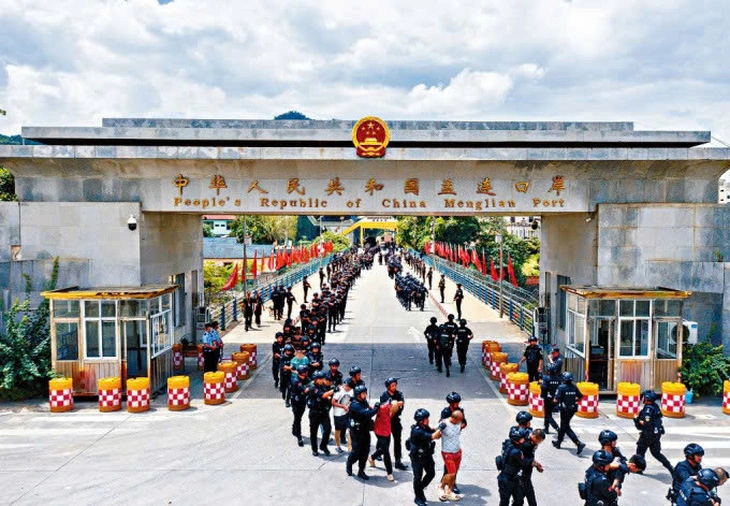
Các nghi phạm bị dẫn giải từ Myanmar về Trung Quốc tại cửa khẩu Mạnh Liên ở Vân Nam (Ảnh: XINHUA)

Tiếp tục đọc “Sào huyệt lừa đảo ở Đông Nam Á: Tội phạm Trung Quốc thống trị, gây thiệt hại hàng tỷ USD”

Crimes Associated with Critical Minerals in Southeast Asia

UNICRI – United Nations Interregional Crime and Justice Research Institute

NEW UNICRI Report: Crimes Associated with Critical Minerals in Southeast Asia

As Southeast Asia’s role in global critical mineral supply chains grows, so does its exposure to criminal threats like environmental crimes, corruption, and illicit financial flows.

UNICRI’s latest publication analyzes how various actors exploit legal and enforcement gaps across the mineral value chain. It includes case studies on unlawful extraction, smuggling, and corruption-linked offenses.

🔍 Key criminal patterns identified:

  • Illegal mining operations
  • Corruption in licensing and environmental compliance
  • Smuggling and laundering of proceeds
  • Lack of supply chain transparency

🛡️ Recommendations to strengthen regional responses:

  • Enhance financial investigation and AML cooperation
  • Develop traceability tools and leverage complementary technologies such as satellite monitoring
  • Build enforcement capacity on mining-related crime
  • Promote inter-agency coordination
  • Empower Indigenous and local communities through strengthened FPIC implementation
  • Advance research on criminal methodologies in mineral supply chains

UNICRI supports collaboration among Member States and relevant stakeholders to promote secure, transparent, and sustainable mineral supply chains.​

📥 Read the report: https://bit.ly/4lHUBf3

May be a graphic of text

Curse Of Crystal Meth: Addiction, Trafficking & Dangerous Production Exposed | Addicted – Ep 1/3

May 24, 2025 #Meth#CNAInsider#DrugAddiction

An estimated 39.5 million people globally suffer from drug-use disorders — with a growing number hooked on synthetic drugs that are cheaper, more accessible, and far more lethal. We investigate the impacts of this synthetic curse, beginning in Karachi, where millions of young Pakistanis are caught in a deadly spiral of addiction and crime.

Tiếp tục đọc “Curse Of Crystal Meth: Addiction, Trafficking & Dangerous Production Exposed | Addicted – Ep 1/3”

India’s Thriving Scam Industry: Before You Call Tech Support 

We go deep into the vast world of India’s scam call centers, meeting those behind the deception and the new breed of international scambaiters who are trying to bring these scammers down. After seven years of running tech support scams, ‘Leo’ has leveled up. He is now an entrepreneur or a scam call center consultant who sets up scamming outfits for those with money to invest. From hiring to hardware, he has it down to a science, especially on how long it will take to generate returns for the investors. At the other end of the spectrum, we follow an Indian scambaiter ‘Sven’ as he investigates a local company that’s running a scam call center. The majority of their victims are English-speaking foreigners overseas. Through reverse tracking, he has managed to get into the company’s systems, securing access to their confidential files and real-time CCTV footage of scams taking place. Will ‘Sven’ be able to find enough evidence to submit to the police and conduct a crackdown?

Online fraud leaves nobody safe – The vast and sophisticated global enterprise that is Scam Inc

economist.com

EDGAR MET Rita on LinkedIn. He worked for a Canadian software company, she was from Singapore and was with a large consultancy. They were just friends, but they chatted online all the time. One day Rita offered to teach him how to trade crypto. With her help, he made good money. So he raised his stake. However, after Edgar tried to cash out, it became clear that the crypto-trading site was a fake and that he had lost $78,000. Rita, it turned out, was a trafficked Filipina held prisoner in a compound in Myanmar.

In their different ways, Edgar and Rita were both victims of “pig-butchering”, the most lucrative scam in a global industry that steals over $500bn a year from victims all around the world. In “Scam Inc”, our eight-part podcastThe Economist investigates the crime, the criminals and the untold suffering they cause. “Scam Inc” is about the most significant change in transnational organised crime in decades.

Pig-butchering, or sha zhu pan, is Chinese criminal slang. First the scammers build a sty, with fake social-media profiles. Then they pick the pig, by identifying a target; raise the pig, by spending weeks or months building trust; cut the pig, by tempting them to invest; and butcher the pig by squeezing “every last drop of juice” from them, their family and friends.

The industry is growing fast. In Singapore scams have become the most common felony. The UN says that in 2023 the industry employed just under 250,000 people in Cambodia and Myanmar; another estimate puts the number of workers worldwide at 1.5m. In “Scam Inc” we report how a man in Minnesota lost $9.2m and how a bank in rural Kansas collapsed when its chief executive embezzled $47m to invest in crypto, under the tutelage of a fake online woman, called Bella. A part-time pastor, he also stole from his church.

Online scamming compares in size and scope to the illegal drug industry. Except that in many ways it is worse. One reason is that everyone becomes a potential target simply by going about their lives. Among the victims we identify are a neuroscience PhD and even relatives of FBI investigators whose job is to shut scams down. Operating manuals give people like Rita step-by-step instructions on how to manipulate their targets by preying on their emotions. It is a mistake to think romance is the only hook. Scammers target all human frailties: fear, loneliness, greed, grief and boredom.

Addicted: how the world got hooked on illicit drugs – and why we need to view this as a global threat like climate change

theconversation.com

It has taken decades for some to accept the devastating effects of climate change on our planet. Despite scientific evidence that was available years ago, many people were reluctant to make the connection between increasing use of fossil fuels, rising global temperatures and devastating weather events.

A key reason for this reluctance is the dislocation of cause and effect, both in time and geography. And here there are clear parallels with another deadly human activity that is causing increasing levels of suffering across the planet: the production, trafficking and consumption of illicit drugs. Here are some troubling “highlights” from the UN’s latest World Drugs Report:

Cocaine production is reaching record highs, with production climbing in Latin America coupled with drug use and markets expanding in Europe, Africa and Asia.

Synthetic drugs are also inflicting great harm on people and communities, caused by an increase in methamphetamine trafficking in south-west Asia, the near and Middle East and south-eastern Europe, and fentanyl overdoses in North America.

Meanwhile, the opium ban imposed by the de facto authorities in Afghanistan is having a significant impact on farmers’ livelihoods and incomes, necessitating a sustainable humanitarian response.

The report notes how organised criminal groups are “exploiting instability and gaps in the rule of law” to expand their trafficking operations, “while damaging fragile ecosystems and perpetuating other forms of organised crime such as human trafficking”.

Tiếp tục đọc “Addicted: how the world got hooked on illicit drugs – and why we need to view this as a global threat like climate change”

Xu hướng ma túy thế giới và những vấn đề đặt ra đối với công tác phòng, chống ở Việt Nam

Cục cảnh sát điều tra tội phạm ma tuý  05/09/2023 |

Do những tác động của xung đột vũ trang, bất ổn chính trị, kinh tế- xã hội tại nhiều quốc gia, khu vực, năm 2023 tình hình ma túy thế giới có những biến động tiêu cực, nổi lên là sự gia tăng số người sử dụng trái phép chất ma túy; hoạt động sản xuất thuốc phiện, cocain, ma túy tổng hợp và các chất hướng thần xảy ra tại nhiều nơi. Đặc biệt là vấn đề sử dụng internet, mạng xã hội và các ứng dụng truyền thông được mã hóa để giao dịch, mua bán ma túy theo những cách thức mới rất khó kiểm soát.

Tình hình ma túy thế giới và một số xu hướng mới nổi

Số liệu khảo sát của Cơ quan Liên hợp quốc về ma túy và tội phạm (UNODC) công bố tháng 8/2023 cho biết: Số người sử dụng ma túy tiếp tục tăng và duy trì ở mức cao trên toàn thế giới, từ 240 triệu người năm 2011 lên 296 triệu người vào năm 2023 (tương đương 5,8% dân số toàn cầu trong độ tuổi 15–64). Trong đó, cần sa là loại ma túy được sử dụng nhiều nhất, ước tính khoảng 219 triệu người; 36 triệu người sử dụng amphetamine; 22 triệu người sử dụng cocaine và 20 triệu người đã sử dụng các chất dạng “thuốc lắc”. Số lượng người tiêm chích ma túy ở mức cao, 13,2 triệu người, tăng 18% so với năm 2013, tiềm ẩn nguy cơ lây nhiễm nhiều loại bệnh và sức khỏe cộng đồng.

Tiếp tục đọc “Xu hướng ma túy thế giới và những vấn đề đặt ra đối với công tác phòng, chống ở Việt Nam”

Cyber-scam hits the big screen, and Cambodia isn’t happy

focus-cambodia.com

The banning of the Chinese blockbuster “No More Bets” warns that Beijing’s patience is wearing thin over Cambodia’s apparent inability to control cyber crime within its borders. A dramatic drop in tourism numbers may be one symptom. 

All bets are off with regard to the impact in Cambodia of “No More Bets”, a hit Chinese movie based upon Southeast Asia’s cyber-scam industry.

Cambodia’s Ministry of Culture and Fine Arts last week requested the Chinese Embassy to stop screening the action thriller, banning it in Cambodia and calling for censorship in China.

International observers say the movie already is testing the limits of the two nations’ “ironclad” friendship, as well as impacting the already-collapsing Chinese tourism market in Cambodia. Indeed, the outrage generated by “No More Bets” is amplifying awareness of possible further political and economic consequences of this “scamdemic”.

Tiếp tục đọc “Cyber-scam hits the big screen, and Cambodia isn’t happy”

Huge increase in transnational crime and synthetic drugs in SE Asia requires cross-border cooperation

United Nations Office on Drugs and Crime

Bangkok (Thailand), 2 June 2023 – A Thai Navy launch travels at high speed down the muddy brown waters of the Mekong River close to the border town of Chiang Saen in the north of Thailand. To the right is Laos, where huge construction projects funded by foreign investment are rising out of the lush undergrowth along the riverbank and ahead to the left are the dense jungles of Myanmar.

This is the storied Golden Triangle where historically opium was grown to produce heroin for export but where, in recent years, the trade of even deadlier and more profitable synthetic drugs has taken over.

Thailand, Laos and Myanmar are at the frontlines of illicit trade in Asia dominated by transnational organized crime syndicates.

RIVER SEIZURE

UN News/Daniel Dickinson | Captain Phakorn Maniam is deployed to the Thai Navy Mekong Riverine Unit

UN News/Daniel Dickinson | Captain Phakorn Maniam is deployed to the Thai Navy Mekong Riverine Unit

Ma túy “thế hệ mới” đã tấn công và xâm nhập học đường như thế nào?

nhandan.vn

Một học sinh cấp 3 tại Hà Nội sau khi được một huấn luyện viên thể hình (PT) cho một chiếc “bánh lười” – loại bánh trộn cần sa đã mang về… chia cho các bạn cùng sử dụng. Hậu quả, một nhóm học sinh đã bị ngộ độc ngay sau đó.

Thứ sáu, ngày 07/04/2023

"Nước vui", "bùa lưỡi", "bột dâu", "bột xoài" với hình thức bắt mắt dễ dàng qua mặt lực lượng chức năng. (Ảnh: Cơ quan chức năng cung cấp)
“Nước vui”, “bùa lưỡi”, “bột dâu”, “bột xoài” với hình thức bắt mắt dễ dàng qua mặt lực lượng chức năng. (Ảnh: Cơ quan chức năng cung cấp)

Đây chỉ là một trong những thí dụ không hề hiếm gặp cho thấy ma túy “thế hệ mới” đã và đang xâm nhập vào học đường hiện nay.

Nguy hiểm rình rập học đường

Theo thống kê của Bộ Công an vào tháng 6/2022, 60% số người sử dụng trái phép chất ma túy lần đầu ở độ tuổi từ 15-25 tuổi, trong đó nhiều người đang là học sinh, sinh viên. Người nghiện ma túy đang có xu hướng ngày càng trẻ hóa đặt ra không ít thách thức cho công tác phòng, chống ma túy cũng như cai nghiện.

Một điều tra viên lâu năm trong lĩnh vực phòng, chống tội phạm ma túy chia sẻ, bản thân anh đã từng chứng kiến nhiều vụ việc “dở khóc, dở cười”.

“Chúng tôi từng nhận được thông tin về việc một nữ học sinh cấp 3 được huấn luyện viên thể hình đưa cho một chiếc bánh lười (loại bánh tẩm cần sa-PV). Tuy nhiên, cô bé không sử dụng ngay mà mang về… chia cho các bạn cùng lớp ăn cùng. Kết quả, cả nhóm học sinh đều bị ngộ độc và phải đưa đi cấp cứu”, điều tra viên kể lại.

Ma túy “thế hệ mới” đã tấn công và xâm nhập học đường như thế nào? ảnh 1
Ma túy tổng hợp cơ quan chức năng thu giữ. (Ảnh: Cơ quan công an cung cấp)

Các đối tượng tội phạm về ma túy thường lợi dụng tâm sinh lý của học sinh, sinh viên nói riêng; giới trẻ nói chung để lôi kéo, dụ dỗ.

Tiếp tục đọc “Ma túy “thế hệ mới” đã tấn công và xâm nhập học đường như thế nào?”