The Parties to this Treaty reaffirm their faith in the purposes and principles of the Charter of the United Nations and their desire to live in peace with all peoples and all governments. They are determined to safeguard the freedom, common heritage and civilisation of their peoples, founded on the principles of democracy, individual liberty and the rule of law. They seek to promote stability and well-being in the North Atlantic area. They are resolved to unite their efforts for collective defence and for the preservation of peace and security. They therefore agree to this North Atlantic Treaty :
Article 1
The Parties undertake, as set forth in the Charter of the United Nations, to settle any international dispute in which they may be involved by peaceful means in such a manner that international peace and security and justice are not endangered, and to refrain in their international relations from the threat or use of force in any manner inconsistent with the purposes of the United Nations.
A unique court case, brought by four Nigerian victims of Shell oil spills, in conjunction with Friends of the Earth Netherlands, begins on Thursday 3rd December in the court at The Hague. This is the first time in history that a Dutch company has been brought to trial before a Dutch court for damages abroad. The Nigerian farmers and fishers, who lost their livelihoods after oil from leaking Shell pipelines streamed over their fields and fishing ponds, are claiming compensation from the Anglo-Dutch oil giant…Shell denies all responsibility and contends that the Dutch court has no jurisdiction over its Nigerian subsidiary.
“Shell to pay 15 mln euros in settlement over Nigerian oil spills”, 24 Dec 2022
Shell will pay 15 million euros ($15.9 million) to communities in Nigeria that were affected by multiple oil pipeline leaks in the Niger Delta, the oil company on Friday said in a joint statement with the Dutch division of Friends of the Earth.
The compensation is the result of a Dutch court case brought by Friends of the Earth, in which Shell’s Nigerian subsidiary SPDC last year was found to be responsible for the oil spills and was ordered to pay for damages to farmers.
The money will benefit the communities of Oruma, Goi and Ikot Ada Udo in Nigeria, that were impacted by four oil spills that occurred between 2004 and 2007.
“The settlement is on a no admission of liability basis, and settles all claims and ends all pending litigation related to the spills,” Shell said.
An independent expert had confirmed that SPDC has installed a leak detection system on the KCTL Pipeline in compliance with the appeal court’s orders, the company added…
The case was brought in 2008 by four farmers and environmental group Friends of the Earth, seeking reparations for lost income from contaminated land and waterways in the region, the heart of Nigeria’s oil industry.
After the appeals court’s final ruling last year, Shell said it continued to believe the spills were caused by sabotage.
But the court said Shell had not proven “beyond reasonable doubt” that sabotage had caused the spill, rather than poor maintenance.
Content Type:Article”Shell (SHEL.L) will pay 15 million euros ($15.9 million) to communities in Nigeria that were affected by multiple oil pipeline leaks in the Niger Delta, the oil company on Friday said in a joint statement with the Dutch division of Friends of the Earth”
In the Declaration of the High-level Meeting on the Rule of Law, Member States noted that “the rule of law and development are strongly interrelated and mutually reinforcing, that the advancement of the rule of law at the national and international levels is essential for sustained and inclusive economic growth, sustainable development, the eradication of poverty and hunger and the full realization of all human rights and fundamental freedoms, including the right to development, all of which in turn reinforce the rule of law”. They therefore called for consideration of that interrelationship in the post-2015 international development agenda. At the international level, the body of international instruments, including those concerning international trade and finance, climate change and protection of the environment and the right to development, establishes internationally agreed standards which support sustainable development.
At the national level, the rule of law is necessary to create an environment for providing sustainable livelihoods and eradicating poverty. Poverty often stems from disempowerment, exclusion and discrimination. The rule of law fosters development through strengthening the voices of individuals and communities, by providing access to justice , ensuring due process and establishing remedies for the violation of rights . Security of livelihoods, shelter, tenure and contracts can enable and empower the poor to defend themselves against violations of their rights. Legal empowerment goes beyond the provision of legal remedies and supports better economic opportunities.
Intellectual property (IP) law reform and enforcement in Vietnam has been at the center of a broad range of trade agreements the country has signed onto. But change has been slow, and enforcement has been lacking. Here’s how a spat between a cartoon wolf and a cartoon pig could change that.
The owners of the UK’s Peppa Pig, EOne, are suing Vietnam’s Sconnect, the owners of popular YouTube cartoon Wolfoo, alleging trademark and copyright infringement. More specifically, EOne is alleging Sconnect created Wolfoo to look and feel like Peppa Pig to imply the two cartoons were connected.
In its complaint, EOne claims that parts of Wolfoo’s audio have been taken directly from episodes of Peppa Pig and that images of Peppa Pig herself appear on items like clocks and watering cans in the background of Wolfoo videos.
This is currently before the courts in the UK.
But the courts have not been EOne’s only means of recourse.
YouTube, for example, took down 2,000 Wolfoo videos from August to October this year for copyright infringement at the request of EOne. This cost Sconnect US$2 million in lost revenue up to October, according to their own estimates.
In response, Sconnect has made overtures to the Vietnamese government looking for support. It has also countersued in Vietnam and has launched a lawsuit in Russia where, earlier in the year, a copyright infringement case brought by EOne was dismissed in response to sanctions imposed over the war in the Ukraine.
The Paradox of Asia and the Scope of this Report Asia presents a paradox. Many of the more than forty countries in this vast region aren home to vibrant civil society sectors, engaged in everything from social services to advocacy to mutual benefit activities and other pursuits that fall within the definitions of non-profit or charitable activity. Yet in many countries of Asia, government regulatory controls on civil society are restrictive or highly restrictive. Indeed, based on reports from countries as diverse as India, China, Thailand and Vietnam, among many others, the legal operating environment is becoming more restrictive, particularly for advocacy and other groups engaged in independent civil society activity.
This report is an overview of the regulatory environment affecting civil society and civil society organizations (CSOs)2 across Asia, focusing on a number of countries and key themes. These themes include: general constitutional and legal frameworks; types of organizational forms of CSOs; establishment requirements; registration and incorporation requirements; termination and dissolution procedures; state supervisory requirements; legal treatment of foreign organizations; and rules related to funding sources, including cross-border philanthropy and economic activities. While this report may make reference to any country in Asia, it focuses predominantly on Afghanistan, Kazakhstan, Kyrgyzstan, Tajikistan, Turkmenistan and Uzbekistan (Central Asia); Bangladesh, Bhutan, India, Nepal, Pakistan and Sri Lanka (South Asia); Cambodia, Indonesia, Laos, Malaysia, Myanmar, Philippines, Singapore, Thailand and Vietnam (Southeast Asia); China, Hong Kong, Japan, Mongolia and South Korea (East Asia); and Fiji (Pacific).
This report is intended to identify key trends in the regulation of civil society and CSOs across Asia. As readers will note, it is not a detailed study of each country, and not all issues are covered for each country. For more detail, we invite readers to consult other
(PLO)- Xây dựng Luật đạo đức là để giáo dục mọi người nhận thức được danh dự là điều thiêng liêng nhất trong đời người, nhằm góp phần tốt hơn trong phòng ngừa vi phạm, tội phạm.
Báo cáo của Chính phủ, các cơ quan tư pháp gửi Quốc hội (QH) cho thấy có tình trạng móc nối, tiếp tay của cán bộ, công chức, viên chức nhà nước đối với doanh nghiệp để trục lợi.
Tội phạm tham nhũng, chức vụ tăng 37,6%
Mới đây, thừa ủy quyền của Thủ tướng, Tổng thanh tra Chính phủ Đoàn Hồng Phong đã ký báo cáo gửi QH về công tác phòng chống tham nhũng năm 2022. Đáng chú ý, báo cáo của Chính phủ cho hay hoạt động phòng chống tham nhũng, tiêu cực (PCTNTC) đã từng bước được mở rộng ra khu vực ngoài Nhà nước.
Theo Chính phủ, Ủy ban Chứng khoán Nhà nước đã triển khai 25 đoàn thanh kiểm tra định kỳ và 40 đoàn kiểm tra đột xuất về hoạt động chào bán, mua lại cổ phiếu, bán cổ phiếu quỹ, chào mua công khai, việc thực hiện nghĩa vụ của công ty đại chúng, tổ chức niêm yết… cũng như việc tuân thủ quy định pháp luật chứng khoán đối với các công ty đại chúng, công ty chứng khoán, công ty quản lý quỹ.
Cơ quan CSĐT Bộ Công an đã khởi tố vụ án thao túng thị trường chứng khoán xảy ra tại Tập đoàn FLC, Công ty cổ phần Chứng khoán BOS và các công ty có liên quan; khởi tố vụ án lừa đảo chiếm đoạt tài sản xảy ra tại Tập đoàn Tân Hoàng Minh và các tổ chức, đơn vị có liên quan…
Dù vậy, Chính phủ nhận định: “Tình trạng móc nối, tiếp tay của cán bộ, công chức, viên chức nhà nước đối với doanh nghiệp để trục lợi, chiếm đoạt tài sản của Nhà nước còn diễn ra ở một số lĩnh vực”.
Arbitral hubs and institutions in Asia have reached new heights in terms of their growth and popularity, achieving stellar global rankings and an ever-growing number of case filings. Arbitration’s popularity in Asia has been augmented by the generally pro-arbitration stance taken by the countries in the region. This chapter examines recent developments in Singapore and other parts of Asia, tracking the continued growth and overall maturation of Asia’s arbitration scene.
Discussion points
The growing profile of the arbitral seats and institutions in Asia
Steps taken by arbitral institutions to enhance and update their rules to compete with other international arbitral institutions
Pro-arbitration stance of jurisdictions across the region, including support for the arbitral process and the enforcement of arbitral awards
Referenced in this article
Bloomberry Resorts and Hotels Inc and another v Global Gaming Philippines LLC and another ([2021] SGCA 9)
CAJ and another v CAI and another appeal ([2021] SGCA 102)
CKG v CKH ([2021] SGHC(I) 5)
CNX v CNY ([2022] SGHC 53)
National Oilwell Varco Norway AS (formerly known as Hydralift AS) v Keppel FELS Ltd (formerly known as Far East Levingston Shipbuilding Ltd) ([2022] SGCA 24)
Phoenixfin Pte Ltd and others v Convexity Ltd ([2022] SGCA 17)
The ‘Navios Koyo’ ([2021] SGCA 99)
Westbridge Ventures II Investment Holdings v Anupam Mittal ([2021] SGHC 244)
Arbitral hubs and institutions in Asia have reached new heights in terms of their growth and popularity. In the 2021 Queen Mary University of London and White & Case International Arbitration Survey (the QMUL Survey),[1] Singapore and Hong Kong ranked first and third respectively as the most popular arbitral seats in the world. This marks a first for Singapore, and it shares its position with London – a global powerhouse in the field. Singapore was also named the most preferred seat in the Asia-Pacific, and, along with Hong Kong, ranked in the top-five most preferred seats in all regions.
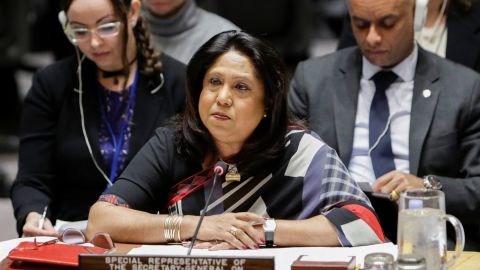
Pramila Patten, Special Representative of the UN Secretary-General on Sexual Violence in Conflict, at a Security Council meeting in New York in 2018.Xinhua/ShutterstockCNN —
Russia is using rape and sexual violence as part of its “military strategy” in Ukraine, a UN envoy said this week.
The claim follows data released by a panel of UN experts recently that verified “more than a hundred cases” of rape or sexual assault incidents reported in Ukraine since February.
“When you hear women testify about Russian soldiers equipped with Viagra, it’s clearly a military strategy,” Pramila Patten, UN Special Representative on Sexual Violence in Conflict, said in an interview with AFP on Thursday.
Human Rights Council Fifty-first session 12 September–7 October 2022 Agenda items 2 and 3 Annual report of the United Nations High Commissioner for Human Rights and reports of the Office of the High Commissioner and the Secretary-General
Promotion and protection of all human rights, civil, political, economic, social and cultural rights, including the right to development
The right to privacy in the digital age Report of the Office of the United Nations High Commissioner for Human Rights*
The present report, submitted pursuant to Human Rights Council resolution 48/4, discusses recent trends and challenges concerning the right to privacy. The report focuses, in particular, on: (a) the abuse of intrusive hacking tools; (b) the key role of encryption in ensuring the enjoyment of the right to privacy and other rights; and (c) wide-spread monitoring of public spaces. It highlights the risk of creating systems of pervasive surveillance and control that may undermine the development of vibrant and rightsrespecting societies.
I. Introduction
II. Surveillance of personal devices and communications
– Đây được xem là bộ luật quốc gia thành văn đầu tiên trong lịch sử lập pháp nước nhà.- Hình thư gồm 3 quyển, trong đó bao gồm các quy định: + Tổ chức của triều đình, quân đội và hệ thống quan lại. + Biện pháp trừng trị đối với những hành vi nguy hiểm cho xã hội. + Sở hữu và mua bán đất đai, tài sản, quy định về thuế…
2
Thời Trần
Quốc triều hình luật
– Kế thừa nội dung của Hình thư từ thời Lý và bổ sung và điều chỉnh nhất định về hình phạt, thủ tục tố tụng và chế độ tư hữu đất đai, tài sản.
3
Thời vua Lê Thánh Tông
Bộ luật Hồng Đức
– Bao gồm 722 điều, chia thành 12 chương, 6 quyển.- Trong đó, có các nội dung về hành chính, hình sự, dân sự, hôn nhân gia đình và tố tụng.- Đây được đánh giá là thành tựu có giá trị đặc biệt quan trọng trong lịch sử pháp luật Việt Nam.
4
Thời Nguyễn
Bộ luật Gia Long
– Bao gồm 398 Điều, chia thành 22 quyển và 6 lĩnh vực.- Trong đó, có các nội dung quy định về: + Tổ chức nhà nước và hệ thống quan lại. + Tội danh và hình phạt. + Quản lý dân cư và đất đai. + Ngoại giao và nghi lễ cung đình. + Tổ chức quân đội và quốc phòng. + Xây dựng, bảo vệ đê điều, lăng tẩm.- Được đánh giá là một trong hai bộ luật tổng hợp có quy mô lớn và nội dung phong phú.
– Đây là bản án Hiến pháp đầu tiên của nước Cộng hòa xã hội chủ nghĩa Việt Nam sau khi chủ tịch Hồ Chí Minh công bố Bản Tuyên ngôn Độc lập.- Bản Hiến pháp này khẳng định quyền tự do dân chủ của dân tộc Việt Nam ta.- Bao gồm: 7 chương và 70 điều, trong đó có các nội dung quy định về: + Chính thể. + Nghĩa vụ quyền lợi của công dân. + Cơ cấu tổ chức của Nghị viên nhân dân, Chính phủ, HĐND, Ủy ban hành chính và cơ quan tư pháp.Kể từ ngày 19/12/1946 – Ngày Toàn quốc kháng chiến, Nhà nước Việt Nam đã ban hành 479 văn bản pháp luật, trong đó có 243 sắc lệnh, 46 Thông tư và 12 văn bản khác.
– Bao gồm 10 chương và 112 Điều. Trong đó, có các nội dung chính quy định về: + Chế độ chính trị, kinh tế và xã hội. + Trách nhiệm và quyền hạn của các cơ quan nhà nước. + Quyền và nghĩa vụ của mỗi công dân…Sau khi Hiến pháp 1959 được thông qua, hoạt động lập pháp của nước ta chỉ quan tâm đến lĩnh vực tổ chức bộ máy nhà nước, nghĩa vụ quân sự và pháp luật hình sự. Các lĩnh vực khác ít được quan tâm hơn.
– Hiến pháp này ra đời nhằm thể chế hóa đường lối chủ trưởng của Đảng Cộng sản Việt Nam trong giai đoạn mới. Đây là Hiến pháp của thời kỳ quá độ lên chủ nghĩa xã hội trong phạm vi cả nước.Bao gồm 12 chương và 147 Điều. Trong đó, có các nội dung chính quy định về: + Chính trị, kinh tế, văn hóa và xã hội. + Quyền và nghĩa vụ cơ bản của công dân. + Cơ cấu tổ chức và nguyên tắc hoạt động của cơ quan nhà nước.Đáng lẽ sau khi Hiến pháp này thông qua thì hệ thống pháp luật Việt Nam có một khởi sắc mới, tuy nhiên, thực tế hoạt động xây dựng pháp luật sau khi bản Hiến pháp này được thông qua không có được khởi sắc cần thiết.Hoạt động lập pháp tập trung chủ yếu về các lĩnh vực tổ chức bộ máy nhà nước, pháp luật hình sự, lĩnh vực quân sự…
– Hiến pháp này khẳng định Nhà nước phát triển kinh tế hàng hóa nhiều thành phần theo cơ chế thị trường định hướng XHCN, Nhà nước ghi nhận quyền tự do kinh doanh của công dân.- Bao gồm 12 chương và 147 Điều. Trong đó, có các nội dung chính quy định về: +Chế độ chính trị, kinh tế, văn hóa, xã hội, quốc phòng, an ninh. + Quyền và nghĩa vụ cơ bản của công dân. + Cơ cấu, nguyên tắc tổ chức và hoạt động của cơ quan nhà nước. + Thể chế hóa mối quan hệ giữa Đảng lãnh đạo, nhân dân làm chủ.- Từ sau khi Hiến pháp 1992 được thông qua, hệ thống pháp luật Việt Nam có những bước phát triển nhảy vọt
Sau gần 10 năm thi hành, Hiến pháp 1992 bộc lộ nhiều thiếu sót và bất cập so với thực tế, Nghị quyết 51 ra đời với mục đích hoàn thiện Hiến pháp 1992.Khẳng định rõ Nhà nước Cộng hòa xã hội chủ nghĩa Việt Nam là Nhà nước pháp quyền xã hội chủ nghĩa của nhân dân, do nhân dân, vì nhân dân. Quyền lực nhà nước thống nhất, có sự phân công và phối hợp giữa các cơ quan nhà nước trong việc thực hiện quyền lập pháp, hành pháp, tư pháp.
– Bao gồm 11 chương và 120 Điều, trong đó bao gồm các nội dung chính về: + Chế độ chính trị, kinh tế, văn hóa, xã hội, bảo vệ môi trường, giáo dục. + Quyền con người, quyền và nghĩa vụ cơ bản của công dân. + Tổ chức bộ máy nhà nước. + Bảo vệ Tổ quốc.- Hiến pháp 2013 ra đời đánh dấu bước hoàn thiện hoạt động lập pháp của nước nhà trong thời kỳ hội nhập và phát triển.>>> Xem chi tiết Phân tích toàn văn Hiến pháp 2013
We need only call to mind the first half of 2022 for an array of the extreme, energy-related global challenges we all face. Around the world, local versions of climate change effects—the temperatures, wildfires, droughts, storms, flooding—underscore how important it is for us to transition away from our overdependence on fossil fuels. And our energy sources don’t just have environmental implications but security ones as well. The Russian invasion of Ukraine is the latest rendition of the resource curse. At the heart of it all, fossil fuels are what enabled and amplified the murderous narcissism we see in Vladimir Putin and created a country with an unbalanced and unhealthy domestic economy able to profoundly destabilize energy flows and prices around the world.
The South China Sea (SCS) brings together its own assortment of these complex challenges and factors. Competing security concerns, resource needs, and nationalisms shape the motivations of the claimants. Much of the attention and conflict has centred on the oil and gas in the seabed. Estimates of SCS hydrocarbon volumes vary; only some of these resources are proven reserves that have been confirmed and measured, and are actually recoverable. But even in more generous assessments, the SCS only provides us with a small percentage of the global total of oil and gas reserves, and even less of the overall energy mix if we include non-fossil-fuel energy sources.
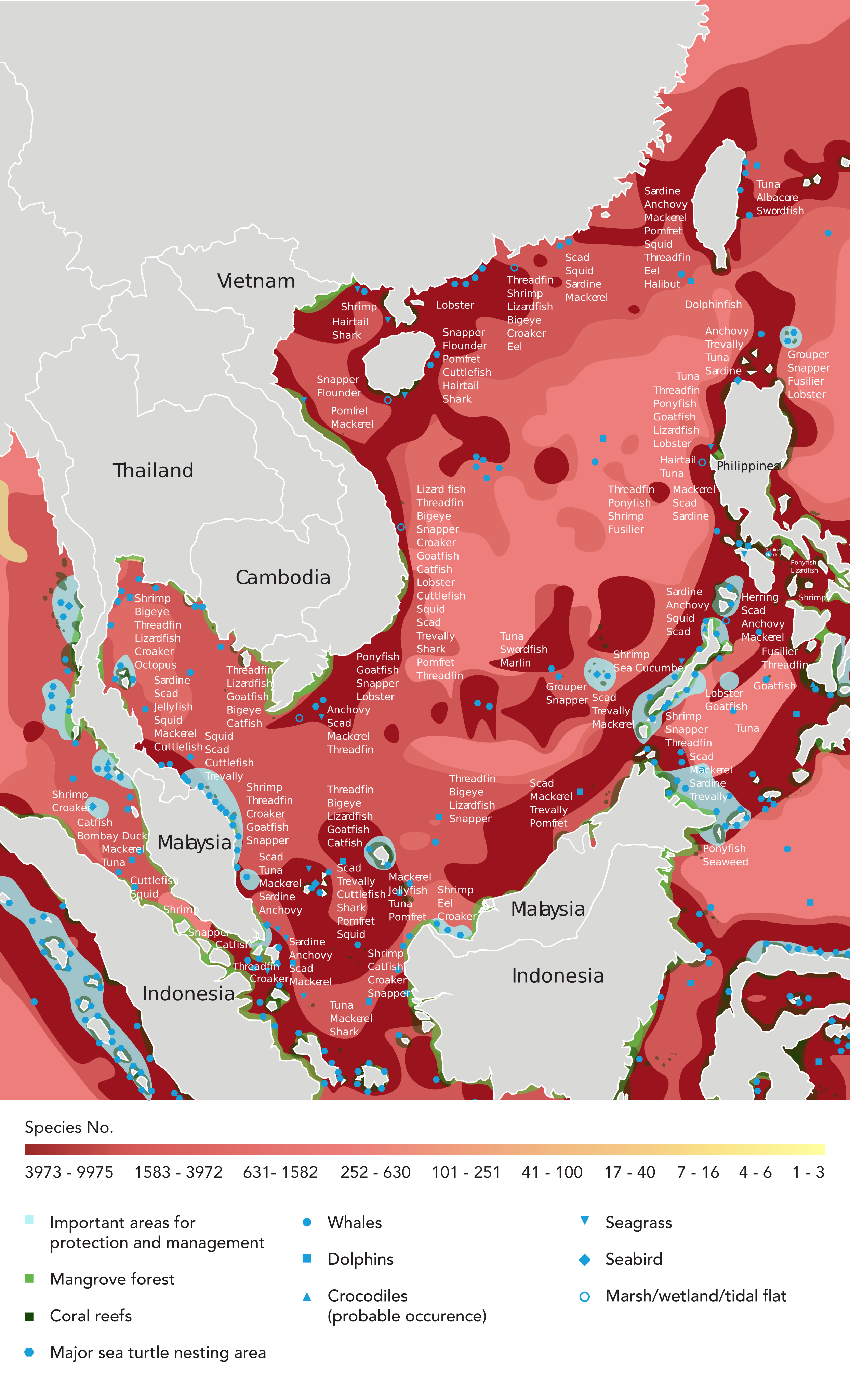
Beyond hydrocarbons, in a two-way tie with the adjacent Coral Triangle, the SCS has the highest level of marine biodiversity in the world. SCS fisheries feed and employ millions of people in the region. It’s true that conflict over these living marine resources also drives the territorial disputes in the region, and a wide variety of human activity degrades the SCS ecosystem. Yet drilling for hydrocarbons in the SCS threatens this vulnerable marine habitat even more, while also clearly contributing to geopolitical and security tensions in the region—and to climate change.
Given how destabilizing oil and gas pursuits have been for the SCS since the 1970s, we might ask ourselves whether we want to keep drilling for fossil fuels there. Do the costs and risks outweigh the benefits?
Download this 21-page report (button above) from Dr. Tabitha Grace Mallory, an inaugural John H. McArthur Research Fellow, an initiative of the Asia Pacific Foundation of Canada, and the Founder of China Ocean Institute and Affiliate Professor, Jackson School of International Studies, University of Washington.
Below, explore the rich marine biodiversity of the South China Sea, one of the most hotly-contested maritime jurisdictions on the planet, in this original map created by the author and APF Canada graphic designer Chloe Fenemore, based on historical and contemporary maps cited in the full report.
Tabitha Grace Mallory is the Founder of China Ocean Institute and Affiliate Professor, Jackson School of International Studies, University of Washington. Dr. Mallory specializes in Chinese foreign and environmental policy. She conducts research on China and global ocean governance and has published work on China’s fisheries and oceans policy.
Dr. Mallory is an inaugural John H. McArthur Research Fellow, an initiative of the Asia Pacific Foundation of Canada launched in 2021 to provide research opportunities for exceptional, mid-career scholars who are working on programs and research areas with direct relevance to Canada and Canada’s interests in Asia.
Luật khám bệnh, chữa bệnh đang trong quá trình sửa đổi và trình lên Quốc Hội cho ý kiến và dự kiến xem xét thông qua tại Kỳ họp thứ 4, Quốc hội khóa XV vào tháng 10.
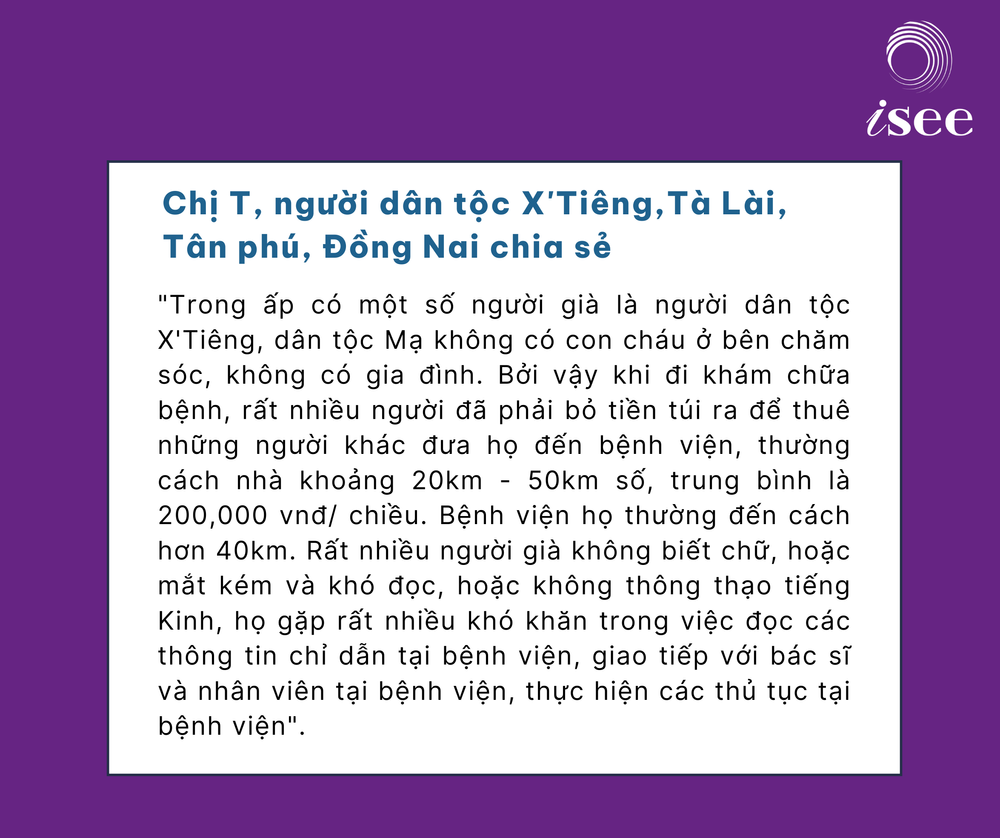
Luật khám bệnh, chữa bệnh có tác động rất lớn đến hệ thống ngành y tế cũng như vấn đề chăm sóc sức khỏe của người dân, trong đó có người Dân tộc thiểu số, Mạng lưới Tiên Phong Vì Tiếng Nói Người Dân Tộc Thiểu Số đã có một buổi trao đổi cùng chuyên gia trong lĩnh vực luật khám bệnh, chữa bệnh đồng thời thảo luận nội bộ để cùng đưa ra ý kiến đối với những vấn đề vẫn còn bỏ ngỏ trong luật.
Qua quá trình thảo luận, nhóm nhận ra rằng rào cản ngôn ngữ giữa bác sĩ và bệnh nhân là người dân tộc thiểu số ở tại địa phương và đặc biệt là cơ sở khám chữa bệnh tuyến Trung Ương là một vấn đề ảnh hưởng trực tiếp đến quyền và chất lượng sử dụng dịch vụ khám chữa bệnh của người dân tộc thiểu số. Dưới đây là những trải nghiệm cá nhân và quan sát của chính các thành viên Tiên Phong về vấn đề này:
This photo taken on 20 August 2022, shows a worker sorting a fresh catch of fish at Sa Ky port on Vietnam’s offshore Ly Son island. Ly Son island, situated north-east of central Vietnam’s Quang Ngai province, is the country’s closest island to the disputed Paracel archipelago in the South China Sea region. (Photo: Nhac Nguyen / AFP)
This article is part of “UNCLOS 40th Anniversary Series – Why UNCLOS Matters” conceptualised by the Blue Security programme. The series, which commemorates the 40th anniversary of the U.N. Convention on the Law of the Sea, brings together established and emerging maritime security scholars from Southeast Asia and the broader Indo-Pacific to address the pertinence and relevance of UNCLOS. Blue Security brings together Australian and Southeast Asian experts to look at a range of maritime security issues across the region. The series was developed by Dr. Troy Lee-Brown and Dr. Bec Strating. It is published in collaboration with the team at Fulcrum.
UNCLOS’s relevance to Vietnam is significant, but the Convention must be updated if Vietnam and other signatories are to succeed in dealing with contemporary challenges in maritime affairs.
While there is still a long way towards effective implementation, Vietnam finally has a law affirming citizens’ right to information. Transparency International’s national chapter actively contributed to the legislative process, helping ensure a stronger legal framework.
When Vietnam’s Law on Access to Information took effect in July 2018, it was long overdue. For many years, citizens had found it very difficult to get government guidance on vital issues like health care, borrowing and employment. Businesses had needed to use personal connections to access information held by state agencies, which regularly refused to clarify policies and share socio-economic development plans. Needless to say, few businesses and citizens could hold their government accountable using information.
TTCT – Đứng về góc độ kinh tế, hình thức doanh nghiệp trách nhiệm hữu hạn, và sau này là cổ phần, cùng với luật về phá sản là một sáng tạo độc đáo của loài người. Nó tạo ra một sân chơi mới rộng lớn và an toàn để mọi người có thể tham gia làm giàu cho mình và cho xã hội mà không phải lo mất trắng.
Thị trường bất động sản đang trì trệ, nhiều dự án đầu tư, xây dựng dang dở – Ảnh: T.T.D.
Mỗi cá nhân khi bước chân vào thị trường lao động thường có hai lựa chọn hoặc là đi làm cho người khác để hưởng lương, hoặc trở thành một doanh nhân. Người ta chỉ chọn trở thành doanh nhân khi họ cho rằng thu nhập kỳ vọng từ công việc này cao hơn. Thu nhập kỳ vọng này bị ảnh hưởng bởi nhiều yếu tố, trong đó có các yếu tố về thị trường, khả năng của doanh nhân về ý tưởng, sản phẩm, năng lực triển khai, tài chính… và các chính sách của nhà nước.





 CVD
CVD 