Prime Minister Nguyen Xuan Phuc speaks at the ground-breaking ceremony of the expansion project of Hoa Binh Hydropower Plant, Hoa Binh Province, January 10, 2021 in this supplied photo.
Vietnam’s Prime Minister Nguyen Xuan Phuc attended the ground-breaking ceremony of the expansion project of Hoa Binh Hydropower Plant in northern Hoa Binh Province on Sunday morning.
By Nguyen Dong January 11, 2021 | 01:27 pm GMT+7 vnexpressA staff stands inside the Hai Van Tunnel 2, January 10, 2021. Photo by VnExpress/Nguyen Dong.
Hai Van Tunnel 2 in central Vietnam has opened to traffic Monday after four years of construction.
Connecting Thua Thien-Hue Province with central hub Da Nang, the tunnel of 6.2 kilometers (3.85 miles) is the longest road tunnel in Southeast Asia and helps reduce traffic pressure on Hai Van Road Tunnel 1.
Welcome to our final newsletter of 2020. We would like to take this opportunity to thank you for your support and interest in our work over the year. We will return in early January and in the meantime wish you an enjoyable festive break and every success in 2021.
New white paper: Digital trade in the Asia-Pacific
Deborah Elms 22 December 2020
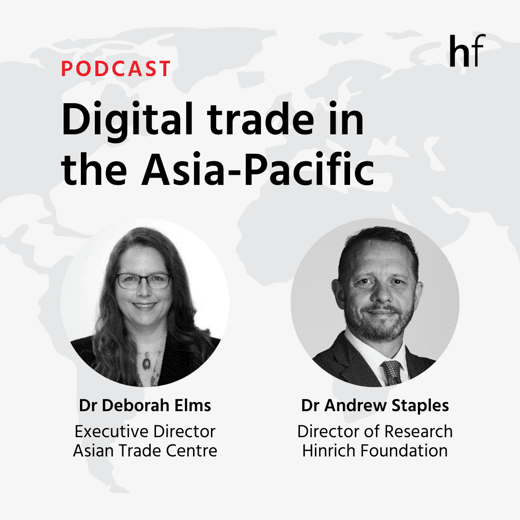
As we move into 2021, what are the key issues facing digital trade in Asia? The Covid-19 pandemic has disrupted global trade and upended many longstanding business models. Firms are rapidly shifting to develop or expand digital capabilities to manage highly altered supply and demand pressures. Despite the growing importance of digital trade, the ability of governments to tackle a range of issues of relevance to managing the online environment still lags behind the speed of innovation for firms. Effective and efficient regulatory policies can support continuing economic growth in the digital economy. Given the overwhelming importance of small firms to every country in Asia, failure to create supportive policies will impede the region’s attempt to advance sustainable and inclusive development. This new paper from the Hinrich Foundation – the first in a series of six reports on digital trade in the Asia-Pacific authored by Dr Deborah Elms, Executive Director at the Asian Trade Centre – identifies eight issues that governments and firms across the region will need to tackle to reap the full benefits of the digital opportunity.
In this short podcast our Director of Research, Dr Andrew Staples, invites Dr Deborah Elms to provide an overview of paper and to highlight the importance of the RCEP agreement for digital trade in Asia.
INTERVIEW WITH RESEARCH FELLOW Hinrich Foundation Research Fellow, Alex Capri, discusses his latest paper with Dr Staples. Released last week, Techno-nationalism and corporate governance examines how the US-China tech cold war has politicized the business environment for multinationals and the implications for corporate governance. Techno-nationalism, he observes, now requires firms to evaluate or restructure their cross-border operations to reduce risks.
IN CASE YOU MISSED IT While 2020 proved to be challenging for all of us, it was also a productive year for our research fellows. Please find below a selection of our most read articles and papers on the key issues impacting global trade in 2020 including the coronavirus pandemic, geopolitical tensions and the US-China trade war, the emergence of “techno-nationalism,” the US presidential election and the signing of the Regional Comprehensive Economic Partnership (RCEP).
Năm 2016, chỉ thị đầu tiên về tự do hóa thị trường điện châu Âu (năm 2006) kỷ niệm 20 năm ngày ban hành. Chúng ta có thể rút ra kết luận gì từ hai thập kỷ tự do hóa thị trường điện? Một số nhà quan sát, thậm chí những người có tiếng, [1] cũng đang tranh luận rằng thử nghiệm này là một thất bại.Theo định kỳ, các hội nghị được tổ chức tại Brussels hoặc các thủ đô khác để thảo luận về những cải cách mới được cho là cần thiết để cứu ngành điện châu Âu. Ủy ban Châu Âu đề xuất những thay đổi sau khi tham khảo ý kiến của các bên liên quan trên thị trường. [2]
Bài báo đưa ra một quan điểm lạc quan hơn đó là: tự do hóa ngành điện của châu Âu đã hoàn thành hầu hết các mục tiêu ban đầu của chỉ thị. Phải thừa nhận rằng có thể và sẽ cần phải cải tiến, nhưng chúng ta đã đi được một chặng đường dài. Vì vậy, ly nước đã đầy một nửa. Trong thời điểm nghi ngờ về sự thành công của hội nhập châu Âu, ngành điện cho chúng ta nhiều cơ sở để hài lòng.
The Mekong Delta region is set to get over 300 kilometers of expressways in the next five years as the government seeks to boost connectivity and economic growth.
Năm nào trúng mùa, mẹ tôi đặt một đôi chiếu Bông và đôi chiếu Cỗ theo kích thước và màu sắc riêng do bà chọn. Bà nói: Để “ăn Tết” với người ta! Hồi đó sống dưới quê, nhà chỉ dám xài chiếu trắng. Sáng nào ngủ dậy, mẹ cũng dặn phải cuốn chiếu lại đem cất trong buồng (phòng ngủ). Thỉnh thoảng thấy mẹ đem chiếu ra sông giặt rồi đem phơi nắng. Còn chiếu Bông bà để dành, chỉ trải khi nhà có khách hoặc có lễ lộc.
The Office of the United States Trade Representative (USTR) on October 2 launched two investigations of Vietnam under Section 301 of the Trade Act of 1974, including one into alleged currency undervaluation. The president has repeatedly complained about Vietnam’s large trade surplus with the United States, and the USTR action is one of several launched by the administration targeting Vietnam’s currency practices. But the administration has also touted the growing security partnership with Vietnam, which shares U.S. anxieties about China, and the trade actions could run counter to the broader strategic alignment between Hanoi and Washington.
Q1: What is Section 301 and why is Vietnam being investigated?
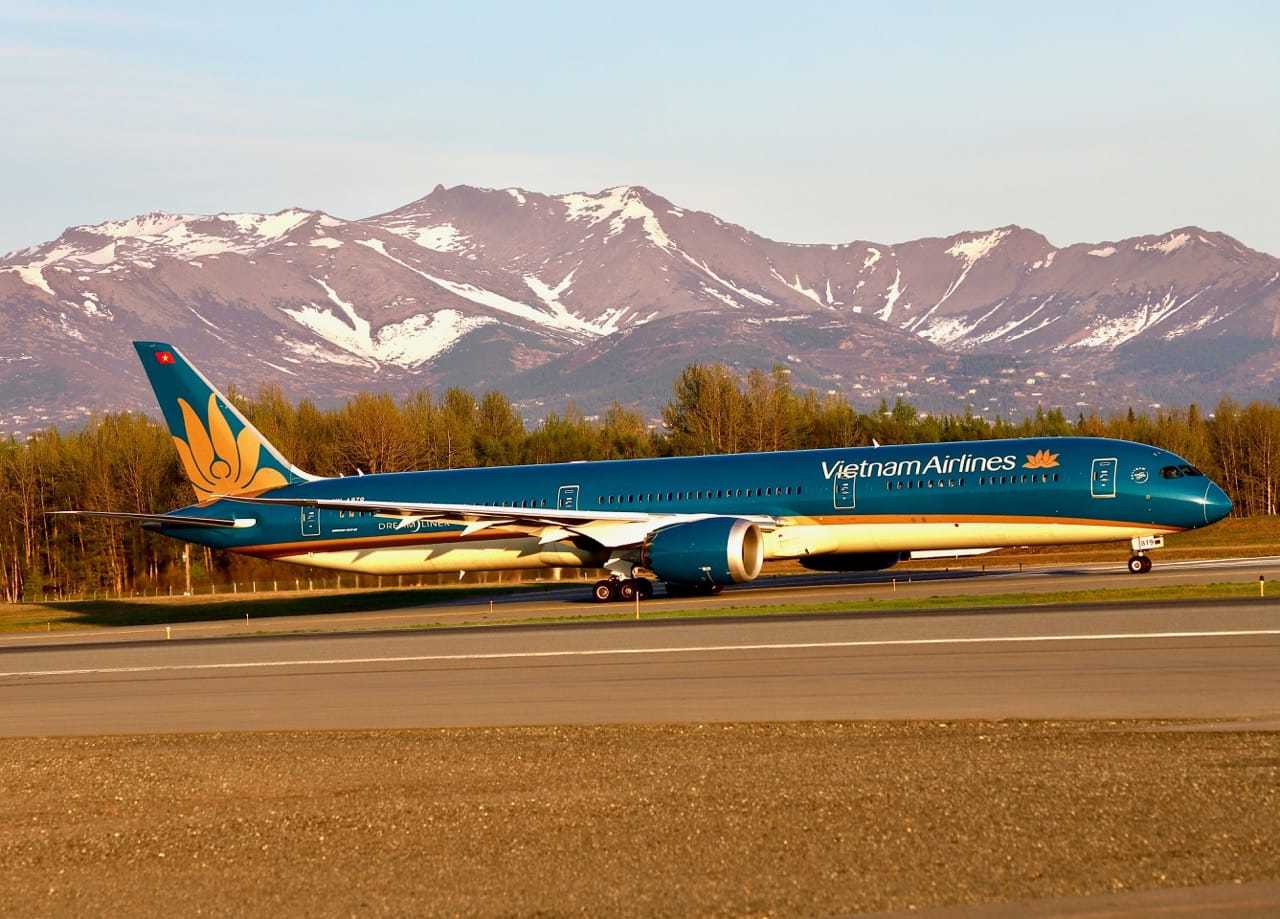
The national airline of Vietnam finally saw “the light at the end of the tunnel” when the National Assembly agreed with the Government’s proposal for solutions to help Vietnam Airlines overcome difficulties caused by the Covid-19 pandemic.
In the resolution of the 10th session, the 14th National Assembly approved two options. Firstly, the State Bank of Vietnam refinances and extends no more than two times for credit institutions (excluding those under special control) to allow Vietnam Airlines to borrow additional capital to serve production and business activities.
A Vietnam Airlines flight from Alaska brought Vietnamese citizens back to their home country in May. Photo: Ted Stevens Anchorage Airport, Alaska
At the same time, Vietnam Airlines is allowed to offer additional shares to existing shareholders to increase its charter capital. The Government will assign the State Capital Investment Corporation (SCIC) to buy shares in Vietnam Airlines on behalf of the Government under the right to buy shares of state shareholders in the mode of transfer of rights to buy. This investment is rated in Group A projects.
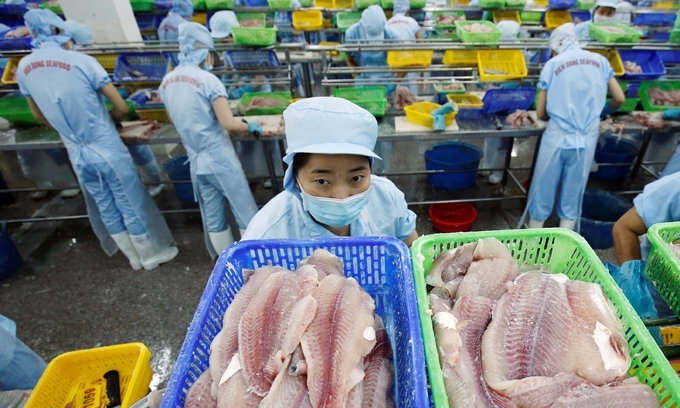
Workers make fillets of catfish at a factory in the southern city of Can Tho. (Photo: Kham)
“Thanks to the successful COVID-19 containment, Vietnam’s growth would be among the highest in the world”, Era Dabla Norris, mission chief to Vietnam and division chief in the IMF’s Asia and Pacific department, was quoted as saying at the end of the team’s virtual mission to Vietnam from October 15 to November 13.
Vietnam is shaping up as Southeast Asia’s single economic success story in the coronavirus era, maintaining steady positive growth as other economies struggle to recover, said Nikkei Asia in a recent journal.
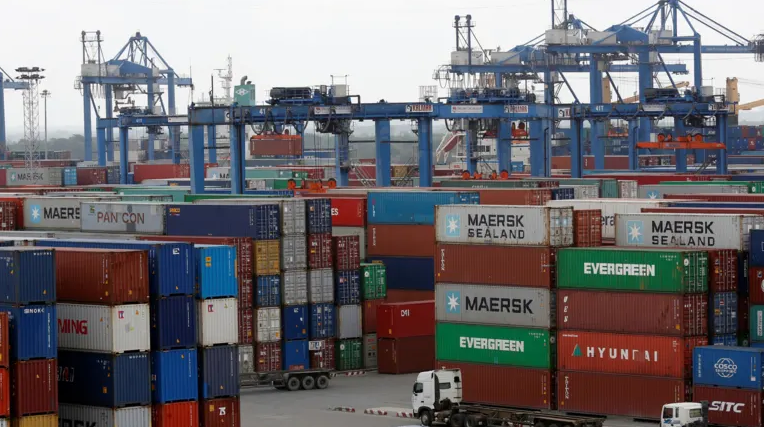
With more goods going out of Vietnam, big container ships have begun stopping there directly, cutting transport costs and time for exporters. (Photo: Reuters)
By Dat Nguyen November 18, 2020 | 08:37 am GMT+7 vnexpressAn aerial view of the Vietnam-Singapore Industrial Parks in southern Binh Duong Province. Photo courtesy of Becamex IDC Corp.Chinese manufacturing companies accounted for 88 percent of $1.57 billion poured into Vietnam’s industrial parks in the first nine months, showing an increasing shifting trend to Vietnam.
Among 20 key investments in the north and south regions, 15 were made by companies from mainland China, Taiwan or Hong Kong, according to a recent report by real estate consultancy Savills.
Companies from Hong Kong participated in eight deals with a total investment of nearly $700 million, while those from mainland China were involved in four deals worth over $300 million.
Companies from Taiwan invested in three deals worth $380 million in the north.
The biggest investments include the $333 million of Taiwanese electronics producer Wistron Corporation and its subsidiary. Wistron is a major laptop producer that has secured land in the northern province of Ha Nam.
The other Chinese companies were in the sectors of electronics, textile and garment, plastic, rubber, and paper.
Among the remaining five non-Chinese investments, two were from Singapore and the rest from Thailand, Japan and South Korea.
Vietnam is seeing rising demand for industrial land amid the establishment and expansion of multinationals as they seek to diversify their supply chains.
The country’s 280 industrial parks posted an occupancy of 70.1 percent in the first 10 months, and another 89 parks are being constructed, according to the Ministry of Planning and Investment.
Data from Savills shows that industrial parks in the northern Bac Ninh Province, the southern Dong Nai and Binh Duong Province are recording high occupancy rate of 94-99 percent, showing a need for an increase in supply.Related News:
By Nguyen Quy November 17, 2020 | 07:58 am GMT+7 vnexpressWomen practice aerobics to beats coming off a smartphone at a Covid-19 quarantine camp in Lao Cai Province, northern Vietnam, February 17, 2020. Photo by VnExpress/Giang Huy.
Vietnam has moved up 12 places to 73rd out of 167 economies in a global prosperity ranking, ahead of several Asian peers.
With an overall score of 58.3 points, Vietnam ranked 13th out of 29 economies in the Asia-Pacific region, according to the Prosperity Index 2020 published Monday by London-based think tank Legatum Institute.
TĐH: There are many intangible benefits from foreign direct investments (FDI) – employment and jobs for the local population, increased education, increased professional skills, better law enforcement and legal process, better working and living conditions in general for the locality… Not just taxes. Tax is a small part of the benefit package. If we need to lower/exempt taxes to compete, then let’s do that to compete. If the entire gang of Asia or Southeast Asia countries agree not to use taxes to compete, then that is “an agreement not to compete,” in a national scene that would constitute a violation of antitrust (anti-competition) law, harmful to consumers and to the economy. The economic principle should not be different in the international scene. (But of course, we need to compete both in business environment and in financial benefits such as taxation and land lease).
By Dat Nguyen, Quynh Trang November 16, 2020 | 08:07 am GMT+7 vietnamnetWorkers seen in a foreign-invested air conditioner manufacturing plant in the northern province of Hung Yen in December 2019. Photo by VnExpress/Vien Thong.
Competing for foreign investment with tax incentives will end up hitting governments’ revenues and be a lose-lose situation for all ASEAN members, experts warn.
The average corporate income tax rate in Southeast Asia has fallen from 25.1 percent in 2010 to 21.7 percent this year, showing that countries are competing with one another in a “race to the bottom” by offering aggressive tax incentives to foreign multinationals, a recent report by Oxfam, a global organization working on poverty alleviation, and its partners said.
Mergers and acquisitions in Vietnam are forecast to change from the beginning of next year, when three amended laws will come into effect at the same time.
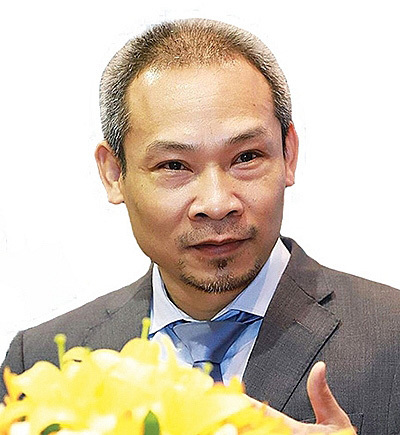
Deputy Director of the Central Institute of Economic Management Phan Duc Hieu, spoke with VIR’s Khanh An about impact of the laws on enterprises, investment, and securities on the M&A market.
Deputy Director of the Central Institute of Economic Management Phan Duc Hieu.
How do you estimate the impact of the amended laws on enterprises, investment, and securities on capital contributions and share purchases activities?
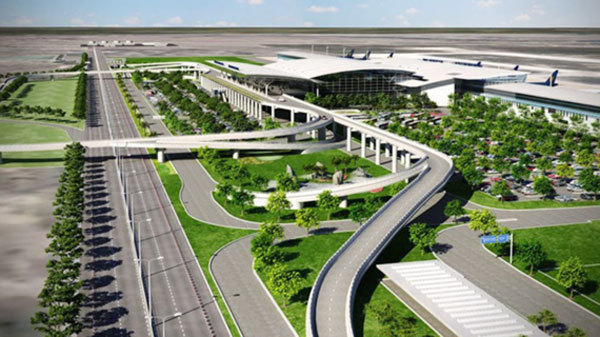
Deputy Prime Minister Trinh Dinh Dung has approved the first phase of the Long Thanh International Airport in the southern province of Dong Nai.
A rendering of the proposed Long Thanh International Airport in the southern province of Dong Nai. – Photo courtesy of Airports Corporation of Vietnam
The project has four component projects such as headquarters of State management agencies, flight management services, essential airport facilities, and other works.
Major works such as airport buildings, the aircraft apron, passenger terminals, and cargo terminals will be built by the Airport Corporation of Vietnam (ACV), which operates 21 airports across the country.
ACV has to raise funding for the construction.
The first phase of the airport, expected to cost more than US$4.6 billion, is projected to be completed by 2025.
The investment was approved by the National Assembly in 2017, which also issued a resolution on compensation and resettlement of and support for affected individuals and organisations.
Prime Minister Nguyen Xuan Phuc urged Dong Nai Province authorities to hand over the required lands in October so that construction of the airport could begin early next year.
He also set a deadline for assessing cleared land for compensation purposes by the end of this month.
The Ministry of Transport should work closely with the province to promptly resolve all challenges to ensure the project remains on schedule, he said.
The airport work requires more than 5,000ha of land and more than 364ha elsewhere to build two resettlement sites.
Around 4,800 households and 26 organisations are expected to be relocated to make way for it.
Spread over a total area of more than 5,580ha, the airport will straddle six communes in Long Thanh District. It is expected to cost VNĐ336.63 trillion ($14.47 billion), with the construction divided into three phases.
In the first phase one runway with a length of 4,000m, taxiways, an apron, and a passenger terminal with other auxiliary works involving a total floor area of 373,000 sq.m will be built to serve 25 million passengers and 1.2 million tonnes of cargo each year.
The airport is expected to have four runways, four passenger terminals and other auxiliary works to ensure a capacity of 100 million passengers and 5 million tonnes of cargo a year by 2040.
Tan Son Nhat International Airport in HCM City, the country’s largest, has been seriously overloaded for years, both in the air and on the ground.
The Ministry of Transport said Long Thanh International Airport is a key national project that would have a significant impact on the southern key economic region. VNS


 A staff stands inside the Hai Van Tunnel 2, January 10, 2021. Photo by VnExpress/Nguyen Dong.
 Deborah Elms








 An aerial view of the Vietnam-Singapore Industrial Parks in southern Binh Duong Province. Photo courtesy of Becamex IDC Corp.Chinese manufacturing companies accounted for 88 percent of $1.57 billion poured into Vietnam’s industrial parks in the first nine months, showing an increasing shifting trend to Vietnam.
 Women practice aerobics to beats coming off a smartphone at a Covid-19 quarantine camp in Lao Cai Province, northern Vietnam, February 17, 2020. Photo by VnExpress/Giang Huy.
 Workers seen in a foreign-invested air conditioner manufacturing plant in the northern province of Hung Yen in December 2019. Photo by VnExpress/Vien Thong.
 CVD
CVD