2 triệu tỉ đồng: Bơm tiền gì mà ghê vậy?

HỒ QUỐC TUẤN – 23/01/2024 19:03 GMT+7

TTCT2 triệu tỉ đồng: nghe chóng mặt không hình dung nổi có bao nhiêu con số không, nhưng với các gói kích thích kinh tế hay chính sách tài khóa, thì cũng là… bình thường.

Chênh lệch tăng trưởng cung tiền M2 so với M1 ở Trung Quốc cho thấy phần lớn lượng cung tiền M2 tăng lên được người dân bỏ vào trong ngân hàng dù lãi suất tiền gửi chỉ còn 1,25-1,5%. Ảnh: Ngân hàng Nhân dân Trung Quốc, Bloomberg

Đầu năm 2024, truyền thông Việt Nam đồng loạt đăng thông điệp khoảng 2 triệu tỉ đồng sẽ được bơm vào nền kinh tế. Nghe thì có vẻ ghê gớm, nhưng thực hư câu chuyện này như thế nào?

Tiếp tục đọc “2 triệu tỉ đồng: Bơm tiền gì mà ghê vậy?”

Cuộc đua cảng trung chuyển tại châu Á

Đặng Dương – 16:00 13/01/2024

Kinh tế Sài Gòn Online – Việt Nam đang bước vào thị trường cảng trung chuyển container quốc tế trong khu vực châu Á, thị trường có tính cạnh tranh được đánh giá là rất khốc liệt.

Bộ Giao thông Vận tải điều chỉnh quy hoạch ưu tiên phát triển cảng trung chuyển quốc tế Cần Giờ, đồng thời đề xuất điều chỉnh bổ sung cảng biển TPHCM quy hoạch tiềm năng thành cảng biển đặc biệt. Ảnh: H.P

Trong tháng 12-2023, Bộ Giao thông Vận tải (GTVT) đã trình Thủ tướng Chính phủ phê duyệt điều chỉnh Quy hoạch tổng thể phát triển hệ thống cảng biển Việt Nam thời kỳ 2021-2030, tầm nhìn đến năm 2050. Trong đó, Bộ GTVT điều chỉnh quy hoạch ưu tiên phát triển cảng trung chuyển quốc tế Cần Giờ (TPHCM) theo Nghị quyết 81/2023 của Quốc hội đồng thời đề xuất điều chỉnh bổ sung cảng biển TPHCM quy hoạch tiềm năng thành cảng biển đặc biệt. Tổng công suất hàng hóa thông qua dự kiến đạt 4,8 triệu TEU cho giai đoạn 1 (dự kiến năm 2027) và 16,9 triệu TEU khi hoàn thiện (dự kiến năm 2040).

Tiếp tục đọc “Cuộc đua cảng trung chuyển tại châu Á”

Red Sea, Black Sea and Panama Canal: UNCTAD raises alarm on global trade disruptions

UNCTAD.org 26 January 2024

The organization warns that escalating attacks on ships in the Red Sea are adding strain to shipping routes already hit by conflict and climate change.

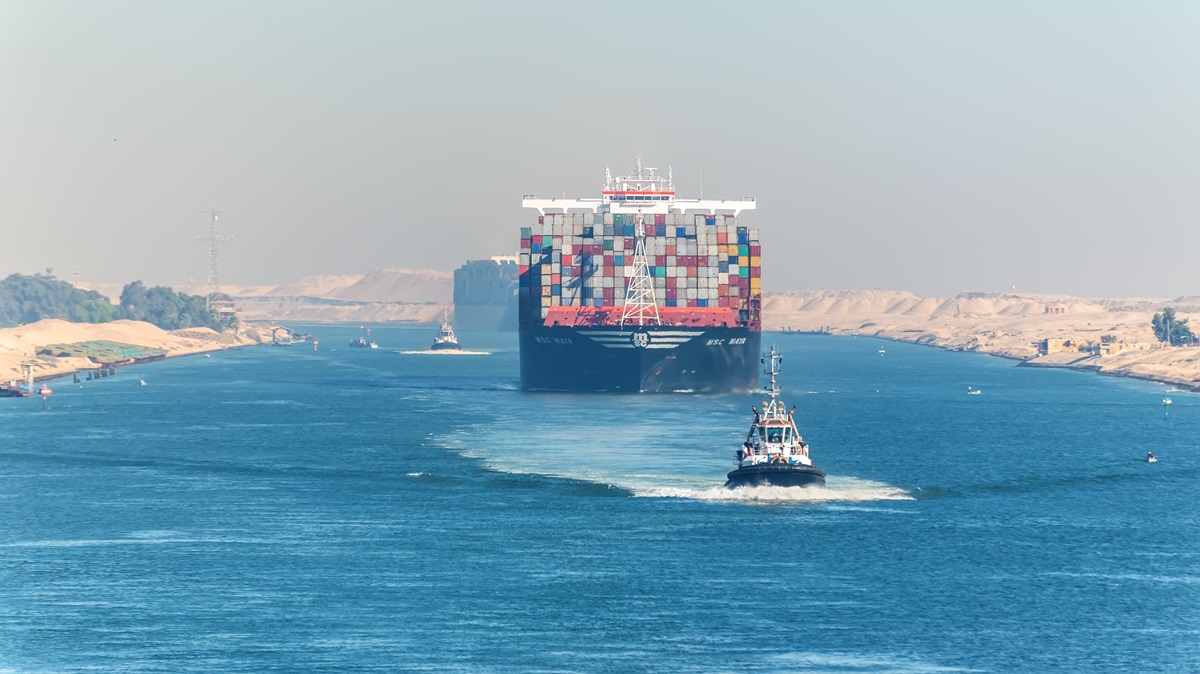
© Shutterstock/byvalet | A large container ship passes through the Suez canal.

The UN’s trade and development body, UNCTAD, has raised profound concerns over escalating disruptions to global trade.

It says that recent attacks on ships in the Red Sea, combined with geopolitical tensions affecting shipping in the Black Sea and the impacts of climate change on the Panama Canal, have given rise to a complex crisis affecting key trade routes.

UNCTAD’s head of trade logistics, Jan Hoffmann, outlined the organization’s detailed analysis of the situation at the UN’s daily press briefing on 26 January. He underlined maritime transport’s critical role in international trade, noting that it is responsible for approximately 80% of the global movement of goods.

Disruptions in the Black Sea and Panama and Suez Canals

The Suez Canal, a critical waterway connecting the Mediterranean Sea to the Red Sea, handled approximately 12% to 15% of global trade in 2023. UNCTAD estimates that the trade volume going through the Suez Canal decreased by 42% over the last two months.

Red Sea crisis: Suez Canal traffic plummets

Suez Danal, daily transits, 28-day rolling average, 2016–23 January 2024, Index, Average=100201620172018201920202021202220232024020406080100120140160180200

Total

Bulkcarriers

Containerships

Oil

 Tankers

Get the data  Download image

The ongoing conflict in Ukraine has also triggered substantial shifts in oil and grain trades, reshaping established trade patterns.

Meanwhile, the Panama Canal, another key artery for global trade, is grappling with a severe drought that has diminished water levels, resulting in a staggering 36% reduction in total transits over the past month compared to a year ago.

Tiếp tục đọc “Red Sea, Black Sea and Panama Canal: UNCTAD raises alarm on global trade disruptions”

Vì sao giá cà phê tăng phi mã ngay trong mùa thu hoạch?

baodaknongH.Mĩ| 19/12/2023 14:45

Sản lượng giảm, kèm theo người dân không chịu bán cho các đại lý khiến giá cà phê tăng mạnh ngay cả khi đang trong giai đoạn thu hoạch.

Giá cà phê tăng ngay trong thời gian thu hoạch

Những ngày đầu tháng 12/2023, giá cà phê robusta tại thị trường nội địa tăng mạnh so với cuối tháng 11/2023. Diễn biến này trái với quy luật mọi năm khi vùng Tây Nguyên đang bước vào thời điểm thu hoạch, giá thường giảm do áp lực nguồn cung tăng lên.

Tính đến ngày 18/12, giá cà phê trung bình ở khu vực Tây Nguyên ở mức 67.300 đồng/kg, tăng mạnh 10.000 đồng/kg (tương đương 17%) so với cuối tháng 11.

Nguồn: giacaphe.com (H.Mĩ tổng hợp)

Tiếp tục đọc “Vì sao giá cà phê tăng phi mã ngay trong mùa thu hoạch?”

Red Sea tension likely to affect garment and footwear exporters from Q2: insiders

By VNA   January 21, 2024 | 02:11 pm GMT+7

Red Sea tension likely to affect garment and footwear exporters from Q2: insiders

Workers at a garment factory in HCMC’s Thu Duc City, November 2023. Photo by VnExpress/Thanh Tung

The tension in the Red Sea, which has led to increases in logistic costs and shipping time, is forecast to affect Vietnamese exporters of garment, textile, footwear and leather products from the second quarter of 2024 if it persists.

The Vietnam Leather, Footwear and Handbag Association (Lefaso) and the Vietnam Textile and Apparel Association (VITAS) Vice President and General Secretary Truong Van Cam said that domestic enterprises are keeping a close eye on the situation to negotiate new export deals.

Tiếp tục đọc “Red Sea tension likely to affect garment and footwear exporters from Q2: insiders”

With no recovery in sight, real estate loses sheen as asset class

VNE – By Ngoc Diem    January 8, 2024 | 07:00 pm GMT+7

Apartment buildings to the west of Hanoi. Photo by Ngoc Thanh

Real estate lost its attractiveness and was not the leading asset class in 2023, according to the Vietnam Association of Realtors.

Speaking at the 2024 real estate forum organized in Hanoi last Friday by the association, its president, Nguyen Van Dinh, said: “The fall of real estate stemmed from uncontrolled development and lack of transparency and safety in the market over a long period of time.”

Between May 2022 and the end of 2023 the property market saw thousands of projects being suspended and many businesses shutting down with 80% of brokers quitting their jobs.

Tiếp tục đọc “With no recovery in sight, real estate loses sheen as asset class”

New International Maritime Bureau report reveals concerning rise in maritime piracy incidents in 2023

  • 11 January 2024

Released today, the annual Piracy and Armed Robbery Report of the ICC International Maritime Bureau (IMB) raises concern over the first successful Somali based hijacking since 2017.

The IMB annual report recorded 120 incidents of maritime piracy and armed robbery against ships in 2023 compared to 115 in 2022. It reveals that 105 vessels were boarded, nine attempted attacks, four vessels hijacked and two fired upon.  

Where the number of 2023 reported incidents has slightly increased compared to 2022, the IMB urges caution for crew safety as the number of crew taken hostage and kidnapped increased from 41 to 73 and from two to 14 in 2022 and 2023 respectively. A further 10 crew were threatened, four injured and one assaulted in 2023. 

Alarming first successful hijacking off Somalia since 2017 

On 14 December 2023, the report recorded the first successful hijacking of a vessel off the coast of Somalia since 2017.  

Tiếp tục đọc “New International Maritime Bureau report reveals concerning rise in maritime piracy incidents in 2023”

Vietnam’s State Shipbuilding corporation to declare bankruptcy: industry ministry

A process has begun to allow the Vietnam Shipbuilding Industry Corporation (SBIC) to declare bankruptcy, according to Deputy Minister of Transport Nguyen Xuan Sang.

Shipbuilding corporation to declare bankruptcy: industry ministry hinh anh 1

A fishing trawler built by the Ha Long Shipbuilding Company, a subsidiary of SBIC, in 2018. (Photo: SBIC)

Hanoi (VNS/VNA) – A process has begun to allow the Vietnam Shipbuilding Industry Corporation (SBIC) to declare bankruptcy, according to Deputy Minister of Transport Nguyen Xuan Sang.

The Ministry of Transport (MoT) said the bankruptcy was, at this point, an inevitable conclusion and the ministry is now aiming for an overhaul of the corporation’s core businesses while trying to retain as many experienced managers and workers as possible.

Tiếp tục đọc “Vietnam’s State Shipbuilding corporation to declare bankruptcy: industry ministry”

Phát triển tiền kỹ thuật số của Ngân hàng Trung ương: Kinh nghiệm quốc tế và bài học cho Việt Nam

Thị trường tài chính tiền tệ

TS. Nguyễn Thị Hải Bình – ThS. Hoàng Mạnh Cường • 14/01/2024 12:56

Sự xuất hiện tiền kỹ thuật số của Ngân hàng trung ương (CBDC) là một bước ngoặt trong sự phát triển của các hình thức tiền tệ pháp định.

Các quốc gia trên thế giới có những động thái khác nhau với CBDC. Có quốc gia đã chính thức phát hành CBDC, cũng có nước đang trong quá trình thử nghiệm nhưng hầu hết đang trong giai đoạn nghiên cứu và đánh giá về khả năng phát hành loại tiền tệ mới này. Tại Việt Nam, Chính phủ cũng đã có những định hướng ban đầu khi giao Ngân hàng Nhà nước (NHNN) nghiên cứu và cơ quan này cũng đang có những bước đi thận trọng trong nghiên cứu và phát triển CBDC. Bài viết tập trung tìm hiểu kinh nghiệm của các quốc gia trên thế giới về nghiên cứu, thử nghiệm và phát hành CBDC, từ đó có những gợi mở cho Việt Nam đối với quá trình xây dựng, thí điểm hay xa hơn là phát hành CBDC.

Tiếp tục đọc “Phát triển tiền kỹ thuật số của Ngân hàng Trung ương: Kinh nghiệm quốc tế và bài học cho Việt Nam”

Nở rộ’ trung tâm hỗ trợ sinh sản, người hiếm muộn thành khách hàng tiềm năng (3 kỳ)

Vietnamnet – Phương Thuý – Thứ tư, 21/06/2023 – 09:00

Kỳ 1 – Dịch vụ thụ tinh ống nghiệm: Ngành ‘công nghiệp’ siêu lợi nhuận?

Người bệnh khám vô sinh tại bệnh viện. Ảnh: Phương Thúy.

So với 10 năm trước, hiện nay, cả nước có 53 trung tâm hỗ trợ sinh sản thụ tinh trong ống nghiệm (IVF). Với chi phí dao động từ hàng chục tới hàng trăm triệu một lần thực hiện, dịch vụ này đang trở thành ngành “công nghiệp” siêu lợi nhuận.

Lời tòa soạn 

Năm 1997, lần đầu tiên tại Việt Nam, kỹ thuật thụ tinh trong ống nghiệm (IVF) được thực hiện. Một năm sau, các em bé chào đời. Mặc dù bắt đầu muộn so với thế giới (1978) và khu vực (1984), nhưng hiện nay, Việt Nam là nước thực hiện IVF nhiều nhất khu vực ASEAN và là nước đi đầu về kỹ thuật này của khu vực. Nước ta có khoảng 50.000 trường hợp IVF mỗi năm, cho đến nay ước tính đã có khoảng 200.000 trẻ ra đời ở Việt Nam từ kỹ thuật này. 

Đây được xem là thị trường y tế siêu lợi nhuận mang lại hàng triệu USD mỗi năm. Tuy nhiên, nhiều bác sĩ lo ngại kỹ thuật hỗ trợ sinh sản sẽ bị thương mại hóa.

VietNamNet xin đăng tuyến bài: ‘Nở rộ’ trung tâm hỗ trợ sinh sản, người hiếm muộn thành khách hàng tiềm năng để phản ánh về thực tế bức tranh điều trị vô sinh hiếm muộn tại nước ta.

Kỳ 1: Nở rộ trung tâm hỗ trợ sinh sản Tiếp tục đọc “Nở rộ’ trung tâm hỗ trợ sinh sản, người hiếm muộn thành khách hàng tiềm năng (3 kỳ)”

Quế, hồi Việt Nam với ‘nỗi đau’ bán thô, thương nhân Ấn Độ đến tận Yên Bái thu mua

vnbusiness –  29/9/2023 | 08:32 

Việt Nam là quốc gia sản xuất và xuất khẩu quế đứng thứ ba thế giới về sản lượng, sau Indonesia, Trung Quốc. Tuy vậy, do sản phẩm Việt Nam chủ yếu xuất thô nên thường gắn nhãn mác của nước ngoài, giá trị thu về thấp, thậm chí có tình trạng xuất khẩu tận vườn như câu chuyện thương nhân Ấn Độ tìm đến Yên Bái để thu mua.

Sản phẩm quế, hồi Việt Nam vẫn chưa xây dựng được thương hiệu ở thị trường thế giới. 

Bộ Công Thương cho biết, trên bản đồ dược liệu thế giới, Việt Nam được đánh giá có nguồn dược liệu đa dạng, tỷ lệ dược liệu tự nhiên quý hiếm vẫn còn khá phong phú. Theo thống kê, hiện nước ta có khoảng trên 5.100 loài cây dược liệu, có nhiều tiềm năng, lợi thế để phát triển dược liệu trở thành một ngành kinh tế.

Tiếp tục đọc “Quế, hồi Việt Nam với ‘nỗi đau’ bán thô, thương nhân Ấn Độ đến tận Yên Bái thu mua”

Vietnam’s forests have been cleared to supply the world’s timber industry (2 parts)

pulitzercenter.org – APRIL 4, 2023

Vietnam’s Forests Have Been Cleared To Supply the World’s Timber Industry

author image

In Central Vietnam’s factory, wood chips are accumulated in the rear of a three-wheel vehicle used to transport acacia wood to the processing machine. Image by Thanh Nguyen.

Vietnam is ranked the fifth-largest country in the world, second in Asia, and the largest in Southeast Asia in furniture exports. Vietnamese furniture has been directly exported to 120 countries and territories.

However, behind this impressive figure is that series of natural forests that have been cut down and quickly. These forest land areas have been occupied for growing short-term timber trees.

Deforestation makes natural disasters in Vietnam more severe, local people suffer the most from the consequences.

An investigation will be published on Mekong Eye.

Tiếp tục đọc “Vietnam’s forests have been cleared to supply the world’s timber industry (2 parts)”

The Unexpected Twist in Vietnam’s Renewable Energy Saga

fulcrumm.sg PUBLISHED 4 JAN 2024 LE HONG HIEP

Punishment awaits the senior officials who allowed Vietnam’s renewable energy quest to go off the rails, despite its apparent initial success. This policy crisis has the potential to affect other economic sectors if no clear end is in sight.

In late 2023, the Inspection Commission of the Central Committee of the Communist Party of Vietnam (CPV) found that Tran Tuan Anh, head of CPV’s Central Economic Commission, and Trinh Dinh Dung, former deputy prime minister, were among the senior government officials responsible for “shortcomings in the advisory and policy-making processes for the development of solar and wind power projects, as well as in the implementation of the amended Power Development Plan VII” (PDP7). The Commission therefore recommended disciplinary actions be taken against Anh, Dung and some other senior officials involved.

Anh served as the minister of industry and trade while Dung was deputy prime minister overseeing economic affairs, including the energy sector, from 2016 to 2021. During their tenure, Vietnam experienced a remarkable surge in renewable energy, with numerous solar and wind power projects completed in just three years. According to Vietnam Electricity (EVN), the state-owned utility company, this led to a significant increase in Vietnam’s renewable energy output, rising from a mere 997 GWh in 2018 to an impressive 37,865 GWh in 2022. Vietnam therefore emerged as Southeast Asia’s renewable energy leader, accounting for 69 per cent of the region’s solar and wind power generation by 2022.

Such successes, however, did not come without problems. Last April, an inspection by the Government Inspectorate revealed numerous violations in the licensing and certification of renewable energy projects. For example, the amended PDP7 outlined a goal of installing 850MW of solar power by 2020, increasing to 4,000MW by 2025. Similarly, the plan projected 800MW of wind power by 2020, with a target of 2,000MW by 2025. However, as of May 2023, the total installed capacity of wind, solar, and rooftop solar projects in Vietnam had already reached a staggering 21,839MW, greatly surpassing targets set in PDP7.

This sudden surge in renewable energy has caused a strain on the national power grid, particularly in the central region where most renewable energy projects are located. Moreover, during the same period, there was a lack of new traditional power plants constructed, which are necessary to provide a stable baseload for renewable energy sources that are more weather-dependent and thus less reliable. This has created significant safety concerns for the national power system. Consequently, EVN had to curtail the amount of power it purchased from renewable sources, resulting in substantial financial losses for project owners.

A main driver behind Vietnam’s rapid growth in renewable energy has been the implementation of high feed-in tariffs (FITs) for certified projects that began commercial operation before specific deadlines. For instance, solar farms that became operational by 30 June 2019 were eligible for a FIT of 9.35 US cents/kWh, while onshore and offshore wind farms that began commercial operation by 1 November 2021 received FITs of 8.5 US cents/kWh and 9.8 US cents/kWh, respectively. Meanwhile, the FIT for rooftop solar projects operated before 31 December 2020 is 8.38 US cents/kWh. These FITs are locked in for 20 years.

This sudden surge in renewable energy has caused a strain on the national power grid, particularly in the central region where most renewable energy projects are located.

These attractive FITs sparked fierce competition among local investors to build solar and wind projects but most of them had no track record in the energy sector. They mainly leveraged connections, often involving under-the-table payments, to secure project licenses, then relied heavily on bank financing or corporate bonds to fund project development. Due to the pandemic and cut-throat competition for equipment and contractors, 62 wind projects failed to start operation before the FIT deadlines. Unable to sell their output to EVN, these projects faced severe financial difficulties. Even projects that qualified for the FITs faced mounting issues. Aside from the curtailment imposed by EVN, the Government Inspectorate found violations in the certification of many projects, putting them at risk of disqualification from the FITs. Foreign investors acquiring projects from local investors may face potential losses if similar violations are found.

The situation also negatively impacts the state and the broader economy. Most FIT rates are higher than average electricity retail prices, meaning that the state and end-users are essentially subsidising renewable energy projects. These high FITs have contributed to EVN’s mounting accumulative losses over the past two years, reaching VND55 trillion (US$2.3 billion) by September 2023. The government therefore has had no choice but to allow EVN to raise electricity retail prices, putting upward pressure on inflation and undermining Vietnam’s competitiveness.

In light of these grave consequences, the government has been trying to contain the damage. For example, EVN stopped buying power from rooftop solar projects completed after 31 December 2020, leaving thousands of investors in limbo. Authorities have also conducted thorough inspections into most renewable energy projects. Projects found to have committed serious violations, such as lacking construction permits or failing to secure proper land usage purpose conversion and commercial operation certification, may have their power purchase agreements with EVN terminated.

Last month, EVN even proposed lowering the FITs for 38 projects but quickly withdrew the proposal after just one day. This sudden reversal may reflect the government’s struggle in finding a satisfactory solution. Being lenient will perpetuate losses for the state budget but a heavy-handed approach could cause extensive financial losses for investors, potentially affecting the banking system, given investors’ heavy reliance on bank financing. This could also negatively impact investors’ confidence in Vietnam’s investment climate and raise doubts about the country’s commitment to energy transition.

At present, there seems to be no straightforward solution. It is not clear yet how Vietnam will effectively address and learn from this situation for future policy decisions. However, it is inevitable that those responsible for this predicament will soon face serious consequences for what could potentially become one of the most significant policy mishaps in Vietnam’s recent history.

2024/2

Le Hong Hiep is a Senior Fellow and Coordinator of the Vietnam Studies Programme at ISEAS – Yusof Ishak Institute.

Vietnam 2023 economic growth slows to 5.05% as exports fall

By Khanh Vu

December 29, 20237:59 AM GMT Updated 7 days ago

A man paints steel structures of a new factory in Hanoi

HANOI, Dec 29 (Reuters) – Vietnam’s economic growth slowed to 5.05% this year from an expansion of 8.02% last year, official data showed on Friday, weighed by weak global demand while public investment stalled amid an intensified anti-graft crackdown.

This year’s gross domestic product (GDP) growth was below a government target of 6.5% and lower than average growth of 5.87% during the previous decade, according to data released by the government’s General Statistics Office (GSO).

Vietnam is a regional manufacturing hub that relies heavily on trade. Exports in 2023 fell 4.4% from last year to $355.5 billion, with shipments of smartphones, its largest foreign currency earner, dropping 8.3%, the GSO said in its report.

Tiếp tục đọc “Vietnam 2023 economic growth slows to 5.05% as exports fall”

More than 100 container ships rerouted from Suez canal to avoid Houthi attacks

theguardian.com

Cape of Good Hope diversion adds 6,000 nautical miles and three or four weeks to delivery times and has driven up oil prices

Jasper Jolly @jjpjollyWed 20 Dec 2023 14.24 GMT

More than 100 container ships have been rerouted around southern Africa to avoid the Suez canal, in a sign of the disruption to global trade caused by Houthi rebels attacking vessels on the western coast of Yemen.

The shipping company Kuehne and Nagel said it had identified 103 ships that had already changed course, with more expected to go around South Africa’s Cape of Good Hope.

Tiếp tục đọc “More than 100 container ships rerouted from Suez canal to avoid Houthi attacks”