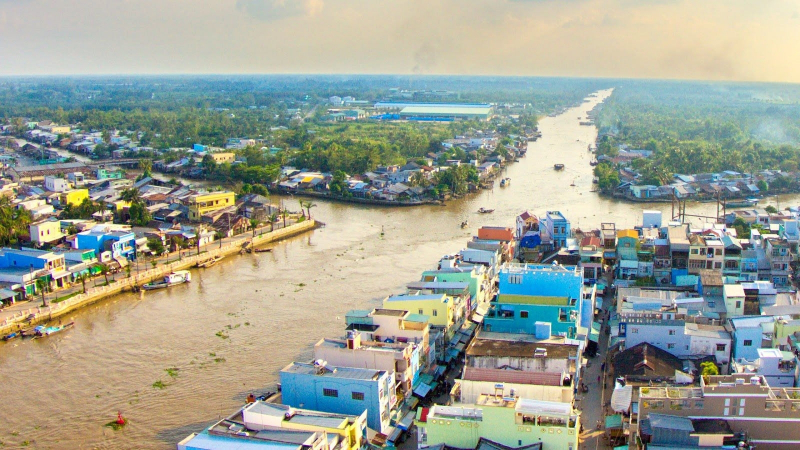
Một số vấn đề ứng phó với biến đổi khí hậu trong quy hoạch các đô thị ven biển Việt Nam

moc.gov.vn

Việt Nam là một trong số những quốc gia chịu ảnh hưởng nặng nề nhất của biến đổi khí hậu (BĐKH) trên thế giới. Trong những năm gần đây, biến đổi khí hậu đã gây ra nhiều hiện tượng như lũ lụt, sạt lở đất, gió bão, nước biển dâng, xâm nhập mặn…với tần suất ngày càng cao, mức độ tàn phá ngày càng nặng nề hơn đối với môi trường, đời sống kinh tế – xã hội Việt Nam.

Với bờ biển dài (trên 3.200km) và diện tích đồng bằng ven biển rộng lớn (135.946km2), Việt Nam đã xây dựng được hơn 405 đô thị ven biển. Đó là các thành phố cảng, trung tâm kinh tế biển, các đô thị du lịch và thương mại, dịch vụ – đóng vai trò quan trọng trong sự phát triển kinh tế của Việt Nam. Biến đổi khí hậu tạo ra những thiệt hại về kinh tế – xã hội ở các đô thị ven biển nhiều hơn bất cứ nơi nào khác vì vậy quy hoạch đô thị khu vực này cần phải có giải pháp kịp thời về cấu trúc đô thị, sử dụng đất, tổ chức không gian môi trường, cơ sở hạ tầng, cảnh quan, … để đô thị phát triển bền vững và chống chịu, tự phục hồi trước những diễn biến bất thường của BĐKH. Bài viết giới thiệu những ảnh hưởng của BĐKH đối với hệ thống đô thị ven biển Việt Nam và một số giải pháp quy hoạch đô thị nhằm giảm nhẹ và thích ứng với các tác động của BĐKH.

1. Giới thiệu

Việt Nam có bờ biển dài, đồng bằng ven biển rộng là cái nôi để phát triển hệ thống đô thị ven biển đa dạng, phong phú trở thành những trung tâm kinh tế, du lịch và dịch vụ quan trọng, đóng góp to lớn cho sự phát triển kinh tế của Việt Nam. Là một trong số những quốc gia được đánh giá là bị ảnh hưởng nghiêm trọng nhất trên thế giới, Biến đổi khí hậu có ảnh hưởng sâu rộng đến mọi lĩnh vực của đời sống, kinh tế – xã hội và môi trường Việt Nam. Đặc biệt các đô thị ven biển Việt Nam hiện nay đang phải đối mặt với các thách thức lớn của BĐKH như hiện tượng nước biển dâng, xâm nhập mặn, lũ lụt, và thiên tai… làm giảm quỹ đất xây dựng, phá hoại hệ thống hạ tầng xã hội và hạ tầng kỹ thuật, suy giảm nguồn nước, xáo trộn và ảnh hưởng đến chất lượng cuộc sống, sinh kế của người dân đô thị. Trước những yêu cầu thực tế, Quy hoạch đô thị cần có những thay đổi về cách tiếp cận để góp phần giảm thiểu các tác động bất lợi của BĐKH, giúp các đô thị ven biển Việt Nam chuyển hóa, thích ứng và chống chịu được BĐKH.

Tiếp tục đọc “Một số vấn đề ứng phó với biến đổi khí hậu trong quy hoạch các đô thị ven biển Việt Nam”

Dự án kênh đào Phù Nam Techo: Đường ra biển của Campuchia

NGUYỄN THÀNH TRUNG – 26/11/2023 12:03 GMT+7

TTCT Tham vọng tiến ra biển của Campuchia đã có người giúp, đó là Trung Quốc, với một dự án cực kỳ tham vọng.

Hôm 17-10, tại thủ đô Phnom Penh của Campuchia, Ủy ban liên bộ Campuchia do Phó thủ tướng Sun Chanthol đứng đầu đã ký kết thỏa thuận với đại diện Tổng công ty Cầu đường Trung Quốc (CRBC) về dự thảo khung xây dựng kênh đào nối ra biển Phù Nam Techo.

Thỏa thuận này sẽ cho phép CRBC tiến hành nghiên cứu chuyên sâu về tất cả các khía cạnh của dự án trong vòng 8 tháng. Dự án kênh đào Phù Nam Techo ước tính sẽ tiêu tốn khoảng 1,7 tỉ USD và mất 4 năm để hoàn thành. 

Đây là dự án cơ sở hạ tầng lớn đầu tiên của Campuchia kết nối sông Mekong với đường biển, nhằm mở rộng tiềm năng vận tải biển của đất nước chùa tháp.

Cao tốc Phnom Penh – Sihanouvkville. Ảnh: Twitter

Trước đây, dự án này mang tên Hệ thống giao thông và hậu cần sông Bassac (BRNLS). Tại phiên họp toàn thể lần thứ 6 của Quốc hội Campuchia ngày 19-5-2023, dự án được đặt tên lại là “Kênh đào Phù Nam Techo”. 

Đây cũng là tên chính thức của kênh đào đến nay. Ngày 7-6, thủ tướng sắp mãn nhiệm Hun Sen thành lập ủy ban liên bộ nghiên cứu và thực hiện dự án gồm 37 thành viên để xem xét và tư vấn về thủ tục, khung pháp lý và đánh giá hiệu quả kinh tế nhằm thúc đẩy sự phát triển của ngành vận tải đường thủy và đường biển của Campuchia.

Tiếp tục đọc “Dự án kênh đào Phù Nam Techo: Đường ra biển của Campuchia”

‘Repaired’ HCMC road leaves houses flooded

All affected families petition UBND of HCMC to compensate them for “damages” to their homes from street repair works. If HCM City say “no” then they should think aout suing the City in Court.- PTH.

Phan Van Ket watches the waist-high water in the alley through the window of his house.

VNE – By Quynh Tran   November 20, 2023 | 09:17 am GMT+7

The “upgrading” of a street along Lo Gom Canal in HCMC’s District 8 has left its houses lower than the road level, meaning floods inundate the homes every time it rains.

Tiếp tục đọc “‘Repaired’ HCMC road leaves houses flooded”

Tan Hoa Village, Vietnam named as Best Tourism Village 2023 by UN World Tourism Organization – Tân Hóa, Quảng Bình được Tổ chức Du lịch thế giới vinh danh “Làng du lịch tốt nhất thế giới” năm 2023.

UNWTO.org

Tân Hoá village is known as the “seasonal flooded zone” of Quang Binh province, where during the rainy season the flood water can submerge the whole village. Tân Hoá used to be one of the poorest villages in Quang Binh province. Since 2011, when tourism activities were adopted by Tân Hoá village, many people have acquired stable jobs and, subsequently, their quality of life has improved significantly. 

The village is situated in the vicinity of Phong Nha-Ke Bang National Park, benefiting from unique natural conditions and a rustic charm. The village has been recognized by the provincial People’s Committee as an ecological and cave tourism area within the Tu Lan cave system. Surrounded by primary forests, limestone mountains, and the tranquil Rao Nan river, Tân Hóa village exhibits a simple and enduring beauty that leaves a lasting impression on visitors. 

Tân Hoá Tourism Village is a pioneering tourism business model that promotes collaboration between enterprises and the local community, aiming for mutual benefits. Oxalis Adventure, as its partner, has implemented a clear and comprehensive business strategy based on three fundamental principles: safety, conservation, and involvement of the local people.

The Village and Oxalis Adventure believe that involving local people in the tourism business is a strategic approach rather than just a responsibility. They have gradually trained the local people to become proficient in serving tourists and transitioned from community involvement into community ownership on services that they deliver. 

HIGHLIGHTS


Tiếp tục đọc “Tan Hoa Village, Vietnam named as Best Tourism Village 2023 by UN World Tourism Organization – Tân Hóa, Quảng Bình được Tổ chức Du lịch thế giới vinh danh “Làng du lịch tốt nhất thế giới” năm 2023.”

Dengue will ‘take off’ in southern Europe, US, Africa this decade, WHO scientist says

By Jennifer Rigby October 6, 2023

LONDON, Oct 6 (Reuters) – Dengue fever will become a major threat in the southern United States, southern Europe and new parts of Africa this decade, the WHO’s chief scientist said, as warmer temperatures create the conditions for the mosquitoes carrying the infection to spread.

The illness has long been a scourge in much of Asia and Latin America, causing an estimated 20,000 deaths each year. Rates of the disease have already risen eight-fold globally since 2000, driven largely by climate change as well as the increased movement of people and urbanization.

Many cases go unrecorded, but in 2022 4.2 million cases were reported worldwide and public health officials have warned that near-record levels of transmission are expected this year. Bangladesh is currently experiencing its worst-ever outbreak, with more than 1,000 deaths.

Tiếp tục đọc “Dengue will ‘take off’ in southern Europe, US, Africa this decade, WHO scientist says”

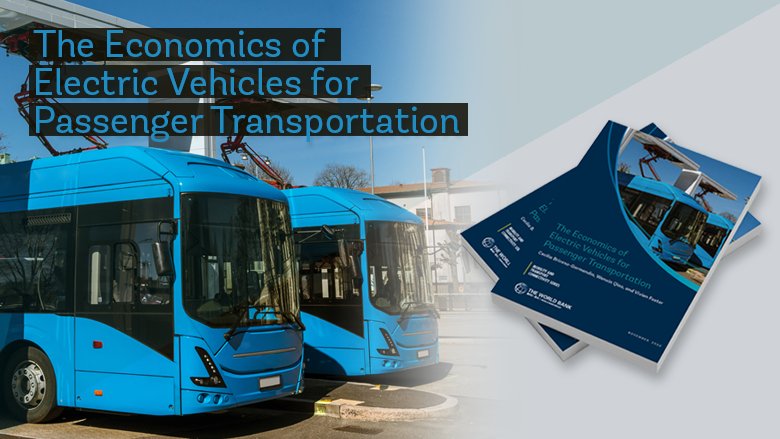
The Economics of E-Mobility for Passenger Tranportation

World Bank, Nov. 11, 2022

eMobility Report Main Image

Overview

Electrification of transport is one of the most talked about instruments to set the world on a net-zero carbon trajectory. Despite the advantages electric vehicles bring, they remain a relative rarity in developing countries. Most of the world’s 6.6 million EV sales in 2021 were concentrated in major global markets such as China, Europe and the United States. The reason? Electric vehicles come at a cost premium, sometimes more than 70% compared to conventional vehicles, creating a financial hurdle for many consumers in developing countries.

But according to The Economics of E-Mobility for Passenger Transportation, feasible entry points to an electric mobility transition are emerging in several developing countries. Electric buses, which cover long mileage and high occupancy, and electric two- and three-wheeled vehicles, which provide last-mile connectivity, can be cost-effective starting points that also bring development benefits. In about half the countries studied in this report, there is already a strong economic case for e-mobility adoption that is likely to further improve in the next few years.

Tiếp tục đọc “The Economics of E-Mobility for Passenger Tranportation”

“Spy” Virus Eavesdrops on Bacteria, Then Obliterates Them

scienctificamerican.com By Angus Chen on December 14, 2018

Viruses use bacteria’s chemical language to time their destruction; this might lead to new ways to fight infections 

"Spy" Virus Eavesdrops on Bacteria, Then Obliterates Them
Bacteriophage virus electron microscopy image. Credit: Getty Images

In the early experiments it looked like the virus called VP882 was doing something that should be impossible for a thing that is not a bacterium, and not technically even alive: intercepting molecular messages exchanged by its host bacteria, and reading them to determine the best time to annihilate the whole bacterial colony. “As scientists, this is just unimaginable to us,” says Bonnie Bassler, a molecular biologist at Princeton University. “We were delighted and skeptical at the same time. It was almost too good to be true.”

Not only did it turn out to be true for VP882; Bassler learned there is a family of bacteria-infecting viruses (a subgroup of a kind called bacteriophages, or just “phages”) that eavesdrop on their hosts’ routine molecular communications with other bacteria. That means VP882’s kill trigger could be easily manipulated to target any bacteria, Bassler says—opening the possibility that the virus could be engineered into an ideal killing machine for dangerous pathogens.

Tiếp tục đọc ““Spy” Virus Eavesdrops on Bacteria, Then Obliterates Them”

Vì sao cần tập trung phát triển vận tải thủy nội địa?

Đại biểu Nhân dân – Thứ Tư, 28/06/2023, 09:19

Với 2.360 sông, kênh, tổng chiều dài khoảng 41.900km, Việt Nam có lợi thế rất lớn để phát triển giao thông thủy nội địa song thực tế vẫn chưa phát huy hết tiềm năng. Một phần bởi tỷ trọng đầu tư còn rất khiêm tốn, chỉ chiếm khoảng 2% tổng mức đầu tư toàn ngành giai đoạn 2001 – 2020. Do đó, để cụ thể hóa Nghị quyết về hoạt động chất vấn tại Kỳ họp thứ Năm, Quốc hội Khóa XV “tiếp tục cơ cấu lại thị trường vận tải theo hướng giảm thị phần vận tải đường bộ, tăng thị phần vận tải đường thủy, hàng hải, đường sắt, hàng không” là thách thức không nhỏ, đòi hỏi nỗ lực và quyết tâm rất lớn không chỉ của riêng ngành Giao thông Vận tải!

Phát triển vận tải thủy nội địa – “đánh thức” tiềm năng đang “ngủ quên” -0
Với hệ thống kênh, rạch chằng chịt, Việt Nam có nhiều lợi thế phát triển vận tải thủy nội địa. Nguồn: ITN
Tiếp tục đọc “Vì sao cần tập trung phát triển vận tải thủy nội địa?”

Google sued for negligence after man drove off collapsed bridge while following map directions

apnews.com

FILE - The Google Maps app is seen on a smartphone, March 22, 2017, in New York. On Tuesday, Sept. 19, 2023, the family of a North Carolina man who died after driving his car off a collapsed bridge while following Google Maps directions filed a lawsuit against the technology giant for negligence, claiming it had been informed of the collapse but failed to update its navigation system. (AP Photo/Patrick Sison, File)

FILE – The Google Maps app is seen on a smartphone, March 22, 2017, in New York.

On Tuesday, Sept. 19, 2023, the family of a North Carolina man who died after driving his car off a collapsed bridge while following Google Maps directions filed a lawsuit against the technology giant for negligence, claiming it had been informed of the collapse but failed to update its navigation system. (AP Photo/Patrick Sison, File)

Updated 2:32 AM GMT+7, September 21, 2023Share

RALEIGH, N.C. (AP) — The family of a North Carolina man who died after driving his car off a collapsed bridge while following Google Maps directions is suing the technology giant for negligence, claiming it had been informed of the collapse but failed to update its navigation system.

Tiếp tục đọc “Google sued for negligence after man drove off collapsed bridge while following map directions”

Khí thải phương tiện giao thông đang trở thành “gánh nặng” cho môi trường [Bài 1]

kinhtemoitruong.vn

Sự gia tăng của các phương tiện giao thông không những gây ra cảnh tắc đường mà còn thải ra môi trường một lượng khí thải vô cùng lớn.

LỜI TOÀ SOẠN: 

Cùng với sự phát triển kinh tế xã hội của Việt Nam, ngày càng có nhiều người dân sở hữu các phương tiện cá nhân như xe ô tô, xe máy. Tuy nhiên, điều này đồng nghĩa với việc ngày càng có nhiều lượng khí thải được thải ra khiến môi trường trở nên ngột ngạt.

Trong những năm gần đây, ô nhiễm không khí đã trở thành vấn đề nóng và nhận được sự quan tâm lớn của cộng đồng. Ở Việt Nam, mỗi năm có khoảng 60.000 người chết có liên quan đến ô nhiễm không khí. Hiện nay, ô nhiễm không khí tiếp tục gia tăng với tốc độ đáng báo động và ngày càng ảnh hưởng đến chất lượng cuộc sống của con người.

Có thể nói, mặc dù tại Việt Nam, các cơ quan chức năng đã rất nỗ lực và đưa ra rất nhiều giải pháp, tuy nhiên, tình trạng ô nhiễm khí thải phương tiện vẫn khá nhức nhối. Để đưa ra bức tranh toàn cảnh về vấn đề ô nhiễm khí thải tại Việt Nam, Tạp chí Kinh tế Môi trường khởi đăng tuyến bài viết Giải pháp nào cho bài toán giảm ô nhiễm khí thải phương tiện giao thông tại Việt Nam? Qua đó, tuyến bài cũng mong muốn góp ý tới các cơ quan chức năng những mô hình đã khá thành công tại một số nước phát triển dưới góc nhìn của các chuyên gia.

Khí thải phương tiện giao thông đang trở thành “gánh nặng” cho môi trường [Bài 1] - Ảnh 1
Khí thải phương tiện giao thông đang trở thành “gánh nặng” cho môi trường [Bài 1] - Ảnh 2
Tiếp tục đọc “Khí thải phương tiện giao thông đang trở thành “gánh nặng” cho môi trường [Bài 1]”

Over 23 million Vietnamese suffer non-communicable diseases

vietnamnet.vn

“Non-communicable diseases are diseases that are not spread through infection or through other people, but are typically caused by unhealthy behaviours. They are the leading cause of death worldwide and present a huge threat to health and development, particularly in low- and middle-income countries.”Four types of non-communicable diseases account for over two thirds of deaths globally: Cardiovascular diseases, Cancers, Diabetes, Chronic respiratory disease” IFRC.org

Roughly 23 million Vietnamese people are suffering from non-communicable diseases (NCDs) that are the leading cause of death in the country, revealed Prof. Nguyen Lan Viet, vice president of the Vietnam National Heart Association.

over 23 million vietnamese suffer non-communicable diseases picture 1
23 million people in Vietnam are suffering non-communicable diseases (Photo: Tien Phong)

Viet quoted statistics compiled by the Ministry of Health in 2021 and Globocan, an online database providing global cancer statistics, saying 17 million local people were suffering from high blood pressure, 4.6 million having diabetes, 1.5 million having chronic obstructive pulmonary disease, 354,000 living with cancer.

He said NCDs typically cause 80% of deaths annually, with 41% dying before the age of 70, and account for 74% of financial burden for disease treatment.

The professional pointed out that one of the main causes for the increase in cases is people’s poor awareness of cigarette smoking and alcohol drinking prevention. In addition, people have imbalanced diets, leading to an increasing number of overweight people.

In order to avoid these NCDs, Prof. Viet urged people to follow a healthy lifestyle, eat a proper diet, maintain their weight, stop smoking, and drinking alcohol products. One of the steps encouraged by the professional is doing physical activities every day.

Bình Thuận: Khu rừng hơn 600 ha sắp bị phá làm hồ thủy lợi

vnexpress.vn

Tỉnh Bình Thuận chuẩn bị phá khu rừng tự nhiên hơn 600 ha ở xã Mỹ Thạnh (huyện Hàm Thuận Nam) để làm hồ chứa nước phát triển kinh tế.

Dự án hồ chứa nước Ka Pét dung tích hơn 51 triệu m3 đã được Quốc hội thông qua chủ trương đầu tư tổng vốn 874 tỷ đồng. Dự án lấy mặt bằng từ việc phá khu rừng tự nhiên rộng hơn 619 ha ở xã Mỹ Thạnh, huyện Hàm Thuận Nam.

Hồ sẽ được xây tại khu rừng sau khu dân cư hiện hữu của xã Mỹ Thạnh, cách chừng 2 km, kéo dài lên hướng núi rừng huyện Tánh Linh.

Khu rừng sắp bị cưa hạ tồn tại từ lâu đời, gắn liền không gian sống của người dân tộc Rai (Raglai) hàng trăm năm qua.

Hiện khu rừng được hai chủ rừng (Khu bảo tồn thiên nhiên Núi Ông và Ban quản lý rừng phòng hộ Sông Móng – Ka Pét) quản lý, có sự chung tay bảo vệ của cộng đồng địa phương thông qua chính sách nhận khoán.

Tiếp tục đọc “Bình Thuận: Khu rừng hơn 600 ha sắp bị phá làm hồ thủy lợi”

1,000 years of history sandwiched between Red River and Mekong delta on the Reunification Express through Vietnam

scmp.com Published: 1:15pm, 3 Sep, 2023

A journey from Hanoi, the Vietnamese capital, via former capitals Ninh Binh and Hue, to Ho Chi Minh City, its investment capital, reveals much about the country

It’s difficult not to think about trains while in downtown Hanoi, especially at mealtimes.

Long metal caravans shunting through town in plain view of the near-ubiquitous streetside eateries contribute a periodic clappity-clap rhythm to the city’s clamorous soundtrack.

Tracks girdle the historical heart of the Vietnamese capital like the head of a question mark and in doing so, connect two of Hanoi’s most popular sites: the Long Bien Bridge, a colonial structure spanning the Red River that was bombed so many times during the Vietnam war it became a symbol of national resistance, and Ngo 224 Le Duan (better known as Train Street), an alleyway along which trains pass perilously close to houses and makeshift cafes.

However, my travel inspiration comes not from the recurrent glimpses of locomotives, but from an old propaganda poster hanging in a tourist shop opposite the Cathedrale Saint-Joseph de Hanoi.

A train nuzzles its way down “Train Street”, a modern-day tourist attraction in Hanoi, Vietnam. Photo: Thomas Bird
Tiếp tục đọc “1,000 years of history sandwiched between Red River and Mekong delta on the Reunification Express through Vietnam”

Japan’s Indo-Pacific Plan – 2 part

Japan And China: Competition Or Cooperation In Southeast Asia? | Japan’s Indo-Pacific Plan – Part 1

Japan is investing in a series of infrastructure and supply chain resilience projects in ASEAN. It’s all part of the Free and Open Indo-Pacific plan launched by the Japanese government. Is this an alternative to China’s Belt and Road Initiative? What is the current state of relations between Japan & China? Will the two Asian giants cooperate or compete?

***

How Will Japan’s Indo-Pacific Strategy Impact Southeast Asia? | Japan’s Indo-Pacific Plan – Part 2

Japan is investing in infrastructure to alleviate the economic bottlenecks in ASEAN countries. In Indonesia, it’s building the country’s first MRT project. In Vietnam, it has invested in a network of roads, rail, ports and energy infrastructure. And in the Philippines, it’s investing in a flood mitigation project. What do these projects have in common? And why has Japan chosen to invest in them?