UNICEF unveils ‘Pandemic Classroom’ at United Nations Headquarters in New York to call attention to the need for governments to prioritise the reopening of schools

Conversations on Vietnam Development


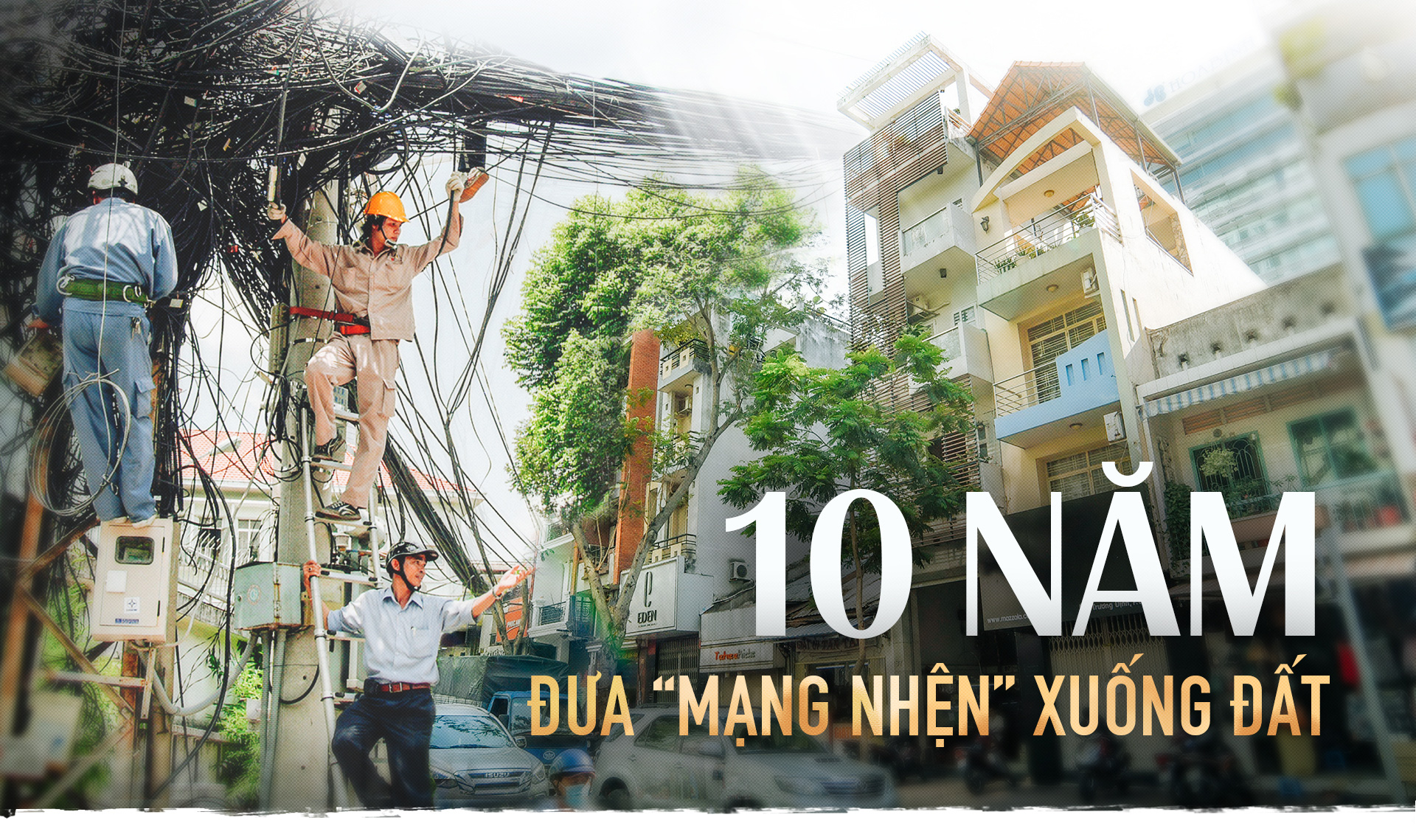
TTO – Nhiều người dân TP.HCM khi được hỏi vẫn không quên hình ảnh những bó dây điện, cáp viễn thông nặng trĩu sà xuống những đường phố những năm trước đây. Các bó dây rối nùi, chằng chịt khiến người dân lo sợ sẽ đổ ập xuống khi qua lại. Nhưng hiện tại đã khác, những “mạng nhện” khổng lồ này đã vắng bóng dần, nhưng ít ai biết để đưa mạng lưới này từ trên trời xuống đất, thành phố phải trải qua một thập kỷ với nhiều nỗ lực từ các bên liên quan. Tiếp tục đọc “10 năm đưa “mạng nhện” xuống đất”
When a meteor, a hulking hunk of prehistoric mass, shreds through Earth’s atmosphere and slams into the surface, the impact vaporizes terrestrial scraps of minerals and sends debris into the sky. The molten globs float like glassy raindrops and fall thousands of kilometers away. Buried under layers of rock laid over millions of years, occasionally the shiny shards work their way to the surface; shimmering examples of Earth’s immensity and the intensity of time. Have you ever seen one? If not, you can.
A case filled with these tektites awaits in District 1 alongside literal pieces of lava, impressions made by long-extinct sea creatures straight out of a science-fiction movie, and wood transformed to stone. Can you imagine, wood to stone! What was once a tiny seed and then a towering tube of pulp pumping sap to a canopy of soft leaves made into solid rock by the geological machinations of our exceedingly strange planet. No one seems to care. Tiếp tục đọc “In Defense of Bảo Tàng Địa Chất, Saigon’s Most Neglected Museum”

TTO – Một lần đi trên con đường trơn trượt, ngập ngụa bùn đất, chưa kể phải lội qua 4 con suối lớn chảy xiết và hơn chục khe suối nhỏ mới tới được trường học của các em nhỏ vùng cao để quý trọng hơn từng mét đường bê tông mà công trình “Con đường em đến trường” thực hiện ở Yên Bái.
Vượt hơn 35km đường rừng, sương mù bảng lảng quanh sườn núi, chốc chốc phía xa, đám mây đen bất chợt kéo đến, ánh mắt lo lắng hiện rõ trên gương mặt đồng nghiệp dù bao năm tác nghiệp miền núi và có tiếng “tay lái lụa” chẳng khác gì trai bản. Tiếp tục đọc “Đường đến trường “nơi tận cùng” Mù Căng Chải”
Balance of systems, software, supply chain constraints, and reliability and performance guarantees all weigh on total costs.
Batteries make up only a slice of energy storage system costs. (Credit: Ameren)
The energy storage market in the United States is booming, with 476 megawatts of new projects installed in the third quarter of 2020 alone, up 240 percent over the second quarter, according to industry analysts at Wood Mackenzie. 2021 is expected to be another record-breaking year for storage, but with technological innovation accelerating across the market, renewable energy asset owners need to carefully select safe and reliable systems to protect their storage investments. As the market accelerates, these are a few of the essential questions asset owners should be asking.
When analysts speak about declines in storage pricing, they are referring to battery pricing, which continues to decline every year. Bloomberg New Energy Finance’s latest report states that current lithium-ion pricing stands at about $137 per kilowatt-hour and will drop as low as $100 per kWh by 2023.
However, purchasers of energy storage systems may see substantially higher prices for their projects, depending on a range of factors. For example, the lowest pricing for lithium-ion batteries is generally available for either a major supply contract or for very large-scale deployments of 500 megawatt-hours and above. Since most projects today are not that large, that $137 per kWh figure will be closer to $150 to $170 per kWh, and perhaps as high as $200 to $210 per kWh on the battery-pack level, depending on the size of the project.
Tiếp tục đọc “Beyond Declining Battery Prices: 6 Ways to Evaluate Energy Storage in 2021”
Executive Summary
The deployment of battery energy storage systems (BESS) is rapidly increasing throughout the world. This technology presents many opportunities for increasing contributions of variable renewable energy technologies, providing ancillary services, enabling energy access to remote areas, and increasing resilience during grid power outages. At the same time, BESS has not been widely deployed and operated in many contexts. The use of BESS requires codes and standards similar to those for other inverter-based technologies but may also necessitate special safety considerations in specific contexts. As countries in Asia consider the inclusion of BESS in their power systems to meet policy objectives, renewable energy goals, increase resilience, and expand energy access, there is an opportunity to learn from the experiences of other regions and jurisdictions that have developed more advanced storage markets and practices.
This report presents global best practices of codes, standards, and interconnection procedures developed to support the safe and reliable deployment of BESS. Several relevant case studies highlight current efforts to ensure safe operation of BESS and showcase potential pathways for adoption of relevant codes and standards. Specifically, this report is intended to support the Thailand Office of Energy Regulatory Commission (OERC) and other stakeholders in their efforts to develop technical codes and standards to govern the installation and operation of BESS; it may also be utilized as a guide for other countries as interest in the deployment of BESS technologies continues to grow. Coupled with well-defined regulatory objectives, market incentives, permitting procedures, and technical review processes, the adoption of technical codes and standards that govern the design, construction, installation, and operation of BESS can help provide regulatory certainty, as well as reduce barriers to investment. Such codes and standards also ensure BESS deployment will meet national, regional, and local goals, while maintaining a reliable grid, and ensuring public safety.
Finally, a robust BESS market can support the increased adoption of variable renewable energy generation technologies to meet Thailand’s energy portfolio goals. This report has been prepared by the National Renewable Energy Laboratory (NREL) with support from the U.S. Agency for International Development (USAID) Regional Development Mission for Asia, and in collaboration with USAID Clean Power Asia.
Download full report https://www.nrel.gov/docs/fy21osti/78780.pdf
Monday, January 11, 2021, 14:36 GMT+7 tuoitre

Vietnam’s Prime Minister Nguyen Xuan Phuc attended the ground-breaking ceremony of the expansion project of Hoa Binh Hydropower Plant in northern Hoa Binh Province on Sunday morning.
Tiếp tục đọc “Expansion of Hoa Binh hydropower plant begins in northern Vietnam”By Nguyen Dong January 11, 2021 | 01:27 pm GMT+7 vnexpress
A staff stands inside the Hai Van Tunnel 2, January 10, 2021. Photo by VnExpress/Nguyen Dong.
Hai Van Tunnel 2 in central Vietnam has opened to traffic Monday after four years of construction.
Connecting Thua Thien-Hue Province with central hub Da Nang, the tunnel of 6.2 kilometers (3.85 miles) is the longest road tunnel in Southeast Asia and helps reduce traffic pressure on Hai Van Road Tunnel 1.
Tiếp tục đọc “Southeast Asia’s longest road tunnel opens”English: Liberalisation of the European electricity markets: a glass half full
Năm 2016, chỉ thị đầu tiên về tự do hóa thị trường điện châu Âu (năm 2006) kỷ niệm 20 năm ngày ban hành. Chúng ta có thể rút ra kết luận gì từ hai thập kỷ tự do hóa thị trường điện? Một số nhà quan sát, thậm chí những người có tiếng, [1] cũng đang tranh luận rằng thử nghiệm này là một thất bại.Theo định kỳ, các hội nghị được tổ chức tại Brussels hoặc các thủ đô khác để thảo luận về những cải cách mới được cho là cần thiết để cứu ngành điện châu Âu. Ủy ban Châu Âu đề xuất những thay đổi sau khi tham khảo ý kiến của các bên liên quan trên thị trường. [2]
Bài báo đưa ra một quan điểm lạc quan hơn đó là: tự do hóa ngành điện của châu Âu đã hoàn thành hầu hết các mục tiêu ban đầu của chỉ thị. Phải thừa nhận rằng có thể và sẽ cần phải cải tiến, nhưng chúng ta đã đi được một chặng đường dài. Vì vậy, ly nước đã đầy một nửa. Trong thời điểm nghi ngờ về sự thành công của hội nhập châu Âu, ngành điện cho chúng ta nhiều cơ sở để hài lòng.
1. Các mục tiêu ban đầu của quá trình tự do hóa ngành điện Châu Âu Tiếp tục đọc “Tự do hóa thị trường điện Châu Âu: nửa ly nước đầy”
By Ta Lu, Doan Loan December 3, 2020 | 11:10 am GMT+7
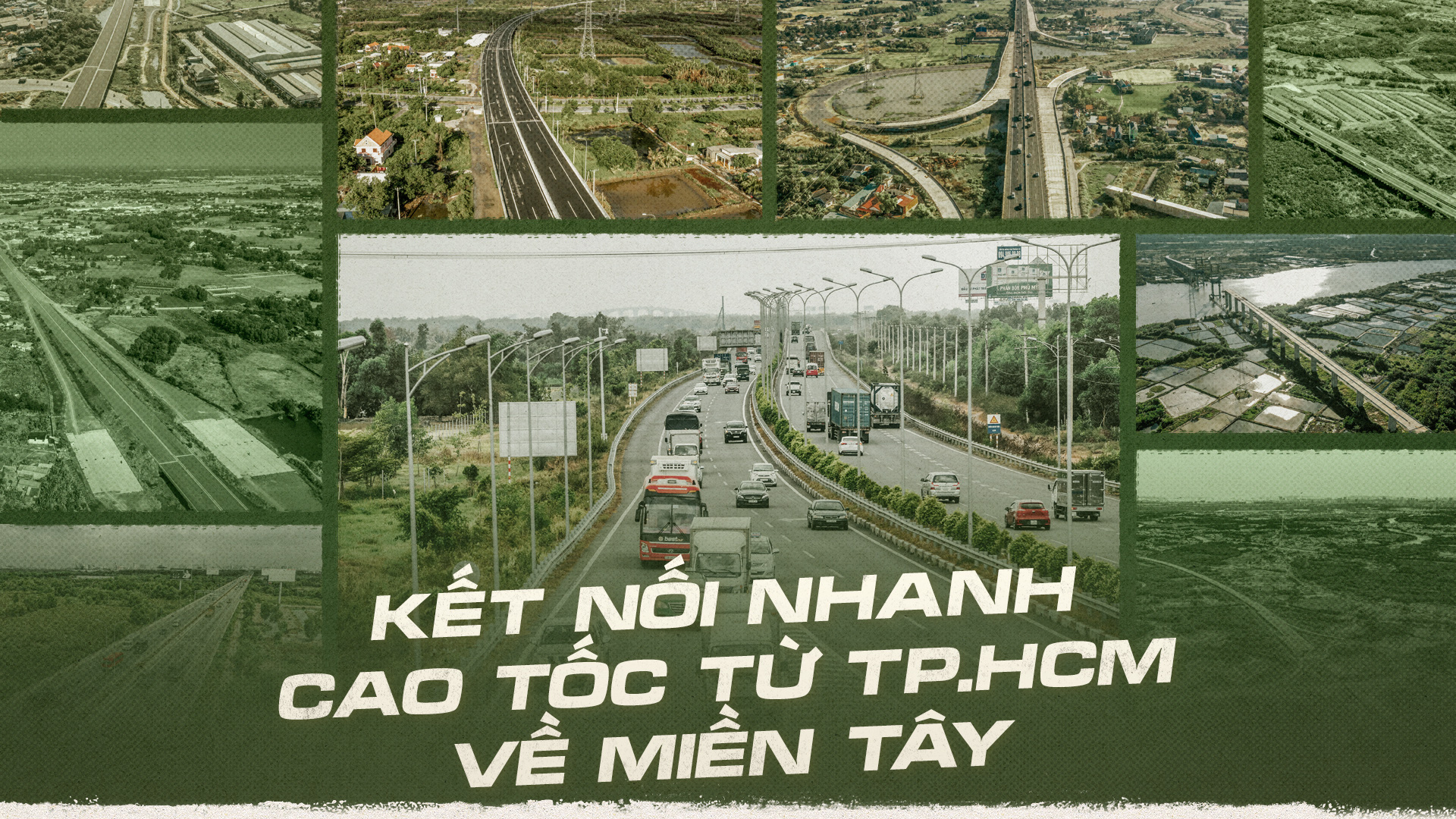
The Mekong Delta region is set to get over 300 kilometers of expressways in the next five years as the government seeks to boost connectivity and economic growth.

Related News:
By Dat Nguyen November 18, 2020 | 08:37 am GMT+7 vnexpress
An aerial view of the Vietnam-Singapore Industrial Parks in southern Binh Duong Province. Photo courtesy of Becamex IDC Corp.Chinese manufacturing companies accounted for 88 percent of $1.57 billion poured into Vietnam’s industrial parks in the first nine months, showing an increasing shifting trend to Vietnam.
Among 20 key investments in the north and south regions, 15 were made by companies from mainland China, Taiwan or Hong Kong, according to a recent report by real estate consultancy Savills.
Companies from Hong Kong participated in eight deals with a total investment of nearly $700 million, while those from mainland China were involved in four deals worth over $300 million.
Companies from Taiwan invested in three deals worth $380 million in the north.
The biggest investments include the $333 million of Taiwanese electronics producer Wistron Corporation and its subsidiary. Wistron is a major laptop producer that has secured land in the northern province of Ha Nam.
The other Chinese companies were in the sectors of electronics, textile and garment, plastic, rubber, and paper.
Among the remaining five non-Chinese investments, two were from Singapore and the rest from Thailand, Japan and South Korea.
Vietnam is seeing rising demand for industrial land amid the establishment and expansion of multinationals as they seek to diversify their supply chains.
The country’s 280 industrial parks posted an occupancy of 70.1 percent in the first 10 months, and another 89 parks are being constructed, according to the Ministry of Planning and Investment.
Data from Savills shows that industrial parks in the northern Bac Ninh Province, the southern Dong Nai and Binh Duong Province are recording high occupancy rate of 94-99 percent, showing a need for an increase in supply.Related News:
vietnamnet 16/11/2020 15:48 GMT+7
| A rendering of the proposed Long Thanh International Airport in the southern province of Dong Nai. – Photo courtesy of Airports Corporation of Vietnam |
The project has four component projects such as headquarters of State management agencies, flight management services, essential airport facilities, and other works.
Major works such as airport buildings, the aircraft apron, passenger terminals, and cargo terminals will be built by the Airport Corporation of Vietnam (ACV), which operates 21 airports across the country.
ACV has to raise funding for the construction.
The first phase of the airport, expected to cost more than US$4.6 billion, is projected to be completed by 2025.
The investment was approved by the National Assembly in 2017, which also issued a resolution on compensation and resettlement of and support for affected individuals and organisations.
Prime Minister Nguyen Xuan Phuc urged Dong Nai Province authorities to hand over the required lands in October so that construction of the airport could begin early next year.
He also set a deadline for assessing cleared land for compensation purposes by the end of this month.
The Ministry of Transport should work closely with the province to promptly resolve all challenges to ensure the project remains on schedule, he said.
The airport work requires more than 5,000ha of land and more than 364ha elsewhere to build two resettlement sites.
Around 4,800 households and 26 organisations are expected to be relocated to make way for it.
Spread over a total area of more than 5,580ha, the airport will straddle six communes in Long Thanh District. It is expected to cost VNĐ336.63 trillion ($14.47 billion), with the construction divided into three phases.
In the first phase one runway with a length of 4,000m, taxiways, an apron, and a passenger terminal with other auxiliary works involving a total floor area of 373,000 sq.m will be built to serve 25 million passengers and 1.2 million tonnes of cargo each year.
The airport is expected to have four runways, four passenger terminals and other auxiliary works to ensure a capacity of 100 million passengers and 5 million tonnes of cargo a year by 2040.
Tan Son Nhat International Airport in HCM City, the country’s largest, has been seriously overloaded for years, both in the air and on the ground.
The Ministry of Transport said Long Thanh International Airport is a key national project that would have a significant impact on the southern key economic region. VNS
The Ministry of Finance (MOF) has warned about problems with the Long Thanh International Airport project, ….
The government’s report to the National Assembly on the implementation of the Long Thanh International ….

29/10/2020 18:10 GMT+7 vietnamnet
Many experts believe that the historic floods in the central region some days ago were the results of climate change. How does the draft of the amended law on environmental protection address the issue?

Minister of Natural Resources and the Environment Tran Hong Ha
The issues related to climate change, natural disasters and floods are mentioned in many laws. The reason behind recent floods is extreme climate change. All the indicators exceed the indicators of the floods in history.
Tiếp tục đọc “Minister warns about development of small-scale hydropower”30/10/2020 07:10 GMT+7 vietnamnet

The high-speed line, inter-provincial, inter-regional and urban railway networks must also be added to the strategy, he said.
He was speaking at a Government meeting on Wednesday on the development strategy for Vietnam’s railway towards 2050.
Tiếp tục đọc “North-South high-speed railway to be core part of national transport system”