Chinese vessels threaten Vietnamese rescuers on mission near Paracel Island

By Nguyen Tu, Thanh Nien News

DA NANG – Tuesday, June 02, 2015 15:06

A Vietnamese sailor was transferred to the rescue boat coded SAR 412 on Monday. Photo: Nguyen Tu

Vietnamese rescuers on mission to save a fisherman near Hoang Sa (Paracel) Islands were threatened by Chinese vessels and asked to change their course Monday, the Vietnam Maritime Search and Rescue Coordination Center (MRCC) said.

Last Friday afternoon, a Vietnamese fishing boat with 45 crew members was traveling some 410 nautical miles off the central city of sDa Nang when a sailor named Ngoc suffered chest pains. Tiếp tục đọc “Chinese vessels threaten Vietnamese rescuers on mission near Paracel Island”

Sabah’s Shadow on the South China Sea

• By Jay L. Batongbacal I May 27, 2015

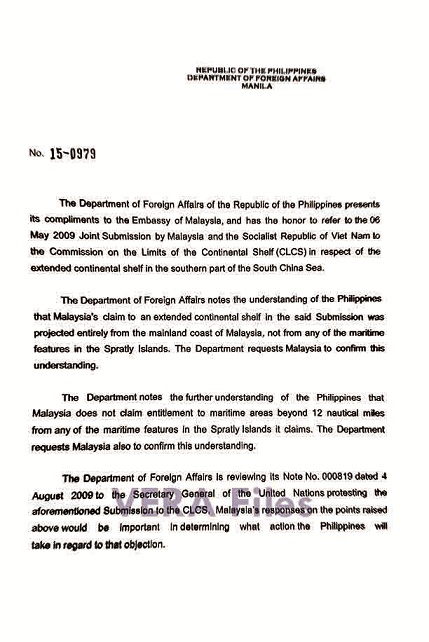
cogitasia – Philippine media went into a minor frenzy with the startling news that Manila purportedly offered Kuala Lumpur a quid pro quo in March: dropping the Philippine claim to North Borneo (Malaysia’s Sabah State) in exchange for Malaysian support for Manila’s arbitration case over the South China Sea. The media reports were quickly denied by the Philippines Department of Foreign Affairs, which noted the total absence of any reference to such a deal in the note that set off the firestorm. Recently, President Benigno Aquino III had to reiterate that his administration was not dropping the claim, prompting Malaysia to summon the Philippine Charge d’Affaires. Tiếp tục đọc “Sabah’s Shadow on the South China Sea”

Enter Science & China’s Blue Economy in the South China Sea’s Policy Discussion

by  • June 2, 2015 •

By James Borton

Source: Vladimir Varfolomeev's flickr photostream, used under a creative commons license.

cogitasia – The role of marine science and the emergence of China’s blue economy helped frame a new narrative on the South China Sea’s policy debate, as shown at a CSIS discussion on May 21titled “The Convergence of Marine Science and Geopolitics in the South China Sea.” Two of the panelists John McManus from the University of Miami’s Rosentiel School of Marine & Atmospheric Science and Kathleen Walsh from the U.S. Naval War College agree that the South China Sea is not simply a sovereignty dispute but is likely to be recognized as one of the most significant environmental issues of the 21st century. Tiếp tục đọc “Enter Science & China’s Blue Economy in the South China Sea’s Policy Discussion”

In defense of facts in the South China Sea

AMTI – Secretary of Defense Ash Carter’s address at this weekend’s Shangri-La Dialogue was generally well received by conference attendees and Asia-security watchers. A few critics have argued that Carter was “just talk.” What none have noted, however, is the fact that the Secretary’s remarks were the latest installation in a series of moves by the administration to articulate a fact-based approach to the South China Sea. This approach is a nuanced one and does not necessarily constitute a “strategy” for countering China’s recent moves. It is, however, a wise way to engage two key audiences to whom Carter was speaking at Shangri-La: other states in the region and China itself. Let me explain.

Tiếp tục đọc “In defense of facts in the South China Sea”

China is using one of the most dangerous conflicts on the planet as a distraction

China navy PLAReutersThe Chinese People’s Liberation Army (PLA) Navy during a commemoration ceremony for Chinese soldiers killed during the First Sino-Japanese War, near Liugong island in Weihai, Shandong province, on August 27.

In an effort to stoke nationalism and distract its people from a slowing economy, the Chinese government has been acting particularly aggressively in the South China Sea, engaging in territorial disputes with neighbors including Japan.

This is one of the most dangerous games in the world. Tiếp tục đọc “China is using one of the most dangerous conflicts on the planet as a distraction”

Beijing Hint: No More Mr. Nice Guy in South China Sea

(WSJ): In position to reclaim its ‘lake,’ China invokes its long tolerance of neighbors’ acts

China’s Adm. Sun Jianguo chats with U.S. Defense Secretary Ash Carter at the Shangri-La Dialogue meeting in Singapore this weekend. Adm. Sun said China has exercised ‘enormous restraint’ in the South China Sea.
China’s Adm. Sun Jianguo chats with U.S. Defense Secretary Ash Carter at the Shangri-La Dialogue meeting in Singapore this weekend. Adm. Sun said China has exercised ‘enormous restraint’ in the South China Sea. Photo: Agence France-Presse/Getty Images

SINGAPORE—The way China looks at the disputes roiling the South China Sea, its forbearance has gone on far too long.

Smaller countries that ring the sea, including Vietnam, the Philippines and Malaysia have tested Beijing’s patience by striking claims to multiple islets, building structures on them and prospecting for energy in the surrounding waters. Indeed, these actions preceded any by China. But leniency has limits.

This sense of righteousness drives China’s massive island-building project in the Spratlys chain, which is now at the center of a gathering crisis in the world’s most economically vibrant region. Tiếp tục đọc “Beijing Hint: No More Mr. Nice Guy in South China Sea”

Shangri La Dialogue 2015


AMTI

Explore key maritime security developments from the 2015 Dialogue.

Ashton Carter, Secretary of Defense, United States

Secretary of Defense Ash Carter’s Saturday morning address was well-received by the Shangri-La audience. Carter’s speech included a strong stand against China’s building efforts in the South China Sea, and reaffirmed the United States’ intention to “fly, sail, and operate wherever international law allows.” This was, however, embedded in a broader message was that all countries in Asia should have the opportunity to rise peacefully. Carter called for a freeze on land reclamation by all South China Sea claimants, and has reportedly since taken up the issue with Vietnam on a visit to Hanoi.

Tiếp tục đọc “Shangri La Dialogue 2015”

Messages from China’s National Defense White Paper


June 2, 2015
CSIS

“China’s Military Strategy,” released on May 26, 2015, is the 9th Chinese defense white paper since 1998. For the first time, the white paper elaborates comprehensively on the missions and strategic tasks of China’s armed forces in the new political environment and emphasizes the essence of the strategic concept of active defense. There are four critical security domains highlighted in this White Paper: challenges for outer space security; security of strategic SLOCs and overseas interests; maintenance of a minimum nuclear capacity sufficient to meet national security demand; an increased capacity for cyber security.

Tiếp tục đọc “Messages from China’s National Defense White Paper”

China’s missed opportunity at the Shangri-La Dialogue

Riding the Tiger of Anti-U.S. Sentiment in the South China Sea

FP
Beijing’s tough rhetoric over maritime disputes has inflamed nationalist fervor online. That’s not necessarily a good thing for China.

Riding the Tiger of Anti-U.S. Sentiment in the South China Sea

The South China Sea has long been the focus of simmering maritime disputes between China, which claims sovereignty over almost all of the sea, and its neighbors in the Asia-Pacific, each with smaller overlapping claims. But strains between China and the United States have increased since February, when satellite images revealed that Chinese vessels are engaging in a massive reclamation project to turn submerged reefs into small islands capable of supporting airstrips. Now a small but vocal group of nationalist Web users are seizing on what they view as the latest provocations in the region – and with its own harsh rhetoric, Beijing risks painting itself into a corner to appease its strongly nationalist citizenry. Tiếp tục đọc “Riding the Tiger of Anti-U.S. Sentiment in the South China Sea”

US commends China for transparency on military affairs: Duowei

China Times

  • Staff Reporter
  • 2015-05-30
  • 09:50 (GMT+8)
China's carrier battle group visits Sarayburnu in Istanbul, Turkey, for five days, from May 24. This is the third time for China's military have visited the country. (Photo/Xinhua)

China’s carrier battle group visits Sarayburnu in Istanbul, Turkey, for five days, from May 24. This is the third time for China’s military have visited the country. (Photo/Xinhua)

The US has affirmed the relative transparency of China after the country laid out its military strategy in a white paper, according to Duowei News, a media outlet run by overseas Chinese.

The white paper focuses on territorial disputes in the South China Sea, countermeasures for the US Asia Pivot and efforts to work together with the militaries of other countries in the region, as well as with the US. Tiếp tục đọc “US commends China for transparency on military affairs: Duowei”

White Paper Outlines China’s Ambitions

TAIPEI, Taiwan — China released its first white paper on military strategy Tuesday, just two weeks after the release of the Pentagon’s annual report to the US Congress on China’s military and security developments.

Neither report appears to take blame for the rising tensions in the South China and East China seas. The Chinese report, “China’s Military Strategy,” indicates “some of its offshore neighbors” have taken “provocative actions” and reinforced their military presence on China’s reefs and islands “illegally.” Tiếp tục đọc “White Paper Outlines China’s Ambitions”

China reinstitutes annual moratorium on fishing in part of South China Sea

China on May 16 reinstituted its annual ban on fishing in areas of the South China Sea north of the 12th parallel. The ban runs through August 1 and covers disputed waters around the Paracel Islands as well as part of a joint fishing area in the Gulf of Tonkin that Beijing and Hanoi agreed upon in 2000. Vietnam’s government strongly objected to the unilateral ban, which each year leads to sometimes-violent clashes between Chinese authorities and Vietnamese fishermen.

Biển của ta, ai có quyền cấm!

19/05/2015 23:27

NLDÝ thức rõ càng nhân nhượng thì Trung Quốc càng lấn tới nên ngư dân Việt Nam đồng lòng khẳng định sẽ tiếp tục ra Hoàng Sa, Trường Sa đánh bắt dù sẽ khó khăn, vất vả hơn Tiếp tục đọc “China reinstitutes annual moratorium on fishing in part of South China Sea”

Chinese long-range drones, artillery on artificial islands

FP Situation Report
Friday, May 29, 2015

One of the biggest bits of news has been the first sighting of a massive new Chinese long-range drone that is thought to be able to pick up and track stealthy aircraft at long range. The drone, first reported Thursday by Popular MechanicsJeffrey Lin and P.W. Singer, had its maiden flight in February, and “could change the brewing arms race in the Asia Pacific.”

The double-bodied behemoth, with an estimated 40-meter wingspan, is packed with seven different radar systems and a variety of surveillance equipment to help it detect U.S. stealth aircraft like the F-35 fighter, B-2 bombers, and ships at long distances.

And to no one’s surprise, Beijing has been placing offensive weaponry on the artificial islands it’s been building in the South China Sea. We’ve already seen what look like air strips on some of the clumps of dirt hastily dumped on top of coral reefs, but the mobile artillery pieces that American intelligence have detected is something new.

While hardly a threat to any naval or air assets in the region, the guns are within range of nearby islands claimed by Vietnam, according to the Wall Street Journal’s Julian Barnes and Gordon Lubold, and their sheer symbolism carries some significant weight. With American surveillance planes flying nearby and U.S. Navy ships insisting on the right to transit close to the makeshift bits of land, the artillery pieces represent a small, but real, escalation of the game.