G7 phản đối Trung Quốc cải tạo ồ ạt các đảo trên Biển Đông

(LĐO) V.N – 7:49 PM, 08/06/2015

Lãnh đạo các nước công nghiệp G7 đã bày tỏ sự phản đối mạnh mẽ với việc Trung Quốc cải tạo ồ ạt các đảo nhằm thay đổi hiện trạng ở Biển Đông – Kyodo ngày 8.6 dẫn lời một quan chức Nhật cho biết.

Theo Phó chánh văn phòng Nội các Nhật Hiroshige Seko, tại hội nghị, Thủ tướng Nhật Shinzo Abe đã nhắc tới những hành động của Bắc Kinh ở Biển Đông và Biển Hoa Đông. Ông nói rằng các nhà lãnh đạo G7 “không được để yên cho các nỗ lực đơn phương nhằm thay đổi hiện trạng”. Tiếp tục đọc “G7 phản đối Trung Quốc cải tạo ồ ạt các đảo trên Biển Đông”

China’s investment in renewables soars

Despite a slowdown in its economy and the continued reliance on coal, China is pumping billions of dollars into its renewable energy industry.

GLOBE-Net – By Kieran Cooke

LONDON, 30 May, 2015 − China invested more than US$89 billion in renewable energy projects in the country in 2014 – a growth of 31% on the previous year, according to a detailed report on the country’s energy sector.

The soaring increase is revealed in a report by the US government’s Energy Information Administration (EIA). But it adds that fossil fuels − particularly coal − still look set to continue to dominate China’s power sector.

Coal is by far the most polluting fossil fuel, and China is the world’s leading emitter of climate-changing greenhouse gases.

Wind power production went up by nearly 40% in the 2012-13 period. Although there are still big gaps in the transmission infrastructure, the aim is to generate 200 gigawatts (GW) of electricity from wind by 2020.

Government subsidies

“China is also aggressively investing in solar power and hopes to increase capacity from 15 GW at the end of 2013 to 100 GW by the end of 2020,” says the EIA. Substantial government subsidies have helped to fuel growth in the solar sector. Tiếp tục đọc “China’s investment in renewables soars”

ASEAN must take a collective stance on the South China Sea

4 June 2015

Author: Vignesh Ram, Manipal University

 
EAF – The South China Sea dispute has become the new normal in ASEAN meetings. The dispute, with its overlapping claims on various land features in the South China Sea, has started to figure as the most important territorial disputes in Asia, one that risks becoming a major power confrontation in the region. With this in mind, ASEAN must take a collective stand on the South China Sea.

Beijing deployed the Haiyang Shiyou oil rig 981 in May 2015 close to the Paracel Islands, triggering a furious reaction in Hanoi and the most serious uptick in tensions in the waters in years. (Photo: AAP) Tiếp tục đọc “ASEAN must take a collective stance on the South China Sea”

Website VN trước đòn tấn công ồ ạt của hacker Trung Quốc

04/06/2015 08:30

 TN – Nhiều website của các cá nhân, tổ chức tại VN hiện nay chưa thực sự quan tâm đến bảo mật, an toàn thông tin; còn quá nhiều lỗ hổng cơ bản… Đây thực sự là miếng mồi ngon cho các cuộc tấn công dồn dập của hacker Trung Quốc thời gian qua.
Hacker Trung Quốc dồn dập tấn công mạng VN Hacker Trung Quốc dồn dập tấn công mạng VN – Ảnh: chụp từ trang chủ của nhóm hacker 1937cn

Như Thanh Niên hôm qua đã thông tin, website 1937cn.net cho biết trong 2 ngày 30 và 31.5.2015 đã có hơn 1.200 website của VN và Philippines bị tấn công, trong đó có khoảng 1.000 website của VN.

Theo ông Trần Quang Chiến, Giám đốc Công ty CP VNIST (VNIST Corp), phụ trách website an ninh mạng securitydaily.net, thì 1937cn.net là trang web chính thức của nhóm hacker 1937cn nổi tiếng và mạnh nhất Trung Quốc (TQ). Đây là trang mạng được lập ra với mục đích kích động hacker TQ tấn công các website của VN và các quốc gia ở khu vực Biển Đông. Tiếp tục đọc “Website VN trước đòn tấn công ồ ạt của hacker Trung Quốc”

China hacks US government

Washington (CNN) Four million current and former federal employees may have had their personal information hacked, the Office of Personnel Management said on Thursday.

The agency, which is conducts background checks, warned it was urging potential victims to monitor their financial statements and obtain new credit reports.

U.S. officials believe this could be the biggest breach ever of the government’s computer networks.

The breach is beyond the Office of Personnel Management and Department of Interior, with nearly every federal government agency hit by the hackers, government officials said. Tiếp tục đọc “China hacks US government”

Chinese vessels threaten Vietnamese rescuers on mission near Paracel Island

By Nguyen Tu, Thanh Nien News

DA NANG – Tuesday, June 02, 2015 15:06

A Vietnamese sailor was transferred to the rescue boat coded SAR 412 on Monday. Photo: Nguyen Tu

Vietnamese rescuers on mission to save a fisherman near Hoang Sa (Paracel) Islands were threatened by Chinese vessels and asked to change their course Monday, the Vietnam Maritime Search and Rescue Coordination Center (MRCC) said.

Last Friday afternoon, a Vietnamese fishing boat with 45 crew members was traveling some 410 nautical miles off the central city of sDa Nang when a sailor named Ngoc suffered chest pains. Tiếp tục đọc “Chinese vessels threaten Vietnamese rescuers on mission near Paracel Island”

Sabah’s Shadow on the South China Sea

• By Jay L. Batongbacal I May 27, 2015

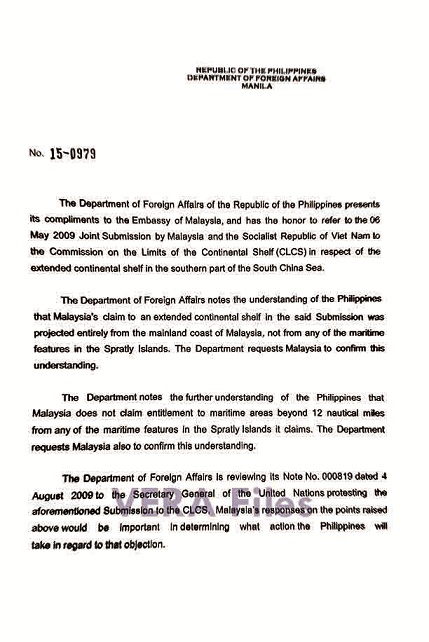
cogitasia – Philippine media went into a minor frenzy with the startling news that Manila purportedly offered Kuala Lumpur a quid pro quo in March: dropping the Philippine claim to North Borneo (Malaysia’s Sabah State) in exchange for Malaysian support for Manila’s arbitration case over the South China Sea. The media reports were quickly denied by the Philippines Department of Foreign Affairs, which noted the total absence of any reference to such a deal in the note that set off the firestorm. Recently, President Benigno Aquino III had to reiterate that his administration was not dropping the claim, prompting Malaysia to summon the Philippine Charge d’Affaires. Tiếp tục đọc “Sabah’s Shadow on the South China Sea”

Enter Science & China’s Blue Economy in the South China Sea’s Policy Discussion

by  • June 2, 2015 •

By James Borton

Source: Vladimir Varfolomeev's flickr photostream, used under a creative commons license.

cogitasia – The role of marine science and the emergence of China’s blue economy helped frame a new narrative on the South China Sea’s policy debate, as shown at a CSIS discussion on May 21titled “The Convergence of Marine Science and Geopolitics in the South China Sea.” Two of the panelists John McManus from the University of Miami’s Rosentiel School of Marine & Atmospheric Science and Kathleen Walsh from the U.S. Naval War College agree that the South China Sea is not simply a sovereignty dispute but is likely to be recognized as one of the most significant environmental issues of the 21st century. Tiếp tục đọc “Enter Science & China’s Blue Economy in the South China Sea’s Policy Discussion”

In defense of facts in the South China Sea

AMTI – Secretary of Defense Ash Carter’s address at this weekend’s Shangri-La Dialogue was generally well received by conference attendees and Asia-security watchers. A few critics have argued that Carter was “just talk.” What none have noted, however, is the fact that the Secretary’s remarks were the latest installation in a series of moves by the administration to articulate a fact-based approach to the South China Sea. This approach is a nuanced one and does not necessarily constitute a “strategy” for countering China’s recent moves. It is, however, a wise way to engage two key audiences to whom Carter was speaking at Shangri-La: other states in the region and China itself. Let me explain.

Tiếp tục đọc “In defense of facts in the South China Sea”

China is using one of the most dangerous conflicts on the planet as a distraction

China navy PLAReutersThe Chinese People’s Liberation Army (PLA) Navy during a commemoration ceremony for Chinese soldiers killed during the First Sino-Japanese War, near Liugong island in Weihai, Shandong province, on August 27.

In an effort to stoke nationalism and distract its people from a slowing economy, the Chinese government has been acting particularly aggressively in the South China Sea, engaging in territorial disputes with neighbors including Japan.

This is one of the most dangerous games in the world. Tiếp tục đọc “China is using one of the most dangerous conflicts on the planet as a distraction”

Beijing Hint: No More Mr. Nice Guy in South China Sea

(WSJ): In position to reclaim its ‘lake,’ China invokes its long tolerance of neighbors’ acts

China’s Adm. Sun Jianguo chats with U.S. Defense Secretary Ash Carter at the Shangri-La Dialogue meeting in Singapore this weekend. Adm. Sun said China has exercised ‘enormous restraint’ in the South China Sea.
China’s Adm. Sun Jianguo chats with U.S. Defense Secretary Ash Carter at the Shangri-La Dialogue meeting in Singapore this weekend. Adm. Sun said China has exercised ‘enormous restraint’ in the South China Sea. Photo: Agence France-Presse/Getty Images

SINGAPORE—The way China looks at the disputes roiling the South China Sea, its forbearance has gone on far too long.

Smaller countries that ring the sea, including Vietnam, the Philippines and Malaysia have tested Beijing’s patience by striking claims to multiple islets, building structures on them and prospecting for energy in the surrounding waters. Indeed, these actions preceded any by China. But leniency has limits.

This sense of righteousness drives China’s massive island-building project in the Spratlys chain, which is now at the center of a gathering crisis in the world’s most economically vibrant region. Tiếp tục đọc “Beijing Hint: No More Mr. Nice Guy in South China Sea”

Shangri La Dialogue 2015


AMTI

Explore key maritime security developments from the 2015 Dialogue.

Ashton Carter, Secretary of Defense, United States

Secretary of Defense Ash Carter’s Saturday morning address was well-received by the Shangri-La audience. Carter’s speech included a strong stand against China’s building efforts in the South China Sea, and reaffirmed the United States’ intention to “fly, sail, and operate wherever international law allows.” This was, however, embedded in a broader message was that all countries in Asia should have the opportunity to rise peacefully. Carter called for a freeze on land reclamation by all South China Sea claimants, and has reportedly since taken up the issue with Vietnam on a visit to Hanoi.

Tiếp tục đọc “Shangri La Dialogue 2015”

Messages from China’s National Defense White Paper


June 2, 2015
CSIS

“China’s Military Strategy,” released on May 26, 2015, is the 9th Chinese defense white paper since 1998. For the first time, the white paper elaborates comprehensively on the missions and strategic tasks of China’s armed forces in the new political environment and emphasizes the essence of the strategic concept of active defense. There are four critical security domains highlighted in this White Paper: challenges for outer space security; security of strategic SLOCs and overseas interests; maintenance of a minimum nuclear capacity sufficient to meet national security demand; an increased capacity for cyber security.

Tiếp tục đọc “Messages from China’s National Defense White Paper”

China’s missed opportunity at the Shangri-La Dialogue

Riding the Tiger of Anti-U.S. Sentiment in the South China Sea

FP
Beijing’s tough rhetoric over maritime disputes has inflamed nationalist fervor online. That’s not necessarily a good thing for China.

Riding the Tiger of Anti-U.S. Sentiment in the South China Sea

The South China Sea has long been the focus of simmering maritime disputes between China, which claims sovereignty over almost all of the sea, and its neighbors in the Asia-Pacific, each with smaller overlapping claims. But strains between China and the United States have increased since February, when satellite images revealed that Chinese vessels are engaging in a massive reclamation project to turn submerged reefs into small islands capable of supporting airstrips. Now a small but vocal group of nationalist Web users are seizing on what they view as the latest provocations in the region – and with its own harsh rhetoric, Beijing risks painting itself into a corner to appease its strongly nationalist citizenry. Tiếp tục đọc “Riding the Tiger of Anti-U.S. Sentiment in the South China Sea”