
Nhiều trang mạng TQ cuối tháng 10 loan báo một tin tức giật gân rằng tàu sân bay Liêu Ninh đã bị theo dõi suốt 3 ngày 3 đêm bởi 1 tàu ngầm kilo.
Chuyên mục: China military
Từ biển Đông đến RIMPAC
- DANH ĐỨC
- 02.06.2018, 16:04
TTCT – Tình hình Biển Đông đang thay đổi chóng vánh và dồn dập, kèm theo những “bình luận” trích từ nhiều nguồn dễ gây ngộ nhận tương quan “nhân quả”. Các sự kiện trên Biển Đông liên quan gì tới cuộc tập trận RIMPAC và những động thái mới của Mỹ? Các dữ kiện sẽ cho phép nhận chân tình hình.
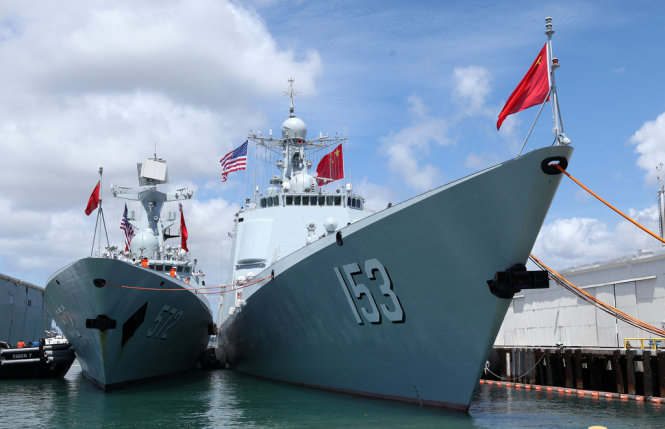 |
| Tàu chiến Trung Quốc tham gia cuộc tập trận RIMPAC 2016. Ảnh: Asia News |
“Chúng tôi có bằng chứng mạnh mẽ rằng Trung Quốc đã triển khai các tên lửa đối hạm, đối không, cùng các thiết bị nhiễu sóng tại các thực thể tranh chấp ở khu vực Trường Sa của Biển Đông. Việc Trung Quốc vừa cho hạ cánh máy bay ném bom trên đảo Phú Lâm cũng đã làm căng thẳng nổi lên” – người phát ngôn Bộ Quốc phòng Mỹ loan báo hôm 23-5. Tiếp tục đọc “Từ biển Đông đến RIMPAC”
Vũ khí hạt nhân – 7 kỳ
- Kỳ 1: Siêu bom hạt nhân thế hệ mới là cái gì?
- Kỳ 2: Tổng thống Pháp được thả xuống tàu ngầm như thế nào?
- Kỳ 3: Tên lửa hủy diệt của Nga: xóa sổ một cường quốc trong vài giây
- Kỳ 4: Trung Quốc thử nghiệm tên lửa 10 đầu đạn
- Kỳ 5: Đối đầu dai dẳng Ấn Độ – Pakistan
- Kỳ 6: Triều Tiên: từ tên lửa tầm ngắn đến liên lục địa
- Kỳ 7: Thế phân tranh vũ khí hạt nhân ở Trung Đông
***
Siêu bom hạt nhân thế hệ mới là cái gì?
TTO – Đầu tháng 7-2017, Viện Nghiên cứu hòa bình quốc tế Stockholm đã cảnh báo tình hình hiện đại hóa vũ khí hạt nhân vẫn tiếp tục diễn ra trên thế giới.
 |
| Mỹ bắn thử tên lửa đạn đạo liên lục địa Minuteman III đêm 26-4-2017 – Ảnh: Không quân Mỹ |
Không có quốc gia sở hữu vũ khí hạt nhân nào sẵn sàng từ bỏ kho vũ khí hạt nhân trong tương lai gần. Các nước đều tiếp tục phát triển hoặc triển khai thêm các hệ thống vũ khí mới hoặc tuyên bố sẽ làm như thế
Chuyên viên Shannon Kile (Viện Nghiên cứu hòa bình quốc tế Stockholm)
Chín nước gồm năm nước thường trực Hội đồng Bảo an Liên Hiệp Quốc và Ấn Độ, Pakistan, Israel, Triều Tiên đang sở hữu 14.935 đầu đạn hạt nhân, trong đó đã triển khai 4.150 đầu đạn. Tiếp tục đọc “Vũ khí hạt nhân – 7 kỳ”
Trung Quốc nổ súng ở châu Phi báo hiệu ra biển lớn
TTO – Căn cứ quân sự Trung Quốc ở nước ngoài tại Djibouti sẽ là cái đầu tiên trong chuỗi các căn cứ sẽ xây dựng để bảo vệ lợi ích kinh tế của các công ty Trung Quốc.

Xe bọc thép Trung Quốc tham gia tập trận bắn đạn thật ở Djibouti tháng trước – Ảnh chụp màn hình SCMP
Khi binh sĩ Trung Quốc bắn những phát đạn tượng trưng đầu tiên tại căn cứ quân sự Djibouti cách đây hơn 2 tháng, đó cũng là những phát đạn cảnh báo cho thế giới rằng theo chân quá trình tranh giành lợi ích toàn cầu của Bắc Kinh sẽ là một quân đội hùng mạnh ở nước ngoài đủ sức để đảm bảo mọi thứ diễn ra êm đẹp. Tiếp tục đọc “Trung Quốc nổ súng ở châu Phi báo hiệu ra biển lớn”
Ông láng giềng của chúng ta đang lo sợ?
VN Youtuber – Xuất bản 22 thg 8, 2017
Theo một số nhà bình luận, ông láng giềng phương bắc đã di chuyển trọng tâm chú ý lên hướng đông bắc.
Chinese long-range drones, artillery on artificial islands
First posted on UNCLOSforum.wordpress.com on May 29, 2015
FP Situation Report
Friday, May 29, 2015
One of the biggest bits of news has been the first sighting of a massive new Chinese long-range drone that is thought to be able to pick up and track stealthy aircraft at long range. The drone, first reported Thursday by Popular Mechanics’ Jeffrey Lin and P.W. Singer, had its maiden flight in February, and “could change the brewing arms race in the Asia Pacific.”
The double-bodied behemoth, with an estimated 40-meter wingspan, is packed with seven different radar systems and a variety of surveillance equipment to help it detect U.S. stealth aircraft like the F-35 fighter, B-2 bombers, and ships at long distances.
And to no one’s surprise, Beijing has been placing offensive weaponry on the artificial islands it’s been building in the South China Sea. We’ve already seen what look like air strips on some of the clumps of dirt hastily dumped on top of coral reefs, but the mobile artillery pieces that American intelligence have detected is something new.
While hardly a threat to any naval or air assets in the region, the guns are within range of nearby islands claimed by Vietnam, according to the Wall Street Journal’s Julian Barnes and Gordon Lubold, and their sheer symbolism carries some significant weight. With American surveillance planes flying nearby and U.S. Navy ships insisting on the right to transit close to the makeshift bits of land, the artillery pieces represent a small, but real, escalation of the game.
Divine Eagle, China’s Enormous Stealth Hunting Drone, Takes Shape
First posted on UNCLOSforum.wordpress.com on May 29, 2015
What a Big Bird

China’s Military Strategy White Paper
First posted on UNCLOSforum.wordpress.com on May 27, 2015
Document: China’s Military Strategy
May 26, 2015 6:54 AM

The following is the first public Chinese Military Strategy white paper outlining a new policy of “active defense,” released by the Chinese Ministry of National Defense on May 26, 2015.
________________
China’s Military Strategy
The State Council Information Office of the People’s Republic of China
May 2015, Beijing
Contents
Preface
I. National Security Situation
II. Missions and Strategic Tasks of China’s Armed Forces
III. Strategic Guideline of Active Defense
IV. Building and Development of China’s Armed Forces
V. Preparation for Military Struggle
VI. Military and Security Cooperation
Tự do hàng hải của nước lớn
TTCT– Thứ sáu 21-7 vừa rồi, Jared Dummitt và Eliot Kim, hai nghiên cứu sinh của Trường Luật Harvard, đã đăng một bài trên website luật học lawfareblog.com có tựa đề “khác lạ”: “Chiến tranh vì biển: Hãy quen dần với điều đó trên Biển Đông”.
 |
| Tàu sân bay tự đóng đầu tiên của Trung Quốc (chưa đặt tên) được hạ thủy ngoài khơi thành phố cảng Đại Liên tháng 4-2017.-Ảnh: The New York Times |
Hai tác giả bắt đầu bằng câu chuyện: “Tuần này, hải quân và không quân Trung Quốc đã thực hiện các hoạt động mở rộng – trong số đó có một số vụ là chưa từng có trước đó ở trong và xung quanh lãnh hải của Nhật Bản, Đài Loan và Mỹ. Bắc Kinh đã tỏ rõ giọng điệu thách thức khi dấy lên những dấu hỏi về tính thích đáng của các hoạt động này”. Tiếp tục đọc “Tự do hàng hải của nước lớn”
Mạng TQ đăng clip rượt đuổi tàu CSB VN trên biển
VNY – 30 thg 6, 2017
Hôm 28/6, mạng Sina của Trung Quốc đăng lên một clip quay cảnh rượt đuổi giữa các tàu cảnh sát biển.
China launches first domestically made aircraft carrier
Al Jazeera April, 26, 2017
Newly built 50,000-tonne carrier demonstrates the growing technical sophistication of China’s defence industries.
![The newly built carrier was transferred from dry dock into the water in Dalian [Li Gang/Xinhua via AP]](https://i0.wp.com/www.aljazeera.com/mritems/imagecache/mbdxxlarge/mritems/Images/2017/4/26/cbb4a758d45b4d2ba71579758b034d97_18.jpg "China launches first domestically made aircraft carrier")
China has launched its first domestically made aircraft carrier, in a demonstration of the growing technical sophistication of its defence industries.
The 50,000-tonne carrier was towed from its dockyard on Wednesday morning after a ceremony in the northern port city of Dalian.
Development of the new carrier began in 2013 and construction commenced in late 2015. It is expected to be formally commissioned some time before 2020, after sea trials and the arrival of its full air complement. Tiếp tục đọc “China launches first domestically made aircraft carrier”
Internal Chinese Navy magazine says country has secured military dominance in South China Sea
Japan Times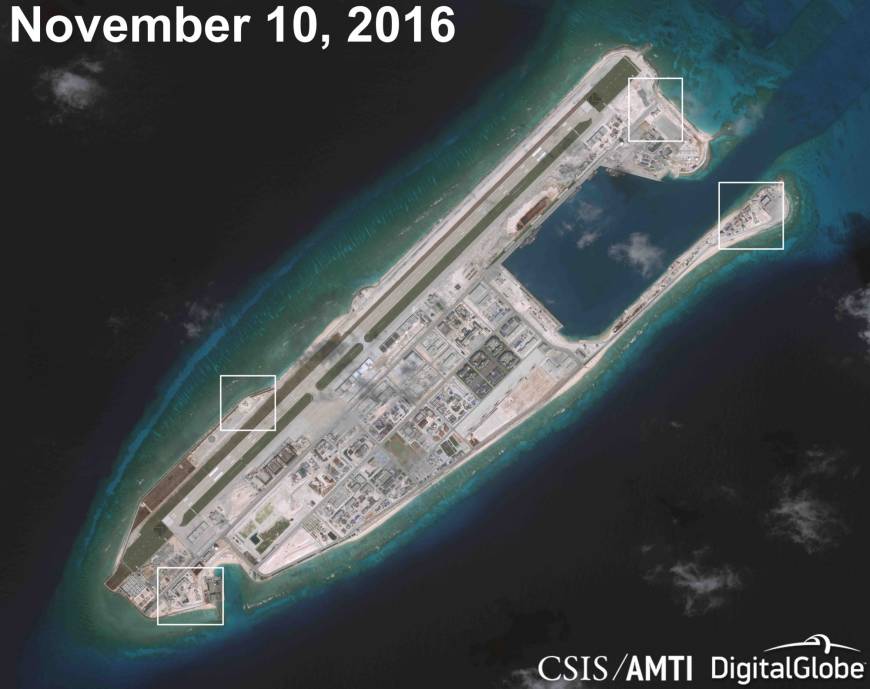
A satellite image shows what appears to be anti-aircraft guns and what are likely to be close-in weapons systems on the artificial island at Fiery Cross Reef in the South China Sea in this image released Dec. 13. | CSIS ASIA MARITIME TRANSPARENCY INITIATIVE / DIGITALGLOBE / VIA REUTERS
Kyodo, Mar 20, 2017
TAIPEI – China has secured the central leadership role in the South China Sea and other players cannot match its military supremacy in the region, according to an internal magazine of the People’s Liberation Army obtained by Kyodo News.
Amid staunch denials by China that it is militarizing the South China Sea, the article amounts to a rare admission by its military of its true intentions in the region. Specifically, it sheds light on the policy of boosting the military influence in the area under the cloak of “civilian activities” such as private aviation. Tiếp tục đọc “Internal Chinese Navy magazine says country has secured military dominance in South China Sea”
Marine Corps to Protect China’s Growing Interest in Asia-Pacific Region
Sputnik © AFP 2017/ STR
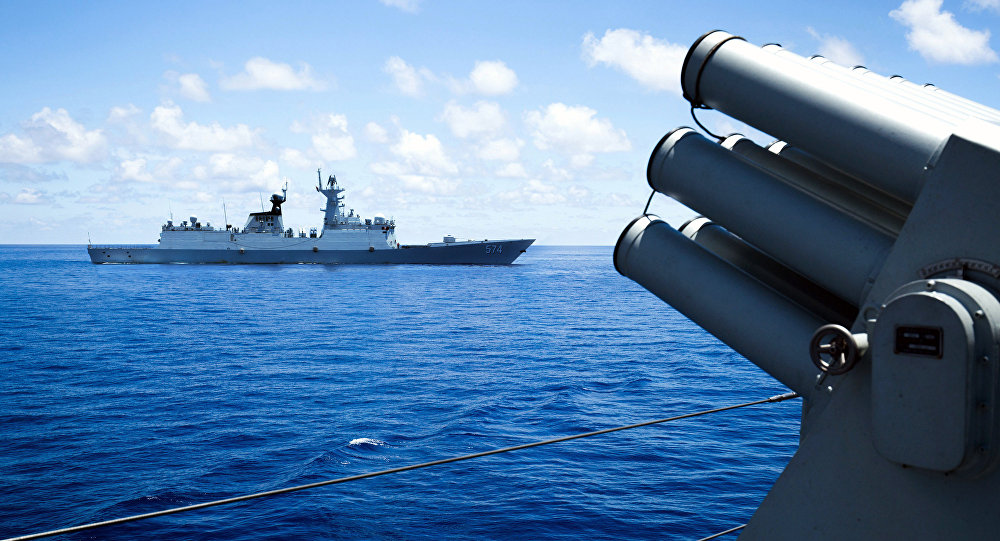
China plans to increase the number of its Marine Corps units from 20,000 to 100,000 in order to protect its vital marine communications and growing interests abroad, according to Hong Kong newspaper South China Morning Post citing military sources and experts.

© REUTERS/ U.S. Navy/Handout
The publication refers to the Chinese logistics base in Djibouti and port of Gwadar in the southwest of Pakistan. The areas of protection of interests also include the Korean Peninsula, the East China and South China Sea, and land and sea territories along the Silk Road, including Afghanistan.The newspaper further noted that the Chinese marine contingent has been nearly doubled to the existing 20,000 by transferring two regular army brigades to their squad. Tiếp tục đọc “Marine Corps to Protect China’s Growing Interest in Asia-Pacific Region”
Chinese weapons, warplanes reaching ‘near-parity’ with West: study

Japan times
AFP-JIJI Feb 15, 2017
LONDON – China is beginning to export its own weapon designs, including armed drones, worldwide and is reaching “near-parity” with the West in terms of military technology, according to a report on Tuesday.
The International Institute for Strategic Studies said that China’s official defence budget of $145 billion (€137 billion) last year was 1.8 times higher than those of South Korea and Japan combined.
It also accounted for more than a third of Asia’s total military spending in 2016, the IISS annual Military Balance report said, adding that spending in Asia grew by 5 to 6 percentage points a year between 2012 and 2016.
Total global military spending instead fell by 0.4 percent in real terms in 2016 compared to 2015, largely due to reductions in the Middle East.
“China’s military progress highlights that Western dominance in the field of advanced weapons systems can no longer be taken for granted,” IISS director John Chipman said at a presentation in London.
continue reading on Japan times
China’s Intelligent Weaponry Gets Smarter

Robert O. Work, the veteran defense official retained as deputy secretary by President Trump, calls them his “A.I. dudes.” The breezy moniker belies their serious task: The dudes have been a kitchen cabinet of sorts, and have advised Mr. Work as he has sought to reshape warfare by bringing artificial intelligence to the battlefield.
Last spring, he asked, “O.K., you guys are the smartest guys in A.I., right?”
No, the dudes told him, “the smartest guys are at Facebook and Google,” Mr. Work recalled in an interview.
Now, increasingly, they’re also in China. The United States no longer has a strategic monopoly on the technology, which is widely seen as the key factor in the next generation of warfare.
The Pentagon’s plan to bring A.I. to the military is taking shape as Chinese researchers assert themselves in the nascent technology field. And that shift is reflected in surprising commercial advances in artificial intelligence among Chinese companies.
 CVD
CVD 