
Is China’s High-Tech ‘Overproduction’ Killing Jobs In The West? | When Titans Clash | Full Episode
Chuyên mục: China – EU relationship
Speech by President von der Leyen on EU-China relations to the Mercator Institute for China Studies and the European Policy Centre
30 March 2023 Brussels, European Commission
Ladies and Gentlemen,
It is a real pleasure to be here at this very special event co-hosted by two of Europe’s most knowledgeable and independent-minded think tanks. In a time when global affairs are becoming harder to decrypt – and in an era where facts are routinely challenged – the work that you do at these think tanks has never been more important for Europe. Because it is only by having a deeper understanding of the world as it really is – not as we may wish it to be – that we can develop better informed policies. This is why I believe think tanks are an essential part of our democracy. In just ten years, MERICS has developed a unique expertise in analysing the political, economic and social trends in China and how these impact Europe and the world. And we must preserve and uphold your right – and that of all think tanks –– to be analytical and to be critical. So I want to express my solidarity with you and all the other individuals and institutions who have been unfairly sanctioned by the Chinese government. I would also like to congratulate the European Policy Centre on its recent 25th anniversary. From the outset, you have been a truly European voice in the world of policy and academia. This spirit is very much in the image of one of your founders, and one of Europe’s most unheralded fathers – Max Kohnstamm. Max Kohnstamm lived through personal trauma and tragedy during World War II. This experience inspired him to dedicate his life to building a united Europe. One question always guided his work: ‘Do we believe that states are forever condemned to remain […] never to trust another state? Or do we believe in the possibility of change, of gradually changing men’s minds and their behaviour?’. This commitment to creating a better understanding between people lives on through Europe’s think-tank community.
Tiếp tục đọc “Speech by President von der Leyen on EU-China relations to the Mercator Institute for China Studies and the European Policy Centre”China Belt and Road dreams fade in Germany’s industrial heartland
Geopolitical tensions derail Duisburg’s hopes of trade bonanza
DUISBURG, Germany — Suad Durakovic, the owner of a truck driving school on the outskirts of the western German city of Duisburg, made it into Chinese newspapers in 2019 by testifying that Beijing’s Belt and Road Initiative had triggered a local logistics industry boom.
Today, his business benefits from a shortage of qualified truckers, but not because of China’s global infrastructure development strategy.
“The Silk Road has not developed for us,” Durakovic told Nikkei Asia. “First it was COVID, then it was the Ukraine war, so the boom is no longer about Silk Road logistics.”
Duisburg, a city of half a million people, is located in Germany’s industrial heartland at the junction of the Rhine and Ruhr rivers. A downturn in the country’s steel and coal industries in the 1990s and early 2000s battered its economy.
But the city found a savior in Chinese President Xi Jinping, who visited Duisburg in 2014 to officially make its inland port Europe’s main Belt and Road hub. While this fueled anticipation of a new heyday, recent events suggest the prospects are dimming.

Much of this stems from the Ukraine war and Germany’s awkward relationship with China.
Chancellor Olaf Scholz was the first European leader to visit Beijing since Xi secured a third term as party leader at the Communist Party Congress in October. But German attitudes have soured recently over China’s cozy relationship with Russia, Taiwan and human rights, as well as its growing trade deficit with the world’s second-biggest economy.
Tiếp tục đọc “China Belt and Road dreams fade in Germany’s industrial heartland”
China is still the ultimate prize that Western banks can’t resist
Analysis by Laura He, CNN Business
Updated 1041 GMT (1841 HKT) January 14, 2022
A version of this story appeared in CNN’s Meanwhile in China newsletter, a three-times-a-week update exploring what you need to know about the country’s rise and how it impacts the world. Sign up here.
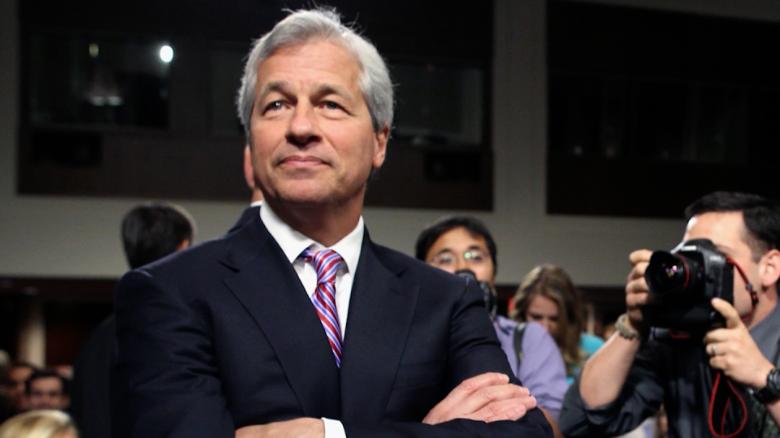
Hong Kong (CNN Business)For many companies, doing business in China is getting trickier by the day. But Western banks and asset managers are more than willing to up their bets on the world’s second biggest economy, convinced that the opportunities remain too good to pass up.Major banks in recent weeks have inked deals to expand their footprint in China — or are otherwise attempting to take greater control of their businesses there — after years of being forced to enter the market via joint ventures. That’s despite fraught geopolitics, a slowing economy and an increasingly hostile environment for private business.Late last month, HSBC (HBCYF) received approval from Chinese regulators to take full control of its life insurance joint venture, which was created in 2009 in equal partnership with a Chinese company under rules that were rolled back in 2020. The bank said the move underscored its “commitment to expanding business in China.”
Tiếp tục đọc “China is still the ultimate prize that Western banks can’t resist”
China keeps scoring its “own goals”
Europe, US should say ‘no’ to China’s ‘wolf-warrior’ diplomacy: EU envoy

FILE PHOTO: An attendant walks past EU and China flags ahead of the EU-China High-level Economic Dialogue at Diaoyutai State Guesthouse in Beijing, China on Jun 25, 2018. (Photo: REUTERS/Jason Lee)
10 Dec 2020 02:50PM(Updated: 10 Dec 2020 02:52PM)
Tiếp tục đọc “Europe, US should say ‘no’ to China’s ‘wolf-warrior’ diplomacy: EU envoy”
China-EU relations: Can the EU have its cake and eat it too?
SCMP Newsletter
The European Union (EU) needs China, given their close economic ties. And China needs the EU, particularly given the sharp escalation of tensions between Beijing and Washington.
But ties are starting to fray given recognition in most European capitals that China’s economic model is not compatible with theirs, that there are security risks from China’s increasingly assertive global outreach, and that China does not place the same value on human rights as they do. Tiếp tục đọc “China-EU relations: Can the EU have its cake and eat it too?”
EU tỉnh giấc
TTCT – Cuộc họp thượng đỉnh trực tuyến hôm 14-9 giữa các lãnh đạo Liên minh châu Âu (EU) và Trung Quốc đã được dư luận châu Âu tóm tắt bằng những câu xoay quanh tính từ “ngờ nghệch”. Tỉ như tựa đề: “Châu Âu vẫn còn quá ngây ngô trong tương quan lực lượng với Trung Quốc” của tờ Huffington Post 14-9. EU đã ngây ngô từ bao giờ, như thế nào, đến đâu, và đã thức tỉnh chưa?
 |
| Quan hệ EU – Trung Quốc đang bước vào giai đoạn nhiều thử thách. Ảnh: scmp.com |
Bài xã luận cùng ngày của tờ Le Monde tái khẳng định nhận xét chua chát trên: “Châu Âu nay phải trả giá cho sự ngây ngô trước Bắc Kinh”. Tờ báo hàng đầu của Pháp giải thích “không son phấn”: “Nhóm 27 nước [tức EU, sau khi Anh đã Brexit] lâu nay mù quáng thèm khát một thị trường khổng lồ, giờ phải rũ bỏ những thỏa hiệp dễ dãi không đi kèm với những điều kiện đủ khắt khe.
Từ giờ châu Âu muốn chấm dứt tình trạng cạnh tranh bất chính của một đối tác mà châu Âu đã ngộ ra rằng cần phải đề cao cảnh giác, và nay sẵn sàng nói ra điều đó”. Tiếp tục đọc “EU tỉnh giấc”
EU, Vietnam to become brothers in arms
AUGUST 1, 2019
Two sides will sign a new defense agreement on August 5, opening the way for stronger strategic cooperation including in the South China Sea

By DAVID HUTT
On August 5, the European Union’s (EU) chief diplomat Federica Mogherini will sign a new defense agreement with Vietnam, the first such security deal Brussels will have with a Southeast Asian nation.
It is the latest indication that the EU is trying to forge a closer defense relationship with the region and Vietnam in particular, which is at the heart of disputes with China in the South China Sea. Tiếp tục đọc “EU, Vietnam to become brothers in arms”
China’s Golden Era in Portugal
thediplomat
Why is this medium-sized southern European country being targeted by Chinese investors?
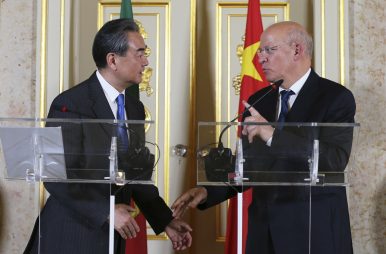
Chinese Foreign Minister Wang Yi looks at his Portuguese counterpart Augusto Santos Silva, right, during a joint news conference following their meeting at Lisbon’s Necessidades Palace, the Portuguese foreign ministry (May 18, 2018). Image Credit: AP Photo/Armando Franca
China set to fully control Portugal’s power grid amid Europe’s inertia
EURACTIV

China is set to make further inroads into European infrastructure, as a state-owned company attempts to gain full control of Portugal’s power grid.
The case could be a game changer when it comes to third country foreign investments in the EU. Currently, the Commission lacks the proper legal framework to “protect” EU common interests and it could be a wake-up call to speed up the procedure to establish an investments screening mechanism. Tiếp tục đọc “China set to fully control Portugal’s power grid amid Europe’s inertia”
Chinese premier offers billions more to Europe
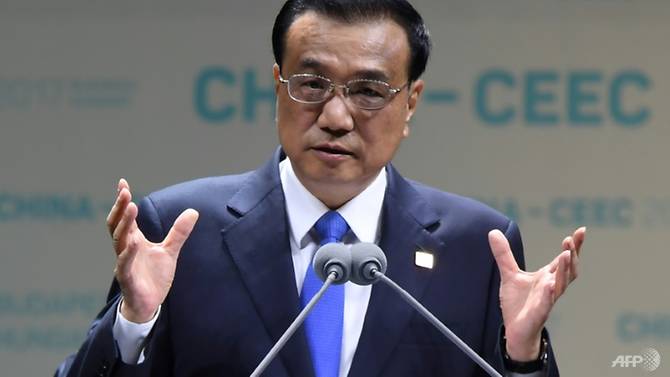
Li said that China’s Development Bank would make available the equivalent of two billion euros (US$2.4 billion) to a new interbank association between the region and China to be inaugurated later in the day. Tiếp tục đọc “Chinese premier offers billions more to Europe”
Whiff of discontent as China bans imports of soft European cheese
Read: Solar industry says EU tariffs on
Chinese imports will raise panel prices
Soft European cheese has fallen on hard times in China. Customs officials have banned a host of soft, mould-ripened cheese for containing “too much bacteria”, with authorities reportedly alarmed the mould contained colonies of bacteria that had not been officially approved.
The ban mainly affects French and Italian cheese, including brie, camembert, gorgonzola and roquefort, as well as the English delicacy stilton. Tiếp tục đọc “Whiff of discontent as China bans imports of soft European cheese”
Solar industry says EU tariffs on Chinese imports will raise panel prices
Read: Whiff of discontent as China bans imports of soft European cheese
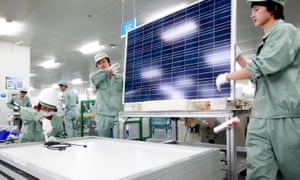
Europe’s solar industry has condemned an EU vote to impose another round of duties on Chinese imports, just weeks before a US trade panel is due to rule on similar tariffs.
A Brussels committee yesterday agreed to set minimum import duties for Chinese solar modules and cells that could price them up to 30% above market levels with “huge negative effects” for the industry, according to trade groups. Tiếp tục đọc “Solar industry says EU tariffs on Chinese imports will raise panel prices”
Lựa chọn của Hy Lạp
Thái Bình Thứ Bảy, 2/9/2017, 08:12 (GMT+7)
 Du khách Trung Quốc trước trụ sở Quốc hội Hy Lạp. Ảnh: NYT
(TBKTSG) – Những đồng tiền đầu tư của Trung Quốc vào Hy Lạp – quốc gia Nam Âu, thành viên của Liên hiệp châu Âu (EU) mấy năm gần đây bị khủng hoảng kinh tế trầm trọng – đã bắt đầu sinh lợi nhuận, không chỉ tính bằng tiền bạc mà cả bằng ảnh hưởng chính trị ngày càng tăng của Bắc Kinh ở Hy Lạp và cả khối EU.
Trong cơn khủng hoảng kéo dài, Hy Lạp phải cầu xin sự trợ giúp của “bộ ba”, gồm EU, Ngân hàng Trung ương châu Âu (ECB) và Quỹ Tiền tệ quốc tế (IMF). Để được vay tiền cứu nguy, Hy Lạp phải thực hiện các biện pháp khắc khổ như tăng thuế, giảm trợ cấp xã hội, giảm biên chế và giảm lương công chức, tư nhân hóa tài sản quốc gia… dù phải đối mặt với làn sóng phẫn nộ của dân chúng. Giữa cảnh khốn quẫn đó, có một bàn tay chìa ra mà Hy Lạp khó mà từ chối: Trung Quốc. Tiếp tục đọc “Lựa chọn của Hy Lạp”
 CVD
CVD 