Policing Beyond Borders: China’s Law-Enforcement Expansion in the Mekong Region

NBR.org September 17, 2025

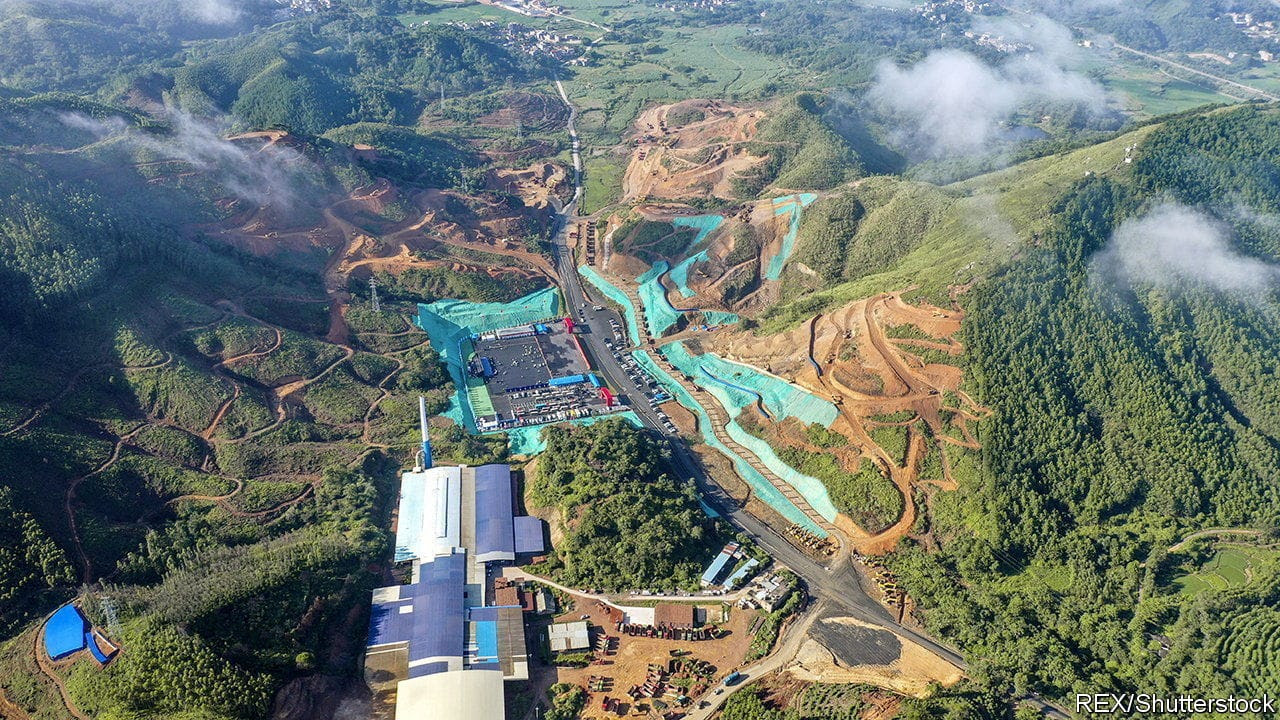
The People’s Republic of China (PRC) faces a mounting challenge from transnational organized crime along its southern periphery. Myanmar has become the world’s most criminalized state, particularly after the 2021 military coup, providing a safe haven for illicit economies ranging from drug, human, and arms trafficking to illegal mining, cybercrime, and financial crimes.1 Other Mekong countries have also emerged as criminal hotspots, with Cambodia hosting around 100,000 trafficked victims in scam centers, according to a UN estimate.2 Sustained by corruption, weak governance, and entrenched Chinese criminal networks, these activities have disproportionately targeted Chinese nationals and thus have been framed as a matter of national security by the party-state.

In response, the PRC Ministry of Public Security (MPS) and other security agencies have intensified law-enforcement efforts in the Mekong region, designated as a “pilot zone” (实验区) for the Global Security Initiative (全球安全倡议). Chinese authorities have increased pressure on their neighbors and multiplied joint operations, resulting in the arrest and deportation of over 55,000 individuals from scam centers in northern Myanmar between August 2023 and April 2025.3 At the same time, Beijing has sought to pursue subregional security mechanisms under its leadership. These include coordinated Mekong river patrols with Laos, Myanmar, and Thailand, which were launched in 2011, and the Lancang-Mekong Law Enforcement and Security Cooperation Center (LM-LECC), a spin-off intergovernmental body established in Yunnan in 2017 within the broader Lancang-Mekong Cooperation framework.

Tiếp tục đọc “Policing Beyond Borders: China’s Law-Enforcement Expansion in the Mekong Region”

Lancang-Mekong countries see positive outcomes from joint anti-crime operation

Langcan-Mekong Coorperation January 29, 2026

Six Lancang-Mekong Cooperation (LMC) countries have achieved fruitful results in combating telecommunication fraud, online gambling, and drugs and human trafficking in 2025.

During the”Safe Lancang-Mekong 2025″ joint operation launched in late February last year, law-enforcement agencies from China, Cambodia, Laos, Myanmar, Thailand and Vietnam cracked down on 8,012 telecommunication fraud and online gambling cases and arrested 14,047 criminal suspects, according to the Lancang-Mekong Integrated Law Enforcement and Security Cooperation Center (LMLECC).

Additionally, 122,503 drug-related cases were busted, leading to the arrest of 139,956 suspects and the seizure of over 82 tonnes of various drugs along with 169.73 tonnes of precursor chemicals.

Law enforcement officers also cracked down on 1,017 human trafficking cases, capturing 718 suspects and rescuing 1,469 victims.

Officials from the LMC countries met Monday and Tuesday in Kunming, capital of southwest China’s Yunnan Province, to exchange experiences and discuss further law enforcement and security cooperation.

All parties agreed to continue joint operations to combat telecommunication fraud, the most serious transnational crime in the Lancang-Mekong region.

Established in 2017 in Kunming, the LMLECC serves as a comprehensive intergovernmental international organization for law enforcement and security cooperation in the Lancang-Mekong River basin.

Exclusive: China-backed militia secures control of new rare earth mines in Myanmar

reuters.com By Naw Betty HanShoon NaingDevjyot GhoshalEleanor Whalley and Napat Wesshasartar

June 12, 20255:48 PM GMT+7Updated 5 days ago

United Wa State Army (UWSA) soldiers march during a media display in Pansang, Wa territory in northeast Myanmar

Item 1 of 4 United Wa State Army (UWSA) soldiers march during a media display in Pansang, Wa territory in northeast Myanmar, October 4, 2016. Picture taken on October 4, 2016. REUTERS/Soe Zeya Tun/File Photo

[1/4]United Wa State Army (UWSA) soldiers march during a media display in Pansang, Wa territory in northeast Myanmar, October 4, 2016. Picture taken on October 4, 2016. REUTERS/Soe Zeya Tun/File Photo Purchase Licensing Rights, opens new tab

  • Summary
  • Beijing-backed UWSA protecting new rare earth mines in Shan state, sources say
  • Mines being run by Chinese-speaking operators
  • China relies on Myanmar for rare earth imports but had recently faced some supply challenges
  • Rare earths offer Beijing leverage in trade war with Washington

BANGKOK, June 12 (Reuters) – A Chinese-backed militia is protecting new rare earth mines in eastern Myanmar, according to four people familiar with the matter, as Beijing moves to secure control of the minerals it is wielding as a bargaining chip in its trade war with Washington.

China has a near-monopoly over the processing of heavy rare earths into magnets that power critical goods like wind turbines, medical devices and electric vehicles. But Beijing is heavily reliant on Myanmar for the rare earth metals and oxides needed to produce them: the war-torn country was the source of nearly half those imports in the first four months of this year, Chinese customs data show.

Tiếp tục đọc “Exclusive: China-backed militia secures control of new rare earth mines in Myanmar”

Impact of Trump 2.0 on Southeast Asia’s Energy Geopolitics

Fulcrum.sg Published 3 Mar 2025 Mirza Sadaqat Huda

Trump’s rent-seeking foreign policy pertaining to energy and critical minerals will force Southeast Asian countries to do what they least desire: making a choice between China and the US.

The Trump administration’s insular and rent-seeking foreign policy will significantly alter the geopolitics of energy transition in Southeast Asia. This will manifest in two ways. First, the potential cessation of US involvement in the region’s energy sector will heighten fears of China’s dominance in energy infrastructure projects — including the ASEAN Power Grid (APG). Second, Trump’s intentions of using critical minerals as a bargaining chip for providing military assistance, if applied to the ASEAN region, will impact the regional vision for sustainable mineral development.

The shutting down of the United States Agency for International Development (USAID), an important player in the energy sector, will intensify existing fears of China’s dominance in electricity transmission and generation. As shown in Table 1, China provided approximately US$534 million in aid to the region’s energy sector in 2022, accounting for more than a quarter of the total share. Comparatively, the US provided only US$23.7 million, or 1 per cent of total energy-related aid to Southeast Asia. In addition, the China Southern Power Grid Company and State Grid Corporation of China own and operate significant portions of the national grids in Laos and the Philippines, respectively.

China Leads in Energy Aid

Table 1 Energy-related aid to Southeast Asia 2022 (excerpt) (USD, in %)

Donor Amount Contribution
China 534 million 26
ADB 368 million 18
Germany 274 million 13
Canada 231 million 11
South Korea 211 million 10
Japan 167 million 8
World Bank 90.0 million 4
EU Institutions 42.3 million 2
France 42.2 million 2
AIIB 34.8 million 2
United States 23.7 million 1

The table is modified from Lowy Institute’s (2024) Southeast Asia Aid Map.

Tiếp tục đọc “Impact of Trump 2.0 on Southeast Asia’s Energy Geopolitics”

The Rise of Chinese Capital: Impact on ASEAN’s Manufacturing Landscape

vietnam-briefing.com November 21, 2023

Amid evolving dynamics in Asia’s supply chain and labor markets, extensive discussions have unfolded regarding the notable shift of manufacturing operations to Southeast Asian countries. While much of this discourse has traditionally centered around foreign companies relocating from China in pursuit of cost-effective alternatives, a compelling aspect often overlooked is the surge in such endeavors by Chinese corporations themselves.

Driven in part by rising domestic wages and operational costs, Chinese companies have increasingly directed their investments towards the manufacturing sector in ASEAN countries. What was once a less pronounced trend has rapidly transformed, reflecting a strategic recalibration of Chinese business interests and a major shift in where the majority of global manufacturing takes place.

The significance of Chinese investment in ASEAN’s manufacturing landscape is underscored by the fact that China holds the position of ASEAN’s largest trade partner, and is fast becoming one of the most important sources of investment in the region.

Tiếp tục đọc “The Rise of Chinese Capital: Impact on ASEAN’s Manufacturing Landscape”

China’s New $6B Railway in Laos: Massive Debt Trap or Megaproject Success?

A $6 billion Chinese-built railway in Laos is transforming a small town on the border of China, easing transportation and promising new products for export. The 262-mile rail line is a key part of China’s Belt and Road Initiative, aimed at upgrading trade and transport networks from Africa to the Pacific. China is looking to link its companies with new overseas markets while Laos has hopes of growing a robust export market. But what are the costs of developing this massive infrastructure? WSJ explores the ambition behind China’s envisioned rail network, the economic implications for Laos and challenges as other railways eye development.

China dams make ‘upstream superpower’ presence felt in Asia

asiaa.nikkei.com PAK YIU JULY 24, 2023

Enormous water diversion projects spark concern across region

A large cloud of dust

Description automatically generated

Water is released from the Xiaolangdi Reservoir Dam on the Yellow River in a sand-discharging operation. July 2022, Luoyang, China. (Footage via Getty Images)

Drought in China dried up parts of the Yangtze river last year – but the largest water transfer apparatus ever built still drew from it to supply Beijing’s needs. 

More than a billion cubic meters flowed through the colossal South-to-North Water Diversion Project in 2022. It traveled from a reservoir in central China to millions of households in the capital 1,200 kilometers away. The journey, via underground tunnels and canals that cross the Yellow River, roughly equaled the distance between Amsterdam and Rome.

The movement highlights the scale of China’s measures to shore up water security – and the profound potential effects these have on neighboring countries.

Many of Asia’s transboundary rivers originate in the Indo-Tibetan plateau in China. They flow into 18 downstream nations such as India, Kazakhstan, Bangladesh and Vietnam, delivering water to a quarter of the world’s population.


That alone makes the world’s second most populous nation an upstream superpower with enormous influence over irrigation of much of the continent. Projects such as building dams and hydropower plants potentially fuel existing regional political tensions – and create new ones.

Tiếp tục đọc “China dams make ‘upstream superpower’ presence felt in Asia”

China has plans for grand canals

economist.com

The building scheme is part of an effort to become a “transportation power”

Mandatory Credit: Photo by Xinhua/Shutterstock (13331262b)Aerial photo taken on Aug. 28, 2022 shows a construction site of the Pinglu Canal project in Lingshan County, south China's Guangxi Zhuang Autonomous Region. The construction of the Pinglu Canal project officially kicked off on Sunday. The canal, stretching about 135 km, aims to link Xijiang River with ports in the Beibu Gulf. Upon completion, the canal, starting from the Xijin reservoir in city of Hengzhou and ending at Luwu Town of Lingshan County, where ships could reach the Beibu Gulf via the Qinjiang River, will open a shorter route to the sea for Guangxi and other regions in southwest China.China Guangxi Pinglu Canal Project Construction - 28 Aug 2022

Sep 15th 2022Share

These are good times for local officials who want to build expensive infrastructure. To revive a flagging economy, battered by draconian pandemic-control measures, the central government is giving them freer rein. The southern province of Guangxi has a project that fits the bill: a canal costing $10.5bn that will link its main river system to the sea. It will involve a spree of demolition, digging, dredging and building over the next four and a half years. Mulled over for more than a century, the project began last month.

Tiếp tục đọc “China has plans for grand canals”

RCEP- Regional Comprehensive Economic Partnership  – a boon or a bust for sustainable trade?

gtreview.com ASIA / 18-04-23 / BY ELEANOR WRAGG

As the Regional Comprehensive Economic Partnership (RCEP) machine whirrs into life and trade flows within the bloc increase, could its paucity of explicit ESG provisions lead to a lowering of sustainability ambitions for trade? Eleanor Wragg reports.

Just over a year has passed since RCEP, the world’s largest trade agreement, came into force. Covering a third of the world’s population and linking together least developed countries (LDCs) such as Laos, Cambodia and Myanmar to wealthier nations like Australia, China, South Korea and Japan, the deal promises to inject new impetus into regional integration and cement the position of ‘Factory Asia’ at the centre of the world’s supply chains.

The well-documented linkages between trade liberalisation and increased productivity, wages and employment could help some of RCEP’s poorest countries inch closer to achieving United Nations Sustainable Development Goals (SDGs) 1 – no poverty, and 8 – decent work and economic growth.

However, unlike most recent preferential trade pacts, RCEP does not contain provisions on topics such as the environment or labour rights, raising questions about the extent to which it balances economic interest with social and environmental protections.

A shot in the arm for Asian trade

Thrashed out over eight long years of painstaking negotiations between the 10 Asean member states, Australia, China, Japan, New Zealand, South Korea as well as India – which walked away from talks before they were finalised – RCEP streamlines the tangled web of bilateral trade agreements among its signatories into a bumper megadeal that spans 510 pages of agreement text and thousands upon thousands of pages of associated schedules.

Tiếp tục đọc “RCEP- Regional Comprehensive Economic Partnership  – a boon or a bust for sustainable trade?”

“The Mekong is Dying”: How China’s River Diplomacy Neglects Locals, Exacerbates Climate Change

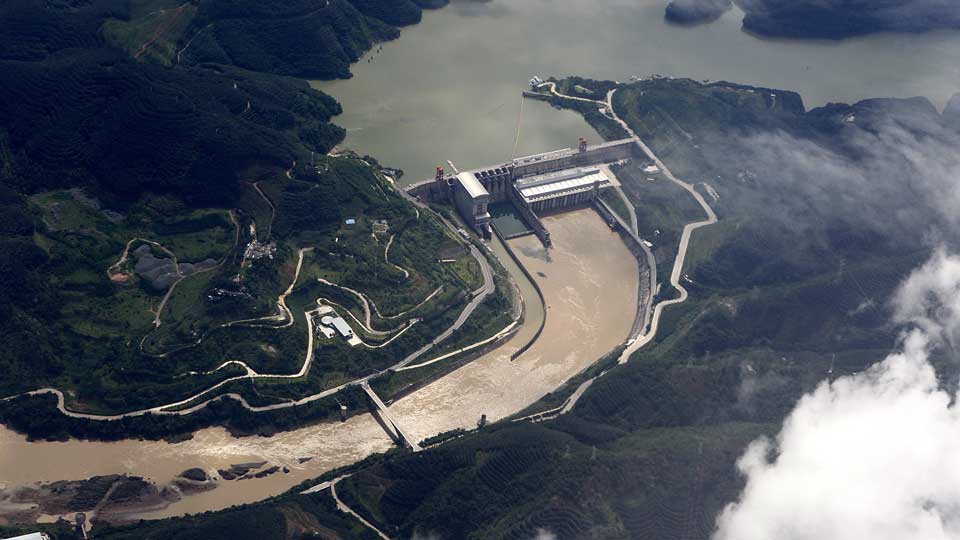
File image of the aerial view of the Jinghong Hydropower Station on the Lancang River, the Chinese part of the Mekong River, in Jinghong city, Xishuangbanna Dai Autonomous Prefecture, southwest China’s Yunnan province. Imaginechina Limited / Alamy Stock Photo

Chinaglobalsouth.com

The rainy season would usually start in May, but this was late June and it was still not raining much. Niwat Roykaew, who grew up on the bank of the Mekong River in Thailand’s northern Chiang Rai province, noticed. 

Born and raised in the Chiang Khong district, Roykaew, 63, was taught to observe the Mekong River to tell the season. But, in the past two decades, the river has become unpredictable like it has “pulsated out of tune”.

Niwat Roykaew is a Thai activist who campaigns for China to share data about water restrictions by its dams upstream.

“The water would get high for two days, then on the third day it would suddenly drop, even during the rainy season,” said Roykaew. 

Local residents like him knew that this delay could mean another year of drought. Since at least 2019, that’s what has happened: the monsoon rain is late, and when it comes, it departs early.

The Mekong River’s water levels in the lower basin, including in Thailand, are now very unstable, being heavily affected both by climate change and hydropower dams upstream that are mostly powered by China, according to local residents, activists, and experts.

Tiếp tục đọc ““The Mekong is Dying”: How China’s River Diplomacy Neglects Locals, Exacerbates Climate Change”

Road to nowhere:China’s Belt and Road Initiative at tipping point

Pakistan, Sri Lanka debt crises threaten Beijing’s regional influence

asia.nikkei.com

By Adnan Aamir, Marwaan Macan-Markar, Shaun Turton and Cissy Zhou – AUGUST 10, 2022

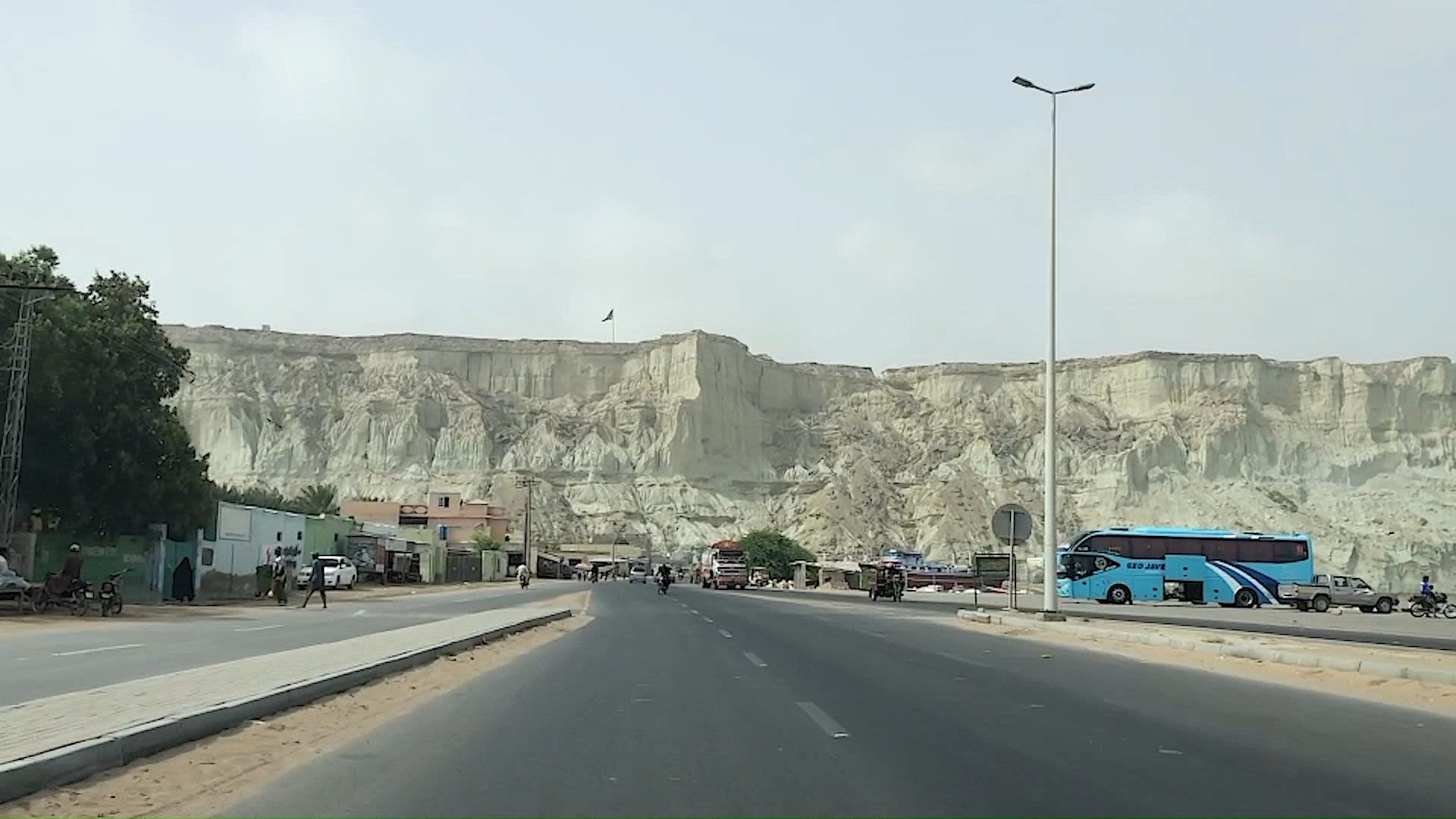
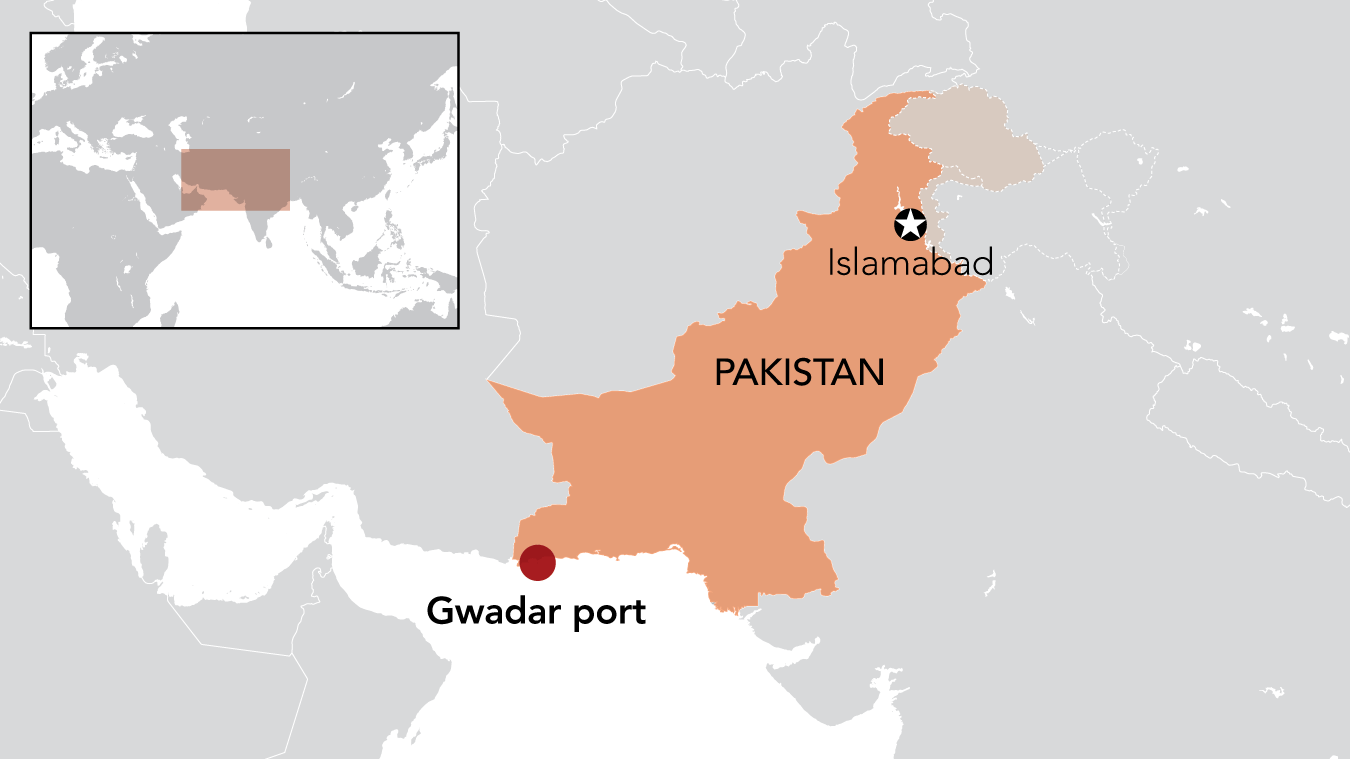
The drive to Pakistan’s port of Gwadar takes seven and a half hours from Karachi via the Makran coastal highway. Much of the 600-km route is deserted, with no restaurants, restrooms or even fuel stations. On a recent journey, around 200 vehicles in total could be counted during the entire drive.

Arriving in the city on Pakistan’s Indian Ocean coast, Chinese and Pakistani flags are ubiquitous, and Chinese-financed construction projects loom, but the city is spookily devoid of economic activity. Near the seafront, broad avenues are curiously empty of vehicles. Inside the city center, the roads are narrow, congested and covered with foul smelling drain water, with few multistory buildings aside from the Chinese-built port compound. 

It is hard to visualize Gwadar as the launch pad of a new global paradigm, but that is what Beijing would have the world believe.

Nine years ago it was plucked out of obscurity —  a backwater in Pakistan’s restive Balochistan region — and presented as China’s commercial window onto the Indian Ocean, a hub for regional integration under the Belt and Road Initiative, which was to harness the juggernaut of the Chinese economy to the goal of Asian economic development. 
 

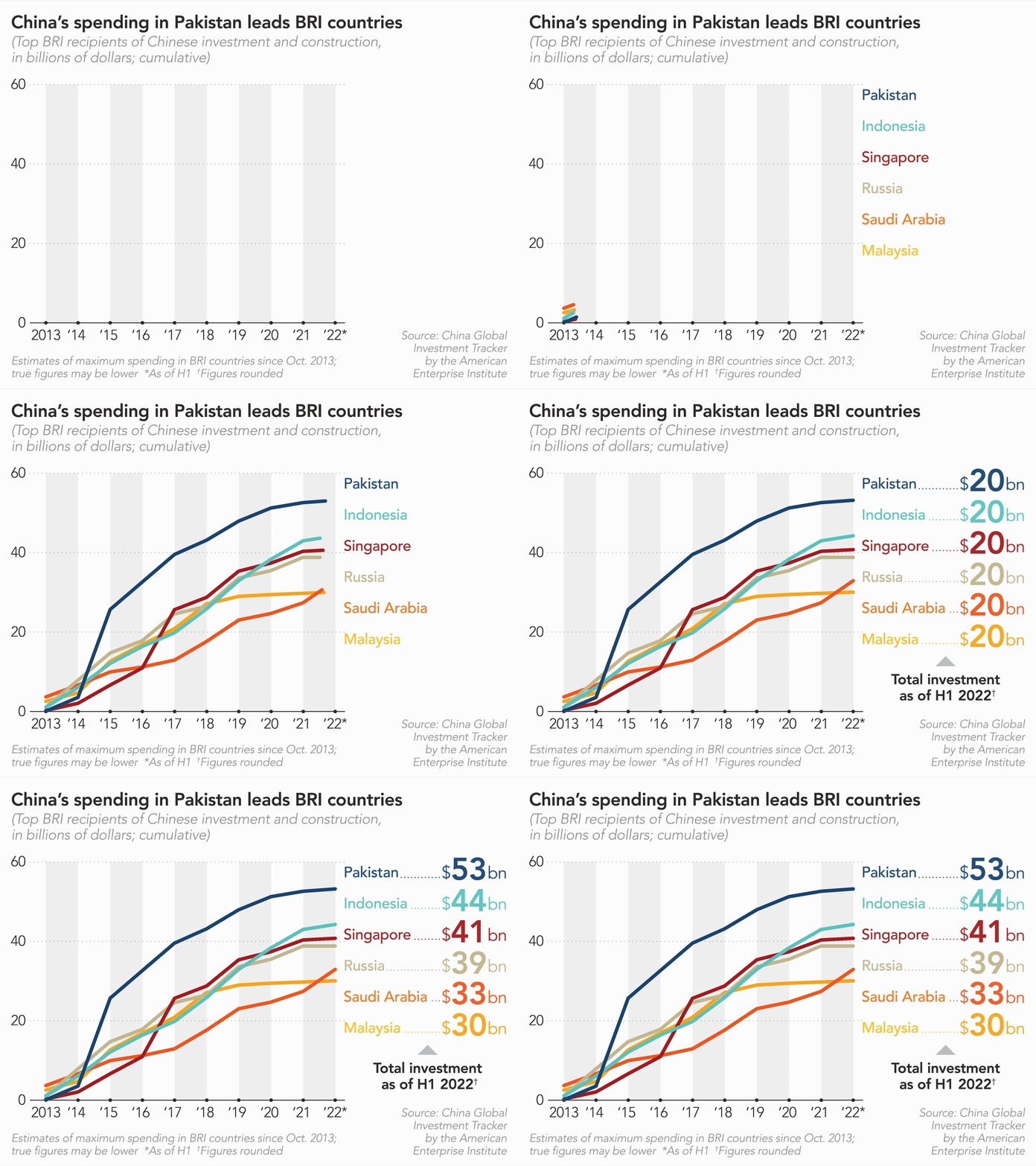
The BRI is an audacious program of lending, aid and infrastructure contracts totaling over $880 billion, according to the American Enterprise Institute.

The initiative, which includes pledges to 149 countries, aims to promote Chinese-led regional integration — and sow economic dependence on Beijing.

First announced in a speech by Chinese President Xi Jinping in 2013 as the “Silk Road,” the BRI was fleshed out in April 2015 with the announcement of the China-Pakistan Economic Corridor (CPEC), stretching from Gwadar to the Chinese city of Kashgar, in Xinjiang. The CPEC showcased the China-Pakistan “all-weather friendship” with $46 billion in pledged funds that has since grown to $50 billion. It was to be the backbone of the now renamed Belt and Road Initiative.

Tiếp tục đọc “Road to nowhere:China’s Belt and Road Initiative at tipping point”

Southeast Asians sticking with China on Taiwan: survey

asiatimesDemocracy Perception Index survey shows most Southeast Asians would not support cutting economic ties with China if it invades Taiwan

By DAVID HUTTJUNE 1, 2022Print

Military helicopters carrying large Taiwan flags do a flyby rehearsal on October 5, 2021, ahead of National Day celebrations amid escalating tensions between Taipei and Beijing. Photo: AFP / Ceng Shou Yi / NurPhoto

A recent Democracy Perception Index survey of worldwide public opinion found that a majority of Southeast Asians would not support their governments cutting economic ties with China if Beijing launched an invasion of Taiwan. 

The same report found that only Singaporeans, from the six Southeast Asian countries surveyed, favored cutting economic ties with Russia because of its invasion of Ukraine in February. Indonesians and Vietnamese were two of the three nationalities who believed most strongly that ties with Russia should be maintained.  

The Democracy Perception Index 2022 survey, published this month by Latana and the Alliance of Democracies Foundation, asked respondents: “If China started a military invasion of Taiwan, do you think your country should cut economic ties with China?” 

Tiếp tục đọc “Southeast Asians sticking with China on Taiwan: survey”

2022 State of Southeast Asia Survey: Diverse Perspectives and Hard Realities

fulcrum.sg

PUBLISHED 16 FEB 2022

TERENCE CHONG

The US has gained ground against China in the contest for regional influence in Southeast Asia, according to the latest State of Southeast Asia Survey. ASEAN continues to be seen as ineffective in the eyes of respondents; at the same time, they are willing to give it credit when it is due.

The United States is gaining significant ground against China in the battle to win friends and influence countries, with respondents across Southeast Asia confident that Washington would be able to lead on issues such as championing free trade and upholding the rules-based regional order. 

A fresh reading of The State of Southeast Asia Survey also showed that pressing issues — the Covid-19 pandemic, unemployment and economic retraction as well as climate change – continue to be prioritised by respondents. In their view, however, ASEAN is seen as too slow and ineffective to cope with rapid developments.

Tiếp tục đọc “2022 State of Southeast Asia Survey: Diverse Perspectives and Hard Realities”

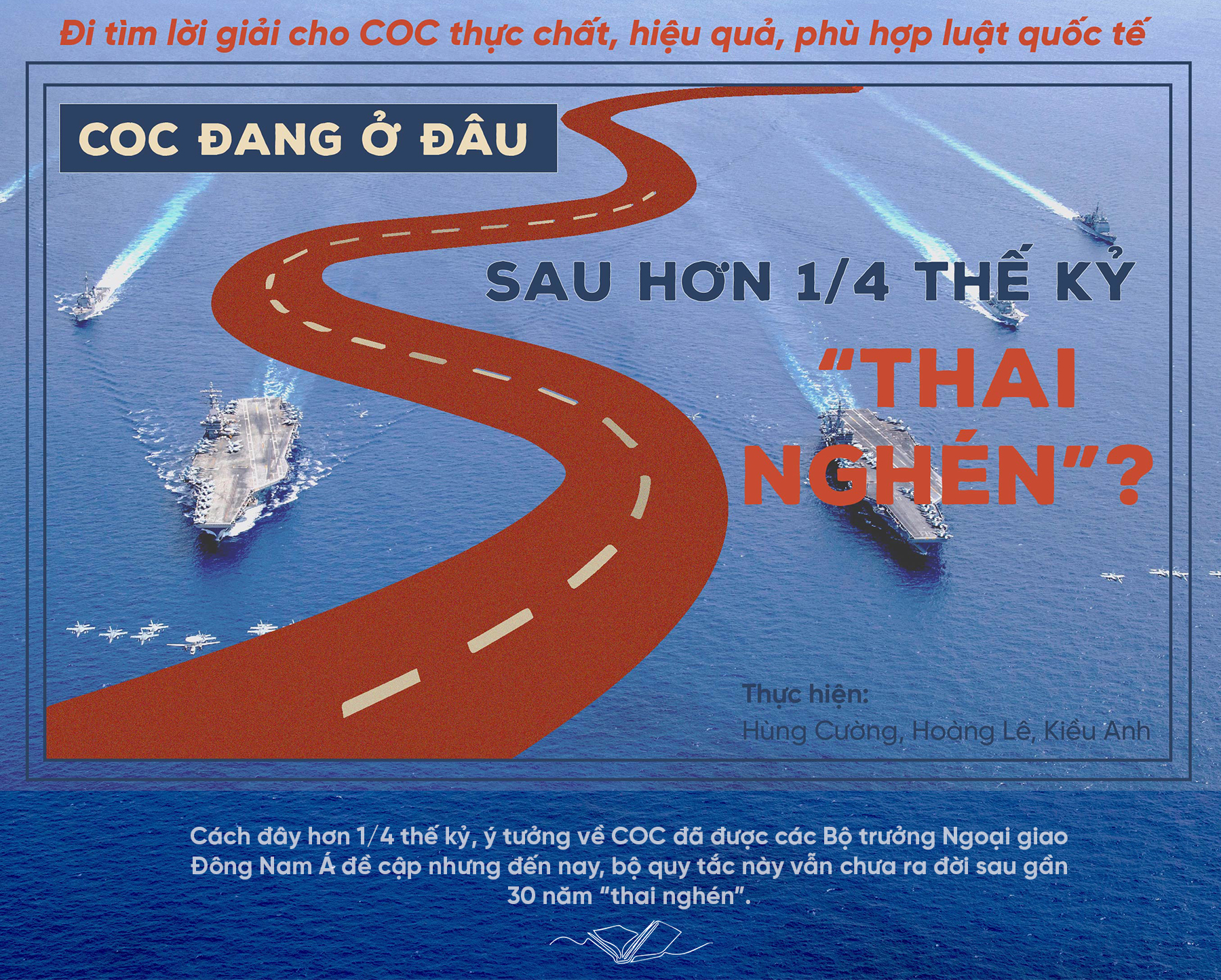
COC đang ở đâu sau 1/4 thế kỷ “thai nghén”?

VOV – 25/01/2022 – 11:57

Cách đây hơn 1/4 thế kỷ, ý tưởng về  COC đã được các Bộ trưởng Ngoại giao Đông Nam Á đề cập nhưng cho đến nay, bộ quy tắc này vẫn chưa ra đời sau gần 30 năm “thai nghén”

Khi các tranh chấp là vấn đề nổi cộm ở Biển Đông, có rất nhiều ví dụ về các thỏa thuận quản lý nghề cá, khai thác dầu khí… có thể giúp ích cho các cuộc đàm phán về xây dựng Bộ Quy tắc ứng xử ở Biển Đông (COC) giữa Trung Quốc và các nước Đông Nam Á. Nhưng câu hỏi cơ bản là liệu Bắc Kinh đã sẵn sàng đưa ra bất kỳ nhượng bộ thiện chí nào để đạt được thỏa thuận như vậy hay chưa? Suốt hơn 20 năm qua, câu trả lời chỉ là không.

Tiếp tục đọc “COC đang ở đâu sau 1/4 thế kỷ “thai nghén”?”