CSIS – AMTI Brief – March 31, 2016

 
Developing a Scarborough Contingency Plan
by Gregory Poling and Zack Cooper

U.S. chief of naval operations Admiral John Richardson told Reuters on March 19 that the United States was monitoring increased Chinese activity around Scarborough Shoal. He warned, “I think we see some surface ship activity … survey type of activity … That’s an area of concern … a next possible area of reclamation.” Tiếp tục đọc “CSIS – AMTI Brief – March 31, 2016”

CSIS Southeast Asia Sit-Rep – March 24, 2016

CSIS Southeast Asia SIT-REP

This issue includes a survey of Japan’s energized agenda in Southeast Asia, and analyses on Indonesia’s turning point in its South China Sea policy, prospects for Myanmar’s peace process under the new government, and the reemerging debate on reviving a quadrilateral strategic dialogue between Australia, India, Japan, and the United States. Links will take you to the full publications, multimedia, or to registration for upcoming programs when available. To jump to a section, select one of the following:

Tiếp tục đọc “CSIS Southeast Asia Sit-Rep – March 24, 2016”

Giàn khoan Trung Quốc cắm trong khu vực chồng lấn

10:14 AM – 28/03/2016 TN

Một giàn khoan dầu khí của Trung Quốc - Ảnh: Reuters

Một giàn khoan dầu khí của Trung Quốc – Ảnh: Reuters

Cục Hải sự Trung Quốc vừa ra thông báo cho biết giàn khoan Hải Dương-943 của nước này sẽ hoạt động tại giếng LD 11-1-1, ở vị trí có tọa độ 17°47’28,8’’ vĩ bắc/108°46’00’’ kinh đông, từ 25.3 – 31.7.

Cách TP.Tam Á ở đảo Hải Nam 50 hải lý về phía tây nam, vị trí này nằm trong khu vực chồng lấn chưa được phân định giữa VN và Trung Quốc ở ngoài cửa vịnh Bắc bộ. Thông báo trên website của MSA yêu cầu tàu bè giữ khoảng cách an toàn 1 hải lý khi qua lại xung quanh vị trí nói trên. Tiếp tục đọc “Giàn khoan Trung Quốc cắm trong khu vực chồng lấn”

Tàu cá TQ ồ ạt xuống biển Đông: Indonesia, Malaysia bất bình

27/03/2016 15:22 GMT+7

TTOViệc Malaysia phát hiện gần 100 tàu cá Trung Quốc xâm phạm vùng biển của nước này và phía Indonesia bắt tàu cá Trung Quốc xâm phạm lãnh hải cho thấy nguy cơ mới trong khu vực từ kiểu hành xử nước lớn của Bắc Kinh.

Tàu cá TQ ồ ạt xuống biển Đông: Indonesia, Malaysia bất bình
Chiếc tàu cá Lu Yan Yuan Yu 010 của Trung Quốc bị tuần duyên Argentina đánh chìm hồi giữa tháng 3-2016 vì đánh bắt cá trái phép trong vùng biển của Argentina – Ảnh: AFP

Bộ trưởng An ninh Malaysia Shahidan Kassim ngày 25-3 cho biết chính quyền nước này đã điều lực lượng Cơ quan thực thi hàng hải và hải quân đến khu vực để giám sát tình hình sau khi lực lượng tuần tra bờ biển nước này xác nhận phát hiện gần 100 tàu cá Trung Quốc tại bãi Luconia của Malaysia. Tiếp tục đọc “Tàu cá TQ ồ ạt xuống biển Đông: Indonesia, Malaysia bất bình”

Nonproliferation and Nuclear Energy: The Case of Vietnam

Is Vietnam diverting its civilian know-how to create an indigenous nuclear weapons program? Not yet, says the CSS’ Oliver Thränert, but increased tensions or overt conflict with China could lead Hanoi to develop its own nuclear deterrent.

By Oliver Thränert for Center for Security Studies (CSS)

ISN – For many years, the international nuclear non-proliferation regime has been in deep crisis. This became apparent most recently when the ninth Review Conference of the Parties to the Treaty on the Non-Proliferation of Nuclear Weapons (NPT) in May 2015 ended without a common final document. At the same time, a number of threshold countries are planning to begin using nuclear energy for peaceful purposes. In a time of increasing international tensions, some of them might build on know-how acquired through their civilian programs to safeguard their national security needs through a nuclear weapons program in the near future. Vietnam is an interesting case in point. Irrespective of certain delays in the development of its peaceful nuclear program, the country has progressed quite far. At the same time, it is engaged in an increasingly precarious conflict with its main neighbor, nuclear-armed China. Currently, there are no signs of a Vietnamese nuclear weapons program. In the framework of the nuclear non-proliferation regime, the country is a model of transparency and cooperation. But it is uncertain whether this will always remain the case. On the contrary, Hanoi might change its policy if the conflict with China should come to a head while the NPT continues to be weakened.

Vietnam’s strategic situation

Vietnam might complete its first nuclear reactor within a few years, ahead of ambitious neighbors such as Indonesia or Malaysia. The country’s main motivations are its growing energy requirements and the desire to diversify its energy sources. Considerations of prestige may also be a factor. As a threshold nation, Vietnam aims to achieve the same level as Asia’s developed nations. With a view to China, Hanoi probably also wishes to demonstrate the high level of global confidence that the country enjoys in sensitive matters of security policy. Tiếp tục đọc “Nonproliferation and Nuclear Energy: The Case of Vietnam”

Indonesia hopes to maintain good relations with China

Good relations: Foreign Minister Retno Marsudi speaks to journalists at the Foreign Ministry. She said Indonesia would strive to maintain its good relations with China, along with upholding international law, despite a recent fishing dispute. (thejakartapost.com)

Good relations: Foreign Minister Retno Marsudi speaks to journalists at the Foreign Ministry. She said Indonesia would strive to maintain its good relations with China, along with upholding international law, despite a recent fishing dispute. (thejakartapost.com)

Foreign Minister Retno Marsudi has said Indonesia wants to maintain good relations with China despite a recent fishing dispute.

“We have a good relationship with China. [Despite the fishing dispute] we will strive to maintain our good relations along with international laws,” Retno said at the State Palace on Monday. Tiếp tục đọc “Indonesia hopes to maintain good relations with China”

CSIS: Asia Maritime Transparency Initiative, March 22, 2016

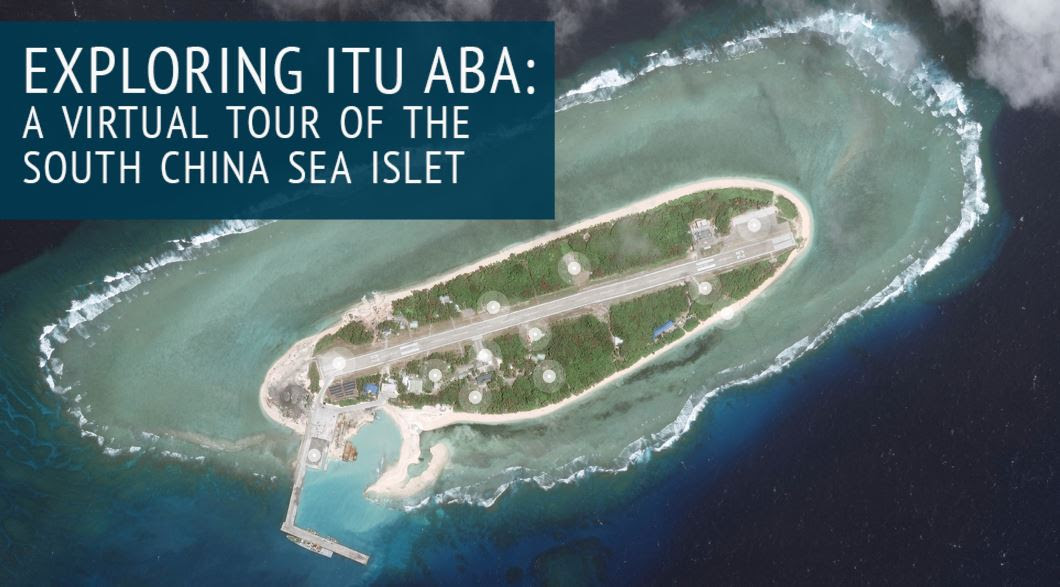
Exploring Itu Aba: A Virtual Tour of a South China Sea Islet

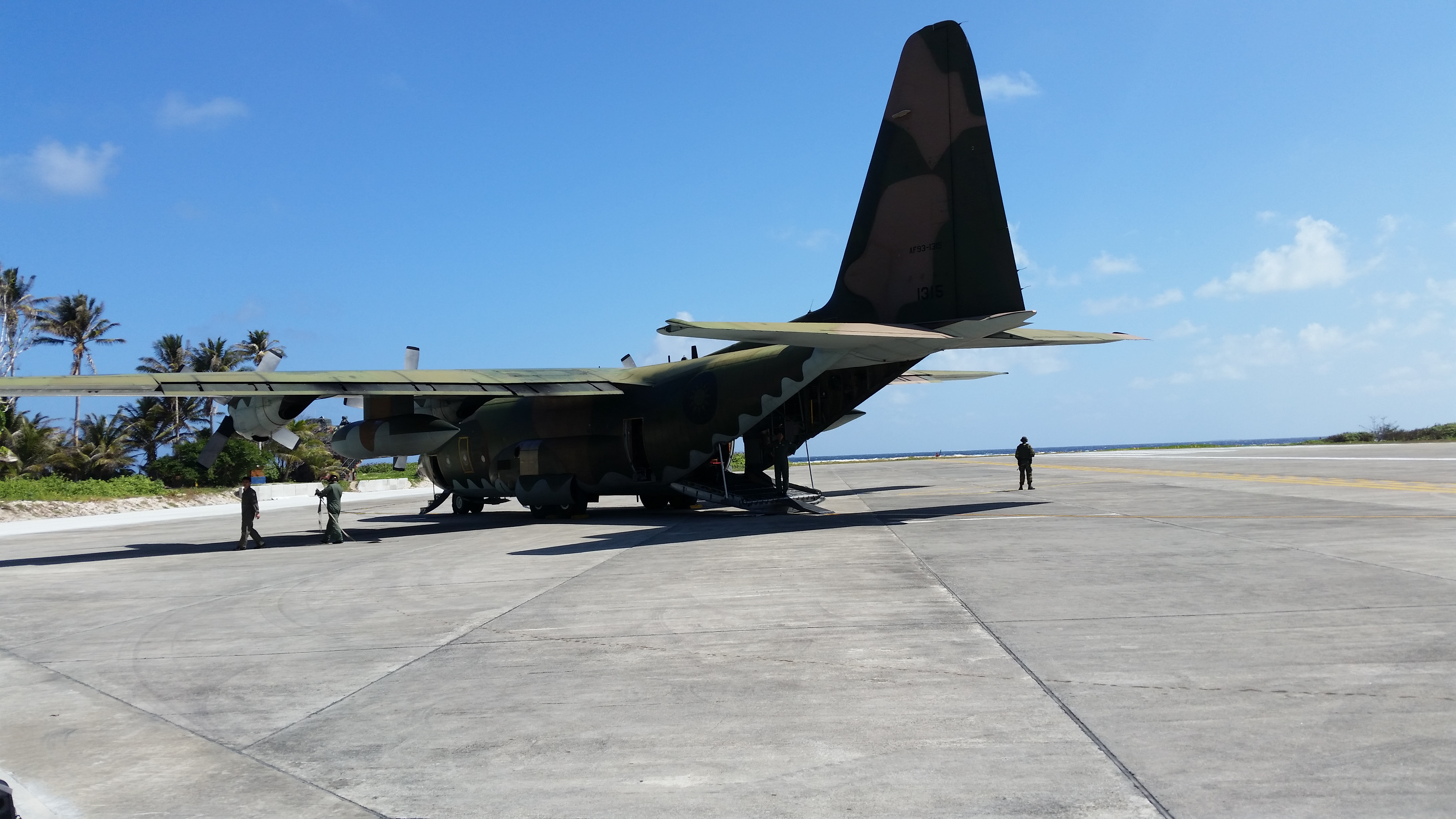
On January 23, AMTI Director Gregory Poling and Ambassador José Abeto Zaide, now with the Manila Bulletin, became the first foreigners to visit Itu Aba (Taiping Dao in Chinese)—the only feature in the Spratly Islands occupied by Taiwan. They accompanied a delegation of Taiwanese experts and officials, including the ministers of foreign affairs, mainland affairs, and environmental protection. President Ma Ying-jeou made his first visit to the island five days later. Using the graphic below, you can explore each location the group visited. And even more images and video follow.

Itu Aba has a lot of attention lately thanks to its inclusion in Manila’s arbitration case against Beijing’s South China Sea claims. The Philippines’ legal team has argued that Itu Aba cannot sustain human habitation and is therefore legally a “rock,” entitled to only a 12-nautical-mile territorial sea, and not an “island,” which would generate an exclusive economic zone and continental shelf. Manila believes that if Itu Aba—the largest naturally formed feature in the Spratly Islands—is not an island, then none of the Spratlys are. Taipei has insisted Itu Aba is an island, and the debate has focused on details such as the availability of drinkable water and arable soil.

For more on the debate, listen to recent AMTI podcasts with Paul Reichler, lead counsel for the Philippines, and Shen Lyu-Shun, Taiwan’s representative to the United States, or read “Is There Drinkable Water and Topsoil on Itu Aba?” by Yann-huei Song.

Read on…

  Tiếp tục đọc “CSIS: Asia Maritime Transparency Initiative, March 22, 2016”

Will Indonesia, Provoked, Now Choose to Lead on the South China Sea?

CSIS

A confrontation between Indonesian and Chinese law enforcement vessels in the South China Sea over the weekend could mark a turning point in Indonesian foreign policy under President Joko “Jokowi” Widodo, forcing him to choose between two of his top priorities: attracting foreign investment – particularly Chinese investment – to fund his ambitious infrastructure agenda; and a more assertive defense of Indonesian territorial integrity and sovereignty over its natural resources. That, in turn, could herald a significant shift in diplomacy over the South China Sea. Tiếp tục đọc “Will Indonesia, Provoked, Now Choose to Lead on the South China Sea?”

Japan: How Energy Security Shapes Foreign Policy

thediplomat_Five years after the nuclear meltdown at Fukushima, public debates over nuclear power are still having an impact on Japan’s energy mix — and that, in turn, helps shape Japanese foreign policy. The Diplomat speaks with Jane Nakano, a senior fellow in the Energy and National Security Program at the Center for Strategic and International Studies, about the connection between Japan’s energy security concerns and its foreign policy decision making.

The Diplomat: What effect do you think the indictment and impeding trial of the three former TEPCO executives will have on the public debate in Japan over the future of nuclear energy? What other energy options does Japan have?

Nakano: The current public apprehension over, or opposition to, nuclear power generation in Japan seems to stem from their loss of trust in nuclear safety and governance. It is unclear as to what extent the indictment of TEPCO officials five years later may serve to restore the public confidence in nuclear safety and governance.

Diversification will remain to be the key in enhancing Japan’s sense of energy security.  As fossil fuels will remain important in Japan, as in most of the industrialized economies around the world, Japan is focused on using natural gas—which is the cleanest type of fossil fuels—and advancing clean coal technologies while promoting the greater use of wind and solar.

How dependent is Japan on oil imports from the Middle East, and how does this shape Japan’s foreign policy approach to the region? Tiếp tục đọc “Japan: How Energy Security Shapes Foreign Policy”

Exclusive: U.S. sees new Chinese activity around South China Sea shoal

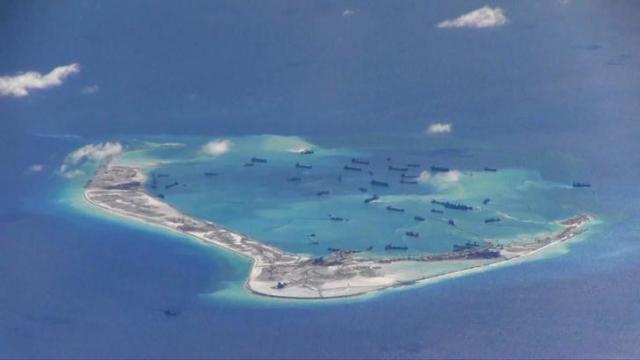
Chinese dredging vessels are purportedly seen in the waters around Mischief Reef in the disputed Spratly Islands in the South China Sea in this still image from video taken by a P-8A Poseidon surveillance aircraft provided by the United States Navy May 21, 2015. REUTERS/U.S. Navy/Handout via Reuters

The U.S. just sent a carrier strike group to confront China

51760 397 LINKEDIN 390 COMMENTMORE

This article first appeared March 3 at 4:15 p.m. and has been updated

The U.S. Navy has dispatched a small armada to the South China Sea.

The carrier John C. Stennis, two destroyers, two cruisers and the 7th Fleet flagship have sailed into the disputed waters in recent days, according to military officials. The carrier strike group is the latest show of force in the tense region, with the U.S. asserting that China is militarizing the region to guard its excessive territorial claims. Tiếp tục đọc “The U.S. just sent a carrier strike group to confront China”

Điểm sách: Can Trường Trong Chiến Bại

    Đối với mọi đọc giả ngày nay, dù quan tâm hay không đến lịch sử miền Nam, chương quan trọng nhất trong quyển sách là Chương 16: Trận Hải Chiến Tại Hoàng Sa. Đây là trận chiến giữa các chiến hạm Hải quân VNCH dưới quyền của tác giả, tư lệnh hải quân vùng 1 duyên hải, và các chiến hạm Trung quốc, tháng 1 năm 1974.

Phó đề đốc Hồ Văn Kỳ Thoại trên đảo Pattle, Hoàng Sa

Chào các bạn,

Anh Hồ Văn Kỳ Thoại là bạn vong niên của mình. Lúc anh Thoại còn làm việc tại Council for Advancement and Support of Education (CASE) ở Washington DC, hai anh em thường gặp nhau ăn trưa và hàn huyên. Quyển “Can Trường Trong Chiến Bại” là hồi ký anh Thoại viết về cuộc đời hải quân của anh, ghi lại “hành trình của một thủy thủ” từ lúc gia nhập Hải quân Việt Nam Cộng Hòa (tức miền Nam trước 1975) cho đến cuối cuộc chiến tranh Việt Nam ngày 30.4.1975, lúc anh Thoại đang là phó đề đốc hải quân (tương đương chuẩn tướng bên lục quân).

Quyển sách này liên hệ đến một số biến cố lớn của Nam Việt Nam, và trong bài điểm sách này chúng ta chỉ điểm qua vài biến cố, như cuộc đảo chánh tổng thống Ngô Đình Diệm năm 1963 (5 năm sau khi tác giả rời chức vụ tùy viên cho tổng thống Diệm), các cuộc đảo chánh và chỉnh l‎ý liên tục của các tướng lãnh sau 1963, và cuộc triệt thoái quân đội miền Nam ra khỏi quân khu 1(Quảng trị đến Đà Nẵng) đưa đến sự sụp đổ của toàn miền Nam.

Tiếp tục đọc “Điểm sách: Can Trường Trong Chiến Bại”

Người Việt ở Đức tuần hành phản đối quân sự hóa Biển Đông

VE – Bất chấp thời tiết giá lạnh, đông đảo người Việt ở Frankfurt, Đức, mang theo quốc kỳ và biểu ngữ phản đối những động thái gây hấn gần đây của Trung Quốc trên Biển Đông.

Hôm qua, trước Tổng lãnh sự quán Trung Quốc tại thành phố Frankfurt đã diễn ra cuộc biểu tình của bà con người Việt và bạn bè quốc tế nhằm yêu cầu Trung Quốc chấm dứt ngay các hoạt động xây dựng và chiếm đóng trái phép tại Biển Đông.

Tiếp tục đọc “Người Việt ở Đức tuần hành phản đối quân sự hóa Biển Đông”

Việt Nam cảnh báo tình trạng quân sự hoá Biển Đông đặc biệt lo ngại

Thứ năm, 25/2/2016 | 17:06 GMT+7

Việt Nam hôm nay phản đối mạnh mẽ Trung Quốc xâm phạm chủ quyền của Việt Nam, đồng thời khẳng định tình trạng quân sự hoá Biển Đông đặc biệt đáng lo ngại.
toan-tinh-cua-trung-quoc-khi-dua-ten-lua-den-hoang-sa-2

Hai khẩu đội tên lửa HQ-9 bố trí trên bờ biển đảo Phú Lâm được vệ tinh phát hiện vào tuần trước. Ảnh: Fox News

Tiếp tục đọc “Việt Nam cảnh báo tình trạng quân sự hoá Biển Đông đặc biệt lo ngại”