Secretary of Defense James N. Mattis; John Chipman, Director-General and Chief Executive, IISS
June 2, 2018
JOHN CHIPMAN: Ministers, members of houses of parliament, delegates, welcome to the opening plenary of the 17th IISS Shangri-La Dialogue. We have a very full program before us this morning, and so I’m delighted to be able to open at this time.
Allow me first to thank very warmly Prime Minister Shri Narendra Modi for his splendid keynote opening address last night, which was a joy to listen to, and I think his text deserves a full reading. And I’m quite certain by now it’s on the IISS website, possibly even on your telephone apps, and I think it’s something that should not just be heard, but also studied in slower time.
Let me thank also, of course, Prime Minister Lee Hsien Loong for graciously hosting our dinner last night, Deputy Prime Minister Teo, Minister Ong, foreign minister and other hosts of the government of Singapore for insuring that yesterday’s dinner was such an excellent celebration of the spirit of the Shangri-La Dialogue and all that it represents.
This morning’s proceedings in plenary are on the record. The prepared remarks of each of the speakers are on the record. The answers to questions are on the record. I’d also like to underscore the questions themselves that are on the record. So, as you pose your questions, think, also, of your own reputations, as you make those brief remarks.
I will ask, when we do come to questions and comment that, you take no more than about 90 seconds in making that comment or question and perhaps, if you have something particularly profound to say, stretch to a maximum of two minutes. If I sense a speech coming on or serious momentum or building to a crescendo, I might, with the powers available to me here, turn off your microphone, so do exercise discipline.
I will be doing so, only in the democratic interest of insuring that as many of you as possible are able to join the conversation, as we say.
If you do want to make a brief comment or ask a question from the floor and we do want to engage as many people as possible, you need to do three things. First, you take your name badge and tap it on the left side of the microphone unit. And the second thing you do is touch the screen, either the left or right, depending on where you’re sitting in respect to the microphone, and then press the silver button on either the left or the side — or the right side. And when you do that, you will be joining the queue.
The microphone unit will turn green. That does not mean your microphone is on. So if you whisper something to your neighbor, you can be confident that not everybody in the hall will hear it. I will turn on your microphone when I call you, but it is important to put your name badge on the microphone. Press the green button. Press the silver button. Do those three things. You’re in the queue. There could often be 10 or 12, 15 people in the queue, and then I’ll shall call people as — as I can.
US Defense Secretary James Mattis accused China of “intimidation and coercion” in the Indo-Pacific and declared that the United States does not plan to abandon its role in the region during a speech Saturday in Singapore.
SINGAPORE (CNN) — US Defense Secretary James Mattis accused China of “intimidation and coercion” in the Indo-Pacific and declared that the United States does not plan to abandon its role in the region during a speech Saturday in Singapore.
Defence Minister Marise Payne has issued a coded but clear demand on China not to bully other countries that disagree with it.
In a speech to military and political leaders from Asia and the Pacific region on Saturday, Senator Payne will say that no one country can tear up the system of international rules – which she pointedly notes has let countries such as China grow and prosper peacefully.
Senator Marise Payne listens to Foreign Affairs Secretary Frances Adamson during estimates.Photo: Dominic Lorrimer
In the speech to the Shangri-La dialogue in Singapore, Senator Payne makes it clear Australia will continue calling out behaviour that tries unilaterally to change what Australia and its allies call “the rules-based order”.
While she doesn’t name China, Senator Payne makes thinly veiled references to China’s behaviour, making it apparent the Turnbull government means to keep pressing Beijing over issues such as the South China Sea and foreign interference even as it tries to improve the relationship after a rocky six months. Tiếp tục đọc “Australia won’t bite its tongue, Defence Minister warns in clear signal to China”→
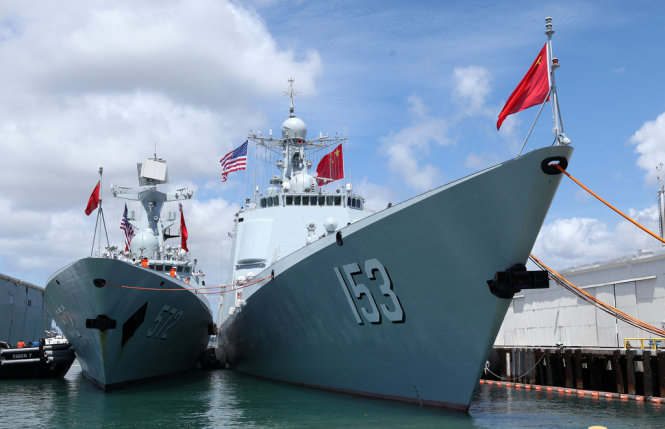
TTCT – Tình hình Biển Đông đang thay đổi chóng vánh và dồn dập, kèm theo những “bình luận” trích từ nhiều nguồn dễ gây ngộ nhận tương quan “nhân quả”. Các sự kiện trên Biển Đông liên quan gì tới cuộc tập trận RIMPAC và những động thái mới của Mỹ? Các dữ kiện sẽ cho phép nhận chân tình hình.
Tàu chiến Trung Quốc tham gia cuộc tập trận RIMPAC 2016. Ảnh: Asia News
“Chúng tôi có bằng chứng mạnh mẽ rằng Trung Quốc đã triển khai các tên lửa đối hạm, đối không, cùng các thiết bị nhiễu sóng tại các thực thể tranh chấp ở khu vực Trường Sa của Biển Đông. Việc Trung Quốc vừa cho hạ cánh máy bay ném bom trên đảo Phú Lâm cũng đã làm căng thẳng nổi lên” – người phát ngôn Bộ Quốc phòng Mỹ loan báo hôm 23-5. Tiếp tục đọc “Từ biển Đông đến RIMPAC”→
On Monday 14 May 2018 the Chinese Journal of International Law, an Oxford University Press journal, published an extraordinary 500 page “Critical Study” of the Awards on jurisdiction and the merits in the South China Sea Arbitration between the Philippines and China. Readers will recall the case was brought under the UN Convention on the Law of the Sea (UNCLOS) by the Philippines against China and that there was an awards on jurisdiction in 2015 and a final award on the merits in 2016 (discussed in many places including here, here, here, here and here). The Critical Study was produced by the joint efforts of some 70 scholars and is listed as having been authored by the Chinese Society of International Law (CSIL). It examines almost every issue raised in the case – and several that weren’t – and concludes the Tribunal was catastrophically wrong on every single point, right down to how many times the Philippines was allowed to amend its pleadings. Tiếp tục đọc “A new twist in the South China Sea Arbitration: The Chinese Society of International Law’s Critical Study”→
This critical Study analyzes in detail the award on jurisdiction and admissibility of 29 October 2015 and the award of 12 July 2016 in the South China Sea Arbitration. After briefly introducing the project and the Study and describing the background to and course of the South China Sea Arbitration and the position of the Chinese Government, the Study moves to address one by one the following matters: jurisdiction; admissibility; historic rights; the status of China’s Nansha Qundao and Zhongsha Qundao; the legality of China’s activities in the South China Sea; due process and evidence. The Study closes with the conclusion that the Tribunal’s many errors deprive its awards of validity and threaten to undermine the international rule of law. Included as annexes are five useful official documents of the Chinese government on jurisdiction, the two awards, China’s territorial sovereignty and maritime rights and interests in the South China Sea, and China’s adherence to the position of settling through negotiation the relevant disputes between China and the Philippines in the South China Sea. Tiếp tục đọc “The South China Sea Arbitration Awards: A Critical Study”→
Over the past three years, the U.S. and China have been at odds over the status of Chinese artificial islands in the South China Sea and U.S. Freedom of Navigation Operations.
The U.S. government initiated a Freedom of Navigation Program to contest “unilateral acts of other states designed to restrict the rights and freedom of the international community.” The program includes both maneuvers designed exclusively to challenge maritime claims the U.S. considers excessive, and operations with other purposes that incidentally challenge territorial claims. Tiếp tục đọc “A Brief History of U.S. Freedom of Navigation Operations in the South China Sea”→
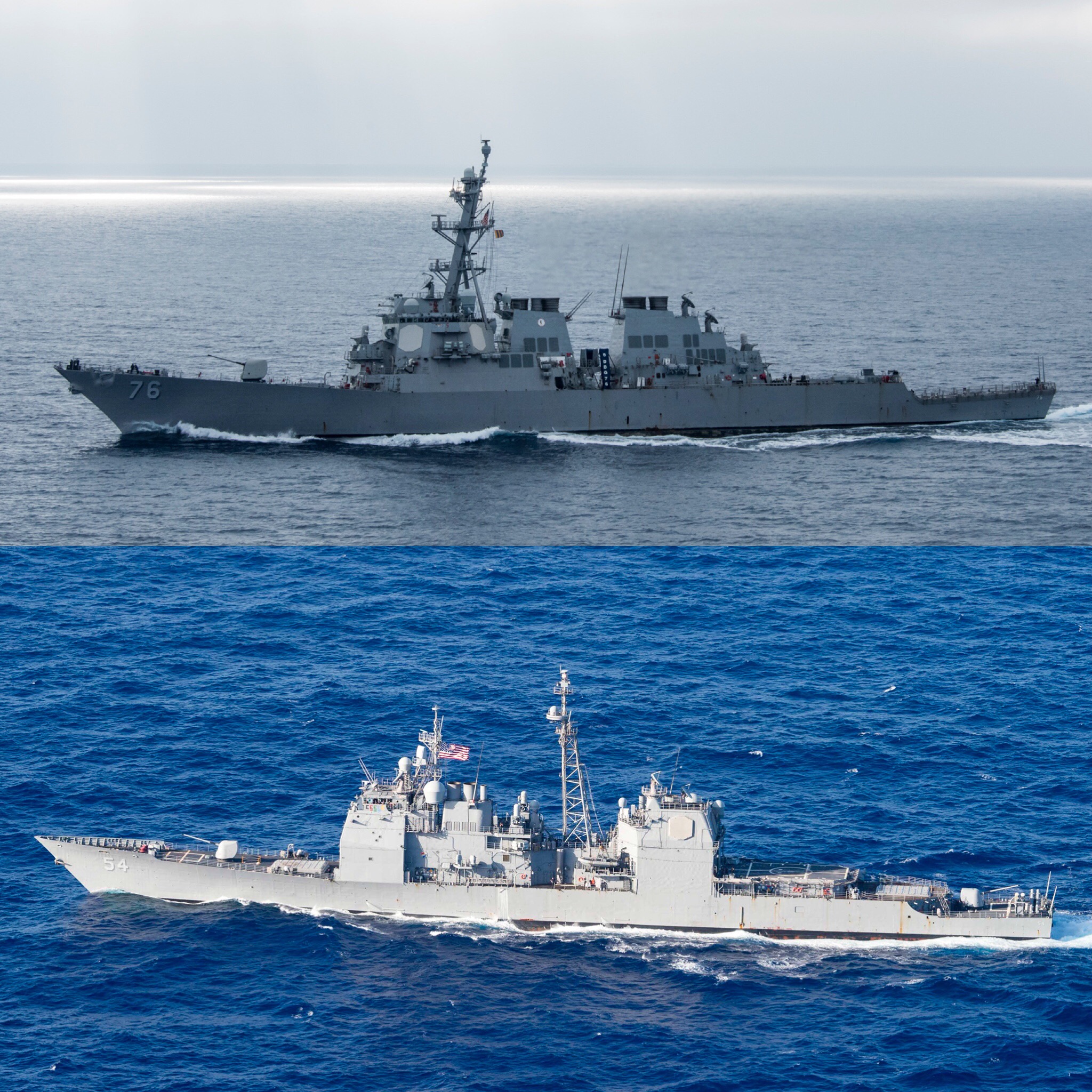
Guided-missile destroyer USS Higgins (DDG-76), guided-missile cruiser USS Antietam (CG-54). US Navy Photos
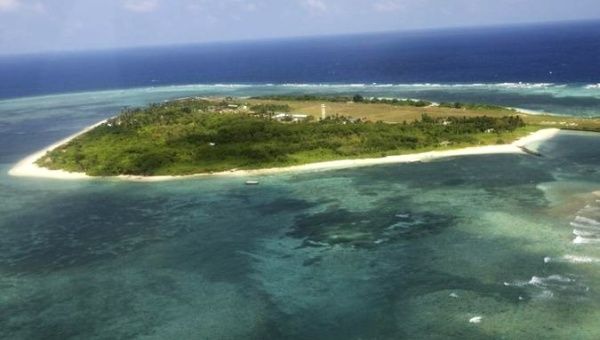
Over the weekend, a Ticonderoga-class guided-missile cruiser USS Antietam (CG-54) and Arleigh Burke-class destroyer, USS Higgins (DDG-76) sailed in a two-ship freedom of navigation operation past islands claimed by China, according to media reports first reported by Reuters.
The FON operation in the Paracel Island chain was called a “serious infringement on China’s sovereignty,” Wu Qian, a spokesperson for China’s Ministry of National Defense, said in a Sunday statement.
The Pentagon on Wednesday uninvited China from a major United States-hosted naval drill in response to what it sees as Beijing’s militarization of islands in the South China Sea, a decision the Asian country called unconstructive.
“As an initial response to China’s continued militarization of the South China Sea we have disinvited the PLA Navy from the 2018 Rim of the Pacific (RIMPAC) Exercise,” said Lieutenant Colonel Christopher Logan, a Pentagon spokesman. Tiếp tục đọc “China Uninvited From Major US Military Exercise By Pentagon”→
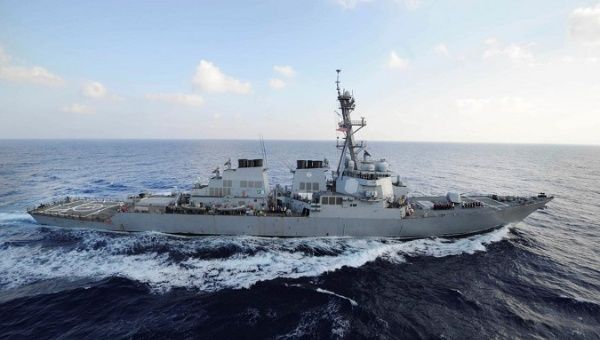
The guided-missile destroyer USS Mahan (DDG 72) transits the Mediterranean Sea in this August 31, 2012 handout photo. | Photo: Reuters
China’s Foreign Ministry urged the United States to stop such actions.
Two U.S. Navy warships sailed near South China Sea islands claimed by China Sunday, two U.S. officials told Reuters, in a move that drew condemnation from Beijing as President Donald Trump seeks its continued cooperation on North Korea.
The secretary allayed fears and addressed criticism by stressing that the Philippines has not lost a single inch of territory to China during the Duterte administration.
The government of Filipino President Rodrigo Duterte has fired off a stern warning to China regarding the natural resources in the South China Sea region.
The Philippines foreign ministry vows that the country will not shy away from going to war over the disputed region. The official, on Monday, stated that there are several “red lines” or actions – if crossed or taken – would be deemed unacceptable resulting in an aggressive response from Manila. Tiếp tục đọc “Philippines: We Will go to War Over South China Sea Violations”→
TTCT – Vụ một nhóm du khách Trung Quốc nhập cảnh vào Cam Ranh với áo thun in hình “lưỡi bò” trên lưng chỉ là một trong vô vàn âm mưu thôn tính lớn nhỏ.
Máy bay vận tải quân sự Thiểm Tây Y-8 của Trung Quốc trên đá Subi, ảnh công bố ngày 28-4. Ảnh: AMTI
Hôm thứ hai 14-5, Hãng thời trang GAP đã xin lỗi Bắc Kinh vì bán ra những áo thun in bản đồ Trung Quốc mà không thể hiện trên đó Đài Loan, Nam Tây Tạng và biển Nam Hải (cách Trung Quốc gọi Biển Đông). Hãng GAP cam kết trong một thông báo trên Hoàn Cầu Thời Báo rằng họ “tôn trọng chủ quyền và sự vẹn toàn lãnh thổ của Trung Quốc”.
Báo mạng chuyên về kinh tế – tài chính Business Insider của Mỹ, phát hành bằng 8 thứ tiếng Anh, Ba Lan, Đức, Hà Lan, Nhật, Pháp, Hoa, Ý, còn “lập công” khi cho biết “đến tối thứ hai, Business Insider vẫn tìm thấy áo thun gây tranh cãi của Hãng GAP được bán” ngoài thị trường. Vụ việc đó, cùng vụ mặc áo thun in hình “lưỡi bò” ở Việt Nam, thật điển hình cho “cuộc chơi” cùng “luật chơi” ở Biển Đông lúc này. Tiếp tục đọc “Biển Đông: Cuộc chơi và luật chơi của ai?”→
The ability of global trade to feed the world is one of the great success stories of the past generation. More than 1 billion people faced hunger on a planet of 5.6 billion a quarter-century ago; that number has fallen to 800 million, even as the population has grown to 7.6 billion. Trade has brought much of that progress: Shippers and exporters have become better and better at getting affordable food from places of surplus to regions of scarcity.
But the planet is at rising risk of choking on its good fortune.


 Vietnamese Foreign Ministry’s spokesperson Lê Thị Thu Hằng. — VNA/VNS Photo Phương Hoa
 CVD
CVD 