
fulcrumm.sg PUBLISHED 4 JAN 2024 LE HONG HIEP
Punishment awaits the senior officials who allowed Vietnam’s renewable energy quest to go off the rails, despite its apparent initial success. This policy crisis has the potential to affect other economic sectors if no clear end is in sight.
In late 2023, the Inspection Commission of the Central Committee of the Communist Party of Vietnam (CPV) found that Tran Tuan Anh, head of CPV’s Central Economic Commission, and Trinh Dinh Dung, former deputy prime minister, were among the senior government officials responsible for “shortcomings in the advisory and policy-making processes for the development of solar and wind power projects, as well as in the implementation of the amended Power Development Plan VII” (PDP7). The Commission therefore recommended disciplinary actions be taken against Anh, Dung and some other senior officials involved.
Anh served as the minister of industry and trade while Dung was deputy prime minister overseeing economic affairs, including the energy sector, from 2016 to 2021. During their tenure, Vietnam experienced a remarkable surge in renewable energy, with numerous solar and wind power projects completed in just three years. According to Vietnam Electricity (EVN), the state-owned utility company, this led to a significant increase in Vietnam’s renewable energy output, rising from a mere 997 GWh in 2018 to an impressive 37,865 GWh in 2022. Vietnam therefore emerged as Southeast Asia’s renewable energy leader, accounting for 69 per cent of the region’s solar and wind power generation by 2022.
Such successes, however, did not come without problems. Last April, an inspection by the Government Inspectorate revealed numerous violations in the licensing and certification of renewable energy projects. For example, the amended PDP7 outlined a goal of installing 850MW of solar power by 2020, increasing to 4,000MW by 2025. Similarly, the plan projected 800MW of wind power by 2020, with a target of 2,000MW by 2025. However, as of May 2023, the total installed capacity of wind, solar, and rooftop solar projects in Vietnam had already reached a staggering 21,839MW, greatly surpassing targets set in PDP7.
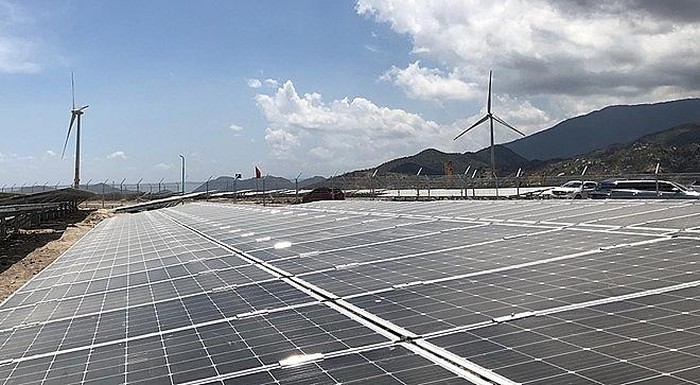
This sudden surge in renewable energy has caused a strain on the national power grid, particularly in the central region where most renewable energy projects are located. Moreover, during the same period, there was a lack of new traditional power plants constructed, which are necessary to provide a stable baseload for renewable energy sources that are more weather-dependent and thus less reliable. This has created significant safety concerns for the national power system. Consequently, EVN had to curtail the amount of power it purchased from renewable sources, resulting in substantial financial losses for project owners.
A main driver behind Vietnam’s rapid growth in renewable energy has been the implementation of high feed-in tariffs (FITs) for certified projects that began commercial operation before specific deadlines. For instance, solar farms that became operational by 30 June 2019 were eligible for a FIT of 9.35 US cents/kWh, while onshore and offshore wind farms that began commercial operation by 1 November 2021 received FITs of 8.5 US cents/kWh and 9.8 US cents/kWh, respectively. Meanwhile, the FIT for rooftop solar projects operated before 31 December 2020 is 8.38 US cents/kWh. These FITs are locked in for 20 years.
This sudden surge in renewable energy has caused a strain on the national power grid, particularly in the central region where most renewable energy projects are located.
These attractive FITs sparked fierce competition among local investors to build solar and wind projects but most of them had no track record in the energy sector. They mainly leveraged connections, often involving under-the-table payments, to secure project licenses, then relied heavily on bank financing or corporate bonds to fund project development. Due to the pandemic and cut-throat competition for equipment and contractors, 62 wind projects failed to start operation before the FIT deadlines. Unable to sell their output to EVN, these projects faced severe financial difficulties. Even projects that qualified for the FITs faced mounting issues. Aside from the curtailment imposed by EVN, the Government Inspectorate found violations in the certification of many projects, putting them at risk of disqualification from the FITs. Foreign investors acquiring projects from local investors may face potential losses if similar violations are found.
The situation also negatively impacts the state and the broader economy. Most FIT rates are higher than average electricity retail prices, meaning that the state and end-users are essentially subsidising renewable energy projects. These high FITs have contributed to EVN’s mounting accumulative losses over the past two years, reaching VND55 trillion (US$2.3 billion) by September 2023. The government therefore has had no choice but to allow EVN to raise electricity retail prices, putting upward pressure on inflation and undermining Vietnam’s competitiveness.
In light of these grave consequences, the government has been trying to contain the damage. For example, EVN stopped buying power from rooftop solar projects completed after 31 December 2020, leaving thousands of investors in limbo. Authorities have also conducted thorough inspections into most renewable energy projects. Projects found to have committed serious violations, such as lacking construction permits or failing to secure proper land usage purpose conversion and commercial operation certification, may have their power purchase agreements with EVN terminated.
Last month, EVN even proposed lowering the FITs for 38 projects but quickly withdrew the proposal after just one day. This sudden reversal may reflect the government’s struggle in finding a satisfactory solution. Being lenient will perpetuate losses for the state budget but a heavy-handed approach could cause extensive financial losses for investors, potentially affecting the banking system, given investors’ heavy reliance on bank financing. This could also negatively impact investors’ confidence in Vietnam’s investment climate and raise doubts about the country’s commitment to energy transition.
At present, there seems to be no straightforward solution. It is not clear yet how Vietnam will effectively address and learn from this situation for future policy decisions. However, it is inevitable that those responsible for this predicament will soon face serious consequences for what could potentially become one of the most significant policy mishaps in Vietnam’s recent history.
2024/2
Le Hong Hiep is a Senior Fellow and Coordinator of the Vietnam Studies Programme at ISEAS – Yusof Ishak Institute.




 CVD
CVD 