Asia Pacific leaders make joint appeal for free and fair trade

By Reuters   November 21, 2020 | 09:08 am GMT+7 vnexpressAsia Pacific leaders make joint appeal for free and fair tradeA view show virtual APEC Economic Leaders Meeting 2020, in Kuala Lumpur, Malaysia November 20, 2020. Photo by Reuters/Lim Huey Teng.Asia Pacific leaders set aside differences on Friday with their first joint communique in three years, calling for free and predictable trade amid the coronavirus pandemic.

Leaders of the 21-nation Asia-Pacific Economic Cooperation (APEC), who included Vietnam’s Prime Minister Nguyen Xuan Phuc, U.S. President Donald Trump, China’s President Xi Jinping, also said they would not resort to protectionist policies.

Their joint statement, after a virtual summit hosted by Malaysia, is set against a backdrop of ongoing trade tensions between the world’s two largest economies.

“The impact of (the U.S.-China) trade war has been eclipsed by the COVID-19 pandemic,” Malaysian Prime Minister Muhyiddin Yassin told reporters after the meeting.

“APEC has also pledged to refrain from backtracking and resorting to protectionist measures to keep markets and borders open,” he said.

In the communique, the leaders said they recognized “the importance of a free, open, fair, non-discriminatory, transparent and predictable trade and investment environment” to drive growth during the crisis.

APEC countries failed to reach agreement in 2018, after talks were stymied by discord over trade and investment between the United States and China, and last year’s gathering in Chile was canceled due to violent street protests.

Subdued performance

Trump, who has yet to concede defeat in the Nov. 3 U.S. election and begin a transfer of government to President-elect Joe Biden, largely focused on domestic issues in his remarks at the meeting and spoke of the successes of his time in office, a source who heard his address said.

It was an unusually subdued performance by Trump, who has often attacked China over Covid-19, declared it a strategic rival and imposed tariffs on billions of dollars in Chinese goods.

A White House statement said Trump had “reaffirmed the commitment of the United States to building on our unprecedented economic recovery from Covid-19, as well as promoting peace and prosperity in the Indo-Pacific region through strong economic growth”.

It said Trump and APEC leaders had endorsed the APEC Putrajaya Vision 2040 “that will make free and fair trade the focus of the APEC agenda for the next two decades”.

Although Trump’s administration declared the Asia-Pacific and competition with China to be foreign policy priorities, he has been criticised for limited personal engagement in Asia.

The only other time he has joined an APEC summit was in 2017. He also missed a summit of the Association of Southeast Asian Nations (ASEAN) last weekend, when 15 nations formed the world’s largest free-trade bloc, the Regional Comprehensive Partnership Agreement (RCEP), cementing China’s dominant role in regional trade.

In his remarks on Friday, Xi called for free and open trade and investment, and support for multilateralism.

He said China would “actively consider” signing up for a regional free-trade pact, the Comprehensive and Progressive Agreement for Trans-Pacific Partnership (CPTPP).

When he took office, Trump pulled out of the Trans-Pacific Partnership trade pact, the predecessor to CPTPP.

Biggest challenge

Before the meeting, several APEC leaders warned against protectionism and expressed hope that a Biden administration will engage more and support multilateral trade.

“As we confront this generation’s biggest economic challenge, we must not repeat the mistakes of history by retreating into protectionism,” New Zealand Prime Minister Jacinda Ardern said on Friday at the APEC CEO Dialogues.

“APEC must continue to commit to keeping markets open and trade flowing.”

Singapore Prime Minister Lee Hsien Loong said on Thursday that U.S. trade policies under Trump had caused “very slow” progress in APEC in recent years, adding that he expected “more multilateralists” in the Biden administration.

U.S. Senator Chris Coons, seen as a contender for secretary of state under Biden, told Reuters he expected the new administration to make an analysis with Congress on “where we are and where we’re going in the U.S.-China bilateral relationship before making any decisions about either carrots or sticks” on trade and Chinese actions related to the coronavirus.Related News:
Following France and Germany, the Netherlands Pivots to the Indo-Pacific

The new Dutch policy could foreshadow a joint European policy toward the strategically vital region.

By Sebastian Strangio, The Diplomat, November 18, 2020   

Following France and Germany, the Netherlands Pivots to the Indo-Pacific
Credit: Pixabay/BRRT

ADVERTISEMENT

The government of the Netherlands has released a new policy document outlining a new strategy for the Indo-Pacific region, following similar recent moves by its European neighbors France and Germany.

The new policy document, which was released by the Ministry of Foreign Affairs on November 13, foreshadows a greater focus on Asia, in apparent recognition of China’s growing assertiveness and the European Union’s increasing economic and trade partnerships with the region.

Tiếp tục đọc “Following France and Germany, the Netherlands Pivots to the Indo-Pacific”

SECNAV Braithwaite Calls for New U.S. 1st Fleet Near Indian, Pacific Oceans –

SECNAV Braithwaite Calls for New U.S. 1st Fleet Near Indian, Pacific Oceans

By: Megan Eckstein
November 17, 2020 1:02 PM • Updated: November 17, 2020 2:41 PM USNI NEWS

Tiếp tục đọc “SECNAV Braithwaite Calls for New U.S. 1st Fleet Near Indian, Pacific Oceans –”

Đông Nam Á – trái tim trong chiến lược Ấn Độ Dương – Thái Bình Dương của Nhật

13/10/2020 10:45 GMT+7 tuoitre

TTO – Nhật Bản đã đạt được những bước tiến to lớn trong việc trở thành một trong những quốc gia được các nước Đông Nam Á ủng hộ nhiều nhất. Trước Thủ tướng Suga, ông Abe cũng từng chọn thăm các nước Đông Nam Á đầu tiên.

Đông Nam Á - trái tim trong chiến lược Ấn Độ Dương - Thái Bình Dương của Nhật - Ảnh 1.

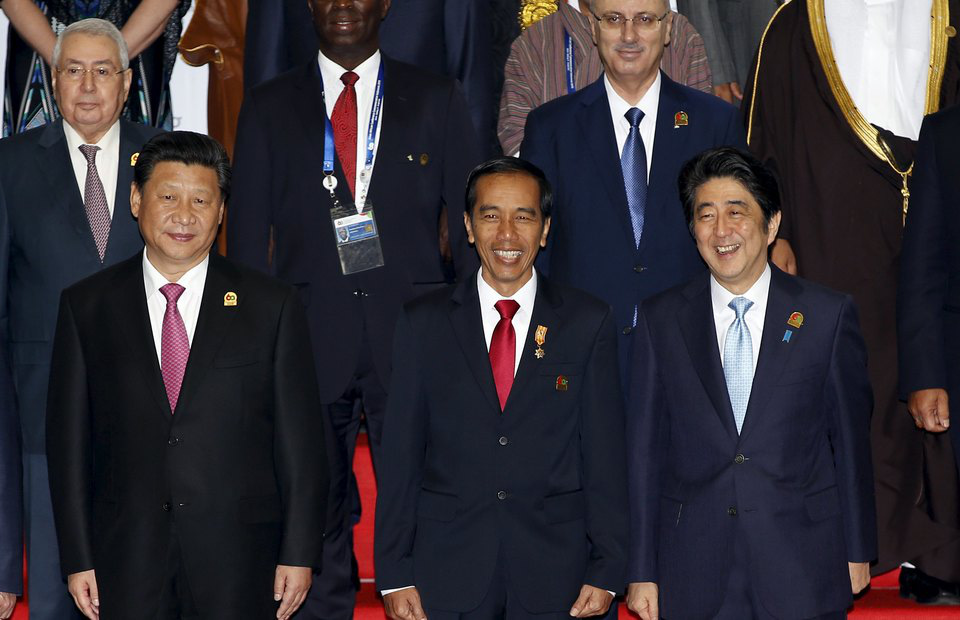
Từ trái sang: Chủ tịch Trung Quốc Tập Cận Bình, Tổng thống Indonesia Joko Widodo và Thủ tướng Nhật Bản Shinzo Abe trong một lần xuất hiện chung ở Jakarta, Indonesia hồi năm 2015 – Ảnh: REUTERS

Tiếp tục đọc “Đông Nam Á – trái tim trong chiến lược Ấn Độ Dương – Thái Bình Dương của Nhật”

India, US, Japan, Australia resume naval exercise

CNA

India US Japan Australia Navy
image.png

17 Nov 2020 09:26PM

image.png
India US Japan Australia Navy

NEW DELHI: The navies of India, the United States, Australia and Japan held exercises Tuesday (Nov 17) in the Northern Arabian Sea in the second phase of a naval drill seen as part of a regional initiative to counter China’s growing assertiveness in the Indo-Pacific.

Tiếp tục đọc “India, US, Japan, Australia resume naval exercise”

Japan and Australia seek to align on defence as China’s regional influence grows

Japanese PM Suga speaks to the media during a press conference in Jakarta

FILE PHOTO: Japanese Prime Minister Yoshihide Suga speaks to the media during a press conference in Jakarta, Indonesia, Oct 21, 2020. (Photo: Dita Alangkara/Pool via REUTERS)

16 Nov 2020 03:31PM CNA

TOKYO: Japanese Prime Minister Yoshihide Suga and his Australian counterpart, Scott Morrison, may agree a historic defence pact on Tuesday (Nov 17) that will closely align two key US allies in Asia as a counter to China’s growing influence in the region.

Tiếp tục đọc “Japan and Australia seek to align on defence as China’s regional influence grows”

15th East Asia summit on Saturday to push for free, open, inclusive & rules-based Indo-Pacific region

SECTIONS ..

The 15th East Asia Summit on Saturday hopes to give a big push to a free, open, inclusive, transparent, rules-based, peaceful and prosperous Indo-Pacific region.

The Summit Meeting will also discuss ways and means to strengthen the EAS platform and to make it more responsive to emerging challenges on its 15th anniversary. The Leaders will also exchange views on issues of international and regional interest including the COVID-19 pandemic and the cooperation among EAS participating count ..

Read more at:
https://economictimes.indiatimes.com/news/politics-and-nation/15th-east-asia-summit-on-saturday-to-push-for-free-open-inclusive-rules-based-indo-pacific-region/articleshow/79211661.cms?utm_source=contentofinterest&utm_medium=text&utm_campaign=cppst

Powers, Norms, and Institutions: The Future of the Indo-Pacific from a Southeast Asia Perspective

Results of a CSIS Survey of Strategic Elites

June 9, 2020

DOWNLOAD THE REPORT

Situated at the heart of the Indo-Pacific, Southeast Asia has, in recent years, become the bellwether for the region, including the future of democratic governance. External powers, including the United States and China, have ramped up engagement with Southeast Asia and now compete for influence in the region. Amid these geopolitical shifts, Southeast Asian perspectives on dynamics that will shape the future of the region more than ever before.

In late 2019, the Center for Strategic and International Studies (CSIS) conducted a survey of strategic elites in Indonesia, Malaysia, the Philippines, Singapore, Thailand as well as Fiji to understand how the region views trends related to power, norms, and institutions. In early 2020, CSIS conducted extensive analysis of the survey data and convened a workshop in Sydney, Australia, to further examine the results with leading experts from the countries surveyed, as well as Australia and the United States. This report presents key findings from the survey and workshop on the strategic landscape in Southeast Asia and the future of power and influence and challenges faced by the region.

This report is made possible by the generous support from the Australian Department of Defence and the Australian Embassy, Washington, D.C.

Chinese Investment in the Maldives: Appraising the String of Pearls

September 4, 2020  |  AMTI Brief

Chinese investment in the Maldives is a frequent subject of concern. The archipelagic nation is strategically located along major Indian Ocean shipping routes. Its former president has very publicly speculated that China is being allowed to buy up whole islands and extend loans that the government cannot afford.

And media articles in India, long the most important external partner for the Maldives, often assume that prominent Chinese investments are a stalking horse for military access. The most frequently cited example of late is a resort development on Feydhoo Finolhu island. But the available data suggests these fears, and those surrounding other Chinese projects in the Maldives, are overblown. Tiếp tục đọc “Chinese Investment in the Maldives: Appraising the String of Pearls”

Họp với ASEAN, quan chức quốc phòng Mỹ quan ngại Trung Quốc tập trận ở Hoàng Sa

Đại diện Bộ Quốc phòng Mỹ tham dự hội nghị quan chức Quốc phòng ASEAN mở rộng đã phát biểu bày tỏ quan ngại về các cuộc diễn tập của Trung Quốc tại quần đảo Hoàng Sa.

Sáng nay (7/7), tại Hà Nội, Bộ Quốc phòng tổ chức hội nghị trực tuyến Quan chức Quốc phòng cấp cao các nước ASEAN mở rộng (ADSOM+).

Với sự tham dự của Trưởng ADSOM+ 9 nước ASEAN và 8 nước (Nga, Trung Quốc, Hoa Kỳ, Nhật Bản, Hàn Quốc, Australia, New Zealand, Ấn Độ), Phó tổng Thư ký ASEAN.

Phát biểu từ điểm cầu Mỹ, ông Chris Johnstone, Trưởng phòng Nam – Đông Nam Á thuộc Văn phòng Bộ Quốc phòng Mỹ, đánh giá cao những nỗ lực chống bệnh dịch đang diễn ra hằng ngày, lực lượng vũ trang của Mỹ đang thực hiện nghĩa vụ của mình ở bất cứ nơi nào luật pháp quốc tế cho phép.

Họp với ASEAN, quan chức quốc phòng Mỹ quan ngại Trung Quốc tập trận ở Hoàng Sa
Điểm cầu với sự tham gia của quan chức quốc phòng các nước

“Chúng tôi cũng đang thực hiện nhiệm vụ đi lại tự do trên vùng biển quốc tế với ASEAN và các quốc gia đối tác, để có thể thúc đẩy hòa bình, an ninh và tự do hàng hải, hàng không tại Biển Đông. Chúng tôi cũng hoan nghênh tuyên bố của các lãnh đạo ASEAN về việc giải quyết các vấn đề bằng biện pháp hòa bình, phù hợp với luật pháp quốc tế”, ông Chris Johnstone cho hay.

Mỹ cùng với Việt Nam và Singapore quan ngại về các cuộc diễn tập gần đây của Trung Quốc tại quần đảo Hoàng Sa và coi hoạt động này là phản tác dụng, vi phạm Tuyên bố ứng xử của các bên ở Biển Đông (DOC) và làm căng thẳng tình hình khu vực.

“Chúng tôi kêu gọi các bên giải quyết tranh chấp phù hợp với luật pháp quốc tế và chúng tôi mong muốn thúc đẩy quan hệ đối tác và hợp tác chặt chẽ để thúc đẩy an ninh, an toàn với các đối tác và đồng minh để thúc đẩy một trật tự dựa trên luật lệ. Chúng tôi sẽ tiếp tục hợp tác với quý vị trong thời gian sắp tới” ông Chris Johnstone nhấn mạnh.

Cục Hải sự tỉnh Hải Nam hôm 29/6 thông báo quân đội Trung Quốc sẽ tiến hành cuộc tập trận từ ngày 30/6 đến 5/7 gần quần đảo Hoàng Sa của Việt Nam và yêu cầu tàu thuyền tránh xa khu vực này.

Việt Nam đã trao công hàm phản đối Trung Quốc tập trận tại Hoàng Sa, yêu cầu không tái diễn hành động tập trận trái phép ở Hoàng Sa.

Trong cuộc họp báo gần đây, người phát ngôn bộ Ngoại giao Lê Thị Thu Hằng cho biết việc Trung Quốc tập trận tại khu vực quần đảo Hoàng Sa của Việt Nam đã vi phạm chủ quyền của Việt Nam, đi ngược tinh thần Tuyên bố ứng xử của các bên ở Biển Đông (DOC), gây phức tạp tình hình, không có lợi cho quá trình đàm phán giữa Trung Quốc và ASEAN về Bộ Quy tắc ứng xử giữa các bên ở Biển Đông (COC), cũng như duy trì hòa bình, ổn định và hợp tác ở Biển Đông.

Người phát ngôn khẳng định Việt Nam có đầy đủ bằng chứng lịch sử và căn cứ pháp lý để khẳng định chủ quyền với Trường Sa và Hoàng Sa, phù hợp với luật pháp quốc tế. Mọi hoạt động của các bên tại Trường Sa và Hoàng Sa mà không có sự cho phép của Việt Nam đều vô giá trị.

Thành Nam

Việt Nam trao công hàm phản đối Trung Quốc tập trận ở Hoàng Sa

Việt Nam trao công hàm phản đối Trung Quốc tập trận ở Hoàng Sa

Việt Nam đã trao công hàm phản đối, yêu cầu Trung Quốc không lặp lại hành động tập trận ở Hoàng Sa trong ….

Southeast Asia is the world’s bilge dumping hotspot—what can be done to stop ships discharging waste oil?

eco-business.com

Satellite images have revealed the illegal discharge of waste oil and sludge from ships to be a daily occurrence in Indonesia, while Southeast Asia’s biodiverse waters suffer more from the problem than anywhere. What can be done to stop the destructive practice of bilge dumping?

Piracy. Illegal fishing. Slavery. The issues facing the shipping trade are increasingly well known and a highly traditional industry has at last started to confront them. But one important issue, which is as old as the trade itself, has been largely overlooked: bilge dumping.
Tiếp tục đọc “Southeast Asia is the world’s bilge dumping hotspot—what can be done to stop ships discharging waste oil?”

Indonesian environment ministry ends WWF partnership amid public spat

Southeast Asia in 2020: Issues to Watch, Part 1

CSIS.org

January 14, 2020

In this two-part series, Dr. Amy Searight, senior adviser and director of the CSIS Southeast Asia Program, previews five key issues to watch in Southeast Asia in 2020. This installment addresses U.S.-ASEAN relations, climate change and the imperiled Mekong, and domestic politics. The next installment will cover economic trends and developments in the digital space.

Can Trump Reset U.S.-ASEAN Relations?

Disappointingly, 2019 was a pretty bad year for U.S.-ASEAN relations. Trump had a promising start in his first year in office, hosting four Southeast Asian leaders in the White House, traveling to Vietnam and the Philippines to unveil his “Free and Open Indo-Pacific” vision, and holding a U.S.-ASEAN summit. But Trump’s interest in Southeast Asia has since appeared to wane considerably. Although Trump traveled to Vietnam in February for a second summit with North Korean leader Kim Jong-un, he later called Vietnam the “single worst abuser” in trade relations with the United States. In November, President Trump skipped the East Asian Summit (EAS) for the third straight year, sending National Security Advisor Robert O’Brien instead. Trump’s absence in Bangkok and the historically low level of diplomatic representation at the summit ruffled a lot of feathers within ASEAN and led most of the Southeast Asian leaders to snub the U.S.-ASEAN summit held on the sidelines of the EAS (only Thailand, Vietnam, and Laos attended at the leader level). ASEAN’s disenchantment with the level of U.S. engagement came just as China was gaining new traction in the region, with a revamped Belt and Road Initiative that appeared to address regional concerns and progress toward launching the Regional Comprehensive Economic Partnership (RCEP), a trade agreement between ASEAN, China, and four other regional trade partners.
Tiếp tục đọc “Southeast Asia in 2020: Issues to Watch, Part 1”

ASEAN Outlook on the Indo-Pacific

ASEAN

The AsiaPacific and Indian Ocean regions are amongst the most dynamic in the world as well as centers of economic growth for decadesAs a result, these regions continue to experience geopolitical and geostrategic shiftsThese shifts present opportunities as well as challengesOn the one hand, the economic growth of the region opens up possibilities of cooperation to alleviate poverty and elevate living standards of millions of peopleOn the other hand, the rise of material powers, i.eeconomic and military, requires avoiding the deepening of mistrust, miscalculation, and patterns of behavior based on a zerosum game.

Download the full statement here.

Châu Á vẫn mê than

nhipcaudautu – Thứ Hai | 02/09/2019 08:00


Ảnh: tinkinhte.com

Chính phủ các nước, đặc biệt tại châu Á, vẫn tiếp tục đổ tiền vào than đá, tác nhân lớn nhất gây biến đổi khí hậu.

Trước hệ lụy khó lường của biến đổi khí hậu, những thông tin về vị thế ngày càng suy giảm của than đá đã làm dấy lên tia hy vọng về một tương lai bớt u ám hơn của thế giới. Ngày càng nhiều quốc gia muốn giảm dần việc sử dụng than đá và tiến tới xóa bỏ hoàn toàn, một phần nhờ khí đốt giá rẻ và chi phí năng lượng gió và mặt trời giảm mạnh.

Tiếp tục đọc “Châu Á vẫn mê than”