Brawls break out in the SEA Games 32 final between Indonesia and Thailand at the Olympic Stadium, Cambodia, May 16, 2023.
Coaches and players from Thailand and Indonesia tore into each other as disputes during the SEA Games men’s football final erupted into at least two full-scale brawls on Tuesday.
Indonesia was leading Thailand 2-1 in the second half of the match when the referee blew the whistle to allow a direct penalty for Thailand.
TTCT – Với nhiều môn thể thao, tấm HCV ở các kỳ đại hội lớn (Olympic, Asiad, SEA Games) là mục tiêu đỉnh cao. Nhưng với một số khác, đó lại chỉ là bước đệm.
Danh sách này gồm bóng đá, bóng rổ, quần vợt, cầu lông, các môn đấu võ đài… Đó thường là những môn thể thao nhà nghề có tính giải trí cao với lực lượng người hâm mộ đông đảo.
Việt Nam lần đầu tiên có HCV bóng rổ ở một kỳ SEA Games. Ảnh: Nam Trần
TTCT – Đam mê thành tích thật ra không phải chuyện xấu.
SEA Games 2015 ở Singapore là kỳ đại hội sòng phẳng nhất trong những kỳ SEA Games gần đây. Ảnh: Soka Gakkai Singapore
Từ phương Đông tới phương Tây, có bậc phụ huynh nào không muốn con đi học có thành tích tốt, được vinh danh trên bảng vàng, được nguyên thủ quốc gia viết thư khen… Còn trong thể thao, đi thi đấu thì ai chẳng thích nhận huy chương.
Vấn đề nằm ở chỗ thành tích đạt được có đúng với thực lực hay không? Vì vậy, có phê phán bệnh đam mê thành tích cần thêm cụm từ “bằng mọi giá”.
The ASEAN Studies Centre (ASC) at ISEAS – Yusof Ishak Institute released “The State of Southeast Asia 2023 Survey Report” online at 1130 hr on 9 February 2023 (Singapore time).
Findings from the latest run of the State of Southeast Asia Survey conducted by the ASEAN Studies Centre at the ISEAS – Yusof Ishak Institute reveal that Southeast Asia’s top preoccupations are with recessionary pressures, potential military tensions, and a ‘slow and ineffective’ ASEAN. China continues to be regarded as the most influential economic and political power in the region and the US has sharpened its edge over China in the event of a forced choice while Japan remains its most trusted major power. Click to read the full Media Release.
For current and past years reports, click here. For Event Highlights of the discussion, click here. To view the discussion, click here.
ASEAN FINANCE SECTORAL BODIES RELEASE ASEAN TAXONOMY FOR SUSTAINABLE FINANCE VERSION 2 The ASEAN Taxonomy Board (ATB), representing ASEAN finance sectoral bodies, today took the next step towards meeting the Paris Agreement commitments, with the release of the ASEAN Taxonomy for Sustainable Finance Version 2 (Version 2). While the first version laid out the broad framework of the ASEAN Taxonomy, Version 2 consists of the (a) complete Foundation Framework comprising detailed methodologies for assessing economic activities; and (b) Technical Screening Criteria (TSC) for the first focus sector ie Electricity, Gas, Steam and Air Conditioning Supply sector (Energy sector) under the Plus Standard. TSCs for other focus sectors will be published in the subsequent versions of the ASEAN Taxonomy. Version 2 builds on the conceptual thinking of the multi-tiered framework outlined in Version 1. The multi-tiered framework is intended to facilitate transition of ASEAN Member States (AMS) recognising the diversity in economic development, financial sector, and infrastructure maturity. Through the Foundation Framework which adopts a principles-based approach, users are now able to qualitatively assess economic activities using guiding questions, decision trees and use cases for all the four environmental objectives(EOs) and three essential criteria (EC). The environmental objectives and essential criteria, as well as guiding questions that make up the Foundation Framework are designed to be readily applicable to all AMS as well as stakeholders in the financial sector and business enterprises. Using the guiding questions, activities are classified as Green, Amber or Red. The Plus Standard adopts a more advanced assessment and methodology that is based on specific TSC and science-based thresholds in classifying activities. To further encourage and recognise transition efforts by businesses, the Plus Standard contains Amber Tier 2 and Amber Tier 3 classifications which will be retired over time. This is in addition to the Green tier that is aligned with other relevant international taxonomies and benchmarked to the 1.50C Paris Agreement target. . Version 2 also highlights the importance of social aspects in the Taxonomy, by incorporating it as the ASEAN Taxonomy’s third EC, alongside “Do No Significant Harm” (DNSH) and “Remedial Measures to Transition” (RMT). In combination with other features such as the expansion of the “Do No Significant Harm” criteria, common building blocks are established to enable an orderly and just transition and foster sustainable finance adoption by ASEAN countries. In considering ASEAN’s specific circumstances, the Taxonomy recognises efforts to the early retirement of coal-fired power plants. A global first for a regional taxonomy, the ATB has thoroughly considered how and where coal phase-outs (CPOs) can play a role in decarbonisation in support of the Paris Agreement goals and when approached correctly, provides a powerful tool for transition.
The key question is whether ASEAN can make a constructive and meaningful contribution to resolving its own internal divisions, let alone to influencing the behavior of China and the United States. Such outcomes may be unlikely but not impossible if the ASEAN states can develop a coherent, continuing, and collective response to the challenges they face.
The Association of Southeast Asian Nations (ASEAN) currently faces a series of major, historically unprecedented, challenges. Perhaps the most consequential of these new threats is the intensifying strategic, economic, and even institutional competition between the United States and China. ASEAN’s rather predictable response to this geopolitical contest has been to “hedge” and avoid choosing between the two great powers. While this strategy may be understandable, it threatens to undermine ASEAN’s much vaunted “centrality” and the geopolitical and diplomatic relevance of the organization as a whole. This article explores the background to these developments and Southeast Asia’s relationship with both the United States and China. I argue that the limited impact of ASEAN-style multilateralism helps to explain why great powers are creating alternative forums or simply paying lip service to the notion of ASEAN centrality.
Aljazeera – Vladimir Putin’s absence from the G20 Summit in Bali also undermines talk of a Russian pivot to the Asia-Pacific region.
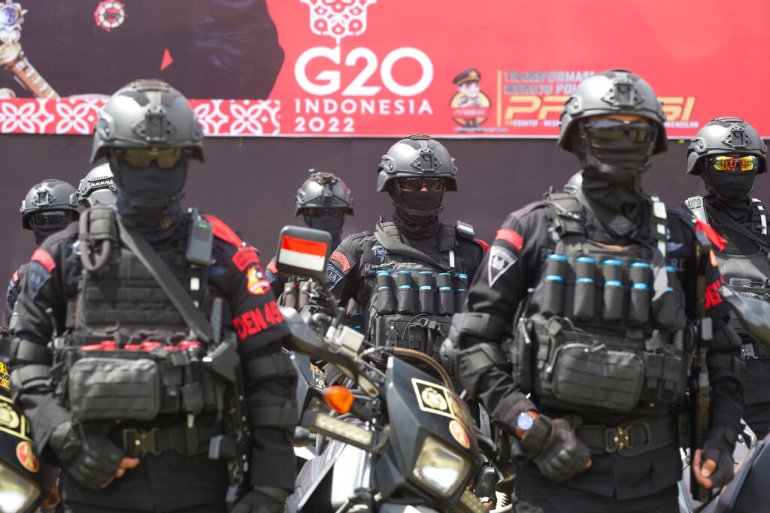
Indonesian police line up during a security parade on November 7, 2022, in preparation for the G20 meeting in Bali, Indonesia [File: Firdia Lisnawati/AP] (AP Photo)
By Al Jazeera Staff
Published On 15 Nov 202215 Nov 2022
Russian President Vladimir Putin has oozed a casual resentment when describing the “irreversible and even tectonic changes” that he says have led the West to become a spent force in the world.
“Western countries are striving to maintain a former world order that is beneficial only to them,” he told attendees at the Eastern Economic Forum in the Russian city of Vladivostok in September.
Military helicopters carrying large Taiwan flags do a flyby rehearsal on October 5, 2021, ahead of National Day celebrations amid escalating tensions between Taipei and Beijing. Photo: AFP / Ceng Shou Yi / NurPhoto
A recent Democracy Perception Index survey of worldwide public opinion found that a majority of Southeast Asians would not support their governments cutting economic ties with China if Beijing launched an invasion of Taiwan.
The same report found that only Singaporeans, from the six Southeast Asian countries surveyed, favored cutting economic ties with Russia because of its invasion of Ukraine in February. Indonesians and Vietnamese were two of the three nationalities who believed most strongly that ties with Russia should be maintained.
The Democracy Perception Index 2022 survey, published this month by Latana and the Alliance of Democracies Foundation, asked respondents: “If China started a military invasion of Taiwan, do you think your country should cut economic ties with China?”
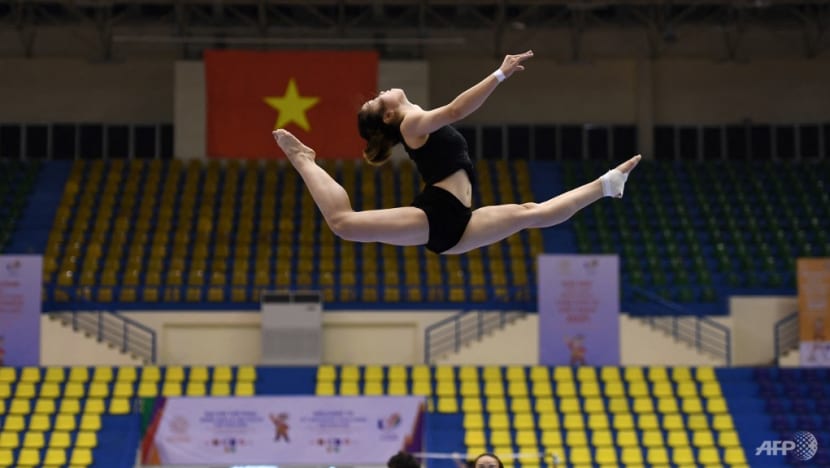
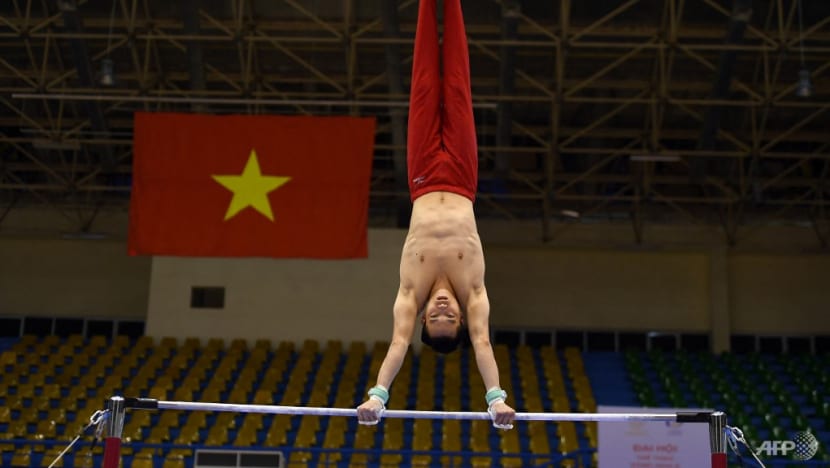
A Vietnamese gymnast takes part in a training session ahead of the 31st Southeast Asian Games (SEA Games) at Quan Ngua gymnasium in Hanoi on May 5, 2022. (Photo: AFP/Nhac Nguyen)A Vietnamese gymnast takes part in a training session ahead of the 31st Southeast Asian Games (SEA Games) at Quan Ngua gymnasium in Hanoi on May 5, 2022. (Photo: AFP/Nhac Nguyen)Malaysia’s Nur Dhabitah Sabri won the first gold at the SEA Games in Hanoi. (Photo: AFP/Nhac Nguyen)The SEA Games will officially begin on May 12, 2022 in Hanoi. (Photo: AFP/Nhac Nguyen)
HANOI: The Southeast Asian Games open in the Vietnamese capital Hanoi on Thursday (May 12) after a six-month COVID-19 delay with Southeast Asian pride at stake in everything from football to bodybuilding and e-sports.
More than 5,000 athletes including Olympic champions are vying for more than 500 gold medals in the event, which is staged every two years, in what should be packed arenas.
The 11-nation Games include traditional Olympic sports such as athletics, swimming and boxing, but also regional ones like sepak takraw, an eye-catching volleyball-style game where teams kick a rattan ball.
The US has gained ground against China in the contest for regional influence in Southeast Asia, according to the latest State of Southeast Asia Survey. ASEAN continues to be seen as ineffective in the eyes of respondents; at the same time, they are willing to give it credit when it is due.
The United States is gaining significant ground against China in the battle to win friends and influence countries, with respondents across Southeast Asia confident that Washington would be able to lead on issues such as championing free trade and upholding the rules-based regional order.
A fresh reading of The State of Southeast Asia Survey also showed that pressing issues — the Covid-19 pandemic, unemployment and economic retraction as well as climate change – continue to be prioritised by respondents. In their view, however, ASEAN is seen as too slow and ineffective to cope with rapid developments.
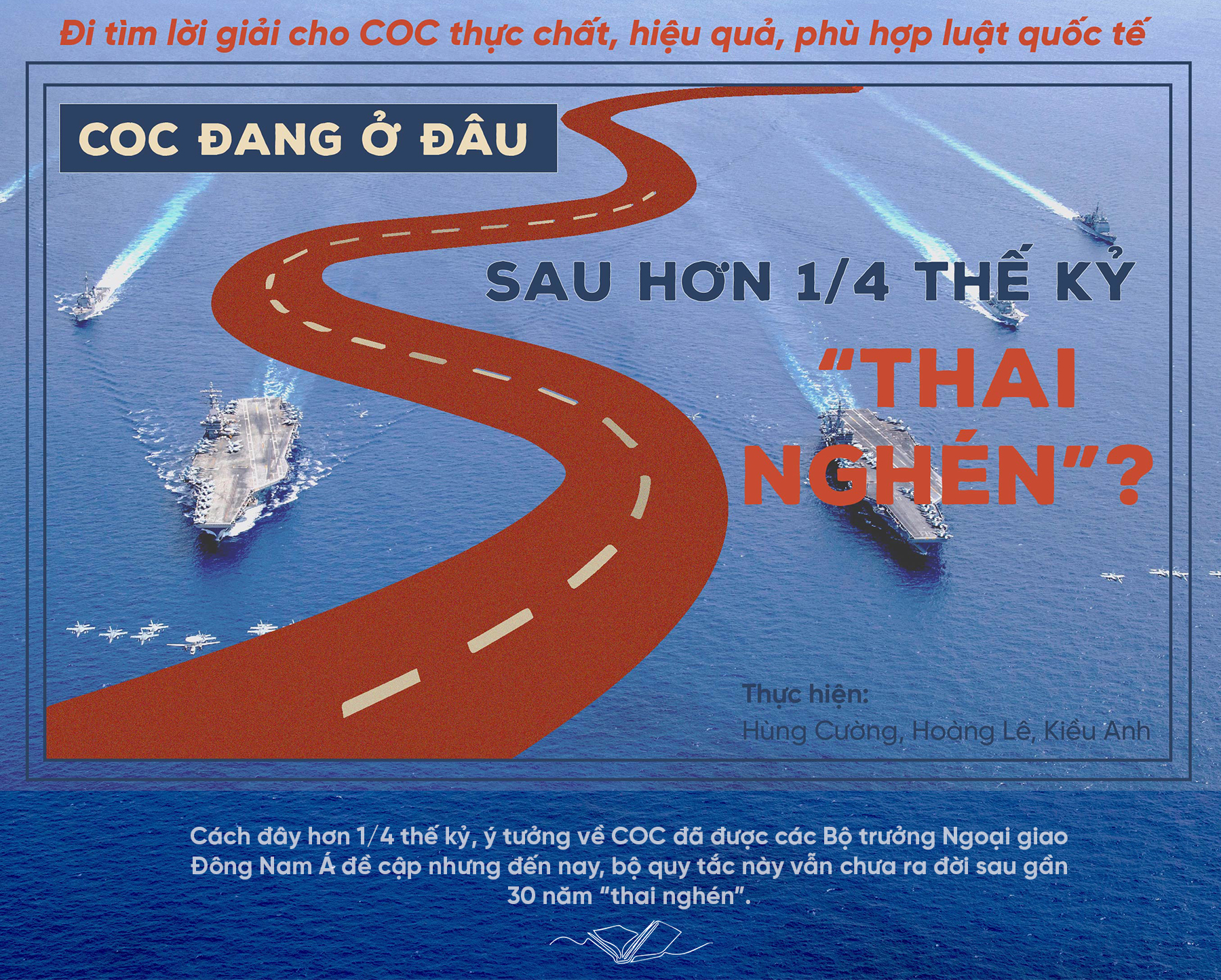
Cách đây hơn 1/4 thế kỷ, ý tưởng về COC đã được các Bộ trưởng Ngoại giao Đông Nam Á đề cập nhưng cho đến nay, bộ quy tắc này vẫn chưa ra đời sau gần 30 năm “thai nghén”
Khi các tranh chấp là vấn đề nổi cộm ở Biển Đông, có rất nhiều ví dụ về các thỏa thuận quản lý nghề cá, khai thác dầu khí… có thể giúp ích cho các cuộc đàm phán về xây dựng Bộ Quy tắc ứng xử ở Biển Đông (COC) giữa Trung Quốc và các nước Đông Nam Á. Nhưng câu hỏi cơ bản là liệu Bắc Kinh đã sẵn sàng đưa ra bất kỳ nhượng bộ thiện chí nào để đạt được thỏa thuận như vậy hay chưa? Suốt hơn 20 năm qua, câu trả lời chỉ là không.
TTCT – Sau 3 năm rưỡi giữ cương vị đặc phái viên của tổng thư ký Liên Hiệp Quốc về Myanmar, cuối tháng 10-2021, bà Christine Schraner Burgener rời cương vị trong nỗi canh cánh về nguy cơ bùng nổ nội chiến toàn diện tại quốc gia Đông Nam Á dường như đã nhãn tiền.
Từ “nội chiến” đã được nhiều chuyên gia sử dụng để nói về tình hình Myanmar lúc này. Ảnh: AP
Trong cuộc trả lời phỏng vấn Hãng tin AP trước khi mãn nhiệm, bà Burgener, một người Thụy Sĩ, đã dùng thẳng từ “nội chiến” để mô tả tình trạng bạo lực và bất ổn đang lan tràn khắp nơi tại Myanmar lúc này.
Bà kêu gọi cộng đồng quốc tế cân nhắc các biện pháp cụ thể và dứt khoát hơn để giúp quốc gia này sớm tìm được lối ra cho cuộc khủng hoảng chính trị hiện nay.
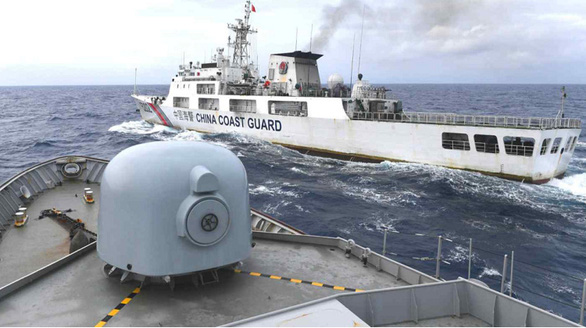
Cục diện cấu trúc an ninh ở Biển Đông dường như đã tiến triển sang một giai đoạn mới khi Indonesia, nơi đặt trụ sở của tổ chức ASEAN, quyết định thúc đẩy các hoạt động hợp tác an ninh hàng hải mang tính đa phương với các quốc gia trong khu vực.
Một tàu hải cảnh Trung Quốc được nhìn từ tàu hải quân Indonesia đang trong cuộc tuần tra ở khu vực Biển Bắc Natuna – Ảnh: REUTERS
Điều này cũng trùng hợp với căng thẳng gần đây giữa Indonesia với Trung Quốc ở khu vực ngoài khơi quần đảo Natuna thuộc chủ quyền Indonesia.











 CVD
CVD 