Nghị quyết số 140/NQ-CP của Chính phủ : Ban hành Chương trình hành động của Chính phủ thực hiện Nghị quyết số 55-NQ/TW

Thông tin chi tiết Nghị quyết của Chính phủ
Nghị quyết số 140/NQ-CP của Chính phủ : Ban hành Chương trình hành động của Chính phủ thực hiện Nghị quyết số 55-NQ/TW ngày 11 tháng 02 năm 2020 của Bộ Chính trị về định hướng Chiến lược phát triển năng lượng quốc gia của Việt Nam đến năm 2030, tầm nhìn đến năm 2045
Thuộc tính văn bản
Số/Ký hiệu 140/NQ-CP
Ngày ban hành 02/10/2020
Người ký Nguyễn Xuân Phúc
Trích yếu: Ban hành Chương trình hành động của Chính phủ thực hiện Nghị quyết số 55-NQ/TW ngày 11 tháng 02 năm 2020 của Bộ Chính trị về định hướng Chiến lược phát triển năng lượng quốc gia của Việt Nam đến năm 2030, tầm nhìn đến năm 2045
Cơ quan ban hành: Chính phủ
Phân loại: Nghị quyết

Tệp đính kèm:140.signed.pdf (1469357 Byte

PHÁT ĐỘNG HỢP TÁC MEKONG-HOA KỲ: MỞ RỘNG SỰ THAM GIA CỦA HOA KỲ VỚI KHU VỰC MEKONG

 (Launch of the Mekong-U.S. Partnership: Expanding U.S. Engagement with the Mekong Region)

Office of the Spokeperson – Bình Yên Đông lược dịch, Mekong-Cuulong

U.S. Department of State – September 14, 2020

Hoa Kỳ, Cambodia, Lào, Myanmar, Thái Lan và Việt Nam tái xác nhận mối quan hệ lâu đời của mình qua việc phát động Hợp tác Mekong-Hoa Kỳ (Mekong-US Partnership (MUSP)) hôm 11 tháng 9.  Hoa Kỳ loan báo các kế hoạch, cộng tác với Quốc hội Hoa Kỳ, để gia tăng hỗ trợ cho quyền tự trị, độc lập kinh tế, cai quản tốt, và tăng trưởng khả chấp của các quốc gia đối tác Mekong, quan niệm rằng giữ gìn các giá trị nầy cũng quan trọng cho sự hoàn kết và hiệu quả của ASEAN [Hiệp hội các Quốc gia Đông Nam Á (ĐNA)].

Tiếp tục đọc “PHÁT ĐỘNG HỢP TÁC MEKONG-HOA KỲ: MỞ RỘNG SỰ THAM GIA CỦA HOA KỲ VỚI KHU VỰC MEKONG”

HOA KỲ NÓI TRUNG HOA PHẢI “CHỊU TRÁCH NHIỆM” VỀ CÁC ĐẬP MEKONG TẠI PHIÊN HỌP NGOẠI TRƯỞNG CỦA KHU VỰC

Sunday, September 27, 2020

 (US says China has to be made ‘accountable’ for Mekong dams at meeting with region’s foreign ministers) 

Kyodo – Bình Yên Đông lược dịch, Mekong-Cuulong

South China Morning Post – 12 September 2020

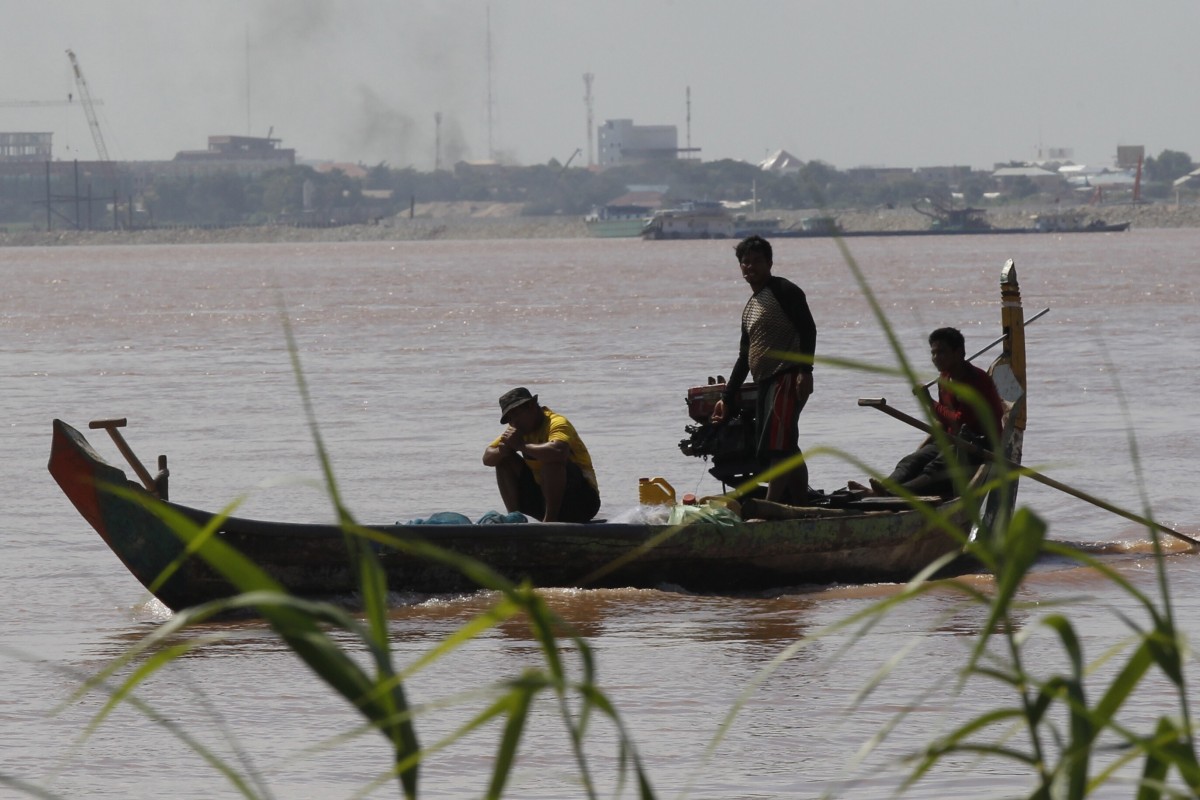
Người dân đi thuyền trên sông Mekong ở Phnom Penh, Cambodia. [Ảnh: EPA]

•           Phụ tá Ngoại trưởng Hoa Kỳ Stephen Biegun dùng phiên họp để tố cáo Trung Hoa về hạn hán đang xảy ra ở vùng hạ lưu Mekong

•           Tuy nhiên, một viên chức Thái nói phiên họp có mục đích thảo luận các biện pháp để “tăng cường hợp tác qua Sáng kiến Hạ lưu Mekong (Lower Mekong Initiative (LMI))”

Tiếp tục đọc “HOA KỲ NÓI TRUNG HOA PHẢI “CHỊU TRÁCH NHIỆM” VỀ CÁC ĐẬP MEKONG TẠI PHIÊN HỌP NGOẠI TRƯỞNG CỦA KHU VỰC”

United States closes immigration door to communists in clear swipe at China

Yahoo! News

Keegan Elmer South China Morning Post 4 October 2020

TĐH: This will affect Vietnam

The United States has released guidance on its immigration laws that will make it almost impossible for members of a Communist party or similar to be granted permanent residence or citizenship of America.

Tiếp tục đọc “United States closes immigration door to communists in clear swipe at China”

Exxon Mobil’s $5-billion LNG power plant gets green light

By Dat Nguyen   October 3, 2020 | 02:30 pm GMT+7 vnexpressExxon Mobil’s $5-billion LNG power plant gets green lightAn LNG carrier seen at the port of Nakhodka, Russia. Photo by Shutterstock/VladSV.

The northern port city of Hai Phong has given approval to Exxon Mobil to build a liquefied natural gas-fired power plant.

The city People’s Committee said in a recent statement that the $5.09 billion plant will be built in two phases, each with a capacity of 2.25 gigawatts, the first going on stream in 2026-27 and the second three years later.

Tiếp tục đọc “Exxon Mobil’s $5-billion LNG power plant gets green light”

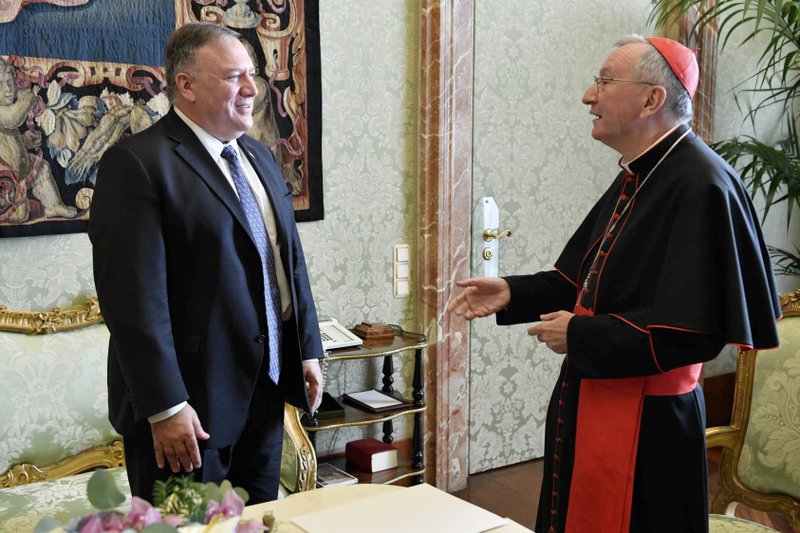
Pompeo, Vatican clash over China after tensions spill out

By NICOLE WINFIELD Oct. 2, 2020 AP

U.S. Secretary of State Mike Pompeo meets Vatican Secretary of State Cardinal Pietro Parolin, at the Vatican, Thursday, Oct. 1, 2020. Pompeo is meeting Thursday with top Vatican officials, a day after tensions over U.S. opposition to the Vatican’s China policy spilled out in public. (Vatican Media via AP)

ROME (AP) — The U.S. and the Vatican butted heads over China on Thursday as the Holy See chafed at U.S. Secretary of State Mike Pompeo’s public call to take a harsher stance against Chinese restrictions on religious freedom.

Tiếp tục đọc “Pompeo, Vatican clash over China after tensions spill out”

Changes Underway at Cambodia’s Ream Naval Base

October 2, 2020
October 2, 2020  |  AMTI Brief

The Cambodian government has demolished a U.S.-built facility at the country’s Ream Naval Base, according to satellite imagery collected on October 1. The demolition occurred sometime after September 5—likely around September 10—though imagery of sufficient resolution to confirm was not available at that time. The building was one of several U.S.-funded facilities on the base which were reportedly to be relocated after Cambodia struck a secret deal to grant China access to Ream. The recent demolition seems to confirm that changes are underway at the naval base and again raises questions about rumored Chinese access. Tiếp tục đọc “Changes Underway at Cambodia’s Ream Naval Base”

US-China tech war: can China’s chipmaking drive save it from US technology embargo?


Beijing is going all in to back a breakthrough in Chinese semiconductor manufacturing as the nation faces US sanctions on hi-tech goodsBut many newcomers to the industry have little experience and some experts say the ‘whatever it takes’ approach shows tolerance for inefficiency

Cissy Zhou

Cissy Zhou

Published: 11:30pm, 28 Sep, 2020 SCMP

TOP PICKShttps://tpc.googlesyndication.com/safeframe/1-0-37/html/container.htmlEconomyChina is nowhere near meeting Trump trade deal targets, analysis reveals29 Sep 2020EconomyChina’s ‘sea turtles’ return in record numbers into crowded job market21 Sep 2020EconomyChina’s foreign currency saving rates slashed to record lows29 Sep 2020BusinessChina’s EV makers pull out all stops to catch up with industry leader Tesla29 Sep 2020EconomyChina says surging corn prices caused by ‘irrational hoarding’25 Sep 2020BusinessAlibaba to upend China’s real estate sales by putting homes online29 Sep 2020EconomyChina property developer follows Huawei with job cuts in Australia25 Sep 2020EconomyCoronavirus and geopolitical tensions dash Chinese dreams in Malaysia20 Sep 2020EconomyFew US firms fleeing China, despite Trump’s calls to decouple10 Sep 2020EconomyUS mulls ban on Chinese textiles over Xinjiang human rights abuses

Tiếp tục đọc “US-China tech war: can China’s chipmaking drive save it from US technology embargo?”

Duterte invokes court ruling against China in UN address


In his more than four years in office, it was the first time that Duterte addressed the UN body, which marks its 75th anniversary this year [Manuel Elias/UN via AFP]

23 Sep 2020 Al Jareeza

Philippine President Rodrigo Duterte went on the offensive over the South China Sea on Wednesday, in his first-ever address to the United Nations General Assembly, stressing his country’s legal victory at The Hague in its long-simmering maritime dispute with China.

Tiếp tục đọc “Duterte invokes court ruling against China in UN address”

Powers, Norms, and Institutions: The Future of the Indo-Pacific from a Southeast Asia Perspective

Results of a CSIS Survey of Strategic Elites

June 9, 2020

DOWNLOAD THE REPORT

Situated at the heart of the Indo-Pacific, Southeast Asia has, in recent years, become the bellwether for the region, including the future of democratic governance. External powers, including the United States and China, have ramped up engagement with Southeast Asia and now compete for influence in the region. Amid these geopolitical shifts, Southeast Asian perspectives on dynamics that will shape the future of the region more than ever before.

In late 2019, the Center for Strategic and International Studies (CSIS) conducted a survey of strategic elites in Indonesia, Malaysia, the Philippines, Singapore, Thailand as well as Fiji to understand how the region views trends related to power, norms, and institutions. In early 2020, CSIS conducted extensive analysis of the survey data and convened a workshop in Sydney, Australia, to further examine the results with leading experts from the countries surveyed, as well as Australia and the United States. This report presents key findings from the survey and workshop on the strategic landscape in Southeast Asia and the future of power and influence and challenges faced by the region.

This report is made possible by the generous support from the Australian Department of Defence and the Australian Embassy, Washington, D.C.

Trade, deglobalization and the new mercantilism

Author Photo

Razeen Sally

SHARE

Deglobalization And New Mercantilism Hinrich Foundation

hinrichfoundation Published 24 September 2020 | 10 minute read

The COVID-19 pandemic is accelerating shifts underway since the last global financial crisis (GFC). It ushers in a new era of deglobalisation and protectionism, indeed a new mercantilist world order.

Three global shifts will shape international trade. They will probably last beyond the immediate crisis to the “post-vaccine” future. The first is an accelerated shift from Market to State: more government interventions will further restrict markets. The second is to national unilateralism – governments acting on their own, often against each other – at the expense of global cooperation. The third is to more contested and unstable geopolitics, centred on US-China rivalry. Taken together, they herald a new mercantilism, whose main precedents are Europe and its colonial expansion in the seventeenth and eighteenth centuries, and the period between the two world wars in the first half of the twentieth century.

Tiếp tục đọc “Trade, deglobalization and the new mercantilism”

Vì sao Việt Nam cần có chiến lược nhập khẩu LNG trong dài hạn?

06:59 |05/05/2020 nangluongvietnam

 –  Trong bối cảnh nguồn cung khí trong nước suy giảm nhanh, các mỏ mới có chi phí phát triển cao, quá trình đàm phán giá khí thường kéo dài, trong khi đó nhu cầu sử dụng khí ngày càng tăng đòi hỏi phải có các giải pháp đồng bộ để bảo đảm duy trì nguồn cung cấp khí ổn định, lâu dài cho nền kinh tế và góp phần vào bảo đảm an ninh năng lượng quốc gia. Do đó, giải pháp hữu hiệu nhất là ưu tiên đầu tư hạ tầng kỹ thuật phục vụ nhập khẩu và tiêu thụ khí tự nhiên hoá lỏng (LNG) như đã nêu trong Nghi quyết 55/NQ -TW của Bộ Chính trị.


Những vấn đề cần ưu tiên trong ‘Chiến lược phát triển năng lượng’ [Kỳ 1]
Những vấn đề cần ưu tiên trong ‘Chiến lược phát triển năng lượng’ [Kỳ 2]
Những vấn đề cần ưu tiên trong ‘Chiến lược phát triển năng lượng’ [Kỳ 3]
Những vấn đề cần ưu tiên trong ‘Chiến lược phát triển năng lượng’ [Kỳ 4]
Những vấn đề cần ưu tiên trong ‘Chiến lược phát triển năng lượng’ [Kỳ 5]
Những vấn đề cần ưu tiên trong ‘Chiến lược phát triển năng lượng’ [Kỳ 6]
Những vấn đề cần ưu tiên trong ‘Chiến lược phát triển năng lượng’ [Kỳ 7]
Những vấn đề cần ưu tiên trong ‘Chiến lược phát triển năng lượng’ [Kỳ 8]
Những vấn đề cần ưu tiên trong ‘Chiến lược phát triển năng lượng’ [Kỳ 9]
Những vấn đề cần ưu tiên trong ‘Chiến lược phát triển năng lượng’ [Kỳ 10]
Những vấn đề cần ưu tiên trong ‘Chiến lược phát triển năng lượng’ [Kỳ 11]
Những vấn đề cần ưu tiên trong ‘Chiến lược phát triển năng lượng’ [Kỳ 12]
Những vấn đề cần ưu tiên trong ‘Chiến lược phát triển năng lượng’ [Kỳ 13]
Những vấn đề cần ưu tiên trong ‘Chiến lược phát triển năng lượng’ [Kỳ 14]
Những vấn đề cần ưu tiên trong ‘Chiến lược phát triển năng lượng’ [Kỳ 15]
Những vấn đề cần ưu tiên trong ‘Chiến lược phát triển năng lượng’ [Kỳ 16]
Những vấn đề cần ưu tiên trong ‘Chiến lược phát triển năng lượng’ [Kỳ 17]
Những vấn đề cần ưu tiên trong ‘Chiến lược phát triển năng lượng’ [Kỳ 18]
Những vấn đề cần ưu tiên trong ‘Chiến lược phát triển năng lượng’ [Kỳ cuối]


Khí tự nhiên được coi là nhiên liệu hóa thạch thân thiện hơn với môi trường vì phát thải CO2 thấp nhất tính trên cùng một đơn vị năng lượng và thích hợp để sử dụng cho các nhà máy nhiệt điện công nghệ tua bin khí hỗn hợp (TBKHH). Tính theo nhiệt lượng tương đương, thì đốt khí tự nhiên sẽ sinh ra một lượng CO2 ít hơn khoảng 30% so với đốt dầu và 50% so với đốt than, còn với NOx thì có thể giảm tới 90% và bụi 100%.

Trong những năm gần đây, đặc biệt từ sau COP 21 nhu cầu LNG trên thế giới tăng đáng kể. Năm 2016, khối lượng LNG buôn bán trên toàn thế giới khoảng 258 triệu tấn LNG, tăng 13 triệu tấn so với năm 2015 (5,3%) và giai đoạn 15 năm từ 2000 đến 2015 nhu cầu LNG trên thế giới tăng với nhịp độ bình quân 6,3%/năm. Theo dự báo, công suất LNG trên thế giới sẽ tăng từ 340 triệu tấn/năm (năm 2017) lên 453 triệu tấn/năm vào năm 2022.

Tiếp tục đọc “Vì sao Việt Nam cần có chiến lược nhập khẩu LNG trong dài hạn?”