I am an attorney in the Washington DC area, with a Doctor of Law in the US, attended the master program at the National School of Administration of Việt Nam, and graduated from Sài Gòn University Law School. I aso studied philosophy at the School of Letters in Sài Gòn.
.
I have worked as an anti-trust attorney for Federal Trade Commission and a litigator for a fortune-100 telecom company in Washington DC.
I have taught law courses for legal professionals in Việt Nam and still counsel VN government agencies on legal matters.
I have founded and managed businesses for me and my family, both law and non-law.
I have published many articles on national newspapers and radio stations in Việt Nam.
In 1989 I was one of the founding members of US-VN Trade Council, working to re-establish US-VN relationship.
Since the early 90's, I have established and managed VNFORUM and VNBIZ forum on VN-related matters; these forums are the subject of a PhD thesis by Dr. Caroline Valverde at UC-Berkeley and her book Transnationalizing Viet Nam.
I translate poetry and my translation of "A Request at Đồng Lộc Cemetery" is now engraved on a stone memorial at Đồng Lộc National Shrine in VN.
I study and teach the Bible and Buddhism. In 2009 I founded and still manage dotchuoinon.com on positive thinking and two other blogs on Buddhism.
In 2015 a group of friends and I founded website CVD - Conversations on Vietnam Development (cvdvn.net).
I study the art of leadership with many friends who are religious, business and government leaders from many countries.
I have written these books, published by Phu Nu Publishing House in Hanoi:
"Positive Thinking to Change Your Life", in Vietnamese (TƯ DUY TÍCH CỰC Thay Đổi Cuộc Sống) (Oct. 2011)
"10 Core Values for Success" (10 Giá trị cốt lõi của thành công) (Dec. 2013)
"Live a Life Worth Living" (Sống Một Cuộc Đời Đáng Sống) (Oct. 2023)
I practice Jiu Jitsu and Tai Chi for health, and play guitar as a hobby, usually accompanying my wife Trần Lê Túy Phượng, aka singer Linh Phượng.
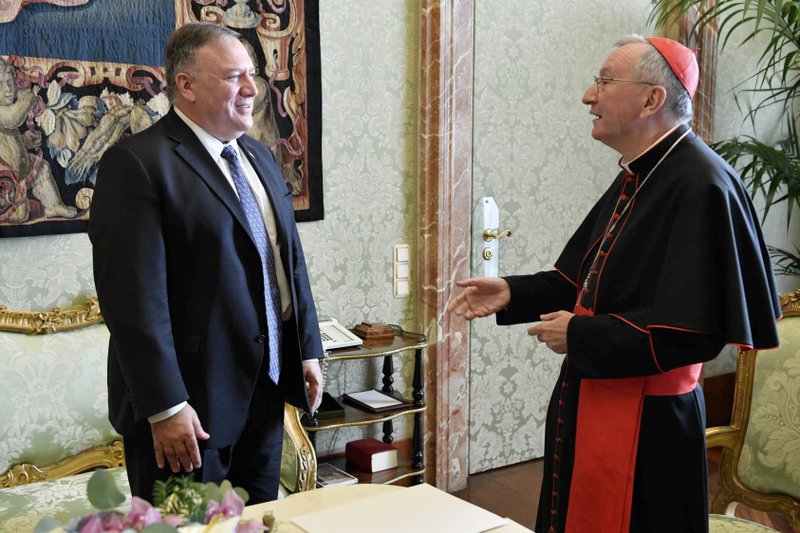
U.S. Secretary of State Mike Pompeo meets Vatican Secretary of State Cardinal Pietro Parolin, at the Vatican, Thursday, Oct. 1, 2020. Pompeo is meeting Thursday with top Vatican officials, a day after tensions over U.S. opposition to the Vatican’s China policy spilled out in public. (Vatican Media via AP)
ROME (AP) — The U.S. and the Vatican butted heads over China on Thursday as the Holy See chafed at U.S. Secretary of State Mike Pompeo’s public call to take a harsher stance against Chinese restrictions on religious freedom.
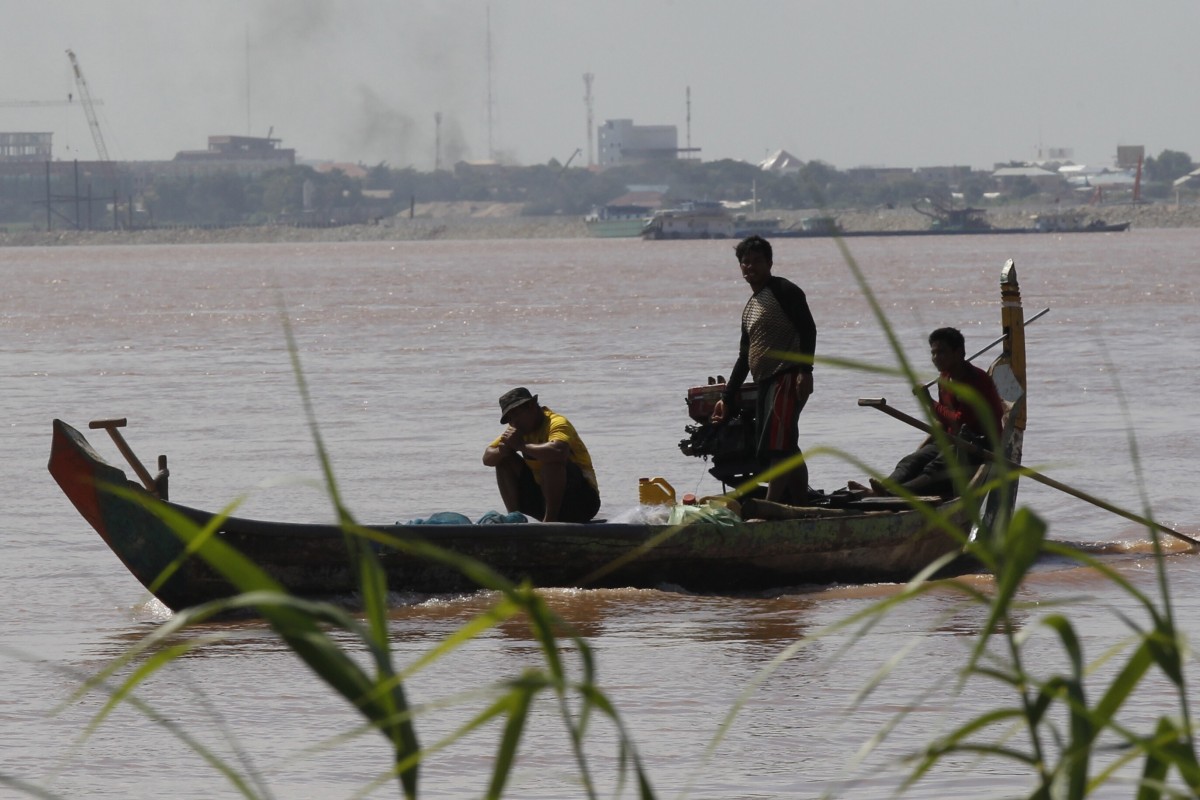
The Cambodian government has demolished a U.S.-built facility at the country’s Ream Naval Base, according to satellite imagery collected on October 1. The demolition occurred sometime after September 5—likely around September 10—though imagery of sufficient resolution to confirm was not available at that time. The building was one of several U.S.-funded facilities on the base which were reportedly to be relocated after Cambodia struck a secret deal to grant China access to Ream. The recent demolition seems to confirm that changes are underway at the naval base and again raises questions about rumored Chinese access. Tiếp tục đọc “Changes Underway at Cambodia’s Ream Naval Base”→
Beijing is going all in to back a breakthrough in Chinese semiconductor manufacturing as the nation faces US sanctions on hi-tech goodsBut many newcomers to the industry have little experience and some experts say the ‘whatever it takes’ approach shows tolerance for inefficiency
The US Department of Commerce has written to American suppliers of China’s biggest chip manufacturer, warning them of “unprecedented risks” that their products could be used by the Chinese military.
In his more than four years in office, it was the first time that Duterte addressed the UN body, which marks its 75th anniversary this year [Manuel Elias/UN via AFP]
Philippine President Rodrigo Duterte went on the offensive over the South China Sea on Wednesday, in his first-ever address to the United Nations General Assembly, stressing his country’s legal victory at The Hague in its long-simmering maritime dispute with China.
Situated at the heart of the Indo-Pacific, Southeast Asia has, in recent years, become the bellwether for the region, including the future of democratic governance. External powers, including the United States and China, have ramped up engagement with Southeast Asia and now compete for influence in the region. Amid these geopolitical shifts, Southeast Asian perspectives on dynamics that will shape the future of the region more than ever before.
In late 2019, the Center for Strategic and International Studies (CSIS) conducted a survey of strategic elites in Indonesia, Malaysia, the Philippines, Singapore, Thailand as well as Fiji to understand how the region views trends related to power, norms, and institutions. In early 2020, CSIS conducted extensive analysis of the survey data and convened a workshop in Sydney, Australia, to further examine the results with leading experts from the countries surveyed, as well as Australia and the United States. This report presents key findings from the survey and workshop on the strategic landscape in Southeast Asia and the future of power and influence and challenges faced by the region.
This report is made possible by the generous support from the Australian Department of Defence and the Australian Embassy, Washington, D.C.
The Indian Government will support seven water management projects in the Mekong Delta provinces of Ben Tre, Hau Giang, Kien Giang, and Tien Giang with non-refundable aid of $350,000.
The COVID-19 pandemic is accelerating shifts underway since the last global financial crisis (GFC). It ushers in a new era of deglobalisation and protectionism, indeed a new mercantilist world order.
Three global shifts will shape international trade. They will probably last beyond the immediate crisis to the “post-vaccine” future. The first is an accelerated shift from Market to State: more government interventions will further restrict markets. The second is to national unilateralism – governments acting on their own, often against each other – at the expense of global cooperation. The third is to more contested and unstable geopolitics, centred on US-China rivalry. Taken together, they herald a new mercantilism, whose main precedents are Europe and its colonial expansion in the seventeenth and eighteenth centuries, and the period between the two world wars in the first half of the twentieth century.
– Trong bối cảnh nguồn cung khí trong nước suy giảm nhanh, các mỏ mới có chi phí phát triển cao, quá trình đàm phán giá khí thường kéo dài, trong khi đó nhu cầu sử dụng khí ngày càng tăng đòi hỏi phải có các giải pháp đồng bộ để bảo đảm duy trì nguồn cung cấp khí ổn định, lâu dài cho nền kinh tế và góp phần vào bảo đảm an ninh năng lượng quốc gia. Do đó, giải pháp hữu hiệu nhất là ưu tiên đầu tư hạ tầng kỹ thuật phục vụ nhập khẩu và tiêu thụ khí tự nhiên hoá lỏng (LNG) như đã nêu trong Nghi quyết 55/NQ -TW của Bộ Chính trị.
Khí tự nhiên được coi là nhiên liệu hóa thạch thân thiện hơn với môi trường vì phát thải CO2 thấp nhất tính trên cùng một đơn vị năng lượng và thích hợp để sử dụng cho các nhà máy nhiệt điện công nghệ tua bin khí hỗn hợp (TBKHH). Tính theo nhiệt lượng tương đương, thì đốt khí tự nhiên sẽ sinh ra một lượng CO2 ít hơn khoảng 30% so với đốt dầu và 50% so với đốt than, còn với NOx thì có thể giảm tới 90% và bụi 100%.
Trong những năm gần đây, đặc biệt từ sau COP 21 nhu cầu LNG trên thế giới tăng đáng kể. Năm 2016, khối lượng LNG buôn bán trên toàn thế giới khoảng 258 triệu tấn LNG, tăng 13 triệu tấn so với năm 2015 (5,3%) và giai đoạn 15 năm từ 2000 đến 2015 nhu cầu LNG trên thế giới tăng với nhịp độ bình quân 6,3%/năm. Theo dự báo, công suất LNG trên thế giới sẽ tăng từ 340 triệu tấn/năm (năm 2017) lên 453 triệu tấn/năm vào năm 2022.
– Như chúng ta đều biết, trong dự thảo Báo cáo Quy hoạch điện VIII, Viện Năng lượng (Bộ Công Thương) đã đưa ra phương án xem xét phát triển nhà máy điện hạt nhân sau năm 2030, để cập nhật thêm thông tin, chuyên gia Tạp chí Năng lượng Việt Nam đã có cuộc phỏng vấn TS. Trần Chí Thành – Viện trưởng Viện Năng lượng Nguyên tử Việt Nam (Bộ Khoa học Công nghệ) về những nhận định xung quanh vấn đề này. Tuy nhiên, chủ trương dừng dự án điện hạt nhân đã được Quốc hội thông qua vào năm 2016, vì vậy, TS. Trần Chí Thành trả lời với tư cách là một nhà nghiên cứu trong lĩnh vực công nghệ và an toàn điện hạt nhân [1].
Xin ông cho biết hiện trạng các nhà máy điện hạt nhân (ĐHN) và xu thế phát triển loại nguồn điện này trên thế giới trong hai thập kỷ tới?
TS. Trần Chí Thành: Có thể thấy rằng, từ sau khi sự cố Fukushima xảy ra năm 2011, ngành điện hạt nhân thế giới tuy có bị ảnh hưởng, nhưng nhìn chung vẫn tiếp tục phát triển. Hiện nay trên thế giới có 442 lò đang vận hành, tổng công suất lắp đặt gần 392.000 MWe, chiếm khoảng 11% sản lượng điện của cả thế giới, mặc dù điện hạt nhân chỉ có ở hơn 30 quốc gia. Có 53 lò hạt nhân đang được xây dựng, nhiều lò đã lên kế hoạch và nhiều nước bắt đầu triển khai chương trình điện hạt nhân.
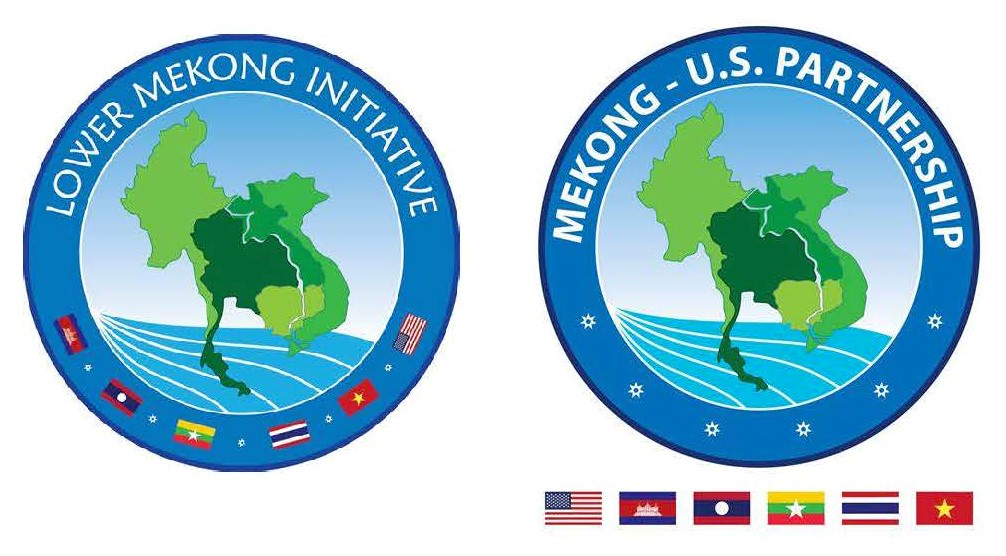
The launch of the Mekong-U.S. Partnership reflects the importance of the Mekong region to the United States. Our relationship with Mekong partner countries is an integral part of our Indo-Pacific vision and our strategic partnership with ASEAN. With more than $150 million in initial investments in regional programs, we will build on the good work of the Lower Mekong Initiative and the $3.5 billion in regional U.S. assistance during the last eleven years. Tiếp tục đọc “The Mekong-U.S. Partnership: The Mekong Region Deserves Good Partners”→
By Anh Minh September 23, 2020 | 08:14 am GMT+7 vnexpressA worker looks at wind turbines in central Ninh Thuan Province. Photo by VnExpress/Quynh Tran.
The Ministry of Industry and Trade wants to extend the incentive feed-in-tariff (FIT) period for wind power projects by a couple of years.
The current incentive FIT applies to projects commissioned before November 1, 2021, but the ministry will request Prime Minister Nguyen Xuan Phuc’s permission to extend it until the end of 2023, Minister Tran Tuan Anh said at a recent meeting.
A court in HCMC sentenced 20 people to up to 24 years in jail on Tuesday for their involvement in the bombing of a police station in 2018.
The HCMC People’s Court deemed the bombing a dangerous act that violated national security.
Nguyen Khanh, residing in Dong Nai Province that borders HCMC, that mastermind in the bombing, will serve a 24-year prison sentence for terrorism and illegal manufacturing, possession and purchase of explosives.
The court also imposed a VND10 million ($429) fine per each of 20 defendants, who will have to enter local confinement for three to five years after their release.
Nguyen Khanh after a trial against his directing a police station bombing in HCMC, September 22, 2020. Photo by VnExpress/Huu Khoa.
According to the panel, Khanh was upset over a local land dispute and enticed by 68-year-old Ngo Van Hoang Hung in Canada to join Trieu Dai Viet (Vietnam Dynasty), which opposes the Vietnamese government. Khanh was promised the position of the organization’s chief of Dong Nai Province upon the successful purchase of explosives and recruitment of additional organization members.