I am an attorney in the Washington DC area, with a Doctor of Law in the US, attended the master program at the National School of Administration of Việt Nam, and graduated from Sài Gòn University Law School. I aso studied philosophy at the School of Letters in Sài Gòn.
.
I have worked as an anti-trust attorney for Federal Trade Commission and a litigator for a fortune-100 telecom company in Washington DC.
I have taught law courses for legal professionals in Việt Nam and still counsel VN government agencies on legal matters.
I have founded and managed businesses for me and my family, both law and non-law.
I have published many articles on national newspapers and radio stations in Việt Nam.
In 1989 I was one of the founding members of US-VN Trade Council, working to re-establish US-VN relationship.
Since the early 90's, I have established and managed VNFORUM and VNBIZ forum on VN-related matters; these forums are the subject of a PhD thesis by Dr. Caroline Valverde at UC-Berkeley and her book Transnationalizing Viet Nam.
I translate poetry and my translation of "A Request at Đồng Lộc Cemetery" is now engraved on a stone memorial at Đồng Lộc National Shrine in VN.
I study and teach the Bible and Buddhism. In 2009 I founded and still manage dotchuoinon.com on positive thinking and two other blogs on Buddhism.
In 2015 a group of friends and I founded website CVD - Conversations on Vietnam Development (cvdvn.net).
I study the art of leadership with many friends who are religious, business and government leaders from many countries.
I have written these books, published by Phu Nu Publishing House in Hanoi:
"Positive Thinking to Change Your Life", in Vietnamese (TƯ DUY TÍCH CỰC Thay Đổi Cuộc Sống) (Oct. 2011)
"10 Core Values for Success" (10 Giá trị cốt lõi của thành công) (Dec. 2013)
"Live a Life Worth Living" (Sống Một Cuộc Đời Đáng Sống) (Oct. 2023)
I practice Jiu Jitsu and Tai Chi for health, and play guitar as a hobby, usually accompanying my wife Trần Lê Túy Phượng, aka singer Linh Phượng.
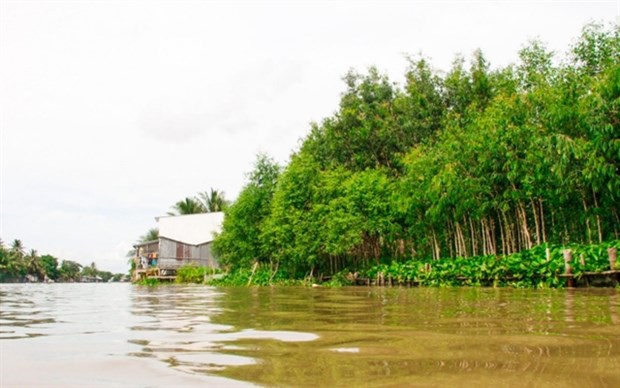
More people in the Mekong Delta are planting trees and building embankments made of natural materials to prevent erosion along rivers and canals.
A natural embankment in Phung Hiep District’s Bung Tau Town in Hau Giang Province (Photo: nhandan)
The delta, which has a dense river and canal network, has faced increasing erosion along rivers and canals in recent years because of human activity and climate change.
In Hau Giang Province, the Irrigation Sub-department built three natural embankments with a total length of 380 metres on a pilot basis to prevent erosion in Phung Hiep District and Nga Bay Town in 2017.
The natural embankments are made by filling eroded areas with soil and setting up a barrier made of cajuput trunks or bamboo between the embankments and water.
Cajuput and crabapple mangrove trees are planted inside the barriers so that their roots prevent soil erosion. Permeable fabric or fine nets are installed outside the barrier to hold the soil.
Does investor protection increase foreign direct investment? A meta‐analysis
par Josef C. Brada, Zdenek Drabek, Ichiro Iwasaki
Abstract
We undertake a meta‐analysis of the effects of international investment agreements for the protection of foreign investors on foreign direct investment using 2107 estimates drawn from 74 studies. Our meta‐analysis finds robust evidence that effect of international investment agreements is so small as to be considered zero. However, our results do not rule out the possibility that the effect of these agreements is, in fact, positive and that current research methods are insufficiently powerful or precise to identify the underlying genuine effect. FDI from developed countries appears to be more responsive to the existence of investment protection, and there is evidence of publication–selection bias in favour of studies that find a positive effect for investor protection.
Does investor protection increase foreign direct investment? A meta‐analysis
Journal of Economic Surveys | 30 September 2020
Does investor protection increase foreign direct investment? A meta‐analysis
par Josef C. Brada, Zdenek Drabek, Ichiro Iwasaki
Abstract
We undertake a meta‐analysis of the effects of international investment agreements for the protection of foreign investors on foreign direct investment using 2107 estimates drawn from 74 studies. Our meta‐analysis finds robust evidence that effect of international investment agreements is so small as to be considered zero. However, our results do not rule out the possibility that the effect of these agreements is, in fact, positive and that current research methods are insufficiently powerful or precise to identify the underlying genuine effect. FDI from developed countries appears to be more responsive to the existence of investment protection, and there is evidence of publication–selection bias in favour of studies that find a positive effect for investor protection.
By Dang Khoa November 1, 2020 | 11:46 am GMT+7 vnexpressVietnamese police during a drill in Hanoi in 2019. photo by VnExpress/Ngoc Thanh.
Vietnam is 10th in this year’s Global Law and Order index that measures people’s perceptions of personal security.
For the report published earlier this week, American analytics firm Gallup asked nearly 175,000 people in 144 countries and territories via telephone and in person about their “confidence in their local police, their feelings of personal safety, and the incidence of theft and assault or mugging in the past year.”
The unexpected visit by US Secretary of State Michael Richard Pompeo to Vietnam reflects the development of Vietnam – US relations. Pompeo’s visit to Vietnam took place after his visits to four Asian countries.
According to the Vietnamese Ministry of Foreign Affairs, at the invitation of Deputy Prime Minister and Foreign Minister Pham Binh Minh, US Secretary of State Michael Richard Pompeo officially visited Vietnam on October 29-30 to celebrate the 25th anniversary of Vietnam-US diplomatic relations.
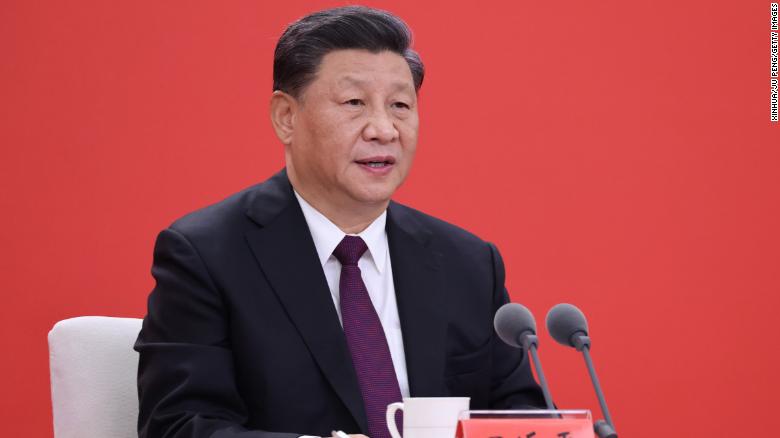
Hong Kong (CNN Business) China wants to counter the United States by boosting its technological capabilities and becoming more self sufficient. That’s easier said than done.Beijing outlined its goal for more economic independence this week as the Chinese Communist Party’s Central Committee put together its latest Five-Year Plan. The 14th iteration of the vast policy framework will cover 2021 to 2025, and is key to setting the country’s political and economic agenda.The full scope of the plan might not be known for months, but a statement published Thursday said that China wants to focus on economic self-reliance and technological independence. Doing so would help insulate the country from US attempts to restrict its access to critical technologies.”[We will] nurture a strong domestic market and establish a new development pattern,” the statement said. “Domestic consumption will be a strategic focus.”Chinese President Xi Jinping delivers a speech in Shenzhen on October 14.
Light on detail
The statement did not yet outline any specific targets.But messages from Beijing are being closely watched right now.The world’s second largest economy is likely to be the only major world power to expand this year as the coronavirus pandemic prevents growth elsewhere. China’s future is also closely tied to its unfolding trade and technology war with the United States, and tensions between the two are getting worse.
“Economic globalization is facing headwinds now,” said Han Wenxiu, a senior finance official from the Communist Party’s Central Committee during a press conference Friday. The pandemic, coupled with rising protectionism, has weakened international economic cooperation, Han added.The need for innovation at home was underscored byWang Zhigang, China’s Minister of Science and Technology.”Technological self sufficiency is a strategic pillar of the nation’s development,” Wang said. “We must boost independent innovation and do our own job well. That’s because key technologies can’t be bought or asked for [from others].”
Easier said than done
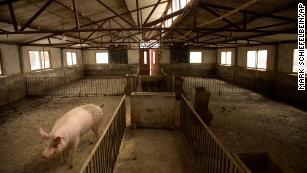
China’s desire to achieve economic self-sufficiency isn’t a new one. Many of the country’s Five-Year Plans have prioritized sustainable growth and expanding domestic industry. And a recent, ambitious 10-year plan — “Made in China 2025″ — was created to push China’s manufacturing sector into more advanced technological fields.But achieving economic independence is easier said than done.”There is no guarantee that efforts to boost self-sufficiency in specific sectors will succeed,” wrote Julian Evans-Pritchard, senior China economist for Capital Economics, in a research note late last week.Evans-Pritchard pointed out that unforeseen events can derail China’s plans, such as when an outbreak of African Swine Fever decimated the country’s pork industry last year. The disease wiped out a third of China’s pig population, causing a shortage that forced China to import massive amounts of meat.
For advanced sectors, shedding foreign independence is even more difficult. China is hugely reliant on other countries for the chipsets it needs to build the next generation of technology. The country imported more than $300 billion worth of chips last year, about $64 billion more than it spent on crude oil.”Made in China 2025″ was intended to help China reduce that reliance, and included goals for 40% of chips to be produced domestically by 2020. That share was supposed to increase to 70% by 2025.But the country doesn’t appear to be anywhere close to achieving those targets. Last year, less than 16% of the chips that China needed were produced within the country’s borders, according to an estimate published earlier this year by IC Insights.”Given the large gap between China and the US in the semiconductor industry, China will have to make gigantic investments over a long period in order to catch up with material progress,” according to Chaoping Zhu, global market strategist for JP Morgan Asset Management based in Shanghai.He wrote in a report Friday that it’s doubtful as to whether China will be able to achieve self-reliance in a variety of areas, with chips on top of that list.Economic self sufficiency is also not always good for economic development, according to Evans-Pritchard. He noted that companies are most productive when they can freely choose between domestic or imported inputs without political interference.”Pursuing self-sufficiency is (literally) a textbook way to depress productivity,” he wrote.
Beijing’s hands might be tied
China might not have a choice, though, when it comes to pursuing further economic independence.Washington and Beijing have been locked in an escalating battle over technology, trade and national security. Tensions have only increased this year as they blame each other for starting and mishandling the coronavirus pandemic and clash over Hong Kong and alleged human rights abuses in Xinjiang.
The spat has led the United States to slap heavy sanctions on Chinese companies that rely on US technology to survive, including tech firm Huawei. Other tech champions, including China’s biggest chipmaker SMIC, have also entered Washington’s crosshairs.”Facing the risks of widening restrictions, it is increasingly critical for China to develop domestic capacity and reduce its dependence on foreign technology, ” wrote Zhufrom JP Morgan.Evans-Pritchard said that China still needs to figure out a way to address its biggest problems, including an over-reliance on infrastructure-focused investment as a means to protect growth and an aging population.”Without faster progress in addressing structural problems, we think growth could slow to just 2% by 2030,” he said.
Hong Kong (CNN) At the first meeting between Donald Trump and Chinese leader Xi Jinping, held over chocolate cake and sorbet at the US President’s vast Mar-a-Lago private club in Florida, the two leaders seemed on the brink of establishing an unlikely and potentially special relationship.Trump, less than three months into his first term, had spent his election campaign denouncing the Chinese government for undermining the United States, through a wide trade imbalance and cheap labor. “We can’t continue to allow China to rape our country,” Trump said in May 2016.But when Trump was standing alongside Xi at Mar-a-Lago the following April, his tone changed dramatically. The two leaders exchanged compliments during a news conference, with Trump describing their relationship as “outstanding.” Pictures from the meeting showed the two men sitting side-by-side, smiling broadly, on a golden couch.”It was a great honor to have President Xi Jinping and Madame Peng Liyuan of China as our guests … Tremendous goodwill and friendship was formed,” Trump tweeted shortly after the visit.US President Donald Trump poses with Chinese President Xi Jinping and his wife Peng Liyuan upon their arrival at the Mar-a-Lago estate in West Palm Beach, Florida, on April 6, 2017.
After releasing his plan to reopen America safely in April, President Trump remarked that prior to the Coronavirus pandemic, the United States had “built the greatest economy anywhere in the world . . . and we’re going to build it again.”
Hong Kong (CNN) China was one of two countries, along with Russia, named in a 2018 Pentagon report as posing the most significant military challenge to the United States. Two years on and that challenge has only grown.Beijing’s program of rapid modernization has seen its military transformed into a true global power, capable of comfortably projecting its forces throughout the Indo-Pacific region and beyond.This year alone has seen China engage in deadly border clashes with Indian troops; China’s People’s Liberation Army aircraft have repeatedly buzzed Taiwanese and Japanese air defenses; and Chinese ships have been involved in multiple incidents in the disputed waters of the South China Sea.<img alt=”The USS Nimitz and USS Ronald Reagan Carrier Strike Groups conduct dual carrier operations in the Indo-Pacific earlier this year.” -=””>
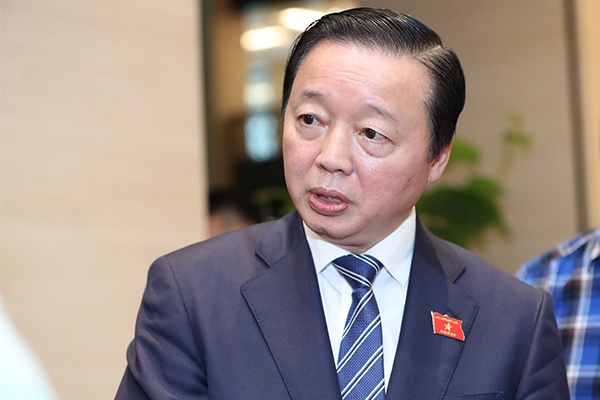
Answering the local press on the sidelines of the National Assembly session, Minister of Natural Resources and the Environment Tran Hong Ha said the principle of his ministry is ‘not to develop small-scale hydropower at any cost’.
Many experts believe that the historic floods in the central region some days ago were the results of climate change. How does the draft of the amended law on environmental protection address the issue?
Minister of Natural Resources and the Environment Tran Hong Ha
The issues related to climate change, natural disasters and floods are mentioned in many laws. The reason behind recent floods is extreme climate change. All the indicators exceed the indicators of the floods in history.
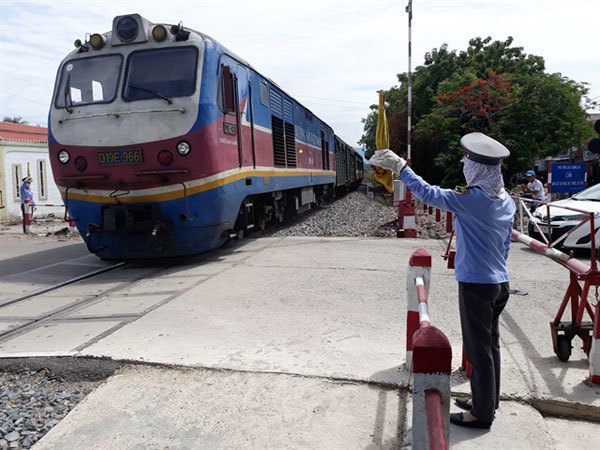
Prime Minister Nguyen Xuan Phuc asked the Ministry of Transport to propose a feasible plan for the North-South high-speed railway, considering this the backbone of the national strategy on railway development by 2050.
A train in Ninh Phuoc District, Ninh Thuan Province. — VNA/VNS Photo
The high-speed line, inter-provincial, inter-regional and urban railway networks must also be added to the strategy, he said.
He was speaking at a Government meeting on Wednesday on the development strategy for Vietnam’s railway towards 2050.
PRESIDENT TRUMP: (In progress) …on the phone, we have some terrific people: Chairman Abdel al-Burhan and Prime Minister Abdalla Hamdok of Sudan — a beautiful part of the world; and Prime Minister Benjamin Netanyahu — I think you mostly know him. You perhaps heard of him somewhere. We have the very highly sophisticated press. I think they may have heard of him, of Israel. So I want to just congratulate all of you.
The State of Israel and the Republic of Sudan have agreed to make peace. This is for many, many years they’ve been at odds, to put it nicely, and to normalize their relations. This will be the third country where we’re doing this. And we have many, many more coming. We have — they’re coming at us hot and heavy. In the coming weeks, they will meet to negotiate cooperation agreements. You saw that happen with UAE and Bahrain recently in agriculture, technology, aviation, migration, and other critical areas.
“Over the last quarter century, our two countries have built a partnership and friendship founded on shared interests, mutual respect, and people-to-people ties. Our everyday interactions are highlighted by increasing trade and investment ties, strategic cooperation, and collaboration on humanitarian and legacy of war issues, including the solemn duty of accounting for our wartime missing. In recent years, we have strengthened and expanded our Comprehensive Partnership, based on a shared vision of a stable and peaceful Indo-Pacific region, as well as respect for each other’s independence, sovereignty, territorial integrity, and political systems.”
– U.S. Secretary of State Michael R. Pompeo, July 10, 2020
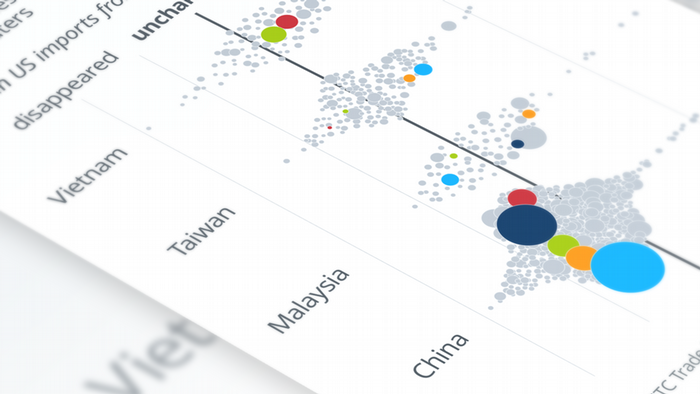
With tariffs on Chinese products high, US importers are turning to other countries. A DW analysis shows where Americans are now buying their cell phones, computers, furniture and clothing from instead.
Dung Trans’ business is booming: “Last year, we added a second floor to our factory. And now I’m looking at a new site four times larger than the current one.” For his company, the ongoing trade dispute between China and the United States has been a boon. And he is not alone.
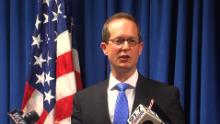
(CNN)The Unites States has charged eight people, including six Chinese citizens, over a three-year plot to intimidate a US resident into returning to China to face criminal charges.The case is believed to be part of the ruling Communist Party’s Operation Fox Hunt, an international anti-corruption campaign targeting Chinese fugitives — often former officials or rich individuals suspected of economic crimes.The US Department of Justice said Wednesday the charges included “conspiring to act in the US as illegal agents of the People’s Republic of China.” Five people have been arrested, while three are believed to be at large in China.In 2016, the group — which includes an American-licensed private investigator — is alleged to have embarked on an illegal campaign targeting a former Chinese government official, who has lived in the US since 2010. They are accused of recording and harassing his daughter, taping a threatening note to his front door and flying his elderly father from China — allegedly against his will — in 2017 to pressure his son to return to China.The note on the target’s New Jersey home said in Chinese: “If you are willing to go back to the mainland and spend 10 years in prison, your wife and children will be all right. That’s the end of this matter!”Speaking at a press conference Wednesday, US Assistant Attorney General John C. Demers said the arrests sent a message that the US “will not tolerate this type of flagrant conduct on our shores.”close dialog
Get daily analysis on the historic 2020 US election delivered to your inbox.Sign Me UpNo ThanksBy subscribing you agree to ourprivacy policy.“Without coordination with our government, China’s repatriation squads enter the United States, surveil and locate the alleged fugitives, and deploy intimidation and other tactics to force them back into China where they would face certain imprisonment or worse following illegitimate trials,” he said.Speaking at a press conference Thursday, Chinese Foreign Ministry spokesman Wang Wenbin said that Chinese law enforcement agencies “conduct foreign cooperation in strict accordance with international law, fully respect foreign laws and judicial sovereignty.””The United States ignores the basic facts and uses ulterior motives to smear China’s work in pursuit of escaped and stolen goods. China firmly opposes this. We urge the US to immediately correct its mistakes,” he said.
Operation Fox Hunt
The Chinese government launched Operation Fox Hunt in 2014 to target wealthy citizens who were accused of corruption and had fled the country with large amounts of money.Beijing authorities said at least 150 corrupt officials had fled to the US, and provided American counterparts with a list of “priority cases.”Demers said such operations — regardless of whether the targets were guilty or not — were “a clear violation of the rule of law and international norms.””Rather than work with US authorities for assistance with recognized criminal cases as responsible nations do, China resorts to extralegal means and unauthorized, often covert, law enforcement activity,” he said.FBI Director Christopher Wray said at a news conference Wednesday that in a different Operation Fox Hunt case, the Chinese government had sent an “emissary” to the target’s US-based family warning that the person should “return to China promptly or commit suicide.”Wray said that when Operation Fox Hunt targets refuse to return to China, family members in their home country “have even been arrested for leverage.””These are not the actions we would expect from a responsible nation state. Instead they’re more like something we would expect from an organized criminal syndicate,” Wray said.



 Abstract
 Vietnamese police during a drill in Hanoi in 2019. photo by VnExpress/Ngoc Thanh.
 Chinese President Xi Jinping delivers a speech in Shenzhen on October 14.

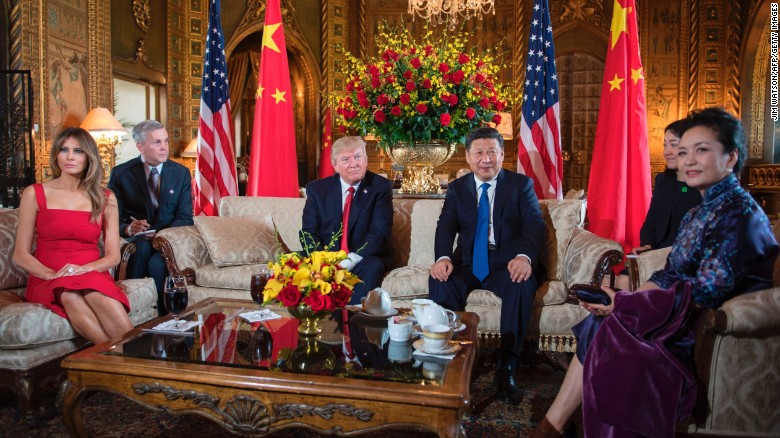 US President Donald Trump poses with Chinese President Xi Jinping and his wife Peng Liyuan upon their arrival at the Mar-a-Lago estate in West Palm Beach, Florida, on April 6, 2017.



 CVD
CVD 
