I am an attorney in the Washington DC area, with a Doctor of Law in the US, attended the master program at the National School of Administration of Việt Nam, and graduated from Sài Gòn University Law School. I aso studied philosophy at the School of Letters in Sài Gòn.
.
I have worked as an anti-trust attorney for Federal Trade Commission and a litigator for a fortune-100 telecom company in Washington DC.
I have taught law courses for legal professionals in Việt Nam and still counsel VN government agencies on legal matters.
I have founded and managed businesses for me and my family, both law and non-law.
I have published many articles on national newspapers and radio stations in Việt Nam.
In 1989 I was one of the founding members of US-VN Trade Council, working to re-establish US-VN relationship.
Since the early 90's, I have established and managed VNFORUM and VNBIZ forum on VN-related matters; these forums are the subject of a PhD thesis by Dr. Caroline Valverde at UC-Berkeley and her book Transnationalizing Viet Nam.
I translate poetry and my translation of "A Request at Đồng Lộc Cemetery" is now engraved on a stone memorial at Đồng Lộc National Shrine in VN.
I study and teach the Bible and Buddhism. In 2009 I founded and still manage dotchuoinon.com on positive thinking and two other blogs on Buddhism.
In 2015 a group of friends and I founded website CVD - Conversations on Vietnam Development (cvdvn.net).
I study the art of leadership with many friends who are religious, business and government leaders from many countries.
I have written these books, published by Phu Nu Publishing House in Hanoi:
"Positive Thinking to Change Your Life", in Vietnamese (TƯ DUY TÍCH CỰC Thay Đổi Cuộc Sống) (Oct. 2011)
"10 Core Values for Success" (10 Giá trị cốt lõi của thành công) (Dec. 2013)
"Live a Life Worth Living" (Sống Một Cuộc Đời Đáng Sống) (Oct. 2023)
I practice Jiu Jitsu and Tai Chi for health, and play guitar as a hobby, usually accompanying my wife Trần Lê Túy Phượng, aka singer Linh Phượng.
Pro-democracy Hong Kong lawmakers tell a news conference on November 11, 2020 that they will resign in solidarity with four colleagues disqualified by the city’s pro-Beijing authorities AFP/Anthony WALLACE
19 Nov 2020 08:29AM(Updated: 19 Nov 2020 08:36AM)
WASHINGTON: The United States, Britain, Australia, Canada and New Zealand on Wednesday (Nov 19) jointly accused China of violating its commitments following the disqualification of pro-democracy lawmakers from Hong Kong’s legislature.
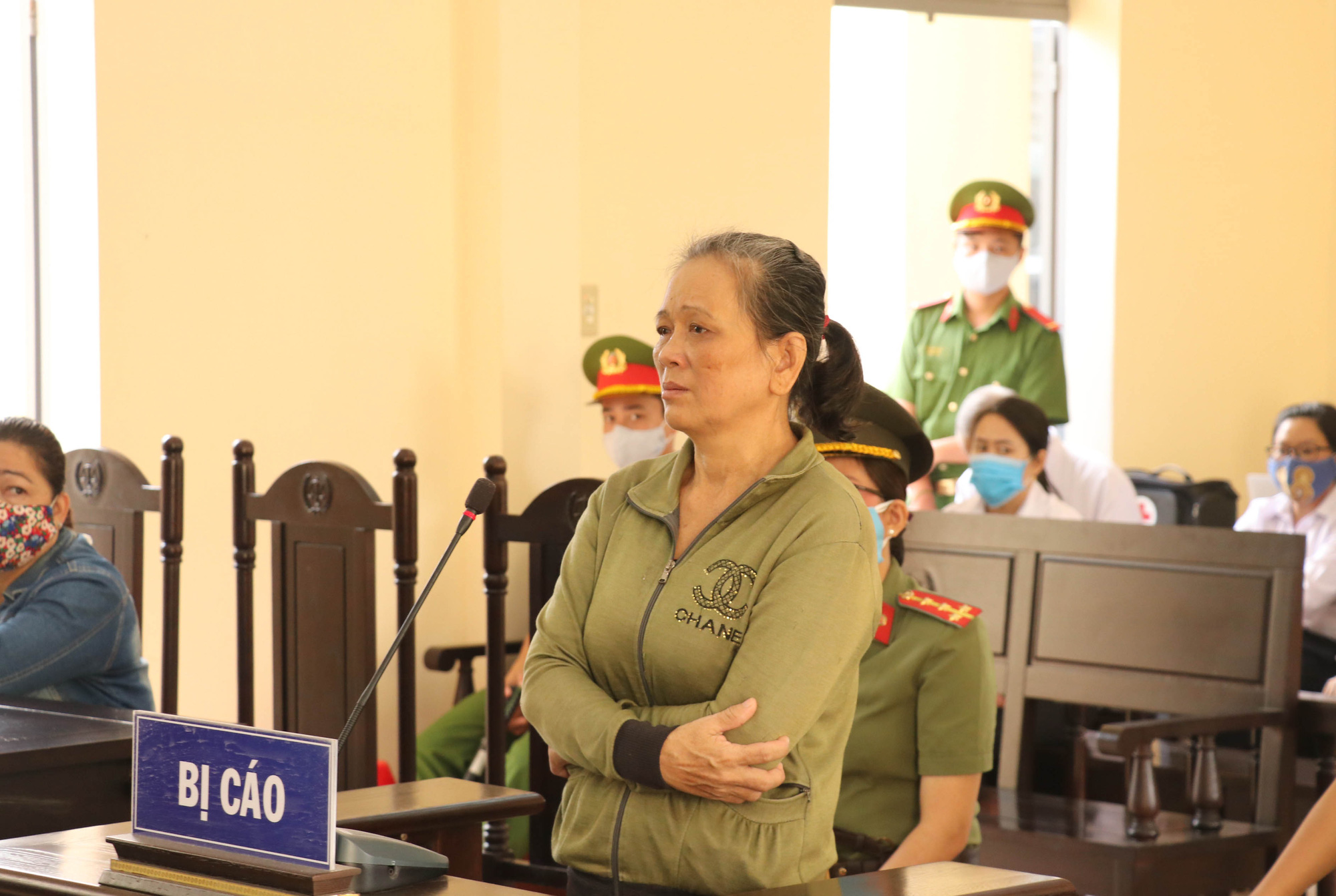
Nguyen Thi Hoa stands her trial at the People’s Court in Can Duoc District, Long An Province, Vietnam, November 17, 2020. Photo: An Long / Tuoi Tre
A woman in Vietnam’s Mekong Delta has been sentenced to four years in prison after being caught on camera beating and pouring feces onto her elderly mother.
By Dat Nguyen November 18, 2020 | 05:30 pm GMT+7 vnexpressVietnamese women work in an office in Hanoi. Photo by Shutterstock/Jimmy Tran.Gender bias is preventing Vietnamese women from climbing the corporate ladder, a recent study by the International Labor Organization has found.
The survey polled executives and employees at 300 companies of whom 54 percent agreed or strongly agreed that women with equal skills and qualifications as men have greater difficulty reaching top management positions.
By Phuong Vu November 18, 2020 | 08:30 pm GMT+7 vnexpressChinese structures are pictured at Vietnam’s Spratly Islands in the East Sea, 2017. Photo by Reuters/Erik De Castro.Canadian defense minister Harjit Sajjan has made it clear that his nation is against militarization in the South China Sea.
“Canada opposes unilateral actions that have escalated tensions in the region and undermined stability in the South China Sea. We are against the threat or use of force, large-scale land reclamation, building outposts on disputed entities and using them for military purposes in the sea,” he said.
TTO – Nhật Bản đã đạt được những bước tiến to lớn trong việc trở thành một trong những quốc gia được các nước Đông Nam Á ủng hộ nhiều nhất. Trước Thủ tướng Suga, ông Abe cũng từng chọn thăm các nước Đông Nam Á đầu tiên.
Từ trái sang: Chủ tịch Trung Quốc Tập Cận Bình, Tổng thống Indonesia Joko Widodo và Thủ tướng Nhật Bản Shinzo Abe trong một lần xuất hiện chung ở Jakarta, Indonesia hồi năm 2015 – Ảnh: REUTERS
Đại đoàn kết dân tộc là chủ trương chiến lược, có ý nghĩa sống còn và quyết định sự thành bại của cách mạng, theo Tổng bí thư, Chủ tịch nước Nguyễn Phú Trọng.
Sáng 18/11, phát biểu tại lễ kỷ niệm 90 năm Ngày thành lập Mặt trận Dân tộc thống nhất Việt Nam – Ngày truyền thống Mặt trận Tổ quốc Việt Nam (18/11/1930-18/11/2020), Tổng bí thư, Chủ tịch nước Nguyễn Phú Trọng nhấn mạnh đoàn kết là truyền thống quý báu, làm nên sức mạnh của dân tộc Việt Nam.
By Dat Nguyen November 18, 2020 | 08:37 am GMT+7 vnexpressAn aerial view of the Vietnam-Singapore Industrial Parks in southern Binh Duong Province. Photo courtesy of Becamex IDC Corp.Chinese manufacturing companies accounted for 88 percent of $1.57 billion poured into Vietnam’s industrial parks in the first nine months, showing an increasing shifting trend to Vietnam.
Among 20 key investments in the north and south regions, 15 were made by companies from mainland China, Taiwan or Hong Kong, according to a recent report by real estate consultancy Savills.
Companies from Hong Kong participated in eight deals with a total investment of nearly $700 million, while those from mainland China were involved in four deals worth over $300 million.
Companies from Taiwan invested in three deals worth $380 million in the north.
The biggest investments include the $333 million of Taiwanese electronics producer Wistron Corporation and its subsidiary. Wistron is a major laptop producer that has secured land in the northern province of Ha Nam.
The other Chinese companies were in the sectors of electronics, textile and garment, plastic, rubber, and paper.
Among the remaining five non-Chinese investments, two were from Singapore and the rest from Thailand, Japan and South Korea.
Vietnam is seeing rising demand for industrial land amid the establishment and expansion of multinationals as they seek to diversify their supply chains.
The country’s 280 industrial parks posted an occupancy of 70.1 percent in the first 10 months, and another 89 parks are being constructed, according to the Ministry of Planning and Investment.
Data from Savills shows that industrial parks in the northern Bac Ninh Province, the southern Dong Nai and Binh Duong Province are recording high occupancy rate of 94-99 percent, showing a need for an increase in supply.Related News:
Treaty of Amity and Cooperation in Southeast Asia Indonesia, 24 February 1976
The High Contracting Parties :
CONSCIOUS of the existing ties of history, geography and culture, which have bound their peoples together;
ANXIOUS to promote regional peace and stability through abiding respect for justice and the rule or law and enhancing regional resilience in their relations;
DESIRING to enhance peace, friendship and mutual cooperation on matters affecting Southeast Asia consistent with the spirit and principles of the Charter of the United Nations, the Ten Principles adopted by the Asian-African Conference in Bandung on 25 April 1955, the Declaration of the Association of Southeast Asian Nations signed in Bangkok on 8 August 1967, and the Declaration signed in Kuala Lumpur on 27 November 1971;
CONVINCED that the settlement of differences or disputes between their countries should be regulated by rational, effective and sufficiently flexible procedures, avoiding negative aftitudes which might endanger or hinder cooperation;
BELIEVING in the need for cooperation with all peace-loving nations, both within and outside Southeast Asia, in the furtherance of world peace, stability and harmony;
SOLEMNLY AGREE to enter into a Treaty of Amity and Cooperation as follows:
CHAPTER I : PURPOSE AND PRINCIPLES
Article 1
The purpose of this Treaty is to promote perpetual peace, everlasting amity and cooperation among their peoples which would contribute to their strength, solidarity and closer relationship,
Article 2
In their relations with one another, the High Contracting Parties shall be guided by the following fundamental principles :
a. Mutual respect for the independence, sovereignty, equality, territorial integrity and national identity of all nations;
b. The right of every State to lead its national existence free from external interference, subversion or coersion;
c. Non-interference in the internal affairs of one another;
d. Settlement of differences or disputes by peaceful means;
e. Renunciation of the threat or use of force;
f. Effective cooperation among themselves.
CHAPTER II : AMITY
Article 3
In pursuance of the purpose of this Treaty the High Contracting Parties shall endeavour to develop and strengthen the traditional, cultural and historical ties of friendship, good neighbourliness and cooperation which bind them together and shall fulfill in good faith the obligations assumed under this Treaty. In order to promote closer understanding among them, the High Contracting Parties shall encourage and facilitate contact and intercourse among their peoples.
CHAPTER III : COOPERATION
Article 4
The High Contracting Parties shall promote active cooperation in the economic, social, technical, scientific and administrative fields as well as in matters of common ideals and aspirations of international peace and stability in the region and all other matters of common interest.
Article 5
Pursuant to Article 4 the High Contracting Parties shall exert their maximum efforts multilaterally as well as bilaterally on the basis of equality, non-discrimination and mutual benefit.
Article 6
The High Contracting Parties shall collaborate for the acceleration of the economic growth in the region in order to strengthen the foundation for a prosperous and peaceful community of nations in Southeast Asia. To this end, they shall promote the greater utilization of their agriculture and industries, the expansion of their trade and the improvement of their economic infrastructure for the mutual benefit of their peoples. In this regard, they shall continue to explore all avenues for close and beneficial cooperation with other States as well as international and regional ~organisations outside the region.
Article 7
The High Contracting Parties, in order to achieve social justice and to raise the standards of living of the peoples of the region, shall intensify economic cooperation. For this purpose, they shall adopt appropriate regional strategies for economic development and mutual assistance.
Article 8
The High Contracting Parties shall strive to achieve the closest cooperation on the widest scale and shall seek to provide assistance to one another in the form of training and research facilities in the social, cultural, technical, scientific and administrative fields.
Article 9
The High Contracting Parties shall endeavour to foster cooperation in the furtherance of the cause of peace, harmony, and stability in the region. To this end, the High Contracting Parties shall maintain regular contacts and consultations with one another on international and regional matters with a view to coordinating their views actions and policies.
Article 10
Each High Contracting Party shall not in any manner or form participate in any activity which shall constitute a threat to the political and economic stability, sovereignty, or territorial integrity of another High Contracting Party.
Article 11
The High Contracting Parties shall endeavour to strengthen their respective national resilience in their political, economic, socio-cultural as well as security fields in conformity with their respective ideals and aspirations, free from external interference as well as internal subversive activities in order to preserve their respective national identities.
Article 12
The High Contracting Parties in their efforts to achieve regional prosperity and security, shall endeavour to cooperate in all fields for the promotion of regional resilience, based on the principles of self-confidence, self-reliance, mutual respect, cooperation and solidarity which will constitute the foundation for a strong and viable community of nations in Southeast Asia.
CHAPTER IV : PACIFIC SETTLEMENT OF DISPUTES
Article 13
The High Contracting Parties shall have the determination and good faith to prevent disputes from arising. In case disputes on matters directly affecting them should arise, especially disputes likely to disturb regional peace and harmony, they shall refrain from the threat or use of force and shall at all times settle such disputes among themselves through friendly negotiations.
Article 14
To settle disputes through regional processes, the High Contracting Parties shall constitute, as a continuing body, a High Council comprising a Representative at ministerial level from each of the High Contracting Parties to take cognizance of the existence of disputes or situations likely to disturb regional peace and harmony.
Article 15
In the event no solution is reached through direct negotiations, the High Council shall take cognizance of the dispute or the situation and shall recommend to the parties in dispute appropriate means of settlement such as good offices, mediation, inquiry or conciliation. The High Council may however offer its good offices, or upon agreement of the parties in dispute, constitute itself into a committee of mediation, inquiry or conciliation. When deemed necessary, the High Council shall recommend appropriate measures for the prevention of a deterioration of the dispute or the situation.
Article 16
The foregoing provision of this Chapter shall not apply to a dispute unless all the parties to the dispute agree to their application to that dispute. However, this shall not preclude the other High Contracting Parties not party to the dispute from offering all possible assistance to settle the said dispute. Parties to the dispute should be well disposed towards such offers of assistance.
Article 17
Nothing in this Treaty shall preclude recourse to the modes of peaceful settlement contained in Article 33(l) of the Charter of the United Nations. The High Contracting Parties which are parties to a dispute should be encouraged to take initiatives to solve it by friendly negotiations before resorting to the other procedures provided for in the Charter of the United Nations.
CHAPTER V : General Provision
Article 18
This Treaty shall be signed by the Republic of Indonesia, Malaysia, the Republic of the Philippines, the Republic of Singapore and the Kingdom of Thailand. It shall be ratified in accordance with the constitutional procedures of each signatory State. It shall be open for accession by other States in Southeast Asia.
Article 19
This Treaty shall enter into force on the date of the deposit of the fifth instrument of ratification with the Governments of the signatory States which are designated Depositories of this Treaty and the instruments of ratification or accession.
Article 20
This Treaty is drawn up in the official languages of the High Contracting Parties, all of which are equally authoritative. There shall be an agreed common translation of the texts in the English language. Any divergent interpretation of the common text shall be settled by negotiation.
IN FAITH THEREOF the High Contracting Parties have signed the Treaty and have hereto affixed their Seals.
DONE at Denpasar, Bali, this twenty-fourth day of February in the year one thousand nine hundred and seventy-six.
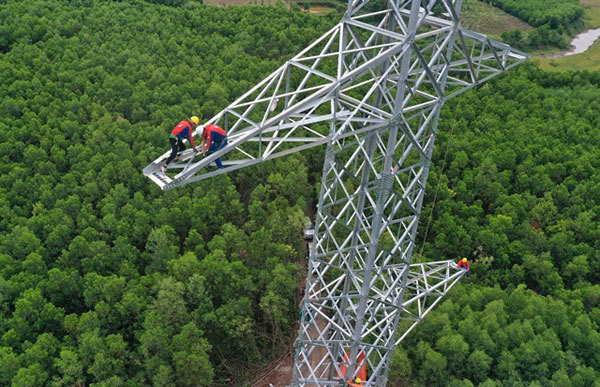
Bui Van Kien, deputy director general of the National Power Transmission Corporation (EVNNPT) under Vietnam Electricity (EVN), talks about the risks of falling behind schedule on the North-South 500kV power line in the central region.
Installation of a power tower in Hoa Vang District, Da Nang, part of Circuit 3 of the North-South 500kV power transmission line.
Circuit 3 (Vung Ang-Quang Trach-Doc Soi-Pleiku 2) of the 500kV power line is meant to ensure energy security in the southern region. Construction is entering a critical phase but is facing adverse factors due to factors outside of human control. Can you tell us about these problems?Tiếp tục đọc “Major power line suffers multiple setbacks”→
Author Felix K. Chang is a senior fellow at the Foreign Policy Research Institute. He is also the Chief Operating Officer of DecisionQ, a predictive analytics company, and an assistant professor at the Uniformed Services University of the Health Sciences.
In October 2020, Hong Kong’s air traffic control denied a Taiwanese flight access to Pratas Island, a Taiwan-occupied feature in the South China Sea. It was the first time that had ever occurred. The refusal, likely prompted by Beijing, might seem to be just another way for China to put pressure on Taiwan, which it has long regarded as a renegade province. But more broadly, the incident reflects a marked change in not only how China sees Taiwan’s remote outposts, but also how confident China is in its ability to control the air and sea spaces of the South China Sea and its willingness to wield that power as a political tool.
Australian Prime Minister Scott Morrison and Japan’s Prime Minister Yoshihide Suga bow at the start of their meeting at Suga’s official residence in Tokyo, Japan November 17, 2020. Eugene Hoshiko/Pool via REUTERS
17 Nov 2020 07:08PM(Updated: 18 Nov 2020 12:56AM) CNA
TOKYO: Japan and Australia agreed on a breakthrough defence pact on Tuesday (Nov 17) allowing reciprocal visits for training and operations, and voiced concern over the disputed South China Sea, where China is extending its military influence.
NEW DELHI: The navies of India, the United States, Australia and Japan held exercises Tuesday (Nov 17) in the Northern Arabian Sea in the second phase of a naval drill seen as part of a regional initiative to counter China’s growing assertiveness in the Indo-Pacific.
Chinese navy conducts simultaneous drills in various theatre commandsManoeuvres designed to show that the maritime force can mobilise personnel in different regions at once, analyst says SCMP
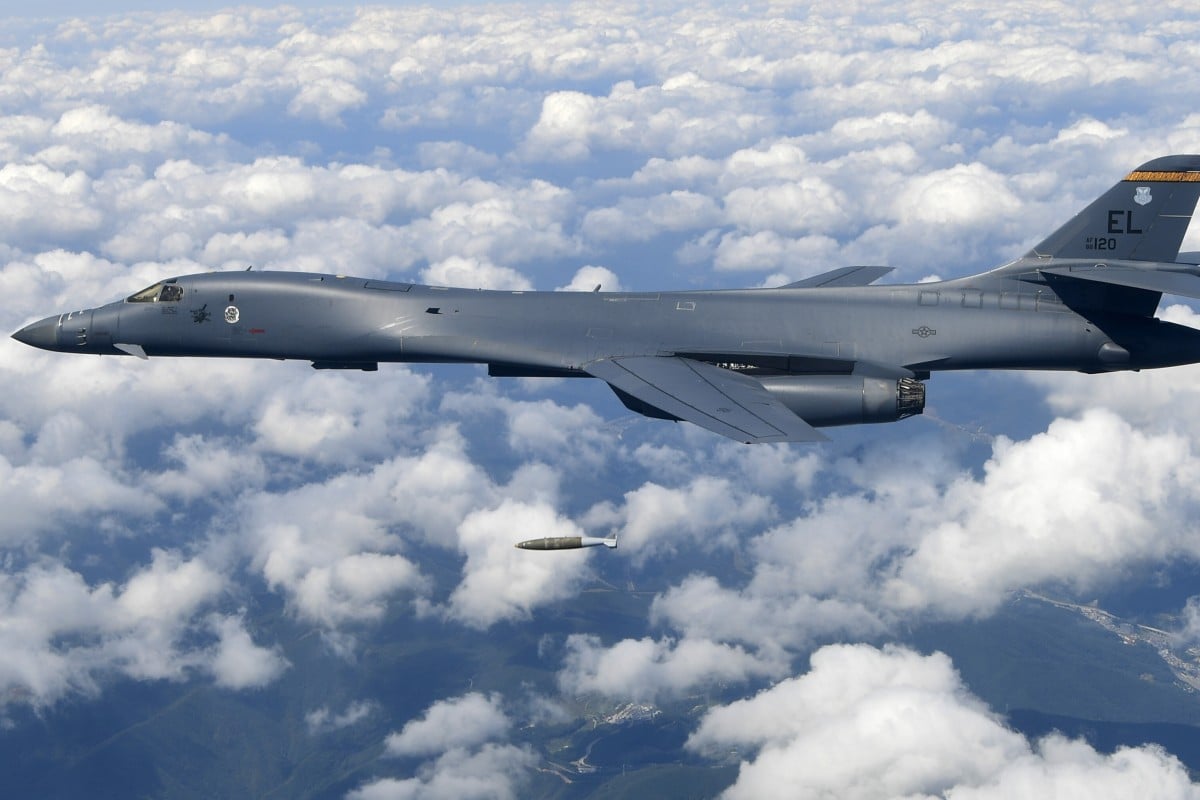
Two US Air Force B-1B bombers entered China’s ADIZ on Tuesday, according to an aviation tracking service. Photo: AP
The United States sent two long-range bombers into China’s air defence identification zone (ADIZ) on Tuesday in an apparent show of force, as the Chinese navy conducted a series of simultaneous massive drills.
According to aviation tracker Aircraft Spots, two US Air Force B-1B Lancer bombers left Andersen Air Force Base in Guam on Tuesday morning and entered China’s ADIZ over the East China Sea.
Aircraft Spots said the bombers were refeulled in flight during the mission.
The B1-B has the biggest payload of any bomber and is a departure from the fighter jets and spy planes the American forces have sent before on missions so close to the Chinese coast.
Such heavy aircraft are not known for being deployed on spying missions, suggesting that the US was sending a blunt warning.



 Vietnamese women work in an office in Hanoi. Photo by Shutterstock/Jimmy Tran.Gender bias is preventing Vietnamese women from climbing the corporate ladder, a recent study by the International Labor Organization has found.
 Chinese structures are pictured at Vietnam’s Spratly Islands in the East Sea, 2017. Photo by Reuters/Erik De Castro.Canadian defense minister Harjit Sajjan has made it clear that his nation is against militarization in the South China Sea.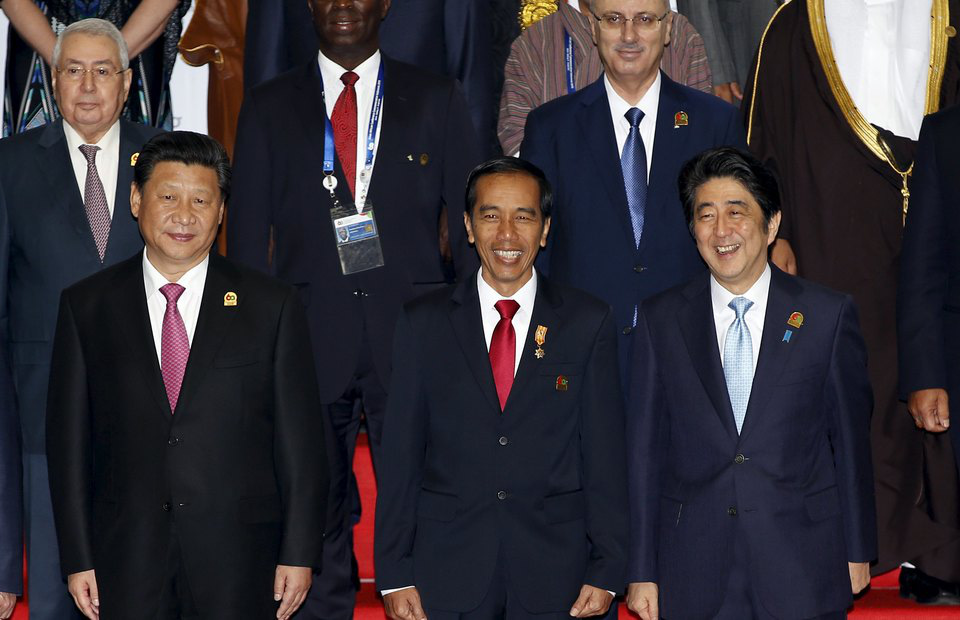
 An aerial view of the Vietnam-Singapore Industrial Parks in southern Binh Duong Province. Photo courtesy of Becamex IDC Corp.Chinese manufacturing companies accounted for 88 percent of $1.57 billion poured into Vietnam’s industrial parks in the first nine months, showing an increasing shifting trend to Vietnam.