I am an attorney in the Washington DC area, with a Doctor of Law in the US, attended the master program at the National School of Administration of Việt Nam, and graduated from Sài Gòn University Law School. I aso studied philosophy at the School of Letters in Sài Gòn.
.
I have worked as an anti-trust attorney for Federal Trade Commission and a litigator for a fortune-100 telecom company in Washington DC.
I have taught law courses for legal professionals in Việt Nam and still counsel VN government agencies on legal matters.
I have founded and managed businesses for me and my family, both law and non-law.
I have published many articles on national newspapers and radio stations in Việt Nam.
In 1989 I was one of the founding members of US-VN Trade Council, working to re-establish US-VN relationship.
Since the early 90's, I have established and managed VNFORUM and VNBIZ forum on VN-related matters; these forums are the subject of a PhD thesis by Dr. Caroline Valverde at UC-Berkeley and her book Transnationalizing Viet Nam.
I translate poetry and my translation of "A Request at Đồng Lộc Cemetery" is now engraved on a stone memorial at Đồng Lộc National Shrine in VN.
I study and teach the Bible and Buddhism. In 2009 I founded and still manage dotchuoinon.com on positive thinking and two other blogs on Buddhism.
In 2015 a group of friends and I founded website CVD - Conversations on Vietnam Development (cvdvn.net).
I study the art of leadership with many friends who are religious, business and government leaders from many countries.
I have written these books, published by Phu Nu Publishing House in Hanoi:
"Positive Thinking to Change Your Life", in Vietnamese (TƯ DUY TÍCH CỰC Thay Đổi Cuộc Sống) (Oct. 2011)
"10 Core Values for Success" (10 Giá trị cốt lõi của thành công) (Dec. 2013)
"Live a Life Worth Living" (Sống Một Cuộc Đời Đáng Sống) (Oct. 2023)
I practice Jiu Jitsu and Tai Chi for health, and play guitar as a hobby, usually accompanying my wife Trần Lê Túy Phượng, aka singer Linh Phượng.
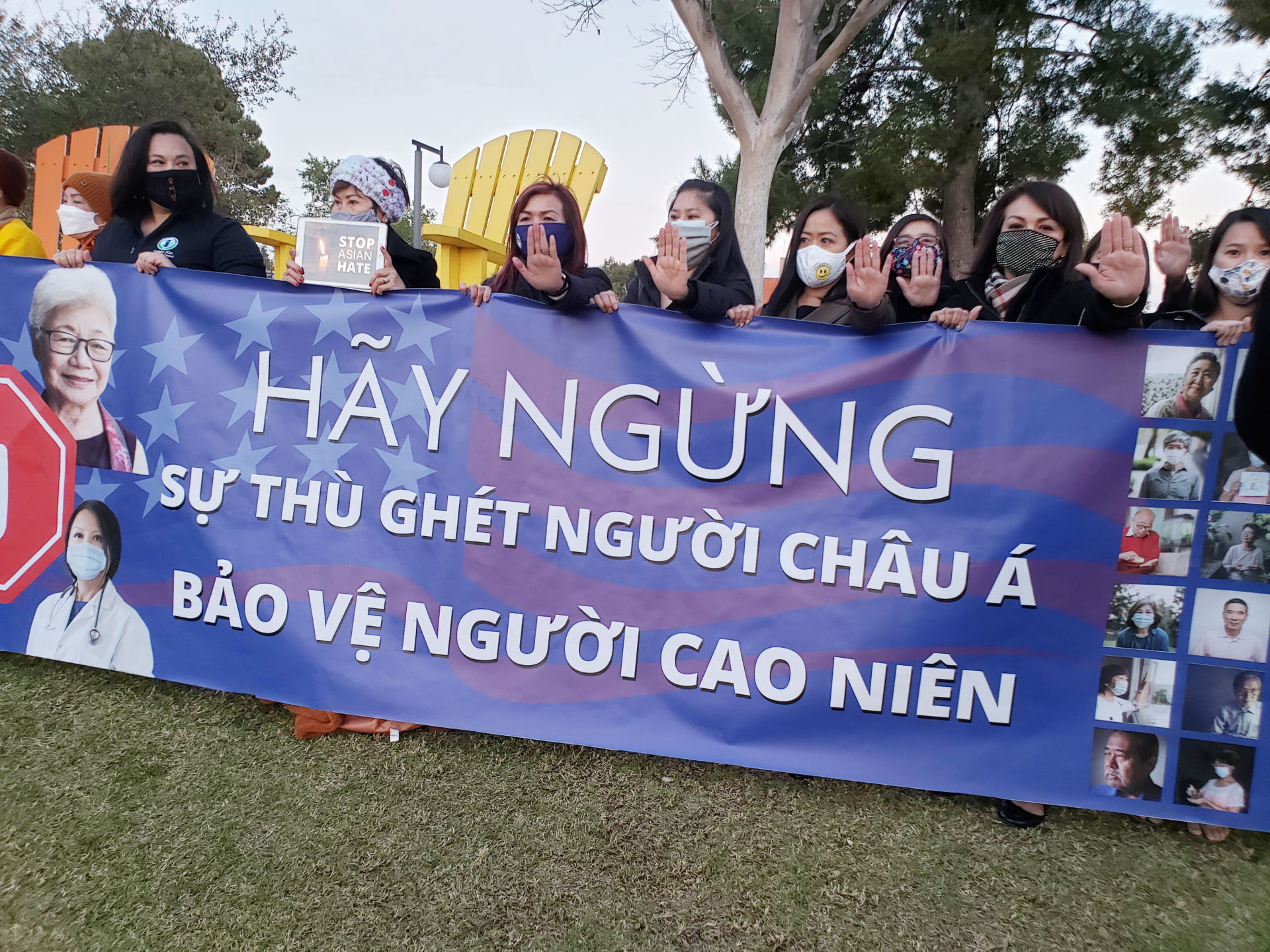
GARDEN GROVE, California (NV) – Nhiều dân cử và lãnh đạo tôn giáo vùng Little Saigon vừa tổ chức một buổi tập họp tại công viên Community Center Park, Garden Grove, chiều Thứ Tư, 17 Tháng Ba, để phản đối tình trạng ngày càng có nhiều sự kiện mang tính thù ghét người Mỹ gốc Á Châu và Thái Bình Dương (AAPI).
Buổi nói chuyện gồm toàn phụ nữ gốc Á. (Hình: Đằng-Giao/Người Việt)
Đặc biệt, cuộc tập họp này xảy ra chỉ một ngày sau khi một thanh niên da trắng 21 tuổi, tên là Robert Aaron Long, cư dân tiểu bang Georgia, bắn chết tám người, trong đó có sáu phụ nữ gốc AAPI, tại ba tiệm đấm bóp ở thành phố Acworth, cách Atlanta khoảng 30 dặm về phía Tây Bắc.
Atlanta (CNN)Video evidence suggests “it is extremely likely” that the same person was responsible for the three deadly shootings at massage parlors in the metro Atlanta area, police said Tuesday.Eight people were killed and one person was wounded in the attacks. Two of the shootings were at spas across the street from each other in northeast Atlanta and the other happened about 30 miles away in Cherokee County to the northwest of the city.”Video footage from our Video Integration Center places the Cherokee County suspect’s vehicle in the area, around the time of our Piedmont Road shootings,” the Atlanta Police Department said in a news release. “That, along with video evidence viewed by investigators, suggests it is extremely likely our suspect is the same as Cherokee County’s, who is in custody. Because of this, an investigator from APD is in Cherokee County and we are working closely with them to confirm with certainty our cases are related.”Officials in each jurisdiction said there were no immediate indications of motive.
More protesters killed in Myanmar as military tightens grip
Martial law imposed in Myanmar as protester death toll rises.
A protester holds a bullet as protests against the military coup and detention of elected government members continue in Hlaing Thayar Township, Yangon. [Anadolu]
A human rights group says at least 183 people have been killed in Myanmar since the recent military coup in the country, 20 of whom died on Monday.
“Casualties are drastically increasing,” said the Assistance Association for Political Prisoners (AAPP), which has been tracking the situation since the February 1 coup, in its daily update.
As of March 15, a total of 2,175 people had been arrested, charged or sentenced by authorities, AAPP added.
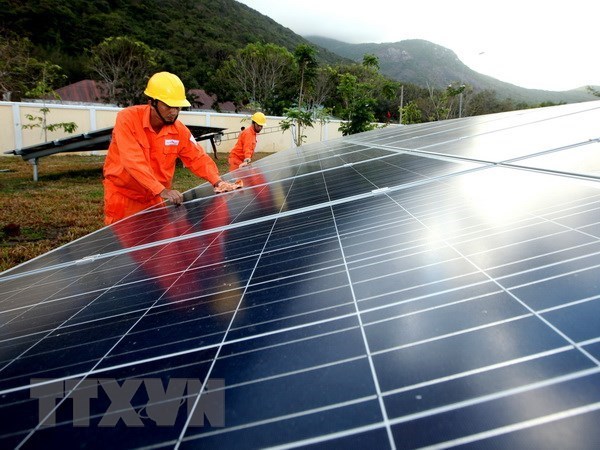
Low power demand coupled with oversupply of electricity at times have forced authorities to cut the capacity of renewable energy plants in order to avoid overwhelming the national grid, according to the Ministry of Industry and Trade (MoIT).
Low power demand coupled with oversupply of electricity at times have forced authorities to cut the capacity of renewable energy plants. (Photo: VNA)
A large amount of investments from social resources has been poured into developing renewable energy, particularly solar energy, over previous years in Vietnam, according to the ministry.
However, a boom in high-capacity renewable energy projects, mainly in central and southern Vietnam, has overloaded inter-regional transmission lines and caused oversupply at times, the ministry said in Document No 1226/BCT-DTDL sent to the National Assembly’s committees for Science, Technology and Environment, and Economic Affairs and the Office of the Government explaining its stance on the power capacity cut.
Additionally, domestic demand for power has fallen below normal levels due to the impact of COVID-19, which led to an oversupply of electricity during off-peak times such as holidays, weekends, and at noon, the ministry said.
According to the ministry, this is a very dangerous situation that adversely affects the safe operation of the national grid. Though the National Load Dispatch Centre (A0) has reduced the output of traditional energy to the minimum, the oversupply remains, so the centre had to make another cut to renewable energy capacity to prevent the electricity system from collapsing.
The ministry has ordered Vietnam Electricity (EVN) and A0 to calculate the required reduction of capacity at all renewable power plants in a transparent and fair manner, regardless of who their investors are.
The ministry added that it has received government approval onthe supplement of various power transmission line projects into planning while urging EVN to fast-track the progress of existing projects to raise the capacity of the national electricity network./. VNA
11 March (IEEFA Vietnam): Vietnam’s recently published draft power development plan for 2021-2030 (PDP8) has failed to acknowledge the importance of developing a more flexible system that can accommodate a changing technology mix, according to a new report from the Institute for Energy Economics and Financial Analysis (IEEFA).
“After a decade filled with disappointments from the fossil fuel industry, planners successfully tested the dynamism of renewable energy in Vietnam’s fast-growing market,” says report author IEEFA Director of Energy Finance Studies Asia, Melissa Brown.
“Many conventional coal and gas-power projects failed to progress during the development process, only managing to meet half of the targeted capacity for 2016-2020.
“Solar power developers however over-delivered by five times, and they have done so in a fraction of the time.
“This evidence would surely inform the next stage of Vietnam’s power development.
LNG importers will bear climate-related risks of exporting countries, threatening energy security and electricity costs
The Texas energy crisis has become world news.
During last week’s extreme winter weather, surging electricity demand collided with falling generation, forcing the state’s grid operator to implement rolling blackouts. In many cases, blackouts lasted for over 24 hours, causing fuel and electricity supply shortages and disruptions throughout the gas supply chain. At least 4.5 million Texans were at one point without electricity and more than 30 deaths have been attributed to power losses, though the final toll could be much larger.
News of the Texas power crisis has spread throughout Asia, where energy growth markets such as Vietnam, the Philippines, and Bangladesh are considering U.S. liquified natural gas (LNG) imports as an alternative to coal-fired electricity generation. But the events in Texas have highlighted the risks inherent in LNG imports for both the energy transition and climate change adaptation.
Below are five lessons from the crisis for emerging markets in Asia.
Lesson 1. Gas/LNG volatility is here to stay.
It has been a tumultuous year in global LNG markets. The COVID-19 outbreak sent global LNG demand plummeting and Asian prices hit an all-time low of $1.85/MMBtu last May. U.S. LNG export facilities remained idle for much of the summer, oil and gas drilling fell by 40% internationally, and bankruptcies in the North American oil and gas sector soared to their highest level since 2016. Starting in the fall, a combination of production shut-ins, shipping delays, and cold weather caused Asian LNG prices to spike to a record high of $32.50/MMBtu.
The Texas energy crisis is another sign that volatility in global gas markets is likely to continue. High electricity demand combined with supply chain disruptions sent wholesale natural gas prices skyrocketing. At Texas’s Waha Hub, for example, prices jumped from $2.77 to $219, while spot prices in Oklahoma’s Oneok hub jumped to over $1,000/MMBtu. For gas producers able to keep wells operating, the Texas freeze was “like hitting the jackpot,” but for LNG exporters, power outages disrupted liquefaction trains and feedgas pipelines. Several LNG export terminals scaled back production, while Corpus Christi LNG and Cameron LNG went offline completely. Overall, 10 cargoes amounting to 1 billion cubic meters of gas were likely delayed from the already-volatile global LNG market.
Volatility in global gas markets is likely to continue
Lesson 2. Volatile prices can cause LNG-fired power plants in Asia and associated infrastructure to go under-utilised.
Volatile LNG prices create an increasingly challenging environment for price-sensitive emerging markets. High prices and difficulties sourcing gas can cause gas-fired power plants in importing countries to go underutilized. In turn, all the associated infrastructure – ports, regasification facilities, pipelines – are also at risk of being stranded. IEEFA recently estimated that volatile LNG prices put over $50 billion of natural gas projects at risk of cancellation in Vietnam, Bangladesh, and Pakistan.
Since the value of associated infrastructure is dominated by fixed costs, per unit natural gas prices depend largely on total gas demand. This means that to realize any economic benefits from imported gas, costs must be spread over a wider consumer base than currently exists in many south and southeast Asian countries. The decision to import LNG is therefore not an incremental one. Rather, it will lead to new sources of financial vulnerability resulting from long-term, large-scale fossil gas lock-in. Without major storage capacity, volatile LNG prices will be a constant threat to the affordability of gas and gas-powered electricity in import markets.
Lesson 3. LNG imports come at the cost of domestic energy security.
By importing greater volumes of LNG, Asian countries become more vulnerable to supply disruptions in global gas markets and geopolitical dynamics beyond their control. With increasingly severe and frequent weather events caused by climate change, Asian importers are not just assuming the risks of climate-related disruptions in their own country, they are also assuming risks of climate-related weather events in exporting countries. In Texas, generators were not required to invest in cold weather safeguards, leaving them vulnerable to unpredictable weather events.
LNG import infrastructure in Asia is highly vulnerable to extreme weather
LNG import infrastructure in Asia is also highly vulnerable to extreme weather. While numerous countries rely on floating storage and regasification units (FSRUs) as cheaper alternatives to land-based import terminals, FSRUs are difficult to operate in poor weather conditions. In 2018, Bangladesh announced it would cancel plans to build additional FSRUs because they were unreliable during the monsoon season. In Malta, the inoperability of FSRUs during storms has caused the complete shut-down of the country’s gas-fired power plants.
Lesson 4. Grid expansion and modernization must take centre stage.
Some commentators have suggested the solution to climate-related blackouts is to build more generation capacity, but all power sources are susceptible to outages when weather events occur. In Texas, 30,000MW of thermal capacity was forced offline – including 40% of natural gas capacity and a nuclear reactor – as well as 17,000MW of wind capacity. As a result, wholesale electricity prices skyrocketed to the state’s $9,000 per MWh cap, up from their average of $30.
Along with generation capacity, grid reliability depends largely on transmission infrastructure and interconnections to other areas. The Texas grid is highly isolated from surrounding power systems, limiting power imports from nearby markets. In small portions of the state connected to other grids, cities experienced brief blackouts compared to the rest of the state.
A greater emphasis on system-level planning in emerging Asian markets, rather than a myopic focus on generation, could improve the efficiency of existing generators, enable the installation of greater capacities of domestic renewable energy, and lower wholesale electricity prices during times of short supply.
Lesson 5. The energy transition is a humanitarian issue.
The COVID-19 pandemic and the Texas energy crisis have exacerbated the risks inherent in LNG imports and revealed the flaws of centralized generation capacity buildouts. In Texas, blackouts disproportionately affected low-income communities, while electricity bills for some households that maintained power spiked into the tens of thousands of dollars. The total cost of electricity sold in Texas from February 15-19 was $50.6 billion, up from $4.2 billion in the prior week. For Asian countries already grappling with high electricity prices, the risks of LNG imports and associated infrastructure lock-in are simply too high. Instead, reliability and resilience are key to keeping costs down and the lights on.
As a lethal pandemic, economic and physical insecurity, and violent conflict ravaged the world, democracy’s defenders sustained heavy new losses in their struggle against authoritarian foes, shifting the international balance in favor of tyranny.
As a lethal pandemic, economic and physical insecurity, and violent conflict ravaged the world in 2020, democracy’s defenders sustained heavy new losses in their struggle against authoritarian foes, shifting the international balance in favor of tyranny. Incumbent leaders increasingly used force to crush opponents and settle scores, sometimes in the name of public health, while beleaguered activists—lacking effective international support—faced heavy jail sentences, torture, or murder in many settings.
The winter storms that swept across the U.S., particularly Texas, upending the energy market and knocking out power for millions of people, have delivered a windfall for Macquarie Group, with the Australian bank lifting its profit outlook for 2021 by as much as 10 percent, just two weeks after warning that earnings would be “slightly down”.
“Extreme winter weather conditions in North America have significantly increased short-term client demand for Macquarie’s capabilities in maintaining critical physical supply across the commodity complex,” according to the company, which is the second-largest supplier of gas in North America after oil major BP, as quoted by Reuters.
German frigate’s forthcoming transit comes as Western allies step up ‘freedom of navigation’ passages in disputed sea
German Sachsen-class frigate the Hamburg (Bundeswehr photo)
TAIPEI (Taiwan News) — A German frigate will traverse the South China Sea this summer for the first time since 2002, German officials confirmed Tuesday (March 1).
Officials in the country’s defense and foreign ministries told Reuters that the frigate, scheduled to embark on a trip to Asia in August, will traverse the South China Sea on the return leg of its journey.
On 21 January 2021, the Electricity and Renewable Energy Authority of Vietnam (EREA) submitted Report No. 20/BC-DL to the Deputy Minister of Industry and Trade in charge. The report requests the Ministry of Industry and Trade (MOIT)’s internal approval of the draft of the Prime Minister’s decision on the selection of investors for grid-connected solar power projects in Vietnam (“Draft Decision”).
This Draft Decision would apply the selection mechanism on a long-term basis. Bidding rounds will be conducted based on a so-called Renewable Energy Development Plan formulated by the MOIT for each five-year period. A more specific plan will be circulated on a biannual basis.
A “superhero” delivery driver in Hanoi has saved a two-year-old girl who fell from a 12th-floor balcony.
Nguyen Ngoc Manh, 31, was sitting in his car waiting to make a delivery at 5pm on Sunday when he heard a child crying, he told the Anninhthudo news organisation. A woman started screaming and he stuck his head out of the window to see what was going on.
He told local media in the Vietnam capital that he first thought it was a child having a tantrum, but quickly realised it was something else. The child was nearly 50 metres above ground.
“I saw a girl climbing out of the balcony,” he said. He jumped out of his car and climbed up on to a nearby building to get closer should the child fall.
Standing on a metallic roof used to store generators, he lost his footing as the child began to fall, he told VN Express International. But he flung himself forward to catch her, landing so hard that he left a dent in the roof.
“I tried to reach out my hand and took the maximum effort to catch the girl,” he said, hoping that at the very least he might be able to prevent her from falling straight to the ground.
In a video of the incident taken from a nearby apartment building, the child can be seen climbing over the balcony railing and on to a thin ledge. Neighbours in a building opposite can be heard crying out to her. The child holds on for a few moments before losing her grip and falling.
“Luckily, the baby fell into my lap,” Nguyen said. “I hurriedly embraced her then saw blood leaking from her mouth, I was very frightened.”
The child was taken to the National Children’s Hospital where doctors told local media she had dislocated her hip but suffered no other injuries. Le Ngoc Duy, a doctor at the hospital, said she was in a cast and being monitored.
Beijing’s South China Sea moves have ramped up with the passing of a law allowing the China Coast Guard (CCG) to fire on what it identifies as illegal foreign vessels in waters under its jurisdiction. By virtue of China’s nine-dash line claim, this law applies to the entire South China Sea. Given that China’s claims are opposed by other South China Sea claimants as well as numerous non-claimant countries, the law has proven controversial and raises concerns over whether it will increase the risk of confrontation and conflict in the disputed waters.
The Law
On January 22, the standing committee of China’s National People’s Congress passed a new law empowering the CCG to employ “all necessary means” to stop or prevent threats from foreign vessels and specifying the circumstances under which different weapons, “handheld, shipborne, or airborne,” can be deployed, as well as allowing it to demolish structures built by other claimants in areas China considers its own. This new law is another manifestation of the CCG’s expanding role. The roles and practices of the CCG have generally been in line with those of other coast guards around the world. This specific law, however, lays out the powers and duties of the CCG in so called “jurisdictional waters,” which include the highly contested areas in the South China Sea. For now, the law amounts to a figurative shot across the bows of other claimants—but that shot could soon be literal.
Washington [US], March 1 (ANI): Raising concerns over the dipping water-levels of the Mekong River and upstream dams in China, Principal Deputy Assistant Secretary of State for East Asian and Pacific Affairs Ambassador Atul Keshap points out that upstream dams in China that exacerbate droughts are hurting the communities and ecosystems that have relied for countless generations on the Mekong River’s natural flood pulse.
Speaking at the Indo-Pacific conference on Strengthening Transboundary River Governance, Keshap on Saturday (local time) said the conference report launched at the event is excellent and summarizes our work examining the challenges facing the Mekong River basin and its ties to the economies, livelihoods, and culture of nearly 70 million people.
“We remain concerned just as we were in October during the conference–that record droughts and the upstream dams in China that exacerbate them are hurting the communities and ecosystems that have relied for countless generations on the Mekong River’s natural flood pulse,” he said as reported by the Frontier Post.
[TĐH: Jane Fonda was an anti-Vietnam-War activist]
Washington [US], March 1 (ANI): At this year’s Golden Globes, American actor Jane Fonda received the prestigious Cecil B. DeMille Award.
According to Variety, the honour recognises Fonda’s illustrious career in film, one that saw her top the box office and cement her name in movie history by starring in such classics as ‘Klute,’ ‘The China Syndrome’ and ‘9 to 5.’More recently, Fonda has appeared in the Netflix series ‘Grace and Frankie’ as well as ‘Book Club’ and ‘Youth.’ The 83-year-old star’s other films include ‘The Electric Horseman,’ ‘Barefoot in the Park,’ ‘Coming Home, and ‘Julia.’One of her biggest commercial successes was the 1982 release of her first exercise video, ‘Jane Fonda’s Workout,’ which went on to sell 17 million copies and spawned several follow-ups.
Fonda has been equally well known for her political stances – protesting the Vietnam War, campaigning for civil rights, and advocating for feminist causes. Currently, Fonda is leading Fire Drill Fridays as part of a national movement to raise awareness about the climate crisis.
The Cecil B. DeMille Award is the highest honour given out by the Hollywood Foreign Press Association, the organisation behind the Globes. Past recipients include Robert De Niro, Sophia Loren, Sean Connery, Oprah Winfrey, Martin Scorsese, Jodie Foster, Steven Spielberg, and Meryl Streep. Last year’s honouree was Tom Hanks.
A 15-time nominee, Fonda has been awarded Golden Globes for seven-times.
The 78th Golden Globe Awards is taking place nearly two months later than normal, due to the impact of the COVID-19 pandemic on cinema and television.
This is the first bi-coastal ceremony, with Tina Fey hosting from the Rainbow Room in New York City, and Amy Poehler hosting from The Beverly Hilton in Beverly Hills, California. The nominees for Golden Globes were announced on February 3. (ANI)



![A protester holds a bullet as protests against the military coup and detention of elected government members continue in Hlaing Thayar Township, Yangon. [Anadolu]](https://www.aljazeera.com/wp-content/uploads/2021/03/20210315_2_47343002_63394770.jpg?resize=1170%2C780)





 CVD
CVD 