Beijing more than just a ‘worse violator’ in S China Sea

Three Vietnamese academics take strong issue with a recent Asia Times op-ed

By TRAN HUU DUY MINHHOANG THI NGOC ANH And NGUYEN HAI DUYEN

SEPTEMBER 28, 2021

Chinese fishing vessels set sail for the Spratly Islands. Photo: AFP

In an article recently published by Asia Times, Mark Valencia claims that China is not the only wrongdoer in the South China Sea but Vietnam is as well. This view misinterprets the policy of China in the South China Sea.

China has not only violated the maritime rights of other states but also systemically rejects the United Nations Convention on the Law of the Sea.

China maintains maritime claims that are clearly inconsistent with UNCLOS. It denies the awards of the South China Sea Arbitration, which are final and binding. It utilizes the advantages of a more powerful country to realize aggressively its unlawful maritime claims in the South China Sea and to disturb the normal and lawful exploitation of other states’ resources in their maritime zones.

Tiếp tục đọc “Beijing more than just a ‘worse violator’ in S China Sea”

Overcoming the Tragedy of TPP

September 28, 2021

In common parlance today, the word “tragedy” is used to describe any ill fortune that befalls a person or group: a destructive earthquake, a fatal shooting, the death of a family member from disease. But to the ancient Greeks, tragedy involved an element of human error (hamartia), not just external circumstance. On this measure, the saga of the United States and the Trans-Pacific Partnership (TPP) would have given Sophocles enough material for an epic to rival Oedipus Rex.

From the start, TPP was marked by tragic irony—with China always in a supporting role. The George W. Bush administration notified Congress of its intent to negotiate a high-standard trade agreement with Asia-Pacific partners on September 22, 2008—one week into a global financial crisis that would severely undermine U.S. economic leadership and embolden Beijing. While quick to embrace TPP and successful in concluding an agreement among the parties, President Barack Obama fatally delayed pushing for trade promotion authority from Congress in 2014—choosing instead to name the chairman of the relevant Senate committee, Max Baucus, as his ambassador to China. And in one of his first, catastrophic acts as president, Donald Trump withdrew the United States from the unratified TPP—not understanding that it was one of the most powerful tools he had to compete with his nemesis, China.

Tiếp tục đọc “Overcoming the Tragedy of TPP”

The Quad’s Growing Unity in Rhetoric and Goals

Pacific Forum

Over the past year, China has adopted an increasingly forward-looking defense posture. It has flown its fighter jets over Taiwan, built air bases in the territories bordering India and, most recently, voiced its opposition to Australia buying nuclear-powered submarines from the United States and United Kingdom.

Not so long ago, China’s Foreign Minister, Wang Yi, denigrated the Quadrilateral Security Dialogue (or “Quad”) grouping, saying it would “dissipate like sea foam” in the Indian Ocean, and called it nothing more than a “headline-grabbing” exercise.

It is worth pondering why a “dissipating sea foam” suddenly warrants such a proactive defense posture.

Following in Trump’s footsteps

For starters, Quad nations have begun to turn words into action. Australia cancelled port projects that were part of the Belt and Road Initiative (BRI), embarked on a mission to find alternative markets for its exports, and cemented ties with India and the United States, taking the initiative to diversify its supply chains. India went a step further and instituted Foreign Direct Investment rules that selectively kept Chinese investment out. This measure aided in fulfilling the Modi administration’s Atmanirbhar Bharat (“self-reliant India”) goals, while simultaneously reducing the Indian economy’s over-reliance on Chinese imports.

Tiếp tục đọc “The Quad’s Growing Unity in Rhetoric and Goals”

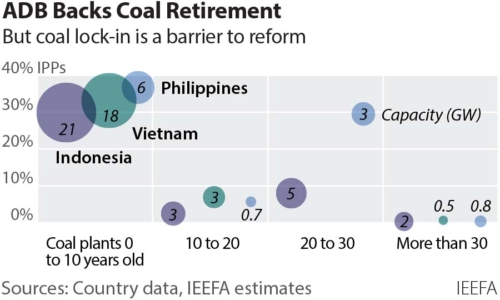
IEEFA: High stakes for Asian Development Bank’s ambitious coal power retirement plan

Implementation challenges could block funding for other equally important high impact clean energy funding strategies

24 September 2021 (IEEFA Asia): In the lead up to the United Nations Climate Change Conference COP26, the Asian Development Bank (ADB) announced a plan to speed up the retirement of high emissions coal-fired power plants in Southeast Asia. This announcement sets the stage for a transformation of the Asian multilateral development bank’s (MDB) role in guiding power infrastructure development in the region, finds a new report by the Institute for Energy Economics and Financial Analysis (IEEFA).

With British insurer Prudential and other financial firms, ADB’s ambitious plan is to build public-private funding vehicles to buy coal-fired power plants and retire them within 15 years to allow countries time to switch to renewable energy.

Tiếp tục đọc “IEEFA: High stakes for Asian Development Bank’s ambitious coal power retirement plan”

‘Here to stay’: Indo-Pacific Quad leaders to meet at White House

First in-person leader meet of US, Japan, India and Australia grouping signals ‘durability’ despite differences.

The so-called 'Quad' grouping will hold its first in-person leaders meeting on Friday [File: Kiyoshi Ota/Reuters]
The so-called ‘Quad’ grouping will hold its first in-person leaders meeting on Friday [File: Kiyoshi Ota/Reuters]

By Joseph Stepansky 23 Sep 2021, Al Jazeera

The leaders of the United States, Japan, India and Australia will meet on Friday for their first in-person person summit of the Indo-Pacific Quadrilateral Security Dialogue, or so-called “Quad” grouping.

The informal arrangement, with the countries first working together in response to the 2004 Indian Ocean earthquake and tsunami, has increasingly solidified since 2017. It has been fuelled by consecutive US administration’s policies towards China, and aided in no small part by individual tensions between Tokyo, Canberra, New Delhi with Beijing.KEEP READINGUS to join Australia, India, Japan in first-ever Quad summitWhat is the Quad and can it counter China’s rise?Quad goals: US, Indo-Pacific allies to up India’s vaccine outputCan the Quad effectively counter China’s influence?

Tiếp tục đọc “‘Here to stay’: Indo-Pacific Quad leaders to meet at White House”

Vietnam Continues Efforts to Reduce Trade Dependence on China

by Bich T. Tran, ISEAS

As of August 2021, Vietnam has officially joined 15 FTAs, including six ASEAN FTAs with regional partners (China, South Korea, Japan, India, Australia, and New Zealand) and the Regional Comprehensive Economic Partnership. In this photo, Vietnam’s Prime Minister Nguyen Xuan Phuc (R) is pictured on a TV monitor clapping next to other country signatories during the signing ceremony for the Regional Comprehensive Economic Partnership (RCEP) trade pact at the ASEAN summit that is being held online in Hanoi on 15 November 2020. Photo: Nhac NGUYEN, AFP.

EXECUTIVE SUMMARY

  • Vietnam’s trade deficit with China has grown rapidly since 2001. Its heavy dependence on Chinese intermediate and capital goods creates vulnerabilities in its entire production chain.
  • China has a history of using trade as a weapon to punish countries with which it has disputes. Escalating tensions in the South China Sea have served as a wake-up call for Hanoi to reduce its trade dependence on Beijing.
  • Towards this end, Vietnam, has over the past few years, signed a number of new-generation free trade agreements (FTAs), including the Comprehensive and Progressive Agreement for Trans-Pacific Partnership (CPTPP), which excludes China, and the European Union-Vietnam Free Trade Agreement (EVFTA).
  • However, Vietnam’s efforts to reduce its trade dependence on China through these FTAs have not produced desired outcomes. Both the CPTPP and the EVFTA have come into force in Vietnam for a short while, and it may take more time for Vietnam to fully benefit from them.
  • In the meantime, Vietnam will need to take proactive measures to increase the utilization rate of these agreements and push forward economic and institutional reforms to strengthen its overall economic resilience. If Vietnam is successful in these efforts, its trade reliance on China, which is likely to persist in the short to medium term, will be less of a concern.

* Bich T. Tran is a Ph.D. Candidate at the University of Antwerp, a Fellow at Verve Research, and an Adjunct Fellow at the Center for Strategic & International Studies (CSIS). Her research interests include Vietnam’s grand strategy, Southeast Asian states’ relations with major powers, and political leadership.

Tiếp tục đọc “Vietnam Continues Efforts to Reduce Trade Dependence on China”

EU Strategy for Cooperation in the Indo-Pacific


SOTEU BannerOn 19 April 2021, the Council adopted conclusions on an EU Strategy for cooperation in the Indo-Pacific [1]. As a follow-up to the Council conclusions, the Commission and the High Representative presented a Joint Communication on the EU’s Indo-Pacific Strategy on 16 September 2021.

Why an EU Strategy for cooperation in the Indo-Pacific?

The Indo-Pacific region is increasingly becoming strategically important for the EU. The region’s growing economic, demographic, and political weight makes it a key player in shaping the international order and in addressing global challenges.

The EU and the Indo-Pacific are highly interconnected. The EU is already the top investor, the leading development cooperation partner and one of the biggest trading partners in the Indo-Pacific region. Together, the Indo-Pacific and Europe hold over 70% of the global trade in goods and services, as well as over 60% of foreign direct investment flows.

Tiếp tục đọc “EU Strategy for Cooperation in the Indo-Pacific”

Biden’s Covid Summit

New York Timses newsletter

At the opening of a virtual Covid-19 summit organized with the U.N., President Biden called on world leaders, pharmaceutical executives, philanthropists and civil society organizations to forge a global consensus around a plan to fight the coronavirus crisis.

“We need to go big,” Biden said. “It’s an all-hands-on-deck crisis.”

The president pointed to two especially urgent challenges: vaccinating the world and solving a global oxygen shortage, which is leading to unnecessary Covid deaths. Tiếp tục đọc “Biden’s Covid Summit”

Remarks by President Biden Before the 76th Session of the United Nations General Assembly

SEPTEMBER 21, 2021

United Nations Headquarters
New York, New York

10:01 A.M. EDT

THE PRESIDENT:  Mr. President, Mr. Secretary-General, my fellow delegates, to all those who dedicate themselves to this noble mission of this institution: It’s my honor to speak to you for the first time as President of the United States. 

We meet this year in a moment of — intermingled with great pain and extraordinary possibility.  We’ve lost so much to this devastating — this devastating pandemic that continues to claim lives around the world and impact so much on our existence. 

Tiếp tục đọc “Remarks by President Biden Before the 76th Session of the United Nations General Assembly”

Why Aukus is welcome in the Indo-Pacific

America’s efforts to strengthen deterrence of China are gathering momentum
GIDEON RACHMAN

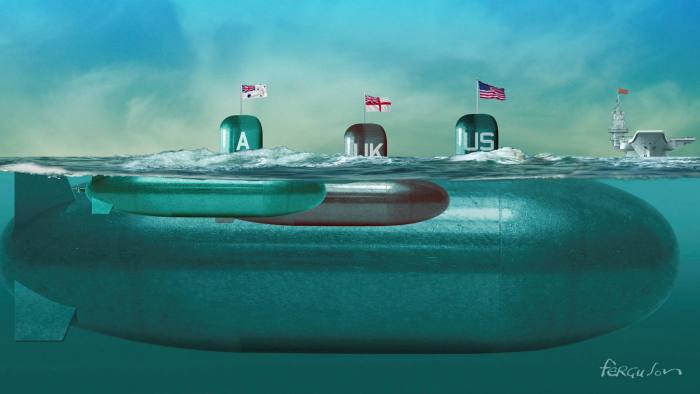
James Ferguson illustration of Gideon Rachman column ‘Why Aukus is welcome in the Indo-Pacific’

© James Ferguson

The Australia-UK-US security pact — Aukus — has been greeted with rage in China and France. But more significant than the flamboyant anger in Beijing and Paris are the countries that are quietly applauding the agreement.

The many Indo-Pacific nations that are worried by China’s increasing belligerence look to America, not France, to balance Chinese power. Japan and India, the two largest economies in the region outside China, have welcomed Aukus. Later this week, the White House will host a summit meeting of the leaders of the Quad — the US, India, Japan and Australia. Week by week, the US is visibly strengthening its network of security relationships across the Indo-Pacific.

Tiếp tục đọc “Why Aukus is welcome in the Indo-Pacific”

Global Strategy 2021: An Allied Strategy for China (The Atlantic Council)

Download pdf file >>

This strategy was produced in collaboration with experts from ten leading democracies.

Foreword

Following World War II, the United States and its allies and partners established a rules-based international system. While never perfect, it contributed to decades without great-power war, extraordinary economic growth, and a reduction of world poverty. But this system today faces trials ranging from a global pandemic and climate change to economic disruptions and a revival of great-power competition.

As Henry Kissinger has pointed out, world order depends on the balance of power and principles of legitimacy. The rise of Chinese power is straining both aspects of the existing rules-based system. China benefited from the system and does not seek to kick over the table as Hitler did with the 1930s international order, but China wants to use its power to change the rules and tilt the table to enhance its winnings. Beijing is directing its growing economic, diplomatic, and military heft toward revisionist geopolitical aims. While we once hoped that China would become what we considered a “responsible stakeholder” in a rules-based system, President Xi Jinping has led his country in a more confrontational direction.

Some analysts portray a new Cold War, but this historical metaphor misunderstands the nature of the new challenge. The Soviet Union was a direct military and ideological threat, and there was almost no economic or social interdependence in our relationship. With China today, we have half a trillion dollars in trade and millions of social interchanges. Moreover, with its “market-Leninist” system, China has learned to harness the creativity of markets to authoritarian Communist party control. It announced its intent to use this system to dominate ten key technologies by 2025. We and our allies are not threatened by the export of communism – few people are taking to the streets in favor of Xi Jinping thought – but by a hybrid system of interdependence. China has become the leading trading partner of more countries than the US. Partial decoupling on security issues like Huawei (discussed below) is necessary, but total decoupling from our overall economic interdependence would be extremely costly, and even impossible in the case of ecological interdependence such as climate change or future pandemics. For better and worse, we are locked in a “cooperative rivalry” in which we have to do two contradictory things at the same time.

Addressing the China challenge will require a collective effort on the part of the United States and its allies and partners, in which we leverage effectively our hard and soft power resources to defend ourselves and strengthen a rules-based system. Some pessimists look at China’s population size and economic growth rates and believe that the task is impossible. But on the contrary, if we think in terms our alliances, the combined wealth of the Western democracies – US, Europe, Japan – will far exceed that of China well into the century. A clear strategy with well-defined goals that neither under- nor over-estimates China is necessary for the current moment. Over the past two years, the Atlantic Council has convened high-level meetings of strategists and experts to produce just that.

In this paper, Global Strategy 2021: An Allied Strategy for China, Matthew Kroenig and Jeffrey Cimmino, along with expert collaborators from ten of the world’s leading democracies, propose a logical and actionable strategy for addressing the China challenge. The strategy articulates clear long- and short-term goals and several major strategic elements to help achieve those goals.

First, the paper calls for strengthening likeminded allies and partners and the rules-based system for a new era of great-power competition. This will require, for example, prioritizing innovation, repairing infrastructure, and establishing new institutions to bolster democratic cooperation. A successful strategy begins at home.

Second, likeminded allies and partners should defend against Chinese behavior that threatens to undermine core principles of the rules-based system. Executing this element will mean prohibiting China’s engagement in economic sectors vital to national security, countering Chinese influence operations, and deterring and, if necessary, defending against, Chinese military aggression in the Indo-Pacific.

Third, the authors recognize that China also presents an opportunity, and they recommend that likeminded allies and partners engage China from a position of strength to cooperate on shared interests and, ultimately, incorporate China into a revitalized and adapted rules-based system. Thus, efforts should be made to cooperate with China on issues of shared interests, including public health, the global economy, nonproliferation, and the global environment.

They argue that the desired endpoint of the strategy is not everlasting competition or the overthrow of the Chinese Communist Party, but rather to convince Chinese leaders that their interests are better served by cooperating within, rather than challenging, a rules-based international system. They pay attention to both the rivalry and the cooperative possibilities in the relationship.

The paper presents a sound strategic framework and a comprehensive and practical plan for the US and its democratic allies to follow as they address the China challenge. I encourage experts and officials from the United States and allied nations to study this thoughtful report. Following this strategy could help leading democracies cope with the China challenge and advance a revitalized rules-based system for years to come.

Download pdf file >>

America’s China Strategy Is Working

[TĐH: If foreign investors have problems with China,
Vietnam and other countries in the region stand to gain.]


Washington’s push against Beijing’s human-rights abuses could have more of an impact than tariffs or trade wars.

 
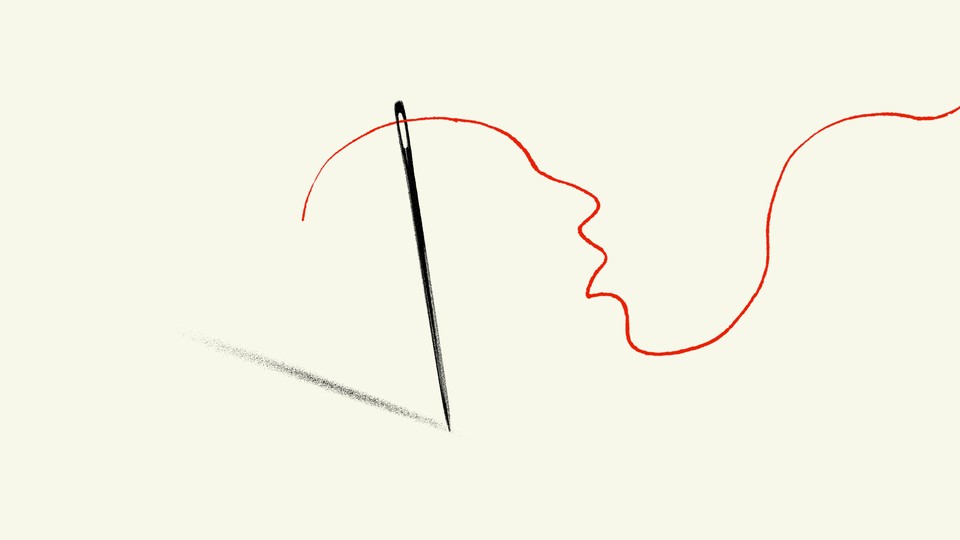
An illustration of a needle and thread making out a face in pain
Adam Maida / The Atlantic

6:00 AM ETSHARE

Executives at the fashion brand Eileen Fisher are no strangers to China—or to its enormous benefits and dangerous pitfalls: The American outfitter began manufacturing its clothing there about a quarter century ago, but last year, it realized that working in China could no longer be business as usual.

The catalyst was Beijing’s repression of China’s Uyghurs in the far-west province of Xinjiang. A series of reports exposed horrific abuses of the Muslim minority group, including mass detentions, torture, and forced labor in factories and fields. “There are some issues that that’s it, you draw the line, and forced labor is one of those,” Amy Hall, Eileen Fisher’s social-consciousness strategic adviser, told me.

What Hall and her colleagues did next highlights a generally unrecognized factor that is reshaping China’s role in the global economy: its human-rights record.

Tiếp tục đọc “America’s China Strategy Is Working”

Offshore wind power: unpredictable ‘waves’ as investors wait for decision on tariff

Chia sẻ | FaceBookTwitter Email Copy Link Interested003/09/2021    16:00 GMT+7

Vietnamnet

Many offshore wind power investors are holding their breath waiting for the next move of the Ministry of Industry and Trade and the Government.

Nearly three years have passed since the Prime Minister’s Decision 39 dated September 10, 2018 on wind power prices was issued, with the offshore wind power price over VND2,223/kWh (US$9.8 cent/kWh), but no offshore wind power project has kicked off yet.

Ra Biển Đông đón nguồn điện vô tận: Sóng gió khó lường

Many foreign and domestic investors have surveyed and conducted research on offshore wind power in Vietnam. They have said the price of over VND2,200/kWh is “acceptable”. However, three years is still a short time for these projects to be implemented in reality, while this incentive price will end in two months.

Tiếp tục đọc “Offshore wind power: unpredictable ‘waves’ as investors wait for decision on tariff”

What are the regional reactions to the new US-UK-Australia security pact?

By Mike Yeo Saturday, Sep 18 Defenseews

(fpm/Getty Images)

MELBOURNE, Australia — China has lashed out at plans by Australia to forge a closer alliance with the United States and the United Kingdom, which includes the sharing of nuclear-powered submarine technology. But other Indo-Pacific nations are reacting more cautiously.

Speaking during a news conference, Chinese Foreign Ministry spokesman Zhao Lijian said the nuclear-powered submarine cooperation “has seriously undermined regional peace and stability, intensified the arms race and undermined international nonproliferation efforts.”

Tiếp tục đọc “What are the regional reactions to the new US-UK-Australia security pact?”

Tên tiếng Anh các Cơ quan ban ngành VN

Cảm ơn các bạn đã download tài liệu này!

Một số lưu ý:

– Ấn Ctrl+F để tìm kiếm tên cơ quan nhanh.

– Nguồn tên các cơ quan lấy từ Trang chủ các Bộ, Wikipedia, Google.

– Mặc dù Nhà nước đã ban hành Thông tư Hướng dẫn dịch tên các cơ quan theo một chuẩn thống nhất nhưng các Bộ vẫn đặt tên các cơ quan trực thuộc một cách rất tùy ý. Ví dụ: Vụ Pháp chế Bộ này đặt là Legal Department, Bộ kia đặt là Legislation Department, lại có Bộ đặt là Department of Legal Affairs. Rất lung tung. “Văn phòng Bộ”, “Thanh tra Bộ” cũng là những cơ quan có cách đặt tên tiếng Anh không thống nhất. Trong danh sách này t để nguyên cách đặt tên tiếng Anh khác nhau của các Bộ vì cơ bản nghĩa tiếng Việt của chúng đều giống nhau, các bạn chỉ cần lưu ý một chút khi dịch là được.

– T không cho Bộ Công an và Bộ Quốc phòng vào danh sách này một là vì thông tin không đủ, hai là trong quá trình học môn Biên dịch chúng ta sẽ không tiếp xúc với hai Bộ này nhiều.

Nguyễn Khánh Linh

Download pdf file >>

TÊN TIẾNG ANH CÁC CƠ QUAN TRỰC THUỘC BỘ

1. BỘ TÀI CHÍNH

MINISTRY OF FINANCE

Department of State BudgetVụ Ngân sách Nhà nước
Department of InvestmentVụ Đầu tư
Department of Finance for National Defence and SecurityVụ tài chính quốc phòng, an ninh, đặc biệt ( Vụ I )
Department of Public ExpenditureVụ Tài chính hành chính- sự nghiệp
Department of Tax PolicyVụ Chính sách thuế
Department of Banking and Financial InstitutionsVụ Tài chính các ngân hàng và tổ chức tài chính
Department of Accounting and Auditing RegulationsVụ Chế độ kế toán và kiểm toán
Department of Financial PlanningCục Kế hoạch- Tài chính
Department of Emulation and CommendationVụ Thi đua- Khen thưởng
Department of Personal and TrainingVụ Tổ chức cán bộ
Department of International CooperationVụ Hợp tác quốc tế
Legal DepartmentVụ Pháp chế
Ministerial OfficeVăn phòng Bộ
Ministry InspectorateThanh tra Bộ
General Department of TaxationTổng cục Thuế
General Department of CustomsTổng cục Hải quan
General Department of National ReservesTổng cục Dự trữ Nhà nước
State TreasuryKho bạc Nhà nước
State Securities CommissionỦy ban chứng khoán Nhà nước
Department of Public Asset ManagementCục quản lý Công sản
Department of Price ManagementCục Quản lý giá
Department of Corporate FinanceCục Tài chính doanh nghiệp
Department of Financial Informatics and StatisticsCục Tin học và Thống kê tài chính
Department of Debt Management and External FinanceCục Quản lý nợ và Tài chính đối ngoại
Insurance Supervisory and AuthorityCục Quản lý giám sát bảo hiểm
National Institute for Finance (Institute of Financial Strategy and Policy)Viện Chiến lược và Chính sách Tài chính
Vietnam Financial TimesThời báo Tài chính Việt Nam
Finance MagazineTạp chí Tài chính
Training Centre for Finance OfficersTrường Bồi dưỡng cán bộ tài chính
Academy of FinanceHọc viện Tài chính
University of Finance and MarketingTrường ĐH Tài chính- Marketing
College of Accounting and FinanceTrường ĐH Tài chính- Kế toán
College of Finance and Business AdministrationTrường ĐH Tài chính Quản trị kinh doanh
College of Finance and CustomsTrường CĐ Tài chính Hải quan
Finance Publishing HouseNhà Xuất bản Tài chính
Tiếp tục đọc “Tên tiếng Anh các Cơ quan ban ngành VN”