
Tác giả: Đào Thu Hằng
I'm from Hanoi, Viet Nam.
I'm an author of Dot Chuoi Non (dotchuoinon.com/author/hangbelu/), a blog on Positive thinking, founded by Dr. Tran Dinh Hoanh, an attorney in Washington DC.
I'm a co-founder of Conversations on Vietnam Development - cvdvn.net, a virtual think tank. I am a co-founder of two companies in Viet Nam working on children education services. I advise companies on STEAM education, English language education for children and students in Vietnam.
I'm studying the Buddha's teaching and the teaching of Jesus. I practice mindful living including meditation.
I hold a PhD on Sustainable Energy Systems from University of Lisbon and Aalto University.
I graduated from Hanoi University of Technology on Environmental Engineering. I obtained a Master degree of the same major from Stanford University and Nanyang Technological University.
My English-language blog at: hangbelu.wordpress/.
I play table tennis as a hobby.
‘Rice ATM’ feeds Vietnam’s poor amid virus lockdown
HO CHI MINH CITY (Reuters) – A Vietnamese entrepreneur in Ho Chi Minh City has invented a 24/7 automatic dispensing machine providing free rice for people out of work following an ongoing nationwide lockdown to curb the spread of the novel coronavirus.
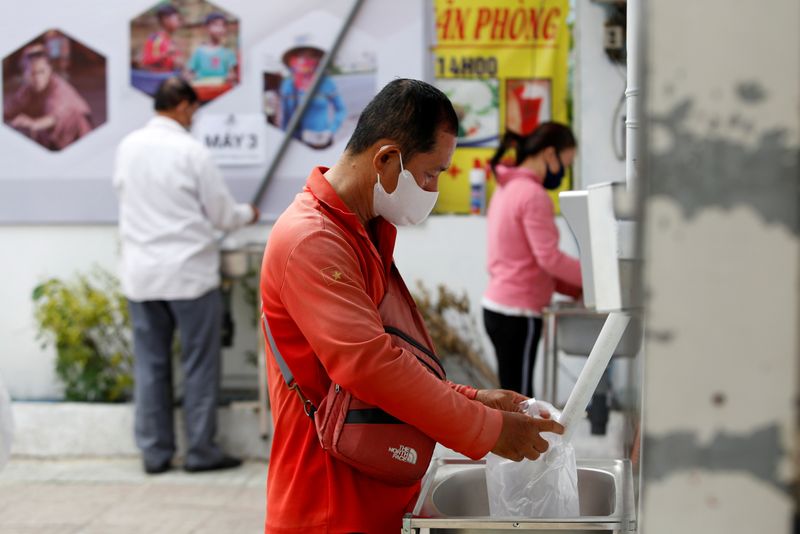
Vietnam has reported 262 COVID-19 cases, and no deaths so far, but as a result of a 15-day social distancing programme that began on March 31 many small businesses have been shuttered and thousands of people temporarily laid off from work.
Nguyen Thi Ly’s husband was among those who have lost their job. Tiếp tục đọc “‘Rice ATM’ feeds Vietnam’s poor amid virus lockdown”
Monitoring the Quantity of Water Flowing Through the Upper Mekong Through Natural (Unimpeded) Conditions
The Eyes on Earth report, Monitoring the Quantity of Water Flowing Through the Upper Mekong Through Natural (Unimpeded) Conditions, published this week by Pact, shows that deviations from normal flow patterns began to occur with the operation of the first large hydropower dam on the Upper Mekong mainstream in 2012. Using satellite data on the Upper Mekong from 1992 to 2019, matched against daily measurements of river height downstream at Chiang Saen, Thailand, the research shows unusual fluctuations in recent years. The report concludes that cooperation between China and the Lower Mekong countries to simulate the natural flow cycle of the Mekong could potentially improve low-flow conditions and benefit all communities in the Mekong River Basin.

Các doanh nghiệp năng lượng chung tay đẩy lùi dịch COVID-19
Sáng ngày 28/3, Đại diện của Hiệp hội Năng lượng Sạch Việt Nam – Văn phòng đại diện tại TP.HCM, phối hợp với Hiệp hội Điện gió tỉnh Bình Thuận, cùng các doanh nghiệp ngành năng lượng tái tạo đã đến thăm, chia sẻ khó khăn và hỗ trợ những vật dụng thiết yếu cho cơ sở cách ly tập trung tại khu B, Ký túc xá Đại học Quốc gia TP.HCM.
Góp ý và bình luận về quyết định của TTCP cơ chế khuyến khích phát triển điện mặt trời tại Việt Nam 13/2020/QD-TTg
Thủ tướng Chính phủ VN vừa ra Quyết định số 13/2020/QĐ-TTg ngày 6/4/2020 về cơ chế khuyến khích phát triển điện mặt trời tại Việt Nam. Quyết định này có hiệu lực thi hành từ ngày 22/5/2020. (Xem Toàn văn quyết định)
Quyết định là một dấu hiệu tích cực thể hiện cam kết của Việt Nam để cung cấp những tín hiệu rõ ràng hơn về chính sách cho thị trường điện mặt trời, đặc biệt liên quan đến điện mặt trời áp mái, và công nhận khái niệm mua bán điện từ mái nhà tư nhân.
Tuy nhiên, mốc thời hạn của quyết định cho FIT2 đến cuối năm 2020 chỉ còn 9 tháng, có nghĩa là sẽ vẫn tồn tại đáng kể những điểm chưa rõ ràng, điều này sẽ cản trở các quyết định đầu tư. Sự chưa rõ ràng về mốc thời gian này rất nhiều nguy cơ có thể trở nên càng bất ổn hơn trước những thách thức liên quan đến dịch bệnh COVID. Những quyết định và quy định hướng dẫn sau quyết định này nên làm rõ về lộ trình chắc chắn hơn trong cơ chế cho giá FIT và các cơ chế khuyến khích khác để thúc đẩy các quyết định đầu tư vào điện mặt trời,dể phát triển tiềm năng lớn của điện mặt trời tại Việt Nam Tiếp tục đọc “Góp ý và bình luận về quyết định của TTCP cơ chế khuyến khích phát triển điện mặt trời tại Việt Nam 13/2020/QD-TTg”
Global poverty update from the World Bank: New poverty estimates for 2018
The March 2020 global poverty update added more than 200 new surveys to PovcalNet, bringing the total number of surveys to more than 1,900. New poverty estimates for the reference year 2018 are now included for some regions, and the previously published global and regional estimates from 1981 to 2015 have been revised, reflecting data revisions and the availability of new data. More details on the revisions can be found in Atamanov et al. (2020).
Tiếp tục đọc “Global poverty update from the World Bank: New poverty estimates for 2018”
Coconut farmers in Southeast Asia struggle as palm oil muscles in on them
- Indonesia and the Philippines account for most of the world’s coconut production. But as the palm oil industry expands, helped along by generous government subsidies, coconut farmers are struggling to adapt.
- In 2010, palm oil overtook coconut oil as the top-selling oil in most Philippine grocery stores. Most of it was imported from Indonesia or Malaysia, but now the Philippines is trying increase its own production.
- Oil palm is a much more industrialized crop than coconut, which is dominated by smallholders. But while the low price of palm oil has given it an advantage, demand has risen for high-quality coconut products due to health and sustainability concerns.
- Some coconut farmers say they need the same kind of support from the government that palm oil companies get if they are going to survive.
GENERAL NAKAR, Philippines — Lucio Tena, 64, has been growing coconuts on his 20-hectare (49-acre) farm in General Nakar, on the east coast of the Philippine island of Luzon, for more than four decades. But the situation facing farmers like him today is the worst he’s experienced in his lifetime.
Tiếp tục đọc “Coconut farmers in Southeast Asia struggle as palm oil muscles in on them”
Tôn vinh văn hóa địa phương – một cách mới để nâng cấp cơ sở hạ tầng / Honoring local culture – a new way to sustain infrastructure
Ảnh

Vietnam’s social marketing hit a new level in the time of COVID19 – Truyền thông xã hội Việt Nam thời Corona
Museum Asks People To Recreate Paintings With Stuff They Can Find at Home, Here Are The Results
Even though most of us are stuck at home during Coronavirus quarantine and can’t go out and enjoy art in museums, that doesn’t mean that life has to be boring or uncultured. The Getty Museum in Los Angeles challenged art fans to post photos of themselves recreating their favorite works of art from the safety of their homes. People responded with a lot of enthusiasm and flooded social media with their unique artistic interpretations. Scroll down to see the best examples!


Rice crop evolution in the Mekong Delta – European Space Agency
EU-Vietnam: Council gives final green light to free trade agreement
The Council today adopted a decision on the conclusion of a free trade agreement (FTA) between the EU and Vietnam. This decision clears the path, on the EU side, for the entry into force of the agreement.
Once the Vietnamese National Assembly also ratifies the FTA, the agreement can enter into force, most likely in early summer 2020.
This agreement is the second one we are concluding with a Southeast Asia country, after Singapore. It is also the most ambitious free trade agreement ever concluded with a developing country. We are opening up new trading opportunities, but we are also creating new tools to give impetus to the enforcement of basic freedoms and labour rights in Vietnam.
Tiếp tục đọc “EU-Vietnam: Council gives final green light to free trade agreement”
Mekong River dams could slice 0.3 pct off Vietnam’s GDP: report

A satellite image on January 3, 2020, shows Xayaburi Dam sitting astride the Mekong River, which has turned blue due to drought and other factors reducing sediment, near the town of Xayaboury, Laos. Photo by Reuters.
Hydropower dams on the Mekong River are expected to reduce Vietnam’s GDP by 0.3 percentage points due to their impact on fisheries and agriculture.
Vietnam quarantines tens of thousands in camps amid vigorous attack on coronavirus
HANOI (Reuters) – Vietnam has sent tens of thousands of people to quarantine camps as waves of overseas citizens return home to escape a coronavirus pandemic spreading in Europe and the United States.
FILE PHOTO: A Vietnamese woman who came back from China wears a protective mask while talking on the phone with a relative inside a quarantine area at a military base in Lang Son province, Vietnam February 20, 2020. REUTERS/Kham/File Photo
The coronavirus pandemic in five powerful charts
From papers published to carbon emissions to confirmed cases, these data reveal an unprecedented viral outbreak and its impacts around the world.

A worker disinfects a mosque in Istanbul as part of city-wide efforts to contain the spread of COVID-19.Credit: Chris McGrath/Getty
How is the coronavirus spreading around the world?
Tiếp tục đọc “The coronavirus pandemic in five powerful charts”

