South Korea and Japan Will End Overseas Coal Financing. Will China Catch Up?

WRI.org

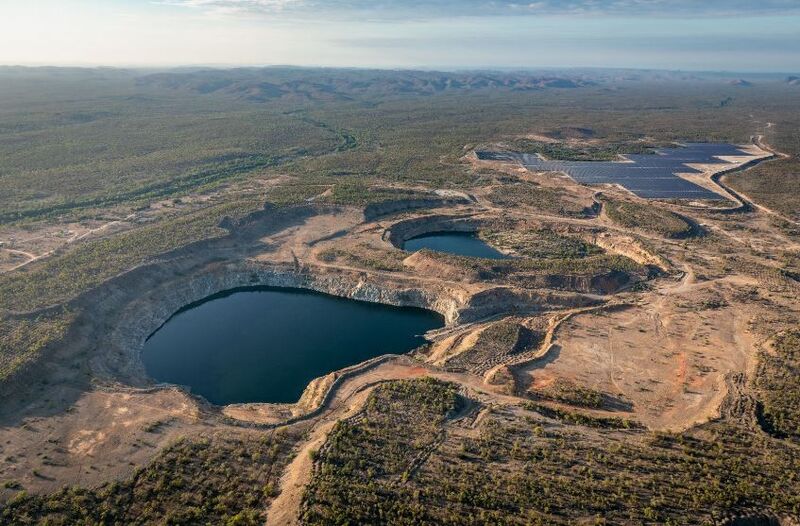
Since 2013, public finance from China, Japan and South Korea accounted for more than 95% of total foreign financing toward coal-fired power plants. This financing enabled the construction and operation of coal power plants in developing countries, where investment in power supply does not match demand. These investments also came at a time when the global carbon budget was already overstretched.

Tiếp tục đọc “South Korea and Japan Will End Overseas Coal Financing. Will China Catch Up?”

Sixty years of climate change warnings: the signs that were missed (and ignored)

theguardian.com

The effects of ‘weird weather’ were already being felt in the 1960s, but scientists linking fossil fuels with climate change were dismissed as prophets of doomby Alice BellMon 5 Jul 2021 06.00 BST

In August 1974, the CIA produced a study on “climatological research as it pertains to intelligence problems”. The diagnosis was dramatic. It warned of the emergence of a new era of weird weather, leading to political unrest and mass migration (which, in turn, would cause more unrest). The new era the agency imagined wasn’t necessarily one of hotter temperatures; the CIA had heard from scientists warning of global cooling as well as warming. But the direction in which the thermometer was travelling wasn’t their immediate concern; it was the political impact. They knew that the so-called “little ice age”, a series of cold snaps between, roughly, 1350 and 1850, had brought not only drought and famine, but also war – and so could these new climatic changes.

“The climate change began in 1960,” the report’s first page informs us, “but no one, including the climatologists, recognised it.” Crop failures in the Soviet Union and India in the early 1960s had been attributed to standard unlucky weather. The US shipped grain to India and the Soviets killed off livestock to eat, “and premier Nikita Khrushchev was quietly deposed”.

But, the report argued, the world ignored this warning, as the global population continued to grow and states made massive investments in energy, technology and medicine.

Tiếp tục đọc “Sixty years of climate change warnings: the signs that were missed (and ignored)”

How to Teach Consent Across the Curriculum

Edutopia.org

Studying the concept of consent outside the confines of health classes may leave students better equipped to apply what they learn.By Laura McGuireJune 16, 2021

DGLimages / Alamy Stock Photo

In 2018, when I first wrote about consent education and the role that schools play in preventing sexual misconduct, my focus was on getting consent education into the schools. Unfortunately, the need for deterring gender-based interpersonal violence is still very much the reality across the country. While a few states have begun creating mandates for consent education at some point in a student’s high school years, most states have either ignored the issue entirely or disregarded the enforcement of these standards. Students, staff, and communities continue to feel the impact of not having consent infused into their school culture.

Tiếp tục đọc “How to Teach Consent Across the Curriculum”

Report: New solar is cheaper to build than to run existing coal plants in China, India and most of Europe

renewableworld.com

By Jennifer Runyon -6.23.2021

Source: BloombergNEF. Note: The map indicates for each country the technology with the lowest LCOE per MWh for new-build solar (yellow) and wind (blue) or running costs fo existing coal (black) or gas (gray). Running costs include a carbon price where applicable. Calculations exclude subsidies and tax-credits. Natural gas reflects combined-cycle gas turbines.

This week, BloombergNEF’s released estimates for its global benchmark that tracks the levelized cost of electricity, or LCOE, for utility-scale PV and onshore wind. The LCOE looks at the all-in cost to build, operate, and maintain power plants and then calculates the cost per megawatt-hour (MWh) of the energy produced based on all of those inputs.

Tiếp tục đọc “Report: New solar is cheaper to build than to run existing coal plants in China, India and most of Europe”

COVID vaccines to reach poorest countries in 2023 — despite recent pledges

Nature.com

Amid a COVID surge in Africa, vaccine promises from richer nations are not enough to bring an early end to the pandemic, experts say.

A woman receives a nasal swab from a health worker wearing personal protective equipment
COVID-19 testing in Johannesburg. South African President Cyril Ramaphosa has reintroduced restrictions following a surge of the Delta variant.Credit: Emmanuel Croset/AFP/Getty

Most people in the poorest countries will need to wait another two years before they are vaccinated against COVID-19, researchers have told Nature.

Around 11 billion doses are needed to fully vaccinate 70% of the world’s population against COVID-19. As of 4 July, 3.2 billion doses had been administered. At the current vaccination rate, this will increase to around six billion doses by the end of the year, researchers from the International Monetary Fund, based in Washington DC, project.

Tiếp tục đọc “COVID vaccines to reach poorest countries in 2023 — despite recent pledges”

China key to Vietnam’s solar success

Chinadialogue.net

A rapid rise in Vietnam’s solar power has been boosted by Chinese finance and technology, but more support is still going to fossil fuels

Solar energy in Vietnam has grown rapidly since 2018, supported by Chinese finance and technology (Image: Alamy)Solar energy in Vietnam has grown rapidly since 2018, supported by Chinese finance and technology (Image: Alamy)

Linh Pham

June 30, 2021

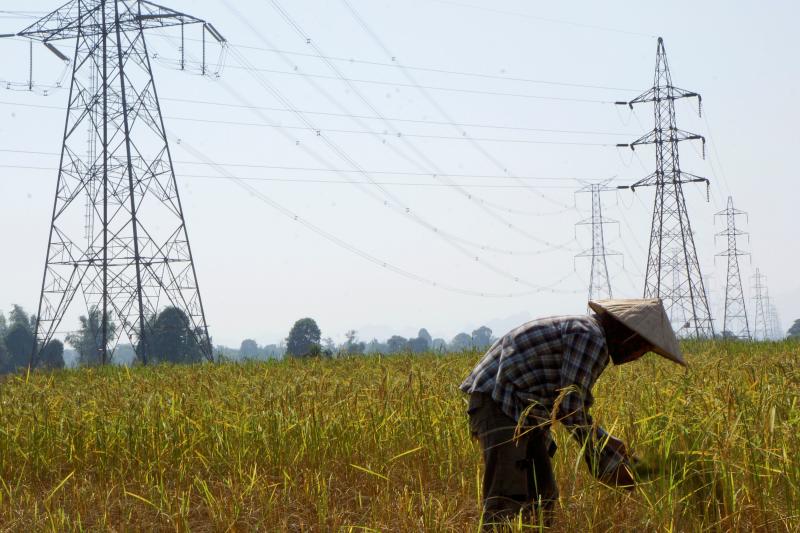
Vietnam has been a Southeast Asia solar success story. It went from having barely any generation in 2018 to a quarter of its total installed capacity being solar – a 100-fold increase in two years.

This rapid growth is mainly down to the Vietnamese government’s feed-in tariff which provides a guaranteed above-market price for renewable energy producers; other incentives signed off in 2017 in an attempt to pivot away from lagging fossil fuel projects; and cheaper solar panels, some of which are assembled domestically.

Around 99% of the installed solar panels in Vietnam come from China. At the same time, China is one of the few countries that still lends Vietnam money to build coal plants.

China’s future role in Vietnam’s power system will be shaped by the latter’s newest plan for its power sector. The final version of the Power Development Plan 8 is due to be published in June, though it has been postponed before and may be again.

Tiếp tục đọc “China key to Vietnam’s solar success”

Thị trường điện cạnh tranh vẫn chậm tiến độ

Nguyễn HoàngThứ tư, 30/6/2021 | 07:59 GMT+7

doanhnhansaigon.vn

Chính phủ yêu cầu Bộ Công Thương rà soát và trình lại Quy hoạch điện VIII trước ngày 15/6/2021, trong đó cần ưu tiên đẩy nhanh tiến độ thị trường điện cạnh tranh, đảm bảo sự tham gia công bằng của các nhà đầu tư và thu hút được nguồn lực xã hội để phát triển năng lượng.

Thị trường điện cạnh tranh đã được quy định trong Luật Điện lực (năm 2004) và Luật Điện lực sửa đổi (năm 2013), được cụ thể hóa trong Quyết định số 26/2006/QĐ-TTg ngày 26/1/2006 của Thủ tướng Chính phủ. Theo quyết định này, thị trường điện Việt Nam sẽ hình thành và phát triển theo ba cấp độ: phát điện cạnh tranh, bán buôn cạnh tranh và bán lẻ cạnh tranh.

Việt Nam đã có gần 20 năm nghiên cứu và thực hiện, nhưng thị trường phát điện cạnh tranh vẫn chưa có mô hình đúng theo nguyên tắc thị trường cạnh tranh: hiệu quả, lành mạnh và bình đẳng, không phân biệt đối xử giữa các đối tượng tham gia thị trường điện. 

Tiếp tục đọc “Thị trường điện cạnh tranh vẫn chậm tiến độ”

Why Investors Should Consider Vietnam’s Electric Vehicle Market

 June 29, 2021 Posted byVietnam Briefing Written byPritesh Samuel Reading Time:6 minutes

  • Vietnam’s electric vehicle market remains in its infancy, but there are plenty of opportunities as we are likely to see a paradigm shift from gasoline to electric-powered vehicles.
  • With a rising population and an expanding middle class, consumers are increasingly aware of the environment, fuel efficiency, and increasing pollution levels in cities.
  • Vietnam Briefing outlines the opportunities in Vietnam’s electric vehicle market despite the slow progress till date.

The electric vehicle market in Vietnam has not garnered as much attention compared to other countries in the region and globally, but this doesn’t mean that opportunities are not there. Electric vehicles are an irreversible trend and will be the future as governments move towards clean energy and consider the environment. This means that investors that are interested can set up the groundwork including production facilities, supply chains, and manpower to prepare for this future shift.

With a population of more than 96 million, about half of Vietnam’s population owns motorcycles, while car ownership is at a ratio of 23 per 1,000 people. Major cities such as Hanoi and Ho Chi Minh City are gridlocked with motorbikes on streets, alleys, and even sidewalks. This in turn has resulted in increased pollution and congestion. Hanoi and Ho Chi Minh City have ranked high in pollution levels globally several times. A poll by IQAir listed Vietnam as the 15th most polluted country in the world.

Tiếp tục đọc “Why Investors Should Consider Vietnam’s Electric Vehicle Market”

Lethal Autonomous Weapons Exist; They Must Be Banned

spectrum.ieee.org

It may not be too late to put the evil “Slaughterbots” genie back in the bottle, if the world acts now

By Stuart Russell, Anthony Aguirre, Emilia Javorsky and Max Tegmark

Officials of Turkish defense industry company "STM", work at Autonomous Rotary Wing Attack Drone UAV Kargu production to meet the needs of the security forces at the campus of OSTIM Technopark in Ankara, Turkey on June 11, 2020.
MEHMET KAMAN/ANADOLU AGENCY/GETTY IMAGES

This is a guest post. The views expressed here are solely those of the author and do not represent positions of IEEE Spectrum or the IEEE.

A chilling future that some had said might not arrive for many years to come is, in fact, already here. According to a recent UN report, a drone airstrike in Libya from the spring of 2020—made against Libyan National Army forces by Turkish-made STM Kargu-2 drones on behalf of Libya’s Government of National Accord—was conducted by weapons systems with no known humans “in the loop.” 

Tiếp tục đọc “Lethal Autonomous Weapons Exist; They Must Be Banned”

Advancing human rights through trade

chathamhouse.org

Why stronger human rights monitoring is needed and how to make it work

Political shifts, the impact of the COVID-19 pandemic, and the struggle for a shared vision of how to ‘build back better’, have reignited the debate about trade and human rights. 

Although many trade agreements take human rights impacts into consideration, the monitoring systems that have emerged so far are not comprehensive. Without robust human rights monitoring, trading partners have little chance of ensuring that their counterparts are meeting their commitments.

While there are considerable structural, political and resource-related challenges to conducting more systematic and effective human rights monitoring, recent experiences in this field can help policymakers design more effective monitoring mechanisms for the future.

Tiếp tục đọc “Advancing human rights through trade”