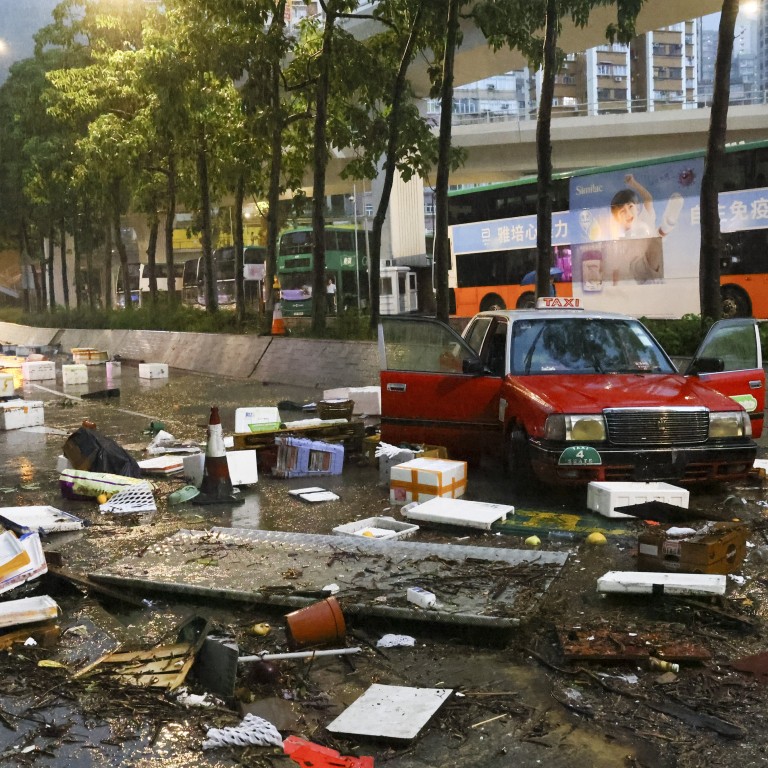
Hong Kong floods: ‘once-in-500-years’ storm hard to predict, officials say, as John Lee agrees on need for warning system review, better communication with public

scmp.com

  • Government efforts seen to be in stark contrast with show of vigilance against Super Typhoon Saola a week earlier
  • Latest storm caught city off guard overnight, flooding roads and malls

Jeffie Lam,Natalie Wong,Edith LinandClifford Lo Published: 2:53pm, 8 Sep, 2023

A Hong Kong road is strewn with debris, rubbish and an abandoned taxi as floodwaters recede. Photo: Dickson Lee

Hong Kong officials met the press at 2.30pm on Friday to provide details on efforts in handling the aftermath of the city’s worst downpour in more than a century amid mounting questions over a perceived lack of preparedness.

Tiếp tục đọc “Hong Kong floods: ‘once-in-500-years’ storm hard to predict, officials say, as John Lee agrees on need for warning system review, better communication with public”

‘Putting a Price’ on Tobacco, Alcohol, and Carbon Emissions

Citizens’ Climate Lobby Posted on December 17, 2022 in Advance Climate Policy

Why taxing bad things is good

For over a century, economists have advocated taxing goods or services that impose greater costs on society than their price reflects. The idea isn’t to raise revenue, even if that’s a nifty benefit, but to discourage the overuse of things that cause unintended harm. 

No bigger example of such unintended harm exists today than the air and climate pollution caused by the burning of fossil fuels. The International Monetary Fund conservatively estimates that the price of such fuels fails to account for $4.2 trillion in air and climate pollution costs each year.

By imposing a fee on fossil fuels to fairly reflect those social costs, on the other hand, we can invoke the power of the market to efficiently limit their use. That’s why more than 3,600 economists call carbon fees “the most cost-effective lever to reduce carbon emissions at the scale and speed that is necessary.”

Public support for carbon fees would be stronger if everyone grasped how they work to discourage the production and consumption of goods that cause societal harm. Unfortunately, many people don’t get it. 

“The expectation that carbon taxes do not work is one of the main reasons for their rejection by people in surveys and real ballots,” an international scholarly review concluded in 2018. For example, only 39 percent of respondents in one Swedish poll understood that a carbon tax “affects my own and other people’s behavior.”

Tiếp tục đọc “‘Putting a Price’ on Tobacco, Alcohol, and Carbon Emissions”

Aging dams and missed warnings: A lethal mix of factors caused Africa’s deadliest flood disaster in Libya

cnn.com

By Nadeen Ebrahim and Laura Paddison, CNN Updated 12:08 PM EDT, Fri September 15, 2023

A satellite image shows the town of Derna in the aftermath of the floods in eastern Libya on Wednesday.

A satellite image shows the town of Derna in the aftermath of the floods in eastern Libya on Wednesday.Maxar Technologies/ReutersCNN — 

It started with a bang at 3 a.m. Monday as the residents of Derna were sleeping. One dam burst, then a second, sending a huge wave of water gushing down through the mountains towards the coastal Libyan city, killing thousands as entire neighborhoods were swept into the sea.

More than 5,000 people are believed to have been killed with thousands more missing, though estimates from different Libyan officials and aid groups have varied and the toll is expected to rise.

The eastern Libyan city of Derna, the epicenter of the disaster, had a population of around 100,000 before the tragedy. Authorities say that at least 10,000 remain missing. CNN could not independently verify the figures.

Buildings, homes and infrastructure were “wiped out” when a 7-meter (23-foot) wave hit the city, according to the International Committee of the Red Cross (ICRC), which said Thursday that dead bodies were now washing back up on shore.

But with thousands killed and many more still missing, there are questions as to why the storm that also hit Greece and other countries caused so much more devastation in Libya.

Experts say that apart from the strong storm itself, Libya’s catastrophe was greatly exacerbated by a lethal confluence of factors including aging, crumbling infrastructure, inadequate warnings and the impacts of the accelerating climate crisis.

Tiếp tục đọc “Aging dams and missed warnings: A lethal mix of factors caused Africa’s deadliest flood disaster in Libya”

The US Office of Strategic Services (OSS) in Vietnam

1945: A War of Missed Opportunities 

The National WWII Museum July 15, 2020

In 1945, members of the American “Deer Team,” part of the OSS, worked with Vietnamese guerrilla fighters to throw Japanese troops out of Indochina. As the war ended, the people of Vietnam looked to the United States to support their dreams of independence.

For most of World War II, the United States considered Vietnam to be a relatively unimportant French colony to someday be reclaimed from the Japanese; but America showed little interest in enlisting Vietnamese aid in that effort. All this changed rapidly in March 1945. Though the Japanese had invaded Vietnam in 1940, they allowed French colonial authorities to retain power so long as they controlled the Vietnamese and maintained the colony as a supply base for the Emperor’s army fighting in China. However, this also allowed the French to maintain covert Allied intelligence networks that supplied information to Allied personnel aiding the Chinese in their war against Japan. By early 1945, however, the war in the Pacific had shifted in favor of the Allies and the Japanese became increasingly suspicious of French activities in Vietnam. As a result, on March 10, 1945, Japanese forces launched Operation Meigo, a swift military takeover that effectively ended French colonial rule of Vietnam.

Members of the Deer Team providing instruction to the Vietnamese on use of the M-1 carbine, August 16, 1945. Photo by the National Archives and Records Administration. 

With the loss of French control over the colony during Meigo, Allied intelligence networks operating in Vietnam collapsed. One such group, known as the “GBT,” had been providing information on weather conditions, the movement of Japanese troop trains and naval vessels, and on escape routes for downed Allied airmen to the 14th US Air Force stationed in China. Up to this point the GBT refused to employ Vietnamese as agents because the French claimed they were untrustworthy and were only interested in acquiring weapons to fight the French, not the Japanese. With their normally busy wires now silent, native agents became necessary.

Both the GBT and the US Office of Strategic Services (the OSS) reached out to a Vietnamese man who had drawn positive attention from the 14th Air Force the previous year when he escorted a downed American pilot out of Vietnam and into China. OSS agent Charles Fenn tracked down the man in question—Ho Chi Minh—describing him as articulate and charismatic, and both open and friendly to Americans. Fenn was convinced Ho would be an excellent intelligence agent and the group he represented, the Viet Minh, would also be valuable assets in the war against Japan. Soon thereafter, Ho Chi Minh became OSS agent “Lucius.”

Members of the Deer Team and Viet Minh at training camp. Allison Thomas stands in the center and is flanked on his left by Vo Nguyen Giap and on his right by Ho Chi Minh. Photo by the National Archives and Records Administration. 

Tiếp tục đọc “The US Office of Strategic Services (OSS) in Vietnam”

Antarctica warming much faster than models predicted in ‘deeply concerning’ sign for sea levels

theguardian.com Graham Readfearn @readfearnThu 7 Sep 2023 16.00 BST

Study finds ‘direct evidence’ of polar amplification on continent as scientists warn of implications of ice loss

An Adelie penguin in Antarctica.
An Adelie penguin in Antarctica. The icy continent is heating faster than climate models had predicted, a study has found. Photograph: Reuters/Alamy

Antarctica is likely warming at almost twice the rate of the rest of the world and faster than climate change models are predicting, with potentially far-reaching implications for global sea level rise, according to a scientific study.

Scientists analysed 78 Antarctic ice cores to recreate temperatures going back 1,000 years and found the warming across the continent was outside what could be expected from natural swings.

In West Antarctica, a region considered particularly vulnerable to warming with an ice sheet that could push up global sea levels by several metres if it collapsed, the study found warming at twice the rate suggested by climate models.

Tiếp tục đọc “Antarctica warming much faster than models predicted in ‘deeply concerning’ sign for sea levels”

What Google, Facebook And Apple Can Learn From Microsoft’s 1998 Antitrust case

In 1995, Microsoft CEO Bill Gates published a memo entitled “The Internet Tidal Wave.” Gates outlined seven areas where Microsoft could increase its focus on internet features, including a web browser. The next year Microsoft launched its Internet Explorer web browser. Microsoft faced an antitrust lawsuit by the Department of Justice in 1998 during the height of the Browser Wars. Its Internet Explorer was quickly becoming the go-to web browser for the masses, but the U.S. government argued it stifled competition.

UN chief hails SE Asia for vital role ‘building bridges of understanding’

news.un.org

UN Secretary-General António Guterres adresses the media at the Association of Southeast Asian Nations (ASEAN) Summit in Jakarta, Indonesia.

UN Indonesia/Lufty Ferdiansyah

UN Secretary-General António Guterres adresses the media at the Association of Southeast Asian Nations (ASEAN) Summit in Jakarta, Indonesia.

Peace and Security

Amid rising geopolitical tension, Southeast Asia is fulfilling a “vital role in building bridges of understanding” worldwide said the UN chief on Thursday.

António Guterres was speaking in Jakarta, Indonesia, at the opening of the ASEAN-United Nations Summit, addressing Member States of the Association of Southeast Asian Nations and declaring “our partnership is more important than ever.”

Tests ‘as far as eye can see’

Tiếp tục đọc “UN chief hails SE Asia for vital role ‘building bridges of understanding’”

Xét xử có bồi thẩm đoàn, Thỏa thuận nhận tội và Tư pháp phục hồi: Kinh nghiệm quốc tế và khuyến nghị đối với Việt Nam –

Jury Trials, Bargaining, and Restorative Justice: International Experience and Recommendations for Viet Nam

UNDP.org 22 FEBRUARY, 2023

Nghiên cứu này là sản phẩm thuộc chương trình: “Tăng cường pháp luật và tư pháp tại Việt Nam” (EU JULE), do Liên minh Châu Âu tài trợ với sự đóng góp tài chính từ UNDP và UNICEF. Chương trình do hai cơ quan này của Liên hợp quốc thực hiện với sự phối hợp của Bộ Tư pháp Việt Nam.

Báo cáo tiếng Việt

Một trong những mục tiêu chính của chiến lược quốc gia về xây dựng nhà nước pháp quyền của Việt Nam là cải thiện hệ thống tư pháp. Chính phủ Việt Nam đã làm rõ điều này bằng cách chấp nhận các khuyến nghị chu kỳ III của cơ chế Rà soát Định kỳ Phổ quát. Các khuyến nghị này kêu gọi “… tăng cường nhà nước pháp quyền, bao gồm cả việc phát triển hơn nữa hệ thống tư pháp hình sự có tính đến quyền con người của các nghi phạm và tù nhân cũng như thúc đẩy việc quản lý công lý công bằng và minh bạch.”

Nhằm góp phần thực hiện khuyến nghị trên, nghiên cứu này tập trung thu thập các thông lệ quốc tế tốt nhất liên quan đến ba cơ chế tư pháp hình sự quan trọng và nổi bật tại các khu vực tài phán thuộc hệ thống thông luật và dân luật, bao gồm: 1) xét xử bồi thẩm đoàn hình sự (hoặc sự tham gia của hội thẩm); 2) thỏa thuận nhận tội; và 3) hòa giải (tư pháp phục hồi). Báo cáo đồng thời xem xét lại luật pháp và thực tiễn hiện hành của Việt Nam đối với từng cơ chế này. Rút ra từ các thông lệ tốt của Việt Nam và quốc tế, nghiên cứu kết luận với các khuyến nghị nhằm hỗ trợ hệ thống tư pháp Việt Nam đạt được các mục tiêu chiến lược quốc gia.

Ấn tượng nhân văn từ “Lá đơn thứ 72”

sggp.org 9/05/2022 08:00 (GMT+7)

(ĐTTCO) – Hướng đến kỷ niệm sinh nhật Bác Hồ, Sân khấu tư nhân Lệ Ngọc công diễn vở kịch “Lá đơn thứ 72” nói về câu chuyện Chủ tịch Hồ Chí Minh chỉ đạo xử lý thư kêu cứu của người dân bị án oan. NSND Lê Tiến Thọ ở tuổi 71 được mời làm đạo diễn, còn NSND Vương Duy Biên ở tuổi 64 đảm nhận vai trò thiết kế mỹ thuật. 

Một cảnh trong vở kịch “Lá đơn thứ 72”.

NSND Lê Tiến Thọ là một nhân vật nổi tiếng bậc nhất trong nghệ thuật tuồng Việt Nam, với các vai diễn trong “Suối đất hoa”, “Hoàng hôn đen”, “Lý Phụng Đình”… và còn thể hiện năng lực trong vai trò đạo diễn các vở tuồng “Thiếu phụ Nam Xương”, “Lý Chiêu Hoàng”, “Dũng khí Đặng Đại Độ”…

Ông cũng là tác giả của nhiều kịch bản tuồng như “Chuyện tình ông vua”, “Hoàng thúc Lý Long Tường”, “Vụ án Lệ Chi Viên”… NSND Lê Tiến Thọ được trao Giải thưởng Nhà nước về văn học nghệ thuật năm 2012. Sau nhiều năm làm Giám đốc Nhà hát tuồng Việt Nam, ông tiếp tục đảm nhận những vị trí Cục trưởng Cục Nghệ thuật biểu diễn, Thứ trưởng Bộ Văn hóa Thể thao – Du lịch, Chủ tịch Hội Sân khấu Việt Nam… 

Tiếp tục đọc “Ấn tượng nhân văn từ “Lá đơn thứ 72””

Biden opens Vietnam visit by saying the two countries are ‘critical partners’ at a ‘critical time’

APnews.com

U.S. President Joe Biden and Vietnam's General Secretary Nguyen Phu Trong, unseen, deliver remarks at the Communist Party of Vietnam Headquarters, in Hanoi, Vietnam, Sunday, Sept. 10, 2023. (AP Photo/Evan Vucci)

1 of 12 | U.S. President Joe Biden and Vietnam’s General Secretary Nguyen Phu Trong, unseen, deliver remarks at the Communist Party of Vietnam Headquarters, in Hanoi, Vietnam, Sunday, Sept. 10, 2023. (AP Photo/Evan Vucci) Tiếp tục đọc “Biden opens Vietnam visit by saying the two countries are ‘critical partners’ at a ‘critical time’”

WHO cảnh báo số ca mắc sốt xuất huyết kỷ lục do sự nóng lên toàn cầu

nhandan.vn – WHO cho biết, tỷ lệ mắc sốt xuất huyết ngày càng gia tăng trên phạm vi toàn cầu, với 4,2 triệu ca bệnh được ghi nhận trong năm 2022, cao hơn gấp 8 lần so với con số thống kê năm 2000.

Một cậu bé che mặt để tránh khói khi khi nhân viên y tế hun khói đuổi muỗi phòng sốt xuất huyết tại một khu dân cư ở Colombo, Sri Lanka, ngày 12/7/2023. (Ảnh: Reuters)

Tổ chức Y tế Thế giới (WHO) ngày 21/7 cảnh báo, số ca mắc bệnh sốt xuất huyết trên thế giới có thể đạt mức cao kỷ lục trong năm nay, một phần là do sự nóng lên toàn cầu tạo môi trường có lợi cho loài muỗi truyền bệnh.

Theo báo cáo của WHO hồi tháng 3, bệnh sốt xuất huyết đã lần đầu tiên xuất hiện tại thủ đô Khartoum của Sudan. Châu Âu gần đây ghi nhận số ca mắc tăng đột biến, trong khi Peru đã phải tuyên bố tình trạng khẩn cấp về dịch bệnh ở hầu hết các khu vực.

Đầu năm nay, WHO đã cảnh báo sốt xuất huyết là bệnh nhiệt đới lây lan nhanh nhất thế giới, và đồng thời là một “mối đe dọa đại dịch”.

Chia sẻ tại họp báo ở Geneva, Thụy Sĩ ngày 21/7, Tiến sĩ Raman Velayudhan, chuyên gia thuộc bộ phận kiểm soát các bệnh nhiệt đới bị lãng quên của WHO, cho biết khoảng một nửa dân số thế giới đang đối mặt với nguy cơ nhiễm bệnh sốt xuất huyết.

Năm 2019, số ca mắc sốt xuất huyết toàn cầu đạt mức cao nhất trong lịch sử với 5,2 triệu trường hợp được ghi nhận tại 129 quốc gia. Sau 4 năm, thế giới một lần nữa chứng kiến sự bùng phát mạnh mẽ của căn bệnh này khi số người nhiễm bệnh đang trên đà chạm mốc 4 triệu.

Tiến sĩ Velayudhan thông tin thêm, gần 3 triệu trường hợp mắc sốt xuất huyết đã được báo cáo ở châu Mỹ, đồng thời bày tỏ quan ngại về sự lây lan của dịch bệnh xuống khu vực phía nam sang các nước Bolivia, Paraguay và Peru.

“Tình hình sốt xuất huyết đang diễn biến khá tồi tệ ở khu vực châu Mỹ. Chúng tôi hy vọng khu vực châu Á có thể kiểm soát được dịch bệnh”, chuyên gia của WHO cho hay.

Theo WHO, các trường hợp mắc sốt xuất huyết được báo cáo cho đến nay chỉ chiếm một phần nhỏ trong tổng số ca nhiễm toàn cầu vì hầu hết đều không có triệu chứng, trong đó tỷ lệ số ca tử vong chưa đến 1%.

Khí hậu ấm hơn được cho là nguyên nhân giúp muỗi sinh sôi nhanh hơn và tạo điều kiện cho virus trong cơ thể chúng phát triển. Ngoài ra, nhu cầu vận chuyển hàng hóa và di chuyển của con người ngày càng cao, quá trình đô thị hóa và các vấn đề liên quan đến vệ sinh cũng là những yếu tố dẫn đến sự gia tăng số ca bệnh.

Trả lời câu hỏi về tình trạng nắng nóng hiện nay ở Bắc bán cầu ảnh hưởng thế nào đến sự lây lan của dịch sốt xuất huyết, Tiến sĩ Velayudhan cho biết còn quá sớm để nói về điều này.

Chuyên gia của WHO giải thích, về lý thuyết, ở nhiệt độ trên 45 độ C, số lượng muỗi bị tiêu diệt nhiều hơn số muỗi sinh ra. Tuy nhiên, muỗi là loài côn trùng rất thông minh, và nó có thể sinh sản trong các vật chứa nước nơi nhiệt độ không tăng đến mức như vậy.

Mosquito-borne dengue grows deadlier in South Asia as planet warms

context.news

A grandmother keeps her vigil at the side of her sick grandchild at the dengue wards at the Mugda Medical College and Hospital, Dhaka, ‎August ‎30, ‎2023

A grandmother keeps her vigil at the side of her sick grandchild at the dengue wards at the Mugda Medical College and Hospital, Dhaka, ‎August ‎30, ‎2023, Thomson Reuters Foundation/Mosabber Hossain

What’s the context?

Virus is posing an ever-greater threat in Bangladesh and Nepal where rise and spread of cases are linked to climate change impacts

  • Dengue on the rise and spreading in Bangladesh, Nepal
  • Heat and longer monsoon linked to worsening outbreaks
  • Authorities struggle to respond but aid groups helping

DHAKA/KATHMANDU – Mosquito-borne dengue fever is taking a heavy toll on South Asian nations this year as Bangladesh grapples with record deaths and Nepal faces cases in new areas, with disease experts linking worsening outbreaks to the impacts of climate change.

Authorities in the two countries are scrambling to contain and treat the disease – which is also known as “breakbone fever” for the severe muscle and joint pains it induces. Entomologists and epidemiologists say rising temperatures and longer monsoon seasons are providing ideal breeding conditions for mosquitoes.

The threat is not restricted to South Asia as dengue rates are rising globally with 4.2 million cases reported in 2022 – up eight-fold from 2000 – the World Health Organization (WHO) says.

Tiếp tục đọc “Mosquito-borne dengue grows deadlier in South Asia as planet warms”

Draft natural gas rules in the Philippines ignore high costs and economic consequences

IEEFA.org September 04, 2023 Sam Reynolds

Key Findings

The Philippines spent nearly US$90 million on its first two shipments of liquefied natural gas (LNG). The price tag for just two cargoes should be a warning sign for the exorbitant LNG import bills to come. 


The Department of Energy’s draft circular aiming to make the country “a major player” in Asia “through the development and operation of LNG facilities” could increase the country’s dependence on one of the most expensive fuels available. 

Tiếp tục đọc “Draft natural gas rules in the Philippines ignore high costs and economic consequences”

Organization of the Petroleum Exporting Countries – OPEC in a Changing World

cfr.org

Western leaders have long criticized OPEC’s power to raise oil prices, and the bloc continues to influence the global market even as U.S. oil production has soared and alternative energies have come to the fore.  

Russian and Emirati energy ministers speak alongside the OPEC secretary-general in Vienna.
Russian and Emirati energy ministers speak alongside the OPEC secretary-general in Vienna. Joe Klamar/AFP/Getty Images

WRITTEN BY Anshu Siripurapu and Andrew Chatzky Last updated March 9, 2022 2:25 pm (EST)

Summary

  • The Organization of the Petroleum Exporting Countries (OPEC) is a group of oil-rich countries that together control nearly 40 percent of the world’s oil supply.
  • Russia’s war in Ukraine has caused global oil prices to surge, giving the bloc more leverage. 
  • However, as the world shifts away from fossil fuels, OPEC’s power could diminish.

The Organization of the Petroleum Exporting Countries (OPEC) is a bloc of thirteen oil-rich member states spanning the Middle East, Africa, and South America. Combined, the group controls close to forty percent of world oil production. This dominant market position has at times allowed OPEC to act as a cartel, coordinating production levels among members to manipulate global oil prices. As a result, U.S. presidents from Gerald Ford to Donald Trump have railed against the oil cartel as a threat to the U.S. economy.

Tiếp tục đọc “Organization of the Petroleum Exporting Countries – OPEC in a Changing World”