Global supplies of rice are facing its most significant shortage in two decades, exacerbating food insecurity fears. Rice is a staple food for over half the world’s population. India’s export bans sent shockwaves through markets as some argue the country is using food as a political pawn. America’s $34 billion rice industry must compete against the same market uncertainty while managing droughts, floods and changing temperatures. Watch this video to learn more about how global rice markets influence food security, geopolitics and the livelihoods of millions of farmers.
Tác giả: Đào Thu Hằng
Tỷ lệ học sinh liên quan đến bạo lực gia đình là rất lớn
NDO – Học sinh là con trong các gia đình bạo lực vừa có thể là người chứng kiến, vừa là đối tượng bị bạo lực, bị bỏ rơi. Do đó việc ngăn chặn, giải quyết bạo lực gia đình là một mắt xích rất quan trọng.
Thứ ba, ngày 07/11/2023 –
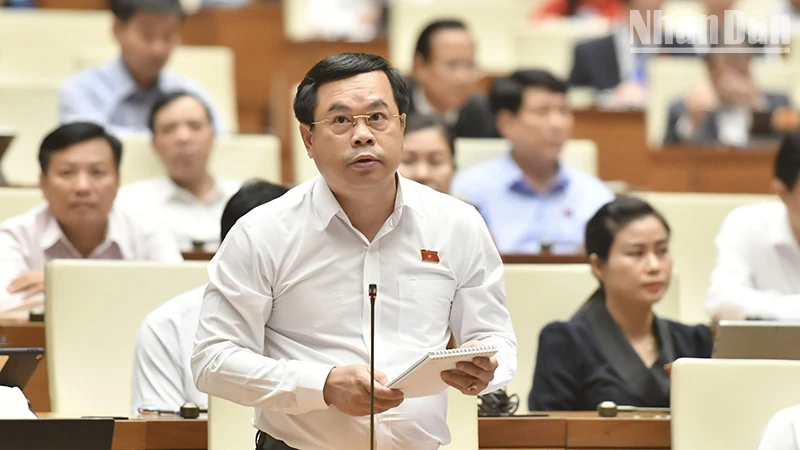
Chiều 7/11, Quốc hội tiếp tục tiến hành Phiên chất vấn và trả lời chất vấn. Đại biểu Vương Quốc Thắng (đoàn Quảng Nam) đặt câu hỏi tại sao “tình trạng bạo lực học đường diễn ra phức tạp” như trong Báo cáo của Chính phủ gửi đại biểu Quốc hội đã nêu.
Đại biểu Thắng thắc mắc những nguyên nhân gây ra tình trạng này và chất vấn Bộ trưởng Giáo dục và Đào tạo về hướng khắc phục “thật căn cơ” trong thời gian tới.
![]() |
| Đại biểu Vương Quốc Thắng (đoàn Quảng Nam). |
Cứ 50 cơ sở giáo dục thì có một vụ bạo lực học đường
Tiếp tục đọc “Tỷ lệ học sinh liên quan đến bạo lực gia đình là rất lớn”‘Too big to fail’: How USAID’s $9.5B supply chain vision unraveled
Ten years ago, USAID unveiled the largest contract in its history, aimed at transforming health supply chains in lower-income countries. It has not gone according to plan.
By Michael Igoe, Ben Stockton, Misbah Khan // 09 November 2023

Within its first two years of operation, the largest-ever project funded by the United States Agency for International Development was in crisis.
Money Matters
Funding insights, analysis, and news, including practical business adviceSubscribe now
The $9.5 billion initiative is led by U.S. contractor Chemonics International. Its aim was to transform global health supply chains — the sprawling system of procurement and transport that delivers lifesaving products including HIV/AIDS drugs, mosquito nets, and contraceptives to millions around the globe.
The supply chain project serves as the backbone for the U.S. government’s most celebrated global health programs, including the HIV/AIDS initiative credited with saving 25 million lives. But this project aimed to go one step further, by improving supply chains in lower-income countries to the point that they could be managed by the countries themselves.
If successful, said one USAID official, the agency would never have to fund another project like it again. But a decade later, that has not come to pass.
Tiếp tục đọc “‘Too big to fail’: How USAID’s $9.5B supply chain vision unraveled”
Volunteers Battle Fiery Infernos In World’s Most Densely Populated City, Manila
In Metro Manila, Philippines, an increase in devastating fires has put volunteer firefighters at the front lines, battling blazes in some of the city’s most vulnerable neighbourhoods. These are the lives of Danie Cabillo, Joanna Mandap (who runs a female dominant fire brigade), and Marvin Bustamante – and their families, as we unmask the emotional complexities and high-risk conditions associated with their heroic roles. From facing life-or-death scenarios that test their limits, these are stories of sacrifice, courage, and triumph – where every second is a battle against time.
00:00 Introduction
02:29 Civilian firefighters face dangers from fires – and people
06:07 How to establish a fire volunteer team
08:45 Female-led fire brigade challenges stereotypes
17:10 Teamwork strategies with other brigades and residents
23:46 Volunteers rely on donations and their own income to keep operations running
29:45 Training community residents to be first responders
31:55 Keeping a cool head to fight fires
33:36 Devastating damage caused by fire
38:22 Do they ever feel like giving up?
42:26 Working alongside official government fire responders
Medical Misogyny: Why Are Women Overlooked In Healthcare Systems Globally?
Many of the world’s healthcare systems are male-centred, rooted in patriarchal concepts and gender bias. From women’s access to healthcare being contingent on the willingness or financial capability of male relatives, to the exclusion of women in clinical trials, to the dismissal of women’s medical concerns and decisions about their own health and bodies, misogyny is prevalent in modern medicine, often resulting in misdiagnoses and even death. The issue of what’s now called obstetric violence has emerged, as more female patients speak out about their mistreatment and abuse by medical practitioners, particularly around the vulnerable time of childbirth.
The World Health Organization describes obstetric violence as “abuse, disrespect and mistreatment in childbirth that result in violations of women’s dignity by health professionals”.
But while awareness of medical misogyny is growing, many cultural, social, and legal barriers prevent its complete eradication.
00:00 Introduction
00:53 Indian women’s limited access to healthcare
07:12 Gender disparity in UK medical research
14:56 The rise of obstetric violence
Why India’s Election Is A Dangerous Time For Lower Castes
Imagine sporting a fancy moustache and taking a walk with your girlfriend in the evening. But if you happen to be in Barwa village in Rajasthan, there’s a very good chance that you may be killed. That’s what happened to Jitendra Meghwal when he was ambushed by two men on motorcycles last year. His crime? Sporting facial hair as a lower caste Dalit. As India heads towards next year’s general election, caste prejudice has become a hot-button topic. The recent Bihar caste census shows the inequality faced by the lower caste, threatening Prime Minister Modi’s agenda.
In the 75th year since caste discrimination was outlawed in India, Insight examines why this issue continues to persist. 00:00 Introduction
04:04 The Hindu caste system and discrimination
10:24 Crimes against Dalits on the rise
14:31 Petty restrictions on Dalits
19:02 An army to champion lower caste rights
20:41 A killing over sweets
27:41 Caste discrimination in the workplace
32:57 Has education helped?
35:25 Attacked over a moustache
38:55 Vying for Dalit votes as election approaches
44:27 Can India achieve caste equality?
How Do Governments Combat Climate Change?
In this free resource, explore seven ways countries are responding to a changing environment, from cap and trade policies to clean energy standards.

Actor Joaquin Phoenix (center) stands with protestors waiting to be arrested on the steps of the U.S. Capitol Building during a climate change protest and rally on Capitol Hill on January 10, 2020 in Washington, D.C.
Source: Paul Morigi/Getty ImagesSHARE
Teaching Resources—Climate Change: Policy (including lesson plan with slides)
Higher Education Discussion Guide
Have you ever brought a reusable tote bag to the grocery store? Or refilled a water bottle rather than buying a disposable one? Do you separate your recycling from your trash?
If you answered yes to any of those questions, you’re not alone. In the United States, more than half of all adults claim to have taken some action to protect the environment. But will individual actions be enough to address the massive, transnational challenge of climate change? Unfortunately, no.
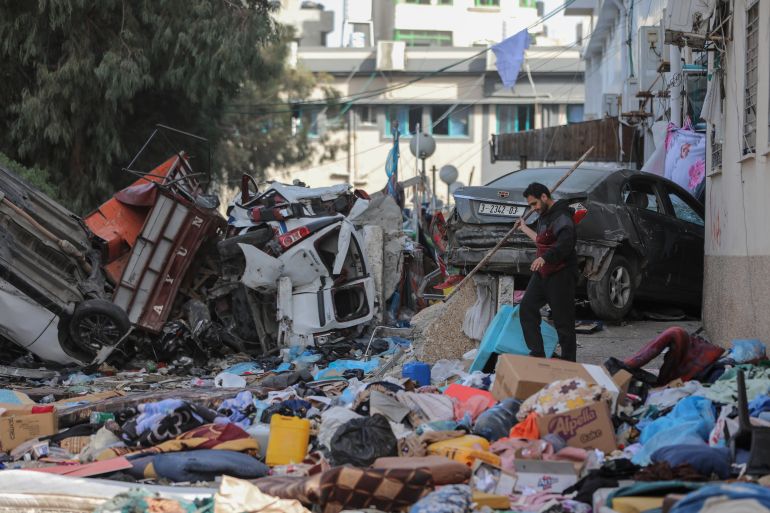
What it’s like to bury countless women and children in Gaza
Lizards, fish and other species are evolving with climate change, but not fast enough
Climate change is threatening the survival of plants and animals around the globe as temperatures rise and habitats change.
Some species have been able to meet the challenge with rapid evolutionary adaptation and other changes in behavior or physiology. Dark-colored dragonflies are getting paler in order to reduce the amount of heat they absorb from the sun. Mustard plants are flowering earlier to take advantage of earlier snowmelt. Lizards are becoming more cold-tolerant to handle the extreme variability of our new climate.
However, scientific studies show that climate change is occurring much faster than species are changing.

What is evolutionary adaptation?
Tiếp tục đọc “Lizards, fish and other species are evolving with climate change, but not fast enough”
Asia’s climate-driven health crisis raises alarm ahead of COP28

New Delhi residents use clothes and books to protect their faces from the scorching sun on a hot June day in India. 2023 could be the hottest year on record. © EAP/Jiji
Summit’s first health ministerial follows record summer spike in heatstroke and dengue cases
SAYUMI TAKE, Nikkei staff writerNOVEMBER 22, 2023 06:00 JST
TOKYO — 2023 is set to be the world’s hottest year on record, and the consequences for the human body are deadly.
Record-shattering temperatures can cause headaches, dizziness and nausea. Disease-carrying mosquitoes flourish after torrential rain and devastating floods. Polluted air causes shortness of breath and respiratory illnesses. The health emergencies that accompany climate change are shaking communities across the globe.
The impact on Asia is already profound. The continent has warmed at twice the speed of the global average in the past 30 years due to its huge land mass, according to the World Meteorological Organization (WMO).
More people in Asia are dying or falling ill than ever before due to high temperatures, the United Nations scientific body Intergovernmental Panel on Climate Change (IPCC) reported in 2022. Heat stress is one of many health risks. Dengue and malaria are increasing in Thailand and Malaysia, while respiratory diseases caused by air pollution are rising in Indonesia. Even mental disorders like depression and anxiety are associated with climate change, according to a 2022 report by the IPCC.
“These impacts that we’re seeing today could be just a symptom of a very dangerous future unless we tackle climate change urgently,” warned Marina Romanello, executive director of the authoritative Lancet Countdown on Health and Climate Change report.
Tiếp tục đọc “Asia’s climate-driven health crisis raises alarm ahead of COP28”Biến đổi khí hậu làm thay đổi mô hình lây truyền các bệnh truyền nhiễm
(SK&MT) – Biến đổi khí hậu tác động đến sức khỏe con người theo nhiều cách khác nhau, như làm tăng nguy cơ mắc các bệnh liên quan đến nhiệt, thay đổi mô hình lây truyền và mức độ các bệnh truyền nhiễm. Nhiệt độ tăng 1oC sẽ làm tăng khoảng 7%-11% nguy cơ mắc bệnh sốt xuất huyết, 5,6% mắc bệnh tay chân miệng.
PGS.TS Nguyễn Thị Liên Hương -Thứ trưởng Bộ Y tế tại cuộc họp nhóm đối tác về biến đổi khí hậu và sức khỏe do Bộ Y tế tổ chức với sự hỗ trợ của Tổ chức Y tế thế giới (WHO) và Liên minh Châu Âu.
![]() |
| PGS.TS Nguyễn Thị Liên Hương -Thứ trưởng Bộ Y tế phát biểu. |
Here is a rundown of what happened in Gaza since October 7
Tổ chức phi lợi nhuận trong phát triển xã hội ở Việt Nam
Những năm gần đây, nghiên cứu lý luận về phát triển xã hội đã trở thành chủ đề được nhiều nhà khoa học quan tâm. Các nhà nghiên cứu tập trung làm rõ khái niệm “phát triển xã hội và quản lý sự phát triển xã hội”, chỉ ra một số mô hình phát triển trên thế giới và đề xuất một số phương hướng cụ thể hóa đường lối, chủ trương của Đảng và chính sách, pháp luật của Nhà nước về phát triển xã hội ở nước ta trong giai đoạn hiện nay. Theo đó, phát triển xã hội được coi là phát triển lĩnh vực xã hội trong một tổng thể kinh tế – chính trị – văn hóa – xã hội. Phát triển xã hội xét đến cùng là phát triển con người, xây dựng mối quan hệ hài hòa giữa các giai tầng xã hội, bảo đảm an sinh và an toàn xã hội. Đây cũng chính là những kết quả nổi bật mà đề tài nghiên cứu cấp nhà nước: “Tổ chức phi lợi nhuận trong phát triển xã hội và quản lý phát triển xã hội ở Việt Nam”, mã số KX.01.23/16-20 do PGS.TS Nguyễn Đức Chiện (Viện Xã hội học – Viện Hàn lâm KH&CN Việt Nam) chủ trì thực hiện.
Nhận diện tổ chức phi lợi nhuận
Khái niệm tổ chức phi lợi nhuận chưa được thống nhất ở Việt Nam với nhiều cách hiểu khác nhau. Trong nhiều trường hợp, các tổ chức này đồng nghĩa với “các tổ chức tự nguyện”, “các tổ chức cộng đồng”, “các doanh nghiệp xã hội”, và thậm chí “các tổ chức phi chính phủ”. Theo nhóm nghiên cứu của đề tài KX.01.23/16-20, “phi lợi nhuận” là đặc điểm chung của tất cả các tổ chức này. Các tổ chức phi lợi nhuận có thể tạo ra lợi nhuận và cần có lợi nhuận, nhưng toàn bộ lợi nhuận đó phải dùng để đầu tư cho các hoạt động của tổ chức chứ không phải chia cho các thành viên, hay sử dụng cho người sáng lập hoặc người có quyền kiểm soát tổ chức đó. Nguyên tắc này yêu cầu các tổ chức không phân chia lợi nhuận cho các thành viên mà sử dụng vì các muc tiêu xã hội. Hiện nay, khi đề cập tới tổ chức phi lợi nhuận, người dân còn nhắc đến các tổ chức phi chính phủ ngoài nước và nhiều tổ chức hoạt động thiện nguyện ở cộng đồng. Trên thực tế, còn nhiều loại hình tổ chức phi lợi nhuận khác, nhưng không được công nhận hoặc biết đến. Nguyên nhân chủ yếu là do thiếu một khung pháp lý/chính sách cho các tổ chức phi lợi nhuận, và đương nhiên các tổ chức này gặp nhiều khó khăn trong quá trình thành lập và hoạt động.

Hoạt động hỗ trợ kiến thức, kỹ năng phát triển kinh tế của tổ chức phi lợi nhuận tại cộng đồng ở nông thôn Việt Nam
(LLCT) – Cùng với quá trình đổi mới và hội nhập của Việt Nam hơn 35 năm qua, các tổ chức phi lợi nhuận đã phát triển và có những đóng góp nhất định cho công cuộc phát triển đất nước. Ở khu vực nông thôn, nhiều tổ chức phi lợi nhuận có xu hướng chuyển từ hình thức hoạt động mang tính nhân đạo, từ thiện, tài trợ sang hình thức hỗ trợ các chương trình/dự án phát triển bền vững, dài hạn, đặc biệt là các chương trình/dự án hỗ trợ kỹ thuật, đào tạo năng lực, kỹ năng phát triển kinh tế cho người dân. Bài viết đánh giá vai trò của các tổ chức phi lợi nhuận trong phát triển cộng đồng ở nông thôn, những kết quả đã đạt được, những hạn chế và nguyên nhân. Từ đó, đề xuất giải pháp góp phần nâng cao vai trò của tổ chức phi lợi nhuận trong phát triển cộng đồng ở nông thôn.
Trích thảo luận
“Để nâng cao vai trò của tổ chức phi lợi nhuận trong phát triển cộng đồng nông thôn nói chung, tại địa bàn nghiên cứu nói riêng, cần thực hiện một số giải pháp sau:
Về phía Nhà nước
Nhà nước cần đối xử bình đẳng giữa tổ chức công và các tổ chức phi lợi nhuận trong cùng một lĩnh vực hoạt động bằng cách tạo lập môi trường pháp lý minh bạch, đồng bộ và nhất quán cho tất cả các tổ chức.
Cần hoàn thiện cơ chế tài chính đối với các tổ chức phi lợi nhuận, bảo đảm hoạt động của các đơn vị này công khai, minh bạch, tạo niềm tin cho các nhà đầu tư, nhà hảo tâm trong xã hội, đáp ứng được mục tiêu của các tổ chức này khi thành lập là hoạt động vì cộng đồng, xã hội, không vì lợi nhuận. Hoạt động của tổ chức nào nếu đã đăng ký là phi lợi nhuận thì phải được công khai, kiểm toán định kỳ. Chênh lệch thu – chi phải được dùng để đầu tư phát triển cơ sở và các hoạt động của tổ chức.
Các cấp chính quyền cần tiếp tục đổi mới công tác quản lý, kiểm tra, giám sát các hoạt động của tổ chức phi lợi nhuận theo quy định pháp luật; đồng thời, tiếp tục cải cách thủ tục hành chính, mặt khác, tăng cường ứng dụng công nghệ thông tin, bảo đảm khoa học, chặt chẽ; không để tình trạng bị động, bất ngờ, nhất là ở những địa bàn nhạy cảm.
Về phía các tổ chức phi lợi nhuận
Tiếp tục đọc “Hoạt động hỗ trợ kiến thức, kỹ năng phát triển kinh tế của tổ chức phi lợi nhuận tại cộng đồng ở nông thôn Việt Nam”The Rise of Chinese Capital: Impact on ASEAN’s Manufacturing Landscape
vietnam-briefing.com November 21, 2023
Amid evolving dynamics in Asia’s supply chain and labor markets, extensive discussions have unfolded regarding the notable shift of manufacturing operations to Southeast Asian countries. While much of this discourse has traditionally centered around foreign companies relocating from China in pursuit of cost-effective alternatives, a compelling aspect often overlooked is the surge in such endeavors by Chinese corporations themselves.
Driven in part by rising domestic wages and operational costs, Chinese companies have increasingly directed their investments towards the manufacturing sector in ASEAN countries. What was once a less pronounced trend has rapidly transformed, reflecting a strategic recalibration of Chinese business interests and a major shift in where the majority of global manufacturing takes place.
The significance of Chinese investment in ASEAN’s manufacturing landscape is underscored by the fact that China holds the position of ASEAN’s largest trade partner, and is fast becoming one of the most important sources of investment in the region.
Tiếp tục đọc “The Rise of Chinese Capital: Impact on ASEAN’s Manufacturing Landscape”