I'm from Hanoi, Viet Nam.
I'm an author of Dot Chuoi Non (dotchuoinon.com/author/hangbelu/), a blog on Positive thinking, founded by Dr. Tran Dinh Hoanh, an attorney in Washington DC.
I'm a co-founder of Conversations on Vietnam Development - cvdvn.net, a virtual think tank. I am a co-founder of two companies in Viet Nam working on children education services. I advise companies on STEAM education, English language education for children and students in Vietnam.
I'm studying the Buddha's teaching and the teaching of Jesus. I practice mindful living including meditation.
I hold a PhD on Sustainable Energy Systems from University of Lisbon and Aalto University.
I graduated from Hanoi University of Technology on Environmental Engineering. I obtained a Master degree of the same major from Stanford University and Nanyang Technological University.
My English-language blog at: hangbelu.wordpress/.
I play table tennis as a hobby.
Haiti: UN report says gang violence spreading, urges speedy deployment of multinational security mission
28 November 2023
People in Haiti are Living A Nightmare
GENEVA/PORT-AU-PRINCE (28 November 2023) – A new UN report out today details a further, shocking rise in gang violence in Haiti as criminal gangs forge alliances and expand to rural areas previously considered safe – killing, raping, kidnapping, and destroying property, among other abuses.
The report, released by the UN Human Rights Office and the UN Integrated Office in Haiti (BINUH), calls for the urgent deployment of the Multinational Security Support mission authorized by the UN Security Council in October, in accordance with international human rights norms and standards. Increased efforts will need to be deployed to strengthen Haiti’s rule of law institutions, in particular the police, the judiciary, and the prison system, the report notes.
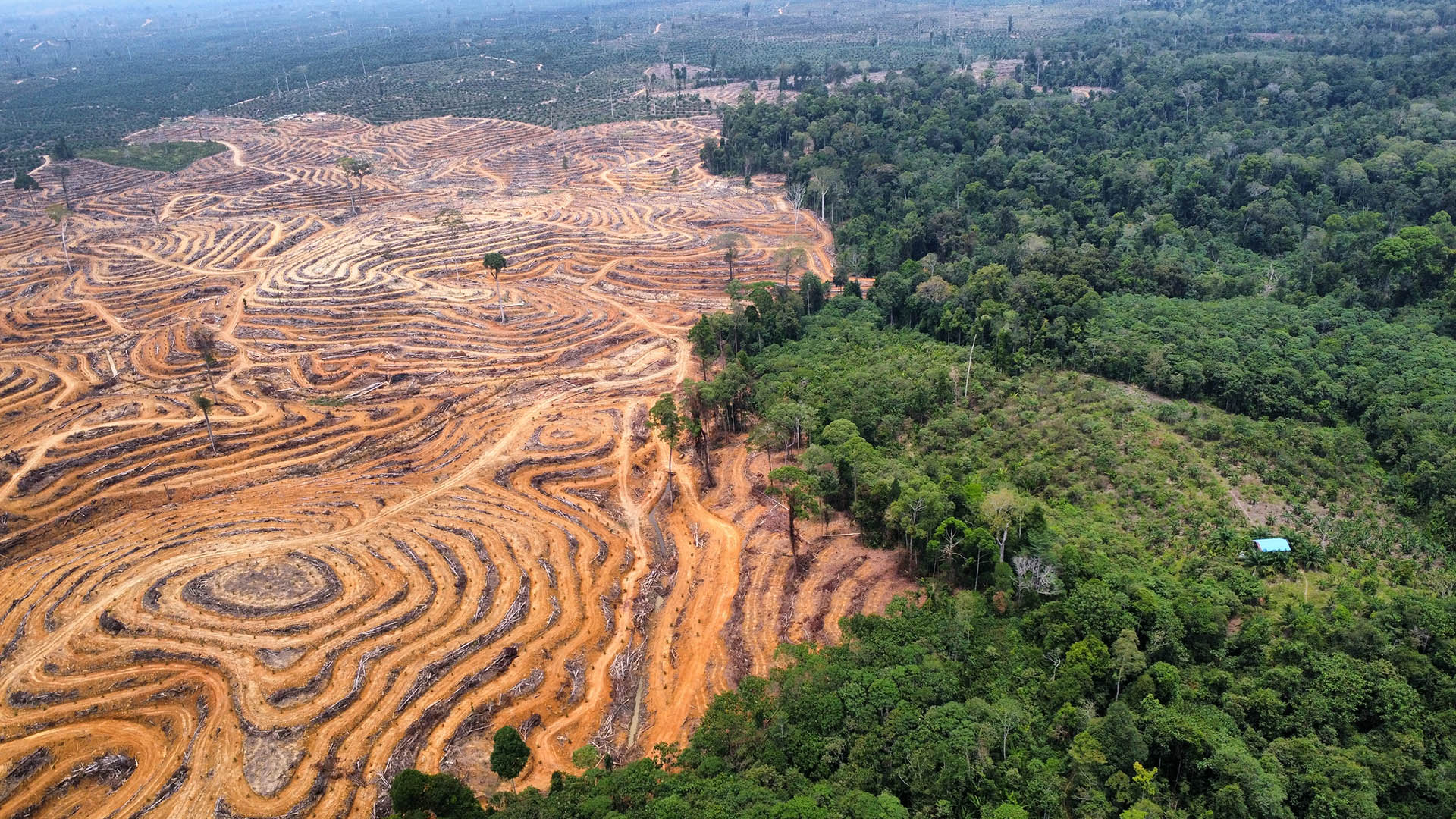
Interviews with former workers by ICIJ partner The Gecko Project reveal new links between First Resources, the billionaire family that owns it, and a trio of companies that have reportedly cleared more forest for palm oil than any other firm in Southeast Asia.
Deforested land in a New Borneo Agri company’s concession in East Kalimantan province, in September 2023.
In public statements, First Resources says it is committed to producing the palm oil that ends up in major Western brands’ cosmetics, foods and biofuel in a manner that doesn’t deplete natural resources and protects wildlife and the environment.
But an investigation by nonprofit newsroom The Gecko Project reveals how First Resources’ majority shareholders, the billionaire Fangiono family, have breached their company’s pledge of “sustainable” production by secretly controlling companies that environmental analysts found had cleared large areas of rainforest in Indonesia.
The investigation in collaboration with the International Consortium of Investigative Journalists also spotlights a loophole in the Singapore Exchange’s reporting rules that allows listed companies to publish so-called sustainability reports, without requiring that an independent firm audits the company’s green claims.
The findings are part of Deforestation Inc., a cross-border investigation led by ICIJ that exposed how a lightly regulated sustainability industry overlooks forest destruction and human rights violations when granting environmental certifications. Deforestation Inc. showed how major companies increasingly use certifications based on flawed audits to advertise products and operations as compliant with environmental standards, labor laws and human rights, misinforming shareholders as well as customers.
In a press release, First Resources said that in 2022 it recorded “its best performance” financially since listing on the Singapore exchange with $1.2 billion in revenues. In the sustainability report it published on its website, the company assured investors and customers that its supply chain is “transparent” and that it “encourages” its suppliers to adhere to its environmental standards.
The examination of First Resources’ practices by The Gecko Project appears to contradict the company’s statements.
Over 120 civil society groups gathered at the Civil Society Conference held on the eve of the 30th OSCE Ministerial Council, 29 November 2023. (OSCE) Photo details
SKOPJE, 29 November 2023 — Putting a stop to the war against Ukraine and strengthening civil society across the OSCE were at the heart of recommendations put forward by civil society representatives from across the OSCE region. The recommendations were handed over at the annual OSCE Parallel Civil Society Conference held in Skopje today.
The Civil Society Conference brought together more than 120 civil society representatives from across the OSCE region to discuss common recommendations from civil society to the OSCE leadership. One of the major outcomes of this year’s conference was the Skopje Declaration. The Declaration emphasised the need to end the war against Ukraine, strengthen civil society and hold participating States accountable for their human dimension commitments.
The Declaration was presented to the OSCE’s leadership, as well as to the organization’s 57 participating States on the eve of the 30th OSCE Ministerial Council.
“I am convinced that there is a clear and positive correlation between a strong, diverse and vibrant civil society on the one hand, and on the other the strength of democratic institutions, the rule of law and tolerant and inclusive communities,” emphasized the OSCE Chairman-in-Office, Minister of Foreign Affairs of North Macedonia Bujar Osmani.
The Conference was also attended by OSCE Secretary General Helga Maria Schmid, by Matteo Mecacci, Director of the OSCE Office for Democratic Institutions and Human Rights (ODIHR), Kairat Abdrakhmanov, OSCE High Commissioner on National Minorities (HCNM) and Teresa Ribeiro, OSCE Representative on Freedom of the Media (RFoM).
The Parallel Civil Society Conference is organized by the Civic Solidarity Platform. The Conference has taken place every year on the margins of the OSCE Ministerial Council since 2010, with the support of the OSCE Chairpersonship.
Firms including Bank of America have made no commitment to cut emissions in line with target system, analysis finds
Sandra Laville Environment correspondentWed 29 Nov 2023 06.00 GMT
Most companies sponsoring the UN climate talks in Dubai are not committed to cutting their greenhouse gas emissions in line with globally recognised net zero targets, it has been revealed.
Only one of the more than 20 sponsors of Cop28 has signed up to UN-backed net zero science-based targets, (SBTi), according to an analysis.
Most of the corporate sponsors, which include the oilfield services company Baker Hughes as well as Bank of America, have made no commitment to reduce emissions to net zero in any time period under the target system.
The global accountancy firm EY, formerly Ernst and Young, which has been hired as the independent verifier of the climate record of all the sponsors, has also not set targets with the net zero scheme.
The targets are recognised as one of the leading voluntary global validations of a company’s commitment to tackling global heating.
The targets are clearly defined science-based pathways for companies and financial institutions to reduce greenhouse gas emissions, and they are reviewed and validated by the SBTi.
Six firms sponsoring the Dubai climate talks, which begin on 30 November, including EY, have made a commitment to set net zero targets, by registering with the scheme. This requires them to submit their plans for validation within 24 months.
The males may spend time above ground ‘simply to loaf or bask in the sun’
Ian Johnston Science Correspondent Tuesday 04 October 2016 14:46 BST
Male Arctic ground squirrels may loaf around in the sun, while the females rush around to get food
(Rex)
The males appear to spend hours loafing around in the sun, while the females rush about, gathering supplies and looking after the kids.
Try as you might, it’s hard not to draw comparisons between a new study about the lives of Arctic ground squirrels and human beings.
Researchers fitted tracking devices to the squirrels to monitor their activity and found that the females tended to be significantly more active than the males – although the squirrel with the highest average activity level was male.
But he appears to have been very much out of step with most of his male friends, who were about half as energetic.
Writing in the Royal Society Open Science journal, the US researchers said: “For much of our study, we found that both sexes spent similar amounts of time above ground, but females were consistently more active.
“It is not clear what [the males] are doing while above ground … it is possible that time above ground serves some sort of social function, such as the establishment and/or persistence of territories.
“The additional time spent above ground may be simply to loaf or bask in the sun. In small mammals, basking behaviour has been commonly reported as a means of passive rewarming from torpor.”
View of an area affected by severe drought in the Rio Negro, Amazonas, Brazil, on Oct. 28. (Andre Coelho/EPA-EFE/Shutterstock)
The Amazon — the lush, tropical basin that holds the world’s biggest river, rainforest and a fifth of its fresh water — is running dry.
The region is entering its fifth month of a drought that has been particularly punishing in the northern reaches of the rainforest, in the region around the city of Manaus. The Rio Negro, a northern Amazon tributary, fell to the lowest levels in its recorded history last month. Wildfires have advanced where waterways have retreated.
Since September, 10% of the local river dolphin population in Lake Tefé, in the heart of the Brazilian Amazon, has died. It’s likely tied to record-setting drought in the region, brought on by climate change and El Niño.
Shattered healthcare and sanitation systems must be restored in Gaza, says World Health Organization.
Drinking water shortages raise risk of gastrointestinal diseases spreading in the Gaza Strip [File: Ibraheem Abu Mustafa/Reuters]
Published On 28 Nov 202328 Nov 2023
More people could die from disease than from bombings in the Gaza Strip if the health and sanitation systems are not repaired, the World Health Organization (WHO) has said.
Critical infrastructure in the besieged territory has been crippled by fuel and supply shortages and targeted attacks on hospitals and United Nations facilities since Israel launched strikes on Gaza on October 7.
“Eventually we will see more people dying from disease than from bombardment if we are not able to put back together this health system,” said Margaret Harris, a spokesperson for the WHO, speaking at a briefing in Geneva on Tuesday.
She described the collapse of al-Shifa Hospital in northern Gaza as a “tragedy” and voiced concern about the detention of some of its medical staff by Israeli forces who took over the complex earlier this month.
She also repeated concerns about a rise in outbreaks of infectious diseases in Gaza, particularly diarrhoeal diseases.
Citing a United Nations report on the living conditions of displaced residents in northern Gaza, she said: “[There are] no medicines, no vaccination activities, no access to safe water and hygiene and no food.”
Al-Shifa Hospital was left in ruins after an Israeli raid [File: Mohammed Hajjar/AP]
‘Risk of major outbreaks’
All key sanitation services have ceased operating in Gaza, which raises the prospect of an enormous surge of gastrointestinal and infectious diseases among the local populations – including cholera.
For Gaza’s 2.3 million residents, half of whom are children, finding drinkable water has become close to impossible.
The WHO has recorded more than 44,000 cases of diarrhoea and 70,000 acute respiratory infections, but real numbers may be significantly higher.
Advertisement
The UN health agency said it was extremely concerned that rains and floods during the approaching winter season will make an already dire situation even worse.
James Elder, a spokesperson from the UN children’s agency in Gaza, told reporters by video link that hospitals were full of children with war wounds and gastroenteritis from drinking dirty water. “They don’t have access to safe water and it’s crippling them,” he said.
If nothing changes, “there will be more and more people falling sick and the risk of major outbreaks will increase dramatically”, Richard Brennan, the regional emergency director for the Eastern Mediterranean region at WHO, told Al Jazeera earlier this month.
Truce is not enough
Despite the temporary truce agreement between Israel and Hamas, which was extended by two days just as it was set to expire on Tuesday morning, the Hamas-run Ministry of Health said no fuel had arrived for generators at hospitals in the territory’s north.
UN official Tor Wennesland warned the humanitarian situation “remains catastrophic”.
It “requires the urgent entry of additional aid and supplies in a smooth, predictable, and continuous manner to alleviate the unbearable suffering of Palestinians in Gaza,” the UN special coordinator for the Middle East peace process said.
Gaza City Mayor Yahya al-Siraj said that without fuel, the territory could not pump clean water or clear waste accumulating in the streets, warning of a potential public health “catastrophe”.
Clean-up was under way at al-Shifa, which is Gaza’s largest hospital. “We hope it can soon resume its activities,” said Gaza health ministry spokesman Mahmud Hammad.
Israeli bombardment has killed more than 14,800 Palestinians, including 6,150 children and more than 4,000 women, according to health authorities in the enclave.
Launched as policymakers lock horns with petrochemicals lobbyists over a treaty to end plastic pollution, the documentary produced by Eco-Business asks why opportunities to solve humanity’s waste crisis are being wasted. It will premiere in Singapore and screen on the sidelines of the upcoming COP28 climate summit.
More than a week after a third round of negotiations for a global treaty to stop plastic pollution came to a disappointing close, a new documentary launches that explores the truth behind the waste industry.
Negotiations for a binding global plastic agreement were stalled by lobbying from petrochemical and plastics industry-leaning governments, who are pushing for the treaty to focus solely on waste management rather than plastic production. The new film, titled “Wasted”, explores the role of “polluter pays” laws that hold corporations to account for the 280 million tonnes of short-lived plastic products that enter the environment every year.
“Why is waste ignored when it is staring us in the face? Maybe it is because the true impact is being hidden from us,” said Jessica Cheam, founder and managing director of Eco-Business, who co-produced the documentary with filmmaker Fraser Morton.
The film investigates the waste landscape in four key Asian countries for waste – Singapore, South Korea, Vietnam and India – and explores the solutions needed to stem the flow of trash into the environment. “Solutions to tackle this blight exist in plain sight, so why are we wasting opportunities to make change?” said Cheam.
On 7 December, Eco-Business will also be hosting the documentary’s premiere on the sidelines of the COP28 climate meeting in Dubai, in partnership with CC Forum. The event will be held at Grand Hyatt Dubai.
This International Day of Solidarity comes during one of the darkest chapters in the history of the Palestinian people. I am horrified by the death and destruction that have engulfed the region, which is overwhelmed with pain, anguish and heartache.
Palestinians in Gaza are suffering a humanitarian catastrophe. Almost 1.7 million people have been forced from their homes – but nowhere is safe. Meanwhile, the situation in the occupied West Bank, including East Jerusalem, risks boiling over.
I express my sincere condolences to the thousands of families who are mourning loved ones. This includes members of our own United Nations family killed in Gaza, representing the largest loss of personnel in the history of our organization.
I have been clear in my condemnation of the terror attacks by Hamas on 7 October. But I have also been clear that they cannot justify the collective punishment of the Palestinian people.
Across the region, the United Nations Relief and Works Agency is an indispensable lifeline, delivering vital support to millions of Palestinian refugees. It is more important than ever that the international community stands with UNRWA as a source of support for the Palestinian people.
Above all, this is a day for reaffirming international solidarity with the Palestinian people and their right to live in peace and dignity.
That must start with a long-term humanitarian ceasefire, unrestricted access for lifesaving aid, the release of all hostages, the protection of civilians and an end to violations of international humanitarian law. We must be united in demanding an end to the occupation and the blockade of Gaza.
It is long past time to move in a determined, irreversible way towards a two-State solution, on the basis of United Nations resolutions and international law, with Israel and Palestine living side-by-side in peace and security with Jerusalem as the capital of both States.
The United Nations will not waver in its commitment to the Palestinian people. Today and every day, let us stand in solidarity with the aspirations of the Palestinian people to achieve their inalienable rights and build a future of peace, justice, security and dignity for all.
Oil and gas producers face pivotal choices about their role in the global energy system amid a worsening climate crisis fuelled in large part by their core products, according to our major new special report.
The Oil and Gas Industry in Net Zero Transitions finds that the oil and gas sector – which provides more than half of global energy supply and employs nearly 12 million workers worldwide – has been a marginal force at best in transitioning to an energy system with net zero emissions, accounting for just 1% of clean energy investment globally.
The report shows how the industry can take a more responsible approach and contribute positively to the new energy economy, highlighting that the UN’s COP28 climate summit in Dubai is “a moment of truth” for the oil and gas sector.To start, all oil and gas companies should commit to tackling emissions from their own operations, according to the report. These emissions need to decline by 60% by 2030 to align with the Paris Agreement goal of limiting global warming to 1.5 °C. Companies also need to dramatically change how they allocate their financial resources. In 2022, clean energy investments accounted for a mere 2.5% of the industry’s total capital spending. The report finds that producers looking to align with the aims of the Paris Agreement would need to put 50% of capital expenditures towards clean energy projects by 2030.What’s more, companies must abandon the notion that they can continue with business as usual simply by ramping up the deployment of carbon capture technologies.
The report finds that if oil and gas consumption were to evolve as projected under today’s policy settings, limiting warming to 1.5 °C would require an entirely inconceivable 32 billion tonnes of carbon capture by 2050, with annual investment rising from $4 billion last year to $3.5 trillion.Opportunities lie ahead despite these challenges, however. Nearly a third of the energy consumed in 2050 in a decarbonised energy system comes from technologies that could benefit from the oil and gas industry’s skills and resources, including hydrogen, offshore wind and liquid biofuels.
Global supplies of rice are facing its most significant shortage in two decades, exacerbating food insecurity fears. Rice is a staple food for over half the world’s population. India’s export bans sent shockwaves through markets as some argue the country is using food as a political pawn. America’s $34 billion rice industry must compete against the same market uncertainty while managing droughts, floods and changing temperatures. Watch this video to learn more about how global rice markets influence food security, geopolitics and the livelihoods of millions of farmers.
NDO – Học sinh là con trong các gia đình bạo lực vừa có thể là người chứng kiến, vừa là đối tượng bị bạo lực, bị bỏ rơi. Do đó việc ngăn chặn, giải quyết bạo lực gia đình là một mắt xích rất quan trọng.
Thứ ba, ngày 07/11/2023 –
Chiều 7/11, Quốc hội tiếp tục tiến hành Phiên chất vấn và trả lời chất vấn. Đại biểu Vương Quốc Thắng (đoàn Quảng Nam) đặt câu hỏi tại sao “tình trạng bạo lực học đường diễn ra phức tạp” như trong Báo cáo của Chính phủ gửi đại biểu Quốc hội đã nêu.
Đại biểu Thắng thắc mắc những nguyên nhân gây ra tình trạng này và chất vấn Bộ trưởng Giáo dục và Đào tạo về hướng khắc phục “thật căn cơ” trong thời gian tới.
Đại biểu Vương Quốc Thắng (đoàn Quảng Nam).
Cứ 50 cơ sở giáo dục thì có một vụ bạo lực học đường
Ten years ago, USAID unveiled the largest contract in its history, aimed at transforming health supply chains in lower-income countries. It has not gone according to plan.
Within its first two years of operation, the largest-ever project funded by the United States Agency for International Development was in crisis.
Money Matters
Funding insights, analysis, and news, including practical business adviceSubscribe now
The $9.5 billion initiative is led by U.S. contractor Chemonics International. Its aim was to transform global health supply chains — the sprawling system of procurement and transport that delivers lifesaving products including HIV/AIDS drugs, mosquito nets, and contraceptives to millions around the globe.
The supply chain project serves as the backbone for the U.S. government’s most celebrated global health programs, including the HIV/AIDS initiative credited with saving 25 million lives. But this project aimed to go one step further, by improving supply chains in lower-income countries to the point that they could be managed by the countries themselves.
If successful, said one USAID official, the agency would never have to fund another project like it again. But a decade later, that has not come to pass.