Only half of young people able to identify correct definition of climate change – UNICEF, Gallup

Unicef.org

Findings highlight urgent need to protect and invest in children, including in climate education, in decisions at COP28

06 December 2023

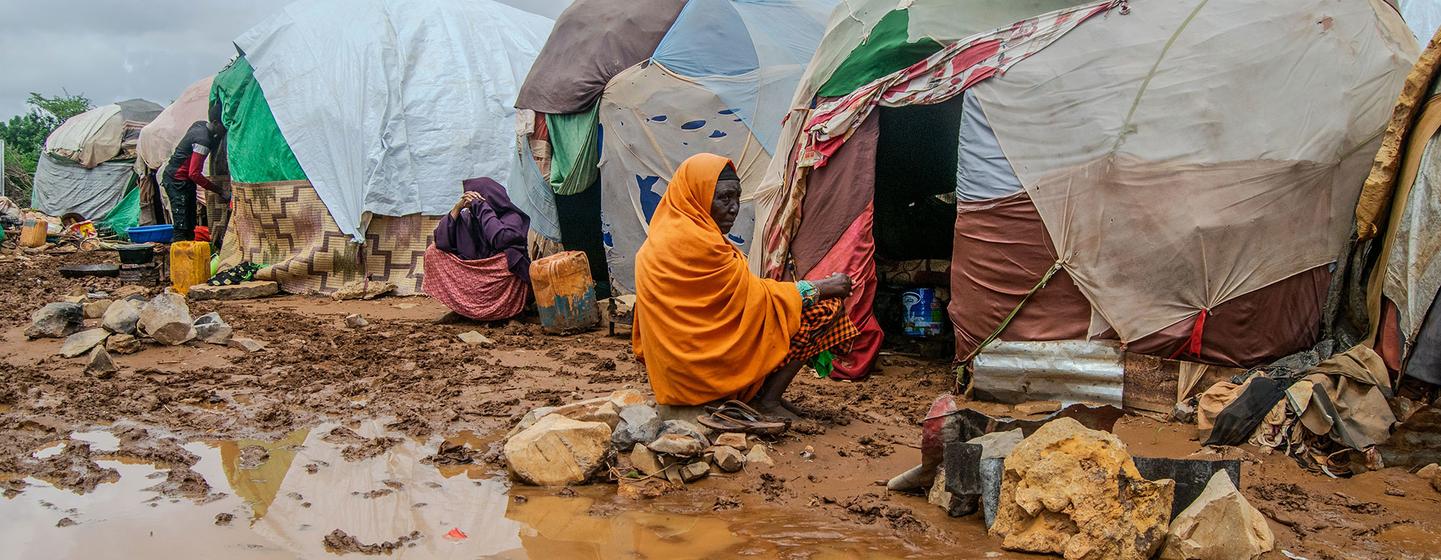
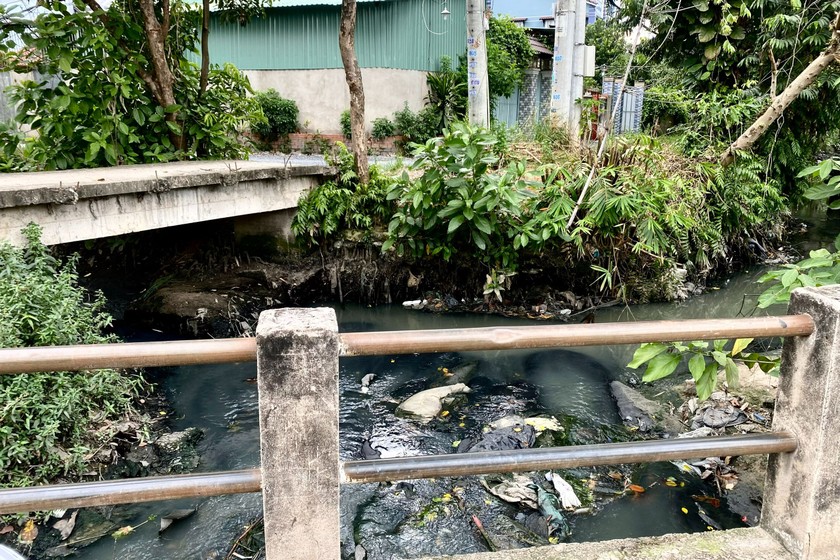
a child stands by a pool of flood water and plastic pollution.

 UNICEF/UNI390327/Wilander

NEW YORK/DUBAI, 7 December 2023 – Most children and young people say they have heard of climate change but only half understand what it is, according to a new UNICEF-Gallup poll, as world leaders gather at this year’s COP28.

Tiếp tục đọc “Only half of young people able to identify correct definition of climate change – UNICEF, Gallup”

Tensions rise as two more boats with over 300 Rohingya land in Indonesia

aljazeera.com

Since November, more than 1,500 refugees have arrived in Indonesia’s Aceh province, triggering anger among the locals.

Rohingya Indonesia
A Rohingya woman rests on a beach following her arrival in Blang Raya, Pidie, Aceh province, Indonesia [Reuters]

Published On 10 Dec 202310 Dec 2023

Over 300 Rohingya refugees have arrived on the coast of Aceh province in Indonesia after weeks of drifting across the sea from Bangladesh.

The emaciated survivors – children, women and men – told of running out of supplies and of fearing death at sea as they landed on the unwelcoming shores of the villages of Pidie and Aceh Besar in the pre-dawn hours of Sunday morning.

“The boat was sinking. We had no food or water left,” told Shahidul Islam, a 34-year-old survivor, saying he had left from a refugee camp in Bangladesh.

A group of 180 refugees arrived by boat at 3am local time (20:00 GMT on Saturday) on a beach in the Pidie regency of Aceh province.

The second boat carrying 135 refugees landed in neighbouring Aceh Besar regency hours later after being adrift at sea for more than a month, while a third boat is missing.

Tiếp tục đọc “Tensions rise as two more boats with over 300 Rohingya land in Indonesia”

‘Heated’ debate on fossil fuels as COP28 winds down

By Editor On Dec 11, 2023 Last updated Dec 11, 2023

By Vishani Ragobeer in Dubai 

Fossils fuels- the main contributor to the climate crisis- were always going to be the hot topic at this year’s global climate talks in Dubai, COP28, with sweltering temperatures making 2023 the hottest year on record. But as the end of the conference draws nearer with a new draft agreement released, fiery debates have taken over the conference.

On Monday night (Dubai time), a new text for the Global Stocktake (GST) was released after negotiators from Guyana and other countries spent days hammering out how best to satisfy everyone.

The GST is a global inventory of sorts that shows how climate goals are unfolding. And the draft text said countries (called Parties) were called upon to take several actions that would reduce greenhouse gas emissions.

Those emissions include carbon dioxide, a harmful gas produced when fossil fuels like oil and diesel are burnt. When that gas is produced, it goes into the atmosphere and leads to global warming.

And countries were told that they could take actions ranging from tripling renewable energy use (that is, using more environmentally-friendly energy sources like solar energy or hydropower) to reduce both the production and use of fossil fuels in a “just orderly and equitable” manner.

Tiếp tục đọc “‘Heated’ debate on fossil fuels as COP28 winds down”

Climate change adaptation commitments so far lacking at COP28

World Dec 8, 2023 6:13 PM EST

DUBAI, United Arab Emirates (AP) — As United Nations climate talks enter their second week, negotiators who are largely focused on how to curb climate change have another thing on their plates: how to adapt to the warming that’s already here.

Discussions for what’s known as the Global Goal on Adaptation — a commitment made in the 2015 Paris Agreement to ramp up the world’s capacity to cope with climate-fueled extreme weather — are being overshadowed by negotiations on how the world is going to slash the use of fossil fuels, causing frustration among some climate campaigners in the most vulnerable countries.

READ MORE: At COP28, pageantry is over and negotiations get intense

Officials and activists from climate-vulnerable nations are pushing for more money to help them deal with scorching temperatures, punishing droughts and deluges and strengthening storms made worse by global warming. Major fossil fuel-emitting countries need to pay vulnerable, developing countries being battered by these events, experts and officials say, to help them avoid catastrophic humanitarian and economic losses.

Tiếp tục đọc “Climate change adaptation commitments so far lacking at COP28”

Wars create opportunities for peaceful change: Will the Gaza war serve as a case in point?

mei.edu

December 7, 2023 Elie Podeh

Photo by AHMAD GHARABLI/AFP via Getty Images

History teaches us that wars, unfortunate as they are, can sometimes create opportunities for major changes that were previously unthinkable, improbable, or impossible. World War I, World War II, the First Gulf War, and many other conflagrations led to formidable political, military, and economic changes. Some of these conflicts and their immediate consequences laid the ground for future wars (like the punitive Versailles peace treaty following World War I), but others gave rise to peaceful arrangements (like the multilateral political and economic institutions as well as security alliance systems that emerged after World War II). The history of the Arab-Israeli conflict is no different. Indeed, all the major Israeli-Arab wars, as well as the many violent Israeli-Palestinian clashes, offered opportunities for change. Some were seized; others were squandered.

When a chain of circumstances produces a favorable opportunity, a liminal period is created, which makes it possible to achieve a breakthrough in a deadlocked conflict. The opportunity may arise from a military or political event that significantly affects the status quo. Particularly when this event causes a traumatic experience affecting both leadership and society, the likelihood of significant change occurring increases. If this moment — or opportunity — is not seized, it is likely to disappear.

While war is still raging in Gaza following Hamas’ brutal Oct. 7 attack on Israel, it nonetheless arguably offers an opportunity for a profound shift in the modalities of the Israeli-Palestinian conflict, which looked unlikely in the period preceding the war. Based on analysis of several examples from the history of the Israeli-Palestinian conflict, one can assert that in order to seize the opportunity, both sides will need legitimate leaderships that enjoy international support and are willing and determined to make concessions and build trust.

Opportunities seized

Tiếp tục đọc “Wars create opportunities for peaceful change: Will the Gaza war serve as a case in point?”

The Responsibility to Protect populations from genocide, war crimes, crimes against humanity and ethnic cleansing

GlobalR2P.org

WHAT IS R2P?

The Responsibility to Protect populations from genocide, war crimes, crimes against humanity and ethnic cleansing has emerged as an important global principle since the adoption of the UN World Summit Outcome Document in 2005.

null

Background Briefing on R2P

Responsibility to Protect

The Responsibility to Protect – known as R2P – is an international norm that seeks to ensure that the international community never again fails to halt the mass atrocity crimes of genocide, war crimes, ethnic cleansing and crimes against humanity. The concept emerged in response to the failure of the international community to adequately respond to mass atrocities committed in Rwanda and the former Yugoslavia during the 1990s. The International Committee on Intervention and State Sovereignty developed the concept of R2P during 2001.

The Responsibility to Protect was unanimously adopted in 2005 at the UN World Summit, the largest gathering of Heads of State and Government in history. It is articulated in paragraphs 138 and 139 of the World Summit Outcome Document:

World Summit Outcome Document

Tiếp tục đọc “The Responsibility to Protect populations from genocide, war crimes, crimes against humanity and ethnic cleansing”

What were the death tolls from pandemics in history?

ourworldindata.org

Pandemics have killed millions of people throughout history. How many deaths were caused by different pandemics, and how have researchers estimated their death tolls?

By: Saloni Dattani December 7, 2023

COVID-19 has brought the reality of pandemics to the forefront of public consciousness. But pandemics have afflicted humanity for millennia. Time and again, people faced outbreaks of diseases – including influenzacholera, bubonic plague, smallpox, and measles – that spread far and caused death and devastation.

Our ancestors were largely powerless against these diseases and unable to evaluate their true toll on the population. Without good record-keeping of the number of cases and deaths, the impact of outbreaks was underrecognized or even forgotten. The result is that we tend to underestimate the frequency and severity of pandemics in history.

Tiếp tục đọc “What were the death tolls from pandemics in history?”

Gaza: UN chief invokes ‘most powerful tool’ Article 99, in bid for humanitarian ceasefire

UN Steps Up Pressure for Gaza Cease-Fire With Strongest Move Since 1971

United Nations chief Antonio Guterres, in a letter to the Security Council, invoked the use of Article 99 of the Charter of the UN over the war in Gaza. Article 99 states that “the Secretary-General may bring to the attention of the Security Council any matter which in his opinion may threaten the maintenance of international peace and security,” according to Stéphane Dujarric, spokesperson for the UN Secretary-General

UN Secretary-General Antonio Guterres used a rarely exercised power to warn the Security Council on Wednesday of an impending “humanitarian catastrophe” in Gaza and urged its members to demand an immediate humanitarian ceasefire. The UN Security Council – of which most members are favourable to a ceasefire – is likely to meet Friday to discuss the matte

UN.org

People search for their belongings in the rubble in the Nuseirat refugee camp in Gaza.

© UNRWA/Ashraf Amra People search for their belongings in the rubble in the Nuseirat refugee camp in Gaza

Peace and Security

Invoking a rarely used article of the UN Charter, Secretary-General António Guterres on Wednesday called on the Security Council to “press to avert a humanitarian catastrophe” in Gaza and unite in a call for a full humanitarian ceasefire between Israel and Palestinian militants.

In a letter to the Council, Mr. Guterres invoked Article 99, contained in Chapter XV of the Charter.

This says that the UN chief “may bring to attention of the Security Council any matter which in his opinion, may threaten the maintenance of international peace and security.”

In a statement to journalists along with the letter, UN Spokesperson Stéphane Dujarric said that this was the first time Mr. Guterres had felt compelled to invoke Chapter 99, since taking office in 2017.

Scale of loss

Tiếp tục đọc “Gaza: UN chief invokes ‘most powerful tool’ Article 99, in bid for humanitarian ceasefire”

Trees alone will not save the world

economist.com

But better markets and better monitoring will let them do more

An image showing a trio of three-dimensional trees made out of an image of a leaf against a bark background.
image: ben denzer

“Everything you see, as far as the eye can see, belongs to us,” says David Beleznay. “Us” is Mosaic, a forest-management company that looks after the upkeep and logging of much of Vancouver Island; Mr Beleznay is its director of climate and watersheds. “As far as the eye can see” takes in a long, deep valley whose forested flanks rise to the rocky top of Mount Arrowsmith. Towering evergreens—Douglas fir, cedar, hemlock—drape the island from its central peaks to the water’s rocky edge.

This drapery is, though, a bit patchy in places. Directly behind Mr Beleznay’s parked pickup are some “polygons”, as the industry calls them, where the trees have been clear-cut, leaving behind jumbled soil, stumps and woody debris; tiny saplings poke through it higgledy-piggledy. Mosaic has an eye to water quality in forest streams, to maintaining biodiversity, to being a partner to the island’s first nations. But the forest it manages is also the basis of a timber business.

Tiếp tục đọc “Trees alone will not save the world”

Corporate Climate Action: Analyzing the Recent Surge of Climate Commitments

RMI.org
RMI analyzes what this increase in corporate commitments means and introduces a new tool to measure impact.

November 29, 2023 By  James Newcomb,  Adefunke Sonaike,  Daan Walter,  Laurens Speelman

On the eve of the UN Climate Change Conference (COP28), the media buzz about corporate climate action is decidedly mixed. Optimism about the growing numbers of companies setting climate goals is tempered by disappointing news about the pace of many companies’ actions to achieve their goals. We are still creating new structures and systems to guide corporate climate action and working through challenges as these systems mature. Beneath the surface, however, there are encouraging signals. Strong systemic forces are inexorably driving more companies to report greenhouse gas emissions, set independently verified climate action targets, and implement strategies to achieve these goals.

RMI is creating new tools and methods, still under development, to better analyze the potential implications of corporate climate action. In this article, we assess recent developments across this landscape, including preliminary analysis from the Corporate Commitments and Emissions Explorer (Corporate Explorer), a new online tool that allows users to explore sectoral emissions targets and actions.

Snapshot of corporate climate action: 2023
Tiếp tục đọc “Corporate Climate Action: Analyzing the Recent Surge of Climate Commitments”

COP28: The climate crisis is also a health crisis

UN.org

Malaria and other diseases were on the rise after floods earlier in the year in Sindh province, Pakistan.

COP28: The climate crisis is also a health crisis

© UNICEF/Saiyna Bashir Malaria and other diseases were on the rise after floods earlier in the year in Sindh province, Pakistan.

3 December 2023Climate and Environment

Health has made it onto the agenda of a UN climate conference, and health advocates at COP28 in Dubai on Sunday said the topic was long overdue for discussion as climate inaction is costing lives and impacting health every single day.

Our planet has logged higher mean temperatures each year, with 2023 set to be the hottest on record. Ice sheets are melting at an unprecedented rate. Wildfires have made the air hazardous in some regions, while in others, floods regularly threaten to contaminate drinking water.

Tweet URL

Against this backdrop, more and more people are being affected by disasters, climate-sensitive diseases and other health conditions.

Climate change exacerbates some existing health threats and creates new public health challenges. Worldwide, only considering a few health indicators, an additional 250,000 deaths per year will occur in the next decades because of climate change, according to the UN World Health Organization (WHO).

WHO Director General Dr. Tedros Adhanom Ghebreyesus told delegates at COP28 that it was long overdue for talks around environmental health, rising sea levels, and melting glaciers to include the direct impacts of such climate shocks on human health.

Tiếp tục đọc “COP28: The climate crisis is also a health crisis”

‘War on Drugs’ Failed and Policies Need Major Overhaul – Report

ips.news.net

Global drug policies need an overhaul, new report says. Credit: Jonathan Gonzalez/Unsplash

Global drug policies need an overhaul, new report says. Credit: Jonathan Gonzalez/Unsplash

BRATISLAVA, Dec 5 2023 (IPS) – A major advocacy group has demanded an overhaul of global drug policies as a landmark report is released showing how governments’ complacency has perpetuated a failed ‘war on drugs’ despite its devastating consequences for millions of people around the world.

Tiếp tục đọc “‘War on Drugs’ Failed and Policies Need Major Overhaul – Report”

Chinese borrowers default in record numbers as economic crisis deepens

ft.com

More than 8mn people are blacklisted by authorities after missed payments on mortgages and business loans

Under Chinese law, defaulters are blocked from a range of economic activities, such as purchasing aeroplane tickets and making mobile phone payments, representing a drag on the economy © Kevin Frayer/Getty Images

Sun Yu in Beijing DECEMBER 3 2023

Defaults by Chinese borrowers have surged to a record high since the outbreak of the coronavirus pandemic, highlighting the depth of the country’s economic downturn and the obstacles to a full recovery.

A total of 8.54mn people, most of them between the ages of 18 and 59, are officially blacklisted by authorities after missing payments on everything from home mortgages to business loans, according to local courts. That figure, equivalent to about 1 per cent of working-age Chinese adults, is up from 5.7mn defaulters in early 2020, as pandemic lockdowns and other restrictions hobbled economic growth and gutted household incomes.

The soaring number of defaulters will add to the difficulty of shoring up consumer confidence in China, the world’s second largest economy and a crucial source of global demand. It also throws a spotlight on the country’s lack of personal bankruptcy laws that might soften the financial and social impact of soaring debt.

Under Chinese law, blacklisted defaulters are blocked from a range of economic activities, including purchasing aeroplane tickets and making payments through mobile apps such as Alipay and WeChat Pay, representing a further drag on an economy plagued by a property sector slowdown and lagging consumer confidence. The blacklisting process is triggered after a borrower is sued by creditors, such as banks, and then misses a subsequent payment deadline.

“The runaway increase in defaulters is a product of not only cyclical but also structural problems,” said Dan Wang, chief economist at Hang Seng Bank China. “The situation may get worse before it gets better.” The personal debt crisis follows a borrowing spree by Chinese consumers. Household debt as a percentage of gross domestic product almost doubled over the past decade to 64 per cent in September, according to the National Institution for Finance and Development, a Beijing-based think-tank. But mounting financial obligations have become increasingly unmanageable as wage growth has stalled or turned negative in the midst of the economic malaise.

As a growing number of cash-strapped Chinese consumers have struggled to make ends meet, many have stopped paying their bills. More Chinese residents are also struggling for work: youth unemployment hit a record 21.3 per cent in June, prompting authorities to stop reporting the data. “I will pay my Rmb28,000 ($4,000) credit card balance when I have a job,” said John Wang, a Shanghai-based office worker who defaulted on his payments after being laid off in May. “I don’t know when that will happen.” China Merchants Bank said this month that bad loans from credit card payments that were 90 days overdue had increased 26 per cent in 2022 from the year before.

Tiếp tục đọc “Chinese borrowers default in record numbers as economic crisis deepens”

China: Design for nuclear-powered ship unveiled

By ZHAO LEI | China Daily | Updated: 2023-12-06 23:09

An illustration of the large nuclear-powered container ship, which can carry 24,000 standard containers. [Photo provided to China Daily]

China has unveiled a conceptual design for what could potentially become the world’s largest nuclear-powered container ship.

The vessel, which has yet to be named, will be powered by molten salt reactors and will have the capacity to carry 24,000 standard containers. In other words, it will be able to hold more than 1 billion boxes of Apple iPhones.

The conceptual design, made by China State Shipbuilding Corp’s Jiangnan Shipyard in Shanghai, was published on Tuesday, as the four-day Marintec China 2023 exhibition opened in the city.

The ship’s design earned an Approval in Principle certificate from the DNV, one of the world’s leading classification societies, at an unveiling ceremony.

A senior researcher at Jiangnan Shipyard, who asked to be identified only as Hu, told China Daily on Wednesday that the idea for a nuclear-powered container ship was the result of the shipyard’s endeavor to seek clean energy solutions for its products.

“Shipbuilders around the world have been under huge pressure from shipping businesses, investors and environmentalists to find cleaner fuel solutions. It is only natural for us to take nuclear power into consideration,” he said.

According to industry statistics, shipping operations account for about 3 percent of global greenhouse gas emissions. The International Maritime Organization has repeatedly pledged to reduce the emissions caused by shipping businesses.

Tiếp tục đọc “China: Design for nuclear-powered ship unveiled”