
Leading powers to double renewable energy supply by 2030
Conversations on Vietnam Development

The full report, in both Vietnamese and English, can be accessed at: http://bit.ly/baocaothuongniendulich2014.
—
The Vietnam National Administration of Tourism (VNAT) under the Ministry of Culture, Sports and Tourism on November 17 announced the ‘Vietnam Annual Tourism Report 2014’ for the first time.

talkvietnam – The report, compiled with technical help of the EU-funded Environmentally and Socially Responsible Tourism Capacity Development Programme, is the first complete document produced in line with international experience, aiding the assessment of tourism’s socio-economic impacts. Tiếp tục đọc “First-ever Vietnam Annual Tourism Report unveiled”
Globalcompetitionreview – Under Vietnam’s Competition Law (VCL), economic concentration includes company mergers, consolidations and acquisitions, and the creation of joint venture. Since it was created in 2005, the Vietnam Competition Authority (VCA) has not officially rejected any proposals for economic concentration that have been notified. However, this does not necessarily mean that this aspect of competition law is overlooked in Vietnam. According to the VCA’s reports, since 2011, it has dealt with an average of three to four notifications per year. In addition, the VCA is closely monitoring merger and acquisition activities in the market by cooperating with the licensing authorities and administering the structural changes of enterprises to ensure that all economic concentration is properly controlled by the competition authority. Notably, on 22 December 2014, the prime minister issued Decision 2327/QD-TTg (Decision 2327), granting an exemption to a merger between the only two card networks, resulting in a monopoly in the relevant market. This is remarkable for being the first exemption granted by the prime minister after 10 year’s enforcement of the VCL. Tiếp tục đọc “The Asia-Pacific Antitrust Review 2015 – Vietnam: Merger Control”

The world relies heavily on fossil fuels to meet its energy needs, and the development and trade of those fuels has influenced relationships among countries throughout modern history. Most reasonable projections of the next several decades anticipate that the role of coal, oil, and gas will be maintained but lose market share to lower-carbon energy sources like wind, solar, nuclear, and greater efficiency. Despite the continued role for fossil fuels, the push for greater reliance on lower-carbon energy sources has made progress since it began in earnest several decades ago. Nearly $318 billion was invested in new clean energy sources around the world last year, up from $60 billion in 2004. Nearly half of this investment took place in large developing economies, particularly China but also Brazil, India, and South Africa.


CSIS – Countries and companies of all sizes continue to adjust to the new economic and market realities following the oil price collapse of 2014. And while the growth in U.S. unconventional production appears to be slowly abating, the upsurge in Organization of the Petroleum Exporting Countries (OPEC) output, robust global stock levels, and ongoing uncertainty around the strength of demand suggest that the oversupply and surpluses are likely to continue well into next year, exerting continued downward pressure on prices.
We need to set the right framework for DER integration, argues Stephanie Wang.
by Stephanie Wang, November 13, 2015

greentechmedia – California is rethinking how to incentivize consumers to manage their energy use. In September, the California Public Utilities Commission (CPUC) said it would seek to create an integration framework to make choosing and integrating distributed energy resources easier for consumers.
The CPUC found that “harmonization” of consumer benefits and “system” (grid and societal) benefits is necessary for integrating more distributed energy resources (DERs). How can we harmonize these benefits with simple, scalable solutions that work for consumers and communities?
Equalize or align benefits
Let’s start with a fundamental question on the definition of harmonization. Does that mean equalization of benefits — ensuring that benefits to consumers and the system are roughly equal? Tiếp tục đọc “Harmonizing the Benefits of Distributed Energy Resources for the Benefit of the Grid”

Worldbank – Thailand’s solar power market was at a standstill in 2008, with solar energy accounting for less than 2 MW of installed capacity. Technology costs were falling, though, and the government was starting incentives for renewable energy developers. Wandee Khunchornyakong, a retired solar panel manufacturing executive, saw potential. Tiếp tục đọc “How Thailand’s Solar Power Visionary Built an Industry with a Boost from IFC”
Tiếp tục đọc “Loss of diversity near melting coastal glaciers”
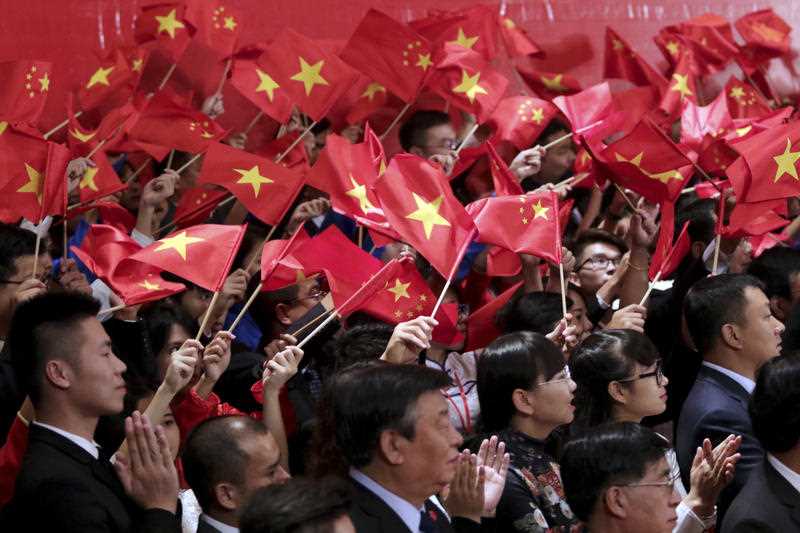 The ability of these princelings to deliver on a broad range of governance issues, beyond just high levels of economic growth, will determine the durability of the current regime. Tiếp tục đọc “Will Vietnam’s communist princelings deliver?”

treehugger – Paul Kedrosky points to this very cool tool for visualizing the jobs people have done between 1850 and 2000; you click on any one or write it in the window and see how they have changed. Kedrosky writes “Too bad it ends at 2000, thus taking away the fun of watching the profusion of real estate agents and mortgage brokers.” But what about “green jobs”? Can one get a sense of what people are doing, and what the trends are?
There appear to be a lot fewer carpenters than there used to be, although again by ending in 2000 this is missing the housing boom of earlier this decade. Tiếp tục đọc “The History of Jobs In America”
This post is written by Giselle Weybrecht, advisor, speaker in the areas of sustainability and business and author of The Sustainable MBA: A Business Guide to Sustainability. A version this post first appeared on the AACSB blog
Post2015 – On September 25 this year, all 193 member states of the United Nations adopted a plan for a path to achieve a better future for all, to end extreme poverty, fight inequality and injustice, and protect the planet. A set of 17 Sustainable Development Goals (SDGs) and 169 related targets were presented that address the most important economic, social, environmental, and governance challenges and that will help guide national priorities over the next 15 years.
Unlike its predecessor, the Millennium Development Goals (MDGs), which expire at the end of 2015, the SDGs were developed through the largest global consultation process ever with a wide range of stakeholders, including business through the UN Global Compact as well as business schools through the Principles for Responsible Management Education (PRME). Although progress was made on the MDGs, which started in 2001, the SDGs represent a much more complete path forward and, despite the increased complexity of having 17 goals instead of just seven, look to enjoy a much larger acceptance and push for action, in particular by business. Tiếp tục đọc “The SDGs: why should business schools care?”
 DigitalGlobe high-resolution imagery of the Subi Reef in the South China Sea. Photo via Getty Images.
Chathamhouse – China has been on a diplomatic charm offensive last week to improve its relations with neighbours who have a stake in the stability of the South China Sea (SCS), reaching out to Vietnam and Japan and culminating in the historic meeting with Taiwan’s leader Ma Ying-jeou on 7 November. This followed on from recent setbacks for its ambitions in the SCS . First, the United States sent its warship USS Lassen within 12 nautical miles of the Chinese controlled Subi Reef to challenge China’s claim to the feature. Then, on 29 October an arbitral tribunal established under the United Nations Convention on the Law of the Sea (UNCLOS) and hosted by the Permanent Court of Arbitration (PCA) at the Hague found that it has jurisdiction to hear the claims put forward by the Philippines in a case against China concerning maritime rights in a part of the SCS claimed by both. Tiếp tục đọc “A Return to the Rule of Law in the South China Sea?”
The continued existence of large stockpiles of legal raw ivory in the country is hampering China’s promises to save the elephant, says .

Kin Cheung /AP/Press Association Images Criminal gangs tried to smuggle this ivory into China from Tanzania.
Nature – The fight against the illegal ivory trade had some success last month with the arrest of a Chinese woman alleged to have smuggled more than 700 elephant tusks from Tanzania. Ivory is a particular prize in China, where it has been carved into ornaments, chopsticks and jewellery for more than 3,000 years. Tiếp tục đọc “China must act decisively to eradicate the ivory trade”
WRI – Up to 65 percent of the world’s land is held by Indigenous Peoples and communities, yet only 10 percent is legally recognized as belonging to them. The rest, held under customary tenure arrangements, is largely unmapped, not formally demarcated, and therefore invisible to the world. Without strong legal protections or concrete maps delineating their territories, communities are vulnerable to losing their land to governments and investors for economic and commercial development.
That’s where LandMark comes in. Launched today, LandMark is the first online, interactive global platform to provide maps and other critical information on lands that are held and used by Indigenous Peoples and communities. The platform aims to raise awareness, engage audiences, and help these people protect their land rights. Shining a light on indigenous and community land reduces the likelihood that irregular acquisitions and expropriations go unnoticed, and helps protect the livelihoods and well-being of billions of rural people.
Tiếp tục đọc “LandMark: Protecting Indigenous and Community Lands by Making Them Visible”
November 11, 2015
From November 14-22, President Obama will embark on a three-stop overseas trip, beginning in Turkey to attend the G20, followed by a stop in Manila for the APEC summit, and ending in Malaysia where he will meet with Asian leaders for the 10th East Asian Summit (EAS) and U.S.-ASEAN Summit.

With more than 130,000 ships passing through the Straits of Malacca, Southeast Asia is a critical maritime region for commerce and resources. Photo/Flickr user salehi hassan http://bit.ly/1SjxL8H
asiafoundation – One of the biggest and most contentious issues at the EAS will no doubt be maritime security, as conflicting territorial and boundary disputes feature prominently in the region. However, none of these disputes will be resolved at the EAS and most likely not for several years to come. At last week’s ASEAN Defense Ministers Meeting Plus in Kuala Lumpur, leaders failed to release a joint statement amid disagreements over China’s objection over the South China Sea being mentioned in the document. Tiếp tục đọc “A Code of Conduct for Maritime Security”
 CVD
CVD 