Vietnam powerless to stop illegal gold mining

An accident last Tuesday that killed four gold miners in the south-central province of Quang Nam has once again given rise to public disquiet over illegal gold mining in central Vietnam.

Despite nearly 40 people having been killed in nine separate gold mine accidents in Quang Nam alone since 2009, thousands continue to put their lives at risk while digging up ranges of mountains in the unlawful pursuit of the precious metal.

Despite nearly 40 people having been killed in nine separate gold mineaccidents in Quang Nam alone since 2009, thousands continue to put their lives at risk while digging up ranges of mountains in the unlawful pursuit of the precious metal.

Tiếp tục đọc “Vietnam powerless to stop illegal gold mining”

Vietnam’s latest minimum wage rise business as usual

17 October 2015
Author: Tu Phuong Nguyen, ANUeastasiaforum – In September 2015, the National Wage Council (NWC) of Vietnam proposed an increase of 12.4 per cent to the minimum wage in 2016. The key parties — representatives of business in the Vietnam Chamber of Commerce and Industry (VCCI) and the state-sanctioned national union of workers, the Vietnam General Confederation of Labour (VGCL) — finally reached a consensus after two stalled meetings. The process, after all, is within the state’s annual schedule and hardly goes with any substantive changes to labour market institutions.

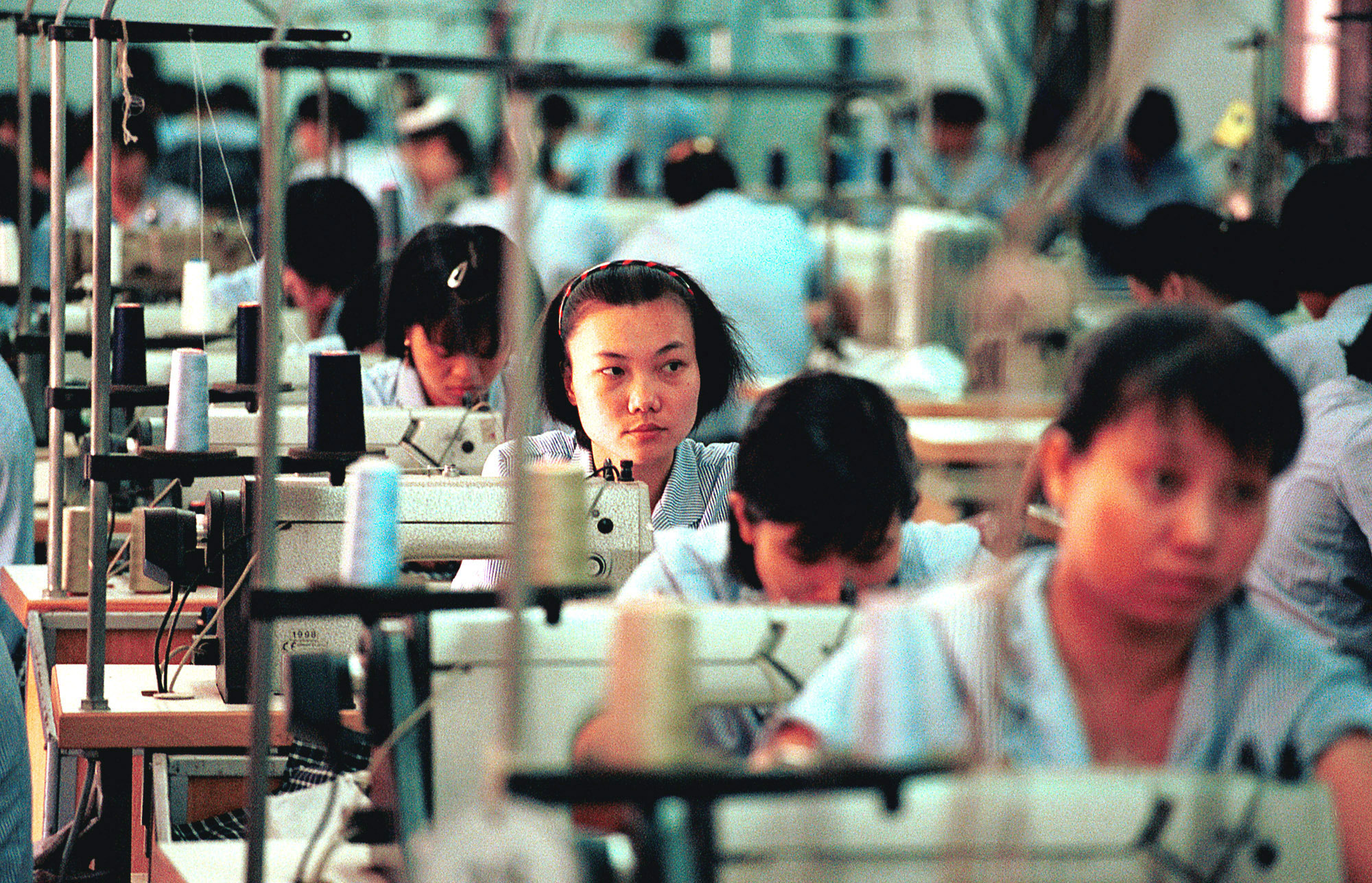
Vietnamese workers sew trousers and shirts destined for the U.S. market at the state-owned Thang Long garment factory in Hanoi (Photo: AAP).State-led wage bargaining is conducted annually in Vietnam and thus has become a key part of maintaining harmonious industrial relations in the country. There are four different minimum wages, which are categorised according to a region’s consumer price index. The first region covers urban and industrialised areas, while the others apply to different rural areas. The NWC has proposed raising the minimum monthly wage for this region from 3.1 million dong (approximately US$138) in 2015 to 3.5 million dong (approximately US$155.7) in 2016. It is likely that the proposal will make its way into a government decree at the end of 2015. Tiếp tục đọc “Vietnam’s latest minimum wage rise business as usual”

Why we are teaching science wrong, and how to make it right

Active problem-solving confers a deeper understanding of science than does a standard lecture. But some university lecturers are reluctant to change tack.

15 July 2015

Article tools

Illustration by Vasava

Outbreak alert: six students at the Chicago State Polytechnic University in Illinois have been hospitalized with severe vomiting, diarrhoea and stomach pain, as well as wheezing and difficulty in breathing. Some are in a critical condition. And the university’s health centre is fielding dozens of calls from students with similar symptoms. Tiếp tục đọc “Why we are teaching science wrong, and how to make it right”

Changing global patterns of poverty

Loewe, Markus / Nicole Rippin
Briefing Paper 3/2012

Bonn: German Development Institute / Deutsches Institut für Entwicklungspolitik (DIE)

die-gdi _ Global patterns of poverty do not look like they did twenty years ago. Many developing countries have been able to raise their average per-capita income over the last two decades; 18 have even trespassed the highly noticed – though arbitrary – ceiling differentiating between ‘low income’ and ‘middle income countries’ (LICs and MICs).

The latter event in particular has attracted much attention has the most populous countries are among those that ‘graduated’ – with the effect that 72 per cent of the extreme income-poor world-wide (defined by the 1.25 USD Purchasing Power Parity (PPP) poverty line) are now living in MICs. Donors increasingly wonder whether development co-operation should therefore focus more on the remaining LICs or rather explore new ways of assisting MICs in poverty alleviation.

We argue that whatever future development co-operation with MICs may look like, poverty eradication should take a central place in it. Even if per-capita income levels are rising in most countries, it is much too early to celebrate the end of global poverty: Tiếp tục đọc “Changing global patterns of poverty”

5 Ways to Get Girls into STEM – Science, Technology, Engineering and Mathematics

edutopia – As a society, we learn about the world and advance our well being through science and engineering. The United States may be known around the world for its higher education, but compared to many other leading and steadily emerging countries, we lack a strong focus on educating scientists and engineers. One significant reason that we have fallen behind is that we do not encourage our female students to pursue career paths in Science, Technology, Engineering and Math (STEM).

This needs to change, as the lack of women in STEM will continue to plague our country until all students, regardless of sex, have adequate opportunities to explore math and science throughout elementary, middle and high school. If we want to attract the best and brightest minds into the fields that will move us forward, we must look to all of the population. More women can contribute to our field, and we can help make that happen. Below are a few strategies for how we can help. Tiếp tục đọc “5 Ways to Get Girls into STEM – Science, Technology, Engineering and Mathematics”

Inequality is bad for growth of the poor

Recent economic thinking has discredited the idea that high inequality stimulates economic growth. Public investment in education is the key to both cutting inequality and achieving sustainable growth, argue Roy Van der Weide, Branko Milanovic and Mario Negre.

Branko Milanovic is Visiting Presidential Professor at the The Graduate Center, City University of New York, and senior scholar at the Luxembourg Income Study Centre. Roy Van der Weide works as an economist at the Poverty and Inequality Unit of the World Bank Research Department. Mario Negre is senior economist at the Poverty and Inequality Unit of the World Bank Research Department and senior researcher at the German Development Institute / Deutsches Institut für Entwicklungspolitik (DIE). Tiếp tục đọc “Inequality is bad for growth of the poor”

Nuclear Vs Non-Nuclear Powered Countries: 2016 Facts

Britishbusinessenergy

https://i0.wp.com/britishbusinessenergy.co.uk/wp-content/uploads/nuclear-power-world-map.png

The map above shows which countries have operating commercial nuclear power stations and which ones do not as of April, 2016. At last count, 31 countries generate at least some of their electricity needs via nuclear power.

Here are 13 interesting facts about these countries and nuclear power. Tiếp tục đọc “Nuclear Vs Non-Nuclear Powered Countries: 2016 Facts”

Meeting Southeast Asia’s ambitious clean energy targets

Southeast Asian countries have set themselves renewable energy targets that are even more ambitious than some European countries, but they are behind schedule in reaching these goals. Government policies and private money are key to its progress.

Tiếp tục đọc “Meeting Southeast Asia’s ambitious clean energy targets”

The 5 Dumbest Things in the U.S. Energy Bill

The energy bill passed by Congress contains some landmark initiatives, but it also has several seriously wrongheaded provisions.

technologyreview


The Energy Policy Modernization Act of 2015, which was approved this week by the U.S. Senate and is now headed for reconciliation with the House version, contains a number of landmark provisions. Among them are the permanent reauthorization of the Land and Water Conservation Fund, which uses oil and gas royalties to preserve undeveloped areas and historic and cultural sites, and the creation of a Department of Energy program to harness resources from the private sector, academia, and the government to develop advanced nuclear reactors.

But like any big bill that’s the result of bipartisan compromise, it also includes some pork. These five items, which range from the wrongheaded to the purely wasteful, aren’t likely to help the country move forward on energy anytime soon.
Clean coal: Driven by West Virginia senator Joe Manchin, the Act and its amendments include several measures to promote more research on carbon capture and storage and to “establish a comprehensive program dedicated to clean coal technological innovation through research, development, and implementation.” The government has already poured billions of dollars into so-called clean coal projects, including the ill-fated FutureGen plant, with basically nothing to show for it. Prolonging the life of the 20th century coal industry is a misguided goal if America is ever going to create a 21st century energy system.

.

Grid modernization: The Senate bill authorizes an “Interagency Rapid Response Team on Transmission” that would “expedite and improve the permitting process for electric transmission infrastructure.” It also includes various other lofty-sounding initiatives to improve and enhance the nation’s electricity grid, which is badly in need of improvements that would integrate rapidly spreading renewable resources. But that’s a trillion-dollar project, on the scale of the building of the interstate highway system. An “interagency rapid response team”—which will include representatives from the Advisory Council on Historic Preservation, among many other federal agencies—is woefully inadequate for such an ambitious task.

Burning biomass: The most controversial amendment to the bill designates the burning of trees for power generation as “carbon neutral,” on the theory that growing new trees offsets the CO2 released by burning old ones. That claim has been refuted by many scientists (growing new trees takes decades; burning wood in a power plant releases greenhouse gases immediately). Leaving aside the fact that the creation of an economically viable biomass industry will take decades, if it ever happens, this amendment is based on junk science.

Net metering: Net metering—compensating owners of solar arrays for excess power they return to the grid—has become a controversial issue as states have started cutting back on the practice. The bill acknowledges this, but rather than actually crafting a national policy on net metering, it calls for a federal report on the issue. There are many, many state reports on the issues surrounding net metering, most of which conclude that it benefits not only solar owners, but also non-solar households and the utilities. The last thing we need is a yet another new report.

Natural gas exports: In a major victory for fossil-fuel companies, the bill would expedite the permitting of large coastal terminals for the export of liquefied natural gas to Europe and Asia. Environmentalists loathe the push to export gas because it will promote more production using fracking, and because many believe that it could raise energy prices in the U.S. Leaving those considerations aside, there is evidence that the scramble to ship LNG overseas is based on inflated estimates of demand. The current policy around approving natural gas exports is slow and methodical, and that’s best left in place.

(Read more: “Suddenly, the Solar Boom Is Starting to Look Like a Bubble,” “Carbon Sequestration: Too Little, Too Late?”)


E-government as a vehicle to reduce white-collar crimes

By and . Posted March 31, 2016

https://i0.wp.com/www.asiapathways-adbi.org/wp-content/uploads/2016/03/E-government-as-a-vehicle-to-reduce-white-collar-crimes.jpg

asiapathway – The increasing use of the internet in recent years has caught the fancy of consumers and producers, in commodities, services, and leisure activities. The wide prevalence of wireless internet access and the portability of devices such as smartphones and tablets have increased access and diffusion of related services and products as possibly no other technology in history.

Slowly but surely, governments are getting into the act by using the cyberspace to provide services. This range of government activities related to the internet is loosely termed e-government. For instance, governments use the internet to provide information and access to various government services such as health advice, tax filings, passport applications, applications for government employment, and business registrations. E-government serves to increase accountability through transparency, enhance the efficient use of public resources, and improve the delivery of public services. Given the wide geographical area over which government services offered via the internet can be accessed, e-government can also be viewed as a form of virtual government decentralization. Tiếp tục đọc “E-government as a vehicle to reduce white-collar crimes”

Early Exposure to TV Violence Predicts Aggression in Adulthood

Huesmann, L. R., Moise-Titus, J., Podolski, C., & Eron, L. D. (2003). Longitudinal relations between children’s exposure to TV violence and their aggressive and violent behavior in young adulthood: 1977-1992. Developmental Psychology, 39, 201-221.

What is this study about?

APA – There is increasing evidence that early exposure to media violence is a contributing factor to the development of aggression. However, much of the past research on media violence has focused on short-term effects and reported significant relations only for boys. This study draws on social-cognitive observational-learning theory, desensitization theory, and social comparison theory to examine the longitudinal relationship between early exposure to TV violence and adult aggressive behavior for both males and females. Tiếp tục đọc “Early Exposure to TV Violence Predicts Aggression in Adulthood”

Human Rights Guide to the SDGs?

What is the Human Rights Guide to the SDGs?

sdg.humanrights

The Guide illustrates the human rights anchorage of the 17 goals and provides concrete links between the 169 targets and the range of human rights instruments and labour standards.

Thereby, the Guide reaffirms that human rights instruments and the 2030 Agenda are tied together in a mutually reinforcing way: human rights offer a legally-binding framework as well as guidance for the implementation of the 2030 Agenda. In turn, the SDGs can contribute substantially to the realization of human rights.

How to use the Guide?

The Guide is the essential tool to:

  • Understand the interlinkages between human rights and the SDGs. Concretely, 156 of the 169 targets (more than 92%) are linked with human rights instruments and labour standards.
  • Develop a human rights-based approach to sustainable development programming, implementation as well as follow-up and review (monitoring, evaluation and reporting)

Tiếp tục đọc “Human Rights Guide to the SDGs?”

Climate Change Vulnerability Mapping for Greater Mekong Sub-Region

01.02.2016

UNESCOBKK –  Thailand’s adaptive capacity to climate change is high among Mekong countries, while the western coastline of Myanmar and the Cambodian Mekong lowland region are the areas of the sub-region most vulnerable to the phenomenon’s effects.

These were among the key findings of the report, “Climate Change Vulnerability Mapping for the Mekong River Basin”, based on a study carried out by UNESCO Bangkok and the Water Resources and Environment Institute (WREI) of Khon Kaen University’s Faculty of Engineering in Thailand.

The study sought to identify the areas most vulnerable to climate change and climate-induced water problems in five Mekong countries: Cambodia, Lao PDR, Myanmar, Thailand, and Vietnam. The study used a framework developed by the Intergovernmental Panel on Climate Change (IPCC), which conceptualizes vulnerability to climate change by looking at the exposure to and sensitivity of a system to a climate hazard and the ability of the system to cope with, adapt to or recover from the effects of hazardous conditions.

The study finds that Mekong countries are adversely affected by major natural hazards, such as tropical cyclones, floods and droughts. The study also mapped adaptive capacity and areas that are vulnerable to the impacts of climate change, which can be a useful tool for determining degrees of adaptation and mitigation responses at the provincial level. The findings of this study will be valuable for the five Mekong countries in ensuring sustainable adaptation to climate change.

Download PDF

—–

Climate Change Vulnerability Mapping for Greater Mekong Sub-Region
Bangkok: UNESCO Bangkok; Khon Kaen: Water Resources & Environment Institute, Khon Kaenn University, 2015, 49p.

TH/SC/15-01

Livestock – Climate Change’s Forgotten Sector: Global Public Opinion on Meat and Dairy Consumption

Rob Bailey Research Director, Energy, Environment and Resources
Antony FroggattSenior Research Fellow, Energy, Environment and Resources
Laura Wellesley Research Associate, Energy, Environment and Resources

chathamhouse– Human consumption of meat and dairy products is a major driver of climate change, but this new paper finds that there is a major lack of public awareness and understanding of the link between eating meat and dairy and climate change.

Consumption of meat and dairy produce is a major driver of climate change.

  • Greenhouse gas emissions from the livestock sector are estimated to account for 14.5 per cent of the global total, more than direct emissions from the transport sector.
  • Even with ambitious supply-side action to reduce the emissions intensity of livestock production, rising global demand for meat and dairy produce means emissions will continue to rise.

Shifting global demand for meat and dairy produce is central to achieving climate goals.

  • Recent analyses have shown that it is unlikely global temperature rises can be kept below two degrees Celsius without a shift in global meat and dairy consumption.
  • Reducing demand for animal products could also significantly reduce mitigation costs in non-agricultural sectors by increasing their available carbon budget.

However, there is a striking paucity of efforts to reduce consumption of meat and dairy products. Tiếp tục đọc “Livestock – Climate Change’s Forgotten Sector: Global Public Opinion on Meat and Dairy Consumption”

There are 168 million victims of child labour – and we’re failing them

Written by
Nina Smith, Executive Director, GoodWeave
Published
Thursday 31 March 2016

weforum – On a recent trip to India, I met a 12-year-old girl, Kushboo, in the village of Bhairupura, not far from Jaipur. Bhairupura is a village of the Raigar people, a scheduled caste who traditionally work in shoe-making. There’s nothing beyond the village but forest. Few outsiders visit Bhairupura, except for the agents working for the carpet manufacturers who operate modern factories in Jaipur.

Those factories are where international buyers are brought to tour. But many of their rugs are not produced at these locations. Rather, they are being made in villages like Bhairupura, by children like Kushboo – a cheap, captive and unseen workforce.

Millions of modern-day slaves

Most of us don’t imagine that the goods we buy with the label Made in India, or any number of other countries, are tainted by child or forced labour. But the International Labour Organization estimates that 168 million child labourers and 21 million forced labourers are toiling away in the global economy. We also know that many people work in informal sectors – sub-contracted production outside of factory settings – where exploitation is commonplace. Tiếp tục đọc “There are 168 million victims of child labour – and we’re failing them”