Colonial Mentality: A Filipino Heritage?

Một bài viết rất thú vị về tâm lý thuộc địa của người Phillipines. Trong cùng một bối cảnh của bài viết, nếu thay người Phillipines thành người Việt Nam, chúng ta sẽ thấy rất nhiều điểm tương đồng trong tâm lý thuộc địa của người Phillipines, người Việt Nam và các nước thuộc địa khác như thế nào?


This is a very interesting article. In the same context, if we replace the Filipinos by the Vietnamese, we’ll see many similarities in the colonial mentality of the Filipinos, of the Vietnamese and other colonial countries.

ĐTH

——————————————————————————————————–

by: Maris Cay E. Garbones

“Tangkilikin ang saraling atin,” (Patronize what is ours), we hear this statement spoken quite often. Cliché as it may sound but Filipinos do not live by it.

Skechers, Havaianas, Converse and Crocs’ sales in the Philippines reach hundred millions a year while the Marikina Shoe industry remains an underdog. A kid prefers to eat Hershey’s Kisses rather than enjoy Goya chocolate. The Hunger Games and other Hollywood films attract more audiences than Ang Babae sa Septic Tank and other Filipino movies. The current trend in the Philippines is very far from what former President Carlos P. Garcia had envisioned when he initiated the Filipino First Policy during his administration. The program’s main objective was to free the Philippine economy from foreign control and supervision. Although there are Filipinos who try to follow the path of nationalism that Jose Rizal and other heroes had taken, there are more who are driven by colonial mentality. Tiếp tục đọc “Colonial Mentality: A Filipino Heritage?”

50 Sản phẩm thiết yếu có khả năng trợ giúp người khuyết tật

DOWNLOAD DANH SÁCH CÁC SẢN PHẨM ĐƯỢC LIỆT KÊ BỞI  TỔ CHỨC Y THẾ GIỚI

Một số định nghĩa

Công nghệ trợ giúp là việc ứng dụng các kiến thức và kỹ năng có hệ thống liên quan đến các sản phẩm trợ giúp, bao gồm cả các hệ thống và dịch vụ. Công nghệ trợ giúp là một nhóm của công nghệ y tế.

Sản phẩm trợ giúp: Bất kỳ sản phẩm bên ngoài (bao gồm thiết bị, thiết bị, dụng cụ hoặc phần mềm), đặc biệt là được sản xuất hoặc có sẵn, mục đích chính của các sản phẩm này là duy trì hoặc cải thiện chức năng và sự độc lập của một cá nhân, và do đó thúc đẩy phúc lợi của họ. Sản phẩm hỗ trợ cũng được sử dụng để ngăn chặn sự suy yếu và nguy cơ về tình trạng sức khỏe của người khuyết tật
Các sản phẩm trợ giúp cần ưu tiên: Những sản phẩm có nhu cầu lớn , và tuyệt đối cần thiết để duy trì hoặc cải thiện chức năng của một cá nhân và cần phải có sẵn ở một mức giá mà cộng đồng / nhà nước có thể đủ khả năng chi trả.

In photos: Elderly Vietnamese woman devotes life to disabled sons

TUOI TRE NEWS

UPDATED : 07/24/2016 19:04 GMT + 7

A septuagenarian woman in the central Vietnamese province of Quang Binh has raised and taken care of her two disabled sons who are victims of Agent Orange (AO)/dioxin on her own for more than four decades.

Nguyen Van Hai, 44, and Nguyen Van Hien, 41, who are both victims of dioxin, have been in the loving care of their 73-year-old mother Tran Thi Dang, of Le Thuy District, in the last 44 years.
Tiếp tục đọc “In photos: Elderly Vietnamese woman devotes life to disabled sons”

Why green growth is the key to Southeast Asia’s future

By Vaidehi Shah

NCCS – The “grow now, clean up later” approach which has dominated economic development for the past century just isn’t working anymore as multiple environmental crises prove. Green growth may be a better way forward for Southeast Asia and the world.

Solar panels on Sumba Island, Indonesia. Over 8.1 million people are now working in renewable energy worldwide. Image: Asian Development Bank, CC BY-NC-ND 2.0.
Multiple environmental crises facing the planet today such as climate change and dwindling resources send a clear message to the global community: “Business-as-usual” ways of production and consumption are no longer acceptable. Tiếp tục đọc “Why green growth is the key to Southeast Asia’s future”

The 50 Essential Products That Could Help People With Disabilities

Priority Assistive Products List.

Assistive technology is the application of organized knowledge and skills related to  assistive products, including systems and services. Assistive technology is a subset of health technology.
Assistive products: Any external product (including devices, equipment, instruments or software), especially produced or generally available, the primary purpose of which is to maintain or improve an individual’s functioning and independence, and thereby promote their well-being. Assistive products are also used to prevent impairments and secondary
health conditions.
Priority assistive products: Those products that are highly needed, an absolute necessity to maintain or improve an individual’s functioning and which need to be available at a price the community/state can afford.

Sex education from church and state sends mixed messages in Vietnam

in Hanoi

theguardian: As church activists hand out information on ‘safe sex days’ to students, Vietnam’s high abortion rate suggests a need for accurate contraception advice

MDG : Abortion and family planning in Vietnam

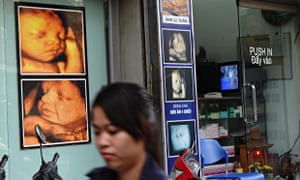
A clinic offering 4D foetus imaging in Hanoi. For decades, communist Vietnam enforced a two-child policy, using a mix of administrative penalties and subsidised family planning. Photograph: Hoang Dinh Nam/AFP/Getty Images

On a Saturday morning, about 100 people gather for mass at Thai Ha church in Hanoi. During the sermon, the priest talks about the dangers of sex before marriage and the sin of killing an unborn child. Behind the pews, on a table, sits a small coffin containing foetuses and stillborn babies collected by volunteers over the week from private clinics. Today there are 13 in the box. Tiếp tục đọc “Sex education from church and state sends mixed messages in Vietnam”

Sexuality Education

UNESCO

https://i0.wp.com/www.unesco.org/new/fileadmin/MULTIMEDIA/HQ/HIV-AIDS/images/teacher_sex_education.haiti.amelia.shaw_photoshare.jpg

Comprehensive Sexuality Education (CSE) is an age-appropriate, culturally relevant approach to teaching about sex and relationships by providing scientifically accurate, realistic, non-judgemental information. Sexuality education provides opportunities to explore one’s own values and attitudes and to build decision-making, communication and risk reduction skills about many aspects of sexuality.   Tiếp tục đọc “Sexuality Education”

Dân lấp “ổ voi” gây tai nạn, bị cán bộ truy “ai cho phép làm”

GiadinhNet – “Ổ voi” xuất hiện nhiều năm, gây ra nhiều vụ tai nạn nhưng không được đơn vị quản lý đường bộ sửa chữa. Khi dân bức xúc tự mang bê tông ra trám đường thì bị cán bộ đến dọa đòi lập biên bản xử phạt hành chính.

Đây là câu chuyện xảy ra ở khu vực km24, QL70 qua huyện Bảo Thắng, tỉnh Lào Cai được chia sẻ và bình luận nhiều trên mạng xã hội mấy ngày qua.

Theo đó, khi nhìn thấy hành động đẹp của người dân, một Facebooker tên là Vương Mạnh đã ghi hình và đẩy lên mạng xã hội. Tiếp tục đọc “Dân lấp “ổ voi” gây tai nạn, bị cán bộ truy “ai cho phép làm””

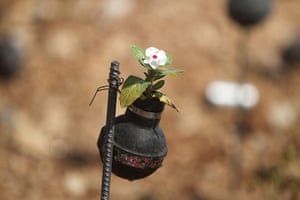
West Bank garden of teargas canisters – in pictures

theguardian _ The Palestinian residents of Bilin have come up with a novel use for the teargas canisters left over from clashes with Israeli soldiers during the weekly protest against the West Bank separation barrier

Tiếp tục đọc “West Bank garden of teargas canisters – in pictures”

A Gender Power Shift in the Making

FULL ARTICLE

Highlights

  • The number of female chief executives of Fortune 500 companies is 5%. Only 4% of chair people of the boards of Europe’s largest publicly quoted companies are women
  • The Credit Suisse Research Institute examined 2,400 companies worldwide and found in 2012 that investors would fare better holding shares in those with at least one woman on the board
  • For a long time, the debate about gender equality was confined to women. Over the past decade, senior men have started to take responsibility for leading change
    Status will instead rely increasingly on unique skills and talents, or the ability to connect people, or being an inspiring leader
  • Women are leading the way in reshaping how jobs are done, including at senior levels
  • In the US, the number of women-owned firms grew at 1.5 times the national average between 2007 and 2014, according to a study commissioned by American Express OPEN
  • Women hold much greater sway in Eastern Europe and Southeast Asia than in most Western economies. Russia tops the table with women in 43% of senior roles
  • Work-life conflict used to be seen primarily as a problem for women. But now employed fathers in dual-earning couples are more likely to experience such conflict
  • Companies have focused their “gender diversity” efforts increasingly on top talent, and it has distracted attention from even bigger gender divides

Women and politics in East Asia

19 June 2016
Author: Katharine H.S. Moon, Wellesley CollegeEastasiaforum – This is supposed to be the Asian century, with East Asian countries leading the way. The world admires many East Asian countries for their miraculous economic growth, democracy-building and cultural innovation. But can East Asia also provide a model for developing women’s rights and political power? East Asia has no coherent pattern to boast or export.https://i0.wp.com/www.eastasiaforum.org/wp-content/uploads/2016/06/Moon-400x280.jpgEast Asians are known for creating wealth nationally and personally but this does not necessarily produce women’s political empowerment or participation. One of the poorest countries in the world, Rwanda, sits atop the very wealthy Nordic states, the United States and newly rich Asia with the highest female representation in national politics worldwide.

In East Asia, the Philippines boasts the highest representation of women in political institutions. Nearly 30 per cent of the Philippines’ lower house is occupied by women, and women form a quarter of the upper house. In local politics, women also fare well, with 17 out of 80 provinces having voted for female governors in 2013. Since 2010, women have also made up 40–45 per cent of the highest civil service positions. Tiếp tục đọc “Women and politics in East Asia”

TRÍ ÓC VÀ TÂM HỒN – KHOA HỌC VÀ HÒA BÌNH

Chào các bạn,

Mấy năm trước học ở Singapore, mình ở ký túc xá cùng với một cô bạn (không phải người Việt). Bạn này rất xinh và hiền, nhưng sống hơi khép kín, không giao tiếp bạn bè nhiều và khá tiêu cực với thế giới xung quanh. Gần như lúc nào cô bạn cũng căng thẳng chuyện học hành. Ban đầu mình nghĩ cô bạn có tính ít nói nên cũng không để ý lắm. Sau đó mình biết là bạn học về công nghệ thông tin, chuyên thiết kế các trò chơi online và rất nhiều sản phẩm, trong đó có các trò chơi bạo lực chém giết. Trên bàn học cô có treo những poster là hình gươm dao súng đạn mà các bạn hay thấy trong các trò chơi điện tử. Mình chỉ thỉnh thoảng nói chuyện được và không biết làm thế nào giúp đỡ cô bạn đỡ căng thẳng hơn. Giờ nghĩ lại mình vẫn thấy thương bạn này và không rõ hậu quả cuộc sống stress đó đã và sẽ dẫn cô đến đâu. Mình không còn liên lạc được với cô ấy sau khi học xong ở đó nữa.

Cũng thời gian đó, mình có một cô bạn khác ở ngay phòng bên cạnh. Bạn này rất giỏi, thông minh, học về robotic và tự động hóa. Trước khi học tiếp PhD, cô được đề nghị một công việc ở Châu Âu. Nhưng sau khi phát hiện ra công ty có liên quan đến việc phát triển và buôn bán vũ khí, cô đã từ chối công việc để tiếp tục đi học PhD với mức lượng thấp hơn nhiều lần so với công việc kia. Tiếp tục đọc “TRÍ ÓC VÀ TÂM HỒN – KHOA HỌC VÀ HÒA BÌNH”

Fukushima and the oceans: What do we know, five years on?

sciencedaily :  30, 2016Source:Goldschmidt ConferenceSummary:A major international review of the state of the oceans five years after the Fukushima disaster shows that radiation levels are decreasing rapidly except in the harbor area close to the nuclear plant itself where ongoing releases remain a concern.

A major international review of the state of the oceans 5 years after the Fukushima disaster shows that radiation levels are decreasing rapidly except in the harbour area close to the nuclear plant itself where ongoing releases remain a concern. At the same time, the review’s lead author expresses concern at the lack of ongoing support to continue the radiation assessment, which he says is vital to understand how the risks are changing.

These are the conclusions of a major 5 year review, with multi-international authors who are all working together as part of a Scientific Committee on Oceanic Research (SCOR) Working Group. The report is being presented at the Goldschmidt geochemistry conference in Japan. The review paper is also published in Annual Review of Marine Science*. The main points made by the report are: Tiếp tục đọc “Fukushima and the oceans: What do we know, five years on?”

Who are nuclear weapons scientists?

Most people study nuclear warfare by studying the new developments in the weapons themselves. Hugh Gusterson takes a different approach. Instead of studying the weapons, he studies the nuclear scientists who created them. He took to the TEDxFoggyBottom stage to share what he learned.

Dr. Gusterson’s research focuses on the interdisciplinary study of the conditions under which particular bodies of knowledge are formed and deployed, with special attention to the science of war, the military, and nuclear weapons.

His research addresses the problem of how to understand knowledge as a cultural formation, and how to analyze the historical and structural transformations of science and technology. He asks questions such as: How do cultures of science initiate and shape participants? How can we critically assess universalist claims about scientific and military “truths?” How do scientists justify their complicity with the projects of nation-states?

This talk was given at a TEDx event using the TED conference format but independently organized by a local community