A Nation, Building

by JOHN S. ROSENBERG

MAY-JUNE 2014

Hanoi’s streets (in 2007, above) are now full of motorcycles and scooters, and shop shelves are no longer bare.

Hanoi’s streets (in 2007, above) are now full of motorcycles and scooters, and shop shelves are no longer bare. Photograph by Chau Doan/Getty Images

harvardmagazine A RECENT Monday morning, during a class on global trade, the professor reviewed the effects of nations’ limits on such commerce: tariffs, quotas, and the “voluntary” restraints exporting countries impose on their shipments to eager customers (lest protected interests in the importing area wilt). His students, arrayed in a teaching amphitheater laid out like the classrooms at Harvard Business School (HBS)—complete with laminated placards bearing each Tiếp tục đọc “A Nation, Building”

World weather: 2016’s early record heat gives way to heavy rains

John Vidal

theguardian – The record-breaking heat of the first six months has turned to severe seasonal flooding across Asia in one of the strongest monsoon seasons in many years

Indian villagers salvage logs of wood brought by floodwaters. The Brahmaputra river has burst its banks in many places and has been at danger levels for weeks.

Tiếp tục đọc “World weather: 2016’s early record heat gives way to heavy rains”

Các c.ty nhà nước sập sệ của Việt Nam làm nguy hại tới tăng trưởng dài hạn

English: Vietnam’s zombie companies threaten long-term growth

Thách thức lớn nhất đối với kinh tế vĩ mô Việt Nam hiện nay là duy trì tăng trưởng. Hầu hết các tăng trưởng của kỷ nguyên đổi mới đã mang lại hoặc là từ hiệu quả có được với sự ra đời của nền kinh tế thị trường (mở cửa thị trường trong nước và thương mại, nới lỏng những bó buộc về phong trào lao động và chuyển đổi đất đai) hoặc từ việc mở rộng nguồn lực của lao động kỹ năng thấp và vốn đầu từ. GDP tiếp tục tăng trưởng với tốc độ rất đáng nể phục, mặc dù thấp hơn so với dự kiến trong văn bản kế hoạch quốc gia.

Hình ảnh Một người đàn ông mang vải trên một chiếc xe máy trên một đường phố ở Lục Ngạn, Việt Nam, ngày 22 tháng 6 năm 2016. (Ảnh: AAP).
Tiếp tục đọc “Các c.ty nhà nước sập sệ của Việt Nam làm nguy hại tới tăng trưởng dài hạn”

Underground revolution: Asia’s grave problem

To solve land shortages, many Asian countries have encouraged “eco-burials” that involve the cremation process. But considering the environmental effects of cremation, the benefits may be short-term at best.

Tiếp tục đọc “Underground revolution: Asia’s grave problem”

Sốt vàng da: Một thảm kịch có thể phòng ngừa

English: Yellow fever: A preventable tragedy 

Châu Phi hiện đang trong vòng kìm kẹp của một trong những dịch bệnh tồi tệ nhất  bùng phát trong 30 năm qua: sốt da vàng. Và một thảm họa lớn hơn đang đe doạ

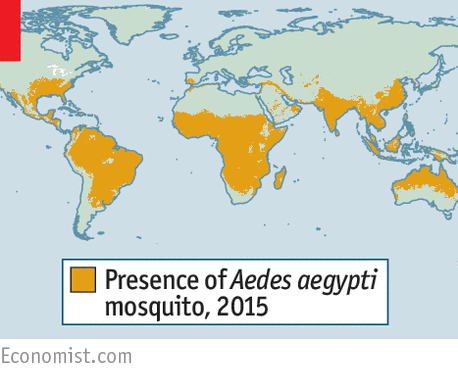
Bản đồ những nơi xuất hiện muỗi vằn

Một trong những bí ẩn của dịch tễ học là tại sao châu Á không bị sốt vàng da. Dịch bệnh hoành hành ở châu Phi, lục địa nơi dịch đã tiến hóa. Dịch sốt da vàng lan rộng ở Nam Mỹ, khi dịch bệnh được mang đến Nam Mỹ bằng tàu nô lệ Châu Phi của châu Âu. Sốt da vàng đã từng được tìm thấy ở cả Bắc Mỹ và Nam Âu, nhưng nó đã bị tận diệt bởi việc áp dụng các nỗ lực đáng kể và nhiều tiền của, và cả hai nơi này có chung may mắn là không có nhiều khỉ, động vật có vai trò chứa và lưu trữ các virus sốt da vàng. Tuy nhiên, mặc dù phần lớn châu Á là nơi tập trung của muỗi vằn – Aedes aegypti, một loại muỗi lây lan bệnh sốt vàng da, thật lành thay châu Á vẫn miễn nhiễm với dịch sốt vàng da. Tiếp tục đọc “Sốt vàng da: Một thảm kịch có thể phòng ngừa”

Can we harness bacteria to help clean up future oil spills?

theconversation – In 2010 the Deepwater Horizon oil spill released an estimated 4.2 million barrels of oil into the Gulf of Mexico – the largest offshore spill in U.S. history. The spill caused widespread damage to marine species, fisheries and ecosystems stretching from tidal marshes to the deep ocean floor.
Tiếp tục đọc “Can we harness bacteria to help clean up future oil spills?”

The pattern of capital flows into Asia in the last decade

The pattern of capital flows into Asia in the last decade

asiapathways-abdi: Looking at the varying patterns of the capital flows into Asia in the last decade, the period after the taper tantrum on 21 May 2013 until 31 October 2015 is of particular interest from both global and local perspectives. Globally, the wave of capital flows became more volatile due to various international factors: (i) the pace of monetary policy normalization in the United States (US), (ii) the slowdown in the People’s Republic of China, (iii) the slide in oil prices, and (iv) higher political uncertainty and elevated geopolitical tensions. Locally, the growth momentum in Asia slowed down due to weaker balance of payments, worsening external debt conditions, and reduction in real economic activity. Monetary policy in Asia therefore became more accommodative to support growth. This, in turn, lowered expected relative interest returns and caused capital to flow out of Asia. Moreover, the exchange rate return on investing in Asian assets, which previously had been a byproduct of investment, declined. This is because there was greater risk aversion on Asian assets and there was downward pressure on all emerging Asian currencies due to weaker economic fundamentals. Tiếp tục đọc “The pattern of capital flows into Asia in the last decade”

Antibiotic Resistance Requires Global Response Similar to AIDS, Climate Change

Unregulated sales of antibiotics are contributing to growing resistance. Credit: Adil Siddiqi/IPS

IPSnews – UNITED NATIONS, Jun 12 2016 (IPS) – Addressing antibiotic resistance will require a global political response similar to the way the world has reacted to climate change or HIV / AIDS, Sweden’s Minister of Public Health Gabriel Wikstrom, told IPS recently.

“(These problems) began with a small group of experts discussing and trying to warn the rest of us and it was not until it was politically addressed that it really became an issue that was solvable.”
Tiếp tục đọc “Antibiotic Resistance Requires Global Response Similar to AIDS, Climate Change”

7 KEYS TO SHAPING SUSTAINABLE CITIES

worldwatch – Cities are the world’s future. More than half of the world’s people live in cities, and the urbanization trend is continuing. Will the world invest in shaping livable, equitable, and sustainable cities?

“The path to a sustainable city starts with a vision,” explains Gary Gardner, co-director of the our newest book, Can a City Be Sustainable? “A well-crafted vision can rally public support and mobilize civic energy for a long-term urban makeover.”

“A well-crafted vision can rally public support and mobilize civic energy for a long-term urban makeover.”

Here are Worldwatch’s top 7 tips for cities who want to unlock sustainability:

sustainable-cities-1

1. Reduce, circulate, and clean up material flows.

Perhaps the biggest single step that cities can take toward a sustainable future is to create economies that greatly reduce materials use and (re)circulate materials. Good examples are car sharing and tool libraries, which reduce a person’s materials footprint.
Tiếp tục đọc “7 KEYS TO SHAPING SUSTAINABLE CITIES”

Vietnam approves $60 mln wind power project

By Dam Tuan   July 28, 2016 | 02:35 pm GMT+7

A Singaporean company plans to tap the potential for wind power in southern Vietnam.

e.vnexpress – Southeast Asia’s leading renewable energy developer, The Blue Circle, has been awarded an Investment Certificate from Vietnamese authorities for a 40 Megawatt (MW) Dam Nai wind project worth $60 million in the southern province of Ninh Thuan.

Tiếp tục đọc “Vietnam approves $60 mln wind power project”

Vietnam Starts 120-Megawatt Wind Farm in Central Highlands

March 13, 2015 — 6:44 AM WET

bloomberg_Vietnam began constructing a 120-megawatt wind farm with a total investment of 6 trillion dong ($281 million) in the Central Highlands province of Dak Lak.
HBRE Wind Power Solution Co. will build the project in three phases through 2020, Chairman Ho Ta Tin said on Friday. The Ho Chi Minh City-based company is expected to be able to produce 400 million kilowatt-hour a year, equal to the demand of 200,000 households.
General Electric Co. will provide the project’s 60 turbines, Tin said on March 13. The first phase, which uses 14 two-megawatt turbines, would start generating electricity next year. Tiếp tục đọc “Vietnam Starts 120-Megawatt Wind Farm in Central Highlands”

Drought and ‘Rice First’ Policy Imperil Vietnamese Farmers

Huynh Anh Dung, 34, at his family farm in Soc Trang Province, Vietnam. His rice crop failed in February because of salty water. Credit The New York Times

nytimes – SOC TRANG, Vietnam —When the rice shoots began to wither on Lam Thi Loi’s farm in the heart of the Mekong Delta, a usually verdant region of Vietnam, she faced a hard choice: Let them die in the parched earth, or pump salty water from the river to give them a chance..

Tiếp tục đọc “Drought and ‘Rice First’ Policy Imperil Vietnamese Farmers”