
Tác giả: Đào Thu Hằng
I'm from Hanoi, Viet Nam.
I'm an author of Dot Chuoi Non (dotchuoinon.com/author/hangbelu/), a blog on Positive thinking, founded by Dr. Tran Dinh Hoanh, an attorney in Washington DC.
I'm a co-founder of Conversations on Vietnam Development - cvdvn.net, a virtual think tank. I am a co-founder of two companies in Viet Nam working on children education services. I advise companies on STEAM education, English language education for children and students in Vietnam.
I'm studying the Buddha's teaching and the teaching of Jesus. I practice mindful living including meditation.
I hold a PhD on Sustainable Energy Systems from University of Lisbon and Aalto University.
I graduated from Hanoi University of Technology on Environmental Engineering. I obtained a Master degree of the same major from Stanford University and Nanyang Technological University.
My English-language blog at: hangbelu.wordpress/.
I play table tennis as a hobby.
Dementia Village
A small village in Weesp, the Netherlands, where every resident has severe dementia
Living with Dementia: To Be or Not To Be
Yvonne van Amerongen is Head of Quality and Innovation at Hogewey, and one of the founders of its internationally award-winning small-scale living model of care.
Yvonne has been working at Vivium Zorggroep since 1983, in particular at nursing home Hogewey. In 1990, she developed a new product which revolutionised care for people developing dementia in the vicinity of the Hogewey nursing home. In 1993, Yvonne became a fulltime project manager for the development of the care project small-scale living with lifestyle for the psycho-geriatrics target group.This project was also the subject matter of her graduation thesis for the Higher Vocational Training in Social Pedagogic Care with a specialisation in Management. Since 1996 Yvonne has been a staff executive for Quality & Innovation for Vivium Zorggroep in Weesp.
Hogewey is located in Weesp, a town outside Amsterdam. Since it opened in 2009, Hogewey has attracted a huge amount of interest from all over Europe, with a centre based on its design currently being built in Switzerland.
Quận 1: Tháo dỡ bậc thềm lấn chiếm vỉa hè của rạp hát gần trăm tuổi

Quang cảnh tháo dỡ các bậc thềm lấn chiếm vỉa hè trước rạp Công Nhân vào tối qua
 Đêm qua, 22.3, ông Đoàn Ngọc Hải, Phó chủ tịch quận 1 đã dừng chân trước rạp Công Nhân (Nhà hát kịch thành phố) nằm trên đường Trần Hưng Đạo (thuộc phường Nguyễn Cư Trinh), ra lệnh phá dỡ toàn bộ 5 bậc thềm có chiều ngang hơn 20 mét vì lấn chiếm vỉa hè. Ít ai biết rạp hát có tuổi đời gần 1 thế kỷ này từng là tài sản của một vị đại gia lẫy lừng Sài Gòn.
Ông Lê Quan Ba, một nhân viên kỳ cựu của Nhà hát kịch thành phố nói trong tiếng ồn của máy khoan: “Tôi năm nay đã được 83 tuổi thì 5 bậc thềm lên xuống rạp này đã có khoảng 80 năm”. Ông Ba cho biết khi nghe tin lực lượng chức năng tháo dỡ bậc thềm, ông chạy từ trên lầu nhà hát xuống để nhìn nó lần cuối, vì bậc thềm này gắn bó nhiều kỷ niệm với ông từ khi còn nhỏ. Trong khi bậc thềm lần lượt bị phá dỡ thành đống gạch vụn thì ông Ba ngồi trên ghế nhìn chăm chú. Tiếp tục đọc “Quận 1: Tháo dỡ bậc thềm lấn chiếm vỉa hè của rạp hát gần trăm tuổi”
Letters from the Mekong: A Call for Strategic Basin-Wide Energy Planning in Laos

This issue brief—the third in Stimson’s “Letters from the Mekong” series — continues to challenge the prevailing narrative that the current rapid pace of dam construction on the Mekong River in mainland Southeast Asia will continue until the entire river is turned into a series of reservoirs. Certainly, the construction of even a few large dams will severely impact food security in the world’s most productive freshwater fishery and sharply reduce the delivery of nutrient-rich sediment needed to sustain agriculture, especially in Cambodia and Vietnam’s Mekong Delta. However, our team’s extensive research over a number of years, including site visits and meetings with regional policymakers, provides compelling evidence that not all of the planned dams will be built due to rising political and financial risks, including questions about the validity of current supply and demand projections in the greater Mekong region. As a consequence, we have concluded that it is not yet too late for the adoption of a new approach that optimizes the inescapable “nexus” tradeoffs among energy, export revenues, food security, and fresh water and protects the core ecology of the river system for the benefit of future generations.
In particular, through a continued examination of rising risks and local and regional responses to those risks, we believe that Laos and Cambodia will fall far short of current plans for more than 100 dams on the Mekong mainstream and tributaries. This reality will have particular implications for Laos, which seeks to become the “Battery of Southeast Asia” by setting the export of hydropower to regional markets as its top economic development priority.
In the case of Laos in particular, the reluctant recognition that its dream of damming the Mekong are in jeopardy may cause a reconsideration of its development policy options. Fewer Lao dams will mean that national revenue targets will not be met. Already the government has begun to make overtures for US and other donor assistance in managing the optimization of its hydropower resources. This is not surprising since Lao decision makers depend almost entirely on outside developers to build out its planned portfolio of dams under commercial build-own-operate-transfer (BOOT) concessions for export to neighboring countries. All of these dams are being constructed in a one-off, project-byproject manner with no prior input from the intergovernmental Mekong River Commission (MRC) or neighboring countries, and hence there is little practical opportunity for synergistic planning that could optimize the benefits of water usage on a basin-wide scale.
Because planners cannot see past the next project, it is impossible to determine to what extent the targets for the final power output of either Laos or the basin as a whole are achievable. Further, critical red lines of risk tolerance, particularly toward the environmental and social risks that impede dam construction, are unidentifiable because the government has little stake invested in the projects and derives few resources from the BOOT process to mitigate risk.
By 2020 roughly 30% of the Mekong basin’s power potential in Laos will be tapped by existing dams and those currently under construction. Beyond 2020 the prospect for completing the remaining 70 plus dams planned or under study by the Lao Ministry of Energy and Mines is unknowable. As Lao officials begin to realize they will not necessarily meet their development goals, there will still be time to transition to a basin-wide, strategic energy plan that meets projected revenue goals while minimizing impacts on key environmental flows through a combination of fewer dams and other non-hydropower sources of clean energy generation.
Asia’s Five Most Corrupt Countries
5. Myanmar: 40% bribery rate
4. Pakistan: 40% bribery rate
3. Thailand: 41% bribery rate
2. Vietnam: 65% bribery rate
1. India: 69% bribery rate
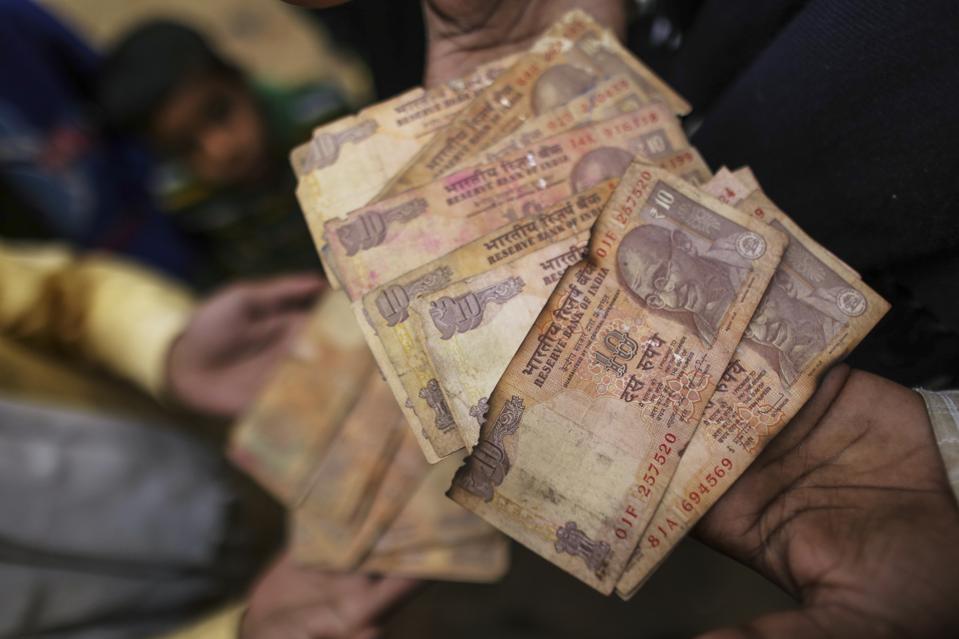
Ten rupees Indian banknotes (Photographer: Dhiraj Singh/Bloomberg)
From South Korea’s presidential scandal to Malaysia’s 1MDB fund, not many Asian countries have been able to avoid the smear of corruption. But just how pervasive is the problem across the continent? Tiếp tục đọc “Asia’s Five Most Corrupt Countries”
Escaping from North Korea in search of freedom
Yeonmi tells her story of life in North Korea and eventual escape, and calls for action against such human rights violators.
Good Night Stories for Rebel Girls
In Kim Jong-nam Killing, a Common Migration Tale Takes a Dark Turn
nytimes_NGHIA BINH, Vietnam — Growing up in this village of rice paddies and banana trees, Doan Thi Huong was known as a gentle girl and a diligent student, her brother said.
She left home at 17 to study pharmacology in Hanoi, the capital, and has returned home only about twice a year in the decade since, said her brother, Doan Van Binh. He said that he rarely pressed his sister for details about her life, and did not realize until a few days ago that she had been working in Malaysia.
Tiếp tục đọc “In Kim Jong-nam Killing, a Common Migration Tale Takes a Dark Turn”
Finland is really good at stopping bullying. Here’s how they’re doing it.
Then you walk around the corner and see this:

Photo from iStock.
What would you do?
Unfortunately, this is a pretty common scene.
About a fourth to a third of all students report that they’ve been bullied in school. Tiếp tục đọc “Finland is really good at stopping bullying. Here’s how they’re doing it.”
If you see it, you can stop it

UNICEF_For International Youth Day, UNICEF has released the results of a new global poll of more than 100,000 young people from more than 14 countries that shows two-thirds of young people have been bullied.
We asked Yeshna, a 18 year old blogger living Mauritius to write a reflection on the results and share her thoughts on bullying and why it continues to affect children in every region of the world.
Nerd. Loser. Ugly. Fake. Lame. Fat. Stupid. Worthless. Weak. Hopeless. Pathetic. If these words that so many use appeared on our skin, would we still feel ‘beautiful’? Tiếp tục đọc “If you see it, you can stop it”
A Zen Master’s Advice On Coping With Trump
huffingtonpost_For HuffPost’s #LoveTakesAction series, we’re telling stories of how people are standing up to hate and supporting those most threatened. What will you stand up for? Tell us with #LoveTakesAction.
What can Zen Buddhism teach us about the art of effective activism in the wake of Donald Trump’s presidency?
Zen master Thich Nhat Hanh, who has been a social and environmental activist for more than 40 years, has said the most important thing for those feeling a sense of despair is to remember that meeting anger with more anger only makes matters worse.
The 90-year-old Vietnamese monk, who is considered to be one of the world’s leading spiritual teachers, is known for creating the idea of Engaged Buddhism, a method of linking mindfulness with social action.
His essential teaching on activism is that mindfulness gives people the ability to find peace in themselves so that their actions come from a place of compassion.
“Mindfulness must be engaged,” Hanh writes in his new book At Home in the World. “Once we see that something needs to be done, we must take action. Seeing and action go together. Otherwise, what is the point in seeing?”
“Nonviolence is not a set of techniques that you can learn with your intellect,” he goes on to say. “Nonviolent action arises from the compassion, lucidity and understanding you have within.”
Drawing from his own experience in seeking an end to the Vietnam War, Hanh writes that activists must learn to look after themselves if they are to be effective:
[I]f we don’t maintain a balance between our work and the nourishment we need, we won’t be very successful. The practice of walking meditation, mindful breathing, allowing our body and mind to rest, and getting in touch with the refreshing and healing elements inside and around us is crucial for our survival.

CHAIWAT SUBPRASOM / REUTERS
Continue reading at huffingtonpost
Flight attendant saves teenage girl from human trafficking after seeing secret note
Ms Frederick noticed a ‘dishevelled’ looking girl accompanied by a well-dressed man and immediately knew something was wrong

Hackers Scrambling to Save Climate Data from Trump Administration
Jan 23, 2017
Fortune_Wired has provided a glimpse into an initiative to download and securely store reams of climate and environmental data from the Environmental Protection Agency and National Oceanic and Atmospheric Administration as the Trump administration takes power. The organizers of the work, including some based at the University of Toronto, were initially motivated by widespread environmental data destruction under Canadian Prime Minister Stephen Harper.
Tiếp tục đọc “Hackers Scrambling to Save Climate Data from Trump Administration”
How did Hitler rise to power?
Ở Butan, chỉ số Hạnh phúc là một công cụ đo lường cho sự đau yếu của xã hội
English: In Bhutan, Happiness Index as Gauge for Social Ills

Thimphu, Bhutan – Như một cơn mưa cuối cùng đổ vào một màn sương mù dày bên ngoài, Dasho Karma Ura chớp đôi mắt ngước lên trần căn phòng họp ốp gỗ và bắt đầu giảng giải về bản chất của hạnh phúc.
“Mọi người cảm thấy hạnh phúc khi nhìn thấy một việc gì đó có đạo đức,” ông nói. “Khi bạn nghĩ rằng bạn đã làm điều gì đó đúng, dũng cảm và can đảm, khi bạn liên tục có thể nạp lại năng lượng cho chính mình như là một nhân tố có ý nghĩa.” Tiếp tục đọc “Ở Butan, chỉ số Hạnh phúc là một công cụ đo lường cho sự đau yếu của xã hội”
 CVD
CVD 