Gold mining suspected as cause of Cambodian mass poisonings

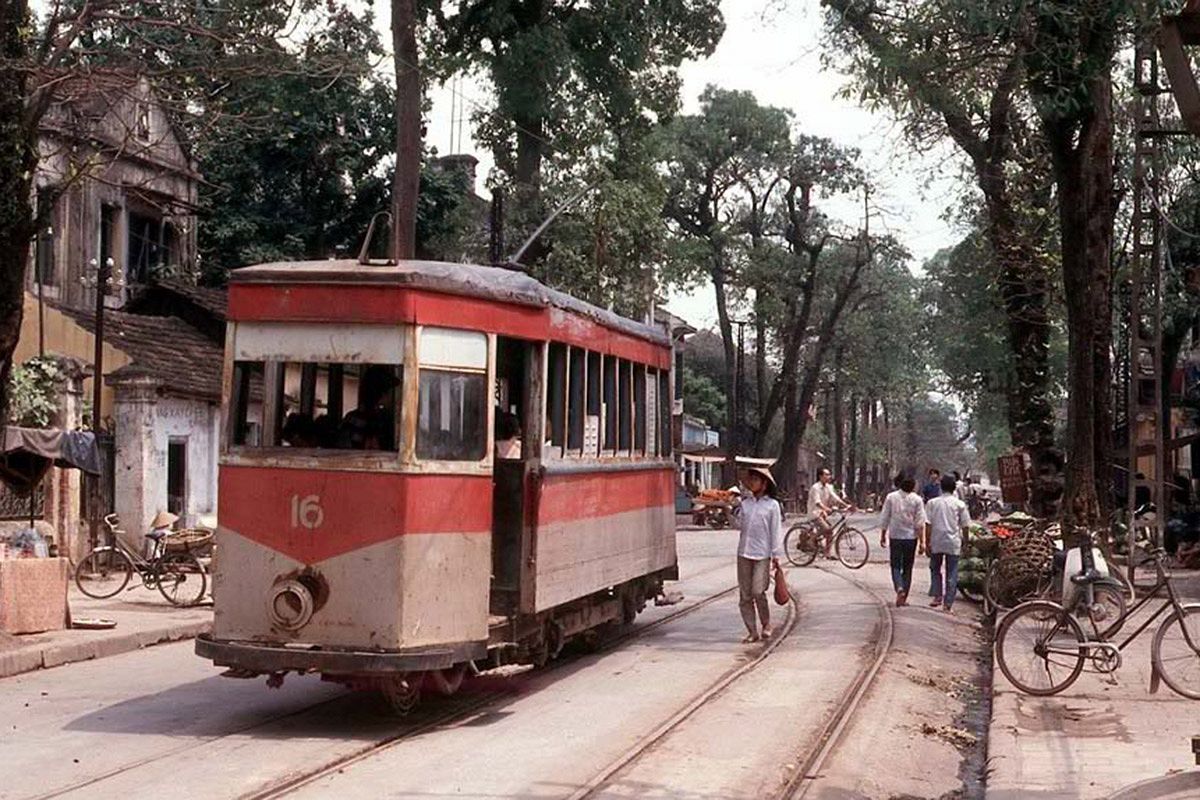
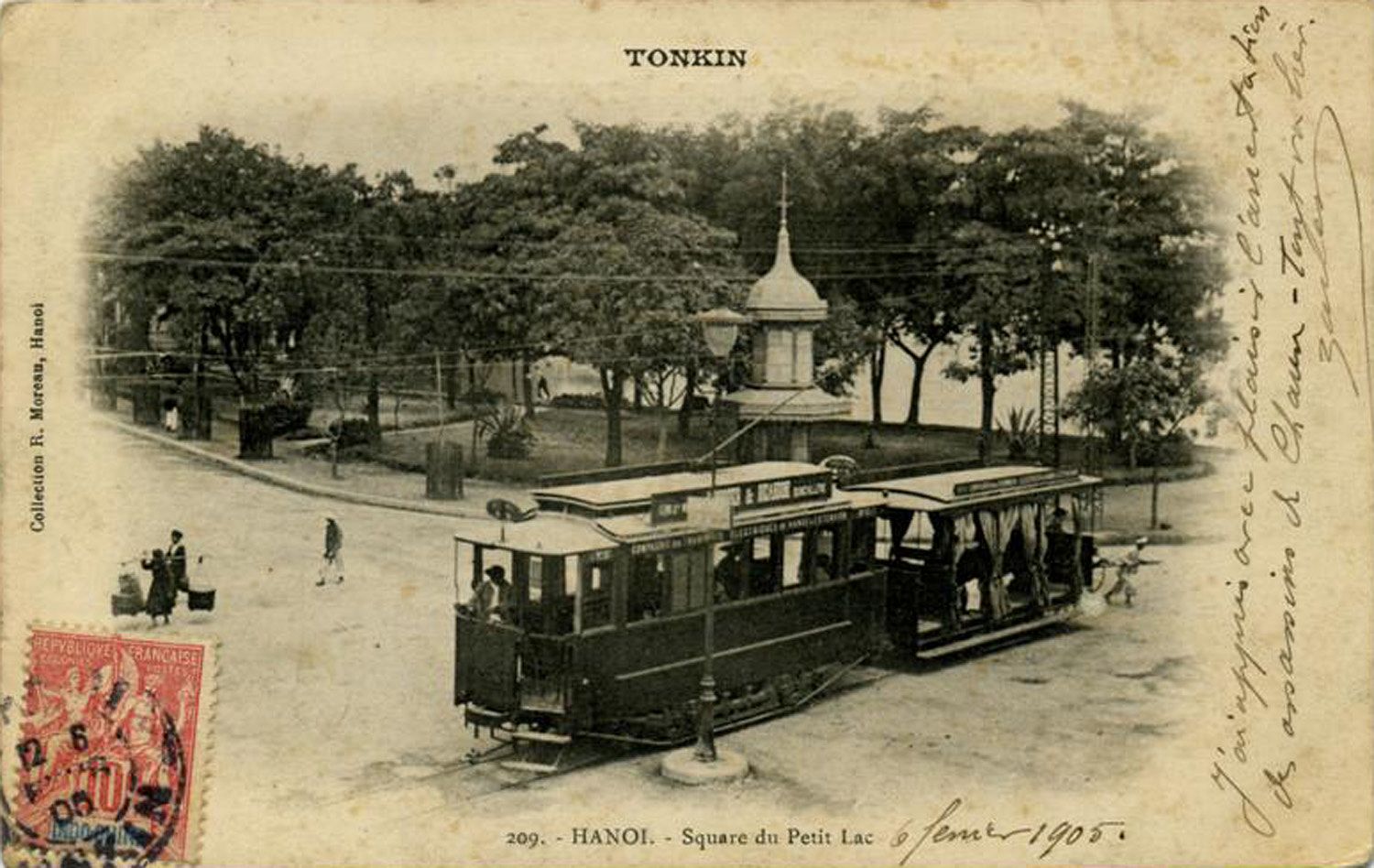
The History of Hanoi’s Lost Tramway Network

When they first drew up plans for a citywide tramway network in 1894, it seemed as though the Hanoi authorities would follow Saigon’s example by opting for steam traction. Yet, by the time government approval was forthcoming in 1899, advances in technology made it possible to construct the entire system as a state-of-the-art, one-meter gauge electric tramway.

In 1900, the Compagnie des Tramways Électriques d’Hanoï et Extensions (CTEH) was to set up to build the first two tramway lines, which were jointly inaugurated in November 1901. Tiếp tục đọc “The History of Hanoi’s Lost Tramway Network”

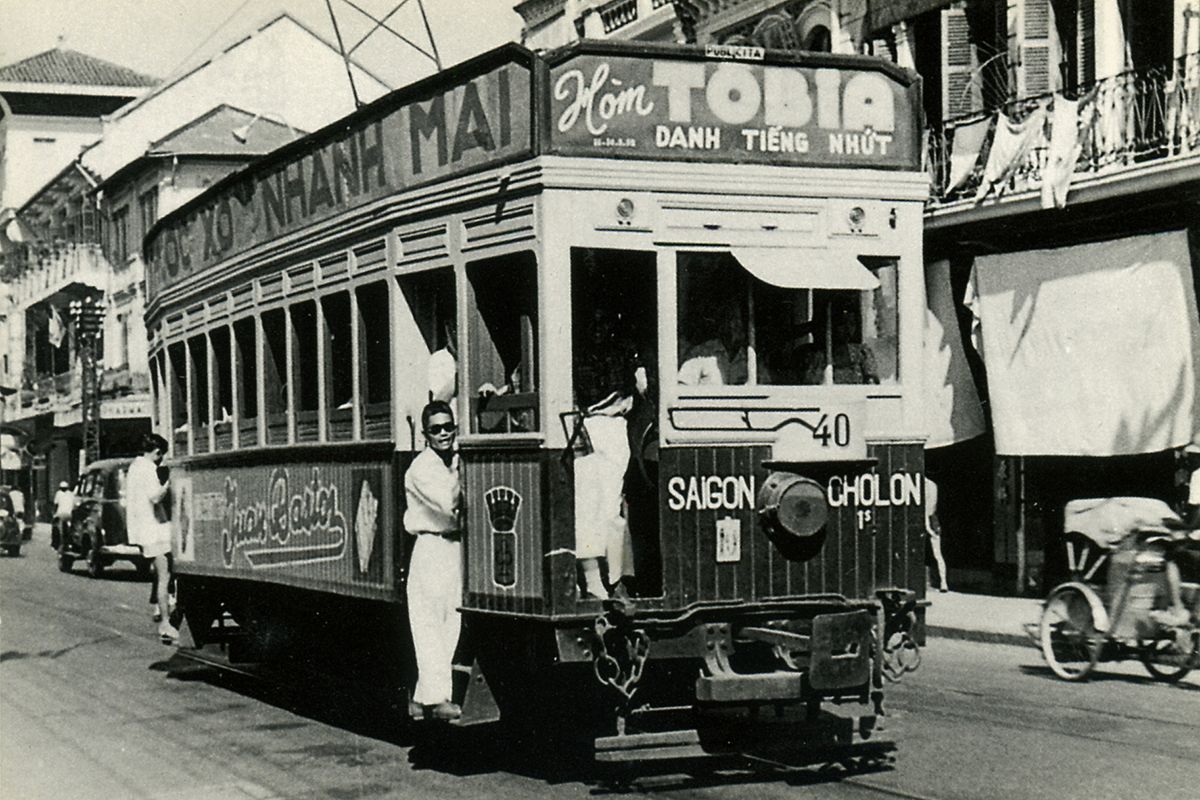
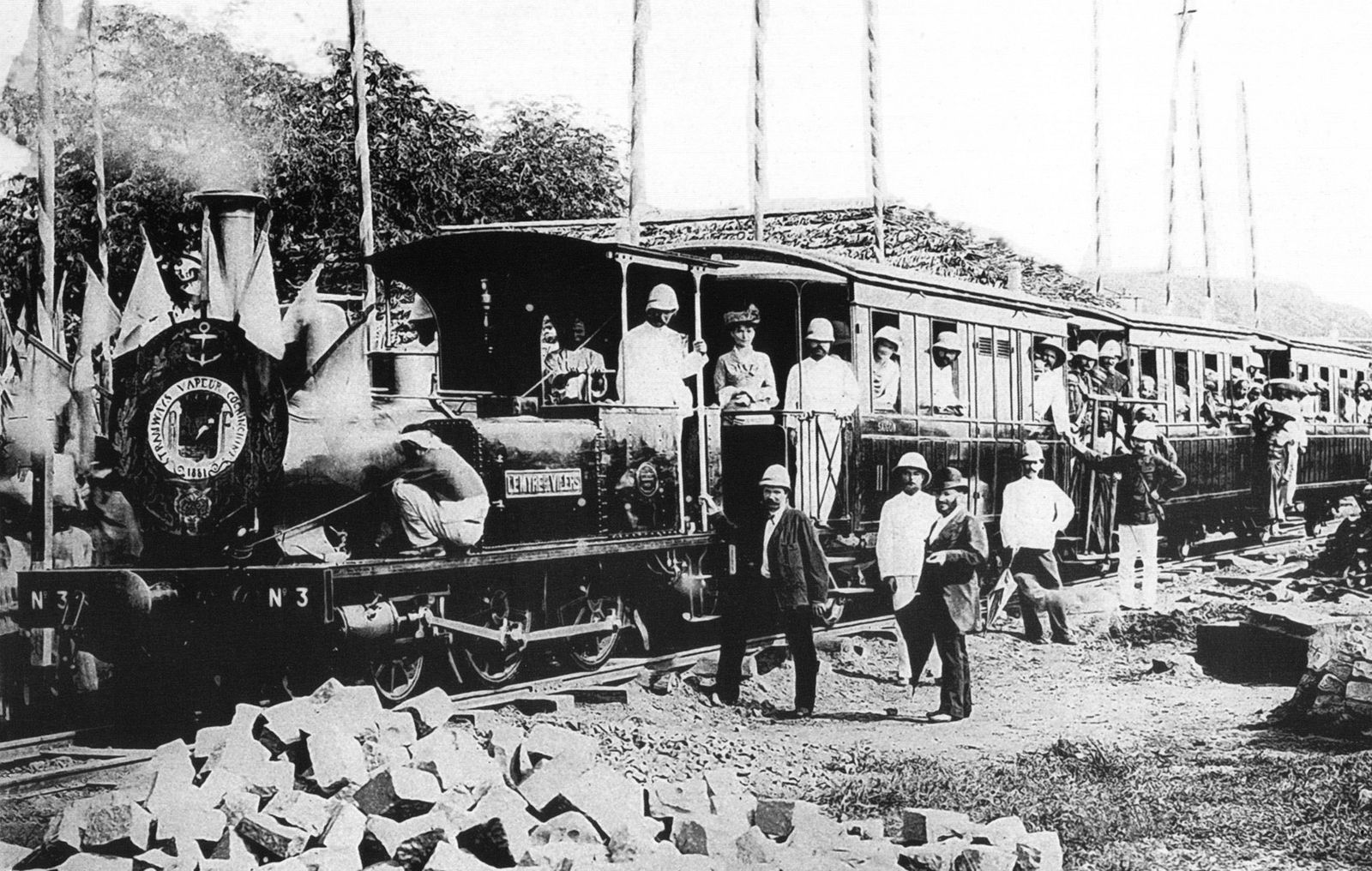
A Throwback to Saigon’s Original Tramway Network

As ever-increasing levels of traffic congestion and air pollution turn many of Ho Chi Minh City’s road junctions into choking bottlenecks, many hopes are pinned on plans to construct a new urban railway network in the southern metropolis. Yet urban railways are hardly a new concept in this city, which was once home to one of Southeast Asia’s largest urban tramway networks.

Indochina’s first mechanized rail-guided transportation system was the one-meter gauge Saigon–Cho Lon “high road” steam tramway, operated by the Societe Generale des Tramways a Vapeur de Cochinchine (SGTVC) and opened to the public on December 27, 1881.

Tiếp tục đọc “A Throwback to Saigon’s Original Tramway Network”

Betel and areca chewing custom in Asia – Tục lệ ăn trầu cau ở Châu Á

> BETEL CHEWING IN SOUTH-EAST ASIA

> Vietnamese people’s betel chewing custom and its existence in today’s modern society

> CNN: Nothing to smile about: Asia’s deadly addiction to betel nuts << The term is incorrect because the areca-nut, not betel-nut, is chewed.

Image result for betel and areca chewing

The ubiquitous red-stained lips and blackened teeth associated with betel chewing are sported by one-tenth of the human race and one-fifth of the global population. The custom pervades Asia, yet it is hardly known outside of the continent. It has no sex barriers and embraces all ages and classes. Even though it has long-established roots in Asian culture, history of the custom relies mainly on oral tradition, probably because it is most prevalent amongst the agrarian population. Since the eleventh century, however, the royal use of betel in South-East Asia is described in written records which provide a rich source of details about the protocol of sharing a quid with a king and the use of betel in royal ceremonies.From the sixteenth century onwards, when Europeans reached the East, accounts include descriptions of the royal use of betel but the custom has consistently been misrepresented by early western travellers who wrote about it, either from their own observations or those of others.

The custom, so alien to foreigners, was viewed from a western perspective. Nearly all of them were repelled by it and called betel chewing an ‘…unhygienic, ugly, vile, and disgusting…’ habit. Even the name given to the custom by Europeans, ‘betel-nut chewing’ is a misnomer. The term is incorrect because an areca-nut, not a betel-nut, is chewed. Tiếp tục đọc “Betel and areca chewing custom in Asia – Tục lệ ăn trầu cau ở Châu Á”

Four Education Trends that Countries Everywhere Should Know About

blogs.worldbank

Students at Catholic University of Peru, Edgar Rivera, Pablo Suarez and David Ramirez (names left to right) study homework together at the university in Lima, Peru on June 27, 2013. Photo © World Bank/Dominic Chavez

Recently, we reached out to education experts around the world to hear what they considered the most pressing issues facing our sector today. Surprisingly, they all said that little has changed in terms of our most common challenges. What was changing, they agreed, were the innovative ways that the global community has begun tackling them.

Our discussions frequently came back to advances in neuroscience, Massive Open Online Courses (MOOCs), Blockchain, and the consequences of negative population growth—as well as the ways that these phenomena are changing and challenging the way we think about education. Some of these changes have received more attention than others, but we are convinced of their importance—and education stakeholders around the world should be paying attention. Tiếp tục đọc “Four Education Trends that Countries Everywhere Should Know About”

Vietnam launches innovation network to tap diaspora expertise

By Staff reporters   August 20, 2018 | 08:45 am GMT+7

Vietnam launches innovation network to tap diaspora expertise

Vietnam’s officials and scientists launch Vietnam Innovation Network in Hanoi on Sunday. Photo by VnExpress/Ngu Hiep

The Vietnam Innovation Network, launched Sunday by the Prime Minister, aims to connect Vietnamese scientists across the world.

“The new network will enable Vietnamese experts working in technologically advanced countries to assist their home country in preparing for the Fourth Industrial Revolution,” Prime Minister Nguyen Xuan Phuc said at the launch.

The network has been joined by over 100 Vietnamese scientists and tech experts living overseas as well as hundreds of their peers in Vietnam.

Tiếp tục đọc “Vietnam launches innovation network to tap diaspora expertise”

Air pollution tanks South Asia’s cities in liveability rankings

eco-business.com 

Bad air has pulled South Asian cities down The Economist Intelligence Unit’s Global Liveability Ranking while political stability has nudged Hong Kong above Singapore. How did the rest of the region fare?

A man carries firewood past the smoking stacks of brick kilns Dhaka

A man carries firewood past the smoking stacks of brick kilns in Dhaka, Bangladesh. The capital city has among the worst air quality in the world. Image: Scott RandallCC BY-NC-ND 2.0By Hannah Koh

Nepal capital Kathmandu fell two positions to 129th place while Dhaka dropped two places to 139th spot in this year’s Global Liveability Ranking by The Economist Intelligence Unit (EIU), which assessed living conditions in 140 cities.
Tiếp tục đọc “Air pollution tanks South Asia’s cities in liveability rankings”

Vietnam set to trial Direct Corporate Power Purchase Agreement

By Oliver Massmann*    August 9, 2018 | 10:14 am GMT+7

Vietnam set to trial Direct Corporate Power Purchase Agreement

Workers check solar panels of a project in Vietnam. Photo by VnExpress/Annie Le

Vietnam’s plan to pilot a direct power purchase agreement for renewable energy in 2019 has drawn keen interest from investors.

On June 12 this year, at a seminar on renewable energy, the Electricity Regulatory Authority of Vietnam (ERAV) discussed and disclosed information about such a pilot DPPA.

Generally, a DPPA is an agreement between a power generator and a corporate customer in which power is physically delivered and sold to the customer for its operation.

Tiếp tục đọc “Vietnam set to trial Direct Corporate Power Purchase Agreement”

Former UN chief Kofi Annan dies at 80

Alzazeera

Annan served as UN secretary-general from 1997 to 2006 and was awarded the Nobel Peace Prize in 2001.

Kofi Annan, a former secretary-general of the United Nations and a Nobel Peace Prize laureate, has died aged 80.

The Ghanaian diplomat passed away at a hospital in the Swiss capital, Bern, on Saturday after a “short illness”, his foundation said in a statement.

“Kofi Annan was a global statesman and a deeply committed internationalist who fought throughout his life for a fairer and more peaceful world,” the statement said.

“He was an ardent champion of peace, sustainable development, human rights and the rule of law,” it added.

Annan served as the seventh UN chief for almost a decade, from 1997 to 2006. Having joined in 1962, he was the first staffer to take over the top UN job and the first hailing from sub-Sahara Africa.

In 2001, he received the Nobel Peace Prize jointly with the UN, lauded for “bringing new life to the organisation”.

On Saturday, current UN Secretary-General Antonio Guterres described Annan as “a guiding force for good”. Tiếp tục đọc “Former UN chief Kofi Annan dies at 80”

Nguy cơ tham nhũng trong ngành Năng lượng ở Việt Nam

Tổ chức Minh Bạch Quốc tế

Yêu cầu báo cáo

Những nguy cơ tham nhũng chủ yếu trong ngành năng lượng Viêt Nam là gì? Báo cáo tập trung vào các nguồn tài trợ quốc tế, bao gồm các nguồn tài trợ từ châu Âu.

Mục đích

Nhận dạng những nguy cơ tham nhũng chính trong ngành năng lượng và các  tác động đến nhà tài trợ tiềm năng

Nội dung

  1. Tổng quan năng lượng Việt Nam
  2. Tổng quan nguy cơ tham nhũng ở Việt Nam
  3. Nguy cơ tham nhũng trong các nguồn tài trợ quốc tế trong ngành năng lượng
  4. Tài liệu tham khảo

Tóm tắt báo cáo

Dân số tăng, thêm các nhu cầu về hàng hóa và dịch vụ, tốc độ đô thị hoá và các hoạt động kinh tế tăng trưởng nhanh trong lĩnh vực công nghiệp và dịch vụ đang tăng áp lực cho nguồn cung năng lượng ở Việt Nam. Có sẵn một nguồn cung năng lượng đầy đủ và đáng tin cậy là một điều kiện tiên quyết để duy trì tăng trưởng xã hội của đất nước bao gồm tăng trưởng kinh tế và đạt được các mục tiêu phát triển kinh tế xã hội của chính phủ.

Tiếp tục đọc “Nguy cơ tham nhũng trong ngành Năng lượng ở Việt Nam”

​CORRUPTION RISKS IN VIETNAM’S ENERGY SECTOR​

Transparency International

This Anti-Corruption Helpdesk brief was produced in response to a query from one of Transparency International’s national chapters. The Anti-Corruption Helpdesk is operated by Transparency International and funded by the European Union.

Query

What are the key corruption risks in the energy sector in Vietnam, with a focus on international budget aid, including aid from European donors?

Purpose

Identify general risks of corruption, especially in the energy sector and determine what they mean for potential donors

Content

  1. Overview of Vietnam’s energy sector
  2. Overview of corruption risks in Vietnam
  3. Corruption risks for budget support in the energy sector
  4. References

Summary

A growing population, a rising appetite for goods and services, rapid urbanisation, and fast growing economic activities in industrial and service sectors are exerting increased pressure on energy supplies in Vietnam. The availability of an adequate and reliable energy supply is an essential prerequisite for maintaining the country’s record of socially inclusive economic growth and achieving the government’s socio-economic development goals. Tiếp tục đọc “​CORRUPTION RISKS IN VIETNAM’S ENERGY SECTOR​”

Air conditioner makers battle for Vietnam’s red-hot market

asia.nikkei.com

Ascendant middle class gravitates toward high-performance models

Daikin air conditioners on display in a Hanoi store. Strong growth in recent years has created soaring demand from first-time buyers. (Photo by Atsushi Tomiyama)

HANOI/OSAKA — Air conditioner manufacturers around the world are locking horns in Vietnam, whose market has become the second largest in Southeast Asia as rapid economic growth supports a burgeoning middle class.

Vietnam’s market for the cooling systems ranked as Asia’s eighth largest in 2011, excluding Japan and China, with about 660,000 units sold. But the country surpassed Thailand in 2015, and sales of 1.98 million units in 2016 lifted the nation into third behind India and Indonesia. Tiếp tục đọc “Air conditioner makers battle for Vietnam’s red-hot market”

Saigon Botanic Garden – The First Botanic Garden in Vietnam

Volume 2 Number 4 – December 1994

Nguyen Nghia Thin

Saigon Botanic Garden (SBG) was established in 1864 – the first botanic garden in Vietnam. This was the work of French Government in Vietnam, according to a Resolution of 23 March 1864 during the first years of occupation. Mr Germein was appointed to manage and establish the garden. An area of 12 ha. was chosen for the garden, situated a few hundred metres from the city. The ground was leveled and a plant nursery was started. In 1865, Louis Pierre, a herbarium curator from Calcutta Botanic Garden, India was appointed as Director of the Saigon Botanic Garden.

The original aim of the Garden was to grow a mixture of local and exotic species which has been continued to the present day.

In 1877, Marine Correy was appointed Director of the Garden as M. L. Pierre returned to France. M. Corroy published a list of plants in cultivation in the Garden in Annales du Jardin Botanique et de la Ferm‚ exp‚rimentale des Mares 2nd fase Juillet 1878 br. in 4 p. 30-90. The same year, Karl Schroeder also published an article in which 902 species in the botanic garden were cited. In 1898 and 1905, two further lists were published by E. Haffner, a later Director of Garden.

On the 1st January 1919, SBG was affiliated to the Scientific Institute of Indochina (SII) headed by Xavier Salomon. Nguyen Duc Hiep was a specialist who was responsible for living plants and the herbarium. At that time the number of plant species grown was 1,500. Tiếp tục đọc “Saigon Botanic Garden – The First Botanic Garden in Vietnam”