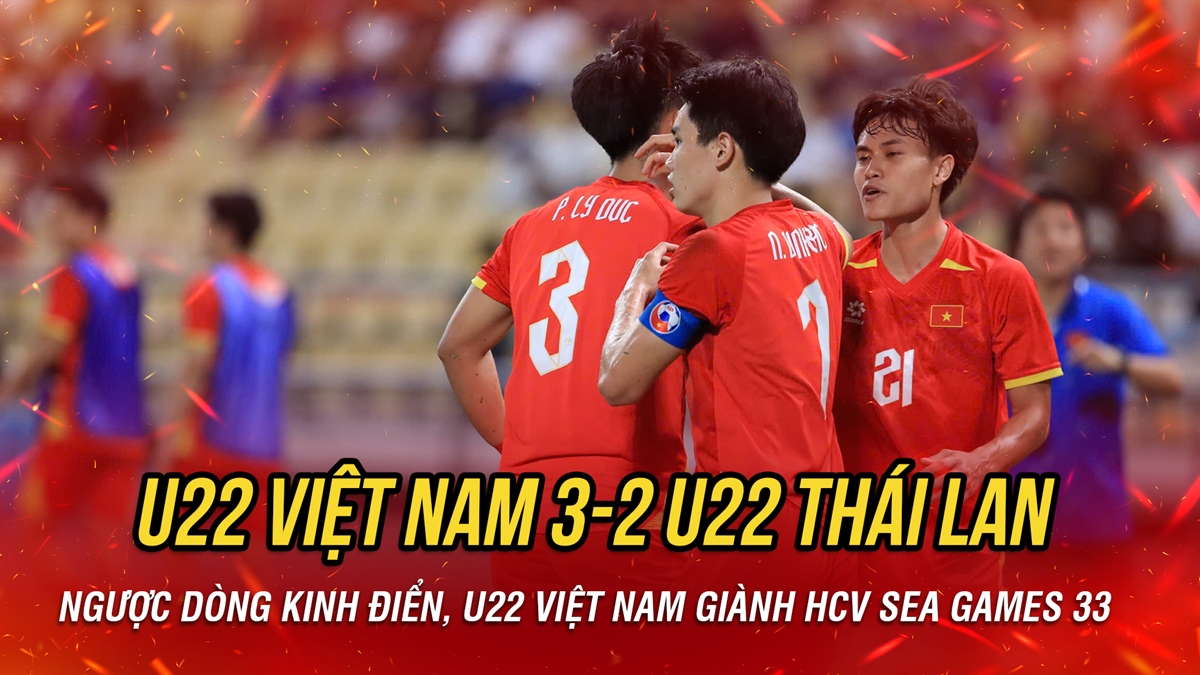
VOV.VN – Kết quả chung kết SEA Games 33: U22 Việt Nam thắng U22 Thái Lan sau trận đấu ngược dòng kịch tính và giành HCV một cách thuyết phục.
Kết quả chung kết SEA Games 33: U22 Việt Nam thắng U22 Thái Lan sau trận đấu ngược dòng kịch tính và giành HCV một cách thuyết phục.
U22 Việt Nam khởi đầu trận chung kết bóng đá nam SEA Games 33 khá tốt với những pha lên bóng nhịp nhàng, đẩy được đối thủ về sân nhà trong khoảng 10 phút đầu. U22 Thái Lan cũng thận trọng và không dám dâng cao đội hình.
Tuy vậy, bước ngoặt lại đến ở phút 19. Trong một tình huống không quá nguy hiểm, Quốc Cường phạm lỗi với cầu thủ Thái Lan ở khoảng cách tầm 27m. Burapha bước lên thực hiện cú sút phạt đẳng cấp tung lưới thủ môn Trung Kiên.
Mr.Hunter Lê Khắc Ngọ, nghi phạm cầm đầu đường dây lừa đảo hơn 5.300 tỉ đồng cùng Mr.Pips, đã bị dẫn độ từ Philippines về nước.
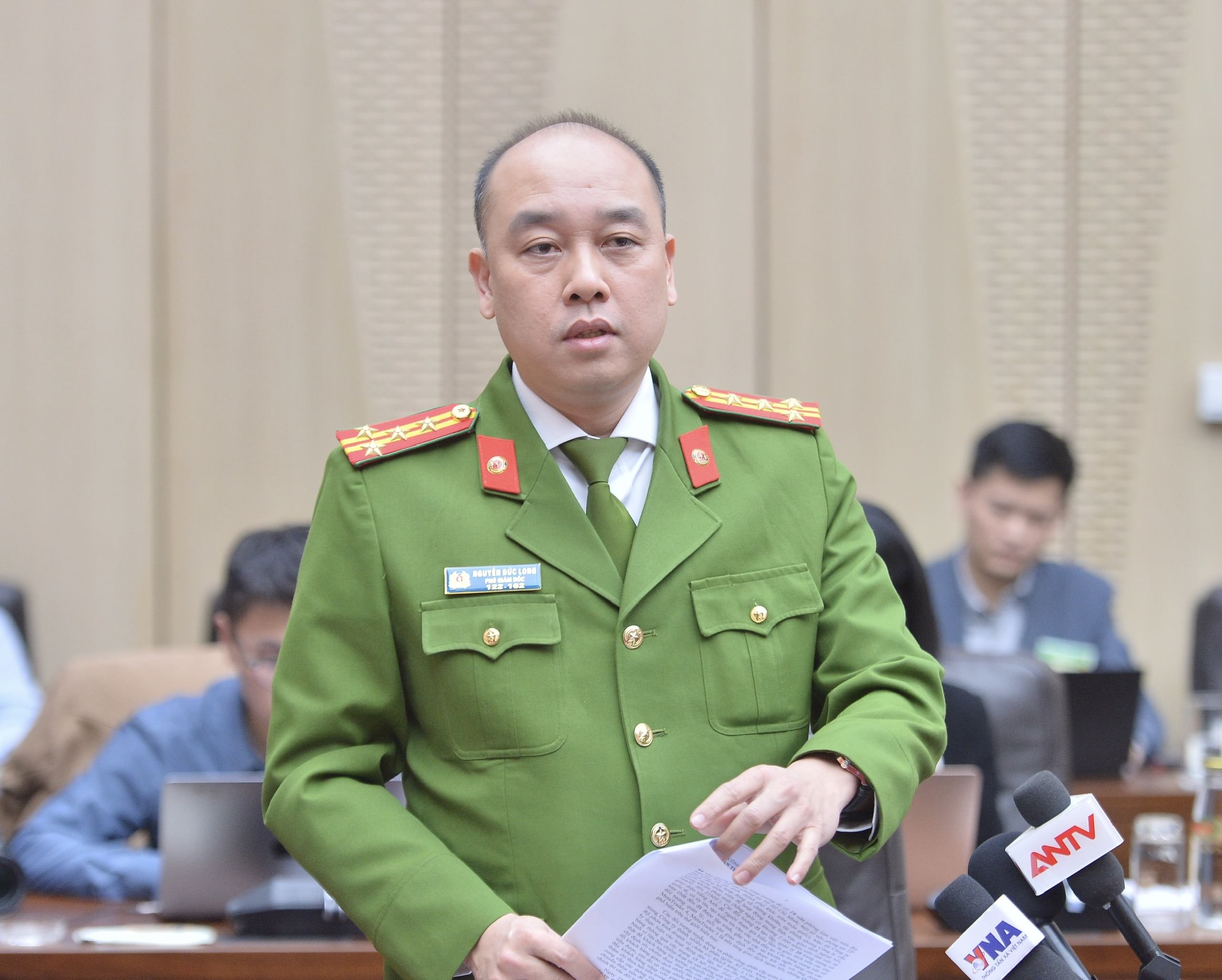
Chiều 15.12, tại họp báo thông tin tình hình, kết quả công tác công an năm 2025 do Bộ Công an tổ chức, đại tá Nguyễn Đức Long, Phó giám đốc Công an Hà Nội, cho biết Lê Khắc Ngọ (tức Mr.Hunter) sau khi bỏ trốn khỏi Việt Nam đã sang Campuchia.
Tháng 9 vừa qua, Ngọ bị cảnh sát Philippines bắt do nhập cảnh trái phép.
Đại tá Nguyễn Văn Long, Phó giám đốc Công an Hà Nội, thông tin về việc dẫn độ Mr.Hunter
Mr.Hunter Lê Khắc Ngọ bị dẫn độ về Việt Nam
Theo đại tá Long, sau khi phối hợp cùng Văn phòng Cơ quan Cảnh sát điều tra Bộ Công an làm các thủ tục, ngày 13.12, công an đã dẫn độ Ngọ về nước.
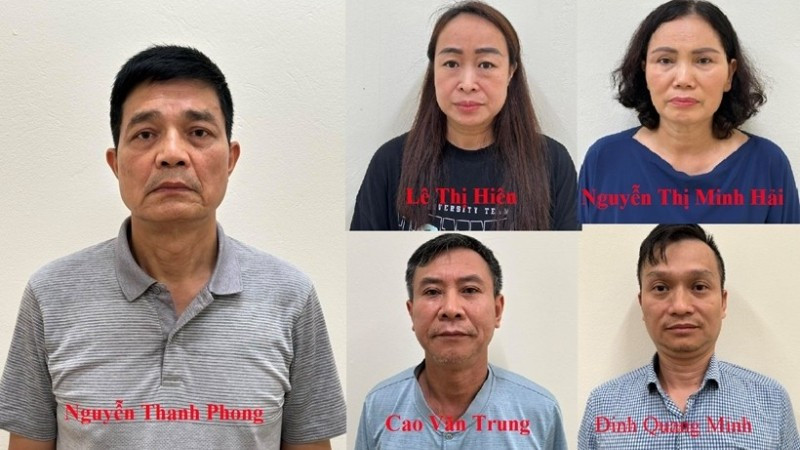
Viện Kiểm sát nhân dân tối cao (Vụ 3) đã hoàn tất cáo trạng truy tố cựu Cục trưởng Cục An toàn thực phẩm Nguyễn Thanh Phong và 54 bị can trong vụ án “Đưa hối lộ, nhận hối lộ” xảy ra tại Cục An toàn thực phẩm (Bộ Y tế) và các doanh nghiệp liên quan trên địa bàn thành phố Hà Nội và các tỉnh, thành trên toàn quốc.
Một số bị can bị Viện Kiểm sát nhân dân tối cao truy tố. (Nguồn: Bộ Công an)
Cụ thể, Viện Kiểm sát nhân dân tối cao truy tố 30 bị can về tội “Nhận hối lộ”, quy định tại điểm a khoản 4 Điều 354 Bộ luật Hình sự gồm: Nguyễn Thanh Phong, cựu Cục trưởng Cục An toàn thực phẩm; Trần Việt Nga, cựu Cục trưởng Cục An toàn thực phẩm và 28 bị can khác là Phó Cục trưởng, cấp trưởng phòng, chuyên viên thuộc Cục An toàn thực phẩm.
I fortunately have a chance to talk to quite many foreigners whom shared with me good stories about my country. Here are things they’ve talked about the most, and probably are what Vietnam is famous for. Feel free to correct me if something is missing. Tiếp tục đọc “What is the country of Vietnam famous for?”→
Sang is one of hundreds of thousands of unwanted and discriminated children left behind by the US soldiers after the Vietnam War. When his lifelong dream of finding his father comes true, Sang’s only mission is to race against time to meet his ailing dad and break the cycle of war trauma that has plagued generations. Tiếp tục đọc “A man’s 50-year search for his father after the Vietnam War”→
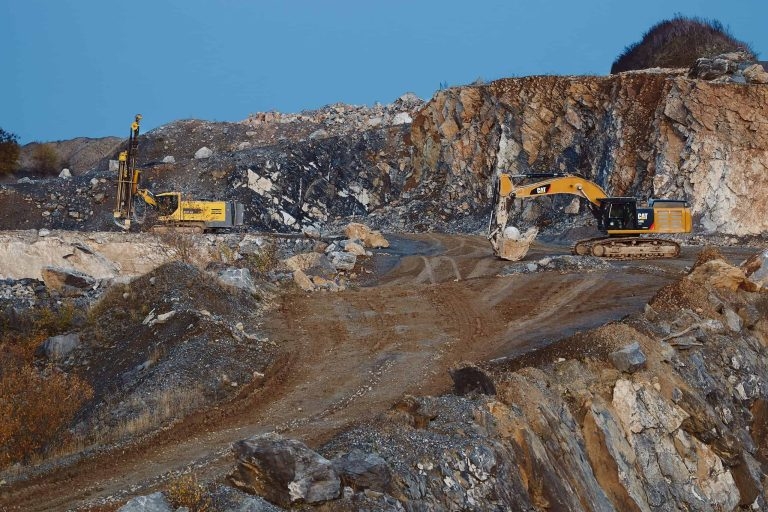
Luật sửa đổi, bổ sung một số điều của Luật Địa chất và khoáng sản khẳng định đất hiếm là khoáng sản chiến lược đặc biệt. Việc thăm dò, khai thác, chế biến phải được kiểm soát chặt chẽ, không xuất khẩu thô khoáng sản đất hiếm. Chỉ các doanh nghiệp, tổ chức được Nhà nước chỉ định hoặc cho phép mới được quyền thăm dò, khai thác, chế biến và sử dụng đất hiếm. Hoạt động chế biến sâu đất hiếm phải gắn với xây dựng hệ sinh thái công nghiệp hiện đại để nâng cao chuỗi giá trị trong nước…
Chỉ các doanh nghiệp, tổ chức được Nhà nước chỉ định hoặc cho phép mới được quyền thăm dò, khai thác, chế biến và sử dụng đất hiếm. Ảnh minh họa
Tiếp tục chương trình Kỳ họp thứ 10, ngày 11/12, Quốc hội biểu quyết thông qua Luật sửa đổi, bổ sung một số điều của Luật Địa chất và khoáng sản với đa số đại biểu có mặt tán thành.
Trước khi Quốc hội thông qua, Bộ trưởng Bộ Nông nghiệp và Môi trường Trần Đức Thắng, thừa ủy quyền của Thủ tướng Chính phủ báo cáo giải trình, tiếp thu, chỉnh lý dự thảo Luật sửa đổi, bổ sung một số điều của Luật Địa chất và khoáng sản. Theo đó, Chính phủ đã tiếp thu và phối hợp với các cơ quan có liên quan rà soát, chỉnh lý, hoàn thiện dự thảo về các vấn đề bảo đảm tính thống nhất, đồng bộ của hệ thống pháp luật, quy định đầy đủ các trường hợp chuyển tiếp và một số vấn đề cụ thể khác.
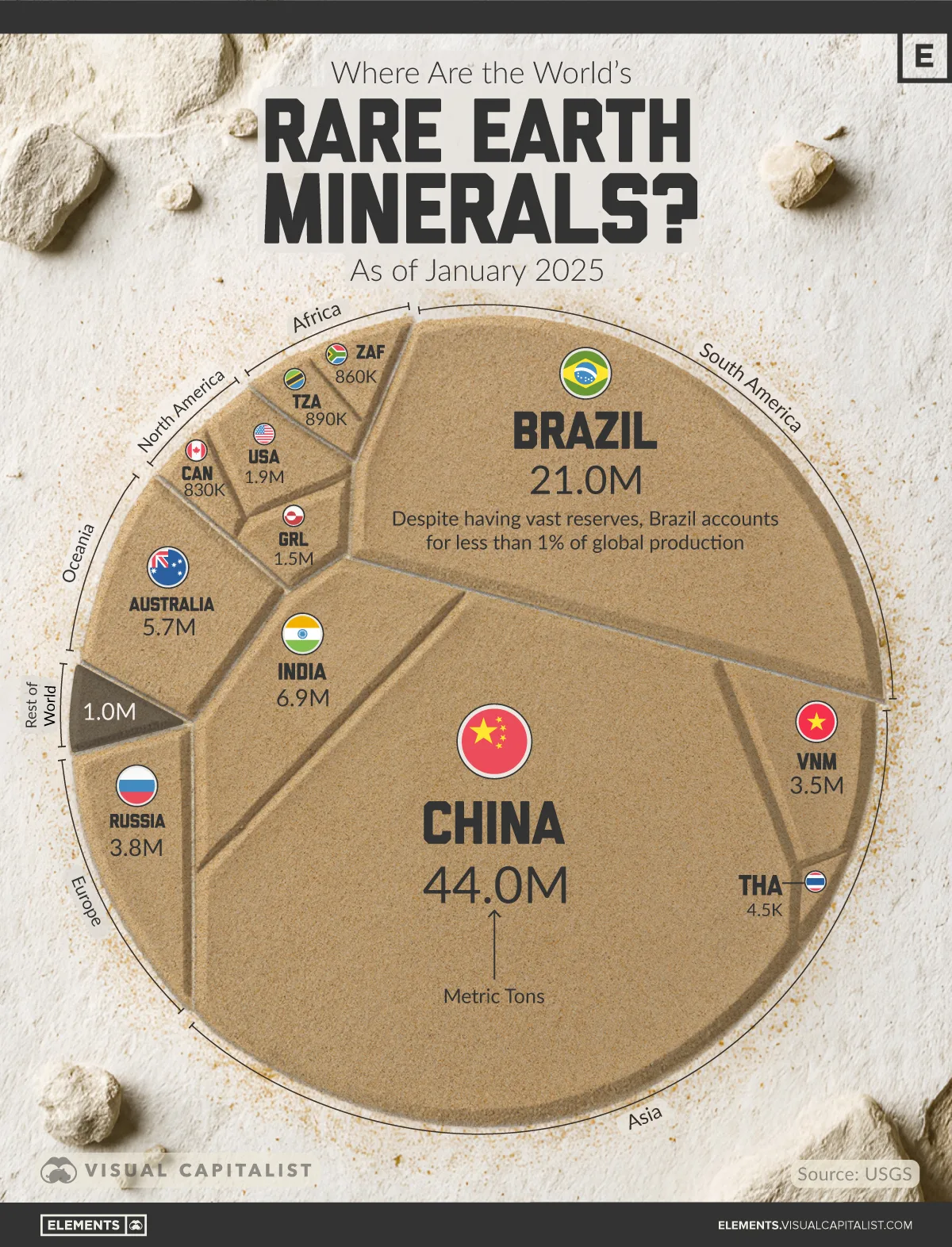
China accounts for nearly half of global rare earth reserves (44M of 92M metric tons).
Brazil ranks second (21M tons), while the U.S. holds 1.9M tons—about 2% of the total.
Rare earth elements (REEs) are the backbone of modern technology, from EV motors and wind turbines to smartphones and precision-guided systems.
This map breaks down where the world’s known rare earth reserves are located in 2025, highlighting how concentrated they are across a handful of countries.
The distribution is highly uneven. China alone holds nearly half of the global total, followed by Brazil’s sizable deposits. By contrast, many advanced economies have limited reserves.
China leads with 44.0 million metric tons, about 48% of the world total of 91.9 million metric tons. Brazil is a clear second at 21.0 million tons (23%), reflecting large ionic clay and hard-rock deposits that are still early in development.
30 years teaching Southeast Asian history at the university level.7y
No. It’s never been easy to invade Vietnam, at least successfully. China has done so numerous times over the millennia. The Chams did it. The French did it. The Americans did it. The Vietnamese fought back, and when the dust had cleared, the Vietnamese are still here, and the invaders are gone.
Why on earth would you (or anyone else) think that invading Vietnam was something to be considered? Just what is your problem?
(Chinhphu.vn) – Sáng 11/12, với đa số đại biểu tán thành (438/444), Quốc hội đã chính thức thông qua Luật Tòa án chuyên biệt tại Trung tâm Tài chính quốc tế.
11/12/2025
Chánh án Tòa án nhân dân tối cao Nguyễn Văn Quảng
Luật Tòa án chuyên biệt tại Trung tâm Tài chính quốc tế có hiệu lực thi hành từ 1/1/2026. Luật này áp dụng đối với Tòa án chuyên biệt, thành viên Trung tâm tài chính quốc tế, nhà đầu tư, cơ quan, tổ chức, cá nhân có liên quan đến việc giải quyết vụ việc thuộc thẩm quyền của Tòa án chuyên biệt.
Tòa án chuyên biệt tại Trung tâm Tài chính quốc tế là tòa án thuộc hệ thống Tòa án nhân dân được tổ chức, hoạt động theo quy định của Luật này, có thẩm quyền xét xử, giải quyết các vụ việc tại Trung tâm tài chính quốc tế.
Luật quy định rõ việc thành lập Tòa án chuyên biệt đặt tại TPHCM.
International standards are proliferating, delivering major benefits to wealthy nations and big multinationals while leaving many developing countries behind, a new World Bank report shows.
Main Messages
Standards are the hidden foundations of prosperity. They are the shared rules that make plugs fit sockets, medicines work safely, and digital systems connect seamlessly. Standards embody collective knowledge, build trust, and enable economies to function efficiently. When they fail, markets fragment; when they work, prosperity follows.
For low- and middle-income countries, standards have never mattered more. Nearly 90 percent of world trade is now shaped by nontariff measures, most linked to standards. From digital systems for payment to charging stations for electric vehicles, new technologies can deliver economywide benefits only when standards exist. Mastering them can enhance national competitiveness and protect against technological, financial, and environmental risks.
Standards are a versatile tool of economic policy.Governments can use voluntary standards to drive innovation and give technical guidance on compliance with regulations. They can also make them mandatory when uniform compliance is necessary to protect health, safety, or the environment. In addition, governments can deploy standards as an instrument of industrial policy without reference to specific technologies or firms.
Ambition must match capacity.Countries should follow a trajectory that takes into account their stage of economic development, first adapting international standards to local realities when needed, then aligning with them as institutions mature, and actively participating in authoring standards in priority areas as capabilities grow. Rwanda’s Zamukana Ubuziranenge (“Grow with Standards”) program exemplifies this path, helping micro, small, and medium enterprises progress step by step towards compliance with international standards.
Investing in quality-enhancing infrastructure makes standards work well. The system of testing, certification, metrology, and accreditation in a country is what makes standards effective. Such systems are expensive to build and easy to neglect. Countries should start with public provision of quality-enhancing services in key sectors, then gradually open these services up to private participation. In many places, capacity gaps are stark: Ethiopia has fewer than 100 accredited auditors for compliance with standards of the International Organization for Standardization (ISO), compared with 12,000 in Germany.
To make standards a springboard for development, countries should do the following:
Create incentives for firms to upgrade the quality of their exports rather than imposing unrealistic mandates.
Adapt and sequence standards to align with the national capacity to enforce them.
Participate actively in international forums for setting standards.
Invest in and share quality infrastructure resources regionally.
The global community, for its part, must do the following:
Support participation by low- and middle-income countries in developing international standards and design tiered standards that reflect diverse capacities among countries.
Deepen regulatory cooperation and reduce fragmentation.
Develop credible standards for emerging technologies and actions to prevent or mitigate climate change.
Expand research and data on the economic and social impacts of standards.
Standards matter for development. Countries that take them seriously are getting ahead. Countries that ignore them risk falling behind.
Lakan Araw, Studied Filipino Language Arts (Graduated 2025), Updated 4y. QUORA
[ From all the articles I’ve written regarding SE Asian economics, here’s how I will arrange the top 5 SE Asian countries that I think will have the most productivity in the next 20 years ]
Viet Nam
Indonesia
Philippines
Laos
Myanmar
Viet Nam has been busy at work lately in the past few years. They focus mainly on manufacturing and exports. The country started off late, but it has picked up its pace very quickly compared to its other neighbors, and its economy is rapidly transforming.
Anh Phan Khắc Hồng một chủ doanh nghiệp ở Khánh Hòa, người đã chuyển đổi hàng trăm hecta đồn điền keo độc canh sang rừng tái sinh đa loài, đa tầng. Với một tinh thần: chuyển sang dưỡng rừng đa loài là con đường tất yếu, con đường lợi về cả về chi phí tài chính lẫn sinh thái.
The world does not understand North Korea. The only nation that understands North Korea is Vietnam.
North Korea and Vietnam went through the same experience.
Both tried to unite the country. Vietnam succeeded but North Korea failed. History is written by the winners. Vietnam is now hailed by the world as a brave and resilient people while North Korea is considered a pariah.
But Vietnam was also considered a pariah, isolated and considered as a threat. Until 1990s, it was sanctioned by the world. Southeast Asian nations such as Singapore and Thailand seriously considered Vietnam as a threat to regional peace. Vietnamese could import international goods through the black market only. People forget what this period was like. Called the rationing period, people were given food by the government, often only a few grams of meat. Today, there are themed restaurants in Hanoi that will take you through some of these memories:
There was a time when the government banned people writing love songs, because they make people weak. Does this sound familiar? However I dare say that without the heavy propaganda and iron fisted rule of North Vietnam, Vietnam would never be a united country today. Believe it or not, psychology is a very powerful thing.
Ultimately both North Korea and Vietnam wanted to unite the country. South Korea and South Vietnam are and were pro American governments set up to strengthen American power in the region. South Korea was also very corrupted and disfunctional, just like South Vietnam. However its government was overthrown and replaced by the dictatorship of Park Sunghye, who implemented economic strategies to turn it into a regional power.
North Korea does not trust China, just like Vietnam. That is why they removed Chinese soldiers in North Korea right after the war. Both North Korea and Vietnam have the same kind of historical relationship with China. Despite having to rely on China, Kim Jong Un is visibly rebelling against China . China has a very hard time controlling what North Korea does. And the only nation that understands this act of balancing is Vietnam.
Another thing people don’t understand is the unique culture of this region, historically influenced by ancient Chinese practices. Historically people seriously worshipped the leaders. The Kings or Emperors were considered sons of heaven. And they reached this position usually because they have defeated a foreign power or have done something heroic. Vietnamese love and respect Ho Chi Minh since he liberated Vietnam from French colonialism. There are temples for every historic heroes in Vietnam and people lit incense for them every year. Most foreigners can not understand this concept. They think the Kim’s family is a cult. Well I’m not in the position to say this is true or not. However from the Vietnamese perspective, I can understand where they are coming from.
North Korea is like Vietnam in the 80s and 90s, struggling to be accepted and struggling to push the country forward. Its people are suffering unnecessarily with economic sanction. People are demonizing it out of fear. However it’s because they just don’t understand it.
North Korea naturally feels at ease and sees Vietnam as a model, more than China.
Even in the recent US North Korea Summit, you could see it in Kim Jong Un’s body language. He was much more relaxed and happy when beginning his official visit to Vietnam than with either US or China.







 CVD
CVD 