Làn sóng tự động hóa: Chúng ta cần chuẩn bị gì ?

Tiasang – Thu Quỳnh

Việt Nam cần cả nguồn lực lao động có kỹ năng cao và năng lực công nghệ để vượt qua ngã rẽ mới về tự động hóa và dịch chuyển lên nấc cao hơn trong chuỗi sản xuất công nghiệp. Nhưng chúng ta đang thiếu cả hai.

Nguồn ảnh: jobsgo.vn/

Làn sóng tự động hóa và trí tuệ nhân tạo trong thời gian gần đây khiến cuộc cách mạng lần thứ tư thực sự đến gần. Nếu như ở các cuộc cách mạng công nghiệp trước đây, chủ yếu chỉ có lao động tay chân, làm công việc giản đơn lặp đi lặp lại mới bị thay thế thì cuộc cách mạng công nghiệp lần này sẽ còn lấy đi cả các công việc vận hành máy móc, văn phòng. Dù mới ở buổi mình minh của trí tuệ nhân tạo, những ví dụ điển hình như ChatGPT có khả năng trả lời lưu loát như người, có tiềm năng ứng dụng trở thành trợ lý ảo, tích hợp vào những ứng dụng văn phòng cho đến AI thiết kế nhanh chóng như Midjourney, Dall.E cho công chúng thấy rõ ràng hơn về cách một ứng dụng trí tuệ nhân tạo có thể thay thế lao động “cổ cồn trắng”.

Trên thế giới đã có nhiều ước tính về tác động của những công nghệ đơn lẻ dạng trợ lý ảo AI như ChatGPT và AI nói chung đến năng suất lao động, thị trường lao động. Ngay sau khi ChatGPT – 3 xuất hiện trên thị trường, đã có ước tính1, chỉ riêng ChatGPT có thể hỗ trợ 80% lao động ở Mỹ xử lý 10% công việc hằng ngày, và 20% sử dụng ChatGPT để xử lý tới 50% công việc hằng ngày. Ước tính, đến 2030, năng suất trên toàn cầu có thể tăng lên 14% so với 2016 nhờ AI (mức tăng bằng quy mô sản xuất của cả Trung Quốc và Ấn Độ hiện nay cộng lại)2.

Việt Nam có thể được hưởng lợi từ làn sóng này?

Tiếp tục đọc “Làn sóng tự động hóa: Chúng ta cần chuẩn bị gì ?”

Europe’s most powerful nuclear reactor kicks off in Finland

By JARI TANNER

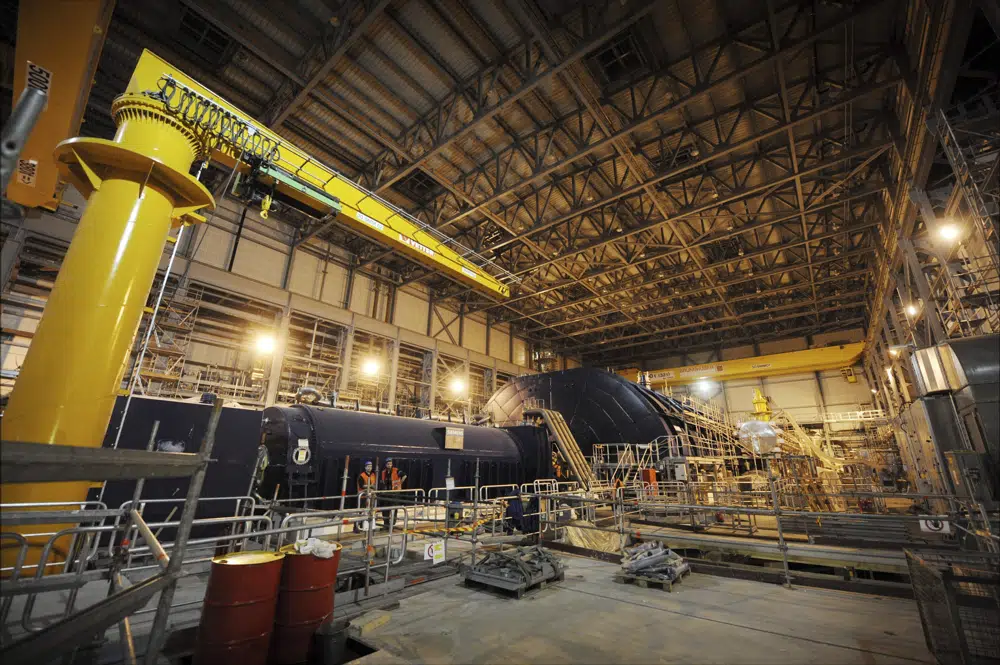
FILE - The turbine hall of the nuclear power plant Olkiluoto 3 'OL3' is pictured under construction in Eurajoki, south-western Finland, March 23, 2011. Finland’s much-delayed and costly new nuclear reactor, Europe's most powerful by production capacity, has completed a test phase lasting over a year and started regular output, boosting the Nordic country’s electricity self-sufficiency significantly. The Olkiluoto 3 reactor, which has 1,600-megawatt capacity, was connected into the Finnish national power grid in March 2022 and kicked off regular production on Sunday, April 16, 2023. (AP Photo/Lehtikuva, Antti Aimo-Koivisto, File)

FILE – The turbine hall of the nuclear power plant Olkiluoto 3 ‘OL3’ is pictured under construction in Eurajoki, south-western Finland, March 23, 2011. Finland’s much-delayed and costly new nuclear reactor, Europe’s most powerful by production capacity, has completed a test phase lasting over a year and started regular output, boosting the Nordic country’s electricity self-sufficiency significantly. The Olkiluoto 3 reactor, which has 1,600-megawatt capacity, was connected into the Finnish national power grid in March 2022 and kicked off regular production on Sunday, April 16, 2023. (AP Photo/Lehtikuva, Antti Aimo-Koivisto, File)

HELSINKI (AP) — Finland’s much-delayed and costly new nuclear reactor, Europe’s most powerful by production capacity, has completed a test phase lasting more than a year and started regular output, boosting the Nordic country’s electricity self-sufficiency significantly.

The Olkiluoto 3 reactor, which has 1,600-megawatt capacity, was connected into the Finnish national power grid in March 2022 and kicked off regular production on Sunday. Operator Teollisuuden Voima, or TVO, tweeted that “Olkiluoto 3 is now ready” after a delay of 14 years from the original plan.

Tiếp tục đọc “Europe’s most powerful nuclear reactor kicks off in Finland”

Cuộc đua Liên vận quốc tế bằng đường sắt giữa Việt Nam và Lào, Thái Lan

An Thanh 08:01 11/02/2023

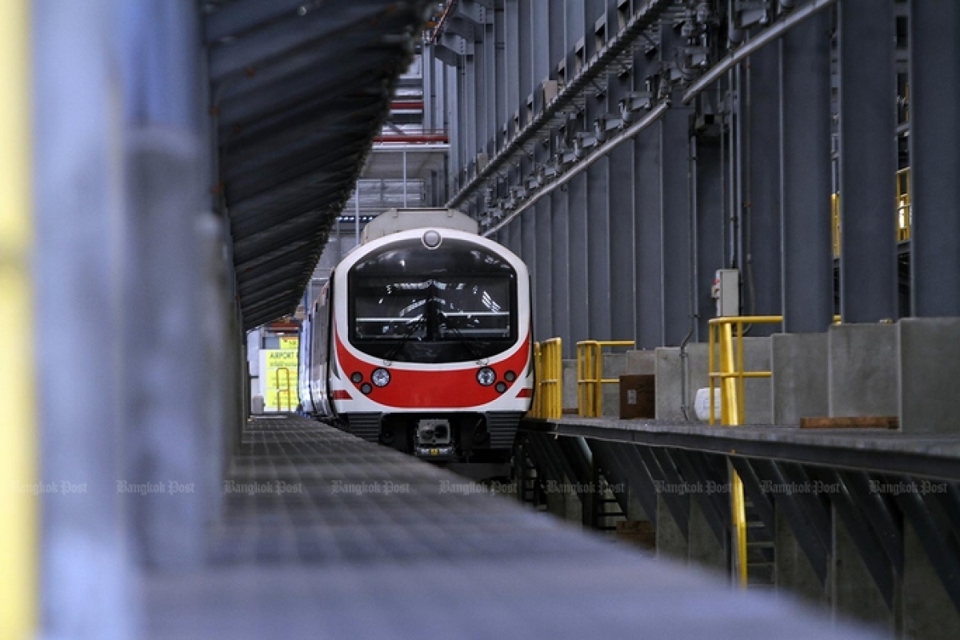
Kinhtedothi Ngày 7/2, đoàn tàu chở 19 container lạnh chứa khoảng 280 tấn rau tươi đã rời Côn Minh, (Vân Nam, Trung Quốc) đã đến thủ đô Bangkok của Thái Lan sau hành trình dài 55 giờ. Chiều về, đoàn tàu Liên vận quốc tế sẽ chở hoa quả Thái Lan nhập vào Trung Quốc.

Ngày 7/2/2023 đoàn tàu chở 19 container lạnh chứa khoảng 280 tấn rau tươi đã rời Côn Minh, (Vân Nam, Trung Quốc) đã đến thủ đô Bangkok của Thái Lan. Ảnh: The Bangkok Post.

Đã từ lâu vận tải đường sắt luôn được xem là giải pháp quan trọng để giảm giá thành hàng hóa xuất khẩu. Sau 5 năm thi công, tuyến đường sắt tốc độ cao Lào – Trung quốc, dài 414 km từ thị trấn biên giới Boten giáp Vân Nam tới thủ đô Vientiane đã đi vào hoạt động từ cuối năm 2021. Mới đây, tuyến đường sắt này đã được nối với đường sắt Thái Lan, tạo nên cuộc đua liên vận quốc tế (LVQT) trong tương lai hứa hẹn quyết liệt.

Tiếp tục đọc “Cuộc đua Liên vận quốc tế bằng đường sắt giữa Việt Nam và Lào, Thái Lan”

“Tiếng Việt từ TK 17: cách dùng Mỵ (Mị) Chu, Diễn Chu, bồ cu, bồ câu … Bùi Chu” (phần 39)

      Nguyễn Cung Thông [1]

Phần này bàn về tên gọi (nhân danh) như Mỵ (Mị) Chu, địa danh như Giao Chu (Châu), Diễn Chu, Bùi Chu và bồ cu, bồ câu … từ thời LM de Rhodes và các giáo sĩ Tây phương sang Á Đông truyền đạo. Đây là lần đầu tiên cách dùng này hiện diện trong tiếng Việt qua dạng con chữ La Tinh/Bồ (chữ quốc ngữ), điều này cho ta dữ kiện để xem lại một số cách đọc chính xác hơn cùng với chữ Nôm.

Tài liệu tham khảo chính của bài viết này là các tài liệu chép tay của LM Philiphê Bỉnh (sđd) và bốn tác phẩm của LM de Rhodes soạn: (a) cuốn Phép Giảng Tám Ngày (viết tắt là PGTN), (b) Bản Báo Cáo vắn tắt về tiếng An Nam hay Đông Kinh (viết tắt là BBC), (c) Lịch Sử Vương Quốc Đàng Ngoài 1627-1646 và (d) tự điển Annam-Lusitan-Latinh (thường gọi là Việt-Bồ-La, viết tắt là VBL) có thể tra tự điển này trên mạng, như trang http://books.google.fr/books?id=uGhkAAAAMAAJ&printsec=frontcover#v=onepage&q&f=false. Các chữ viết tắt khác là Nguyễn Cung Thông (NCT), Hán Việt (HV), Việt Nam (VN), ĐNA (Đông Nam Á), LM (Linh Mục), CG (Công Giáo), PG (Phật Giáo), TVGT (Thuyết Văn Giải Tự/khoảng 100 SCN), NT (Ngọc Thiên/543), ĐV (Đường Vận/751), NKVT (Ngũ Kinh Văn Tự/776), LKTG (Long Kham Thủ Giám/997), QV (Quảng Vận/1008), TV (Tập Vận/1037/1067), TNAV (Trung Nguyên Âm Vận/1324), CV (Chính Vận/1375), TVi (Tự Vị/1615), VB (Vận Bổ/1100/1154), VH (Vận Hội/1297), LT (Loại Thiên/1039/1066), CTT (Chính Tự Thông/1670), TViB (Tự Vị Bổ/1666), TTTH (Tứ Thanh Thiên Hải), KH (Khang Hi/1716), P (tiếng Pháp), A (tiếng Anh), L (tiếng La Tinh), VNTĐ (Việt Nam Tự Điển/Hội Khai Trí Tiến Đức), TNNL (Thiên Nam Ngữ Lục) …v.v… Kí viết là ký (tên người, tên sách) và trang/cột/tờ của VBL được trích lại từ bản La Tinh để người đọc tiện tra cứu thêm. Tương quan Hán Việt ghi nhận trong bài không nhất thiết khẳng định nguồn gốc của các từ liên hệ (có gốc Việt cổ hay Hán cổ).  

[1] Nghiên cứu ngôn ngữ độc lập ở Melbourne (Úc) – email nguyencungthong@yahoo.com

ABD launches South, Southeast Asia clean transition fund

Alongside the GEAPP, the bank will support projects in India, Indonesia, Vietnam, Pakistan, and Bangladesh

 14 April 2023  Other News[Image: Peter Franken/Unsplash] Renews.biz

RELATED STORIES

European Commission launches green industrial plan1 FEBRUARY 2023NZ investor sets up Singapore clean power arm10 SEPTEMBER 2021Asia Pacific renewables ‘cheaper than coal by 2030’26 NOVEMBER 2020Macquarie unveils 20GW clean power push25 SEPTEMBER 2019Swiss fund eyes green Asia11 JULY 2017

The Asian Development Bank (ADB) and the Global Energy Alliance for People and Planet (GEAPP) have launched a new capital fund to accelerate clean energy access and transitions in countries across South and Southeast Asia including India, Indonesia, Vietnam, Pakistan, and Bangladesh.

GEAPP will provide an initial US$35m of catalytic capital towards the fund, which will be established and administered by ADB. 

With this partnership ADB and GEAPP aim to address the challenges of climate change and energy access and transition in Asia and beyond.

Tiếp tục đọc “ABD launches South, Southeast Asia clean transition fund”

Germany bids farewell to its last nuclear plants, eyes hydrogen future

By FRANK JORDANStoday

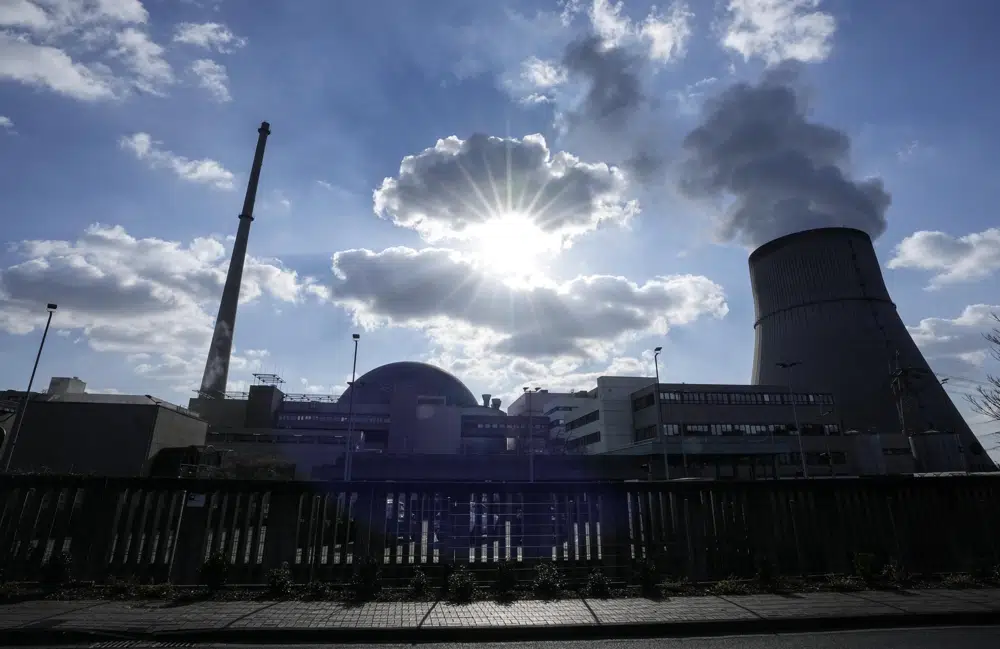
FILE - Water vapor rises from the RWE nuclear power plant Emsland in Lingen, western Germany, March 18, 2022. Germany is shutting down this nuclear power plant and two others on Saturday, April, 2023, as part of an energy transition agreed by successive governments. (AP Photo/Martin Meissner, File)

FILE – Water vapor rises from the RWE nuclear power plant Emsland in Lingen, western Germany, March 18, 2022. Germany is shutting down this nuclear power plant and two others on Saturday, April, 2023, as part of an energy transition agreed by successive governments. (AP Photo/Martin Meissner, File)

LINGEN, Germany (AP) — For 35 years, the Emsland nuclear power plant in northwestern Germany has reliably provided millions of homes with electricity and many with well-paid jobs in what was once an agricultural backwater.

Now, it and the country’s two other remaining nuclear plants are being shut down. Germany long ago decided to phase out both fossil fuels and nuclear power over concerns that neither is a sustainable source of energy.

Tiếp tục đọc “Germany bids farewell to its last nuclear plants, eyes hydrogen future”

Global Electricity Review 2023

Ember-climate.org

Wind and solar reached a record 12% of global electricity in 2022, and power sector emissions may have peaked.

Malgorzata Wiatros-Motyka

Senior Electricity Analyst

12 April 2023 | 85 min read

Ember’s fourth annual Global Electricity Review aims to provide the most transparent and up-to-date overview of changes in global electricity generation in 2022 and a realistic summary of how “on track” the electricity transition is for limiting global heating to 1.5 degrees.

The report analyses electricity data from 78 countries representing 93% of global electricity demand and includes estimated changes in the remaining generation. It also dives deeper into the top ten CO2 emitting countries and regions, accounting for over 80% of global CO2 emissions.

We make all of the data freely accessible to empower others to do their own analysis and help speed the switch to clean electricity. Use our Data Explorer to find out more.

Thank you to all of the contributors at Ember and to the peer reviewers on the Advisory Board.

Download report >>

Global Electricity Review 2023

Wind and solar reached a record 12% of global electricity in 2022, and power sector emissions may have peaked.

Malgorzata Wiatros-Motyka

Senior Electricity Analyst

12 April 2023 | 85 min read

Avail

About

Ember’s fourth annual Global Electricity Review aims to provide the most transparent and up-to-date overview of changes in global electricity generation in 2022 and a realistic summary of how “on track” the electricity transition is for limiting global heating to 1.5 degrees.

The report analyses electricity data from 78 countries representing 93% of global electricity demand and includes estimated changes in the remaining generation. It also dives deeper into the top ten CO2 emitting countries and regions, accounting for over 80% of global CO2 emissions.

We make all of the data freely accessible to empower others to do their own analysis and help speed the switch to clean electricity. Use our Data Explorer to find out more.

Thank you to all of the contributors at Ember and to the peer reviewers on the Advisory Board.

Executive summary

Wind and solar reach a record 12% of global electricity in 2022

As soon as 2023, wind and solar could push the world into a new era of falling fossil generation, and therefore of falling power sector emissions.

The global electricity sector is the first sector that needs to be decarbonised, in parallel with electricity demand rising, as electrification unlocks emissions cuts throughout the entire economy. The IEA Net Zero Emissions scenario points to a 2040 net zero power sector; ten years ahead of a net zero economy in 2050. Tracking the electricity transition, therefore, is critical to assess our climate progress.

The decarbonisation of the power sector is underway, as record growth in wind and solar drove the emissions intensity of the world’s electricity to its lowest ever level in 2022. It will be an impressive moment when power sector emissions begin to fall year-on-year, but the world is not there yet, and emissions need to be falling fast.

  • 01 Electricity at its cleanest, as wind and solar generate 12% of global power. The carbon intensity of global electricity generation fell to a record low of 36 gCO2/kWh in 2022, the cleanest-ever electricity. This was due to record growth in wind and solar, which reached a 12% share in the global electricity mix, up from 10% in 2021. Together, all clean electricity sources (renewables and nuclear) reached 39% of global electricity, a new record high. Solar generation rose by 24%, making it the fastest-growing electricity source for 18 years in a row; wind generation grew by 17%. The increase in global solar generation in 2022 could have met the annual electricity demand of South Africa, and the rise in wind generation could have powered almost all of the UK. Over sixty countries now generate more than 10% of their electricity from wind and solar. However, other sources of clean electricity dropped for the first time since 2011 due to a fall in nuclear output and fewer new nuclear and hydro plants coming online.
  • 02 Limited coal increase, gas plateaus. Power sector emissions rose in 2022 (+1.3%), reaching an all-time high. Electricity is cleaner than ever, but we are using more of it. Coal generation increased by 1.1%, in line with average growth in the last decade. The ‘coal power phasedown’ agreed at COP26 in 2021 may not have begun in 2022, but also the energy crisis didn’t lead to a major increase in coal burn as many feared. Gas power generation fell marginally (-0.2%) in 2022–for the second time in three years–in the wake of high gas prices globally. Gas-to-coal switching was limited in 2022 because gas was already mostly more expensive than coal in 2021. Only 31 GW of new gas power plants were built in 2022, the lowest in 18 years. But 2022 saw the lowest number of coal plant closures in seven years, as countries look to maintain back-up capacity, even as the transition picks up speed. 
  • 032022 may be “peak” power emissions. Wind and solar are slowing the rise in power sector emissions. If all the electricity from wind and solar instead came from fossil generation, power sector emissions would have been 20% higher in 2022. The growth alone in wind and solar generation (+557 TWh) met 80% of global electricity demand growth in 2022 (+694 TWh). Clean power growth is likely to exceed electricity demand growth in 2023; this would be the first year for this to happen outside of a recession. With average growth in electricity demand and clean power, we forecast that 2023 will see a small fall in fossil generation (-47 TWh, -0.3%), with bigger falls in subsequent years as wind and solar grow further. That would mean 2022 hit “peak” emissions. A new era of falling power sector emissions is close.

Download report >>

‘Lỗ hổng’ an toàn hàng không – 2 kỳ

‘Lỗ hổng’ an toàn hàng không: Kỳ 1 – Hãng khai thác vận chuyển hành khách thiếu giấy tờ tùy thân

ĐĐK – 11:02 07/04/2023 – NHÓM PVĐT

Nhiệm vụ đảm bảo an toàn hàng không là nhiệm vụ sống còn, là bộ phận quan trọng đặc biệt trong công tác đảm bảo an ninh quốc gia, giữ gìn trật tự xã hội của đất nước. Nhưng thực tế, phóng viên Báo Đại Đoàn Kết phát hiện hàng loạt đường dây hỗ trợ bay cho hành khách không giấy tờ tuỳ thân, gióng lên ‘hồi chuông’ báo động về ‘lỗ hổng’ an toàn hàng không.

Hành khách xếp hàng để kiểm tra giấy tờ tuỳ thân tại cửa kiểm soát trước khi lên máy bay tại sân bay Đà Nẵng.

Theo quy định, nếu không có giấy tờ tùy thân thì hành khách không đủ điều kiện lên máy bay nhưng qua đường dây hỗ trợ bay trên mạng, hành khách chỉ cần chuyển khoản đến các đại lý bán vé từ 1-3 triệu đồng sẽ được ‘tạo điều kiện’ bay nội địa trên các chuyến của các hãng hàng không: Vietnam Airlines, Bamboo Airways, Vietjet Airlines, Jetstar Pacific.

Tiếp tục đọc “‘Lỗ hổng’ an toàn hàng không – 2 kỳ”

Sunken village: After evictions, ethnic Vietnamese homes underwater

LAND AND ENVIRONMENT

VodEnglishBy Keat Soriththeavy and Fiona Kelliher

ROLEA BA’IER DISTRICT, Kampong Chhnang — Four years ago, Vuen Phouk Thoung was promised a plot of land in a new neighborhood and a garment factory job nearby. Now his home is submerged in floodwater so high he spends all day and night in a hammock suspended from the ceiling.

“I don’t know what to do now,” said Thoung, 35, as he sat cross-legged on the wooden plank he constructed to swim in and out of his house. “I’ll just live like this, here.”

Thoung lives on a 40-hectare site in Kampong Chhnang where about 150 ethnic Vietnamese families were relocated after being evicted from their floating homes on the Tonle Sap starting in 2018. Ethnic Vietnamese people number an estimated 400,000 in Cambodia, but many lack citizenship rights and are unable to own property or access public services, according to Minority Rights Group International.

Tiếp tục đọc “Sunken village: After evictions, ethnic Vietnamese homes underwater”

Mỗi tuần một chuyện: Tú Chinh không phải là trái chanh!

HUY THỌ – 10/04/2023 14:11 GMT+7

TTCT Chín ngày trước khai mạc SEA Games 31 trên sân nhà Việt Nam, “nữ hoàng tốc độ” Đông Nam Á Lê Tú Chinh phải bước vào phòng mổ tại Bệnh viện 175 để phẫu thuật đầu gối.

Ảnh: Phúc Phạm

Chín ngày trước khai mạc SEA Games 31 trên sân nhà Việt Nam, “nữ hoàng tốc độ” Đông Nam Á Lê Tú Chinh phải bước vào phòng mổ tại Bệnh viện 175 để phẫu thuật đầu gối. 

Với người bình thường, tâm trạng khi ấy sẽ khó thoát khỏi lo âu, buồn bã; nhưng với Chinh thì gương mặt lạnh như băng, bình thản.

Tiếp tục đọc “Mỗi tuần một chuyện: Tú Chinh không phải là trái chanh!”

ASEAN Taxonomy for Sustainable Finance – Version 2

asean.org

ASEAN FINANCE SECTORAL BODIES RELEASE ASEAN TAXONOMY FOR SUSTAINABLE FINANCE
VERSION 2
The ASEAN Taxonomy Board (ATB), representing ASEAN finance sectoral bodies, today took the next
step towards meeting the Paris Agreement commitments, with the release of the ASEAN Taxonomy
for Sustainable Finance Version 2 (Version 2). While the first version laid out the broad framework of
the ASEAN Taxonomy, Version 2 consists of the (a) complete Foundation Framework comprising
detailed methodologies for assessing economic activities; and (b) Technical Screening Criteria (TSC)
for the first focus sector ie Electricity, Gas, Steam and Air Conditioning Supply sector (Energy sector)
under the Plus Standard. TSCs for other focus sectors will be published in the subsequent versions of
the ASEAN Taxonomy. Version 2 builds on the conceptual thinking of the multi-tiered framework
outlined in Version 1. The multi-tiered framework is intended to facilitate transition of ASEAN Member
States (AMS) recognising the diversity in economic development, financial sector, and infrastructure
maturity.
Through the Foundation Framework which adopts a principles-based approach, users are now able to
qualitatively assess economic activities using guiding questions, decision trees and use cases for all
the four environmental objectives(EOs) and three essential criteria (EC). The environmental objectives
and essential criteria, as well as guiding questions that make up the Foundation Framework are
designed to be readily applicable to all AMS as well as stakeholders in the financial sector and business
enterprises. Using the guiding questions, activities are classified as Green, Amber or Red.
The Plus Standard adopts a more advanced assessment and methodology that is based on specific TSC
and science-based thresholds in classifying activities. To further encourage and recognise transition
efforts by businesses, the Plus Standard contains Amber Tier 2 and Amber Tier 3 classifications which
will be retired over time. This is in addition to the Green tier that is aligned with other relevant
international taxonomies and benchmarked to the 1.50C Paris Agreement target.
.
Version 2 also highlights the importance of social aspects in the Taxonomy, by incorporating it as the
ASEAN Taxonomy’s third EC, alongside “Do No Significant Harm” (DNSH) and “Remedial Measures to
Transition” (RMT). In combination with other features such as the expansion of the “Do No Significant
Harm” criteria, common building blocks are established to enable an orderly and just transition and
foster sustainable finance adoption by ASEAN countries.
In considering ASEAN’s specific circumstances, the Taxonomy recognises efforts to the early
retirement of coal-fired power plants. A global first for a regional taxonomy, the ATB has thoroughly
considered how and where coal phase-outs (CPOs) can play a role in decarbonisation in support of the
Paris Agreement goals and when approached correctly, provides a powerful tool for transition.

The ASEAN Taxonomy Version 2 can be found at the following websites: • Association of Southeast Asian Nations – https://asean.org/wpcontent/uploads/2023/03/ASEAN-Taxonomy-Version-2.pdf

Giữ chủ quyền trên cao nguyên đá – 6 kỳ

Giữ chủ quyền trên cao nguyên đá – Kỳ 1: Những liệt sĩ đầu tiên của BĐBP

TNMai Thanh Hải – 23/07/2022 09:38 GMT+7

Trên tuyến biên giới phía Bắc, tỉnh Hà Giang không chỉ xa xôi, cách trở, khó khăn, thiếu thốn mà còn khốc liệt trong việc bảo vệ chủ quyền. Rất nhiều máu xương đã đổ xuống cao nguyên đá. Riêng lực lượng bộ đội biên phòng (BĐBP) Hà Giang, từ năm 1979 đến nay, đã có gần 300 liệt sĩ, thương binh.

“Ngày 3.3.1959, Công an nhân dân vũ trang (CAVT, nay là Bộ đội biên phòng – BĐBP) được thành lập và chỉ vài tháng sau, 3 chiến sĩ CAVT đã hy sinh khi làm nhiệm vụ tiễu phỉ ở H.Đồng Văn (Hà Giang) và là những liệt sĩ đầu tiên của lực lượng BĐBP”, thượng tá, cựu chiến binh, thương binh Hoàng Văn Tựt (82 tuổi) kể.

Cán bộ chiến sĩ đồn Biên phòng Xín Cái (Mèo Vạc, Hà Giang) tuần tra địa bàn băng giá khắc nghiệt mùa đông – ĐỘC LẬP

Tiếp tục đọc “Giữ chủ quyền trên cao nguyên đá – 6 kỳ”

International Arbitration Yearbook 2022-2023


Welcome to the 16th edition of the “Baker McKenzie International Arbitration Yearbook.” We are pleased to bring you our analysis of notable developments in international arbitration over the past year from over 45 jurisdictions worldwide.

As with the editions before it, the 2022-2023 Yearbook looks at important legislative and case law updates from each jurisdiction. This includes:

• New arbitral rules from major institutions including the AAA, CAM-CCBC, CEPANI, DIAC and the SCC
• The ongoing reform of arbitration legislation to reflect international best practice, with recent developments in Italy, Japan, Luxembourg, the United Kingdom and Vietnam
• The continued effects of the European Court of Justice’s decision in Achmea
• The decision of a number of European states to withdraw from the Energy Charter Treaty and the accession of new parties to the ICSID convention
• The latest case law on the recognition and enforcement of foreign arbitral awards under the New York Convention, which has now been ratified in 172 jurisdictions worldwide
• New requirements from several institutions to disclose the sources of third-party funding, and the expansion of financing options for arbitration parties in Hong Kong

In this year’s edition we have introduced a new chapter on the arbitration framework in the OHADA area, which includes 17 African states.

I trust you will find our coverage of these, and many other important topics, to be of interest. Such breadth of coverage is only possible because of Baker McKenzie’s truly global presence. Our international arbitration team is the largest, busiest and most ranked arbitration team in the world and is ranked in the top 10 arbitration teams globally by Global Arbitration Review. With over 200 practitioners, we have acted in more hearings than any other firm, in every major center, allowing us to offer unrivaled insights into the state of arbitration right across the globe.

Finally, we extend our thanks to Ben Roe, Markus Altenkirch and Maria Barros Mota, to our editorial team Cathy Keegan, Sarah Fox and Paul Allanigue, and to our vast network of colleagues and friends who have contributed to this international team effort.

Ed Poulton
Global Chair, International Arbitration

Tiếp tục đọc “International Arbitration Yearbook 2022-2023”

Why do Jerusalem tensions fuel regionwide unrest?

yesterday, April7, 2023 AP

Muslim worshippers perform Friday prayers outside the Dome of Rock Mosque at the Al-Aqsa Mosque compound in the Old City of Jerusalem during the Muslim holy month of Ramadan, Friday, April 7, 2023. (AP Photo/Mahmoud Illean)

Muslim worshippers perform Friday prayers outside the Dome of Rock Mosque at the Al-Aqsa Mosque compound in the Old City of Jerusalem during the Muslim holy month of Ramadan, Friday, April 7, 2023. (AP Photo/Mahmoud Illean)

JERUSALEM (AP) — It’s become something of a grim, springtime tradition in the Holy Land.

Israeli police fire tear gas and rubber bullets at Palestinians stockpiling rocks and fireworks inside one of the most bitterly disputed holy sites on Earth. The violence ripples across Israel and the occupied West Bank, and militants from as far away as Gaza and Lebanon respond with rockets.

Tiếp tục đọc “Why do Jerusalem tensions fuel regionwide unrest?”